News From The American Redoubt:

Every once in a while, you read about one of those crazy things that you are just sure is a “tall tale”… And then there is that time Idaho Fish and Game airdropped a bunch of beavers. Thanks to P.M. for sending in the link to Popular Mechanics.

o o o

A new documentary produced in Bozeman, Montana: Unbranded. The amazing story of four men who recently adopted 16 mustangs, broke them, and rode them from the Mexican border to the Canadian border.

o o o

Officials plan to capture wild horses in southwestern Idaho

o o o

Casper, Wyoming: City Council votes down noise ordinance after hundreds show up in protest

o o o

Train project pushed back in northern Idaho


Economics and Investing:

SurvivalBlog reader P.S. sent in a link to the US 2014 wage statistics. Basically:

If you’re making $30K, you are in the 51st percentile. In other words, 51% of the U.S. population is making the same or less than you.
If you’re making $60K, you are in the 81st percentile.
If you’re making $90K, you are in the 90th percentile.
If you’re making $125K, you are in the 95th percentile.
A 1 percenter would be making $250K or more, putting them in the 99th percentile. There are approximately 1.1M people who made between $250K and $500K in 2014.
A 0.1 percenter would be making $500K or more, putting them in the 99.9th percentile. There are approximately 130,000 people who made $500K or more in 2014.

o o o

Zero Percent Inflation: Next Up, Deflation

o o o

Items from the Economics Team:

Budget Prioritization Problems in Illinois: The State is Deep into Uncharted Territory (Reuters)

Free Fruit from Community Orchards (Frugal Living)

Working with a Meal Plan: How to Eat Well on $20 a Week (Wise Bread)

The Mises Week in Review: Governments Continue to Cling to the Follies of Central Planning (Mises Institute)

Learning About Money: What Your Child Should Know (Market Watch) Commentary: I would add a lot more about financial independence, risk reduction, acquisition of means of production, and more, but this list does provide some good ideas worth consideration in the education of young people.


Odds ‘n Sods:

If any SurvivalBlog reader has an e-mail address for the videoblogger “DEMCAD” (Reggie), please let me know. (I lost his address, in a hard drive crash.) Thanks, – JWR

o o o

SurvivalBlog reader G.P. sent in this link to the Florida Sheriffs Sovereign Citizen Training for Law Enforcement video that contains all-encompassing, inflammatory statements like these:

“They will ask ‘What is the reason you are stopping me?’ “

“Their objective is to confuse you, You don’t know their level of commitment, but they are providing you with disinformation in order to distract you to the point where they can take advantage of you and assault you or kill you.”

Is it any wonder that many contacts between law enforcement and citizens are confrontational? Law enforcement is in the position of authority, and they bear the brunt of responsibility for the direction these contacts with citizens take. This type of training is just plain wrong.

o o o

G.P. also sent in this link about Russian ships hanging out to close to undersea data cables prompting fears that Russia is prepared to sabotage them if hostilities become open and overt between the two countries.

o o o

The normally spineless Commander-in-Chief is sending a destroyer to the man-made islands in disputed waters. China has vowed to respond militarily. It’s apparently on. For those who haven’t caught on yet, the U.S. is in an economic war with China and Russia. At some point, one of those powers will realize that they cannot win with the status quo and the conflict will move out in the open. All three powers have demonstrated the ability to hurt the other two. This is not going to end well.

o o o

SurvivalBlog reader GJM writes in with his usual humor:

“Iffin you din’ ketch et, an’ you din’ skin et, ain’t noways yer gonna knows wuts innet!” Your Vegetarian Hot Dog May Contain Meat … and Human DNA I grew up on ground meat and am probably doomed, but I’ve recently stopped consuming it, since discovering that here in hyper-regulated America at least, ground beef is somehow allowed to contain prion-hosting brain and spinal tissue. “Holy Bovine Spongiform Encephalopathy, Batman!” As to my adherent/observant Jewish and Muslim friends who have believed that buying “pork free” means actually not getting porked, I can say only, “Take up thy long rifle, and likewise thy musket, and follow me.” (At least that’s an option in those states where, for a brief period to come, free men and free women can still do such things…)


Hugh’s Quote of the Day:

“A serious problem in America is the gap between academe and the mass media, which is our culture. Professors of humanities, with all their leftist fantasies, have little direct knowledge of American life and no impact whatever on public policy.” – Camille Paglia


Notes for Monday – October 26, 2015

October 26th is the anniversary of the death of American-born RLI Trooper Joseph Patrick Byrne, in Rhodesia, in 1978.

o o o

Today, we present another entry for Round 61 of the SurvivalBlog non-fiction writing contest. The nearly $12,000 worth of prizes for this round include:

First Prize:

  1. A Tactical Self-Contained 2-Series Solar Power Generator system from Always Empowered. This compact starter power system is packaged in a wheeled O.D. green EMP-shielded Pelican hard case (a $1,700 value),
  2. A Gunsite Academy Three Day Course Certificate that is good for any one, two, or three day course (a $1,195 value),
  3. A course certificate from onPoint Tactical for the prize winner’s choice of three-day civilian courses, excluding those restricted for military or government teams. Three day onPoint courses normally cost $795,
  4. DRD Tactical is providing a 5.56 NATO QD Billet upper with a hammer forged, chromlined barrel and a hard case to go with your own AR lower. It will allow any standard AR type rifle to have quick change barrel, which can be assembled in less than one minute without the use of any tools and a compact carry capability in a hard case or 3-day pack (an $1,100 value),
  5. Gun Mag Warehouse is providing 20 Magpul pmags 30-rd Magazines (a value of $300) and a Gun Mag Warehouse T-Shirt; (an equivalent prize will be awarded for residents in states with magazine restrictions),
  6. Two cases of Mountain House freeze dried assorted entrees in #10 cans, courtesy of Ready Made Resources (a $350 value),
  7. The Ark Institute is donating a non-GMO, non-hybrid vegetable seed package (enough for two families of four) plus seed storage materials, a CD-ROM of Geri Guidetti’s book “Build Your Ark! How to Prepare for Self Reliance in Uncertain Times”, and two bottles of Potassium Iodate (a $325 retail value),
  8. A $250 gift certificate from Sunflower Ammo,
  9. KellyKettleUSA.com is donating both an AquaBrick water filtration kit and a Stainless Medium Scout Kelly Kettle Complete Kit with a combined retail value of $304, and
  10. Two cases of meals, Ready to Eat (MREs), courtesy of CampingSurvival.com (a $180 value).

Second Prize:

  1. A Glock form factor SIRT laser training pistol and a SIRT AR-15/M4 Laser Training Bolt, courtesy of Next Level Training, which have a combined retail value of $589,
  2. A FloJak EarthStraw “Code Red” 100-foot well pump system (a $500 value), courtesy of FloJak.com,
  3. A transferable certificate for a two-day Ultimate Bug Out Course from Florida Firearms Training (a $400 value),
  4. A Model 120 Series Solar Generator provided by Quantum Harvest LLC (a $340 value),
  5. A $300 gift certificate from Freeze Dry Guy,
  6. A Trekker IV™ Four-Person Emergency Kit from Emergency Essentials (a $250 value),
  7. Twenty-five books, of the winners choice, of any books published by PrepperPress.com (a $270 value),
  8. A pre-selected assortment of military surplus gear from CJL Enterprize (a $300 value),
  9. RepackBox is providing a $300 gift certificate to their site, and
  10. Safecastle is providing a package of 10 Lifestraws (a $200 value)

Third Prize:

  1. A Royal Berkey water filter, courtesy of Directive 21 (a $275 value),
  2. A $245 gift certificate from custom knifemaker Jon Kelly Designs, of Eureka, Montana,
  3. A large handmade clothes drying rack, a washboard, and a Homesteading for Beginners DVD, all courtesy of The Homestead Store, with a combined value of $206,
  4. Expanded sets of both washable feminine pads and liners, donated by Naturally Cozy (a $185 retail value),
  5. Two Super Survival Pack seed collections, a $150 value, courtesy of Seed for Security, LLC,
  6. Mayflower Trading is donating a $200 gift certificate for homesteading appliances,
  7. APEX Gun Parts is donating a $250 purchase credit,
  8. Montie Gear is donating a Precision Rest (a $249 value), and
  9. Two 1,000-foot spools of full mil-spec U.S.-made 750 paracord (in-stock colors only) from www.TOUGHGRID.com (a $240 value).

Round 61 ends on November 30th, so get busy writing and e-mail us your entry. Remember that there is a 1,500-word minimum, and that articles on practical “how to” skills for survival have an advantage in the judging.


Zero Tolerance Model 180, by Pat Cascio

I hate to admit it, just hate it, but I’m a knife addict! I always have been, since I was a little kid back in Chicago. I’ve always carried some kind of folding knife in a pocket, and, to be sure, most of the kids in the neighborhood also carried pocket knives, even to school. Guess what? No one got stabbed, murdered, or expelled from school. Today, that’s a different story. In most states, it is a mandatory one year expulsion for students who have a knife at school. Instead of using good ol’ common sense and talking to the child about it or calling the parents, many administrators will simply expelled a kid for a year, placing them behind in their studies. Don’t even get me started on the Pop Tart pastry that was supposedly chewed into the shape of a pistol. I’ve studied the photos, and I can’t make that Pop Tart look like a handgun no matter how hard I might try.

I think what many people tend to forget is that a knife is a tool, first and foremost. It accomplishes certain tasks better than other similar tools. The first task that comes to my mind is cutting. While there are other tools designed for cutting, nothing beats a knife in-hand for cutting chores that require immediate attention. A knife can also be used for hunting– dressing out game plus as a weapon of last resort. However, I wouldn’t really want to bring a knife to a gunfight. I believe that most knives are used probably 90-95% of the time as a cutting tool and nothing more. Still, if you watch Hollywood movies, you’ll get the impression that a knife is second in deadliness only to a nuclear bomb. We have so much to “thank” Hollywood for, don’t we?

I go ’round and ’round with the manager at the gun shop I haunt on the quality of knives. He just doesn’t much care for knives made in Taiwan or China for some reason, and it’s not a political thing with him either. As I’ve outlined before, in my knife articles, you get as good a knife as you want from overseas, or you get one as cheaply made as you want. It depends on the company producing the knives and the price point; it’s as simple as that. I don’t especially enjoy supporting the Red Chinese government by purchasing products made in China. However, on the other hand, those jobs in China also support jobs here in the USA as well.

100_6211

Zero Tolerance is a division of Kershaw Knives in the Portland, OR area, which is my neck of the woods. I actually live about a hundred miles south and east of Portland, out in the boonies. However, every couple of years, I work my up to the Portland and surrounding areas to tour some of the knife companies in the area, since the Pacific Northwest has rapidly become the knife-making capitol of the USA, if not actually manufacturing the knives, also importing them. People are amazed when I tell them about all the knife companies we have in this area.

100_6213

I was touring the Kershaw Knives plant one day, when I was shown the new Zero Tolerance line of battle hardy folding and fixed blade knives they were coming out with under the ZT banner. To be sure, these knives are designed for hard use, by military and law enforcement, and of course anyone else can also purchase these knives. Still, the major idea behind ZT Knives is brutally strong knives that can take all the abuse you can give them and continue to function as designed. It was several months before the ZT line came out that I had to sit on pictures of the prototype knives I snapped during my tour of the Kershaw plant, and it was hard. However, I believe I was the first writer to report on the ZT line-up for knives. Since that time, I’ve also been sworn to secrecy, by ZT, when I was shown some more of their new designs, while touring the plant.

100_6215

One of the things I look for in any knife design is how well it is manufactured and how well it fits in my hand. I look at the knife steel and how well it holds an edge and how easy it is to re-sharpen after use. Look, if a knife isn’t sharp, it is a dangerous knife, as you have to exert more pressure to do any cutting, leaving the chance of your hand slipping and getting cut on the blade. A knife must be sharp or it is of no use to me, period! I also look at the intended purpose of any knife. Is it meant as a daily pocket knife for light cutting chores or designed like a tank for serious tasks? Also, if the knife simply doesn’t feel right in my hand, I don’t have a use for it.

100_6216

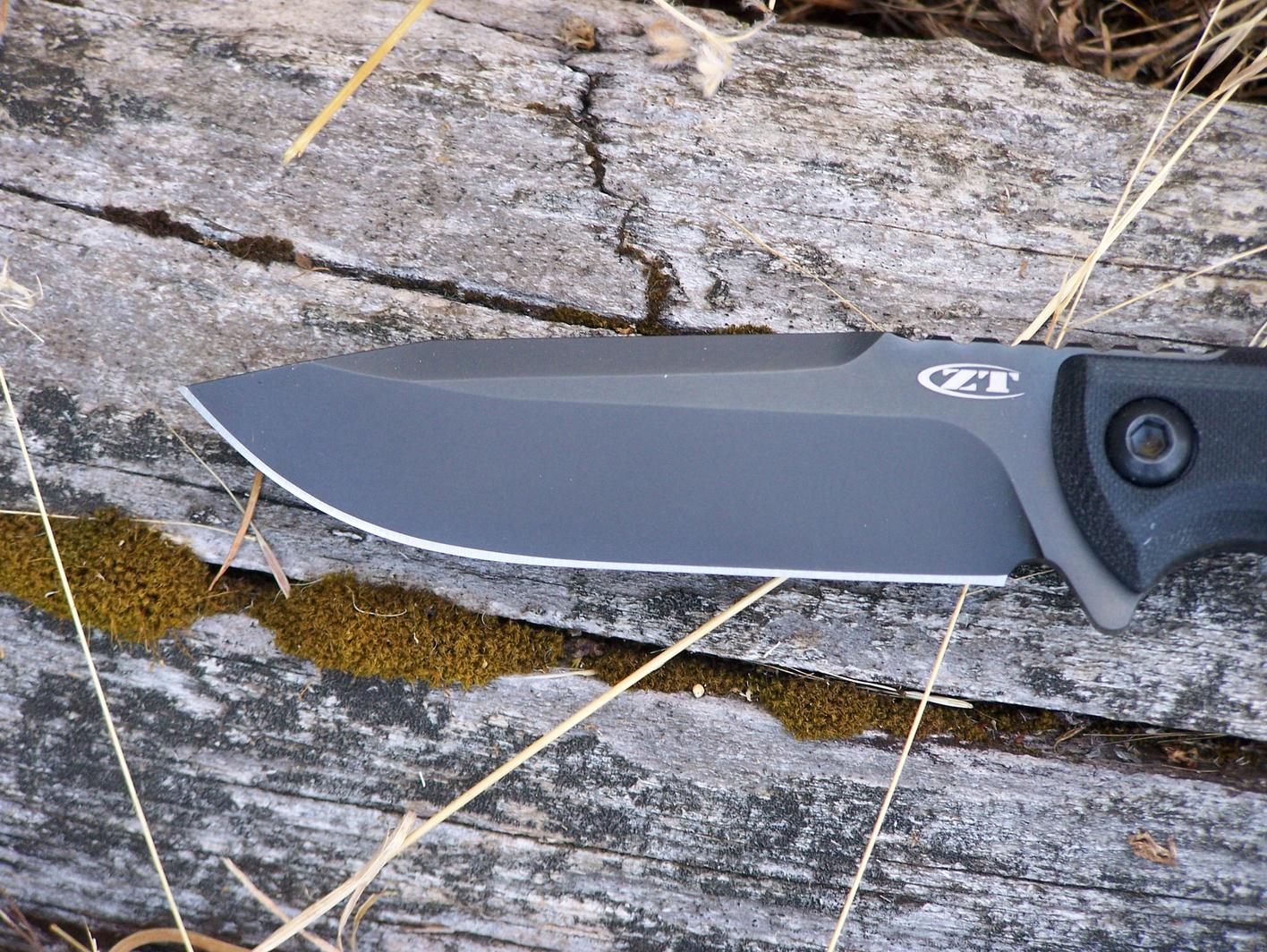
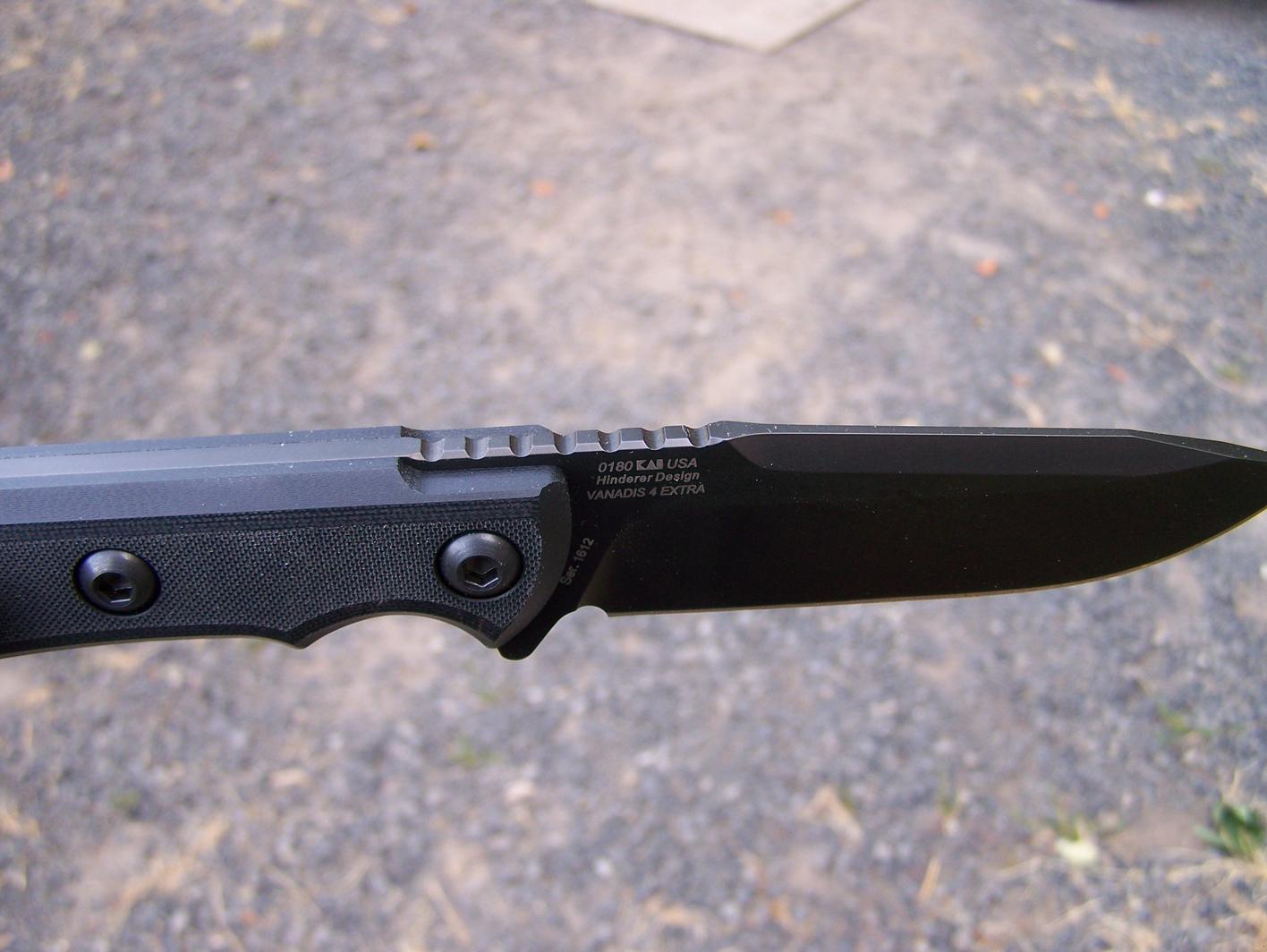
Enter the Zero Tolerance Model 180, designed by custom knife maker Rick Hinderer and based on his custom FieldTac fixed blade knife. The ZT 180 comes with a Vanadis 4 Extra powder metallurgical cold worked steel. We are talking next to bullet proof, if you ask me. It’s super tough steel. The steel is designed for hard use and to resist chipping, which is something a lot of lesser blade steels tend to do, because if you do any chopping their edge will easily chip. The blade also has the DLC coating that is non-reflective and helps resist the elements even more than just the bare steel does.

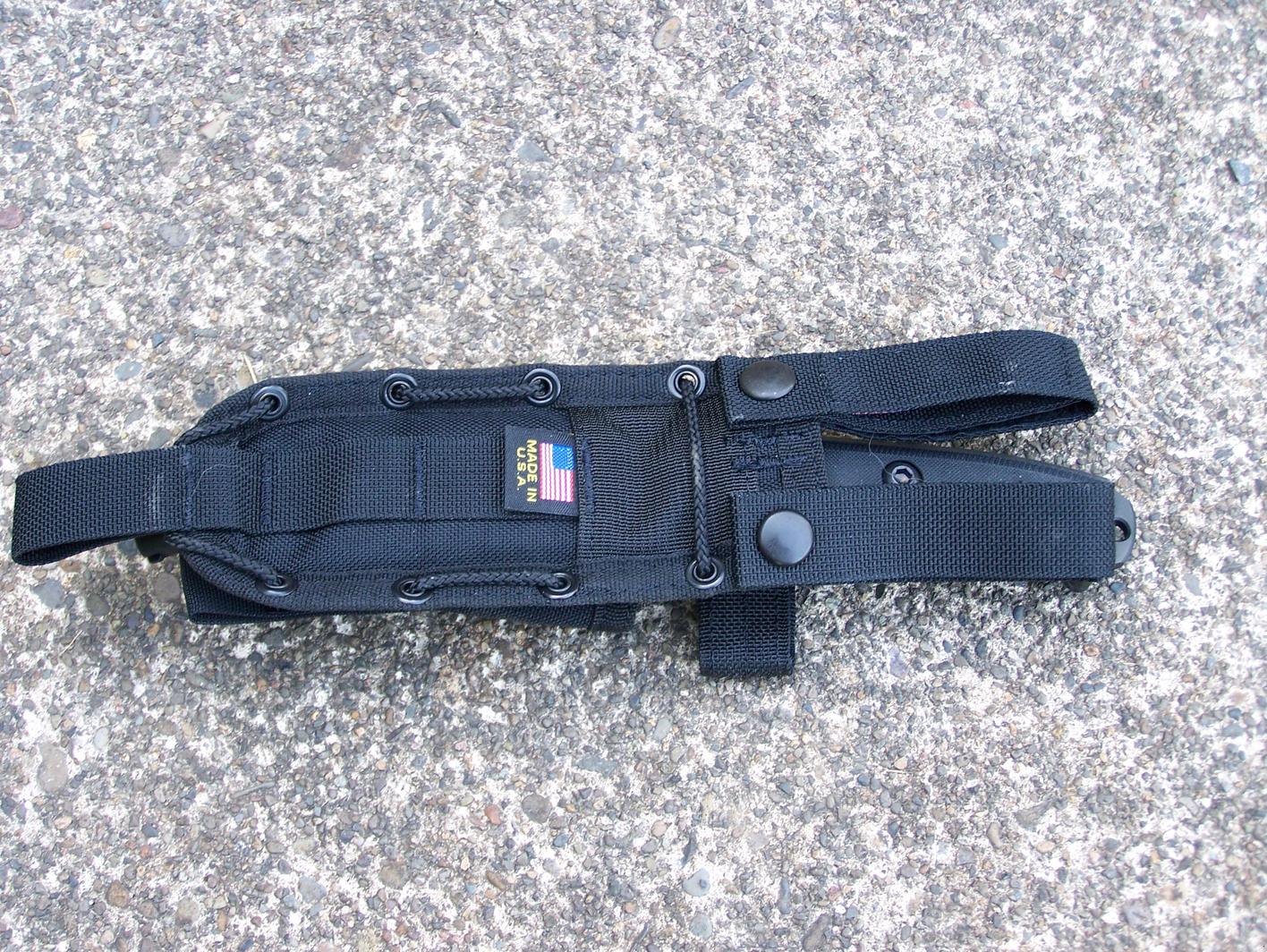
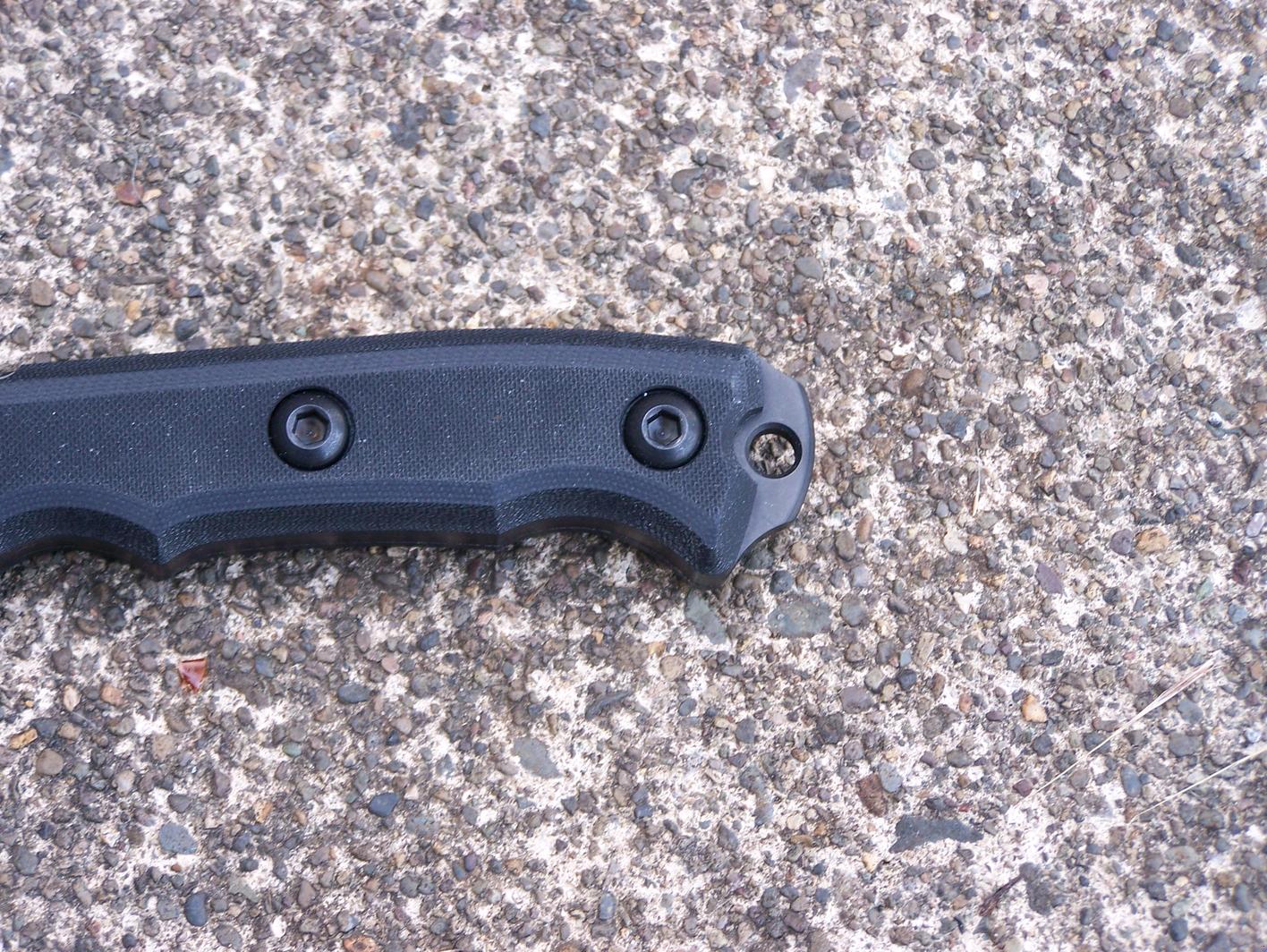
Handle scales on the ZT 180 is black G10, which is some of the best material for hard use knife handles, and it is nicely textured for a sure hold under all weather conditions, too. We also have heavy and course “friction” grooves on the rear of the blade and near the front of the handle scales, so you can really get a great hold on this knife. The handle is nicely sculptured with a finger groove on the bottom of the handle scales, and it is down swept at the back of the handle on the bottom with a lanyard hole. The blade is 4.2 inches long, which is a good size for many cutting chores and tasks. While I like a longer blade for combat use, I’ve found that a blade in the 4-inch length will take care of most of my cutting chores. Overall, the ZT 180 is 9.2 inches long. There is also a nice lined ballistic nylon sheath that comes with the ZT 180, and it is designed for tip down carry (only). There is also a pocket on the front of the sheath, for carrying a sharpening stone or perhaps a multi-tool or fire starter. I’d personally carry all three– a small sharpening stone, multi-tool, and fire starter. It’s a large pocket!

100_6217

We also have just enough of a finger guard on the lower front portion of the handle to prevent the finger from sliding onto the blade, causing some serious injury, when using the knife in the fencing grip, which is probably the most common grip most people take when holding a knife. That’s nice! The knife weighs in at a hefty 8.7 ounces. It is brutally strong, to be sure. This is the sharpened crow bar. It will do anything you ask of it and then some, and then it’ll do some more. Needless to say, the ZT 180 came shaving sharp out of the box, and during several weeks of testing, I never once had to touch-up the edge; I love that!

100_6218

I have certain criteria I use when testing knives. One is cutting hemp and poly rope. Poly rope will readily let you know if the edge isn’t sharp. I cut cardboard, a lot of cardboard. I’ve learned over the years that cardboard will really dull a knife’s edge in short order. I also slice paper as thinly as I can, and we have all manner of chores on our small homestead that require a good knife. One is the on-going fight with blackberry vines. A super sharp knife is required to keep them cut back. I also use a knife around the kitchen as well for all kinds of cutting chores, and I used the ZT 180 to baton it through some fire wood.

100_6219

Honestly, I don’t know what I could do to destroy the ZT 180. I even ran it over with my truck, and it only got the knife dirty. This is one of the toughest fixed blade knives I’ve run across in a long, long time. Any druthers? Well, yes, just one. I’d like to see ZT offer this knife with a hi-rise Kydex sheath for daily carry, instead of just the ballistic nylon sheath. While it’s great for wearing in combat or out hunting/camping, I’d like to see a lighter-weight Kydex sheath that would allow me to carry the knife on my belt for everyday use.

100_6221

To say I was totally blown away with the ZT 180 is putting it lightly, and, to be sure, it is made in the USA, in Oregon. Full retail pricing is $275, and, of course, that’s not cheap, but then again this is a ZT knife, and they are as close to custom-made as you can find at prices a lot less than you’d pay for a similar custom knife. Check one out at your local sporting goods or knife shop. I think you’ll find yourself wanting one, badly!

– Senior Product Review Editor, Pat Cascio


Recipe of the Week: Pork Stew, by B.W.

Ingredients:

  • 1 1/2 pounds fresh cubed pork
  • 4 carrots, chopped
  • 2 onions, chopped
  • 2 ribs celery, chopped
  • 3 to 4 potatoes, peeled and chopped (optional)
  • Red pepper flakes, to taste

Directions:

  1. Boil meat about 20 minutes in a pot on stove.
  2. Put chopped celery, carrots, onions, and potatoes in a 5-quart Dutch oven.
  3. Put meat on top of vegetables.
  4. Pour in 1 cup of liquid from boiled meat.
  5. Put covered Dutch oven in oven and cook at 325 degrees Fahrenheit for 1 hour and 20 minutes.
  6. Check for doneness of vegetables.
  7. Put 2 tablespoons oil in frying pan, mix in 1 large spoonful of flour.
  8. Add water to make a paste-like gravy.
  9. Pour gravy in Dutch oven, stir, and serve.

Notes: This stew can be cooked with or without potatoes, depending on how many people you want to serve. The combination of carrots, onions,, and celery is known as mire-poix in French/Cajun cooking and the taste combination is fantastic! The roux (gravy) that is poured on at the end will make your taste buds water.

o o o

Useful Recipe and Cooking Links:

Enola just posted this recipe on Paratus Familia blog. I made it this evening, and my husband and I thought it was delicious. I baked mine at 400 degrees for 50 minutes, and it turned out perfect.

Do you have a favorite recipe that would be of interest to SurvivalBlog readers? Please send it via e-mail. Thanks!


Letter Re: The OTHER Electrical Grid Failure Problem

Hugh,

Four hundred forty nuclear reactors are operating worldwide, representing about 14 percent of global electricity generation. Sixty power plants are under construction, and many older plants slated to be decommissioned may be given new operating licenses. Which country has the greatest number of nuclear reactors (want to guess)? We do; in the U.S. there are approximately 100 plants currently operating. Now imagine a map of the United States, taking a ruler and drawing a straight line from the northern border with Canada, which would head south through the edge of Minnesota, continue through the very edge of western Iowa. the very eastern portion of Kansas, eastern third of Oklahoma, with the southern portion of the line entering the Gulf just west of Houston. We now have a east and west designated portion of the U.S. The western designated portion contains approximately 15 operating reactor sites with one or more reactors. The eastern designated portion of the U.S. contain the balance of approx 85 operating reactors. This is the situation, as I thought about this and wondered where can a person live and be relatively safe from nuclear fallout from a total power failure caused by nature or man-made catastrophe in the U.S. Please note there is and are additional factors that would exponentially increase nuclear fallout e.g. nuclear war and privately- or government-owned/operated nuclear reactors.

So my next task was to mark the locations of each of the 100 operating reactors by state, and then with prevailing wind patterns highlight those clouds of radioactive particles given the approximate size of each area to be 150 miles by about 80 miles in a egg-shape pattern. The results are approximations, but the overlap of the debris field first of all in the eastern portion of the location map indicate there are few areas that will be spared contamination of any degree. Southern Alabama, southern Arkansas, western Missouri, western Iowa, and northern Wisconsin as an example may be only partially effected. Other portions of the eastern half of the U.S. will have the entire states blanketed, due to the density and overlap of the fallout. As an example, Indiana has no nuclear power plants, but because Illinois has 11, the entire state of Indiana will suffer due to the drift pattern from the Illinois facilities. Looking at real time maps of prevailing wind patterns over the U.S. It is uncertain at best to try and map accurately on any given day what the saturation effect might be, but let’s use Indiana as an example of a state that has no nuclear reactors but regardless of wind direction, whether east, west, or north, they will receive a blanket effect of radiation.

In the western designated portion of the U.S., there are the approximate 15 nuclear sites, so the contamination areas are much less and can be navigated around given enough warning, unlike the eastern portion where they will have very little option for driving clear of contamination areas and where it would be more likely continuous. Approximately seven reactor sites are located in areas of California– four south from Los Angeles through Southwestern Arizona’s three areas. Likely to be spared are the northern half of California and northern half of Nevada (even though there are no facilities in Nevada, the contamination from the four California sites will most likely effect a southern third or more of Nevada, including Los Vegas). Major cities in Arizona will be, I believe, in such an event hard hit; Phoenix, as an example, has the newest and largest nuclear site just 30 miles west/southwest of Phoenix and would receive the full effect from that site. In the northern part of the western map, there is only one nuclear power plant– in the southeast portion of Washington state, which might effect the northeast tip of Oregon, west central Idaho, and at an extreme portions of west central Montana.

The logical questions are: 1) Do we not have time to shut down the reactor cores in case of a “catastrophic power failure”? I do not have an answer in the real world if everything electrical is not working, including trucks and cars, and most people are going to be “family first” types. In this scenario, who is left to respond? 2) Well, they have portable backup systems they could fly in, right? The answer is “yes”. There is one, repeat one, emergency standby system available. Who gets the one system, and do they, after a grid shutdown, EMP, or a natural event, have the means to deliver it? If ever we needed to plan and relocate, it is now. I have read the stories of the world wide effect of a 1859 worldwide solar event named the Carrington Event, which was estimated power of 10 billion atomic bombs. That type of event would in any event put us back 200 years, and realize not only all electronics would be a target but likely all electronics in space would also be dead. This is not a pleasant topic, but I believe it may be one of the most important topics to include in our overall survival plans. Myself, I am including no electronic devices into my preps, unless they are given some measure of survivor ability by use of a Faraday cage.

I am not an expert nor an electronics engineer, but I’m using some common sense along with information available online. It is apparent to me for the approximately 35 million (and growing) preppers in this country to have better information that makes for better choices. We all cannot move to the Redoubt States, but once again this area (and a few others) would be one of the safer areas to reside in case we have that catastrophic event take place with a massive power-grid failure and/or a nuclear plant failure. Trust in God and bless you in your survival efforts. – John in Nevada


Economics and Investing:

Here is a sobering fact about Millennials, the largest cohort behind baby boomers: half of Millennials are living at home with their parents. Another 28 million Millennials are not in school and are working in jobs that pay $10,000 a year or less: Half of Millennials live at home with parents: The economy still feels like it is in a deep recession for millions of Millennials. And this group is supposedly the group that is going to relaunch the American economy.

o o o

Items from the Economics Team:

Rick Rule, Doug Casey: “Severe But Survivable” Reckoning Ahead For The U.S. (Sprott Global)

Greece’s Debt Crisis Explained (New York Times)

IMF Gives Strong Signs of Reserve Currency Nod to China’s Yuan (Bloomberg Business)

Super Yacht Getaway Subs and Luxury Bomb Shelters: The Elite are the Most Paranoid Among Preppers (The Economic Collapse Blog) Hint: Makes the rest of us look tame by comparison!

Tips to Save Money on Your Energy Bill (My Energy)

The ABCs of Frugality (The Dollar Stretcher)

How Much Money Does Illinois Have? We Still Don’t Know! (Huff Post Chicago) Hint: Illinois has not yet filed an annual financial report for

Chinese All Cash Buyers of U.S. Homes Have Tripled Since 2005 (Market Watch)


Odds ‘n Sods:

Little did we know…Overstock holds 3 months of food and $10 million in gold to ensure their employees are taken care of in the coming financial collapse. Sent in by G.G.

o o o

From SurvivalBlog reader GJM: Guns in the hands of law-abiding American citizens—unthinkable mayhem: “very bad”
Guns in the hands of Syrian terrorists like ISIL, who want to kill American citizens, put there by the same Emperor who wants to take them from American citizens, paid for by wealth stolen from American citizens—safe, controlled, intelligent: “very good”
hmm, Einsteinian Insanity

o o o

RBS sent in a link to this article on a bill that has been introduced to remove suppressors from NFA regulation under the Hearing Protection Act. It’s an uphill battle but one well worth the fight.

o o o

As a former teacher, I constantly fought the battle with my students over Wikipedia. On February 6 of this year, Sharyl Attkisson gave a TEDx talk outlining the weaknesses in this resource. If you use Wikipedia as a source, it’s 10 minutes of your time well spent. Thanks to reader T.P. for the link.

o o o

Reader T.K. sent in this link about a New York man building his own ‘country’ in Utah. It will be interesting to see how well it fares and if the Federal or State governments take notice of him. This is a subject that is near and dear to us here at SurvivalBlog with the release of JWR’s new book “Land of Promise” on December 1st. (Reminder: Order your copy on December 1st)


Notes for Sunday – October 25, 2015

Safecastle is now in the last day of their “big Future Essentials Sale” with up to 38% off of 65 varieties of coffee, smoothies, LRRPs, pilot crackers, and more.

o o o

Today, we present another entry for Round 61 of the SurvivalBlog non-fiction writing contest. The nearly $12,000 worth of prizes for this round include:

First Prize:

  1. A Tactical Self-Contained 2-Series Solar Power Generator system from Always Empowered. This compact starter power system is packaged in a wheeled O.D. green EMP-shielded Pelican hard case (a $1,700 value),
  2. A Gunsite Academy Three Day Course Certificate that is good for any one, two, or three day course (a $1,195 value),
  3. A course certificate from onPoint Tactical for the prize winner’s choice of three-day civilian courses, excluding those restricted for military or government teams. Three day onPoint courses normally cost $795,
  4. DRD Tactical is providing a 5.56 NATO QD Billet upper with a hammer forged, chromlined barrel and a hard case to go with your own AR lower. It will allow any standard AR type rifle to have quick change barrel, which can be assembled in less than one minute without the use of any tools and a compact carry capability in a hard case or 3-day pack (an $1,100 value),
  5. Gun Mag Warehouse is providing 20 Magpul pmags 30-rd Magazines (a value of $300) and a Gun Mag Warehouse T-Shirt; (an equivalent prize will be awarded for residents in states with magazine restrictions),
  6. Two cases of Mountain House freeze dried assorted entrees in #10 cans, courtesy of Ready Made Resources (a $350 value),
  7. The Ark Institute is donating a non-GMO, non-hybrid vegetable seed package (enough for two families of four) plus seed storage materials, a CD-ROM of Geri Guidetti’s book “Build Your Ark! How to Prepare for Self Reliance in Uncertain Times”, and two bottles of Potassium Iodate (a $325 retail value),
  8. A $250 gift certificate from Sunflower Ammo,
  9. KellyKettleUSA.com is donating both an AquaBrick water filtration kit and a Stainless Medium Scout Kelly Kettle Complete Kit with a combined retail value of $304, and
  10. Two cases of meals, Ready to Eat (MREs), courtesy of CampingSurvival.com (a $180 value).

Second Prize:

  1. A Glock form factor SIRT laser training pistol and a SIRT AR-15/M4 Laser Training Bolt, courtesy of Next Level Training, which have a combined retail value of $589,
  2. A FloJak EarthStraw “Code Red” 100-foot well pump system (a $500 value), courtesy of FloJak.com,
  3. A transferable certificate for a two-day Ultimate Bug Out Course from Florida Firearms Training (a $400 value),
  4. A Model 120 Series Solar Generator provided by Quantum Harvest LLC (a $340 value),
  5. A $300 gift certificate from Freeze Dry Guy,
  6. A Trekker IV™ Four-Person Emergency Kit from Emergency Essentials (a $250 value),
  7. Twenty-five books, of the winners choice, of any books published by PrepperPress.com (a $270 value),
  8. A pre-selected assortment of military surplus gear from CJL Enterprize (a $300 value),
  9. RepackBox is providing a $300 gift certificate to their site, and
  10. Safecastle is providing a package of 10 Lifestraws (a $200 value)

Third Prize:

  1. A Royal Berkey water filter, courtesy of Directive 21 (a $275 value),
  2. A $245 gift certificate from custom knifemaker Jon Kelly Designs, of Eureka, Montana,
  3. A large handmade clothes drying rack, a washboard, and a Homesteading for Beginners DVD, all courtesy of The Homestead Store, with a combined value of $206,
  4. Expanded sets of both washable feminine pads and liners, donated by Naturally Cozy (a $185 retail value),
  5. Two Super Survival Pack seed collections, a $150 value, courtesy of Seed for Security, LLC,
  6. Mayflower Trading is donating a $200 gift certificate for homesteading appliances,
  7. APEX Gun Parts is donating a $250 purchase credit,
  8. Montie Gear is donating a Precision Rest (a $249 value), and
  9. Two 1,000-foot spools of full mil-spec U.S.-made 750 paracord (in-stock colors only) from www.TOUGHGRID.com (a $240 value).

Round 61 ends on November 30th, so get busy writing and e-mail us your entry. Remember that there is a 1,500-word minimum, and that articles on practical “how to” skills for survival have an advantage in the judging.


Soothing the Savage [Beast], by Captnswife

It’s easy, when preparing for the worst, to concentrate only on material needs and ignore the less tangible but vital elements of health. Music, and the ability to produce it, will be an extremely important salve on the mental, emotional, and even physical wounds of a diminished lifestyle, should the SHTF. Modern science has shown us that there are tangible physical benefits of listening to music, including the ability to help in healing illness and injury.

We must remember it’s only been in the most recent decades that the Western musical experience became the passive listening of professional recording artists. Now, they enter our homes, indeed, go directly into our heads, by way of technology. The manner in which we have customized play lists today was, for thousands of years, an unheard of luxury. The space and expense required for numerous and varied musicians at one’s beck and call would have been fantastical, even to kings and queens!

Given our contemporary habit of music-on-demand, it is reasonable to expect this to be something keenly missed, should our electronics and/or Internet connections become compromised for more than a few hours. The good news is that music itself does not depend upon modern power, and thankfully there are many ways to include it in our planning, even if we aren’t particularly musical ourselves.

In Case of Emergency

To be sure, the sudden loss of the ubiquitous music mobile device will cause frustration, particularly with younger generations, who plug-in to tune-out or separate themselves from others. Expect a period of unpleasant withdrawal! The wise home leader will keep a small stockpile of earphones and batteries, which take up little space, along with a plan to help individual members of the household transition. Having good radios available will help, if music stations are still on the air.

Consider making a list of favorite artists for each person in the household; then, stock up on CDs or vinyl records that can be played in a battery-operated machines. So-called boom boxes have CD players, as do the older model Walkman, if you can find one. Be forewarned if you are purchasing a boom box for CDs that the players tend to wear out long before the radio. There are also battery-operated turn tables available in antique stores and new models manufactured by Crosby, which even have an old-fashioned design.

It will also be important to maintain the ability for all members of the household to listen alone, when music is a much-needed remedy for heartache and other emotional difficulties, which will be increased during crisis. Consider tucking away a small player, batteries, and special musical selections, specifically for use during uniquely difficult circumstances, special celebrations, or for gifts. At some point, this modern way of listening could become as precious as chocolate or coffee.

What about downloading current favorites from mobile devices onto CDs? There are directions online for doing that with iTunes and other players, but be sure to test your CDs on the battery player before assuming they will work. Also, if you are planning to have a special computer available for use offline and expect to use it as a music player, remember that not all current media will play without an online program behind it. (Search “Preserving a Digital Library” on SurvivalBlog to read in more detail how to access digitalized information when the Internet is not available. Current computer models may require access to an online media player to run music CDs. )

Of course, all of the preceding presumes you recognize the folly of trying to keep a half dozen or more iPads, iPhones, smart phones, electronic readers, et cetera alive in a grid-down situation.

Crank It Up, Sonny

It would take a lot of batteries to keep the modern players running very long, so eventually you will need to turn to “old-school” music. If you are interested in a mechanical option, you may want to shop for vintage machines that may be obtained through antique dealers. These include the more well-known crank Victrola and Edison phonographs, as well as older music boxes that play beautiful music on rotating metal “records” or coil. (Some examples: http://www.musicboxesandphonographs.com/musicboxes.htm) Finding one of these in good working condition may take time, and it will require some cash, as they can run into the thousands of dollars. Do not buy one unless you know how to access its workability and understand the limits of your ability to fix problems. Also, these machines require specific types of records, which must be added to your budget and your collection.

You could also hunt down a working player piano. This will require purchasing the music rolls that bring you that honky-tonk sound. Naturally, finding someone to repair any of these machines may be difficult in a SHTF scenario.

It’s Instrumental, Watson

The most obvious, and simplest, way of keeping music alive, and promoting the social welfare of household and community, is through the use of individual instruments. Although it may seem a little odd in the world of Band-Aids, bullets, and beans, music instruction should be added to the list of important skills for preppers. (We’ll call that Beethoven or Beatles.) Most certainly those who can play will be welcomed for entertainment and social activities, should electronic music become a thing of the past.

Piano is still one of the most popular instruments. Fortunately there are still teachers available in most communities, and there are many books and videos to help you self-teach. A piano requires few resources, other than space and an occasional tuning. Often one can be found in good condition at a reasonable cost from private sellers near you or family members. (A cautionary note: some pianos weigh hundreds of pounds and require special equipment or half dozen men to move them, so think ahead before making a commitment.) You will also want to stock a variety of music books, including hymnals, folk tune collections, timeless classical pieces, favorite contemporary selections, children and family songbooks, and the all-important holiday tunes, many of which may be purchased second hand at garage sales.

Guitars, as well, have experienced a revival in recent years, thanks to the popularity of interactive games such as Guitar Hero (ironically). Again, teachers and online tutorials are easy to find for that instrument. Guitars can be relatively inexpensive, or extremely expensive, depending on the age, manufacturer, and materials used. There is a difference, and if you are looking to keep one for a long period of time, consult with someone you know who is well-acquainted with the various brands to be sure you get one that meets your needs. It goes without saying that you should have a good stash of guitar strings in your prepper store, as well as appropriate books.

Beyond these two, there is a great variety of non-electric instruments that would be welcomed in a grid-down world, so whatever strikes your fancy and fits your budget will do. It will be easier to manage and maintain something that is relatively popular and small, such as violins/fiddles, flutes, woodwinds, brass, or small drums, rather than something unusual and large, like a full-sized harp. However, when the lights go out, all instruments will be appreciated. For each instrument you are considering, learn about the necessary accessories and care. Woodwinds, for example, require reeds, and keeping them moist is a must.

As for learning to play, expect any type of mastery to take several years. Just don’t worry if you, or your older child, didn’t take lessons as a youngster. Adolescents and adults (until about middle age) learn much more quickly than younger children, so becoming proficient is certainly within reach. If you are homeschooling, do include basic music theory, classical and folk music, and music instruction in your curriculum.

If you are more mechanical than musical, consider acquiring the skills to tune, repair, or build instruments, or restore them for barter. There are some online tutorials, but an apprentice relationship would likely be more thorough, with a commitment to specific educational training and appropriate space for a work area and/or storage.

The Original Social Media

In a SHTF scenario, the opportunities for using these instruments and training in a SHTF will cover the entire spectrum of human event and celebration. Instrumentalists and singers will be in demand for worship services, weddings, funerals, and to perk up family celebrations.

They also are vital for putting together ensembles for those all-important social gatherings of the community, which bring joy and rest, as well as excuses for young adults to meet each other. Historically people have come together for holiday and seasonal folk dancing (including square and round) and holiday programs and concerts. Music also adds welcome texture to transition events, such as coming of age celebrations, which will add stability to the chaos of a changed world.

Sing … Sing a Song!

The simplest way to ensure a large quantity of music when the SHTF is to listen and learn religious folk and children’s songs that may be sung together, or just hummed around the house during chores. Many a child grew up hearing mother sing old hymns on wash day. Fortunately, it’s easy to download, check-out, or purchase whatever strikes your fancy and listen in the car or around the fire during those long winter evenings.

Again, it may seem strange, but do not ignore the importance of artists, particularly musical ones, when building your prepper circle. Artists are often overlooked, but they are an important conduit for processing emotion in humans and would be sorely missed during a long-term crisis. Certainly in difficult times, the ability to keep music alive will be vital to sanity and peace, truly “soothing the savage [beast]”.


Letter Re: What We Lack In Training Can Be An Advantage- Part 2

HJL,

There was a comment in the article by R.W., “What We Lack in Training Can Be An Advantage“. It is tough to put pen to paper and generate something of value, and I would like to complement their efforts; for the most part I have no issues. However, sometimes what may seem reasonable and practical can in fact be more dangerous. Regarding the use of gas masks for respiratory protection, it stirred some memories from back in the days when I went to NBC School in the Army, from 30+ years ago.

One of the things I remember was regarding use of Gas Masks in a Nuclear environment. Because the radioactive particles will be captured and stored in the filters, this will result in your face being cooked by the radiation the longer you wear the mask. If I recall correctly, the instructors recommended bandanas/cravats around your mouth/nose to protect yourself.

If you plan to use any mask for respiratory protection in a radioactive environment, remember to dispose and replace the filters as soon as you are out of harms way. – Steve T.


Economics and Investing:

SurvivalBlog reader CPL sent in the link showing IRS inflation adjustments for 2016 taxes.

o o o

Items from the Economics Team:

China Cuts Rates for 6th Time Since November (Fox Business)

Reflections on Venezuela’s Economic Miracle (Mises Institute) Hint: Don’t expect a follow up from Salon

Wall Street Investment Banks may be about to Lose one of their Best Customers (Business Insider) Hint: Banks have been cashing in on the price of your prescriptions in a big way for a long time!

Why China’s Rate Cut Won’t Slow Its Economic Decline (Zero Hedge) Hint: The cake has already been baked!

Food Banks are at Risk of Becoming Mainstream (The Guardian)

Morgan Stanley: 7 Biggest Risks to the Global Economy (Business Insider)