Odds ‘n Sods:

Our SurvivalRealty spin-off site gets some very unusual retreat property listings, but this new one on Hawaii’s Big Island is incredible: Private Cave Bordering Forest Reserve in Tropical Paradise

o o o

SurvivalBlog reader R.H. wrote in response to Five Intelligence Essentials for Preparedness and Community Security, by Samuel Culper with a link to an article describing how to turn a computer and a TV tuning dongle into a police scanner capable of receiving trunked radio traffic.

o o o

J.N. writes in: “Gun haters point to recent mass shooting and froth at the mouth demanding new anti-gun legislation to stop such future massacres.

But, the Washington Post– that monument to antigun agenda journalism– has admitted in print, in detail through its “fact checkers”, that NONE of Obama’s proposed gun control initiatives would have stopped those mass shootings!”

o o o

Google Files Patent for “Needle-Free” Glucose Testing Technology – What could possible go wrong here?! – Sent in by D.S.

o o o

Flu Flop: Another Year of Dangerous CDC Lies


Guest Article: Five Intelligence Essentials for Preparedness and Community Security, by Samuel Culper

Intelligence is a poorly covered topic in our the preparedness community, largely because there just aren’t enough former intel guys willing to teach on the topic. Although the work of intelligence can consume your life while preparing for SHTF, there are several small things you can do today in order to become more prepared. If you’re spending hundreds, thousands, or tens of thousands of dollars on things but aren’t studying the threats in your area, then there’s a good chance that you will suffer from strategic shock; in other words, you may be exploited in a way that you hadn’t anticipated.

Here are five ways that you can better prepare for community security through intelligence.

  1. Maps – You simply must have maps of your area of operations (AO).  In order to understand the mission of community security, you’ll need to identify just what your AO is. In other words, you need to know the boundaries of what you’re going to protect.  Identifying the AO is the first step in a line of several steps that we’ll cover later in the article.

    Step into any tactical operations center, or TOC, in Iraq or Afghanistan and you’re likely to see several types of maps of the AO.  The first map we’ll need is a topographical map at 1:24,000 scale available from the USGS.  Printing off a map at your home or office printer is better than nothing; however, what’s best is having a large map hung up on the wall.  You’re going to need at least a 24″x36″ map, if you want to be the best prepared.  You’ll also be interested in having plenty of street maps and imagery of the AO, too.

  2. Police Scanner – Scanning local emergency services frequencies is the absolute best way to get up-to-the-second intelligence information during an emergency.  Unless you live in an area where this traffic is encrypted, you’ll have access to some of the same information that law enforcement does.  When it comes to making informed, time-sensitive decisions, a police scanner will be your best friend.  They’re expensive, however, I highly recommend the Uniden Home Patrol 2.  It’s my police scanner of choice for several reasons, one of which is because, unlike other scanners, its screen shows me what agency is transmitting.  That goes a long way in my ability to determine the area of transmission.
  3. Intelligence Preparation of the Community – I modified the Army’s Intelligence Preparation of the Battlefield for civilian use in my book, SHTF Intelligence, and designed Intelligence Preparation of the Community (IPC).  Once we have our maps and map overlays set up, we need to identify and mark on our maps any critical infrastructure in the area, along with what’s called the human terrain.  Critical infrastructure includes police and fire stations, government buildings, power plants, and fuel depots (among many others), and the human terrain includes community leaders and demographics (among many others).  We need to pay attention to the people, places, and things that keep life-as-we-know-it up and running, and we need to not only know exactly where they are in relation to our AO, but also how they’ll affect our AO.  Doing the legwork now in order to understand the community is a top priority for the S2, and this step never ends.
  4. Threat Analysis – We need to begin identifying threats in our AO, which includes threats from outside the area that have the potential to migrate into the AO.  Threats are broken down into four categories:  conventional, irregular, catastrophic, and disruptive.  Once identified, we begin developing intelligence requirements so we can learn more about each threat and provide better analysis.  If you don’t know the threat, then you can’t defend against it, and if you can’t defend against it, then it’s going to eat your lunch.  In other words, understand each threat as he understands himself.  In the Military Intelligence Creed, that would be “find, know, and never lose the enemy.”
  5. Early Warning Intelligence – Once we’ve identified and analyzed current and potential threats, it’s imperative for us to find ways to provide early warning for them.  For current threats, our greatest early warning, in general, will be the effects of the SHTF event, which are likely to cause criminal behavior.  But beyond that, how can we develop tactical early warning intelligence?  Having “eyes on” our community’s avenues of approach is one of the best ways.  Through our threat analysis, we should know from what direction these threats will migrate and, therefore, we need to identify these threats as they’re migrating as quickly as possible.  For potential threats – that is, threats that have yet to arise – we need to begin looking for “indicators” of their activity.  We might begin looking for tagging on signs and walls, gang-related clothing and hand signs among the populace, noticeable surveillance of potential targets– anything you’d expect to happen before an attack occurs.  If we can identify these indicators soon enough, then we’ll be a leg up on the competition and know they pose a threat to us before it’s too late.

Samuel Culper is a former Military Intelligence NCO and contract intelligence analyst who spent three years in Iraq and Afghanistan.  He’s the director of Forward Observer and the author of SHTF Intelligence: An Intelligence Analyst’s Approach to Community Security.


Guest Article: The 10th Amendment – The Last Bastion of Liberty, by Will Lehr

In this age of increasing federal overreach, one can feel the hand of the government perhaps more than any other time in our albeit short history as a nation.  Thanks to criminal actions from bureaucrats, constitutional violations such as the Patriot Act have become the new law, eroding our liberties on this soil with each passing day, much like a sand dune standing against a series of crashing waves.

So here we are.  What do we do now?  Some are taking action against the system.  Some want to peacefully non-comply just enough to not be thrown into a cage.  It is in times like these when creativity saves lives and fortunes.  We must look to existing logistical solutions already in place.  

Ironically, the very justice system that allows atrocities can be used to protect us.  The legal system in this country is fragmented such that a decentralized power structure shows its value.  Starting with state statute going all the way into local county and sheriff jurisprudence, there are numerous layers to the law in this land.

States’ rights and their protection have a rich history in this country.  This has been debated with great fervor since the creation of the constitution. Today, we see nullification alive and well, as states enact laws to protect civil liberties, limit federal interference, or simply increase revenue.  From legal tender laws to gun laws, to refugee acceptance, to NSA spying, some states have been leading the charge in flexing their muscles of independence.  

We’ve had states, like Utah and Texas, literally introduce competing currency systems to the U.S. dollar.  Utah, Maine, and even California have shutoff resources like water to NSA facilities.  Texas is suing the federal government over forced refugee acceptance.  South Carolina is attempting to nullify SCOTUS ruling on gay marriage.  On a localized level, we recently had a county sheriff in Idaho stop the VA from confiscating the guns of a veteran citizen of his county.

These are just a few examples.  Everywhere we turn today, we see states pulling away.  The level of disdain on the individual level is near an all time high as well.  A recent poll revealed that only 1 in 5 Americans trust the government.  Do you see a trend developing here?  Let this be a source of hope, if you’re concerned about worst-case scenarios.

You can use what’s called an LLC IRA, a type of self-directed IRA whereby the IRA account purchases a limited liability company (LLC).  This LLC acts as an investment holding company that you manage but is owned by your IRA.  This allows you to take the assets from your retirement account  and place them into an entity created, bound, and protected by state statute. Many use this structure to invest in gold and silver bullion coins that can legally be stored at home.  You can issue loans from the LLC, invest in private companies, manage investment real estate, hold cash, and do almost anything.  

In the worst-case scenario of government confiscation of IRAs, this structure could provide an escape hatch to the individual. If the assets are not held within the system they cannot be frozen with a click, and they cannot even be located in many cases.  This shelter allows the assets to be completely removed from the system without taxes or IRA penalties associated with withdrawing.  The IRA assets are only taxed later in retirement, when you distribute or withdraw them from the IRA for personal use.

The confiscation risk to IRAs is real.  In the face of the next financial collapse, the $15 trillion IRA and 401k industry will be targeted as the source of the next bailout.  It will surely be dressed up as a “Save America Bond” or something similar so that it will be gulped down hook, line, and sinker by the masses.  Basel international banking laws have been changed, moving cash deposits to the red side of the balance sheet; they are now liabilities.  The legal framework is in place to allow an all out overhaul of the IRA/401k industry.  Protect yourself while you still can.

Sincerely, Will Lehr Managing Partner & Co Founder Perpetual Assets

Resources:


Letter Re: Keep Your Bicycle Running in Tough Times, by S.H.

Dear Editor

S.H provided an excellent reminder of a vital survival and prepper resource: the bicycle. I would like to add a few points. Commuters, tourists, and utility riders carry loads over various distances and terrain at non-athletic pace, so look to their example.

When selecting a bicycle, look for standard components such as tire size. MTB 26″ and Hybrid/touring style 700c are both common sizes. 29″ is the same as 700c. 27″ is not the same as 700c but may be your local standard for a similar fast/utility wheel. Bike shops now sell MTBs in 27.5″, which is a new standard (based on a boutique French size). It is non-standard and best avoided for prepper use. Folding bikes are never as strong but useful for vehicle carry. 20″BMX tire is std.

Avoid transmissions with very high number of rear sprockets. 8 or 9 is good. 10 or 11 is racing tech.

Practicality demands fixing luggage to the bike frame, so look for threaded eyelets for rack and fenders. Full suspension bikes lack luggage fitments. Commercial rear racks are all pretty good. Aluminium is the usual material but steel is used on premium expedition models such as Tubus. Commerical bags, esp touring grade ones, are very good and use quick-release, locking hooks that are reliable.

A trailer expands bike usefulness hugely. Commercial ones are good. For children, use a child trailer; for cargo, pick a flatbed. You will be able to shift far more than you can lift, eg, logs, tools, materials. This will save you using fuel for non-essential purposes, or will save a horse for heavy lifting jobs.

Modern puncture-resistant tires may seem expensive but are always worthwhile. Schwalbe Marathon Plus is the gold standard but cheaper Marathon is a good and common model.

Assemble some bike spares and tools: tires, inner tubes, chains, spokes, patch kits, spare nuts and bolts, spare pump. Chain-tool, crank tool, sprocket tool. Carry a repair kit or walk.

In a vehicle-based scenario, consider bicycles to be your life raft: not ideal, but better than swimming. If you work in a city, experience in London and Tokyo shows that everyone wants a bike as soon as transportation troubles become apparent. Shops sell out within hours of a “get back home” event.

Be realistic about budget. Bikes are safety critical and can be worked hard every day, so don’t underspend. If you live within 10 miles of work or shops, you can incorporate a bicycle into your life now, and get free fitness training whilst saving on gas. – M.W.


Economics and Investing:

SRSROCCO REPORT: U.S. Ponzi Scheme & Peak Silver

o o o

An anonymous short-seller called a company a ‘Ponzi-like real-estate scheme’ and the stock has crashed 65%

o o o

Items from Professor Preponomics:

U.S. News

Fed “Stimulus” Has Made Inequality Worse, Hurt Economic Growth (Cato Institute) Article Quote: “…Fed policy has contributed to the rise in income inequality in this country. It has also resulted in misallocation of capital in ways that will only be fully discovered when the policy is reversed.”

High-Yield Hedge Fund Stops Redemptions (WSJ via CNBC) Quote: “Icahn, an activist investor, also renewed his repeated criticism of the high-yield market, calling it a “keg of dynamite that sooner or later will blow up.” He contended that some junk bond funds lack necessary liquidity and investors need to know more about their risks.”

The Governor of Alaska Calls for INCOME TAX (USA Today) Spoiler Alert: When there is no way to reconcile state finances short of serious cost cutting measures, the solution (in the eyes of the government) is simple: just call for more tax revenue.

Yellen Interested in Climate Change and Risk to Financial System(Washington Examiner) Presented without further comment except to say that this leaves me nearly speechless.

International News

China Has Officially Joined the Currency Wars (Contra Corner) Commentary: Devaluation of the yuan may be coming. In fact, this writer suggests, it may be unavoidable.

Personal Economics and Household Finance

The Fake IRS Phone Scam is BACK (Clark Howard) Reader Alert: Sophisticated phone scammers have scammed 1,000 people out of $5M. In some cases, they impersonate local law enforcement and threaten people who don’t pay up immediately with imminent arrest. As difficult as it is to imagine falling for this, many people do. Educate and warn your friends, family members, and co-workers.


Odds ‘n Sods:

Reader JBG sent in yet another reason to avoid Social Web Media. While you may not live in Thailand, the record still exists. Once it’s there it’s permanent.

o o o

Wound-Stopping Battlefield Sponge Gun Now OK For Civilians, Too – Sent in by T.P.

o o o

Pete in Switzerland suggested this great six-minute educational video: PSK – Personal Survival Kit – Maxpedition EDC Pocket Organizer

o o o

Does anyone else out there ever find it ironic that the majority of the population of what were the original 13 colonies are so quick to want to jettison the very rights their forefathers fought so hard for? Connecticut Governor Announces Gun Ban – RBS

o o o

Red or Blue: What Happens When YOU Are Put On A List? “If You’re On That List, Your Right Is Cancelled” – B.B.


Hugh’s Quote of the Day:

“And he came to Nazareth, where he had been brought up: and, as his custom was, he went into the synagogue on the sabbath day, and stood up for to read. And there was delivered unto him the book of the prophet Esaias. And when he had opened the book, he found the place where it was written, The Spirit of the Lord is upon me, because he hath anointed me to preach the gospel to the poor; he hath sent me to heal the brokenhearted, to preach deliverance to the captives, and recovering of sight to the blind, to set at liberty them that are bruised, to preach the acceptable year of the Lord. And he closed the book, and he gave it again to the minister, and sat down. And the eyes of all them that were in the synagogue were fastened on him.” Luke 4:16 (KJV)


Notes for Saturday – December 12, 2015

Today, we present another entry for Round 61 of the SurvivalBlog non-fiction writing contest. The nearly $12,000 worth of prizes for this round include:

First Prize:

  1. A Tactical Self-Contained 2-Series Solar Power Generator system from Always Empowered. This compact starter power system is packaged in a wheeled O.D. green EMP-shielded Pelican hard case (a $1,700 value),
  2. A Gunsite Academy Three Day Course Certificate that is good for any one, two, or three day course (a $1,195 value),
  3. A course certificate from onPoint Tactical for the prize winner’s choice of three-day civilian courses, excluding those restricted for military or government teams. Three day onPoint courses normally cost $795,
  4. DRD Tactical is providing a 5.56 NATO QD Billet upper with a hammer forged, chromlined barrel and a hard case to go with your own AR lower. It will allow any standard AR type rifle to have quick change barrel, which can be assembled in less than one minute without the use of any tools and a compact carry capability in a hard case or 3-day pack (an $1,100 value),
  5. Gun Mag Warehouse is providing 20 Magpul pmags 30-rd Magazines (a value of $300) and a Gun Mag Warehouse T-Shirt; (an equivalent prize will be awarded for residents in states with magazine restrictions),
  6. Two cases of Mountain House freeze dried assorted entrees in #10 cans, courtesy of Ready Made Resources (a $350 value),
  7. The Ark Institute is donating a non-GMO, non-hybrid vegetable seed package (enough for two families of four) plus seed storage materials, a CD-ROM of Geri Guidetti’s book “Build Your Ark! How to Prepare for Self Reliance in Uncertain Times”, and two bottles of Potassium Iodate (a $325 retail value),
  8. A $250 gift certificate from Sunflower Ammo,
  9. KellyKettleUSA.com is donating both an AquaBrick water filtration kit and a Stainless Medium Scout Kelly Kettle Complete Kit with a combined retail value of $304, and
  10. Two cases of meals, Ready to Eat (MREs), courtesy of CampingSurvival.com (a $180 value).

Second Prize:

  1. A Glock form factor SIRT laser training pistol and a SIRT AR-15/M4 Laser Training Bolt, courtesy of Next Level Training, which have a combined retail value of $589,
  2. A FloJak EarthStraw “Code Red” 100-foot well pump system (a $500 value), courtesy of FloJak.com,
  3. A transferable certificate for a two-day Ultimate Bug Out Course from Florida Firearms Training (a $400 value),
  4. A Model 175 Series Solar Generator provided by Quantum Harvest LLC (a $439 value),
  5. A $300 gift certificate from Freeze Dry Guy,
  6. A Trekker IV™ Four-Person Emergency Kit from Emergency Essentials (a $250 value),
  7. A $200 gift certificate good towards any books published by PrepperPress.com,
  8. A pre-selected assortment of military surplus gear from CJL Enterprize (a $300 value),
  9. RepackBox is providing a $300 gift certificate to their site, and
  10. Safecastle is providing a package of 10 LifeStraws (a $200 value)

Third Prize:

  1. A Royal Berkey water filter, courtesy of Directive 21 (a $275 value),
  2. A $245 gift certificate from custom knifemaker Jon Kelly Designs, of Eureka, Montana,
  3. A large handmade clothes drying rack, a washboard, and a Homesteading for Beginners DVD, all courtesy of The Homestead Store, with a combined value of $206,
  4. Expanded sets of both washable feminine pads and liners, donated by Naturally Cozy (a $185 retail value),
  5. Two Super Survival Pack seed collections, a $150 value, courtesy of Seed for Security, LLC,
  6. Mayflower Trading is donating a $200 gift certificate for homesteading appliances,
  7. APEX Gun Parts is donating a $250 purchase credit,
  8. Montie Gear is donating a Precision Rest (a $249 value), and
  9. Two 1,000-foot spools of full mil-spec U.S.-made 750 paracord (in-stock colors only) from www.TOUGHGRID.com (a $240 value).

Round 61 ends on November 30th, so get busy writing and e-mail us your entry. Remember that there is a 1,500-word minimum, and that articles on practical “how to” skills for survival have an advantage in the judging.

But first, here is an editorial by SurvivalBlog’s Founder and Senior Editor:


The Myth of The Gun Show Loophole: The Statist Perversion of Our Language Continues

I’ve mentioned this before in SurvivalBlog, but recent events make this worth repeating: The statist gun grabbers drone on and on about a “gun show loophole” as if it were some ground truth, just like saying a phrase like “humans are mortal.” But just what is this “loophole” they are talking about? It is in fact perfectly legal commerce between private citizens of the same state. This is not a “loophole”. Rather, it is merely the exercise of free trade in used household goods between sovereign citizens within their own states. Gun shows are a time-honored tradition in free exercise of our Second Amendment rights–not some sort of dodgy maneuvering.

The leftist whiners–including President Bolt Hold Open (BHO)– are again begging congress to apply the Interstate Commerce Clause to restrict intrastate sales. That is just plain extra-jurisdictional and hence absolutely unconstitutional. (Does the phrase “No nexus” mean anything to them?) In light of the U.S. v. Lopez decision, there is no way that the Commerce Clause can be contorted to fit their expansive view.

The statist Overlords inside the DC Beltway have become famous for perverting our language. These are the same perverts who have intentionally re-invented words like “grass”, “marriage”, “phobia”, “hate”, “fairness”, and even “poverty” to advance their political agenda.

I’ll end with a quote:

“How strangely will the tools of a Tyrant pervert the plain Meaning of Words!” – Samuel Adams

(Permission to re-post the full text of this particular post is granted, as long as a link to SurvivalBlog.com is included.) – JWR


Keep Your Bicycle Running in Tough Times, by S.H.

A lot of times you’ll hear folks say that doing some activity is like riding a bicycle; once you know how to do it, you’ll always remember. Well, it’s true that no matter how long it’s been since you’ve ridden, you can get back on your bicycle, but only if you remember you have one! One thing I’ve noticed in a lot of posts regarding times post-after the Big Schumer hits the fan is the gap that bicycles could fill for transport needs.

Notably, bicycles were employed by a few characters in the book Patriots, so kudos to Mr. Rawles. They’re conspicuously absent from much of the other fiction out there. Horses are of course great if you have the means and knowledge, but they need to feed and have some care.

I’ve personally always enjoyed my time on a bicycle. From the day I got off training wheels, it’s been a pass-time for me personally. I raced a few times, and whether for fitness or with the children, I love being on a bike.

Hopefully, I can impart some useful bicycle knowledge that you can use.

The fastest known human, Mr. Usain Bolt, has been clocked during part of his sprints at up to 28 miles per hour. Now for most people, it’s going to be less than that, and the fastest sustained time runs in the 23 mile per hour range. So it’s safe to assume that most of us are sub-twenty-mile-per-hour runners. A bicycle doesn’t get you a lightning fast start (unless you’re a track speedster), but once you’re going it sure would help.

Imagine you needed to clear away from a pedestrian goblin or goblins in your travels and you got clear of the initial contact by bicycle. It’s reasonable to assume that with a modest 15 mile per hour bicycle travel speed, after half an hour’s ride against an eight minute mile goblin, you’d put 3.5 miles between you and them.

Now I know a lot of folks have SEAL team six backing them up against said goblins in their mind’s eye view of post-Schumer life, and that’s exciting, but I unfortunately don’t. So I’d engage violently in some circumstances and train to prevail. That couple miles is a good starting investment toward not seeing that goblin again. Travel by bicycle can also be fairly quiet.

I travel a fair amount for business, commonly 2000 miles or so. Having thought it through, if there’s no mechanized travel, like planes, trains, motorcycles, and automobiles, a bicycle would make a good option for me, and it would be on my day one SHTF “shopping list” near the top, along with some helpful gear. Under favorable conditions, I can ride 100 miles in a day, but with variable conditions and security concerns it could be 50-60 miles. While I’ve done a 20+ mile hike in a day, the same challenges that could be present that might make 15 miles a good day fortunate. You likely already know the concerns: hunger, water, security, safe travel routes, weather, and so forth. Consider this; you could get home in far less time.

It is a fair consideration as well that cycling moves you further with less effort, so when calories may be limited it makes sense to conserve energy where possible.

So what are some considerations for preparing for a long bicycle ride? Others may have contrary recommendations, but here are some of mine.

Think about what type of bicycle is most suited to the type of riding you’ll be doing. A road cycle is fast if you thought you’d be on great road surfaces but is less than ideal overall. I find that a mountain bike will typically do most jobs well. You don’t have to buy a top of the line mountain bike to do the job. I like mid-grade name brand mountain bikes for a “utility bike”. To me, the utility bike is the scout rifle of transportation preparedness. I have a couple of them, more as a hobby of repairing bikes, and I might even be convinced to barter one someday.

I live near a college town and have been able to pick up a couple of good utility bikes. With a professional grade tune-up (I used to work part time in a bicycle shop during college so I do it myself, but if you are not a do it yourselfer, it’s a good starting point), many used mid-grade bikes should give you a lot of mileage with little problem. If you buy the least expensive big box special, you’re likely to get less reliable components on your bicycle, assembled by someone who doesn’t care.

As far as tires, if knobbier tires are available, these may be helpful in winter months or muddy travel. I like a mid-sized “cross country” mountain tire. Bigger tires do translate to more effort and reduced efficiency.

If you have any choice, try to find a bicycle that fits you. Again, if you go to your local bike shop, they’ll fit a bike for you typically at no cost. It’s appropriate to have some clearance between your crotch and the crossbar (and by the way, unless SEAL team six is covering your six until their helo extracts you, it doesn’t much

matter if it’s a ladies bicycle in practical terms), that’s called stand over height. The next adjustment you should look at is the seat. The seat should be adjusted, in my experience, so that when your leg extends to the bottom of the pedal stroke, it is not quite completely straight. A longer pedal stroke will be rough on the knees, and a shorter one doesn’t capitalize on leg strength.

Suspension may be a point that’s arguable. From my opinion, a front suspension cross country mountain bike with a “hard tail” (sans suspension) will get you there with economy, lighter weight, and less wearable parts.

What about helmets? Can you live without one? If necessitated, yes, but having witnessed the outcome of people suffering brain injuries, I have to advocate in favor of helmet use in terms of your best chance of remaining fit for survival. If you do have SEAL team six with you, they may lend you one of theirs with the high speed NVG apparatus.

There are a few ways that you can fasten additional “luggage” to your bicycle for transport. Trailers like you’d use to carry toddlers are one way, but without going into great detail, it’s possible to fashion a cradle to support a medium-sized backpack (in the way that baskets can be fastened) from the handlebars. Also, it shouldn’t be too challenging to create a rack above the back of the rear axle to stow something akin to saddle bags on, if you do not already have one.

To keep your bicycle rolling, you’ll want to ensure that the chain retains some semblance of lubrication. If it gets rusty, that’s inviting a break, which could be a fatal problem for your bicycle. Ditto for other moving parts. Also, a well-lubricated bike is a quiet bike. Check the recommendations for your bike, but consider that some moving parts with bearings may fair better with grease. This includes the axles, bottom bracket (where crank arms connect to the frame), and the pedal spindles. If you’re desperate, consider using motor oil. In some situations, you may be able to harvest this, if there’s a disabled vehicle.

As far as spare parts and tools, there are a few things that are helpful to have extra of. First is inner tubes. The valve on the inner tube is worthy of some consideration. If you’re into trail biking, you may find that it’s helpful to use Presta valves, in case you need to borrow someone else’s pump. With some newer rims, they’re exclusive to Presta. If you go with presta, it wouldn’t hurt to have more than one pump and an adapter to the ubiquitous Schraeder valve.

In terms of a SHTF situation, I highly recommend you have some inner tubes with a Schraeder valve handy. The Schraeder is the valve that you see on vehicle tires. So it’s reasonable to assume it will be easier to find a Schraeder compatible pump, when the Schumer has hit.

It’s worth keeping a spare chain compatible with your rig available and knowing how to repair/replace a chain. Youtube is a good resource for this fairly easy task. Along with this, a chain cutter repair kit and chain tool are good to have. One “Hillbilly repair” I made that worked adequately was on a trip a ways from a bicycle shop. I found an appropriately-sized nail and aviator snips and crafted my own chain pin. This experiment survived an additional two days of hard riding before getting back to “civilization”.

Flat tires are an issue you should not fear but should be prepared for. Like most things, prevention is a good bet. When I moved to Colorado as a young lad, I had several frustrating experiences with the omnipresent fruit of the tribulus terrestris, or the “Goathead thorn”. It seemed there was nowhere I could go on a bike ride without flatting out. Then a friend recommended tire protector liners, and riding became fun again. These liners go in between the tube and the tire and do a great job protecting from flat tires. Also, maintaining good tire pressure will prevent “pinch flats”.

Tire patch kits are fairly inexpensive, so they’re worth having several spares. Changing a flat is not that difficult. Having an extra tube gets you back on the road/trail more quickly, but unless catastrophically damaged or dry rotted, tubes should be patched and reused whenever possible. Tire levers are a good product to have on hand, polymer ones will minimize the risk of bending a rim or damaging a tire/tube, but if you have to a screw driver will work.

Quick steps to change a tube when your bike tire runs flat:

  1. Remove the wheel, ensuring that brakes allow clearance.
  2. Check for what caused the flat. If there’s a thorn, nail, or glass, it needs to be gone before you fix the situation.
  3. Using your tire levers or other prying device (bonus points when you teach yourself to break the bead with just your fingers), “open” the tire. I usually just open one side for a quick change.
  4. Gently pull the tube out a bit at a time.
  5. Slowly run your finger around the inside of the tire, checking for debris. (Note: Do this slowly, so you don’t wind up with glass or any debris cutting you.)
  6. With the tube fully removed, add a bit of air. I do the soapy water leak test to see where bubbles come out. By “soapy water,” I mean “saliva works well”.
  7. Dry and patch the area, if possible. (Note: This is straightforward. If you can’t figure out the patch kit instructions, you’ll likely not need much survival skillset building; just enjoy life now.)
  8. Pump just enough air into the tube for it to take shape. Insert it into the tire as you removed it.
  9. Using tire levers (or your thumbs), work the “bead” of the tire back inside the rim, beginning at the same spot and working your way around.
  10. Once you’ve restored the bead, pump the tire to appropriate pressure and ride on.

This wouldn’t be a good place to brag about the age of some of the tubes I’ve used and number of patches, because my belief in Murphy’s law runs strong. However, let’s just say there’s a lot of use in a quality tube.

Along with these tips, it will benefit you to learn more about brakes, gears/derailleurs, and other minor maintenance.

I hope this gives you some ideas about how to keep your bicycle rolling in good times and bad, and the Lord blesses you and keeps you safe in your travels.


Letter Re: Sheath for Rawles Voyager XL

JWR,

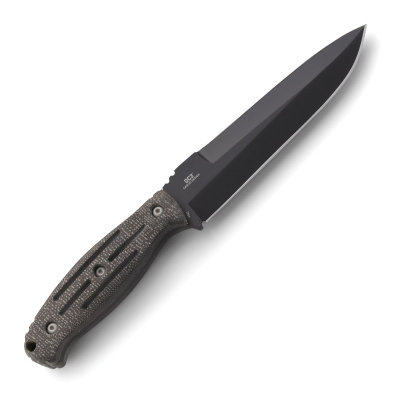
Hey, I sent you an email some time back about a sheath for the new knife of yours that my wife bought for me and you recommended “Wicekleather”, a company from Poland. I just wanted you to know, I ordered the sheath and it came today. It is absolutely BEAUTIFUL workmanship, and the knife fits into it PERFECTLY. I was thrilled with the sheath and for anyone who bought the knife, I can highly recommend Wiceleather. Thanks for the recommendation! – W.R.


Economics and Investing:

Living A Lie How much debt?! – Sent in by B.B.

o o o

Why A Major Deflationary Financial Crisis Is Imminent

o o o

Items from Professor Preponomics:

U.S. News

Why Gold-Backed Money Doesn’t Bring Booms and Busts (Mises Institute)

Zombies Appear in U.S. Oilfields as Crude Plumbs New Lows (Reuters) Article Quote: “The slump has created dozens of oil and gas “zombies,” a term lawyers and restructuring advisers use to describe companies that have just enough money to pay interest on mountains of debt but not enough to drill enough new wells to replace older ones that are drying out.”

Senator Ted Cruz Cosponsors Rand Paul’s Audit the Fed Bill (Breitbart)

International News

Putin Muffles His Anti-Western Rhetoric as Russia’s Economy Shrinks (The Economist) Thought: Never underestimate the power of economic forces at work within politics, but understand as well that these forces are fluid (not static) and Putin’s foundational views and operating philosophy of the United States (and other western nations) have not changed. He may be playing on this country’s utter lack of long term memory. He may be playing on the rising tide of American disgust for domestic politics and politicians, even anger. Russian bombers will be buzzing the U.S. coastline again, soon enough.

Personal Economics and Household Finance

Beware of ID Theft During Medical Emergencies: Couple Accused of Using Stolen Patient Information for Pricey Purchases (Fox 5 New York) Article Quote: “The conduct charged in this case is morally reprehensible. When a person is admitted to a hospital, the last thing that patient or their family members should be concerned about is whether their identity will be stolen.”


Odds ‘n Sods:

SurvivalBlog reader D.B sent in this link about New Legislation Would Force Twitter and Facebook to Report “Terrorist Activity”. So who decides what terrorist activity is? Just one more reason to avoid social web media

o o o

Krayton Kerns on Gun Control – Picasso’s Little Sister

o o o

No passports for US citizens who haven’t paid taxes or don’t have a Social Security number

o o o

I am incredibly unsettled by reports of large amounts of cell phone purchases and stolen LP tanks by Muslims. On one hand, the purchase of cell phones shouldn’t be a crime by itself, but there is also the disturbing trend of how phones like these are being used. (Warning: The video depicts graphic violence and I am unable to ascertain if it is real or not.) And we want more of these people here?!

o o o

From the Desk of Mike Williamson, SurvivalBlog Editor At Large: History repeats itself – Millennials Want To Send Troops To Fight ISIS, But Don’t Want To Serve