
A Lesson from Fasting for Preparedness, by J.C.

First off, let me tell you a little bit about myself and experiences. I am a thirty-four years old, six foot tall, and an active male who enjoys long distance trail running, running mountains, and competing in mud obstacle races and triathlons. I have been married fourteen years and have two pre-teen sons. I currently work out of town as a carpenter and commute three hours each day and work ten-hour days five and sometimes six days a week. During the warmer months, I train nearly every day, mostly running on stairs, hills, trails. During the winter, I am running mostly on weekends, as it is always dark and cold by the time I get home. Typically, I do a fast from Saturday night to Sunday night and multiple three-day fasts throughout the year, especially if I am doing a major nutrition change.

A disclaimer: PLEASE, if you do not have experience fasting, fasting for a long time, or fasting while doing laborious activities, please talk a doctor, nutritionist, physical trainer, et cetera prior to attempting anything like this experiment.

Every December I enjoy the company of family and friends and a smorg of food for a couple of weeks. It throws my regular, nutrient rich, whole food clean eating right out the window. So, every January I do a detox and a fast. This year (2016) I thought I would push myself farther and harder than I have in the past, just to give myself a more accurate perspective of what I could handle in a situation.

During earlier fasts, I did a three-day water fast and that was it. It kind of worked, but it didn’t help me get my eating back on track. In 2015, I tried a three-day detox prior to the three day water fast, and it made it a whole lot easier to do, to recover from and to get my normal nutrition back on track. So this year, I started with the three-day detox and then jumped into a five-day water fast. However, I decided not to do this fast on my time off and just sit back at home. I decided to push it. I started the three-day detox on the last Sunday before I headed back to work from the holidays. This meant Sunday through Tuesday I would do the detox, and Wednesday through Sunday I would be doing my water fast at work. I knew this would be a challenge, and it was, but I had to know if I could actually keep going on absolute zero calories with only an intake of water.

The three-day detox consisted of the same three meals for three days, which totaled only 550 calories per day. Breakfast was a grapefruit, strawberry, and ginger smoothie. Lunch was a beet slaw with arugula salad and avocado. Dinner was a bowl of soup, which consists of spinach, green beans, carrots, onions, and a bit of turmeric. During those three days, I would only consume water to drink, no coffee, tea, soda, et cetera. There was no limit on how much water I would drink; the more the better. The bowl of soup I had for dinner on the third day was the last meal for five more days of strictly only water.

The Detox and Fast Days

Day 1 – Sunday (1 of 3 Detox Days)

On day one, first thing after getting out of bed, I weighed myself, weighing in at 173 lbs. Afterwards I gulped back my smoothie, later in the day my salad, and finished it off with a bowl of soup. During the day I also consumed two liters of cool water. My day went on as normal. Nothing feeling out of the ordinary.

Day 2 – Monday (2 of 3 Detox Days)

On day two, I returned to my carpentry job for the first time after having a week and a half off for the Christmas holidays.

Again, waking up in the morning I rolled out of bed and jumped on the scale, weighing 171 lbs this morning. I ate the same meals and drank another two liters of water throughout the day. As expected I got the detox headaches on this day. These headaches normally occur for me between the thirty and forty hour mark of any nutrition change or fast. They happen due to withdrawal of things like sugar and caffeine or other toxins that might be residing in my system. They did go away prior to going to bed, and I did not take anything for them. It is normal for this to happen, and please avoid taking any medication for the discomfort, as you are trying to clear your system from toxins; just drink more water.

Day 3 – Tuesday (3 of 3 Detox Days)

Day three I weighed in at 170 lbs. I was able to do my job at work as normal and consumed the same three meals and two liters of water throughout the day.

Day 4 – Wednesday (1 of 5 Water Fast Days )

Day four was the first day of the water fast, where zero calories are consumed. I spent the day at work doing all regular duties with no issues. I consumed five liters of water, both warm and cool water. Through this I found that the warm water was not as tasty, but it was more satisfying for my stomach as well I did not need to pee as often, and it warmed me up a bit when I came in from the wintry cold weather. That morning I weighed in at 168 lbs.

Day 5 – Thursday (2 of 5 Water Fast Days)

This morning I weighed in at 167 lbs. I consumed two liters of warm water throughout my work day. Today though, I did find I had reduced upper body strength by about 50% with a max lifting ability of 60 lbs. Half way through my work day, I encountered sore calf muscles (similar to lactic acid build up during long runs), stiffness, and soreness in knees and lower back, and on the way home my forearms started to have the similar soreness my calves were having. It was suggested that I have an Epsom salt bath as soon as I got home. So, I canceled an appointment I had, got in the door, ran a hot bath, tossed in a bunch of Epsom salts, and soaked in there for a good forty-five minutes, barely moving. After the bath, all the stiffness and soreness was gone and did not return for the rest of this experiment.

Day 6 – Friday (3 of 5 Water Fast Days)

This morning’s weight was 166 lbs. I consumed two liters of warm water and had no pains to speak of. I did have a further reduction in upper body strength with a max lift of 50 lbs. Today I also came to notice my heart rate would quickly rise with any heavy lifting or quick movements. It would take about five minutes of rest to bring it back down. My sense of smell was drastically increased. I was able to identify parts of someone’s food from across our gymnasium-sized lunch room at work.

Day 7 – Saturday (4 of 5 Water Fast Days)

Today’s weight was 165 lbs. There was no work today, which turned out to be a blessing. My upper body strength further reduced and was limited to about one minute of exertion. I found this out as we mounted a flat screen tv to a wall bracket. I was holding the tv in position while my wife and boys sat in their respective spots in the living room and indicated if the tv would go higher or lower, so everyone would get a good view. I was only able to do this in short bursts, as my heart rate would race and I would have to take a quick recovery break. Later this day, we also went grocery shopping to get everything for our meals for the upcoming week. I found after the long walks in the grocery store I was running out of breath and would need to stop and lean on something for a minute to catch my breath and slow my heart rate. Also, when we arrived at home, instead of taking big armfuls of stuff, I could only handle one smaller box at a time. Today I only consumed one liter of warm water.

Day 8 – Sunday (5 of 5 Water Fast Days)

I’m very thankful Sunday is back. We normally don’t do a lot on Sundays– mostly church service and church-related things and fellowship with friends, which I am very grateful for today.

This morning my weigh in was 162 lbs. My strength was even further diminished; it drastically reduced today to about a 25 lb max and only for a very short slow period of time. I found it a struggle to put on my old school Canadian military surplus winter parka, as it felt heavier than ever and my heart rate quickly increased during this exertion. I found it even difficult to stand for longer periods of time, such as standing for the songs in church. I also found that if I did not take my time to slowly stand up I was getting dizzy.

At 3 pm, my wife and I started to prepare the smoothie with which I would be breaking my fast. It had bananas, oranges, strawberries, coconut water, and spinach. Before breaking my fast, I re-weighed myself at 160 lbs. Then I enjoyed the smoothie. Wow, did it ever taste great! Not even 30 minutes later, I was feeling revitalized, refreshed, and ready to go. I had color back in my face; I could feel my blood flowing around again, and I went on to prepare dinner for the family.

We had cauliflower soup and well cooked sweet potatoes for dinner, During the cooking time, I continued to sip on some smoothie and snacking on some very tasty figs, reintroducing as many good calories as possible to regain my strength for work the following day.

What I Learned

So, out of this experiment with my body over the eight days, what did I learn that I can take out with me on my next survival trip?

I found that if I am able to consume about 600 calories per day and two liters of water, then I should be able to continue on for ten hours a day with a load. An example would be carrying my 60lb INCH (I’m Not Coming Home) bag for ten hours while walking.

Also, I came to a realization that if I could only obtain water, I could only carry on for three days and only eight hours a day, while reducing my load each day. I would have to make a significant decision by the end of day two. I would have be 100% sure that if I carried on, I would find somewhere with food by the end of day 3, or I would have to make the choice to setup camp and stay there until I was able to acquire enough food (hunting, fishing, trapping, foraging) to get calories up and to keep on going. If I was to wait until the end of day 3, it might be too late. I might be stuck with no energy, no strength, and be unable to properly setup a camp or collect resources for fire, food, and shelter.

On day three of the water fast, I had mentioned my increased sense of smell. Someone was eating a cold cut sandwich a couple tables away. I was able to identify the cheese, the type of meat, the type of specialty bread, and the sauces he had on it. It was remarkable. But, it made me think. In a situation, when you are digging into your food storage and your neighbors are not, I would definitely think twice about cooking anything, or even opening anything with a strong aroma. When you are hungry, your natural instincts are going to kick in ten times stronger than normal to help you find food. Even the MRE’s I have packed in my INCH bag, when opened and warmed up in the woods would enable a hungry or desperate person down wind to be able to find me very quickly.

I will be making a laminated point version of my daily outcomes to put into my INCH bag and other bags to remind me of what to expect of myself during a situation, so that when I am not thinking quite straight I have something to look to, when I was in a much stronger state of mind.

One other important note is that I did this in the Canadian winter months when the temperature ranged from -10 to –24 Celsius during this experiment. I found it increasingly difficult to keep warm the longer I was on the water fast.

Letter: Passports

Hello,

We keep reading about having “current passports”. Could you please explain the ‘necessity’ for this? Where might we go? What might it be needed for? Be well! – RM

HJL Replies: It can be summed up in one of the survivalist’s creeds (actually, I first heard this from a skydiver): It is better to have it and not need it than to need it and not have it. If you don’t have a passport, you have effectively removed the legal means to travel to many foreign countries for a variety of reasons.


Economics and Investing:

Gold Will Overwhelm Dent

o o o

Items from Professor Preponomics:

US News

Where Negative Rates Will Lead Us (Mises) Excerpt: “Despite zero-interest-rate-policy (ZIRP) and multiple quantitative easing programs — whereby the central bank buys large quantities of assets while leaving interest rates at practically zero — the world’s economies are stuck in the doldrums. The central banks’ only accomplishment seems to be an increase in public and private debt.”

CAGW Releases February 2016 Wastewatcher (Citizens Against Government Waste) Obamacare’s Cerberus, Status Quo for Obama’s Last Budget, Solar Wars: Revenge of the Subsidies, Spring Cleaning at the Federal Government, Rethinking the War on Poverty and so much more! Read on.

Federal Footprint Map Shows Government Lands (Government Waste Fraud and Abuse) Excerpt: “The federal government is looking to use the budget process to expand its ownership of land across the United States despite already owning three of every 10 acres, Rep. Louie Gohmert warned Monday.”

America’s Economic Freedom Has Rapidly Declined Under Obama(Heritage Foundation) From 6th to 11th and the slide continues. Frankly there is no excuse for the fact that these United States should be in first place for economic freedom. Excerpt: “America’s declining score in the index is closely related to rapidly rising government spending, subsidies, and bailouts.”

International News

IMF Says It May Further Cut Global Growth Forecast (Market Watch) This is our solution? More debt financed fiscal stimulus? Excerpt: “The world’s largest economies should agree to a coordinated increase in government spending to counter the growing risk of a deeper global economic slowdown, the International Monetary Fund said Wednesday.”

Taking Europe’s Pulse: European Economic Guide (The Economist) Excerpt: “The outlook for growth in 2016 now looks feebler and more uncertain following the sharp falls in European equity markets, particularly of banking shares, since the start of the year. To the extent that this setback to stock markets undermines consumer and business confidence, it is likely to drag down growth.” Continue reading…

Saudi Arabia Dashes Hopes of Output Cut as Oil Woes Deepen (The Telegraph) Excerpt: “Saudi Arabia has warned that there is almost no chance of a cut in oil production by the OPEC cartel to lift prices and avert a bloodbath for the energy industry, dashing hopes for a quick reprieve as the supply glut continues to build.” An added report linked here includes the 2016 Index of Economic Freedom for Saudi Arabia

Personal Economics and Household Finance

1 in 4 Americans On Verge of Financial Ruin (Market Watch) Learn to be a saver. Excerpt: “…nearly one in four Americans have credit card debt that exceeds their emergency fund or savings. And that’s partially because many people, in addition to their debt, don’t have a dime in their emergency fund at all….”

o o o

SurvivalBlog and its editors are not paid investment counselors or advisers. Please see our Provisos page for details.


Odds ‘n Sods:

No introduction needed. The title says it all: A Warning To The Feds On Incremental Prosecutions Of The Liberty Movement – Sent in by RBS.

o o o

Federal Court Rules You Can Be Arrested Simply For Filming The Police – H.K.

JWR’s Comment: This court ruling is yet another reason why all SurvivalBlog readers should get a free set of press credentials from our CFAPA.org spin-off web site.

o o o

Interesting Russian link with Caching Tubes from WWII Still Intact. Sent in by L.I.

Editors note: Google translated link

o o o

Where there is a will, there is a way: Semi-auto pistol improvised from sheet metal. There is third video not in this article but at the same YouTube channel where these are hosted that shows it being test fired by hand. – Sent in by G.P.

o o o

The real reason the FBI wants a backdoor into the iPhone Excerpt: “… if the FBI prevails in this case, the ramifications won’t be limited to smartphones. It will set a precedent for the government legally conscripting any and every entity they desire for the purposes of citizen surveillance and metadata collection.“ – RBS


Notes for Thursday – February 25, 2016

February 25th is the birthday of bluegrass music legend Ralph Stanley (born 1927). His harmonizing and high tenor soloshave an almost haunting sound to them, but I must mention that I was disappointed to hear that he once made a campaign commercial for BHO, back in 2008. Something tells me that he now regrets having done so.

o o o

Today, we present another entry for Round 63 of the SurvivalBlog non-fiction writing contest. The nearly $12,000 worth of prizes for this round include:

First Prize:

  1. A Tactical Self-Contained 2-Series Solar Power Generator system from Always Empowered. This compact starter power system is packaged in a wheeled O.D. green EMP-shielded Pelican hard case (a $1,700 value),
  2. A Gunsite Academy Three Day Course Certificate that is good for any one, two, or three day course (a $1,195 value),
  3. A course certificate from onPoint Tactical for the prize winner’s choice of three-day civilian courses, excluding those restricted for military or government teams. Three day onPoint courses normally cost $795,
  4. DRD Tactical is providing a 5.56 NATO QD Billet upper with a hammer forged, chrome-lined barrel and a hard case to go with your own AR lower. It will allow any standard AR-type rifle to have a quick change barrel, which can be assembled in less than one minute without the use of any tools and a compact carry capability in a hard case or 3-day pack (an $1,100 value),
  5. Gun Mag Warehouse is providing 20 Magpul PMAG 30-rd Magazines (a value of $300) and a Gun Mag Warehouse T-Shirt; (an equivalent prize will be awarded for residents in states with magazine restrictions),
  6. Two cases of Mountain House freeze-dried assorted entrees in #10 cans, courtesy of Ready Made Resources (a $350 value),
  7. The Ark Institute is donating a non-GMO, non-hybrid vegetable seed package (enough for two families of four) plus seed storage materials, a CD-ROM of Geri Guidetti’s book “Build Your Ark! How to Prepare for Self Reliance in Uncertain Times”, and two bottles of Potassium Iodate (a $325 retail value),
  8. A $250 gift certificate good for any product from Sunflower Ammo,
  9. KellyKettleUSA.com is donating both an AquaBrick water filtration kit and a Stainless Medium Scout Kelly Kettle Complete Kit with a combined retail value of $304, and
  10. Two cases of meals, Ready to Eat (MREs), courtesy of CampingSurvival.com (a $180 value).

Second Prize:

  1. A Glock form factor SIRT laser training pistol and a SIRT AR-15/M4 Laser Training Bolt, courtesy of Next Level Training, which have a combined retail value of $589,
  2. A transferable certificate for a two-day Ultimate Bug Out Course from Florida Firearms Training (a $400 value),
  3. A Model 175 Series Solar Generator provided by Quantum Harvest LLC (a $439 value),
  4. A Trekker IV™ Four-Person Emergency Kit from Emergency Essentials (a $250 value),
  5. A $200 gift certificate good towards any books published by PrepperPress.com,
  6. A pre-selected assortment of military surplus gear from CJL Enterprize (a $300 value),
  7. RepackBox is providing a $300 gift certificate to their site, and
  8. Safecastle is providing a package of 10 LifeStraws (a $200 value)

Third Prize:

  1. A Royal Berkey water filter, courtesy of Directive 21 (a $275 value),
  2. A $245 gift certificate from custom knife-maker Jon Kelly Designs, of Eureka, Montana,
  3. A large handmade clothes drying rack, a washboard, and a Homesteading for Beginners DVD, all courtesy of The Homestead Store, with a combined value of $206,
  4. Expanded sets of both washable feminine pads and liners, donated by Naturally Cozy (a $185 retail value),
  5. Two Super Survival Pack seed collections, a $150 value, courtesy of Seed for Security, LLC,
  6. Mayflower Trading is donating a $200 gift certificate for homesteading appliances,
  7. Montie Gear is donating a Precision Rest (a $249 value), and
  8. Two 1,000-foot spools of full mil-spec U.S.-made 750 paracord (in-stock colors only) from www.TOUGHGRID.com (a $240 value).

Round 63 ends on March 31st, so get busy writing and e-mail us your entry. Remember that there is a 1,500-word minimum, and that articles on practical “how to” skills for survival have an advantage in the judging.


Winter Survival- Part 3, by R.C.

In Your Home

In the first two parts of this series, we talked about how to survive on foot and in your vehicle in winter weather conditions. In this third part, we will discuss some plans to survive in your home during a cold weather event. The two worst fears for many of people who read this blog is that “the event” happpens in the winter and the grid goes down. The easy answer would be, I’ll get in my car, use mass transit, or fly somewhere that’s warm. During this past storm, we saw the shut down of all three means of escape. There were reported as many as 36 deaths attributed to this winter storm; most of those were from traffic accidents, carbon monoxide poisoning, and heart attacks from shoveling, as I read.

The main concern for winter survival in your home is heat, followed by food and water and the ability to cook and boil water. Sanition and hygiene can difficult to deal with. Lighting is very important as well as home defense, and don’t forget about your pets and livestock. Having some cards and board games would be helpful, and don’t forget about a way to charge your devices so that your kids (or spouse) don’t have a “melt down”.

Heat is my main concern. Having multiple ways to heat your living space or sleeping space safely can make the difference between life or death for your family. If the grid goes down your heating system may not work, so it’s time to bring in the space heaters. On a safety note, always think about the fire danger as well as the danger from CO poisoning. Have fire extinguishers in plain view, and go over how to use them. Buy a couple of extra smoke/CO detectors and have extra batteries. Remember that fire and EMS personnel can’t get around much better than you, and they will be busy with all the calls on the roads. Most of the 85 millon people in the path of this storm had never seen 30 inches of snow, let alone had knowledge of how to deal with it or an idea of what happens when it melts, so give the plow guys a break. This could be a YOYO (your on your own) event, so plan for such accordingly. Okay, stay on task.

If you have a fireplace or, even better, a wood stove and some wood, you are in much better shape then those who don’t. You can use wood to heat your house, cook, and boil water and provide lighting. That’s how we all survived before the grid existed. My fireplace is very inefficient, and I only plan to use it to heat the living space during the day as well as cooking in it. I have a small woodstove I can rig up in the small bedroom we plan on sleeping in. Having a Kerosene heater and some lamps is another way to heat and light, and you can cook with one as well. I own a lamp with a cooker on the top of it. My plan is to use lamp oil in lanterns and good quality Kerosene in the space heater. Having extra wicks for the lamps and heater would be helpful as well as knowing how and when to trim them. Propane heaters that are designed to run indoors can be a quick way to heat your small space in a grid down event. It can be used to cook and for light, too. Just make sure you have a ventilated area to do so. My Mr. Buddy can use small propane cylinders or a large tank. I have an adapter to fill small cylinders with a large tank if need be. I try to store a few filled propane tanks; they are easy to transport and propane does not go bad.

Finally using unleaded gas in duel fuel stoves or lanterns is my back-up for my back-up. Only, be sure to use these in well ventilated areas.

We plan too sleep in a small bedroom as a family and may even set up the family tent indoors to conserve heat. Make sure to have extra sleeping bags and blankets and have every one wear hats and warm clothing. If you do have space heater in the room, make sure you have ventilation and a CO detector.

Cooking will warm up your living space, so as long as you have food on hand and the fuel, keep cooking. Start with water for coffee or tea, cook breakfast, bake bread, heat soup. You can keep yourself occupied, heat the living space, and provide the extra fuel for your body to stay warm. If you are hungry, you will probably be cold as well.

If you have water and the pipes won’t freeze, use your toilets. If it is below freezing and you can’t maintain your heat, shut your water off and drain your waterlines after you fill up your containers. Then you can set up a porta potty or 5-gallon buckets with some wag bags in your bathroom. The shower can be used with a solar shower with heated water, or use bucket baths. It is important to drink alot of water so you don’t get dehydrated, have plenty of drinking water stored, and keep water in the warm part of the house.

It will be dark in your house. Try to have headlamps for everyone with extra batteries. Solar lamps are great; put them in the windows in the day, and put them around the house at night. I have some that screw on top of canning jars or landscape lights work also. Candles are okay. Just be sure not to start a fire with them. I got a few candle holders that fit in 2-quart canning jars, then I place them in front of a mirror to reflect the light. Generators require a lot of fuel, are noisy, and attrack alot of attention. They should be chained up so they don’t “walk” away. They are also dangerous emitters of CO. People could get desperate and think that if you have a generator you have heat, food, water, et cetera. Have a plan to defend your homestead. My garage will be padlocked. My front door will be locked and covered with plastic. We will have two means of exit and able to guard the other exits. It would be helpful to have early warning devices, like battery-powered door stop alarms and a dog to alert you. You should have some less lethal means of defense, like bear spray or use the firefighter defense– spray ’em with the white stuff and hit ’em with the red thing.

Do not forget your pets or livestock; keep clean water out for them and give them extra feed. You may have to heat a metal pail of rocks and thaw their frozen water a couple of times a day. That’s how they did it before heat lamps and heated water bowls.

I hope some of these suggestions might be helpful for those planning on winter survival on foot, in your vehicle, or in your home.


More About the Coming Forced Digital Currency Swap

The many recent headlines about doing away with the 500 Euro Bill and the $100 Federal Reserve Note, serve as confirmation of my January 28th Essay: Digital Currency: The Key Tool of 21st Century Monolithic Nanny State Tyranny.

The Powers That Be are pushing to go cashless sooner rather than later. In this new era of negative interest rates, there is no point in leaving funds in a bank. However, this could create a shortage of physical cash, and since less than 1% of the money supply is in physical bills (the rest is just electronic ledger entries) there is a possibility of a “cash panic”, if even just a small minority of depositors pulled out their funds and demanded cash. My advice: Don’t be what economist Dr. Gary North calls The Third Guy In Line. Panic early and avoid the rush. Pull some money out of the bank, while you have the chance. Don’t dawdle. Hedge your bets; ask for some of your withdrawal in the form of rolls of nickels. Buy some pre-1965 mint date circulated 90% silver dimes and quarters. (Pay for those coins in cash locally, and don’t leave a paper trail!) Also consider buying some Swiss Francs, especially if you do any overseas travel or hold a second passport. You can buy Swiss Francs at most major airports. (Bring U.S. cash.) I predict that the Swiss Franc may be the veritable “Last Man Standing”, after the other currencies have gone digital. This could mean huge gains (in relative buying power) for holders of Swiss Francs. By the way, there are shortages of Swiss franc notes, so then get Swiss Franc-denominated Traveler’s Checks.

The War On Cash is analogous to the ongoing War On Guns. The same Statists who want to limit you to nothing more than archery equipment and harsh language for self defense, also want to limit you to just 0’s and 1’s in some computer for your currency. The bottom line: Digital currency is all about control. (As I’ve mentioned before, the ability to instantly zero out someone’s account is the ultimate form of control over The Sheeple.)

One closing thought: Digital currency will be worthless in the event of a power grid collapse. The only people still able to transact some basic business and feed their family will be those who hold the old fashioned alternatives!

Wake up, folks! Don’t delay on securing these hedges. – JWR


Economics and Investing:

The Subprime Auto Loan Meltdown Is Here – Sent in by RBS

o o o

Japan’s Negative Interest Rates Are Driving up Sales of Safes – Sent in by G.P.

o o o

Items from Professor Preponomics:

US News

Central Banks Should Stop Paying Interest on Reserves (Mises) Excerpt: “In 2008, the Federal Reserve began paying interest on reserve balances held on deposit at the Fed. It took more than seven decades from the US leaving the gold standard — in 1933 — for the fiat regime to do this and thus revoke a cardinal element of the old gold-based monetary system: the non-payment of any interest on base money.”

Texas Business Bankruptcies May Double: “The Carnage is Going to be Terrible” (The Dallas Morning News) Excerpt: “Texas business bankruptcies jumped significantly in 2015, but lawyers and financial experts say last year’s increase is nothing compared to the tidal wave of corporate failures headed this way.”

North Dakota’s Oil Bust Shatters, Shifts Dreams of Illinois Transplants (Chicago Tribune) Excerpt: “But the floor dropped out from under Turco in the middle of 2014, when an oil glut led to a plunge in gas prices that delighted drivers but indirectly put an estimated 250,000 global oil and gas employees out of work, including Turco. He returned home to the Midwest and self-destructed.”

US Oil Industry Buckling Up for Biggest Production Cuts (CNBC) Excerpt: “The talk of a possible freeze by the world’s largest oil producers has helped push oil prices higher, but it is also being met with skepticism, since it does not include any cutbacks in output. The other issue is that Iran has said it supports the deal but has not said it would agree to go along.”

International News UBS: Globalisation is Collapsing Around Us (Business Insider) Excerpt: UBS… “Economic pressures may be local but economic principles are generally universal. Political risks are, however, far more parochial in their nature. Understanding political risk requires a greater investment in time and resources than does understanding economic risk. As political risks rise investors are likely to keep money closer to home (where familiarity breeds reassurance).”

Europe’s Banks Fear the CoCo Market is Dead (The Telegraph) Excerpt: “If prices stay at these levels, no bank will be able to issue and you end up with an unsustainable capital structure….”

There Will Be Another Crisis. It’s Just a Question of When. (The Telegraph) Excerpt: “Bubbles always burst. But some grow a little larger and float a touch longer on the breeze before they do. The question, therefore, is not ‘if’ but ‘when’. One wrong step by the world’s central banks and that could be sooner rather than later.”

Personal Economics and Household Finance

99 Cent Solutions: Easy Ways to Save Thousands of Dollars (Reader’s Digest) Check Amazon for great savings and affordable prices on used copies of this handy resource with lots of ideas designed to help save you money!

o o o

SurvivalBlog and its editors are not paid investment counselors or advisers. Please see our Provisos page for details.


Odds ‘n Sods:

A warning on genetic testing. While it may be illegal to offer health insurance based on genetic testing, the rules don’t apply to life insurance. Think twice about submitting to such intrusive measures. – H.L.

o o o

I got hacked mid-air while writing an Apple-FBI story. The reader should understand that the author got hacked because he ignored basic OPSEC protocols while accessing the Internet over public WiFi. But the story serves as a reminder that OPSEC should be observed at all times. – P.M.

o o o

Israel gas reserves triple than originally thought. Israel is looking for companies to invest and drill for gas and oil now. – Avalanche Lily


Notes for Wednesday – February 24, 2016

Today, we present another entry for Round 63 of the SurvivalBlog non-fiction writing contest. The nearly $12,000 worth of prizes for this round include:

First Prize:

  1. A Tactical Self-Contained 2-Series Solar Power Generator system from Always Empowered. This compact starter power system is packaged in a wheeled O.D. green EMP-shielded Pelican hard case (a $1,700 value),
  2. A Gunsite Academy Three Day Course Certificate that is good for any one, two, or three day course (a $1,195 value),
  3. A course certificate from onPoint Tactical for the prize winner’s choice of three-day civilian courses, excluding those restricted for military or government teams. Three day onPoint courses normally cost $795,
  4. DRD Tactical is providing a 5.56 NATO QD Billet upper with a hammer forged, chrome-lined barrel and a hard case to go with your own AR lower. It will allow any standard AR-type rifle to have a quick change barrel, which can be assembled in less than one minute without the use of any tools and a compact carry capability in a hard case or 3-day pack (an $1,100 value),
  5. Gun Mag Warehouse is providing 20 Magpul PMAG 30-rd Magazines (a value of $300) and a Gun Mag Warehouse T-Shirt; (an equivalent prize will be awarded for residents in states with magazine restrictions),
  6. Two cases of Mountain House freeze-dried assorted entrees in #10 cans, courtesy of Ready Made Resources (a $350 value),
  7. The Ark Institute is donating a non-GMO, non-hybrid vegetable seed package (enough for two families of four) plus seed storage materials, a CD-ROM of Geri Guidetti’s book “Build Your Ark! How to Prepare for Self Reliance in Uncertain Times”, and two bottles of Potassium Iodate (a $325 retail value),
  8. A $250 gift certificate good for any product from Sunflower Ammo,
  9. KellyKettleUSA.com is donating both an AquaBrick water filtration kit and a Stainless Medium Scout Kelly Kettle Complete Kit with a combined retail value of $304, and
  10. Two cases of meals, Ready to Eat (MREs), courtesy of CampingSurvival.com (a $180 value).

Second Prize:

  1. A Glock form factor SIRT laser training pistol and a SIRT AR-15/M4 Laser Training Bolt, courtesy of Next Level Training, which have a combined retail value of $589,
  2. A transferable certificate for a two-day Ultimate Bug Out Course from Florida Firearms Training (a $400 value),
  3. A Model 175 Series Solar Generator provided by Quantum Harvest LLC (a $439 value),
  4. A Trekker IV™ Four-Person Emergency Kit from Emergency Essentials (a $250 value),
  5. A $200 gift certificate good towards any books published by PrepperPress.com,
  6. A pre-selected assortment of military surplus gear from CJL Enterprize (a $300 value),
  7. RepackBox is providing a $300 gift certificate to their site, and
  8. Safecastle is providing a package of 10 LifeStraws (a $200 value)

Third Prize:

  1. A Royal Berkey water filter, courtesy of Directive 21 (a $275 value),
  2. A $245 gift certificate from custom knife-maker Jon Kelly Designs, of Eureka, Montana,
  3. A large handmade clothes drying rack, a washboard, and a Homesteading for Beginners DVD, all courtesy of The Homestead Store, with a combined value of $206,
  4. Expanded sets of both washable feminine pads and liners, donated by Naturally Cozy (a $185 retail value),
  5. Two Super Survival Pack seed collections, a $150 value, courtesy of Seed for Security, LLC,
  6. Mayflower Trading is donating a $200 gift certificate for homesteading appliances,
  7. Montie Gear is donating a Precision Rest (a $249 value), and
  8. Two 1,000-foot spools of full mil-spec U.S.-made 750 paracord (in-stock colors only) from www.TOUGHGRID.com (a $240 value).

Round 63 ends on March 31st, so get busy writing and e-mail us your entry. Remember that there is a 1,500-word minimum, and that articles on practical “how to” skills for survival have an advantage in the judging.


Winter Survival- Part 2, by R.C.

In Your Vehicle

In this part, we will discuss how to survive in your vehicle. We have all seen the news of cars stuck in a trafic jams or abandoned on the side of the road. Then we listen to the mayor or some emergency management guy telling us to stay off the roads, not to abandon our vehicles, or please not walk down the middle of the plowed street because the sidewalk is now shoveled. As a former snowplow operator and first responder, I would have to agree. Stay home, and keep your kids home if it’s a bad storm. If you must go out, wait until after rush hour, or leave before the traffic gets heavy. Give yourself plenty of extra time to get where you are going and leave plenty of space between you and the vehicle in front of you. It’s important to mentally prepare yourself for the idiot drivers, being late, and to not freak out when an emergency vehicle is trying to pass you.

Keeping your vehicles properly maintained will help keep you on the road, literally. If you cause an accident you will get a ticket, and if you have poor tread on your tires you will get another ticket. It would always amaze me to see a truck on its roof. The first thing first responders notice is the poor quality tires, and then they see the expensive skis next to the truck. If you drive a truck, please put some weight in the back. I carry some wood and some sand bags. They will help you by creating better traction, and you can use the sand or wood to get yourself or someone else unstuck. Having a 4×4 does not make you invincible. I’ve seen small front wheel drive cars do just fine because they don’t have that 4×4 mentality. If you do get in an accident or run off the road, please stay in your vehicle. Don’t be a statistic by getting yourself run over.

A winter car kit is essential to have in your vehicle. You can buy them or put one together yourself. As we used to say on our wildland engines, “You are what you bring.” That means without a blanket, are you prepared to spend a cold night in your vehicle?

First, let’s go over how to get un-stuck. Have I ever been stuck? Yes, I was a few times. Once I was hunting with a chained up 4×4. Another time I was driving an ambulance looking for an address, and I slid off the road and hit a phone box. I had to take the wiz quiz (drug test); I passed. Always carry a tow strap or two; you just might get yanked out of the snow by a good Samaritan. Keep a shovel and some traction aids, like sand or kitty litter, in your vehicle. Please keep your vehicles with at least a half tank of gas. Then, if you are stuck in traffic or off the road, you will have some heat. In this case, only run your car heater for 20 minutes out of every hour, with the window cracked, and make sure your tailpipe is uncovered so you don’t succumb to C.O. poisoning. I also carry a small empty gas can in case I run out of gas or I see somone else who needs it. Having a good tool box and some extra fluids and spare parts can come in handy if, or when, you need them, including a spare serpentine belt and tools to replace it if need be. I carry an older one I’ve replaced for a “just in case” scenario. Remember, if you don’t know how to do it, just Google that stuff or check your manual. Carry jumper cables, fix-a-flat, or an air compressor with a tire fixing kit. The rechargeable battery jump pack I carry has a small air compressor built in. They now make jump packs the size of a tissue box that can jump start a bus. They will also charge your devises with a USB port. Keep a cell phone charger in your car as well as a wind up weather radio to listen to news or weather reports. Tire chains for all four tires with straps can be helpful in icy situations; just be careful putting them on next to the roads. You’ll want to have a large set of channel lock pliers to squeeze them together. Practice putting them on to see if they fit your tires, and when you need them you will know what you are doing. I also carry a fire extinguisher, reflective triangles or other warning devices, and a red bandana or flagging for my antenna.

In Winter Survival- Part 1, about traveling on foot, I went through my heavy winter pack. Where my truck goes, my pack goes. So, I have my winter sleeping bag, extra clothes, food kit, water kit, fire kit, first aid kit, emergecy kit, et cetera. I also store some extra bottled water, emergecy food bars, more blankets, clothes, boots, camp chair, 3-season tent, big first aid kit in a toolbox, maps, stuff to read, and a deck of cards. I also keep a candle and a alcohol stove with warm drinks, cup of soup, and oatmeal. The hygiene kit has ziploc bags to pee into, toilet paper, hand sanitizer, and wet wipes. On my doors of the truck I carry a jogger fogger (pepper spray), rescue knife with a seat belt cutter and window punch, trauma shears, flashlight, and a SOG spirit knife that can screw into a broom handle to make a spear. The other door has sun & bug stuff in ziploc bags, dog cookies, and a leash for my runaway dogs, a ziploc bag containing medical gloves, and work gloves. In the glove box there is a headlamp with batteries, truck manual, pain meds, lip stuff, ear plugs, trailer plug adapter, suckers, lighter and matches, pen and paper, toothbrush and toothpaste, deodorant, some extra cash and checks, and hand warmers. In the bed of my truck, I have my shovel, digging bar, axe, come-along, broom, extra fluids, and tow ropes.

As for my truck gun, I have bn old cammo Mossberg 12-gauge pump in a case that fits under the back seat nicely. I have some extra ammo for my .40 as well as my shotgun. If I’m not carrying my sidearm, it stays within easy reach inside the truck. I also keep a collapsible fishing rod with some fishing gear in the case. As you can see, I don’t have much room left for passengers. As a rule, we don’t take my truck as a family, if we go out; I would have to move some of my gear.

What happens if you get stuck or stranded? Well, first thing you do is accept the fact that you are stuck. Then, you put some better gear on, if you have it. Then try to dig yourself out, if you can, or you get your tow rope out and see if anyone can give you a tow. You might have to wait a long time for a tow truck, so be prepared. If you are injured, call 911 for help. Just remember that you may have to wait a long time if they are busy. It is not normally the job of rescue or EMS personnel to get your vehicle out or give you a ride, so please don’t ask. If you are stranded, please stay with your vehicle. You hear stories about the family that got stuck in the snow and stayed in their car while the father went for help. The family survived, and the father did not. If you decide to go for help, please leave a note in your car with the time and day you left, which way you were headed, your phone number, and an emergency contact number.

A quick review of winter survival in a vehicle:

  • Your vehicle is well maintained, filled with at least half a tank of gas, and you have some tools.
  • You have a shovel, tow strap, traction aids, chains, and warning devises.
  • If you do get stuck or stranded, you are prepared for a cold wait with warm clothes and boots, sleeping bags and blankets, first aid and emergency kits.
  • You have extra food and water, a way to make a hot meal and a warm drink, and you have a hygiene kit to take care of other needs.

For most of your northern readers this is just a friendly reminder, maybe you will throw some extra gear in your vehicles for that “just in case of an emergency” thing. In part 3 of Winter Survival, we will look at surviving at home.


Letter: Safety of Military Surplus DU Round Containers

Hello,
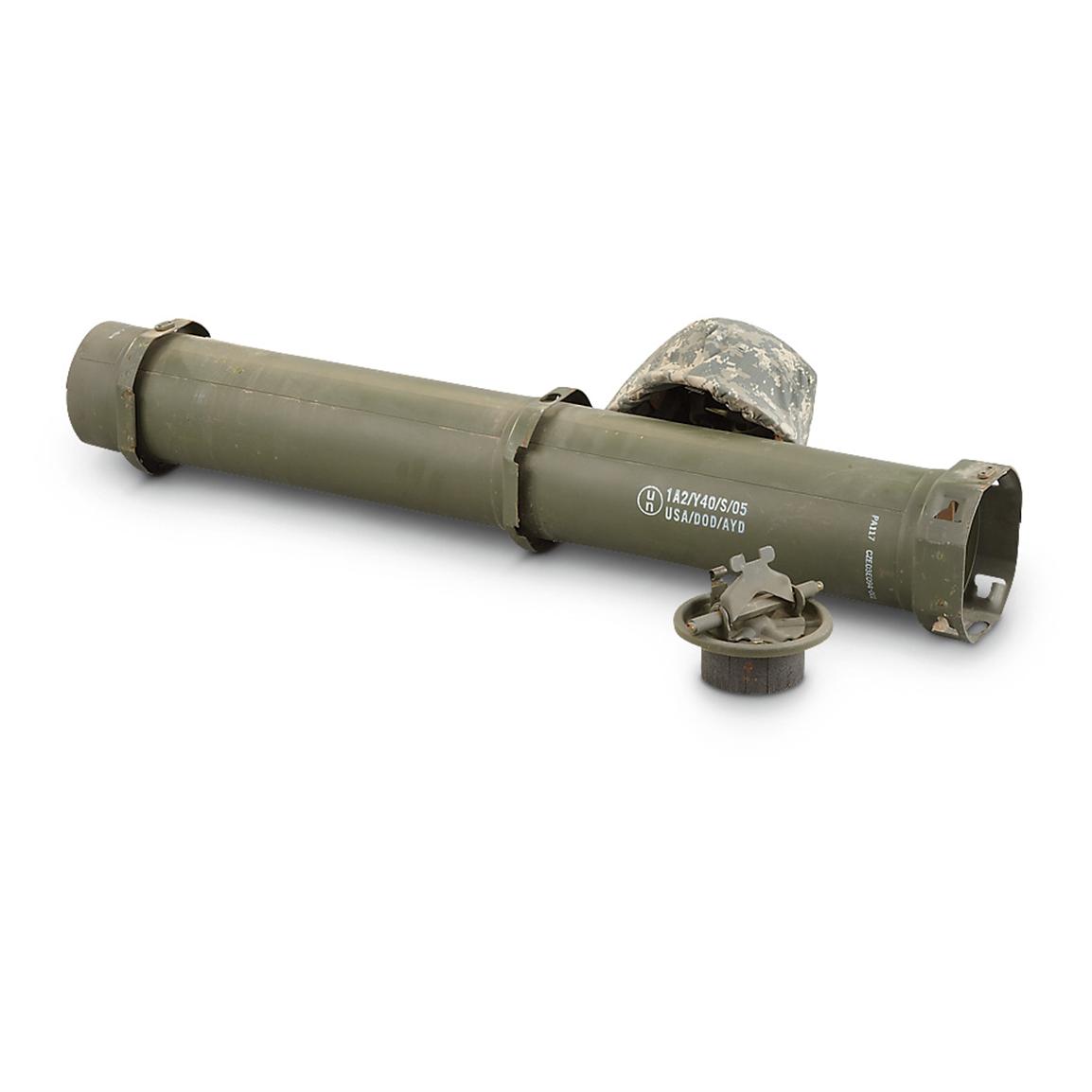
I’ve recently bought a M833 artillery round storage/transport tube at a Canadian store known for buying US DOD surplus.

I had just opened the tube and dumped out the pressboard packing tube when it struck me that this tube may have contained a DU projectile.

A clothing removal, thorough hand washing, and quick web search later proved that the M833 is in fact a DU round.

Aside from M833 and M900 tubes I’m guessing that 20mm transport containers would be available on the surplus market and may have held DU rounds.

Do you or others you may know have any suggestions as to what if any special precautions should be taken when handling transport containers that formerly held DU rounds? – Alley in Soviet Canuckistan

JWR Replies: In the Army, depleted uranium (DU) has never been used for any regular production field artillery rounds. It is used almost exclusively in tank main gun rounds and in Apache helicopter 30mm API rounds. The cans for the latter would be marked “30mm API PGU-14/B”. Most of the tank DU round cans are marked “M833 105mm APFSDS-T”. To be absolutely safe, it is best to avoid buying any cans used for DU rounds, but even then, the risk is absurdly low. To explain: The handling risk is negligible, unless the ammunition was mishandled or crushed, in proximity to an open can. (Obviously, if they were crushed in transit, then the can itself would have also been crushed, beyond repair.) The chances of encountering a contaminated can are nil. (If that were the case, it would be best to wear a dust mask.) DU is an alpha and beta radiation emitter. Inhaled alpha and beta emitters do pose a long-term health threat.

For some background, see this Army Technical Bulletin.


Economics and Investing:

Student debt apocalypse: Median wages up 1.6% over last 25 years while median student debt is up 163.8%.

o o o

Bracken: Burning Down the House in 2016. Commentary: This article from Western Rifle Shooters Association has a lot of economic content and is well-written and hard-hitting. Warning: Some of the comments posted after the article contain racial references I found somewhat offensive, unnecessary and inappropriate. Sites that include open commentary are vulnerable to this. With this in mind, the article itself was a worthwhile read. – Submitted by K.F.

o o o

Items from Professor Preponomics:

US News

The Economics of “Free Stuff” (Mises) Excerpt: “The perennial promises of free stuff from political candidates are front and center again now that we are ensnared in another US election cycle. The knee-jerk response from some economists and libertarians is “TANSTAAFL!” And of course it’s true that There Ain’t No Such Thing As A Free Lunch, because somebody must bear the costs of the supposedly “free” stuff. Nothing is free because every action has an opportunity cost.”

$290B in Federal Subsidies and Health Insurance Premiums are Still Soaring (Econintersect via Contra Corner) Excerpt: “Most Americans are covered by private health insurance, which they either obtain through employment or purchase individually. Insurance premiums – the payments made to buy that coverage by enrollees or by other parties on their behalf – are high and rising.”

Cancer and Obamacare: A Double Whammy (The New American) Excerpt: “Now imagine you’re a cancer patient of modest means trying to figure out which ObamaCare policy to buy that will both cover your treatment, preferably at the provider of your choice, and be, as the law’s moniker suggests, affordable. Then imagine that you get churned about in the wheels of bureaucracy and end up with either no coverage or coverage you can’t afford.”

JP Morgan Puts Another $500M Aside for Energy Sector Woes (Reuters) Excerpt: “JP Morgan will set aside an additional half a billion dollars to cover potential bad loans to oil and gas companies in the first quarter, underlining the sharp deterioration in the U.S. energy sector.”

International News

Moody’s Warns on Top Canadian Banks (Reuters) Excerpt: “The worry is the oil rout will hit mortgages, auto loans and credit card debt of consumers, especially in Alberta.”

Oil Price Shock, Overvalued Homes Threaten Canadian Banks, Fitch Says (The Huffington Post Canada) Excerpt: “Canada’s commodity-reliant economy will be facing challenges that pose new risks to Canada’s major banks if oil prices remain ‘lower for longer’ and/or this creates a macroeconomic shock to the economy….”

Jobless Benefits Claims Soar 100% in Canada’s Dying Oil Patch As Construction Jobs Plunge 84% (Zero Hedge) Excerpt: “Suicide rates are up in the province, as is property crime and foodbank usage. The malaise underscores the fact that Canada’s oil patch is dying. WCS prices are teetering just CAD1 above marginal operating costs, and the BoC failed to cut rates last month, meaning it’s just a matter of time before the entire Canadian oil production complex collapses on itself.” Warning: Commentary following article may include bad language or inappropriate avatar images.

Personal Economics and Household Finance

Garden Planning for Preservation: Best Foods to Freeze, Can, Dehydrate and Ferment (Mother Earth News) Excerpt: “Our vegetable gardens offer us beautiful, fresh bounty during the growing season — and they also have the potential to increase our food security the rest of the year. When you craft a plan to put up some of the crops you grow, you’re preparing for the future, simplifying winter meals, reducing waste, and saving money, too.”

o o o

SurvivalBlog and its editors are not paid investment counselors or advisers. Please see our Provisos page for details.