Economics and Investing:

Items from Mr. Econocobas:

Peter Schiff- Two Down Two to Go.

Video: Stockman CNBC Interview: Dead Cat Bounce Over, Bury The Cat!

Items from Professor Preponomics:

US News

CCAGW Commends Chairman Hatch for Launching Investigation into Green Energy Grants (Citizens Against Government Waste) Excerpt: “A significant number of the recipients were either demonstrably financially unstable, and therefore too high-risk to receive taxpayer money, or already adequately well-funded by private capital and undeserving of taxpayer largesse.” This story is also being developed by the Wall Street Journal. The following report was posted to Market Watch: Senator Probes $25 Billion in Federal Green-Energy Grants

Rubio’s Failure: How Our Broken Economy Fuels Voter Rage (Mises) Excerpt: “None of this may seem to be connected to economics, but the connection is actually quite close. The economy has performed so poorly for so long that tens of millions of primary voters are very, very worried.”

Property Bubble Ghost Haunts Central Bankers Trying to Boost Prices (Bloomberg) Excerpt: “Here’s the dilemma: How do you cut rates to goose too-low inflation and support growth without lighting a fuse under real estate?”

International News

Cha-Ching: US, Cuba Ease Rules on Sending Cash (Washington Examiner) Excerpt: “Obama’s policy pronouncements went smoother than his public appearance did with Cuban President Raul Castro, who castigated the United States on human rights as he stood next to the president….”

Ex-Cuban Prisoner Says Cuban Economy Thwarted by Its Own Policies (Fox News) Excerpt: “The internet is now legal for Cubanos, it was legalized in June of 2013. The cost of internet access, even if the service is not really a great service, went from $6 an hour to $4.50 an hour, now it’s $2 an hour. The government of Cuba has now been opening up internet centers around the island….”

Flight Prices to Cuba Could Drop Almost 50% After US Travel Embargo is Fully Lifted (Forbes) Excerpt: “…a key update to the rule now permits individuals to embark upon personal trips self-determined to meet the criteria. No advance license required.”

Michelle Obama’s Floral Outfits Cost 23x Average Annual Salary in Cuba (Washington Free Beacon) Excerpt: “When the president and his family landed in Cuba Sunday, the first lady descended Air Force One wearing a sleeveless, rose-print dress made by designer Carolina Herrera. The dress is currently sold for $2,190….”

Personal Economics and Household Finance

Here’s How this Family of Three Lives Well on a Single Income (The Penny Hoarder) Excerpt: “Could a family still manage to live on one income in the 21st century? That was the question we had to answer….”

o o o

SurvivalBlog and its editors are not paid investment counselors or advisers. Please see our Provisos page for details.


Odds ‘n Sods:

Update on Video clears Texas man of assaulting cop—did police commit perjury?

JWR’s Comment: This video shows the importance of having both dashcam video cameras and home security video cameras. FYI, I bought pairs of Z-Edge Z3 Full HD dashcams for my vehicles. One faces forward and the other faces toward me and driver’s side window. These cameras come with 32 GB cards and continuously loop three hours of video and audio. The audio can be muted with one button press, for privacy. I also highly recommend getting LOREX webcam sets for your home. Make sure that one camera covers your porch and another covers your driveway, to capture both faces and license plate numbers! Also, be sure to carry free CFAPA press credentials whenever you are on the road.

o o o

Pope Francis Blames Weapons Manufacturers for Brussels Attack

JWR’s Comment: To be more precise in formulating his twisted logic, Pope Francis should have condemned the manufacturers of acetone, hydrogen peroxide, and roofing nails–the precursor chemicals and projectiles used to make the Triacetone Triperoxide (TATP) bombs used by the Islamist fanatics. The problem was not the tool or even the maker of the component parts. Rather, the real problem was with a zealous belief in a Religion of Hate, which the Pope refuses to acknowledge as such. Ironically, living safe in Vatican City behind thick castle-like walls and guarded by mercenaries armed with pistols and submachine guns, the Pope finds it easier to blame dual-use inanimate objects (and their manufacturers) for these terror bombings than to blame the real sinners with hatred in their hearts. Papa est stulto gloria.

o o o

Video: Finally! an accurate model. It’s complicated, noisy, dangerous, and does absolutely nothing. Sent in by SurvivalBlog reader P.W.

o o o

Sent in by RBS: Court ruling allows police to stop and question anyone within 100 miles of border

o o o

More insanity from the Jack-booted thugs: FBI employee charged with pointing a gun at woman’s head inside a restaurant – T.P.


Notes for Monday – March 28, 2016

This is the birthday of Marlin Perkins, of Carthage Missouri. He is remembered as the television host of Mutual of Omaha’s Wild Kingdom. He was born in 1905.

o o o

Today, we present another entry for Round 63 of the SurvivalBlog non-fiction writing contest. The nearly $12,000 worth of prizes for this round include:

First Prize:

  1. A Tactical Self-Contained 2-Series Solar Power Generator system from Always Empowered. This compact starter power system is packaged in a wheeled O.D. green EMP-shielded Pelican hard case (a $1,700 value),
  2. A Gunsite Academy Three Day Course Certificate that is good for any one, two, or three day course (a $1,195 value),
  3. A course certificate from onPoint Tactical for the prize winner’s choice of three-day civilian courses, excluding those restricted for military or government teams. Three day onPoint courses normally cost $795,
  4. DRD Tactical is providing a 5.56 NATO QD Billet upper with a hammer forged, chrome-lined barrel and a hard case to go with your own AR lower. It will allow any standard AR-type rifle to have a quick change barrel, which can be assembled in less than one minute without the use of any tools and a compact carry capability in a hard case or 3-day pack (an $1,100 value),
  5. Gun Mag Warehouse is providing 20 Magpul PMAG 30-rd Magazines (a value of $300) and a Gun Mag Warehouse T-Shirt; (an equivalent prize will be awarded for residents in states with magazine restrictions),
  6. Two cases of Mountain House freeze-dried assorted entrees in #10 cans, courtesy of Ready Made Resources (a $350 value),
  7. The Ark Institute is donating a non-GMO, non-hybrid vegetable seed package (enough for two families of four) plus seed storage materials, a CD-ROM of Geri Guidetti’s book “Build Your Ark! How to Prepare for Self Reliance in Uncertain Times”, and two bottles of Potassium Iodate (a $325 retail value),
  8. A $250 gift certificate good for any product from Sunflower Ammo,
  9. KellyKettleUSA.com is donating both an AquaBrick water filtration kit with a retail value of $250, and
  10. Two cases of meals, Ready to Eat (MREs), courtesy of CampingSurvival.com (a $180 value).

Second Prize:

  1. A Glock form factor SIRT laser training pistol and a SIRT AR-15/M4 Laser Training Bolt, courtesy of Next Level Training, which have a combined retail value of $589,
  2. A transferable certificate for a two-day Ultimate Bug Out Course from Florida Firearms Training (a $400 value),
  3. A Model 175 Series Solar Generator provided by Quantum Harvest LLC (a $439 value),
  4. A Trekker IV™ Four-Person Emergency Kit from Emergency Essentials (a $250 value),
  5. A $200 gift certificate good towards any books published by PrepperPress.com,
  6. A pre-selected assortment of military surplus gear from CJL Enterprize (a $300 value),
  7. RepackBox is providing a $300 gift certificate to their site, and
  8. Safecastle is providing a package of 10 LifeStraws (a $200 value)

Third Prize:

  1. A Royal Berkey water filter, courtesy of Directive 21 (a $275 value),
  2. A $245 gift certificate from custom knife-maker Jon Kelly Designs, of Eureka, Montana,
  3. A large handmade clothes drying rack, a washboard, and a Homesteading for Beginners DVD, all courtesy of The Homestead Store, with a combined value of $206,
  4. Expanded sets of both washable feminine pads and liners, donated by Naturally Cozy (a $185 retail value),
  5. Two Super Survival Pack seed collections, a $150 value, courtesy of Seed for Security, LLC,
  6. Mayflower Trading is donating a $200 gift certificate for homesteading appliances,
  7. Montie Gear is donating a Precision Rest (a $249 value), and
  8. Two 1,000-foot spools of full mil-spec U.S.-made 750 paracord (in-stock colors only) from www.TOUGHGRID.com (a $240 value).

Round 63 ends on March 31st, so get busy writing and e-mail us your entry. Remember that there is a 1,500-word minimum, and that articles on practical “how to” skills for survival have an advantage in the judging.


Esee-4, by Pat Cascio

My long-time friend and fellow gun writer, John Taffin, has been on a life-long search for what he calls the “Perfect Packin’ Pistol”, and it has been a long but fun search for him. I suspect that each and every one of us has also been on that search, even if we didn’t know it or want to admit it. There is that “one” handgun that we all are searching for– that one handgun that will fulfill every chore we’d need it for. I’m sure there is a Perfect Packin’ Pistol for each and every one of us, but the search continues.

When it comes to survival knives, or just an everyday knife, we all are probably on a search for the Perfect Packin’ Knife, and quite honestly I don’t know if such a thing really exists. I’ve been around knives all my life, and I’ve been testing and writing about knives since 1992. I’m also something of a knife designer, having designed at least a dozen knives and had many built by custom knife makers over the years. Additionally, several of my knife designs have been picked up by knife companies for mass production, including my latest design– the OC3, which was a joint effort by myself and custom knife maker, Brian Wagner, of Okuden Knives– that Columbia River Knife & Tool is producing. To be sure, this is a shameless plug for my OC3; forgive me!

100_6342

About six months ago, I was looking at some knives called “Esee Knives”, and I was favorably impressed by what I was reading about their line of knives. I have plenty of big, fixed blade knives, designed for various duties. However, their Esee-4 model caught my attention for some reason. A quick run down on the Esee-4 shows it has a blade of 4.1 inches, made out of 1095 carbon steel, with an overall length of nine inches. BTW, it is a fixed blade knife, too. The Rockwell on the blade is 55-57 for the carbon steel model, and they also manufacture a stainless steel version. The handle material is Micarta, and the blade is a hefty 3/16th inches thick with a black powder coating to help protect the carbon steel blade from the elements. A nice poly sheath (mine was tan colored) comes with the knife, and the knife weighs eight ounces. The blade is a drop point style, which is one of the most popular and useful blade styles in my humble opinion. There is a lanyard hole in the butt of the knife, too, and if you work around water a lanyard comes in handy, so you won’t lose your knife.

100_6343

The Esee-4 also comes in several different colors, including bright rescue orange as well as OD green. Sheath colors vary, so be advised with shopping around for one. Prices on this little knife are all over the place– anywhere from $90 on up to $130. So, shop around for the best deal you can find on the Internet. I liked the version I bought, with the black powder coated blade and the grayish/black Micarta handle scales.

The Esee line of knives comes from Randall’s Adventure Training & Equipment Group, and they have designed quite a few survival and all around knives over the years. They were being marketed under a different name, but for whatever reason they are now marketed under the “Esee” name.

100_6345

BTW, a word on the sheath, it is hard molded, and the knife stays put without any snaps or loops or anything like that. Plus, there is a belt clip that holds the knife on your belt or on a pack or combat vest, and this isn’t a cheap clip; it is heavy duty. There are no worries about it bending out of shape or breaking. There are also plenty of lashing holes around the sheath, if you desire to “tie” it to a combat vest.

The handle design on the Esee-4 is about perfect for my hand. Many other people said the same thing: that it just felt great, and the knife is hard to put down. There are also some shallow friction grooves CNC machined into the top of the blade, where it meets the handle for a sure thumb purchase on the Esee-4. It’s nice! On one side of the blade, at the juncture of the blade and the handle, is the word “Rowen”. I have no idea what that means, and I tried to get some info on it, all to no avail. I don’t know if that is the person who designed the Esee-4 or what. Strange!

100_6346

Now, to be sure, the Esee-4 wasn’t designed to be a “combat” knife of any sort. Instead, it is meant to be an everyday use knife, for all kinds of cutting chores. It will also easily double as a hunting knife, ideal for dressing out game as well as camp chores. It would work nicely as a survival knife. Just keep in mind the length of the blade. It isn’t designed for chopping down trees; it is designed for everyday use.

100_6348

While a folding knife is always clipped in one of my front pockets, sometimes I have two folders– one in each pocket– when testing folders for articles. No matter who makes them, they can only making a folder with a lock that is just “so” strong and no stronger, and a folder can and will fail under the right conditions. So, if you are one who abuses your knives everyday, a fixed blade might just be what you need. The Esee-4 will fill that need without worry of it failing you, like a folding knife might.

Over the course of carrying the Esee-4, it was used almost daily by me, my wife, or even friends, who are always asking “do you have a knife?” Like “duh”, you know I write about and test knives, so of course I have a knife! Kitchen chores were an easy task for the Esee-4, as were opening boxes from FedEx or UPS. I also used the Esee-4 to chop down the ever-present blackberry vines around my small homestead. The blackberry vines were no match for the super-sharp 1095 carbon steel blade.

100_6349

One of the nice things about 1095 carbon steel is that, it holds an edge a good long time, and it is extremely easy to re-sharpen or touch-up on a set of croc sticks. Plus, unlike some stainless steels used for knife blades, the 1095 won’t easily chip the fine edge on a knife. If you look at a lot of stainless steel knife blades – under magnification – you will see a lot of small and rather large chips in the blade’s edge.

100_6350

I was totally blown away by the Esee-4. It just might be the “Perfect Packin’ Knife” for a lot of folks,. And, if the Esee-4 isn’t quite right for you, check out many of the larger and even smaller fixed blade knives in the Esee line-up. I’m betting you’ll find something that will catch your attention. To be sure, shop around on the ‘net because, as I stated before, prices are all over the place on Esee Knives. Get the best deal you can. As for me, I’m in the market for another one or two Esee Knives for my knife collection.

– Senior Product Review Editor, Pat Cascio



The World Through Pink-Colored Glasses: Wikipedia’s Leftist Editorial Distortions

Wikipedia, launched in 2001, now has more than 39 million articles. It is now informally used by millions of students as a reference by students and journalists—usually as the starting point for researching nearly any topic. Wikipedia’s entries are given great weight by search engines, such as Google, placing their articles at the top of search rankings. In the 21st Century Internet age, one can safely say: All Roads Lead to Wikipedia.

Most SurvivalBlog readers have noticed that I refer to Wikipedia as LeftistAgendapedia. I do so for good reason, as a I will explain in this essay.

Because it has mostly attracted editors (called “Wikipedians”) from academia, Wikipedia soon developed a strong leftist and anti-Christian bias. Perhaps sometimes without even realizing it, the editors of Wikipedia have let their biases show in the way that articles have been written and cultivated over the years. Though some of Wikipedia’s leftward push has been overt, most of it is cleverly subtle and promulgated through the use of the online encyclopedia’s own editing rules, the use of sockpuppets (fake editor accounts), and through the manipulation of secret agenda-pushing cabals of editors. Those wishing to distort and censor Wikipedia have become experts at “Wikilawyering”. Typically they use Neutral Point of View (NPOV) arguments and other tactics to counter any wiki content that they dislike.

The Non-Notability Cudgel

Whenever a Wikipedian dislikes a new article they often flag it for deletion. Usually, the reason given is “lack of notability”. (They use the flag “nn”, which stands for “non-notable”.) Given the leftist view of the majority of Wikipedians, many articles about subjects of interest to Constitutionalists, conservatives, libertarians, and Christians become targeted in Articles for Deletion (AfD) campaigns. The debates in these campaigns are often heated, but their result (“by consensus”) almost always exhibits a leftist bias. The end result is that more articles on leftist topics survive. Many articles are summarily deleted, but some don’t go down without a fight in the AfD process.

It is not just individual Wikipedia articles that get deleted. Entire categories are deleted. Just try to find “Category: Climate change skeptics.” It no longer exists. Poof! Down the memory hole, conveniently gone.

The 30,000 Foot View

Until quite recently, I took a “hands off” attitude toward Wikipedia. For more than a decade, I watched with bemused detachment at the flame wars over various articles. The Wikipedia biography page about me was started in 2006. In April of 2008, the biography page was targeted for deletion.

Despite the strong sales for my books and despite the fact that I was frequently interviewed by mass media news outlets, including The New York Times, that biography page just barely survived the two-month AfD campaign.

Then, in 2010, the Wikipedia article about my nonfiction book How to Survive the End of the World as We Know It was similarly targeted for deletion.

This time, despite the fact that the book had already gone through multiple printings and was a bestseller for Penguin Books, the “consensus” of Wikipedia’s editors was that the book was “not notable” enough to have a page of its own, and the article was therefore truncated and merged into the James Wesley Rawles biography page. (The prevailing attitude was “Just because a book is a bestseller doesn’t make it notable.” That is Wikipedia’s twisted logic, and they have Wikilawyered rules to back that up.)

Rather than get involved personally, I asked my readers to chime in on these AfDs, when I heard about them. Noticing some errors of fact in my biography page that chronically went uncorrected, I finally created the James Wesley, Rawles account in April of 2015. After making just a few minor corrections, my reward was to have the biography page flagged with a Conflict of Interest (COI) tag. Henceforth, the first thing that people have seen when they bring up the James Rawles biography page is the warning: “A major contributor to this article appears to have a close connection with its subject. It may require cleanup to comply with Wikipedia’s content policies, particularly neutral point of view.” (So much for trying to do the right thing in the Wiki world.)

The Cabals

The root of the problem with Wikipedia– is the existence of secret cabals of agenda-pushing editors. These cabals are most apparent in the edit-warring campaigns on topics like gun control, homosexuality, pedophilia, and abortion.

The very existence of cabals is denied, and the phrase “There is No Cabal” (TINC) was used as far back as 1995 on Usenet. The TINC phrase is “…used as a pseudo-ironic statement, since presumably an insider or someone who knows “the cabal” would inevitably deny that there is a cabal.”

The cabals grow by a sly but simple method: A cabal member notices edits being made to an article of interest by someone who is obviously like-minded. He contacts that editor via their User “Talk” page and offers his e-mail address. Once they have established private contact, they immediately remove the comments to their respective Talk pages. They then conspire to maintain Watch Lists on articles of interest. They then take turns tendentiously editing articles, in attempt to wear down anyone with a different opinion or politics. These tag-teamed edit wars rage on month after month, often with attempts to edit, restrict, block, or cancel the accounts of other editors. Through Wikilawyering, they gradually bash many of their opponents into submission.

Wikipedia is now influenced by paid editors, in the employ of “reputation management” companies. The work of these paid editors brings the legitimacy of all of Wikipedia’s Bibliographies of Living Persons (BLPs) into question. Even worse than manipulative editing in Wikipedia are its outright lies and hoaxes that end up in print in magazines and newspapers with alarming regularity. Many of these hoaxes have gone on for years. For a good case in point, see: Wikipedia Seigenthaler biography incident

Wikipedia itself admits: “Mere hours after the death of French composer Maurice Jarre, Irish student Shane Fitzgerald added a phony quote to Jarre’s Wikipedia article. The quote said “One could say my life itself has been one long soundtrack. Music was my life, music brought me to life, and music is how I will be remembered long after I leave this life. When I die there will be a final waltz playing in my head, that only I can hear.” The quote was quickly copy/pasted by journalists and incorporated into numerous obituaries of Jarre published in newspapers around the world, including The Guardian and The Independent.”

The Cures

There are only two cures for Wikipedia’s now deeply entrenched bias. First, a larger number of Constitutionalists, conservatives, libertarians, and Christians need to get involved in watching Wikipedia and correcting errors. Second, the alternatives to Wikipedia (such as Conservapedia) should be promoted. Both of these will take lots of time and effort. However, failure to invest this time will result in Wikipedia’s leftist cabals continuing to predominate. If they continue to distort and censor Wikipedia unchallenged, then they will have won their part of The Culture War.

Oh, by the way: Don’t go looking in Wikipedia for an article on “The Culture War”. It was deleted. Nor should you bother with looking for the Wikipedia article on “Wikipedia Cabals”. It no longer exists. In fact the word “cabal” does not even appear in the “Criticism of Wikipedia” wiki page, and that entire criticism page has been nominated for deletion seven times. Still, it has somehow survived, now with a new and improved unblemished sheen. You see, all of the most incisive criticisms are quickly removed by sharp-eyed Wikipedians as soon as they appear. – JWR

Further Reading:


Recipe of the Week: Smoky Brisket

Ingredients:

  • 3 to 4 lbs. lean beef
  • 1 Tbsp smoke-flavored salt
  • 2 medium onions, sliced
  • 1 tsp celery seed
  • 1 Tbsp mustard seed
  • ½ tsp pepper
  • 1 (12 oz) bottle chili sauce

Directions:

  1. Sprinkle both sides of meat with smoke-flavored salt.
  2. Arrange onion slices in bottom of slow-cooking pot. Top with meat.
  3. Combine celery seed, mustard seed, pepper, and chili sauce. Pour over meat.
  4. Cover and cook on low for 10 to 12 hours, or until tender.

Makes 8 to 10 servings.

o o o

Useful Recipe and Cooking Links:

Do you have a favorite recipe that would be of interest to SurvivalBlog readers? Please send it via e-mail. Thanks!


Letter Re: Sharp Shooter 22LR Reloader

Dear Sir,

I have to throw my two cents in the ring on the 22LR reloader. Actually, there is a very good and available alternative. I love the 22LR. So, when the shortage of ammo hit, I searched for and found the near perfect solution! Voila’! It’s the .22 Hornet. This centerfire cartridge can be loaded for same velocities as 22 Long Rifle, 22 Magnum, or simply 22 Hornet +. It can be souped up just a little and come close to the .223!

The rifles are available in single shot or bolt action by several manufacturers.

So, in essence, the cartridge can be an excellent replacement for it. Lee sells a hand loader for less than $30. Then add a small lot of powder, primers, and bullets, and you have a small game, varmit, or a capable deer cartridge. Problem solved! – Okie Hillbilly


Economics and Investing:

Obama’s Final Budget Calls for $2.1 Trillion Tax Hike – B.B.

o o o

Items from Professor Preponomics:

US News

Low Oil Prices End 21st Century Gold Rush (USA Today) Excerpt: “Oil and gas companies worldwide have publicly announced plans to cut more than 319,000 jobs since late 2014…. Among them are large companies such as Baker Hughes, Halliburton and Weatherford International that supply services and equipment to drillers.”

Houston’s Energy Companies Majorly Downgraded by Moody’s (Houston Business Journal) Excerpt: “The negative outlook reflects the potential for a greater than expected deterioration in credit metrics if the demand for the company’s products remains subdued or due to an increase in shareholder distributions in the form of share repurchases….”

International News

New Guard Rises in Saudi Arabia as Oil Crises Forces Rethink (Bloomberg) Excerpt: “The economic and demographic challenges to the kingdom are too great, and they need to be resolved and confronted and addressed forcefully and quickly.”

Shell, Saudi Aramco Plan to Break Up Motiva Partnership (Wall Street Journal) Excerpt: “Ownership of biggest refinery in the US will shift to Saudi Arabia’s hands.” Note: The Wall Street Journal may require sign-in and/or an active subscription in order to access content.

Exclusive: After Motiva Split, Saudi Arabia Aims to Buy More US Refineries – Sources (Reuters) Excerpt: “Under the deal, Aramco would gain full control of the 603,000 barrel-per-day Port Arthur refinery. Shell will get two smaller Louisiana plants, which have a combined crude oil refining capacity of throughput 473,00 bpd last year, according to U.S. government data.”

Can the Oil Price Recovery be Maintained? (The Week) An interesting forecast. Excerpt: “He says prices may not hold at current highs in the short-term, but that they will not now go lower than $30 a barrel and will move up over the next year or so.”

Next Financial Crisis Could Overwhelm World’s Defenses, IMF Says (Bloomberg) Excerpt: “…a system-wide shock could overwhelm the world’s crisis resources, which include nations’ foreign-exchange reserves, central-bank swap lines, regional funds such as the euro area’s European Stability Mechanism, and the IMF itself….”

Personal Economics and Household Finance

4 Sad Facts about Americans’ Savings and What You Can Do To Fix It (Clark Howard) Excerpt: “Save more and spend less. If you’re a Clark Howard fan, then you’re probably familiar with this concept, even if you haven’t quite figured out how to make it work in your life. And that’s the case for a lot of Americans today, according to a new survey.”

o o o

SurvivalBlog and its editors are not paid investment counselors or advisers. Please see our Provisos page for details.


Odds ‘n Sods:

Glider pilot arrested, nearly shot down by DHS, for breaking no laws

o o o

The government continues to bleed critical information, possibly exposing your private information to the wild. Why The IRS’s Technology Nightmare Is Far From Over Sent in by PLC

o o o

Video clears Texas man of assaulting cop—did police commit perjury? Excerpt: “Without the video I would be in prison. There is no doubt about that.” – Sent in by T.P.

o o o

On the flip side of that coin, A young cop in Greenville, South Carolina fell “victim to his own department’s politically correct policy that requires officers to keep their guns holstered, except in the most dire of circumstances”, resulting in his being shot dead with a holstered firearm by a 17 year old punk he was chasing.

o o o

The thin veneer of civilization continues to crumble this election cycle: IT’S ON! Black Lives Matter Leader Issues a Violent Threat to White People if Trump Wins – D.B.


Notes for Sunday – March 27, 2016

March 27th is the birthday of the late Robert W. Ford(born 1923, died 20 September 2013). He was an amazing man who had a remarkable life. His book, Wind Between The Worlds (an account of experiences in Tibet, captivity by the communist Chinese, and his fight against brainwashing), is highly recommended. It is available for free download.

Also, in 1794, in response to attacks and kidnapping by the Barbary pirates, the United States Congress passed the Naval Act to establish a naval force consisting of the USS Constitution and five other frigates, which eventually became the United States Navy. (Wikipedia)

o o o

Naturally Cozy, one of our advertisers, has an Easter Coupon this week for 15% off order that is good through 4/2/2016. Use “risen16” as the coupon code on checkout.

o o o

UV Paqlite has a new product coming out called the Mule Light V2. It eliminates the need for buying traditional chemical glow sticks and can be pre-ordered now.

o o o

I was saddened to hear that actor and president of Screen Actors Guild (SAG) Ken Howard passed away last week, at age 71. Ken and I had several conversations a few years back, when he was exploring doing a miniseries production based on my novel Patriots. That project never came to fruition, but it was great knowing that Ken was a kindred spirit. Ken Howard is most often remembered for his role on television in The White Shadow and in the movie 1776. But my favorite one of his many roles was as leading man Dave Barrett in the now almost forgotten Quinn Martin/CBS television series Manhunter. This was a show that aired in 1974 and 1975 about a WWI-veteran bounty hunter, set in Idaho during the 1930s gangster era. I hope that the entire 22-episode series is eventually released in a digital format, as a tribute to Ken Howard. He was a fine man who will be missed.


Garden Planning Tips- Part 1, by Sarah Latimer

Well, spring has sprung, the bulbs are coming up, and plants are showing signs of life around us. My daffodils are coming up, the hyacinth are blooming, and lilacs budding. I am yearning for fresh fruits and vegetables from our garden, though we have plenty left from last year’s crop. The surplus is mostly stored in freeze-dried and dehydrated form in either vacuum-sealed jars or mylar bags, but we still have a good amount in the freezer waiting to be eaten or freeze-dried. There are also still some vegetables, like carrots and onions, stored in cool, sandy soil through the winter for fresh eating, cooking, and/or replanting/seed-making. We thank the LORD for the bounty given last year, which is a healthy, tasty gift given from the earth He created for us to guard and care for!

While Hugh is most certainly the God-ordained head of our household, he gives guidance as needed and delegates responsibilities. We operate as a great team, happily in the manner God instructs. (I am a blessed and well cared-for woman, willing to serve my mighty leader, Hugh, in whatever he asks of me, and he not only says he would readily die for me but he does so, daily, by sacrificing his own desires to prefer my needs and desires and those of the members of our household over his own.) As such, one of my responsibilities is to oversee food management. I take that very seriously. That does not simply entail meal planning, shopping, and meal preparation; in our family, it involves the management of food production, long-term food storage, and inventory also.

Food management is a continuous effort, even in winter, as that is when we continue moving things from the freezer into the freeze dryer and dehydrator to make room in the freezers for the fresh produce that will be coming out of the gardens. So, our family’s food production operation is a constant work in progress, only taking time off for our Sabbath rest.

We produce the bulk of our annual vegetables and herbs ourselves as well as many of our fruits, spices, teas, and medicines, too. We even have some to share with loved ones, as the LORD guides or as we are blessed with visitors. What a joy that is!

We grow a large, annual vegetable garden and then also have perennial vegetable/herb gardens plus medicinal and tea gardens as well as fruit trees and bushes, all requiring care.

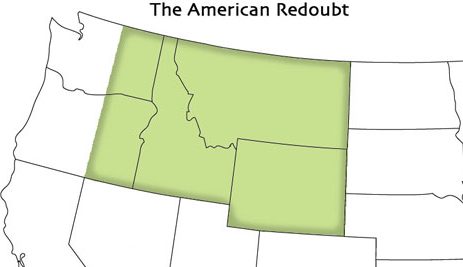
While I may manage the food for the family, Hugh and every member of the family, in various capacities, participates. The only area where I work alone is in the garden design/planning. So, today, I’d like to share some of my tips on that. I thought I’d give you a few of the planning tips and resources that I have used over the years to help me. These are by no means comprehensive. We have had some excellent articles written on SurvivalBlog about how to begin gardening, which use very similar methods to mine and address garden location selection, fencing/barriers, soil preparations and amendments, seeds, tools, and details. I have some additions I’ll make in future articles, too, but these are great articles to get you started in addition to what I’m sharing today. The Tennessean provided very detailed information from seeds and growing specific plans to soil, composting, wind breaks, tools and equipment, and food storage, permaculture, and operational security in his article on “Our Experience Growing and Storing Our Own Food”Part 1, Part 2, and Part 3. AJ has excellent information for some of us in ”Learning How to Grow Food in the American Redoubt”.

Since our garden is worked as a family team, and certainly if you are working as a group, I highly recommend that you have a pictorial plan of your garden that can be shared with everyone. This way your visual learners will be able to get the vision of what the end goal looks like from the beginning and will be more motivated toward the end. Drawing your garden is helpful, not only for the work of seeding or transplanting but also earlier in establishing rows and/or setting up irrigation, depending upon how you are watering, and in putting up trellises or any other garden support systems, especially those that need to go in before the plants emerge or are recognizable. If you are like me, you may have people helping in your garden from time to time who do not know what certain plants look like and feel a bit overwhelmed when faced with venturing into your large garden to find something for whatever reason; so when you tell them to go pick two of the largest bell peppers, they really appreciate having a map of your large garden to help them find where the bell pepper plants are located. You can tell them how to pick or cut your fruit and vegetables and then just hand them a map. (It’s a good idea to have multiple copies of your garden map and laminate each, or put them inside plastic page protector sheets, so that if the maps are dropped in water or mud they aren’t ruined.) I keep one posted in my kitchen on the refrigerator to be reviewed any time. I have found that the garden planner software available through Mother Earth’s News is a great resource! I’ve used it for years, and each year it just gets better with more plants and capabilities. Because I continue to subscribe, my garden plans year after year remain and help me rotate my garden plants, but I believe you can use it for a 30-day free trial. So, why would I rotate my garden rather than just planting it the same each year? I’ll tell you about that, but first, let’s continue talking about the mapping and spacing of the garden.

Plant Spacing and Placement

When visiting a young family who had just put in their first garden a few years back, I saw that their long, beautiful rows were all only one foot apart. When I asked what they were growing and heard the list that included squash, tomatoes, spinach, melons, and corn, I knew they were in for some surprises once those plants grew to maturity…if they grew to maturity due to the limited space for the roots to grow. Just like people, who must have enough air to breathe and food to eat, plants must have enough sunshine, air, water, and nutrients if they are going to live and thrive. So crowding them is not a good idea. On top of their ability to grow, we must be able to get into our garden to harvest without damaging our precious crop, so having long, narrow rows with no room to get into the garden is not efficient. Raised beds that are reached into from outside walkways or long rows with room in which to walk between are necessary for hand harvesting, which is how most families harvest and certainly will be the means for harvesting if/when there is no more fuel for tractors available. So, allot plenty of room for the plants you are growing. Some, like carrots, require only a few square inches each, while others, like melons and squash, require multiple square feet. Again, the online garden planning tool from Mother Earth News is very helpful in this function. Depending upon what plant you are placing into your garden space design, it allots the appropriate amount of space per plant. It has a grid, showing your garden’s dimensions, which you provided in the set up. (You can have multiple garden plots, too.) You can drag the corner dot of a particular kind of plant to place multiple plants, and it will tell you how many plants of this particular type fit within that space. It’s a great planning feature that simplifies the process, especially for a novice who isn’t sure how much space to dedicate for a specific number of plants in their planning process.

When placing plants, remember the maturity height and shadows that tall plants will create. I place my plant beds/rows running east to west for drainage purposes (because of a slight slope), to give the plants maximum sunlight as the sun progresses across the southern horizon, and so that I can place taller plants on the north side, or in rotating the tall plants to the southern side of the garden, I give more space between the bed/row to allow for sunlight to reach behind the taller plants to those shorter ones behind them. For example, I will space rows of corn, which grows over five feet tall and fairly dense, at least three feet apart and put corn on the north end of the garden so that it does not shade low-growing plants. When I rotate the position of the corn to other areas of the annual vegetable garden, I will provide at least four feet of space on the north (shaded) side before planting a low-growing plant, like bush beans or potatoes.

Crop Rotation

Some plants, like corn, extract a great deal of nitrogen from the soil while others, like beans, put nitrogen into the soil. Crop rotation is designed to prevent overcropping– exhausting arable land by excessive cultivation. Instead, rotating the crops to various parts of your garden allows regeneration of the soil through a variety of plants that enrich it where some plants withdraw. I understand that there are some who get by without crop rotation by using cover crops put in during the fall and grown during the winter and then tilled into the garden several months before the garden is planted in order to provide increase nitrogen into the soil, but I have not yet done this in any large scale. I have had a fair crop of dandelions, grass, and lettuce from blown-in and dropped seeds, and even some other volunteer plants come up each early spring that get tilled in (or transplanted into pots, depending upon the plant) before planting begins months later. Everything that has died in the garden gets put back into it. (We don’t waste much, as either the animals or the garden/compost get almost all of our food/plant waste.)

Additionally, certain plants attract certain “bad” microbes and also insects that may lay eggs in the soil where these plants were grown in the previous year. By rotating where you plant them within your garden, you may help minimize damage to young plants by making the new plants less accessible to their predators and disease, since they are no longer in the same area where the “parents” were last year. This, of course, is a very simplistic explanation, but it is the concept.

Tomatoes, corn, and melons are some of the plants that must be rotated each year. However, some plants are just fine staying in the same place year after year. Because of the microclimates within my garden compounded with the fact that a few items, like lettuce and celery, prefer cooler temperatures and I have filtered afternoon shade offered in two west corners that work well for them in my high elevation during the heat of summer, there are several annual crops that are not rotated in my garden, but these have companions that help to protect them from predators.


Letter Re: Advice on Learning Morse Code

Hugh,

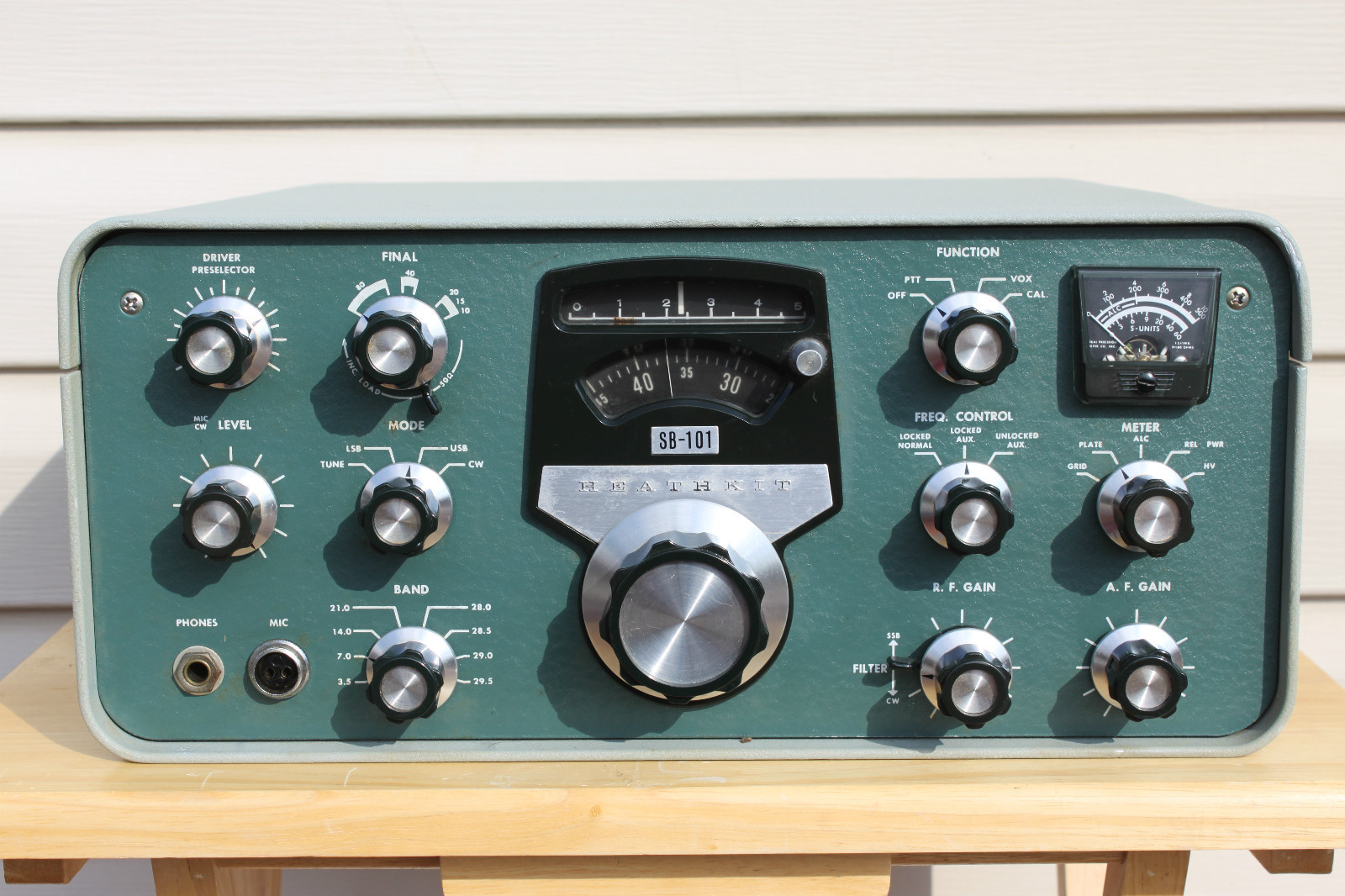
Learning the Morse code is not particularly difficult, but there are several common pitfalls that typically interfere with the learning process. The best advice I have for learning the Morse code is to get together with someone who is proficient with the code and work one on one with that person. This way, you can avoid developing bad habits that you will have to unlearn later.

If such a person is not available, then learning the code becomes a bit more difficult. The most important thing to keep in mind is that the Morse code is an aural language. It is the pattern of sounds, not the number of dots or dashes, that make up the language. You can hum a song learned in your youth because you heard it a lot; you sang and/or hummed it a lot, and the sounds of that song became incorporated into your brain. Learning the Morse code requires that same skill set.

The Morse code is made up of only three things– the sound represented by di (or dit), the sound represented by dah, and the spaces in between. Many people just learning the code don’t understand the importance of the spacing. There are many CW operators on the air that run their code together horribly. This makes copying them very error prone and difficult. Proper spacing will help avoid this.

Another thing to understand is that receiving the code and sending the code are two different skill sets. Most people find sending the code relatively easy compared to receiving it, once the characters are learned.

The first task is to learn the sounds of the characters. Say the patterns out loud to yourself as you write down the individual characters. You say dih-dah dit, and you write down ‘R’, etc. Listen to the code sent properly at about 12 to 15 words per minute using one of the apps mentioned in HJL’s response to the original letter. A common mistake is to learn the characters at a very slow rate first. If you do this, you’ll find it even more difficult to learn a reasonable rate as you will have to forget the previously learned slow rate while attempting to learn the new sounds at the faster rate. If you learn the code characters at around 15 words per minute from the beginning, the transition to 20 to 25 words per minute is very easy and comes quite naturally with practice and experience.

When I was learning the code, one thing that helped me a lot was to attempt to say the code for the letters and words found on street signs I passed as I drove around town every day. I would try to say everything on the sign before I passed it. At first, all I could do was the numbers on speed limit signs. I quickly learned “STOP”, “SPEED”, and “LIMIT”, and other common words. Another thing that helped me was to say the words I was reading in the newspaper, magazines, or even the cereal box in the code. Remember, you are trying to associate the sound patterns you hear to each character. Learning the code takes a significant directed effort. You must do the work.

As to sending the code, HJL was correct in his response saying that a straight key and paddle require two different skill sets. However, I would suggest learning on a straight key first. With a straight key, you are developing muscle memory in your hand, wrist, and forearm. How you hold and move your wrist, hand, and arm relative to your key matters. Practice will develop muscle memory over time. Also, the quality of your key and its proper adjustment matter. Again, the best advice is to seek out the help of a skilled CW operator. With the skills learned with the straight key, you can send the code adequately with as little as two wires pressed together.

Learning first on the paddle allows you to send code much faster and sooner than with a straight key. The result of the ease of sending code is that you end up sending faster than you can receive; when the other person comes back to you at that fast speed, you get lost, panic, miss most of what they are saying, and feel dumb. Learning the paddle after first becoming proficient with a straight key tends to improve your overall quality of sending the code.

Working another CW operator while sending and receiving good quality code with proper spacing and at a fairly quick pace is a real pleasure. Working someone who is erratic in their sending speed with words and characters jammed together is inefficient and is a lot more work than pleasure.

I hope this helps some of you who are having difficulty learning the Morse code. I’ve been an avid CW op for over 40 years, and it is still my favorite mode. I hope to work some of you on the bands soon.


Economics and Investing:

Stuck in the Monetary Mud. All the Fed can do is hope, says Peter Schiff. Sent in by H.L.

o o o

Fiscal and Monetary Madness. Excerpt: “A world of fiat currencies “managed” by central banks descends into the trap of exponentially increasing debt that leads, slowly or rapidly, toward monetary madness and … Train wreck ahead!

o o o

How Oil Can Be Used To Defeat ISIS

o o o

Youtube: The Central Bankers And Corporations Are Running The Country: John Titus. – Sent in by RBS

o o o

If your country’s broke, don’t hold all of your savings there

o o o

Japan’s (Third) Lost Decade. Excerpt: “Today, a full 25 years after the bubble burst in Japan, that country continues to struggle with deflation, zero interest rates, weak banks, adverse demographics, and periodic bouts of negative growth. Japan has endured a 26-year depression, and there is no end in sight.”

o o o

Items from Professor Preponomics:

Professor Preponomics’ Reading Recommendation

From the Cato Institute store: Going for Broke: Deficits, Debt and the Entitlement Crisis by Michael D. Tanner

US News

Commentary: The GOP and Social Security (Cato) Excerpt: “…Social Security’s unfunded liabilities approach $26 trillion. That’s not because of waste or administrative glitches; it’s because of shifting demographics.”

Southern Tennessee Medical Center, LLC to Pay $2.48 Million to Settle False Claims Act and Overpayment Allegations (Justice.gov)

21st Century Oncology to Pay $19.75 Million to Settle Alleged False Claims for Unnecessary Laboratory Tests (Justice.gov)

Tennessee Children’s Food Program Under Scrutiny (Government Waste Fraud and Abuse) One word comes to mind immediately. Dispicable. Excerpt: “…a subsequent investigation by The Tennessean, which found unscrupulous contractors in some cases were pocketing funds intended for hungry children. In one instance, a contractor spent money on lavish bonuses, home improvements and on-demand movies in hotels.”

International News

Central Banks are Already Doing the Unthinkable – You Just Don’t Know It (The Telegraph) Excerpt: “A catch-all term, helicopter drops describe the process by which central banks can create money to transfer to the public or private sector to stimulate economic activity and spending.”

Personal Economics and Household Finance

Snapchat, Seagate Among Companies Duped in Tax-Fraud Scam (Clark Howard) Excerpt: “A major phishing scheme has tricked several major companies — among them, the messaging service Snapchat and disk-drive maker Seagate Technology — into relinquishing tax documents that exposed their workers’ incomes, addresses and Social Security numbers.”

Watch Out for this New Tax Scam (Market Watch) Excerpt: “The IRS says it has begun receiving reports “in the last few weeks” of phone scams that use a slightly different tactic: They don’t ask for money, and instead request personal financial information, pretending they need to verify it.”

o o o

SurvivalBlog and its editors are not paid investment counselors or advisers. Please see our Provisos page for details.