Letter Re: Backup Electric Power Design Considerations

Hugh,

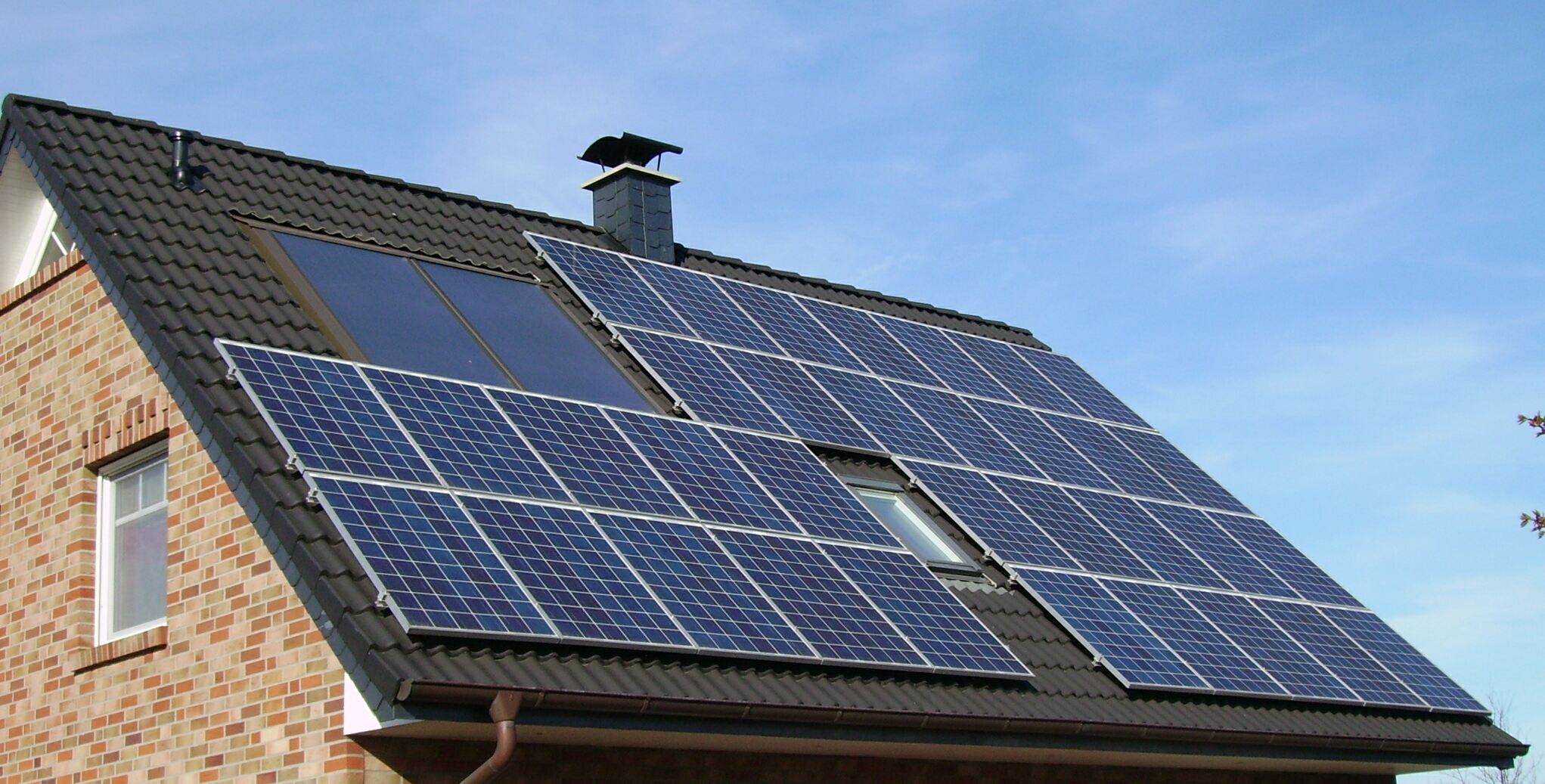
The largest draw on your power is for the refrigeration of both you and your food. These guys have some interesting solutions that are direct connect DC. They seem to be fine folks, but the solutions are pricey. Danzer makes an interesting refrigerator that runs on 24 volt. I get the idea from numerous articles that you really should not have just one solar system in your house. I have bought components and run my Ham radio off a panel and a couple of deep cycle batteries, but I have a long way to go.

www.wholesalesolar.com has some great products and great prices if your “puzzler” needs something to study. Ready Made Resources, a SurvivalBlog advertiser, has well-priced, quality, turn-key solutions if your “puzzler” is otherwise occupied. – RV


Economics and Investing:

The US faces a perfect economic storm – G.G.

o o o

Taxpayer advocate warns taxes could kill the 2nd Amendment – DSV

o o o

Items from Professor Preponomics:

US News

Wall Street is Edging Toward Win on Derivatives Capital Rule (Bloomberg) Excerpt: “The Basel Committee on Banking Supervision on Wednesday proposed a new method for banks to assess their exposure to derivatives, which could wind up lowering the amount of capital lenders need to meet restrictions on leverage.”

6 Reasons I’m Worried Derivatives Could Take Down the Economy Again (Yahoo! Finance) Excerpt: “A number of years ago, Warren Buffett referred to derivatives as ‘financial weapons of mass destruction.’ Since then, Wall Street has tried to pooh-pooh this description, but the facts speak for themselves.”

American Executives’ Names Surface in Panama Papers (USA Today) Excerpt: “The names of hundreds of Americans have surfaced in the Panama Papers, including a handful of U.S. businessmen accused or convicted by U.S. authorities for ties to financial crimes or Ponzi schemes.”

US Judge Orders Deposition of Bernard Madoff (CNBC) Excerpt: The judge “restricted questions to the meaning of more than 91,000 transactions recorded as ‘profit withdrawal’ on the books of the former Bernard L. Madoff Investment Securities LLC.”

International News

Panama Papers Scratch the Surface of Global Shell Game (The Telegraph) Excerpt: “But as the Panama Papers leak has shown this weak, these business tactics can lead to gross distortions of the rules.”

Personal Economics and Household Finance

How to Avoid Getting Crushed by Stock Fraud (CNBC) Excerpt: “If it feels like you’ve heard this story before, it’s because you have.”

Securities Fraud Awareness & Prevention Tips (FBI) Excerpt: “The term Securities Fraud covers a wide range of illegal activities, all of which involve the deception of investors or the manipulation of financial markets.”

o o o

SurvivalBlog and its editors are not paid investment counselors or advisers. Please see our Provisos page for details.


Odds ‘n Sods:

Twitter Kills Pro-Second Amendment Ad Campaign. It’s not the fact that Twitter censors free speech on their network that bothers me; it is, after all, a private network. No. What bothers me is the fact that we keep using it, knowing that they do this. – DSV

o o o

As we continually discover, it’s hard to “one-up” nature: A Massive Solar EMP Could Do More Damage Than A Nuclear EMP! – RBS

o o o

More nonsense from the institution of higher learning: Clinical Law Prof Questions Indoctrinating Students With Social Justice Morality And Requiring Pro Bono By Students, Not Faculty And Administrators – Sent in by PLC

o o o

Russian pilots are known for doing stupid things, and this is how wars start: Good photo of the SU-24’s CLOSE buzz job on the U.S.S. Cook

o o o

A decent primer on carrying: The Mindset You Must Have For Concealed Carrying A Handgun


Hugh’s Quote of the Day:

“They arose at twilight to go to the camp of the Arameans; when they came to the outskirts of the camp of the Arameans, behold, there was no one there. For the Lord had caused the army of the Arameans to hear a sound of chariots and a sound of horses, even the sound of a great army, so that they said to one another, “Behold, the king of Israel has hired against us the kings of the Hittites and the kings of the Egyptians, to come upon us.” Therefore they arose and fled in the twilight, and left their tents and their horses and their donkeys, even the camp just as it was, and fled for their life. – 2 Kings 7:5-7(KJV)


Notes for Friday – April 15, 2016

April 15th is dreaded as Income Tax day in these United States, but it is also Patriot’s Day.

o o o

Today, we present another entry for Round 64 of the SurvivalBlog non-fiction writing contest. The nearly $12,000 worth of prizes for this round include:

First Prize:

  1. A Tactical Self-Contained 2-Series Solar Power Generator system from Always Empowered. This compact starter power system is packaged in a wheeled O.D. green EMP-shielded Pelican hard case (a $1,700 value),
  2. A Gunsite Academy Three Day Course Certificate that is good for any one, two, or three day course (a $1,195 value),
  3. A course certificate from onPoint Tactical for the prize winner’s choice of three-day civilian courses, excluding those restricted for military or government teams. Three day onPoint courses normally cost $795,
  4. DRD Tactical is providing a 5.56 NATO QD Billet upper with a hammer forged, chrome-lined barrel and a hard case to go with your own AR lower. It will allow any standard AR-type rifle to have a quick change barrel, which can be assembled in less than one minute without the use of any tools and a compact carry capability in a hard case or 3-day pack (an $1,100 value),
  5. Gun Mag Warehouse is providing 20 Magpul PMAG 30-rd Magazines (a value of $300) and a Gun Mag Warehouse T-Shirt; (an equivalent prize will be awarded for residents in states with magazine restrictions),
  6. Two cases of Mountain House freeze-dried assorted entrees in #10 cans, courtesy of Ready Made Resources (a $350 value),
  7. The Ark Institute is donating a non-GMO, non-hybrid vegetable seed package (enough for two families of four) plus seed storage materials, a CD-ROM of Geri Guidetti’s book “Build Your Ark! How to Prepare for Self Reliance in Uncertain Times”, and two bottles of Potassium Iodate (a $325 retail value),
  8. A $250 gift certificate good for any product from Sunflower Ammo,
  9. KellyKettleUSA.com is donating an AquaBrick water filtration kit with a retail value of $250, and
  10. Two cases of meals, Ready to Eat (MREs), courtesy of CampingSurvival.com (a $180 value).

Second Prize:

  1. A Glock form factor SIRT laser training pistol and a SIRT AR-15/M4 Laser Training Bolt, courtesy of Next Level Training, which have a combined retail value of $589,
  2. A transferable certificate for a two-day Ultimate Bug Out Course from Florida Firearms Training (a $400 value),
  3. A Model 175 Series Solar Generator provided by Quantum Harvest LLC (a $439 value),
  4. A Trekker IV™ Four-Person Emergency Kit from Emergency Essentials (a $250 value),
  5. A $200 gift certificate good towards any books published by PrepperPress.com,
  6. A pre-selected assortment of military surplus gear from CJL Enterprize (a $300 value),
  7. RepackBox is providing a $300 gift certificate to their site, and
  8. Safecastle is providing a package of 10 LifeStraws (a $200 value)
  9. American Gunsmithing Institute (AGI) is providing a $300 certificate good towards any of their DVD training courses.

Third Prize:

  1. A Royal Berkey water filter, courtesy of Directive 21 (a $275 value),
  2. A $245 gift certificate from custom knife-maker Jon Kelly Designs, of Eureka, Montana,
  3. A large handmade clothes drying rack, a washboard, and a Homesteading for Beginners DVD, all courtesy of The Homestead Store, with a combined value of $206,
  4. Expanded sets of both washable feminine pads and liners, donated by Naturally Cozy (a $185 retail value),
  5. Two Super Survival Pack seed collections, a $150 value, courtesy of Seed for Security, LLC,
  6. Mayflower Trading is donating a $200 gift certificate for homesteading appliances,
  7. Montie Gear is donating a Precision Rest (a $249 value), and
  8. Two 1,000-foot spools of full mil-spec U.S.-made 750 paracord (in-stock colors only) from www.TOUGHGRID.com (a $240 value).

Round 64 ends on May 31st, so get busy writing and e-mail us your entry. Remember that there is a 1,500-word minimum, and that articles on practical “how to” skills for survival have an advantage in the judging.


Controlling UAV Drone Intrusions, by B.I.

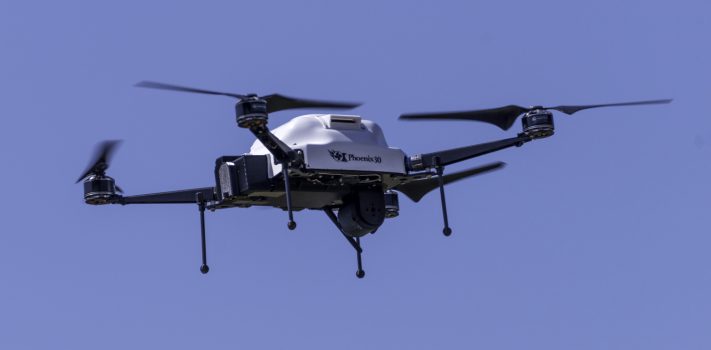
I see much interest in the emerging technology of drones. It seems natural for survival groups that wish to band together, and perhaps develop community compounds, to consider drones, which are also known as Unmanned Aerial Vehicles (UAVs), to surveil and protect their environment.

Drones can be either individually controlled by an operator with a “radio control” or pre-programmed to fly a specific pattern and then return to a point of origin. Usually, they send data– telemetry, either digital or video/audio– back to the controller, for whatever purpose the drone has been deployed.

This author is not a drone technician, although he is a long-retired electronic technician. What struck my interest is not so much the exploding technology of drones, which are at the point of becoming a nuisance, but the almost total lack of technology to protect against intrusion by drones from either either the government or private parties. It is a technology that is just starting to emerge, and there are questions as to any effective UAV countermeasures.

The Washington Times reported in an article dated August, 2015, that research on anti-drone technology is at an early stage. To this author’s view, the problem presented can be stated to be in these stages: Detection, Interception, Intervention, and Resolution.

Detection

Detection is a large hurdle to overcome, especially with small, private drones, which may be no larger than perhaps a half dollar. Some obvious methods of detection are radar and radio or sound detection. Radar is limited economically to fairly large objects; sound is limited to reasonable close-proximity; radio signal detection has proven productive but is easily foiled by the UAV and its controller using a prearranged sampling of various frequencies.

Much attention was drawn in the Spring of 2015 to a UAV countermeasures system called Anti-UAV Defence System (AUDS). Developed by a trio of British companies, AUDS claims to use a highly accurate radar tracking system with an unsurpassed ground clutter suppression technology for effective near-horizon detection of flying objects. It then employs the very latest electro-optic infrared day and night cameras and state-of-the-art digital video tracking technology to automatically track any UAV intrusion and classify the target. The system then uses a “smart radio frequency inhibitor to selectively disrupt various command and control communication links employed by the UAV”.

On the face of it, this appears to be a working system. It has been tried in the DMZ between the two Koreas. Unhappily, for small local groups, it sells for about £800,000, or about $1.2 million. It is sold in the U.S. by Liteye of Centenniel, Colorado.

Also in the Spring of 2015, Popular Mechanics Magazine highlighted a sound detection system developed by DroneShield, a Washington, D.C.-based startup company. The system uses weather-proof microphones and digital algorithms to discern distinct acoustic propeller patterns, which it must isolate from all other background noises. The company claims it can detect these sounds from as much as 1,000 yards away from the sensor. When an intrusion is detected, the unit sends an alarm over the local Wi-Fi/cellular network as a text message or e-mail. As many detection sensors as desired can be deployed; DroneShield says that can run the costs from about $1,000 to more than $100,000.

The system was deployed at the Boston Marathon in 2015. While DroneShield has not mentioned any specific intervention method, they refer to the possibility of portable net guns.

A Berlin company, Cyborg Unplug, makes a device that plugs into a local electrical receptacle and connects into the local wireless network. When an unauthorized signal touches that network, it shuts down the video, audio, or other information the device is capturing. In “Territory” mode, it monitors an individual’s network; users simply plug in the Cyborg Unplug device and select which devices they want banned from the network. In “All Out” mode, Cyborg Unplug disables any wireless surveillance technologies in the Cyborg Unplug’s range on any network.

The unit does not shut down the drone, only the camera or device that the drone is carrying. The company says that two plug-in units would cover a residence and cost about $112. The device may not yet be legal in the U.S., due to “jamming” regulations.

“Batelle’s DroneDefender™ is a rifle that shoots radio pulses at a drone, disabling it at a distance of 400 meters,” reported dronelife.com in October of 2015. The rifle is designed to confuse the GPS capabilities of the drone and disrupt its remote operations. The intent is to cause the drone’s automated systems to either return it to the point of origin or to land it. Battelle says that the rifle could disable any hostile armament mounted on the drone, such as explosives or chem/bio weapons. The rifle weighs about 10 pounds and can be operated from a fixed mount or as a portable.

Interception

Interception can take many forms, as already noted. Law enforcement is beginning to come to grips with this new technological threat. Reuters reports that the New York City Police used a microwave-based system in Times Square on New Years of 2015 to track a commercially-available drone. Their hope was to take control of the drone and return it to its base, thus neutralizing any possible threat and identifying the drone operator. Success was hindered by interference from nearby media broadcasts. The outcome is not clear.

Especially over populated areas, authorities are loathe to disable a drone or crash it, due to possible damage on the ground. They prefer to take control of the UAV and return it to its point of origin, thus identifying the operator. To shoot it down could activate any on-board weaponry. UAVs operated near airports present their own unique set of challenges for authorities to deal with.

Intervention

Domestic Drone Countermeasures (DDC), manufactured by APlus Mobile, Inc., uses a “mesh network” of detectors to triangulate moving transmitters. Network communications is via Wi-Fi and scans frequencies in the range of 1MHz – 6.8GHz in order to effectively detect all known drone transmitters. Base operations can choose from all detected transmitter signals as to what is acceptable and what should be rejected. Any signal that is not purposely ignored by base operations, the system assumes the rogue transmitter is hostile.

Like many UAV devices and countermeasure devices, the system operates with a Linux operating system. Wireless mesh networks are being increasingly used by local government operations and can be self-adapting to changing conditions. As many detector nodes can be added as needed to cover an expanding area. These expandable networks are attractive for outdoor events, such street fairs, outdoor concerts, and political rallies, where hard wire connections are difficult or impossible.

DDC suggests a countermeasures net over or around an area to capture small UAV’s, even a kevlar net with conductive elements woven into the sensor net. If any of the sensors woven into the net are broken or interrupted, the unit activates an alarm; the impact of a drone would sever a conductive sensor element, and thereby break the circuit.

DDC company president, Amy Ciesielka, told The Huffington Post that the system is not designed to disable the UAV or jam its signals; it is intended to neutralize the ability of an air-borne drone to aquire data, such as sound or video. Ciesielka said that the system was worth as much as a car, perhaps an Audi.

APlus Mobile, Inc., the parent company of DDC, makes and sells defense-level computer hardware systems. According to the company’s website, any buyer of the anti-drone system must sign a non-disclosure agreement and must be an American citizen.

Resolution

Christopher Samson– podcaster, writer, and producer– wrote on Linked in that the DDC system and some other UAV countermeasures may just be a money-making hoax. He calls them “untested and ineffective”, and points out that they are not comprised of new or cutting-edge technology.

Certainly the military and government agencies can afford advanced technologies, including finite radar systems, laser ‘guns’ and counter-strike UAV’s. The problem of the proper way to deactivate an intrusive drone and/or dispose of it certainly presents many challenges.


Letter Re: Grid Down Digital Library

HJL,

Downloading YouTube on Android. Remember micro-SD cards are interchangeable and inexpensive, so get a phone with a slot and make backups (and put them around various places). Often large (128Gb+, often U3 for GoPro) capacity cards will go on sale at least once a month, so I look for them and stock up. I’ve seen these as low as $15, limit 2. Sometimes there are excess stock or closeouts on prepaid, and I didn’t have to activate them though there was a trick to bypassing that screen. Most can be rooted. I have several, so it pays to look through the online bargain bin, particularly the refurbished section for things like tablets. One app to get is http://maps.me/en/home; they have OFFLINE maps (even if the Internet or GPS goes down, it works though it won’t track). It’s detailed and of the entire world. And change can be good for hiding them, which should also act as a Faraday cage.

M-disc or even regular DVDs or blu-rays aren’t electronic themselves, so I tend to keep a second backup on them. Generally, it is better to keep backups on at least two different media types, so I use these. I also have a media safe, as normal safes will keep paper from burning, and these have extra insulation to preserve magnetic and optical media and electronics.

One final thing, for the price of the fancy Ziplock Faraday bags, you can buy enough aluminum foil at the dollar store or Amazon Prime Pantry to wrap a vehicle, much less phones. I can also get two 33-gallon galvanized steel trash cans for an extra layer of protection. If you are worried about screen scratching, use a soft cloth or lint-free paper towel. – T.Z.


Economics and Investing:

In a new video, Mike Maloney warns of dangerously high P/E ratios and predicts a massive rollover of the stock market in the near future. Any SurvivalBlog readers still holding stocks are warned: Get out now! – JWR

o o o

The largest U.S. coal company just filed for bankruptcy April 13 – DSV

o o o

Items from Professor Preponomics:

US News

Obama Builds a Corporate Tax Prison (Washington Examiner) Excerpt: “None of this would be necessary if the U.S. weren’t now such an inhospitable place to do business.”

Will the Last Company in America Please Turn Off the Lights (Fox News) Excerpt: “Obama wanted to stop the deal because it would have made Pfizer an Irish company. Ireland’s corporate tax is 12.5 percent versus a 35 percent rate charged in the USA.”

A Milestone in Federal Education Waste (My Gov Cost) Excerpt: “Conservatives have threatened to eliminate the department but none, including Ronald Reagan, managed to do so. The federal government continues to get bigger, not smaller.”

Flies on the Aviation Bill (Taxpayers for Common Sense) Excerpt: “One consequence of virtually no legislation passing Congress is that when something is likely to pass, every legislative Tom, Dick, and Harry is going to try to jump on board.”

Medicare’s Improper Payment Facepalm Continues Unabated (Citizens Against Government Waste) Excerpt: “Later this year, CMS will publish a more in-depth look at the improper payment rate data for Medicare FFS (FFS), but the appendices already show that the improper payments rate for 2015 was 12.1 percent, up from 8.6 percent five years ago, costing taxpayers $43.3 billion. “

International News

Senior Bosses at World’s Biggest Banks “Knew Libor was Rigged” (The Telegraph) Excerpt: “Because the bankers had never been told otherwise, the jury at Southwark Crown Court heard, they cannot be said to have acted dishonestly.”

Ex-Barclay’s Trader Told SFO His Bosses Knew About Libor Fix (Bloomberg) Excerpt: “The continuation of the conspiracy became increasingly too difficult toward the end of 2007 when the financial crisis hit….”

Personal Economics and Household Finance

The Only 6 Rules of Frugal Living You Need to Know (WiseBread) Excerpt: “Let’s scrap all the circular talk and bottom-line it. Here are the only six rules of frugal living you need to know.”

o o o

SurvivalBlog and its editors are not paid investment counselors or advisers. Please see our Provisos page for details.


Odds ‘n Sods:

It was only a matter of time before this tool was used for the nefarious purpose of “casing”: Hillside residents report ‘Peeping Tom’ drone outside their windows – DSV

o o o

Publicly funded education is dead – The Re-Education Camps We Call Universities – B.B.

o o o

A governor who gets it: Maine Gov. Signs Bill Prohibiting Gun Bans in Public Housing – Sent in by H.L.

o o o

How to Build a Storm Shelter – If you are going to the trouble of building the shelter, it might not be a bad idea to add EMP protection as well. – Sent in by G.P.

o o o

Obama lawlessness: IRS says it’s OK for illegal aliens to use fraudulent Social Security numbers – The rule of law is dead. – B.B.


Notes for Thursday – April 14, 2016

Today, we present another entry for Round 64 of the SurvivalBlog non-fiction writing contest. The nearly $12,000 worth of prizes for this round include:

First Prize:

  1. A Tactical Self-Contained 2-Series Solar Power Generator system from Always Empowered. This compact starter power system is packaged in a wheeled O.D. green EMP-shielded Pelican hard case (a $1,700 value),
  2. A Gunsite Academy Three Day Course Certificate that is good for any one, two, or three day course (a $1,195 value),
  3. A course certificate from onPoint Tactical for the prize winner’s choice of three-day civilian courses, excluding those restricted for military or government teams. Three day onPoint courses normally cost $795,
  4. DRD Tactical is providing a 5.56 NATO QD Billet upper with a hammer forged, chrome-lined barrel and a hard case to go with your own AR lower. It will allow any standard AR-type rifle to have a quick change barrel, which can be assembled in less than one minute without the use of any tools and a compact carry capability in a hard case or 3-day pack (an $1,100 value),
  5. Gun Mag Warehouse is providing 20 Magpul PMAG 30-rd Magazines (a value of $300) and a Gun Mag Warehouse T-Shirt; (an equivalent prize will be awarded for residents in states with magazine restrictions),
  6. Two cases of Mountain House freeze-dried assorted entrees in #10 cans, courtesy of Ready Made Resources (a $350 value),
  7. The Ark Institute is donating a non-GMO, non-hybrid vegetable seed package (enough for two families of four) plus seed storage materials, a CD-ROM of Geri Guidetti’s book “Build Your Ark! How to Prepare for Self Reliance in Uncertain Times”, and two bottles of Potassium Iodate (a $325 retail value),
  8. A $250 gift certificate good for any product from Sunflower Ammo,
  9. KellyKettleUSA.com is donating an AquaBrick water filtration kit with a retail value of $250, and
  10. Two cases of meals, Ready to Eat (MREs), courtesy of CampingSurvival.com (a $180 value).

Second Prize:

  1. A Glock form factor SIRT laser training pistol and a SIRT AR-15/M4 Laser Training Bolt, courtesy of Next Level Training, which have a combined retail value of $589,
  2. A transferable certificate for a two-day Ultimate Bug Out Course from Florida Firearms Training (a $400 value),
  3. A Model 175 Series Solar Generator provided by Quantum Harvest LLC (a $439 value),
  4. A Trekker IV™ Four-Person Emergency Kit from Emergency Essentials (a $250 value),
  5. A $200 gift certificate good towards any books published by PrepperPress.com,
  6. A pre-selected assortment of military surplus gear from CJL Enterprize (a $300 value),
  7. RepackBox is providing a $300 gift certificate to their site, and
  8. Safecastle is providing a package of 10 LifeStraws (a $200 value)
  9. American Gunsmithing Institute (AGI) is providing a $300 certificate good towards any of their DVD training courses.

Third Prize:

  1. A Royal Berkey water filter, courtesy of Directive 21 (a $275 value),
  2. A $245 gift certificate from custom knife-maker Jon Kelly Designs, of Eureka, Montana,
  3. A large handmade clothes drying rack, a washboard, and a Homesteading for Beginners DVD, all courtesy of The Homestead Store, with a combined value of $206,
  4. Expanded sets of both washable feminine pads and liners, donated by Naturally Cozy (a $185 retail value),
  5. Two Super Survival Pack seed collections, a $150 value, courtesy of Seed for Security, LLC,
  6. Mayflower Trading is donating a $200 gift certificate for homesteading appliances,
  7. Montie Gear is donating a Precision Rest (a $249 value), and
  8. Two 1,000-foot spools of full mil-spec U.S.-made 750 paracord (in-stock colors only) from www.TOUGHGRID.com (a $240 value).

Round 64 ends on May 31st, so get busy writing and e-mail us your entry. Remember that there is a 1,500-word minimum, and that articles on practical “how to” skills for survival have an advantage in the judging.


A Digital Library in a Grid-Down World, by J.G.

Since you are reading this online, nothing bad has happened yet to the grid. The walk from dependency on modern culture and conveniences to preparedness is ongoing. The naïve and nihilists are doing little to prepare for what we hope never happens. The rest of us are on a continuum of awareness and readiness. Today, we take the power grid as a given. Virtually all apocalyptic scenarios involve loss of power and electricity, sooner if not later. There are plenty of articles stating the absolute need for clean water, food, shelter, and security. This is not in dispute. We all have different needs and risk tolerances that influence what we do to prepare for the unthinkable. My plan was to create my own personalized digital library, protected from EMP and dependent upon rechargeable batteries powered by the sun.

Background

Without knowing it, my interest in preparedness began in high school with the classic Alas, Babylon, which was required reading. Other than becoming an Eagle Scout in 11th grade, I had no other thoughts or actions that could be considered survival motivated until relatively recently. I had several friends who had guns and enjoyed target shooting. One of these friends suggested I read Lucifer’s Hammer. One scene keeps coming back to me in this 70’s novel in which there is warning of impending disaster for those who cared to listen. The character, Dan Forrester, has a library of books that he wants to preserve for rebuilding civilization. His method used Zip-Loc bags, bug spray, and mothballs. After multiple layers of plastic, he stuffed the books in a septic tank for future generations to discover. Today, this scene seems well intentioned but a little over the top. We now consider books to be fairly hardened against many disasters. It is the digital world that is threatened. Our dependency on the power grid is far more fragile in comparison to printed works.

I have been trying to learn the principles of survival for about three years now. I often use YouTube to research techniques and equipment. How often do we think, “I’ll check Google” when we want fast information? Without electricity and the Internet, we are back to the dictionary or encyclopedia. As I started prepping in my own way, I began to notice that I was accumulating a large number of instructional videos saved from YouTube. I have two or three videos saved for each gun, radio, solar panel, and aspect of survival in my collection. The library numbers over 100 five- to ten-minute video clips, and it continues to grow. For example, even in my absence, someone could learn how to field strip or clean all the common guns in our group’s armory. In medical school, there is an old saying: “See one, do one, teach one”.

I have a number of PDF files of survival information that, ideally, would be printed out to hard copy. Realistically, who is going to print out the 676-page Army Field Survival Manual, 576-page Survival Handbook by John Wiseman, or 503-page classic reference Where There is No Doctor?

Two Methods of Maintaining the Digital Library in Grid-Down Situation

I understand that there will be many who object to keeping anything electronic after TEOTWAWKI. I present two methods of maintaining the digital library in the grid down situation. I have tried both and will keep each as backup to the other. They involve storing the information on a smart phone or small laptop. These may be already lying around or can be purchased reasonably on Ebay. They also take relatively little power to recharge. They are small enough to store in small- and medium-sized Faraday bags.

There are some assumptions and a few steps common to both solutions. In the current grid-up situation, it’s assumed:

  • You have a desktop or laptop with Internet access and you are building your library of useful knowledge.
  • You are familiar with Word and Adobe documents, with DOC and PDF formats.
  • You have a basic understanding of YouTube videos. They can be downloaded and saved in about three steps.
  • You are aware of solar power generation for 12-volt batteries and power inverters. (Some may prefer to charge their device’s battery directly without an external battery/inverter).

Finally, in addition to the assumptions above, the methods need some sort of EMP protection.

Hardware Method 1

A smart phone can store hours of videos and a small library of .doc and .pdf files. There are free software programs, such as Polaris Office, found on Google Play to read these formats. I had upgraded to a Samsung Galaxy S5 but still had my old Galaxy S3. Most smart phones accept 16 to 64 gigabyte micro-SD cards for extra storage room. These phones can be found on Ebay for $50-100.

Hardware Method 2

This uses a laptop or tablet. I have a retired Acer Netbook with 70 gigabytes storage space. It runs Windows XP, which is no longer supported by Microsoft but works well as long as I don’t access the Internet. These hardware solutions are described in greater detail below.

Power

My Kill-a-Watt says the Netbook draws 29 watts and Galaxy S3 draws 7 watts when being charged. A small 10 watt solar panel could charge the phone directly. A 30-50 watt solar panel could keep a 12-volt battery topped off. I have a 100 watt Renogy Solar Panel. I use a 12V battery and 200 watt inverter to run my CPAP on camping trips. The advantage of using the external battery/inverter is your device’s built-in charge controller may not be capable of handling a powerful solar panel directly.

EMP Protection

There are so many methods proposed to defend against EMP, and no one is certain which will be safest. My method is to use Blackout Faraday Shields. Some say their gun cabinet or an old microwave will suffice. I say do your own research and take your own chances. A combination of methods makes sense to me.

Software

The following steps do not require great computer expertise, and there are probably other solutions. I use the Windows 7 PC operating system on my home computer. I have made folders on the desktop for things of interest to me. These folders are named Guns, Communications, Power Generation, and Survival. Then, do a google search for “Computer Hope”. There will be a hyperlink that says, “How do I save a YouTube video?” Merely left click, hold, and drag the link to your desktop. Then later you can drag it to your taskbar for ease of frequent access. The next step allows you to save a YouTube video in a common format playable on most computer media players.

You Tube

YouTube has a search feature for subjects of interest. It is all about the “keywords” you use. Select YouTube videos that have decent production values, especially sound and focus. Steer clear of those that are too long or burdened by minutia. When you find one that adds significantly to your evolving library, then merely right click on the video (even as it is playing). A menu should pop up that says, “Copy Video URL”. When you click that, it will copy the address automatically to the clipboard. Then go to the Computer Hope link that was dragged to your desktop. Open it with a left click, and scroll down about half way where it says, “Enter or Paste URL here”. (Ignore offers to get a one-click version.) Then right click in the space and you will get a choice of menu options, one of which says “Paste”. That will transfer the address from the clipboard. Then left click the Download Video button. Depending on the size of the file, it will take a few minutes. Then, you will be presented with a still picture from the video you should recognize. (If the ‘net is busy, this may have to be repeated more than once.) Beside that is a green box with the words Download MP4 -720. The 720 is a resolution number. I usually select 360 to keep file sizes smaller. MP4 is nearly a universal format easily read by most media players. You can find the downloaded video in your Downloads folder of MyDocuments. The videos can be found arranged by date or alphabetically in the Downloads folder. Then, drag or copy/paste the video to one of the folders in your survival library.

Two Hardware Solutions

The next steps vary, depending on the type of hardware chosen to hold your library for post grid-down. You may already have a suitable device laying around. It needs to be something you don’t need for everyday use, due to the EMP protection. On Ebay you can find used hardware in working condition. In the Sold items section of Ebay, I see where an Acer Aspire One closed for $58 including shipping, power cord, battery, and some operating system. (XP works fine, since there is no expectation of Internet access.) My Aspire One draws 29 watts. If you want something newer, then try an ASUS X205T sold for $98 and also draws 29 watts. A used smart phone is an option worth considering as well. They are available on Ebay for $50-100. Be careful to only buy from highly rated sellers. Pay attention to the stated condition.

Laptop Solution

Get at least a 16 gigabyte thumb drive ($10 new on Amazon) and transfer the files to it from the home computer. In MyComputer, just drag the whole folders to the thumb drive. Then transfer the folders by plugging into the survival computer and dragging. Then protect from EMP in the preferred method. I do not know if the transformer is vulnerable to EMP, so consider protecting that, too.

Smart Phone Solution

I have my old Samsung Galaxy S3 that draws only 7 watts. It had 12 gigabytes of available storage, plus I put in a 16 gigabyte MicroSD card. (You can now get 32 gigabytes for $10 on Amazon.) Since the old battery had worn out, I ordered a replacement for $7 plus shipping from Amazon. Delete or uninstall all non-essential data and programs. This includes any programs that require the digital world, such as Orbitz and Yelp. All random picture files should be removed EXCEPT for the following: Keep digital copies of important documents, such as birth certificates, passports, credit cards, and concealed carry and driver’s licenses. Keep a few family photos for morale purposes. (They don’t take up that much space.) You might keep a few gigabytes of .mp3 music files, if you have the space for it. (One of the side themes in the movie of survival The Martian used disco and 70’s sitcoms for mental health purposes.) Connect the phone to the main computer with a micro-USB to USB cable. Wait for a few moments for it to be recognized. Use as high a quality cable as you have. It is the weak link in this process. On your main computer find MyComputer or Computer, where all the drives are listed. Find where the phone is listed as a drive (in my case, it is called a portable media player). Click on the smartphone in MyComputer; two folders should be seen– “Card” (if you have a micro-SD card) and “Phone”. (This is also where you see how much free space you have.) Click on Phone” and look for “DCIM”; click on that and a folder called Camera will appear. Drag your folder of videos onto the Camera folder of the smart phone. If the folder has any videos in the .mp4 format, Android will ask you if you want to convert the videos (to a format your phone will play). Click “Yes, Convert and Copy”. It will take a considerable amount of time to convert and drive all that data through the USB cable. It can take an hour to convert and transfer 10 videos averaging 5-10 minutes each. Then .doc or .pdf files can be dragged into the Document or Download folder of the smart phone.

There are numerous programs for free download from Google Play that read word files and .pdf documents. I like Polaris Office, PDF, PPT, XLS, DOC. Finally, drop the phone in a Faraday bag and take a deep breath. You are now done, other than adding to the library as you find more resources you can’t memorize or print out to hard copy.

Conclusion

There are pros and cons to a digital library. Purists will object to any use of digital technology. This is not intended to replace hard copies of documents. A video describing the field stripping and cleaning of a Glock does not replace practice and training. However, not all the information can be found in hard copy. A picture is worth a thousand words, as the saying goes. The library could be used to bring other group members up to speed. It could be required viewing for training purposes post-SHTF.

Suggested Sample of Resources for Digital Library

  • (A PDF manual can usually be found online for every Gun and Radio)
  • Army Survival Field Manual -PDF
  • Army FM_preservation_of_foods -PDF
  • Survival Water Storage –DOC
  • How to Use a Compass & Map [Compass Navigation Tutorial] – YouTube
  • Getting Started on Ham Radio 2M FM, Part 1 and 2 – YouTube
  • AARL Repeater Directory –PDF
  • Antennas 101 – 2013 – The Basics -PDF
  • Baofeng For Dummies- UV5R+ HAM Radio Tutorial – YouTube
  • Communication In A Zombie Apocalypse – YouTube
  • PRIME TIME SHORTWAVE Stations- DOC
  • Homemade Bicycle Generator – YouTube
  • To The First Time Glock Owner – YouTube
  • Where There Is No Doctor -PDF
  • Where There Is No Dentist -PDF
  • Antibiotic_guidelines_Johns_Hopkins –PDF
  • Sling Bow- Final Modification How To – YouTube
  • Preparing Salt Pork – 18th Century Cooking Series – YouTube


Letter Re: Backup Electric Power Design Considerations

Editor,

I found KK’s recent letter interesting in that he, as an experienced solar installer, recommends DC coupled systems. In particular, I would like him to expand on how his clients cope with using DC rather than AC on their properties and how and where they buy DC appliances, tools, pumps, et cetera. I understand that battery-powered electronics and tools are ubiquitous and well tested, but in general the batteries have voltages from 1.5 to 18 volts or so and the chargers accommodate that by plugging into 110 volt AC. Do his clients use small point load inverters for this? Where can you easily buy DC-powered clothes washers and other household appliances, for instance? Would they not have different voltage requirements? My understanding is you cannot take power (different voltages) off of different points in a battery bank as that creates long-term difficulties. Do not lower DC voltage systems require large size wiring to be run throughout a home? My deep well required 400′ of #10 cabling to accommodate the 240 volt 1 1/2 hp submersible pump. I’d hate to think of what the cabling cost would be for powering a DC pump at lower voltages, not to mention the cost of the nonstandard pump itself. The hassle of running a homestead on DC would seem to be huge. Everything electrical you bought would have to be specialized.

I use a 1600 watt solar system as my primary power source without much consideration in not being grid tied. I do that by using a MagnaSine 4kw 24v-240v inverter that has run continuously for four years without issue. My backup 240 volt generator runs power through the inverter to charge my batteries and also run the homestead when we have long cloudy periods. How would KK do this with a DC coupled system? While it adds cost and complexity, as it’s one more piece of equipment, it would seem at least to me that an inverter and a conventional 110v/240v homestead is more than worth it. Perhaps K.K. could write an article on DC coupled systems. As an experienced installer, an article from him would be most informative and welcome.

K.K. Responds: It sounds like a DC Coupled system.

DC or AC coupled simply refers to the relationship between the PV panels and the batteries (or grid). An example of AC coupled: a PV string inverter converts the DC power from the PV panel into AC power and sends it to another AC battery based inverter (in an off-grid situation) that changes it back into DC voltage and charges the batteries. An example of DC coupled: PV panel sends its DC power to a charge controller that regulates the DC power into the batteries. An AC inverter is also installed on the battery bank to provide AC power to loads in the house.

Here is a short article and an informative video on AC coupling. Going all DC is difficult as pointed out. I don’t advocate going all DC, but having as much DC equipment as possible will increase efficiency and in most cases will increase durability as well.


Economics and Investing:

US faces ‘disastrous’ $3.4tn pension funding hole

o o o

Items from Mr. Econocobas:

U.S. Runs $108 Billion Budget Deficit in March, Treasury Says

Video: The April Emergency The Fed Doesn’t Want You To Know About – Mike Maloney – Interesting take..

Items from Professor Preponomics:

US News

Auditor: Government Will Owe More than Entire Economy Produces (Washington Free Beacon) Excerpt: “The audit also called into question the reliability of the government’s financial statements.”

“Mr. Social Security” Indicted in $600 Million Disability Fraud Scheme (Washington Free Beacon) Excerpt: “The defendants are charged with designing an intricate scheme, using their expertise and positions of authority, to fraudulently induce payment of $600 million in federal disability and healthcare benefits….”

USPS Could be $2 Billion Poorer Come Sunday (Washington Examiner) Excerpt: “The U.S. Postal Service will see an additional $2 billion in annual losses if Congress does not extend a temporary price hike on stamps before Sunday.”

Socialism is Harder than You Think: Because Reality Has a Neoliberal Bias (Foundation for Economic Education) Excerpt: “Suppose you wanted to switch to socialism — what would be the ideal place to do so?”

International News

The Ticket to Prosperity (Townhall) Excerpt: “Despite decades of economic aid, many recipient nations are worse off now than they were before they first received development assistance. What foreign aid usually accomplishes is to enable tyrants to retain power….”

Why UK Living Standards May Never be the Same Again (The Telegraph) Excerpt: “With inflation finally set to start creeping up it’s absolutely vital this productivity slump is turned around fast. Otherwise pay and living standards will suffer….”

Personal Economics and Household Finance

Create Your UNGrocery List (Just Plain Living) Excerpt: “Create your UNgrocery list. Save money, time and eat healthier.”

o o o

SurvivalBlog and its editors are not paid investment counselors or advisers. Please see our Provisos page for details.


Odds ‘n Sods:

Just 8 Miles Outside Texas Border, This Islamic Camp Exists – Guess Who Aids Them – Sent in by B.B.

o o o

Two court rulings that send a disturbing message:

Florida Court Gives Police Right To Detain Innocent Passengers – Sent in by RBS

Court Rules Police Can Legally Make Up Lies to Pull People Over to Fish for Criminal Behavior – Sent in by Mr. Natural

o o o

Skynet, here we come: Russia Building Nuclear-Armed Drone Submarine – DMS

o o o

Surveillance cameras sold on Amazon infected with malware. It pays to know your sources. The best price is not always the best deal. – B.B.

o o o

Prank Video: Brothers Convince Little Sister of Zombie Apocalypse.

It has had 11 million views in just three days!