Memorial Day: Give it Meaning!

This weekend we celebrate Memorial Day (originally called Decoration Day), a day of remembrance for those who have died serving in the military of the United States of America.

B-24-PICT1730

In my family, we think especially of my Great Uncle Robert Kinsella, who died when his B-24D bomber “Punjab” was lost on a bombing mission over Rabaul in the South Pacific, on November 16th, 1942. It was the lead bomber on the mission. Both Group Commander (Colonel Arthur Meehan) and the Squadron Commander (Major Raymond Morse) were on board.

Memorial day is more than just a three day weekend with BBQs, folks! – JWR


Letter Re: Using EMP-Hardened HF Ham Radio

Hugh,

I strongly recommend against using any Heathkit rig for an emergency radio. There was one solid state Heathkit but it was a rebadged, factory assembled Yaesu. All others were built by an individual, whose attention to detail you most likely have no idea about. They are known in the hobby as “GRIEF kits” for a GOOD reason. They fail – early, and often. They have too many disadvantages for the emergency backup purpose. Besides all the ones mentioned by the original author:

  • They have high (LETHAL) voltages inside.
  • They require 120V AC power.
  • They have no cooling fan on radio, nor power supply, and these digital modes are 100% duty cycle on transmit.
  • They have no easy way to “turn down the output power”, and hence avoid detection (OPSEC), and save precious (AC) power.
  • They are old, and WILL fail. (Did I mention that before?). Tubes are fragile, if one needs to transport the rig. Tubes themselves are becoming increasingly hard to find, and costly, and it adds to the cost of a set of spares (you WILL have spares, right?)….you will soon approach the cost of a modern, solid state radio that runs on a 12V battery.

There are many more disadvantages, but these are the few that immediately came to mind as I read the article. The use of vacuum tubes is the ONLY advantage I can see the GRIEF kits have over a modern solid state radio, for the proposed use. My proposed solution is to buy a modern rig, and put it in an EMP mitigating enclosure when not in use. Or, using the prepper credo “Two is one, one is none”. Better yet– keep one in the EMP mitigating container. Make it the same as the radio you use every day.


Economics and Investing:

S&P Significant Low has Occurred – NOT Likely! – “Of course this time might be different, but it seems wise to consider the possibility of a substantial S&P 500 Index drop in coming months.”

o o o

Why $50 Oil Is Here To Stay – “As oil prices hit $50, oil traders are trying to answers the million dollar question: will U.S. drillers turn the taps back on?”

o o o

Video: Brexit – The Movie – a crowdfunded film that presents the case for Britain to leave the EU on June 23rd. – P.S.

o o o

Greece’s Journey to Redemption Remains a Long One After Aid Deal

o o o

SurvivalBlog and its editors are not paid investment counselors or advisers. Please see our Provisos page for details.


Odds ‘n Sods:

Facebook Will Now Track You and Force Feed You Ads Even If You Don’t Use It – DSV

o o o

A warning to Canadians via video: S-223 Canada’s New Gun Control Bill

o o o

Senate bill would let FBI read your emails without a court order – “All the agency would need is a National Security Letter, which lets the FBI get information from companies about their customers without alerting the person being investigated. Currently, the FBI can access phone records that way, but not emails.” – B.B.

o o o

The inmates are indeed running the asylum! Oberlin Students Demand Abolition Of Midterms, Grades Lower Than C – PLC

o o o

A critique on Venezuela: Venezuela and the Silence of the Left – J.L.


Hugh’s Quote of the Day:

“Ah Lord God! behold, thou hast made the heaven and the earth by thy great power and stretched out arm, and there is nothing too hard for thee: thou shewest lovingkindness unto thousands, and recompensest the iniquity of the fathers into the bosom of their children after them: the Great, the Mighty God, the Lord of hosts, is his name, great in counsel, and mighty in work: for thine eyes are open upon all the ways of the sons of men” – Jeremiah 32:17-19 (KJV)


Notes for Friday – May 27, 2016

On May 27, 1813, former President Thomas Jefferson wrote former President John Adams about the loss of their mutual friend, Dr. Benjamin Rush. Reflecting upon the loss, Jefferson wrote, “We too must go; and that ere long. I believe we are under half a dozen at present; I mean the signers of the Declaration.”

Dr. Rush was instrumental in the reconciliation of Jefferson and Adams by initiating correspondence between the three of them. Both Jefferson and Adams continued to correspond until their deaths on July 4th, 1826– the 50th anniversary of the Declaration of Independence, which all three had signed in 1776.

Also on this date, Chief Justice Roger B. Taney of Maryland issued Ex parte merryman, challenging the authority of President Abraham Lincoln and the U.S. military to suspend the writ of habeas corpus in Maryland.

o o o

Rest in Peace: U.S. Army Air Force (USAAF) Master Sgt. Melvin Rector. After 70 years of waiting, WWII ‘Memphis Belle’ gunner, 94, revisits Britain. And dies quietly there.

o o o

SafeCastle is now carrying WonderMill Grain Mills (both the electric and hand-crank models.) These are great mills for those who are just starting out grinding their own grains.

o o o

Don’t forget about Camping Survival’s Mountain House foods sale. It ends this weekend and there are some great prices!

o o o

Time is running out! We are coming up on the end of Round 64 of the SurvivalBlog Writing Contest. If you have an article you would like to submit to the contest, finish it up and email it to SurvivalBlog. If you haven’t read the list of prizes that are going to the top winners, you should take the time to read them below. Sometimes I look at these prizes and wish I could enter the contest! Remember, if you have won the contest before and it has been longer than a year, you can enter and be eligible again. Past winners of the Honorable Mention prizes can enter the contest any time.

o o o

Today, we present another entry for Round 64 of the SurvivalBlog non-fiction writing contest. The nearly $12,000 worth of prizes for this round include:

First Prize:

  1. A Tactical Self-Contained 2-Series Solar Power Generator system from Always Empowered. This compact starter power system is packaged in a wheeled O.D. green EMP-shielded Pelican hard case (a $1,700 value),
  2. A Gunsite Academy Three Day Course Certificate that is good for any one, two, or three day course (a $1,195 value),
  3. A course certificate from onPoint Tactical for the prize winner’s choice of three-day civilian courses, excluding those restricted for military or government teams. Three day onPoint courses normally cost $795,
  4. DRD Tactical is providing a 5.56 NATO QD Billet upper with a hammer forged, chrome-lined barrel and a hard case to go with your own AR lower. It will allow any standard AR-type rifle to have a quick change barrel, which can be assembled in less than one minute without the use of any tools and a compact carry capability in a hard case or 3-day pack (an $1,100 value),
  5. Gun Mag Warehouse is providing 20 Magpul PMAG 30-rd Magazines (a value of $300) and a Gun Mag Warehouse T-Shirt; (an equivalent prize will be awarded for residents in states with magazine restrictions),
  6. Two cases of Mountain House freeze-dried assorted entrees in #10 cans, courtesy of Ready Made Resources (a $350 value),
  7. The Ark Institute is donating a non-GMO, non-hybrid vegetable seed package (enough for two families of four) plus seed storage materials, a CD-ROM of Geri Guidetti’s book “Build Your Ark! How to Prepare for Self Reliance in Uncertain Times”, and two bottles of Potassium Iodate (a $325 retail value),
  8. A $250 gift certificate good for any product from Sunflower Ammo,
  9. KellyKettleUSA.com is donating an AquaBrick water filtration kit with a retail value of $250, and
  10. Two cases of meals, Ready to Eat (MREs), courtesy of CampingSurvival.com (a $180 value).

Second Prize:

  1. A Glock form factor SIRT laser training pistol and a SIRT AR-15/M4 Laser Training Bolt, courtesy of Next Level Training, which have a combined retail value of $589,
  2. A transferable certificate for a two-day Ultimate Bug Out Course from Florida Firearms Training (a $400 value),
  3. A Model 175 Series Solar Generator provided by Quantum Harvest LLC (a $439 value),
  4. A Trekker IV™ Four-Person Emergency Kit from Emergency Essentials (a $250 value),
  5. A $200 gift certificate good towards any books published by PrepperPress.com,
  6. A pre-selected assortment of military surplus gear from CJL Enterprize (a $300 value),
  7. RepackBox is providing a $300 gift certificate to their site, and
  8. Safecastle is providing a package of 10 LifeStraws (a $200 value)
  9. American Gunsmithing Institute (AGI) is providing a $300 certificate good towards any of their DVD training courses.

Third Prize:

  1. A Royal Berkey water filter, courtesy of Directive 21 (a $275 value),
  2. A $245 gift certificate from custom knife-maker Jon Kelly Designs, of Eureka, Montana,
  3. A large handmade clothes drying rack, a washboard, and a Homesteading for Beginners DVD, all courtesy of The Homestead Store, with a combined value of $206,
  4. Expanded sets of both washable feminine pads and liners, donated by Naturally Cozy (a $185 retail value),
  5. Two Super Survival Pack seed collections, a $150 value, courtesy of Seed for Security, LLC,
  6. Mayflower Trading is donating a $200 gift certificate for homesteading appliances,
  7. Montie Gear is donating a Precision Rest (a $249 value), and
  8. Two 1,000-foot spools of full mil-spec U.S.-made 750 paracord (in-stock colors only) from www.TOUGHGRID.com (a $240 value).

Round 64 ends on May 31st, so get busy writing and e-mail us your entry. Remember that there is a 1,500-word minimum, and that articles on practical “how to” skills for survival have an advantage in the judging.


Building An Infrared Triplight (and Other Ideas), by ShepherdFarmerGeek

Here’s an idea for how to build a tripline-activated infrared light that will illuminate a path or area when triggered. The person passing through will not know they have triggered it, and an observer with a night vision device will be able to see the person better than with only ambient light and without activating their own infrared source/spotlight.

Why set up triplights? The reasons would be to: (a) alert you to the approach of someone at night, (b) to help you identify the approaching person(s), and possibly even (c) to help you target the approaching person if you absolutely, positively identify them as a hostile and they present an immediate threat to you and yours.

  1. Buy a Photon infrared micro-light: http://www.photonlight.com/led-flashlights/specialty-ir-infrared-led-lights-illuminators/
  2. Open the back, and remove the battery.
  3. Estimate where the drill bit needs to enter, right behind the tiny plastic block that the diode wire rests on (on the side between the block and the keyring hole). Use a push pin to start the hole for the drill. 1_IMG_6437_1_1
  4. C-a-r-e-f-u-l-l-y drill into the hole started by the push pin and straight through the light to the other side. (I used a 1/16 drill bit.) 2a_IMG_6469_2_1

    2b_IMG_6473_3_1

  5. Bend a big metal paper clip into the shape shown, with a very small bump on the leg to be inserted into the light. Trim off any excess paperclip that sticks out the opposite side of the light. This is your “trigger”. 3_IMG_6447_4_1
  6. Put the IR diode wire off to the side of the tiny plastic block, where it will constantly contact the paperclip to be inserted over it. Insert the paperclip and work it through the hole to the other side. 4_IMG_6474_5_1
  7. Replace the battery and back cover, and test. On my first try, the bump on the paperclip was too tall and so the clip couldn’t rotate fully forward, so I adjusted it with my Leatherman. On a second try, the light stayed on all the time and wouldn’t shut off. You’ll have to experiment.
  8. With the wire in the back/up position, the light is off. With the wire rotated forward, the light comes on and stays on, as long as the wire is in this position. PHOTOS 5a_IMG_6479_6_1

    5b_IMG_6486_7_1

  9. Bend the long leg of the paperclip into a smooth curve up, as shown. You may have to adjust the radius of the curve in the field with your fingers. The purpose of the curve is to ensure that the tripline loop you put over the paperclip pushes it fully into the “on” position. 6a_IMG_6539_1_1

    6b_IMG_6546_2_1

    6c_IMG_6542_3_1

  10. Note that you can only see a faint red glow in the diode, when it is on. Also note that, contrary to appearances, the amount of light shining out of the LED is quite bright. To avoid injuring your eye, don’t stare into the LED when it’s on.
  11. Buy a couple of screw-eyes that will fit through the keyring hole in the squeeze light. (These linked work.) The threads should be about an inch long so that you can screw it into bark (or wood/plastic/sheet metal) far enough to tighten against the light and hold it in place.

    Use your knife to chip away some of the loose bark to get down to the more solid bark that will hold the screw-eye better. (You could use a little stick through the screw-eye itself if it makes it easier for you to hold and turn.) Give your screw-eyes a shot of flat brown paint so they aren’t so shiny. (Mine are still brass in the photos for visibility.) I prefer not to use a hammer or rock to pound a nail in; it’s just quieter and easier to remove and relocate later. 7_IMG_6504_2_1

  12. Keep the paperclip in the up position when mounted. Put a small loop of your tripline over the trigger wire. Tie the loop in advance when you have lots of light; working with tiny line is tough. I recommend not using tripwire (which may be felt when a person contacts it) and also not clear fishing line or “invisible sewing thread” which is thinner but still quite strong, because it still catches the light from a flashlight and glimmers in the dark. (Trust me on this.)

    My preference at this point is black sewing thread. It’s still plenty strong enough to activate the IR light or mousetrap (#17, below), and it’s pretty much invisible, even in daylight. It’s inexpensive, so buy several spools!

  13. Use another screw hook or cup hook below the IR light to redirect the tripline’s pull and height, to ensure that when the tripline is pulled it will pull the paperclip extension all the way down (relative to the light) and completely activate the light. 8_IMG_6518_5_1

    (You might want to scrape the bark away from the tripline loop knot so that it doesn’t catch in the bark!)

  14. Set up the rest of your tripline by anchoring the other end with another screw-eye. I recommend setting the line height at about waist level. (Remember that wildlife uses paths, even human paths, for convenience too.) If you set it too low you’ll be getting a lot of false alarms. Aim the IR light somewhat horizontally so that it lights up a whole section of the path, not just a small spot in front of the attachment point. If the light is aimed too far downward, the person setting it off will walk out of the illuminating beam too quickly. 9_Diagram
  15. Bonus: I made a tripline tensioner from two metal washers and two pieces of rubber sheeting cut in circles with a hole punched in the middle. Slip this on the screw-eye anchor (opposite the tree that your light is mounted on) and wrap the free end of your tripline around the screw-eye shaft several times, between the two rubber “gaskets”, and then tighten the screw-eye against the tree. This will let you pull the tripline tight and hold it in place. 10_IMG_6494_1_1
  16. When you’ve got all your components together and tested, open the back of the IR LED squeeze light and either take out the battery or the paperclip trigger wire, so that the light doesn’t get accidentally activated. Be sure to buy extra batteries. Get them in bulk online, not from your local store where the battery prices are terribly inflated. Put all of your components in a bag or Ziploc to make a kit. Throw a little roll of duct tape in and maybe some 3M double-sided tape and also cheapo fingernail trimmer for cutting your thread or other tripline if you don’t usually carry scissors.
  17. My thought, as someone with zero military experience and zero experience using this setup to detect intruders (no intruders, so far, in rural Spokane except for four-legged varmints), is to set up both a mousetrap and the IR light side-by-side on the same tree. 11_IMG_6537_7_1

    At dawn on your morning checks, you can release the tension on the far end anchor of the tripline to give it slack, then move the tripline loop from the IR light to the mousetrap, for audible daytime monitoring. (Loop it around the mousetrap trigger/catch “spoon”.) Then move it back to the light at dusk. I’m just brainstorming here. 12_IMG_6525_6_1

    This new type are my favorite mousetraps, because they’re safer to reset. Give them a camo paint job, and drill a big anchor hole for a long-shaft screw-eye in the rear (or take off a corner of the “hammer”/lid). You need to be able to quickly anchor or remove the mousetrap without interfering with its function. I’m sure you’ll figure it out. 13a_IMG_6514_3_1

    13b_IMG_6516_4_1 [Editor’s Note: The Snap-E Mouse Traps work similarly to the Victor’s referenced above, but they already have two holes that allow them to be secured to the ground. I’ve used both and found that the Victor quality has changed in the past year or two, so we’ve switched to the Snap-E.]

    If you’re not going to switch between IR lights and mousetraps, at least don’t set/activate your IR light until dusk. If someone or something trips it during the day, they’ll just run the battery down. No one will be able to see that the light is on, and the batteries only have about a 12-hour life.

  18. I hesitate somewhat to mention this, but you could even deploy a “12 gauge Perimeter Alarm System” like this: http://www.americanspecialtyammo.com/Gadgets.html They’re much more expensive per monitoring point than a mousetrap, but if you want to scare the life out of your intruder, this would definitely do the job.

    Be aware of the potential for starting a fire, and please do not use these as booby traps. There’s a possibility that curious wildlife or a dog or child could be seriously injured or blinded. Mount it out of their reach, and use a screw eye or nail to redirect the trigger wire pull. Also, realize that even giving them the scare of their life might not deter the really desperate individuals.

    Why would you use an audible signal when it will alert the person that (a) they have been detected and that (b) you are somewhere nearby? Well, it might be the best strategy you can manage under the circumstances. At least you will know they are there and approximately where they were when they triggered it. That is still very valuable information.

  19. Far niftier but more complex and much, much more expensive would be setting up seismic sensors on the paths you want to monitor. These sensors radio an alarm back to their MURS base station when activated. Search SurvivalBlog for “Seismic Intrusion”.
  20. I should probably mention here that a mid-range option for cost and complexity would be using battery-powered passive infrared motion detectors, originally designed for driveways to detect cars. They may not detect a person wearing heavy winter clothing, unless the detector can “see” the person’s face. (They also don’t detect cars well if they are still cold and haven’t been run for very long.)

    We’ve used these for many years now and they continue to work below freezing and even in snow, if you make a little snow-shield cover for the detector. They use batteries, so stock up on batteries or rechargeables, though they get really good battery life. You’ll have to mod them a bit, since the base station sounds an audible alarm you probably don’t want to share with the surrounding forest/area. But they also flash a light, which is good.

    There are (or at least were, when I bought mine) at least three different “channels”, so you can actually run at least three at a time, as we do, and still tell them apart. You’ll have to look through the boxes in the store to see what channel each unit works on (there should be a sticker) to be sure you don’t get duplicates.

    Label which base station goes with which detector, and you’ll know right where the detection happened. At home you could put one in your RV or camping trailer facing the door, one in your shop or toolbox facing up, one in your car or truck facing the driver seat, et cetera.

  21. There’s no reason you couldn’t modify a regular white-light LED squeeze light in this same way. You could also go crazy and rig a line to trigger one or two sets of battery-powered white light string lights. I personally like the idea of remotely lighting up the area where an unknown person is, rather than giving away my exact location by activating my weapon light or flashlight.

Never set booby traps that act without human control/input. The person coming down the trail could be a friend or ally or someone in desperate need of your help!

Remember that you can have “false negatives” with tripline alarms! For instance, just because the alarm on the trail you’re monitoring hasn’t gone off, it doesn’t mean there aren’t bad guys closing in on your position. Smart opponents stay off trails when they can or recognize choke points and actively look for triplines. If you think you hear something in your area, or you have a gut feeling that there is someone nearby, check it out even if you haven’t had any trail alarms!

(Note: You can also have “false positives” when a deer or dog or a falling branch sets it off. False positives are a danger, because they cause you to lower your guard thinking, “Oh, that’s just another stupid deer”and ignore alarms.)

It’s a safe bet that most of the people in the groups we’re going to get thrown together with (in spite of our plans!) are not going to have night vision devices. So an IR squeeze light on a tripline is going to have limited but possibly critical application. On the other hand, most of your people are going to need white light illumination at some point in a confrontation at night, so definitely have a plan for that! (Also, train your people to avoid white-light “misfires”– accidental weapon light or flashlight activation that dangerously gives away your position.)

M-a-y-b-e all this will be unnecessary. Maybe it’s overkill, but maybe these ideas are options you’ll wish you had at some point in the future. That one successful detection of persons coming through the woods (or desert or alley) in your direction could be the difference between life and death for you, your family, and your team.

Yet, remember this: Our trust is not in technology or tools. Our confidence and hope are not in anything we do or have or know, even though we keep a watchful eye and our guard up. We make the time to stop and wait on God. These intangibles, His peace, His patience, His love, His guidance, His strength, His hope– those are what will give us the edge to survive the people who mean to do us harm, along with the equipment we’ve wisely purchased.

We know we will screw up if we go off half-cocked, if we get all wound up, worried, and panicked when something starts to go wrong. We know we must wait on God. Must. Wait. How else are we going to hear his still, small voice in the storm, directing and protecting, calming, and focusing us? And, if you’re not walking with Him now, how do you expect to walk with Him then?

“This is the way, walk in it,”
Whenever you turn to the right hand
Or whenever you turn to the left.” (Isaiah 30:21)

And lean not on your own understanding;
In all your ways acknowledge Him,
And He shall direct your paths.” (Proverbs 3:5-6)

Trust God. Be Prepared. We can do both.


Letter Re: Lost Knowledge

Hugh,

My great grandmother was born in the late 1800’s and was raised in an orphanage in a rural area. This orphanage had an on-site school where, in addition to the 3R’s, all the girls were required to learn to “Cook, Clean, Sew, Crochet, and Knit”. All of the boys were required to learn to farm and master carpentry skills.

At aged 16 ,when she graduated school and left the orphanage, she was equipped to run a household and earn a living as a seamstress.

My great grandmother lived through the 1918-1919 flu pandemic and a typhoid outbreak. She died at aged 104 outliving three husbands, her only child, and her only grandchild.

She is long gone and with her a vast knowledge base. Gone is the knowledge of baking bread in a wood stove and in an open fireplace, gone is her hard-learned pioneer nursing skills, and gone is the knowledge on making lye and lye soap.

However, the most important of her knowledge is that of the homemade remedies and homemade medicines that is now gone. She had no cookbook; all of her recipes and knowledge were kept in her brain and not on paper.

About 25 years ago when I was working for a major defense contractor, there was another women in the department (with two children) who ate out for every meal. She bragged that she did not know how to cook. This was astonishing to me. Yes, she had grown up in very well off family, while I grew up in a very poor family. Aside from the money issues in our upbringings, I wondered what lessons she was not teaching her two children.

Please do not let this knowledge go away, if you have elderly family members. Please ask for this information. If you do not have any elderly family, consider being a volunteer at a nursing home, and please put this knowledge on paper. – F.M.

Hugh’s Comment: Absolutely! Let’s go a step further and actually put that treasure trove of knowledge to use today!


Economics and Investing:

Storing Precious Metals Safely Is Just As Important As Buying Them

o o o

Special Supplement: Counterfeit Coins? You Get What You Pay For – Sent in by RBS

o o o

Hard Times & False Narratives

o o o

Criminal Bankers Threaten Entire World Economy-Helen Chaitman. The author of a very interesting book about the connections between powerhouse banker JP Morgan. – RBS

o o o

Items from Mr. Econocobas:

Video: David Stockman Fox Interview: The Party’s Over—–Look For Cover, Not ‘Growth’

o o o

SurvivalBlog and its editors are not paid investment counselors or advisers. Please see our Provisos page for details.


Odds ‘n Sods:

Large power outage strikes downtown Seattle – P.S.

o o o

M.B. in Alaska sent in this update on motorists who were warned to look out for a driver impersonating a peace officer. It turns out that it was actually an ATF agent. The officer’s vulgar display of unprofessionalism should further prompt calls to disband the agency that America simply does not need.

o o o

Actor Viggo Mortensen is working on a film where the story line is about a father of six who rejects the modern world to raise his kids completely off the grid. I’m looking forward to seeing this movie. Why Viggo Mortensen Is Off the Grid – Send in by P.K.

o o o

Speaking of movies that move you, “Roots”, the controversial (and facts-challenged) mini-series of 40 years ago is being remade in the modern trend of over-the-top violence and gore to cater to the Black Lives Matter era. In a day and age where actual facts don’t seem to matter very much, this is like pouring gasoline onto an already simmering race war. – T.P.

o o o

Don’t get lost in the woods! Land Navigation Manual: Orienting With a Map & Compass – Sent in by DSV.


Notes for Thursday – May 26, 2016

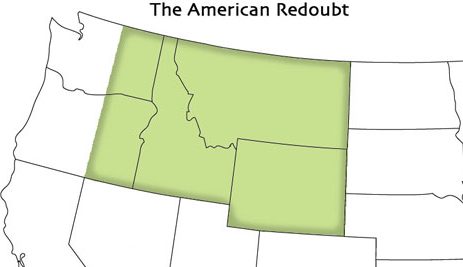
May 26th is the birthday of Randall Hank Williams (Hank Williams, Jr.). He was born in 1949. When not touring, he lives somewhere in Montana, so he qualifies as a Redoubter. He reportedly has a large gun collection, which is heavy on Sharps rifles and rifles that have factory letters showing that they were originally shipped to Montana. His song A Country Boy Can Survive is of course practically a survivalist anthem. His father was just 29 when he died, and despite a couple of close calls Hank Jr. is now 67, so he may yet live to a ripe old age.

o o o

Today, we present another entry for Round 64 of the SurvivalBlog non-fiction writing contest. The nearly $12,000 worth of prizes for this round include:

First Prize:

  1. A Tactical Self-Contained 2-Series Solar Power Generator system from Always Empowered. This compact starter power system is packaged in a wheeled O.D. green EMP-shielded Pelican hard case (a $1,700 value),
  2. A Gunsite Academy Three Day Course Certificate that is good for any one, two, or three day course (a $1,195 value),
  3. A course certificate from onPoint Tactical for the prize winner’s choice of three-day civilian courses, excluding those restricted for military or government teams. Three day onPoint courses normally cost $795,
  4. DRD Tactical is providing a 5.56 NATO QD Billet upper with a hammer forged, chrome-lined barrel and a hard case to go with your own AR lower. It will allow any standard AR-type rifle to have a quick change barrel, which can be assembled in less than one minute without the use of any tools and a compact carry capability in a hard case or 3-day pack (an $1,100 value),
  5. Gun Mag Warehouse is providing 20 Magpul PMAG 30-rd Magazines (a value of $300) and a Gun Mag Warehouse T-Shirt; (an equivalent prize will be awarded for residents in states with magazine restrictions),
  6. Two cases of Mountain House freeze-dried assorted entrees in #10 cans, courtesy of Ready Made Resources (a $350 value),
  7. The Ark Institute is donating a non-GMO, non-hybrid vegetable seed package (enough for two families of four) plus seed storage materials, a CD-ROM of Geri Guidetti’s book “Build Your Ark! How to Prepare for Self Reliance in Uncertain Times”, and two bottles of Potassium Iodate (a $325 retail value),
  8. A $250 gift certificate good for any product from Sunflower Ammo,
  9. KellyKettleUSA.com is donating an AquaBrick water filtration kit with a retail value of $250, and
  10. Two cases of meals, Ready to Eat (MREs), courtesy of CampingSurvival.com (a $180 value).

Second Prize:

  1. A Glock form factor SIRT laser training pistol and a SIRT AR-15/M4 Laser Training Bolt, courtesy of Next Level Training, which have a combined retail value of $589,
  2. A transferable certificate for a two-day Ultimate Bug Out Course from Florida Firearms Training (a $400 value),
  3. A Model 175 Series Solar Generator provided by Quantum Harvest LLC (a $439 value),
  4. A Trekker IV™ Four-Person Emergency Kit from Emergency Essentials (a $250 value),
  5. A $200 gift certificate good towards any books published by PrepperPress.com,
  6. A pre-selected assortment of military surplus gear from CJL Enterprize (a $300 value),
  7. RepackBox is providing a $300 gift certificate to their site, and
  8. Safecastle is providing a package of 10 LifeStraws (a $200 value)
  9. American Gunsmithing Institute (AGI) is providing a $300 certificate good towards any of their DVD training courses.

Third Prize:

  1. A Royal Berkey water filter, courtesy of Directive 21 (a $275 value),
  2. A $245 gift certificate from custom knife-maker Jon Kelly Designs, of Eureka, Montana,
  3. A large handmade clothes drying rack, a washboard, and a Homesteading for Beginners DVD, all courtesy of The Homestead Store, with a combined value of $206,
  4. Expanded sets of both washable feminine pads and liners, donated by Naturally Cozy (a $185 retail value),
  5. Two Super Survival Pack seed collections, a $150 value, courtesy of Seed for Security, LLC,
  6. Mayflower Trading is donating a $200 gift certificate for homesteading appliances,
  7. Montie Gear is donating a Precision Rest (a $249 value), and
  8. Two 1,000-foot spools of full mil-spec U.S.-made 750 paracord (in-stock colors only) from www.TOUGHGRID.com (a $240 value).

Round 64 ends on May 31st, so get busy writing and e-mail us your entry. Remember that there is a 1,500-word minimum, and that articles on practical “how to” skills for survival have an advantage in the judging.


The Prepper’s American Dream: A Practical Guide To Strategic Relocation- Part 3, by Charles T.

Land:

  • Does the area you are moving to offer an improvement from your current residential situation?
  • How fertile is the ground, if you are planning on gardening?
  • Are there regulations on livestock or farming activities, if you plan on farming?
  • What is the cost of living, compared to your current location?
  • Is the housing market higher or lower compared to your current location?
  • Are property taxes higher or lower in your location?
  • Is the kind of house/property you would like to purchase readily available?
  • Do houses tend to stay on the market for a long time, or is the resell time short?
  • Is the temperature and climate what you are used to?
  • Are the winters extremely harsh and long lasting?
  • Are the summers extremely hot and humid?
  • Are there any nuclear or military targets nearby?
  • Where would the prevailing winds blow, if the nearest nuclear reactor melted down?
  • Is the land or water poisoned from industrial contamination?
  • Will you be on well or city water?
  • Is the area prone to natural disasters, such as earthquakes, tornadoes, drought, or hurricanes?

Land is one of the most fun sections for researching. Using one of the online real estate sites, like Trulia or Zillow can help you gain a good feel for the area. You can always call a real estate agent to get an idea as well or contact ***LINK TO*** survivalrealty.com to see if they have any listings in your desired area.

Education:

  • If you are looking at getting additional training for your career, are there local opportunities?
  • What do the school districts look like where your children may attend?
  • If you plan on homeschooling, are there co-ops where you can get help from like-minded parents?
  • Are there any negative regulations towards homeschooling families?
  • Will your children be enabled economically to move forward or will their potential be stunted by a poor school system?
  • Will your kids need to move out of the area once they reach adult age to start careers or families?
  • What would be the impact, if you had to switch your children’s schools mid year?

As you wrestle through these questions and the many more that will come up as you search, remember to always filter the answer through your core values.

Don’t get target fixation. Just because somewhere looks perfect on Google, it doesn’t mean that it will be a good match for you. The only way to really know an area is to go there. It is highly recommended that you physically visit the place you are evaluating, hopefully multiple times. Drive around for a few days, cruise the neighborhoods, go to some church services, eat at local restaurants, and visit in both the best and worst seasons. Will you be a help or a hindrance to this community?

Once you have intellectually, emotionally, and as a family decided to move to a specific location, you have accomplished what is probably the hardest part.

When discussing our move with my grandfather-in-law, who had moved from Canada to the United States decades ago, he shared some wise words. He said, “Moving is easy. It’s deciding to move that is hard.”

Step 2: Executing the Plan

Now that you have a plan and a relocation target, it is time to execute. The more solid and detailed your plan, the easier, faster, and less painful its execution will be.

Execution step 1: Find employment.

Use the Internet. Use your phone. Use your contacts. Just make sure that you have employment secured before you move.

There are so many online resources now to help you find a job that I will not spend too much time detailing the specific options available to you. However, here are the general options.

  • Online job boards (Monster, Indeed, et cetera)
  • Cold calling (Find a company in your target area and contact them directly.)
  • Recruiting services
  • Capitalizing on your social network

I was able to use a recruiting service to help me find a job in my desired field at a salary that was comparable to my previous position.

Once you have your employment secured, and only then, should you terminate your current position. Do not quit until you have written guarantees from your next employer.

Execution Step 2: Find a home.

You need a place to sleep. There has been bountiful information contributed on SurvivalBlog for choosing a retreat location, if that is what you are shooting for.

Make sure that the place you choose lines up with your core values or has the potential to provide for them in the future.

If you are totally new to the area, a real estate agent can provide valuable information in only a few minutes that would take hours or days to determine online or may never be known otherwise.

Rather than rushing into a house immediately, it may be wise to rent for a few months to make sure you have a good feel for the area before committing long term to a particular property.

We rented for two months while looking and initially wanted a small homestead with land. During our search we realized we couldn’t comfortably afford our “dream” house at the present time, so we bought a small house in good neighborhood with great community. Eventually we will move, but in the mean time we are doing what we can with what we have, which is exactly the skill set we will need if SHTF.

Execution Step 3: Find a community.

Either before or immediately after your move, reach out to new neighbors, friends, and long lost relatives that may be near your new location. If you can get a welcoming committee to grease the social wheels for you, integration will be much easier.

Execution Step 4: Leave well.

As you begin your move, the temptation will be to get so focused on your future situation that you neglect your current one.

Don’t forget to thank friends, family, and community members for the wonderful memories and times you have had with them. Most likely, there are people that care about you in your current location and they will miss you when you are gone. This is why it is so important to focus on why you are moving somewhere that you love rather than leaving somewhere you hate. This philosophy leaves a much better taste in the mouths of your loved ones and will have them cheering for you rather than wondering what they did wrong to make you leave.

Once your plan is executed and you are successfully relocated to your dream area, it is time for the final step.

Step 3: Surviving the Plan

“Everybody’s got plans…until they get hit.” ~Mike Tyson

Here’s the deal; no matter how well thought out your plans, you will run into problems in their execution. Things may change midstream. Job prospects may fall through. Spouses may change their minds. You may change your mind. It is essential to learn to roll with the punches and keep focusing on your core values. It may take years for you to fully execute on your dreams. That is okay. What else were you going to do?

One of the biggest and most difficult problems people face when relocating is the culture shock. Once the excitement of progress wears off and you are in a new routine, the little things that you overlooked before have the opportunity to become big things.

Understand that even if you move one town over, there is a different culture that you need to learn and assimilate to. Where you are moving the people will be different. Their values, culture, and accents may be different, and you may never fully “fit in”.

Even so, try your best to assimilate. There have been some excellent articles on SurvivalBlog recently about moving to rural areas. Especially if you are moving from a city, you need to prepare for a total reprogramming. People may move slower. People may drive slower. People may talk slower. You can either become frustrated, or you can realize that you moved here for a slower, different pace and that means you yourself may need to slow down too. Maybe they don’t move too slow; you just move too fast.

If your new area is highly religious and you are not, you may never be able to fully engage in the community if you are not attending a local church. It may be worth just biting the bullet and viewing it as a social and economic move if you are not religious. Who knows, you may find that you enjoy their company more than you thought.

If you are given help moving in by the community, remember to not let it turn into a one-way street. As soon as you can, start reaching out to help others and try to be as self sufficient as possible. Remember in your new area, your most important resources are your neighbors and community. Even so, if you only view them as “survival capitol”, the odds are you won’t be viewed as a normal human being. Please don’t tell people you moved to escape the coming apocalypse. That is a one-way ticket to social ostracization. Tell people how much you love the area and how excited you are to be there, and mean it. Engage in the business of life first, and as you develop your new home, community, and family life, the business of survival will not seem very hard at all.

In summary, don’t let fear get in the way of following your dreams. If your goals are different from your reality, some hard work and risk taking may mean the difference between the life you want and the life you have.


Letter Re: Velcro

Hugh,

IMG_6434

There was some discussion a few weeks ago about using hook and loop fasteners for gear. As this photo demonstrates, it’s essentially useless after about two years. Avoid. – D.D.


Economics and Investing:

Understanding Societal Collapse: Warnings From Venezuela’s Crisis – Sent in by B.B.

o o o

Canadian Silver Maple Sales Surge To Highest Record Ever

o o o

New Mexico, suing the EPA over spill caused by the agency, Seeking $100 million – Some runoff from a pond in Montana gets 15 years in prison. Poisoning Flint, Michigan or the Navajo Nation? Nothing. – T.Z.

o o o

Banks Keep Cutting Bond Traders as One-Third Gone Since 2011

o o o

SurvivalBlog and its editors are not paid investment counselors or advisers. Please see our Provisos page for details.