
“And he said unto him, If they hear not Moses and the prophets, neither will they be persuaded, though one rose from the dead.” Luke 16:31 (KJV)
- Ad Ready Made Resources, Trijicon Hunter Mk2$2000 off MSRP, Brand New in the case
- Ad LifeSaver 20K JerryCan Water PurifierThe best water jerrycan you can buy on the market! Mention Survivalblog for a Free Filter ($130 Value)
Notes for Saturday – June 11, 2016
On June 11th, 1776, the Continental Congress selected Thomas Jefferson of Virginia, John Adams of Massachusetts, Benjamin Franklin of Pennsylvania, Roger Sherman of Connecticut, and Robert R. Livingston of New York to draft a “Declaration of Independence”. Knowing Jefferson’s prowess with a pen, Adams urged him to author the first draft of the document, which was then carefully revised by Adams and Franklin before being given to Congress for review on June 28.
o o o
Today, we present another entry for Round 65 of the SurvivalBlog non-fiction writing contest. The nearly $12,000 worth of prizes for this round include:
First Prize:
- A Tactical Self-Contained 2-Series Solar Power Generator system from Always Empowered. This compact starter power system is packaged in a wheeled O.D. green EMP-shielded Pelican hard case (a $1,700 value),
- A Gunsite Academy Three Day Course Certificate that is good for any one, two, or three day course (a $1,195 value),
- A course certificate from onPoint Tactical for the prize winner’s choice of three-day civilian courses, excluding those restricted for military or government teams. Three day onPoint courses normally cost $795,
- DRD Tactical is providing a 5.56 NATO QD Billet upper with a hammer forged, chrome-lined barrel and a hard case to go with your own AR lower. It will allow any standard AR-type rifle to have a quick change barrel, which can be assembled in less than one minute without the use of any tools and a compact carry capability in a hard case or 3-day pack (an $1,100 value),
- Gun Mag Warehouse is providing 20 Magpul PMAG 30-rd Magazines (a value of $300) and a Gun Mag Warehouse T-Shirt; (an equivalent prize will be awarded for residents in states with magazine restrictions),
- Two cases of Mountain House freeze-dried assorted entrees in #10 cans, courtesy of Ready Made Resources (a $350 value),
- The Ark Institute is donating a non-GMO, non-hybrid vegetable seed package (enough for two families of four) plus seed storage materials, a CD-ROM of Geri Guidetti’s book “Build Your Ark! How to Prepare for Self Reliance in Uncertain Times”, and two bottles of Potassium Iodate (a $325 retail value),
- A $250 gift certificate good for any product from Sunflower Ammo,
- KellyKettleUSA.com is donating an AquaBrick water filtration kit with a retail value of $250, and
- Two cases of meals, Ready to Eat (MREs), courtesy of CampingSurvival.com (a $180 value).
Second Prize:
- A Glock form factor SIRT laser training pistol and a SIRT AR-15/M4 Laser Training Bolt, courtesy of Next Level Training, which have a combined retail value of $589,
- A transferable certificate for a two-day Ultimate Bug Out Course from Florida Firearms Training (a $400 value),
- A Model 175 Series Solar Generator provided by Quantum Harvest LLC (a $439 value),
- A Trekker IV™ Four-Person Emergency Kit from Emergency Essentials (a $250 value),
- A $200 gift certificate good towards any books published by PrepperPress.com,
- A pre-selected assortment of military surplus gear from CJL Enterprize (a $300 value),
- RepackBox is providing a $300 gift certificate to their site, and
- American Gunsmithing Institute (AGI) is providing a $300 certificate good towards any of their DVD training courses.
Third Prize:
- A Royal Berkey water filter, courtesy of Directive 21 (a $275 value),
- A $245 gift certificate from custom knife-maker Jon Kelly Designs, of Eureka, Montana,
- A large handmade clothes drying rack, a washboard, and a Homesteading for Beginners DVD, all courtesy of The Homestead Store, with a combined value of $206,
- Expanded sets of both washable feminine pads and liners, donated by Naturally Cozy (a $185 retail value),
- Two Super Survival Pack seed collections, a $150 value, courtesy of Seed for Security, LLC,
- Mayflower Trading is donating a $200 gift certificate for homesteading appliances,
- Montie Gear is donating a Precision Rest (a $249 value), and
- Two 1,000-foot spools of full mil-spec U.S.-made 750 paracord (in-stock colors only) from www.TOUGHGRID.com (a $240 value).
Round 65 ends on July 31st, so get busy writing and e-mail us your entry. Remember that there is a 1,500-word minimum, and that articles on practical “how to” skills for survival have an advantage in the judging.
- Ad STRATEGIC RELOCATION REALTYFOR SALE: Self-sustaining Rural Property situated meticulously in serene locales distant from densely populated sanctuary cities. Remember…HISTORY Favors the PREPARED!
- Ad Civil Defense ManualClick Here --> The Civil Defense Manual... The A to Z of survival. Looks what's in it... https://civildefensemanual.com/whats-in-the-civil-defense-manual/
Pantry Building Basics for Individuals with Food Allergies or Sensitivities, by M.W.
More and more individuals today are diagnosed with food allergies and sensitivities, and the market for foods which contain alternate ingredients is ever-expanding, reacting to the increasing demand for tolerable foods.
There is a definite difference between a food allergy and a food sensitivity. Healthline.com describes the most common symptoms of a food allergy as hives, swelling, itching, dizziness, and anaphylaxis. Symptoms of a food sensitivity include bloating, diarrhea, constipation, cramping, and nausea. Regardless of the reaction, a person with an allergy or sensitivity to even common pantry staples must remain vigilant when shopping, cooking, and dining out.
As one who suffers from food allergies and sensitivities, I can tell you that even everyday cooking is nothing short of exasperating. Today’s heavily processed foods require that I read every label on every item I purchase every time I purchase it, especially if it’s been repackaged with something like “New and Improved!” on the label.
Building a pantry for a SHTF or TEOTWAWKI situation can be doubly exasperating. Many popular foods marketed to preppers and survivalists typically have one or more of the eight most common allergens, which are: milk, egg, peanut, tree nut, wheat, soy, fish, and crustacean shellfish.
Consider this label from a can of Mountain House Scrambled Eggs and Bacon in Figure 1. I have never eaten this before, but it’s no doubt one of their more popular items, as it provides the high-protein breakfast we all need at the start of the day. However, check the ingredient list.
I am allergic or sensitive to corn, wheat, rye, barley, soy, oats, tapioca, sunflower, and mushrooms. Naturally, upon reading the ingredient list contains Modified Corn Starch, Corn Oil, and Sunflower Oil, I immediately know that this food is not for me. One only needs to remember the debilitating (if not deadly) effects of a reaction to avoid the breathing and digestive issues that my ingestion of this item would surely cause. If it doesn’t kill me, it would certainly make life uncomfortable for the next several days and would make me a liability in a survival situation, slowing or stopping any movement, requiring additional ingestion of valuable stored resources, such as water, electrolytes, and medications, or possibly putting my companions in danger, depending on the situation.
Now look at the last item on the list of ingredients: Xanthan Gum. It’s an ingredient in all sorts of foods, even minimally processed ones. What is Xanthan Gum? Let’s take a quick look at Wikipedia to find out:
“Xanthan gum is a polysaccharide secreted by the bacterium Xanthomonas campestris, used as a food additive and rheology modifier, commonly used as a food thickening agent (in salad dressings, for example) and a stabilizer (in cosmetic products, for example, to prevent ingredients from separating). It is composed of pentasaccharide repeat units, comprising glucose, mannose, and glucuronic acid in the molar ration 2:2:1. It is produced by the fermentation of glucose, sucrose, or lactose. After a fermentation period, the polysaccharide is precipitated from a growth medium with isopropyl alcohol, dried, and ground into a fine powder. Later, it is added to a liquid medium to form the gum.”
It really doesn’t say much despite all the 40-dollar words, does it? However, if you scroll down to the end of the article, you’ll find:
“Allergies: Xanthan gum may be derived from a variety of source products that are themselves common allergens, such as corn, wheat, dairy, or soy (emphasis mine). As such, persons with known sensitivities or allergies to food products are advised to avoid foods including generic xanthan gum or first determine the source of the xanthan gum before consuming the food.
“To be specific, an allergic response may be triggered in people exceedingly sensitive to the growth medium, usually corn, soy, or wheat. For example, residual wheat gluten has been detected on xanthan gum made using wheat. This may trigger a response in people exceedingly sensitive to gluten. Although, the vast majority of industrially manufactured xanthan gum contains far less than 20 ppm gluten, which is the EU limit for “gluten free” labelling.”
Granted, because of the more clearly named corn starch, corn oil, and sunflower oil, this is a food I would have already avoided, but what if xanthan gum was the only allergen present and I didn’t know it was made from corn, such as in this box of Hodgson Mill Gluten Free Baking Mix, seen in Figure 2?
If I were to eat something I cooked with this baking mix, it would definitely cause a reaction. Depending on the allergen or sensitivity, the severity of the reaction elicited may vary. For example, people with an allergy or sensitivity to corn may react less violently to something with Dextrose than something with corn oil, which is said to contain more of the allergen. I know a few people who say they’re allergic to a certain substance, like corn for example, but will still freely consume foods with ingredients like these and state that they experience no problems. They say this because either they simply have a “sensitivity” rather than an allergy or they are not aware of the many symptoms a reaction can elicit. Symptoms of a reaction can vary from “just not feeling right” to migraines or anaphylaxis, so in a survival situation it’s important that these ingredients are avoided as much as possible.
So what’s a person to do? How can one build a pantry for themselves or a family member who suffers from food allergies or sensitivities?
- Research, research, and do more research. Simple Google searches that have provided a plethora of resources include “hidden names for _____” and “_____ ingredient names.” There are also many websites dedicated to identifying ingredient names and brands that are safe from food allergens.
- Read the label, every time you shop. There are instances where a company wants to “improve” the taste or produce it less expensively. More often than not, it means that some common allergen has been added. Just because a brand didn’t elicit a reaction the last time you ate it doesn’t mean it won’t the next time. Also watch for “hidden” sources of allergens that aren’t so clear to detect.
- Stick to simple foods. This is even good advice for those who don’t suffer from food allergies. Companies like those in the photo in Figure 1 have long used common allergens in their freeze-dried or dehydrated long-term prepackaged meals, which for most provide adequate nutrition and excellent taste, but for those with allergies and sensitivities they are useless or even deadly (but can serve as good material for barter). The fewer the ingredients, the better. This is all the more reason to shift to more natural or homegrown, home-cooked, and home-processed foods and away from prepackaged, heavily-processed items. In the end, your diet will be more versatile and nutritious as well. If you haven’t already, take up a valuable skill like canning or dehydrating your own foods and eliminate the guesswork.
- Make nutritional adjustments and food substitutions. There are many lists and products out there for families who want to build a pantry or long-term food storage. Typically, these include “fifty pounds of wheat berries” or “sixteen #10 cans of corn” or “ten pounds of texturized vegetable protein (TVP).” Other companies insist their “Year in a Bucket” packages are the way to go. In these cases, simple substitution is all that is required. As people with allergies and sensitivities already do when preparing everyday meals, adjust the ingredients of your favorite pantry/survival meals to accommodate those allergies. For example, instead of a boxed or freeze-dried pasta meal, which will likely include wheat pasta, dextrose, soy protein, et cetera, assemble your own allergen-free meal kit of rice pasta, a can of tomato sauce, a can of already-cooked ground beef, and starch-free spices stored in a two-gallon zipper storage bag. A little prior planning can ensure that all ingredients are present and that the whole family can safely consume what’s inside.
- Consider your own pantry labeling system. A few years ago, my husband asked me to not only buy mostly foods that all of us could eat, according to my nutritional needs in particular, but to also label them in some way that would set them apart from the other “allergen-filled” foods that already existed in our pantry. Our system includes a simple dot sticker, purchased from the office supply section of a department store or drugstore and placed near the “use-by” date of the item,, which I’ve already clearly written in permanent marker (Figure 3). By searching for the dots, my husband and son know immediately which foods I can tolerate, eliminating the guesswork. It may be necessary to use different colors or symbols or even segregate these foods and store them at one end of the pantry, if several family members have differing sensitivities or nutritional needs. For example, my husband is diabetic, and keeping items which provide a quick sugar boost or long-lasting protein and fiber ingredients is essential. Keep in mind that typically allergen-free foods are more expensive than their heavily-processed counterparts, and it could be more economical for your family to consider storing both and cooking separate meals.
These are just a few ideas for building a pantry for someone with food sensitivities or allergies. If you have any of these allergies or sensitivities, you can only trust yourself to build a pantry with foods that won’t harm you. It’s important that you are educated on your particular allergy and know what to avoid as well as what to stock.
Below are just a few websites that can help those with allergies, or their families, select appropriate pantry staples. Printing these out and maintaining a hardcopy in a binder is an essential part of any pantry.
- Food Allergy Research and Education
- Kids with Food Allergies: A Division of the Asthma and Allergy Foundation of America
- American Academy of Allergy, Asthma, and Immunology
- Food Insight: Your Nutrition and Food Safety Resource Food Allergy Resource Page
- Healthline: The Best Food Allergy Blogs of 2015
Online Resources:
- Ad USA Berkey Water Filters - Start Drinking Purified Water Today!#1 Trusted Gravity Water Purification System! Start Drinking Purified Water now with a Berkey water filtration system. Find systems, replacement filters, parts and more here.
- Ad California Legal Rifles & Pistols!WBT makes all popular rifles compliant for your restrictive state. Choose from a wide range of top brands made compliant for your state.
Letter Re: Sanitation Considerations
Mr. Latimer:
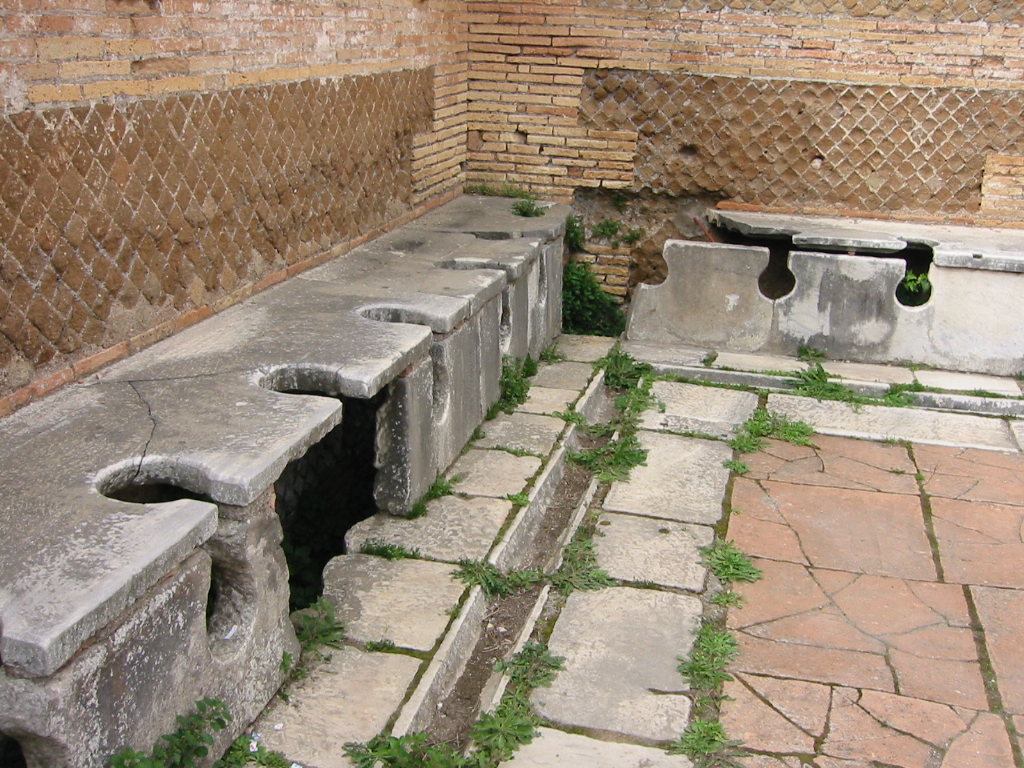
Regarding the problem of smelly outhouses– Deuteronomy 23:13 directs us to “cover that which cometh from thee.” This can be done with soil, or with sawdust, straw, or other common materials. If this is done every time the pit privy is used, the foul odor is nearly eliminated, rendering it no worse than a properly-functioning compost pile. This will also help to reduce danger of contaminants leaching out into the water table. It also eliminates most of the fly problems. You will notice that this is the equivalent of a composting toilet, primitive style. However, there is no need to empty it. Simply dig another hole and move the privy. Trees and other vegetation will be happy to access the compost. Those in the colder regions will want to be sure the hole is large enough to last through the winter months when the ground is frozen. And, speaking of cold, don’t forget the styrofoam seat! There can be a tendency for mold to grow on the seat and lid, so a routine wash with bleach, hydrogen peroxide, et cetera is helpful. Outhouses can be real problems, but they don’t need to be.
One item everyone should read is Notes on Nursing, by Florence Nightingale. She spends a lot of time on the destructive force of open sewers and the necessity of pure air. While this may seem trivial to our society, a collapse of infrastructure would put these issues right in our face. – C.F.
- Ad Click Here --> Civil Defense ManualNOW BACK IN STOCK How to protect, you, your family, friends and neighborhood in coming times of civil unrest… and much more!
- Ad Trekker Water Station 1Gal Per MinuteCall us if you have Questions 800-627-3809

Economics and Investing:
Should IL lose access to debt markets? – P.S.
o o o
How “Fair” Trade Stigmatizes Free Trade and Fails
o o o
Record Shattering 94.7 Million Americans Not in the Labor Force. Up by 664,000 in One Month. – B.B.
o o o
Items from Mr. Econocobas:
Why Big Investors Think it’s Time to Hoard Gold – Pay attention to these guys; they are the movers.
Video: Will gold break back above $1,300? – Don’t pay attention to this guys; they are the financial shills, who are either painfully naive or incredibly slimy.
o o o
SurvivalBlog and its editors are not paid investment counselors or advisers. Please see our Provisos page for details.
- Ad Survival RealtyFind your secure and sustainable home. The leading marketplace for rural, remote, and off-grid properties worldwide. Affordable ads. No commissions are charged!
- Ad Don't wait - get the ultimate US-made ultra-high performance US-made SIEGE Stoves and stunning hand-crafted SIEGE belts for Christmas. For stocking-stuffers see our amazing fire-starters. Gifts that can save lives. Big Sale!Every bespoke SIEGE buckle goes through an hours-long artisanal process resulting in a belt unlike anything else, with blazing fast performance and looks and comfort to match.
Odds ‘n Sods:
From Mike Williamson, SurvivalBlog’s Editor at Large: I, and several other authors, have stories in this anthology, surrounding the rise of medically feasible “zombies” from a neurological disease vector.
o o o
Facial Recognition Software: Technology to Make Big Brother Drool – Excerpt: “With simple snap of a photo from a police officer using an iPhone app can search through driver’s license to identify you.” Sent in by B.B.
o o o
Reagan’s “A Time For Choosing” – History Is Repeating Itself – Excerpt: “We no longer are seeing two separate distinct parties. We see Progressives on both sides working towards a political agenda that is Marxist in nature and two potential candidates that once the makeup and reality TV personas are removed, are strikingly similar.” – B.B.
o o o
Yet another reason to get out of the system: Fate of ‘Bullying’ Sixth-Grader Who Criticized Classmate’s Vegetarianism Has Been Decided — by the State of New Jersey
o o o
- Ad USA Berkey Water Filters - Start Drinking Purified Water Today!#1 Trusted Gravity Water Purification System! Start Drinking Purified Water now with a Berkey water filtration system. Find systems, replacement filters, parts and more here.
- Add Your Link Here
Hugh’s Quote of the Day:
“And I will sow her unto me in the earth; and I will have mercy upon her that had not obtained mercy; and I will say to them which were not my people, Thou art my people; and they shall say, Thou art my God.” Hosea 2;23 (KJV)
Notes for Friday – June 10, 2016
On June 10, 1967, the Six-Day War ended as Israel and Syria agreed to observe a United Nations-mediated cease-fire.
o o o
Today, we present another entry for Round 65 of the SurvivalBlog non-fiction writing contest. The nearly $12,000 worth of prizes for this round include:
First Prize:
- A Tactical Self-Contained 2-Series Solar Power Generator system from Always Empowered. This compact starter power system is packaged in a wheeled O.D. green EMP-shielded Pelican hard case (a $1,700 value),
- A Gunsite Academy Three Day Course Certificate that is good for any one, two, or three day course (a $1,195 value),
- A course certificate from onPoint Tactical for the prize winner’s choice of three-day civilian courses, excluding those restricted for military or government teams. Three day onPoint courses normally cost $795,
- DRD Tactical is providing a 5.56 NATO QD Billet upper with a hammer forged, chrome-lined barrel and a hard case to go with your own AR lower. It will allow any standard AR-type rifle to have a quick change barrel, which can be assembled in less than one minute without the use of any tools and a compact carry capability in a hard case or 3-day pack (an $1,100 value),
- Gun Mag Warehouse is providing 20 Magpul PMAG 30-rd Magazines (a value of $300) and a Gun Mag Warehouse T-Shirt; (an equivalent prize will be awarded for residents in states with magazine restrictions),
- Two cases of Mountain House freeze-dried assorted entrees in #10 cans, courtesy of Ready Made Resources (a $350 value),
- The Ark Institute is donating a non-GMO, non-hybrid vegetable seed package (enough for two families of four) plus seed storage materials, a CD-ROM of Geri Guidetti’s book “Build Your Ark! How to Prepare for Self Reliance in Uncertain Times”, and two bottles of Potassium Iodate (a $325 retail value),
- A $250 gift certificate good for any product from Sunflower Ammo,
- KellyKettleUSA.com is donating an AquaBrick water filtration kit with a retail value of $250, and
- Two cases of meals, Ready to Eat (MREs), courtesy of CampingSurvival.com (a $180 value).
Second Prize:
- A Glock form factor SIRT laser training pistol and a SIRT AR-15/M4 Laser Training Bolt, courtesy of Next Level Training, which have a combined retail value of $589,
- A transferable certificate for a two-day Ultimate Bug Out Course from Florida Firearms Training (a $400 value),
- A Model 175 Series Solar Generator provided by Quantum Harvest LLC (a $439 value),
- A Trekker IV™ Four-Person Emergency Kit from Emergency Essentials (a $250 value),
- A $200 gift certificate good towards any books published by PrepperPress.com,
- A pre-selected assortment of military surplus gear from CJL Enterprize (a $300 value),
- RepackBox is providing a $300 gift certificate to their site, and
- American Gunsmithing Institute (AGI) is providing a $300 certificate good towards any of their DVD training courses.
Third Prize:
- A Royal Berkey water filter, courtesy of Directive 21 (a $275 value),
- A $245 gift certificate from custom knife-maker Jon Kelly Designs, of Eureka, Montana,
- A large handmade clothes drying rack, a washboard, and a Homesteading for Beginners DVD, all courtesy of The Homestead Store, with a combined value of $206,
- Expanded sets of both washable feminine pads and liners, donated by Naturally Cozy (a $185 retail value),
- Two Super Survival Pack seed collections, a $150 value, courtesy of Seed for Security, LLC,
- Mayflower Trading is donating a $200 gift certificate for homesteading appliances,
- Montie Gear is donating a Precision Rest (a $249 value), and
- Two 1,000-foot spools of full mil-spec U.S.-made 750 paracord (in-stock colors only) from www.TOUGHGRID.com (a $240 value).
Round 65 ends on July 31st, so get busy writing and e-mail us your entry. Remember that there is a 1,500-word minimum, and that articles on practical “how to” skills for survival have an advantage in the judging.
Sanitation Considerations for Long Term Emergency Situations- Part 2, by D.Q.
Latrine Alternatives
There are many alternatives to using a latrine, all of which have positive and negative aspects to them. By far and away the best option of all is to have a septic system installed. This kind of system requires a substantial amount of space for its installation, and it can be somewhat costly. However, it is a well understood system that is commonly used throughout rural America. If you live in a house attached to a septic system, then you should have few worries.
Portable Latrine. Another alternative is the use of portable latrines. These are typically used with box-like structures, modified plastic buckets, stools (no pun intended), and other devices, on which you sit and into which you place a plastic bag to catch the pee and poo. These are typically found on the Internet under a search for camping toilets, and they typically cost less than $50 and usually include a small supply of the needed bags. Once you finish your business when using a camping toilet, you remove the bag for disposal. Some bags are biodegradable (meaning more expensive) such that you can take them out and bury them, making them a form of a latrine with a plastic bag acting as a middle man. Others use ordinary, cheap plastic bags; using plastic ones means you must find an alternate means of disposing the waste. While these have the advantage of being user friendly, sanitary, and essentially odor free, they suffer many drawbacks, including the expense of additional bags, the need for further waste disposal, and, most importantly of all, they are temporary solutions, because once you run out of bags it is no longer a solution.
Incinerating Toilet. Yet another alternative is the incinerating toilet. There are many styles and designs by which the pee and poo are treated. They can use propane, electricity, and some even use sunlight to generate the power necessary to decompose the sewage. Some of these toilets even decompose the waste to turn it into a useful product, such as fertilizer or methane gas. While these toilets offer the advantage of providing a sanitary method for the disposal of pee and poo, they almost all require electricity, propane, or some other fuel source in order to operate. The disadvantages include the requirement for fuels, which may or may not be available during a SHTF crisis. Also, these specialized toilets require installation such that not everyone could install these themselves nor could a person consider this an option in any situation other than a well-stocked, well-prepared, preplanned location. Despite all of these negatives, the worst one of all is the cost, which typically ranges from $500 to well over a $1000 each.
Chemical Camp Toilet. A hybrid between an incinerating toilet and the camping toilet is the chemical toilet. These are inexpensive toilets (typically costing less than $100) that are portable and sanitary. The down side to using these toilets is that these toilets require large amounts of chemicals to treat the pee and poo and that they need to be emptied every few days. This makes them unsatisfactory for long-term usage that you would expect given a SHTF situation.
Solutions?
Because everyone’s situation is so different, there is no set answer that will offer a universal solution. Unfortunately there are not many solutions to the issue of pee and poo in a SHTF situation that are workable without a significant amount of long-term planning. If you are on a septic system, then consider yourself one of the luckiest people around, for you have no need to do anything different from you have been doing. At the other end of the spectrum is the apartment dweller who lives up on an upper floor of a high rise. It is this person who faces the greatest challenges with the most difficult solutions. Because of this variability, you must tailor your solution to your anticipated situation. This means that you must not only decide what your needs are, but you must also determine how long you will have to face those needs with your solution.
Even if you live in an apartment, you have several options. The easiest option for an apartment dweller may be to bug out. If you have a predetermined location where you can go to be with others, then this would be a good option, since many hands make every task easier. If, for whatever reason, you are forced to bug in, then you still have options. One is the use of a portable or incinerating toilet. If that is unworkable, then a plastic bucket with kitty litter may have to suffice. While this is relatively inexpensive, it requires a large amount of kitty litter and a place where you could easily dispose of the feces mixture without endangering yourself and others, since this mixture would still contain live disease-causing microorganisms. Perhaps the most cost effective alternative for this situation would be to create your own chemical toilet. This is accomplished by having multiple plastic buckets where the first is filled with waste mixed with lime and then loosely covered, for it will likely off gas initially. (For every few inches of waste in the bucket, add half an inch of lime and continue layering until the bucket is sufficiently filled.) Once the first bucket is filled, it is set aside to “age” while the next bucket is used. As each bucket ages, the lime will kill the microorganisms such that after an extended period the mixture will become sterile and can then be used as a fertilizer. For this strategy to work, all you would need is a supply of quick lime (around $10 for a 20 pound bag) and several plastic buckets with lids. Your disposal site could be a garden, a patch of earth around a tree, or just about anywhere else.
If you live in a house with a yard, then you have an additional option of using a latrine. For the latrine to be an option, you must have sufficient room and be sufficiently high enough above the water table for it to work properly. If a latrine is not feasible, then you are left with the same options as does the apartment dweller.
Cleanliness
No matter where you live, there is one significant constant that absolutely must be addressed and that is cleanliness. Something that is often forgotten about in people’s preparations is hand washing supplies. People must wash their hands after using the “facilities”, before eating, and so forth, which will require substantial quantities of soap or hand sanitizer. Also, hands must be inspected prior to working with your sanitation system to ensure that you have no cuts or open wounds; otherwise, rubber gloves must be used.
Another source for sanitizing is bleach, but bleach is only good for about six months. A far better long-term product option would be pool shock chemical containing either calcium hypochlorite or sodium dichloroisocyanurate salt (a.k.a. sodium 3,5-dichloro-2,4,6-trioxo-1,3,5-triazinan-1-ide). These salts are forever stable when kept dry, but they decompose into bleach when dissolved in water. Upon the purchase of your pool shock chemical, you should perform a quick Internet search to determine which form you have and how much is necessary to create a bleach-like solution. (It should go without saying that a small scale is required to use pool shock chemicals effectively. If you reload your own ammunition, then the balance used to measure powder can also be used to measure pool shock chemical.) As a part of your sanitation process, all surfaces involved in your personal sanitation process should be cleaned regularly with bleach or similar solution. This would include wiping down the outside of used plastic bags, buckets, lids, and so forth.
Ultimately, in a survival situation your primary goal is to stay safe and healthy. To accomplish this goal, it is necessary to plan ahead in an effort to cover all those possibilities with which you will likely be faced. Dealing with your pee and poo is something that is a certainty, so it cannot be avoided. It is far better to think about how you will handle this issue now than it will be after the crisis hits. Should you delay planning how you will take care of your pee and poo, then you could easily be left sick and debilitated, thus hurting your chances to survive. Being proactive about dealing with your pee and poo is not difficult and, in most cases, inexpensive. It just takes a bit of planning and thought. If you are going to do it, then now is the time.
Letter Re: Grey Water for Toilets
Hugh,
I have an idea to provide rain water for toilets when other water is not available. My thought is to place a small broad flatish tank (10 gallons or so) on the rafters in the attic above the bathroom. Then I would modify the vent through the roof to feed the tank and to still provide venting. When the tank is full, the rain would just flow over the “roof drain”. A sort of V shaped channel dam on the roof could divert additional water to the drain into the tank.
There are many possible ways to fill the toilet, ranging from a spicket just over the toilet tank to a dual valve arrangement keeping the water systems separated. Periodically the tank could be drained into the toilet to refresh the water in the tank. If the topic is interesting, I would like to know what the rest of the community thinks. – M.M.
HJL’s Comment: I doubt such an arrangement would make it past the building inspectors approval, but here are some of my thoughts:
- The rafters are generally not designed to carry concentrated weight unless purposely built. This limits the size of tank you can use.
- I have seen toilets that flush with only 1 liter of water, but I’ve never seen one that I liked. The 2.5 liter flushes start getting more to my liking. This means that a 10-gallon tank will give you, at most, 15 flushes. Is that enough?
- Plumbing designed to manage both systems will require backflow preventers and increase the cost.
Economics and Investing:
Video: The Dollar is at an Important Crossroads – Excerpt: “Its next move will have significant implications for the future price direction of the precious metals markets.”
o o o
Ron Paul: The Case for Gold Is Stronger Than Ever
o o o
Items from Mr. Econocobas:
A Bearish George Soros Is Trading Again – Notice the last time he was actively trading was 2007, making bets against the coming housing collapse.
BT Card Outage? 8 Days Into June And Many Americans Are Still Waiting For Food Stamp Money
o o o
SurvivalBlog and its editors are not paid investment counselors or advisers. Please see our Provisos page for details.
Odds ‘n Sods:
WHITE FOLKS NOT WANTED: Mayor’s office racially profiles at Chicago gun buyback – “Were they ejected because they were white? Or were they ejected because they were selling old broken-down guns to fund buying new ones for an NRA kids camp. We’ll never know. – T.P.
o o o
Oklahoma highway patrol conducting civil asset forfeiture from bank accounts – I used to feel safe about this by not carrying large amounts of cash. Now, a patrolman having a bad day can drain my bank account. They admit themselves that you’re guilty unless you can prove otherwise: “If you can prove can prove (sic) that you have a legitimate reason to have that money it will be given back to you. And we’ve done that in the past…” – J.V.
o o o
While we are on the subject of civil asset forfeiture, New Mexico is the only state to rank an “A” with laws regarding the asset forfeiture, but: New Mexico Ended Civil Asset Forfeiture. Why Then Is It Still Happening? – B.B.
o o o
Google is Recording Audio of Everything You Say With “OK Google” Voice Search – D.B.
o o o
An interesting concept for limited space gardening: Are Shipping Containers the Future of Farming? – P.M.
Jim’s Quote of the Day:
“You really don’t understand. We don’t worry about individuals. What counts is that many millions of people have the knowledge that they can go to a weapon shop if they want to protect themselves and their families. And, even more important, the forces that would normally try to enslave them are restrained by the conviction that it is dangerous to press people too far. And so a great balance has been struck between those who govern and those who are governed.” – A.E. Van Vogt, The Weapons Shops of Isher
Notes for Thursday – June 09, 2016
On June 9, 1954, Army counsel Joseph N. Welch confronted Sen. Joseph R. McCarthy during the Senate-Army Hearings over McCarthy’s accusations on a member of Welch’s law firm, Frederick G. Fisher. Welch famously said: ”Have you no sense of decency, sir? At long last, have you left no sense of decency?”
But it was later proven that McCarthy was correct in his assertions, as documented in the book The Venona Secrets.
o o o
Today, we present another entry for Round 65 of the SurvivalBlog non-fiction writing contest. The nearly $12,000 worth of prizes for this round include:
First Prize:
- A Tactical Self-Contained 2-Series Solar Power Generator system from Always Empowered. This compact starter power system is packaged in a wheeled O.D. green EMP-shielded Pelican hard case (a $1,700 value),
- A Gunsite Academy Three Day Course Certificate that is good for any one, two, or three day course (a $1,195 value),
- A course certificate from onPoint Tactical for the prize winner’s choice of three-day civilian courses, excluding those restricted for military or government teams. Three day onPoint courses normally cost $795,
- DRD Tactical is providing a 5.56 NATO QD Billet upper with a hammer forged, chrome-lined barrel and a hard case to go with your own AR lower. It will allow any standard AR-type rifle to have a quick change barrel, which can be assembled in less than one minute without the use of any tools and a compact carry capability in a hard case or 3-day pack (an $1,100 value),
- Gun Mag Warehouse is providing 20 Magpul PMAG 30-rd Magazines (a value of $300) and a Gun Mag Warehouse T-Shirt; (an equivalent prize will be awarded for residents in states with magazine restrictions),
- Two cases of Mountain House freeze-dried assorted entrees in #10 cans, courtesy of Ready Made Resources (a $350 value),
- The Ark Institute is donating a non-GMO, non-hybrid vegetable seed package (enough for two families of four) plus seed storage materials, a CD-ROM of Geri Guidetti’s book “Build Your Ark! How to Prepare for Self Reliance in Uncertain Times”, and two bottles of Potassium Iodate (a $325 retail value),
- A $250 gift certificate good for any product from Sunflower Ammo,
- KellyKettleUSA.com is donating an AquaBrick water filtration kit with a retail value of $250, and
- Two cases of meals, Ready to Eat (MREs), courtesy of CampingSurvival.com (a $180 value).
Second Prize:
- A Glock form factor SIRT laser training pistol and a SIRT AR-15/M4 Laser Training Bolt, courtesy of Next Level Training, which have a combined retail value of $589,
- A transferable certificate for a two-day Ultimate Bug Out Course from Florida Firearms Training (a $400 value),
- A Model 175 Series Solar Generator provided by Quantum Harvest LLC (a $439 value),
- A Trekker IV™ Four-Person Emergency Kit from Emergency Essentials (a $250 value),
- A $200 gift certificate good towards any books published by PrepperPress.com,
- A pre-selected assortment of military surplus gear from CJL Enterprize (a $300 value),
- RepackBox is providing a $300 gift certificate to their site, and
- American Gunsmithing Institute (AGI) is providing a $300 certificate good towards any of their DVD training courses.
Third Prize:
- A Royal Berkey water filter, courtesy of Directive 21 (a $275 value),
- A $245 gift certificate from custom knife-maker Jon Kelly Designs, of Eureka, Montana,
- A large handmade clothes drying rack, a washboard, and a Homesteading for Beginners DVD, all courtesy of The Homestead Store, with a combined value of $206,
- Expanded sets of both washable feminine pads and liners, donated by Naturally Cozy (a $185 retail value),
- Two Super Survival Pack seed collections, a $150 value, courtesy of Seed for Security, LLC,
- Mayflower Trading is donating a $200 gift certificate for homesteading appliances,
- Montie Gear is donating a Precision Rest (a $249 value), and
- Two 1,000-foot spools of full mil-spec U.S.-made 750 paracord (in-stock colors only) from www.TOUGHGRID.com (a $240 value).
Round 65 ends on July 31st, so get busy writing and e-mail us your entry. Remember that there is a 1,500-word minimum, and that articles on practical “how to” skills for survival have an advantage in the judging.
Sanitation Considerations for Long Term Emergency Situations- Part 1, by D.Q.
If you go out onto the Internet, whether it is YouTube, one of the many prepper websites, any of the preparedness forums, and so forth, you are always treated to a wealth of interesting and useful information. Information on food storage, bug out bags, fire starting, EDC reviews, and all sorts of other subjects are common, with the issues of food and clean water being the most important. While many would think personal defense is the next most important issue to be discussed, the truth of the matter is that the need to defend yourself is a potential and not an absolute certainty. What is an absolute certainty and must be considered the third most important subject to be addressed in a long emergency situation is how to deal with your waste. Whether it is pee or poo, human waste has a high potential for causing many diseases, and this potential is made worse by how much pee and poo each person creates day after day after day.
Today, we live in what many would consider a fairly sterile environment as compared to what people lived in a century ago. The customary washing of hands before eating has become a distant memory for many, because we just never seem to get all that dirty any more. Additionally, most people today have been brought up with toilets in their homes. They go into the bathroom, do their business, hit the flush handle, and then leave, without any further thought. Magically, their pee and poo just disappears at the push of a button, so little or no thought goes to sanitation, if or why it is important, or how sewage treatment even works. Some who have thought about this are those who have gone camping where they are required to use an outhouse. Even then, all their thoughts are usually focused on the terrible stench found in the outhouse, and little thought is given to anything else. Those that go camping further back into the bush often do not have an outhouse or portable toilet available, so they typically just wander away from camp to do their business and then forget about it. All of these behaviors lead us to think about pee and poo as a smelly inconvenience and little else. Nothing could be more wrong. In a world where 2.5 billion people still lack flush toilets, around 1.5 million die every year from diarrhea, with the majority of these deathes being those under the age of 5. In a SHTF situation, these conditions would come to America and we would pay a far worse penalty, for we have little experience with this matter.
Pee and poo are very dangerous on many levels and the inappropriate handling of them can cause many diseases. The most common of these diseases would be dysentery and cholera, while other diseases and disease-causing microorganisms that can easily be transmitted include clostridium, E. coli, hepatitis, norovirus, giardia, rotavirus, clostridium, shigella, and many others. Frequently, these are all often lumped together under the title of food poisoning. While many think that the primary method of transmitting these illnesses is via contaminated water, the truth of the matter is that these disease-causing microorganisms can be transmitted in many other ways. Other methods of transmitting these disease causing microorganisms include improper hand washing, poor personal hygiene, improper waste disposal, improper washing of food, flies, and other insects, diaper changing/diaper disposal, and the preparation of food in unclean environments. A clear example of both how badly and rapidly these and similar diseases can affect you, as well as how hard it is to track down the specific vector causing these health problems, can easily be seen on cruise ships that have had to return to port early due to rampant health problems and restaurants, such as Chipotle, that have had repeated customer complaints about food poisoning. In all of these cases, many people were quickly affected with debilitating and potentially life threatening disease/symptoms while the specific cause could never seem to be isolated.
What makes this issue so extremely important is that we have become so used to having toilets in our homes that function, we never think of what we could or should do if they stop working. If cities lose electrical power for an extended period due to an EMP event, social unrest, or whatever, toilets will stop working. With no electrical power, sewage treatment plants will stop, so sewage pipes will fill and will not be emptied. Water pumps will stop, so no water will be available to flush toilets. Sewage lift pumps, which pull sewage uphill to get to the sewage treatment plant) will stop, so sewage may back up into homes, and so forth. It seems as if people plan for all sorts of contingencies in the event something happen at their home, but few, if any, plan on what to do when the toilets stop working. This becomes an overwhelming issue, should you and your family be forced to bug in and you neither planned nor prepared for this.
The question that now arises, and the question that so few think to ask or seem able to answer, is “How do we properly treat our wastes in order to keep us safe and healthy?”
Latrines (a.k.a. Outhouses)
The simplest, and historically most common, method for handling human waste issue is to simply dig a latrine or outhouse. While this is the most cost effective method available, it can be the cause of many problems if not done correctly.
The first issue that must be addressed is location. According to the WHO, the latrine should be no closer than 20 feet to a house and no closer than 100 feet to rivers, wells, or springs. It should be constructed downhill from any water sources and should not be built in rock formations because the cracks and such in the rock will allow for the flow of human wastes through these cracks to unknown distant points. Also, the bottom of the latrine pit should be a minimum of six feet above the water table, as measured during the wet season if there is one, and they should never be built where it can flood.
Latrines can come in any size. A single person does not have a large need, so they could get by with a simple squat hole. This hole would be a somewhat narrow (a foot or so in diameter), several feet deep, and covered with a simple platform containing a center hole and a cover. For a family or a large group, a larger latrine is needed and can be built to a minimum of five feet deep and 3-5 feet in diameter. The latrine pit can be sized larger, if necessary, using the calculation that a person will require about 0.5 cubic feet of volume per year of usage and if materials such as bulky leaves, corn cobs, stones, and such, are to be used after defecation, then the volume should be increased by 50%. Lastly, when the latrine pit is full, there should be enough room left to allow several feet of earth to be placed on top as a cover.
Latrines offer additional hazards that must be considered. The primary hazard is flies and insects. These can land on the feces to lay eggs and then they fly out to contaminate the surrounding area. It is for this reason that food preparation areas must be located much further away than the 20 feet needed for a house. Ideally, mosquito netting can be used to protect food preparation areas. If a building is constructed around the latrine, then the door should remain closed. Additionally, the hole into the pit should always remain covered when not in use. Any structure around the latrine should be kept as clean as possible to reduce the potential for disease, and no standing water should be allowed nearby that could promote the breeding of mosquitos.
There are many methods that can be used to help control latrine odor as well as insects. One method is to build a structure around the latrine and have a ventilation pipe running from the pit and exhausting above the roof. This will help remove odor from the structure and, since insects are drawn towards the latrine odor, the top of the ventilation pipe should be covered with a screen to prevent insects from entering. Also, the pipe should be covered to prevent rainwater from entering. Ashes or sawdust can be sprinkled on top of the feces in the latrine pit from time to time and this will aid in both reducing the odor of the latrine and help speed the decomposition of the wastes. The same effect can be accomplished using crushed lime and food wastes. It should be noted, however, that the addition of these materials to the latrine pit will shorten the lifespan of the latrine by causing it to fill more quickly.