The 18th of September is Chilean Independence Day. On this day, in 1810, Chile declared independence from Spain.
- Ad Elk Creek Company - Federally-Exempt No-Paperwork GunsPre-1899 Antique Cartridge Guns -- No FFL Required. Can be mailed to your doorstep with no Federal paperwork!
- Ad California Legal Rifles & Pistols!WBT makes all popular rifles compliant for your restrictive state. Choose from a wide range of top brands made compliant for your state.
The Golden Moments of Silence, by Sarah Latimer
I have been doing some reflecting recently on the power of silence. While our words have the power to build up or destroy and are so important, so too is our silence; silence is powerful also. Silence can generate equally powerful and varied reactions as words. When a man, who is madly in love with the woman of his dreams proposes marriage on bended knee with expectation that she will be thrilled and readily accept his proposal is instead met with a wide-eyed blank stare and silence, his world teeters on the brink of destruction in that silence. This silence of hesitation or alarm is not the one that has been on my heart, though it is one that can be important to recognize as survivalists. We need to read hesitation in those whom we are asking questions for intel purposes. Alternatively, when a driver approaching an intersection dodges a drunk pedestrian that has stepped off the curb and, though only traveling 15 mph, slightly bumps the fender of the car in the next lane and then approaches the car’s driver, silence coupled with a mildly annoyed glance from the offended driver rather than screaming and aggression is a welcome relief. We are still obligated for repairs to their vehicle, but we don’t have to deal with threats of an irate individual. This calm, rational silence can be a relief in a tense survival situation.
Sometimes the absence of sound tells us what we need to know– that the other person does not share our enthusiasm or reciprocate our feelings, or that they are not angry or filled with emotion. Sometimes, it just means that they are thinking because the proper response is not clear to them yet. In a survival situation, that kind of silence can be valuable, too. We need to know who to trust, and we need to know those we are trusting well. We need to know who can make quick, quality decisions in tense situations and who will not know how or be able to respond in a tense moment. We need to be able to read those who are telling the truth versus those who are lying to us. We need to be expert communicators and interpreters of communications.
The point of this article is that we need to know ourselves and motivations and develop a bank of memories that help drive us forward when things are difficult. Along those same lines, we need to know those with whom we are teaming in terms of their motivations and integrity and encourage our team and our children and families in developing their inner strength and memory banks to endure the hardships that await us. I assert that we need to partner with those who have determination and inner strength to persevere when things are difficult, or have what’s required even when they have to stand alone at times.
To know someone, we have to have spent time with them and listened to what is in their heart and what drives them. This only comes forth when we go through some things together, whether monumental highs and/or dark valleys that either are or feel like the valley of the shadow of death. In these times, good and bad, we need to be silent to hear from them and to experience the moments together. Let’s talk about these golden moments– times where we are silent to absorb the moment, listen to the hearts of those around us, and share in the experiences that can occur at the most unexpected times and bind us together, or at least give us insight into the person to help us know this person’s strength and weaknesses in order to appropriately depend upon them. Golden moments may be monumental to humanity, such as stopping a terrorist attack on U.S. soil, but they can also be help with a vehicle break down or a weekend plumbing crisis. It can be listening to them after a loss of a loved one or in a fit of anger over an injustice. It can be in receiving some homemade artwork from a child who is thrilled at their first finger painting that they made just for you as they tell you what each thing is on the paper and the fantastic story behind it. What grand imaginations our children have! Listening is so important to knowing someone. Do it without distraction!
I have had relatives– uncles, cousins, as well as one of my sons– who fought in wars and told me stories of those who had the mental fortitude to endure tremendous hardship as well as those who gave up, even soldiers who committed suicide in their barracks. From what I can tell, a lot had to do with the family support at home and/or the hope of support upon their return home. I have not fought in wars, so I am not speaking from personal experience. I have, however, endured some very difficult, even life-threatening battles myself that supports what I have heard from others. What I heard was that these soldiers who endured believed they were fighting to protect those they loved and would return to them some day, or at least were fighting for those back home because they felt loyalty to them. They didn’t just fight to save themselves and their fellow troops, though that is obviously a significant motivation, but many had the mindset that they were fighting for their loved ones at home and to be able to return triumphantly to them. Some have endured incredible torture and overcome what seemed like impossible odds to get back home. One relative of mine was on two war ships both sunk within a 24 hour period, and he survived those attacks and cold waters through persistence as well as the rescue efforts of others, of course! I believe it was the memories and thoughts of these loved ones and the hopes and dreams stored deep in their minds’ reserves that fed their will and pushed their bodies onward. In difficult times, it is the snip-its of video that play in our mind’s eye. From my perspective, these golden moments include the photographs of loved ones, the words from letters we have read, the key phrases of telephoned messages, the video of special moments re-lived, the majestic images that moved our souls and we stood together praising God for His creation, the events that stirred us to tears whether in joy or grief, the tender and adoring look upon the face of one who loves us and we love, the thrilled look in our young child’s eyes when we get home carrying a surprise for them, and the shared hopes and dreams of those loved ones who depend upon us, as well as the aspirations we have to pursue adventures, create great things, and become a person of significance. These are some of the “golden moments” that come to my mind, but there are surely many other types of moments that motivate others. It may be a father who said you couldn’t that replays in your mind, as you know that you can and are certainly going to prove him wrong. These golden moments are those moments that we store away in our memory as significant and precious, even if they were painful, and that help drive us onward. They give us hope, courage, and motivate us onward. Even if some of these people with whom we shared these moments are gone, we believe that we carry on in their stead and want to make them proud or we want to see their work, legacy, or dreams completed, so we invest ourselves to finish what they could not. We want to return to the special places we shared together. We see ourselves as part of their legacy, as they invested in us, and we believe we can carry it forward to others.
As believers and followers of the Son of God, we have hope of seeing other believers again and telling them “the rest of the story”. We are invested and strengthened to go forward because of those who were in our life, those who are in our life, and those who will be in our life in the future. However, we are only as invested as we are able to know them and focus upon them. We can’t know them without focused silence to listen, really listen to them. This is especially true of our God and His Word. We have to be silent and listen to Him above all. In our silence, we can hear Him speak to us through His word, His Spirit, and through those who follow Him. If there is too much noise, we will not hear His still small voice calling to us. His Word has much to teach us about who to trust and about being people of integrity and trusting people of integrity.
Proverbs 27:1-19Boast not thyself of to morrow; for thou knowest not what a day may bring forth.Let another man praise thee, and not thine own mouth; a stranger, and not thine own lips.A stone is heavy, and the sand weighty; but a fool’s wrath is heavier than them both.Wrath is cruel, and anger is outrageous; but who is able to stand before envy?Open rebuke is better than secret love.Faithful are the wounds of a friend; but the kisses of an enemy are deceitful.The full soul loatheth an honeycomb; but to the hungry soul every bitter thing is sweet.As a bird that wandereth from her nest, so is a man that wandereth from his place.Ointment and perfume rejoice the heart: so doth the sweetness of a man’s friend by hearty counsel.Thine own friend, and thy father’s friend, forsake not; neither go into thy brother’s house in the day of thy calamity: for better is a neighbour that is near than a brother far off.My son, be wise, and make my heart glad, that I may answer him that reproacheth me.A prudent man foreseeth the evil, and hideth himself; but the simple pass on, and are punished.Take his garment that is surety for a stranger, and take a pledge of him for a strange woman.He that blesseth his friend with a loud voice, rising early in the morning, it shall be counted a curse to him.A continual dropping in a very rainy day and a contentious woman are alike.Whosoever hideth her hideth the wind, and the ointment of his right hand, which bewrayeth itself.Iron sharpeneth iron; so a man sharpeneth the countenance of his friend.Whoso keepeth the fig tree shall eat the fruit thereof: so he that waiteth on his master shall be honoured.As in water face answereth to face, so the heart of man to man.This article, I hope, will inspire you to look up from the computer, smart phone, iPad, or pull out the ear buds and take a break from the hard work of providing and prepping as you can to focus on listening more to friends and family, to look around you, and to record life in your memories and listen intently to others. Know their hearts and heed their wise counsel. Absorb the golden moments that are fleeting and too often missed because of the noise of our busy lives.
I write this to myself. I am a multi-tasker. I always have many things spinning around in my head– new business ideas, project ideas, ideas for how to help loved ones, article ideas, prayers for people I know in need, and just a lot of wheels churning around. However, I realize how important it is “to be still” as God says, “Be still and know that I am God.” It is often in the quiet times that we are able to know God and also others. It is in those moments when I focused on someone or some beautiful aspect of God’s creation that I built my mind’s storehouse of “golden memories”. The funny times, the sweet times, the sorrowful times, the miraculous moments of children’s births and other amazing events, the powerful and humbling experiences, the majestic mountain views, the inspirational sunrises and sunsets over the ocean, mountains, or prairies, and more all came when I was quiet and focused enough for a moment to soak them into my mind’s eye and store them away in the treasure chest of my memory. Even when I am not with these people I love and with whom I shared these moments, I can remember and be strengthened. We have shared, and I recall.
As a mother watching the community children get off the school buses this time of year, I am also reminded about the silence a parent should have about they ask their children about their day to listen as they return from school or outings with friends. There are precious few “golden moments” when a child enters the home that they have a desire to share about their experiences of the day, before their minds move on and the excitement over what has happened is gone, as is the opportunity to hear about it and share in it. If you are not home to greet them with a smile, a cookie, and a hug, you will miss those golden moments with them, and one day they will be grown and possibly living far away, distant in both body and in heart. Our culture is all about the “now experience”, when rather it is the roots of the past that hold us strong when troubling winds blow and the storms of life try to toss us around. Friends and family may be with us to help, or they may not. Those who have stood with us and shared with us are the most invested and most likely to be the ones not tossed aside easily. Are you investing with your silent focus ready to listen and share in the moment?
Take some time to listen and be silent to share in special “golden” moments. Listen to what is in the hearts of those you care about and those you are partnering with in life, business, and survival. Go for coffee. It will not only help you through storms, but it will give you sweet memories for the golden years of life, too. Build a storehouse of precious memories and relationships that are an emotional larder, if you will. It’s good for survival in hard times, and it is good for making life better in all times!
I’m providing one of my favorite cookie recipes below. Make some cookies to share while you listen to someone you care about share with you what’s on their heart, or do something memorable together. Focus on those who are important to build memories that will sustain you in the times to come.
Sarah’s Recipe for Triple Chocolate Chip Cookies
Ingredients:
- 1/2 cup unsalted butter
- 1/2 cup white sugar
- 1/4 cup packed light brown sugar
- 1 large egg
- 1/2 teaspoon vanilla extract
- 1 1/8 cups flour
- 1/2 teaspoon salt
- 1/2 teaspoon baking soda
- 1/3 cup semi-sweet chocolate chips
- 1/3 cup white chocolate chips
- 1/3 cup milk chocolate chips (or substitute extra of either other type of chocolate chip, if milk chocolate unavailable)
Procedures:
- Preheat oven to 375 degrees Fahrenheit.
- Line a baking sheet with parchment paper.
- Mash the butter, white sugar, and brown sugar together in a large mixing bowl with a spatula or with mixer until creamy and smooth (2-3 minutes).
- Add egg and vanilla and whisk vigorously for 30 seconds.
- Whisk the flour, salt, and baking soda together in a small bowl; dump into the butter mixture and mix until combined.
- Fold the semi-sweet chocolate chips, white chocolate chips, and milk chocolate chips into the mixture.
- Arrange dough onto the prepared baking sheet using a small scoop or large spoon.
- Bake in preheated oven until golden brown, about 10 minutes.
- Remove from oven and allow to cool on the sheet for 10 minutes; then transfer to a wire rack to finish cooling completely.
- Makes 12-16 cookies. (I often make a double batch and freeze the extra, but they don’t last long.)
- Ad Click Here --> Civil Defense Manual
NOW BACK IN STOCK How to protect, you, your family, friends and neighborhood in coming times of civil unrest… and much more!- Ad Survival Realty
Find your secure and sustainable home. The leading marketplace for rural, remote, and off-grid properties worldwide. Affordable ads. No commissions are charged!
Letter: Road Maps
Hugh,
On two recent trips this summer, one two week trip to eastern Pennsylvania and one to Las Vegas, I tried to find the old style folding road maps.
In Pennsylvania’s Allentown, Harrisburg, and Philadelphia, and both Pocono’s and New Jersey shore area, at every gas station I stopped at, I asked about folding paper road maps. At some of the more modern stations I was met with a quizzical stare. I finally settled on a Rand McNally book. Fortunately, having grown up in that area, I knew my way around. I did find a paper map of the Las Vegas and Nevada area. My point is we should get these maps now because people are now depending on Google maps, GPS, and other electronic means of navigation.
Places to look now for these maps would be out of the way (older) gas stations or by contacting some of your local auctioneers to ask them to keep a look out for these maps when they do estates of older persons. An old map is better than none, and roads aren’t moved that often. Another good source are the “Gazetteer” State maps. While they are bulky books, they also have back dirt roads and trails in them. C B
- Ad Survival Realty
Find your secure and sustainable home. The leading marketplace for rural, remote, and off-grid properties worldwide. Affordable ads. No commissions are charged!- Ad USA Berkey Water Filters - Start Drinking Purified Water Today!
#1 Trusted Gravity Water Purification System! Start Drinking Purified Water now with a Berkey water filtration system. Find systems, replacement filters, parts and more here.
Economics and Investing:
California added 63,000 jobs in August, 42% of U.S. total – B.B.
o o o
Food stamps may soon be available for online shopping – G.S.
o o o
IRS Numbers Show Little Income Growth for Americans
o o o
China’s Plan For Gold And A New Monetary System
o o o
SurvivalBlog and its editors are not paid investment counselors or advisers. Please see our Provisos page for details.
- Ad Elk Creek Company - Percussion Blackpowder Guns - No FFL Required.
Elk Creek Company - Percussion Blackpowder Guns - Pre-1899 Guns - Knives - Bayonets - Magazines - The last bastion of privacy!- Ad STRATEGIC RELOCATION REALTY
FOR SALE: Self-sustaining Rural Property situated meticulously in serene locales distant from densely populated sanctuary cities. Remember…HISTORY Favors the PREPARED!
Odds ‘n Sods:
This path never ends well: First mercy killing of minor in Belgium – DSV
o o o
Muslim Horde Storms Through Mall of American on Eid Al Adha Holiday. It’s like Black Friday but in September. – B.B.
o o o
Small bomb explodes ahead of New Jersey road race; no injuries – C.L.
o o o
Dallas Cop, Demetrick Pennie, Sues Black Lives Matter And Associates For Inciting Race War – DMS
o o o
- Ad USA Berkey Water Filters - Start Drinking Purified Water Today!
#1 Trusted Gravity Water Purification System! Start Drinking Purified Water now with a Berkey water filtration system. Find systems, replacement filters, parts and more here.- Ad SIEGE belts: The essential go-anywhere GRAY MAN accessory. Solid 5.5-7 oz of persuasive power has saved many on their daily routines & travels. Revered "Thousand-Year Buckles" with stunning hand-crafted finishes. Complements CCW. Lear more..
SIEGE STOVES: the ultimate high-performance portable survival stove. SIEGE BELTS: Use code "SBLOG" at checkout for $20 off any belt. Gifts that have saved lives. Be prepared!
Hugh’s Quote of the Day:
“Your glorying is not good. Know ye not that a little leaven leaveneth the whole lump? Purge out therefore the old leaven, that ye may be a new lump, as ye are unleavened. For even Christ our passover is sacrificed for us” – 1 Corinthians 5:6-7 (KJV)
- Ad SurvivalRealty.com: Sell Your Remote Land
Advertise your hard-to-sell remote land to eager buters. We specialize in rural, remote, and off-grid properties worldwide. Affordable ads. No commissions are charged!
Notes for Saturday – September 17, 2016
Today, September 17th, we celebrate Constitution Day in these United States.
Guest Article: The Real Dirt About Gardening For Survival, by Melisa Mink
I know the “survival” mindset is very popular right now. There’s always a new threat of earthquakes, pandemic, flooding, wild fires, and so on. So, I would like to take a minute to pass on some truthful knowledge to the folks who are not avid gardeners but may find themselves in a disaster or other scenario where it could be a needed skill to survive. You need to be doing it now, to know how to do it later! Should a disaster, such as an earthquake or other event ever occur, your mind, body, and resources will be pushed yet limited to what they are accustomed to dealing with normally. If you do not normally make yourself garden, weed, problem solve for bugs, understand soil needs, et cetera, you will be even less able to cope in a “survival” type situation because of stress and scarce resources. In short, practice makes perfect. You need to practice these skills now, before you regret it.
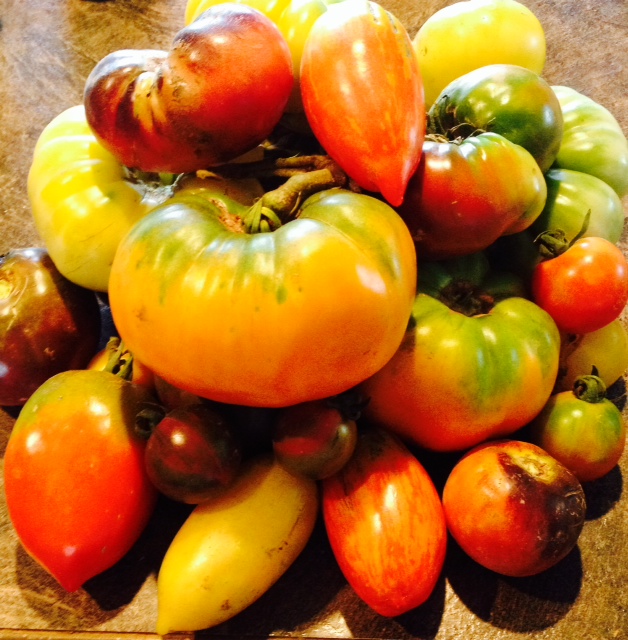
Let me share with you the attitude of the proud– those who will starve in a survival situation. A few years ago, I attended church with a pretty wealthy family whose kids really liked my garden and decided to put their own together the following year. The parents, being accustomed to having everything they ever needed at the drop of a hat, wouldn’t even help the kids except to till the ground. I asked the Dad what he would do, not having any skills in that area, if a crisis or survival situation actually called for him to provide for his family with his own two hands. To my surprise, he says to me, “How hard can it be to throw some seeds out there?” Well, my first thought (after choking on his prideful attitude) was obviously, “You wouldn’t know.” My vocal answer to him was this, “If you think you can sit on some stock of seeds and just get out there when you’re hungry and think you’re going to have the know-how to deal with issues or overcome the learning curve required to get food on the table, you’re going to go hungry.” It takes years of practice to learn to do anything well, no matter your career, interest, hobby, or sport. Even seasoned farmers and gardeners will tell you it’s a game every year. The skills needed to know how to react and knowing what to do for certain things, like diseases or bugs, need to be gained years before you actually have to do it for provision. Read the book before you take the test. Don’t think seeds will just grow themselves. That is the gardener’s job. As God said, “He put man in the garden to tend and keep it”. And believe me it takes a lot of tending and keeping, even for a small garden. We fill up the kid’s wagon to haul to the garden. It takes a few trips on the day we plant tomatoes. We grow some in every color. This makes it super fun for teaching the kids about an agrarian lifestyle and how important these skills are. They will always remember purple and orange tomatoes. 🙂 ?
The next topic I want to share is size or the amount of land required to produce the proper amount of food needed. You cannot grow two tons of food on a 0.25 acre lot. I’m sorry to bust your bubble; it ain’t going to happen. I’ve tried and tried. To my disappointment, it’s a joke. Make sure that you can grow things on a large enough scale to actually feed your family. Most big producers will not fit into a raised bed. Reserve the beds for small fruits, like strawberries, lettuce, spinach, squash, and some bushy plants, if needing to save space. In a real survival situation, you will need room to grow hearty things like corn, potatoes, beans, peas, and such. Listen to people who have lived through a war or famine. It’s all those type crops that got them through. A few raised beds will not keep you fed, unless you are very diligent about succession planting, have a green house for winter, and can eat greens everyday. There are ways to do it smaller with a green house, but that is going to require a lot of work and energy. So get busy figuring it out now. You cannot do the big producers and hearty things successfully in raised beds and get very much food. ?
You can do some of these things in a large green house in winter. I know an Amish man that rotates his poultry and early spring growing in a huge green house, and that works. However, farming is his full time job. Maybe you should consider getting one if your budget will allow. To feed a family of even just four, most of the year, you are going to need at least 1/3 to 1/2 an acre garden. And you’ll still need to succession plant. Keeping up with a garden is a rewarding way to live, but like the Amish friend told my husband once, “There’s only so much time in a day.” Decide to get proactive now rather than later. The people who can pull a rabbit out of the hat, garden for 50 all year on .25 an acre or less, are full-time gardeners with nothing else going on, with paid help, and that is their full-time job. For most people it isn’t realistic. If doing fruit trees or fruit, you’ll need more space or try edible landscaping. They do not go into that figure of 1/2 acre for a family of four. They are extra and need their own space. I know how frustrating it can be to spend so much time trying to get enough food to make it worth my time, only to end up with a few cobs of corn, a few melons, a few tomatoes, and a few peppers at the end. That was when I did it on .25 acre lot. Now, I don’t even play. My kids and I grow a full acre garden of veggies with no problem every year. I learned to throw out the books, roll up my sleeves, and figure it out myself. Some books are helpful, like seed saving books, but sometimes sweat gives you better results. For more production, try the oldies but goodies; the big producers are those row crops mentioned below. Look at these crops for the most bang for your time and money. *We must have caught someone’s eye, because the helicopters searching for weed, fly over us often. I guess one lady and a bunch a kids growing an acre garden is really something suspicious. Lol…I’ve learned to just ignore it. The kids think it’s cool. 🙁 ?
?We plant around 200-300 tomatoes each year. Everyone joins in, and we haul them and plant them together. I thank God for these times with the children. ? We haul in some of the strangest things. We grow fancy melons, cucumbers, and things that produce well. If it can’t hang with our heat, it’s gone. It must be a good producer, or it’s not worth our time. ?I haul some of the strangest things out of the garden as well! They just grab on, and who can resist a piggy back ride? Go for row crops. Quit wasting your time with things that don’t produce as much. To try it out, till up the whole yard if needed. I did when we lived in the suburbs. Our entire back yard had to be sodded when we moved. It was the only way I could get what I wanted out of the garden, and I still needed more space. Maybe you could invest in a piece of land or rent a place where you can grow row crops that will yield more than what you could ever eat. Beans, peas, melons, and squash/zuccinini, corn, okra, potatoes, sweet potaoes and all the things old timers grew are the best producers. They were doing it well before all these new fangled ways became popular, and they were getting enough food to eat. In other words, if it ain’t broke, don’t fix it. Row crops are your staples and usually your items that give you more nutrients as well. But you must get varieties that are good for your climate and soil. Your local co-op and other farmers around you will be one of the best places to look for those items that will be of real use. What do the locals consistently grow with success? Around here it’s G-90 corn or Silver Queen sweet corn. I tried for years, wasting much time and money on other “better” varieties. Heirloom corn cannot keep up here, and it’s a total waste of our time and money, just to be let down. Finally I gave in and now grow either one of those two, and I have an abundance each year. What a waste to spend your time and money on something unproductive when all you need to do is ask around and give it a try. ? We grow an heirloom variety of purple okra that is found at the local farm supply for a very cheap price. The co-op seeds are also tons cheaper than these fancy seed catalogs. I do grow the fancy stuff. We have a tomato in every color of the rainbow. We have orange water melons and even a white cucumber. It took years of trying to see what would and would not work well in our soil, climate, and garden. The local co-op seeds are usually native to the area and do better than seeds from other places. We also know how to bring in the bacon, by sticking to some row crop staples that don’t go out of style, like purple hull peas and green beans. By growing these in large quantities we feel our time is worth the effort. If you’ve spent lots of money on a heirloom seeds that will not survive your climate or produce little to nothing, you will starve. If it comes from similar climates in another country, it might work as well. One of the best buys I ever made was on winter squash seeds from a Guatemalan Blue Squash. It is the only winter squash that can take our heat and humidity in Mississippi and still be very productive. Even though all the seed catalogs have Watham Butternut as a favorite, ours always bombed. There was nothing but a couple of raggedy little squash for all my time and work. It’s better suited for the north and cannot hang with the southern heat. The squash from Guatemala, however, is an awesome producer here. I am always shocked at how much we get off of one 30ft trellis. Below is a medium-sized one. They get huge and put out loads of squash. It’s worth my time to get that food. I wouldn’t know this if I had not been actively trying to figure out these things before it could be a needed skill. And though I hope the grocery store is always an option, if anything happens we can do it. ? ?
You need to make sure you have enough seeds to do the job. Buying from the co-op makes this affordable. Buying from an expensive seed supplier does not cut it if you need seeds by the pound. Johnnyseeds.com is a good one for online bulk purchases of seeds. I always plant more than what I need, and end up glad I did. I garden with kids and critters with two and four legs around me all day. There is no planning for some of the unreal things that happen around here. So whether it is a natural disaster, like a storm or the dogs chasing a rabbit through my beans, I plan for that by planting twice as much as I wanted to get, so I at least get what I needed to get in the first place. In raised beds, row crops, or in seed starting, this has saved our food every year in some way. Also go into it easy and if the soil has never been worked, don’t be ashamed of using a chemical fertilizer just to get started. We did. Then we have weaned ourselves into an organic approach on most things by using our animals’ manure and other composted material. Lime for the soil is all natural and most soils need to be tested to see if you need it. ?Dogs are a great investment. Not only do they keep away would-be thieves, they also keep away varmints that will kill a good crop. Rabbits, coon, deer, or you name it, our dogs are our first line of defense in protecting our food supply. Last but not least, humble yourself before it’s too late. Make friends with the older folks around you, and there is a free flowing well of knowledge right at your finger tips. If you are not actively gardening, take a class or get with someone who is to get you started now! You will need these people as a life line of support as well as learning from them or to trade with in a disaster situation. In bad times, if you are a stranger, they will have nothing to do with you, because you will be a threat to them and their food supply. A friend/pastor to third world countries once told me, morals go out the door when you’re hungry. People who are normally upright and kind will be killing for food. Those who have it will also be doing the same to protect it. Do not think these folks, who bust their butts and sweat for a living, will befriend you then. Try to form relationships with those in your neighborhood or area of survival now. People who do not know you will laugh at you or “worse” in a crisis situation. They have their own families and lives to watch out for. You are a stranger, and if you intend to make it through you should have been doing what they were doing years ago. Community needs to be formed way ahead of a crisis. Building trust is as important as building a storm shelter. Your work ethic and skills should speak for you. Hard working folks will only look at deeds not words. “New comers are not to be trusted”, is an unwritten rule in the country. Most of the time it’s true. We live in a small community off of the interstate, and new comers are usually trafficking drugs up to other states. Everyone keeps a close eye on newcomers here, because they often mean trouble for small towns or very rural areas. In a crisis, you don’t need others being leery of you, when everyone is high strung and motives will be questioned. You probably will also need to depend on animals at some point, and starting now will give you an understanding of there needs such as food, shelter, pests and diseases. So start evaluating what you can do now rather than later for this learning to begin. We began our homesteading in the suburbs 12 years ago. We had chickens and bunnies. Do whatever you can, where you are now. ? Seriously, I make it a point to befriend old folks. Especially old timers that know how to farm, garden, bee keep and just survive. It’s always a treat to have one old timer or another stop by to check in on me and my family and offer garden tips. We chew the fat and carry on about farm stuff and local gossip. My bee man is near ninety years old (he won’t tell me for sure), and he still brings me goodies and offers tips that help me in some way every time he comes by. Thank God my husband isn’t the jealous type, because I’ve got a lot of old timers for miles to help me when I need it. They know I want to learn, and they love that a younger person has time for them and wants their knowledge. There’s a different older man almost daily coming by to check in on my projects and offer wisdom. They love sharing wisdom and our family is loving the learning we get to do and friendships we have made. One near and dear to us passed away a year ago, but right up to his death he taught me things. This man was near ninety as well and went out and wild harvested some Sassafras root for me, so I could have Sassafras tea like he had growing up. I already knew what it was, but I thanked him and came home to make my tea, because he cared enough to take the time to dig it for me. Sassafras was the original base for root beer. It’s slightly spicy and good served warm with honey. It was a major staple crop for colonial Americans to sell to England. ?
The lesson was to be sure to invest your time learning now, because when you need it you’ll have the proper skills. If it’s ever a game changer and you have to do it for survival, you cannot afford to be unskilled, unlearned, and out of shape. I hope you found this helpful. Now, I’m going to pick my okra and sweat for a while. 🙂 *I’ll be teaching a class on Basic Soap Making With or Without Electricity at the National Preppers & Suvivalists Expo in Baton Rouge, March 4-5th 2017! Check it out at NPSexpo.com Make plans now to attend! This article originally appeared in Homesteadmoma.com
Letter Re: Missouri Constitutional Carry—Not So Fast
Gentlemen,
The recent override of Governor Nixon is indeed a step in the right direction. However, it is important to remember that Missouri citizens do not enjoy state preemption. This bill only allows permitless concealed carry where permitless open carry is currently allowed. Many localities ban carrying a firearm (concealed or unconcealed) without the state concealed carry license. If you choose to carry a concealed firearm without a valid permit, you will NOT enjoy any of the exemptions that are enjoyed by those who DO carry on a valid CCW permit, including exemptions to federal laws that prohibit firearms in schools and on premises that meet the federal definition of a “school zone”.
I would hate to see a reader (or anyone) blunder into a felony charge based on a misunderstanding of the law. – C.H.
Economics and Investing:
Foreign Central Banks Sell A Record $343 Billion In US Trasuries In The Last Year – G.G.
o o o
o o o
Gold Prices: Timing The Next Bottom
o o o
Three ways the banks are scamming you
o o o
SurvivalBlog and its editors are not paid investment counselors or advisers. Please see our Provisos page for details.
Odds ‘n Sods:
TV Ad Encourages German Women To Wear Hijabs – Submitted by Pat Cascio
o o o
East Coast faces gas shortages, price hikes after pipeline leak. I Just went to top off my gas and talked with the good ole southern dude that runs the local gas station (not a chain) and he said “we’re not supposed to say anything but we’re figuring we’re going to run out of gas on Monday”. – T.S.
o o o
Apology Issued After Officers Raid Wrong Home – DSV
o o o
The Feds Will Soon Be Able to Legally Hack Almost Anyone – B.B.
o o o
In a hungry Venezuela, buying too much food can get you arrested – G.L.
Hugh’s Quote of the Day:
“For a small moment have I forsaken thee; but with great mercies will I gather thee. In a little wrath I hid my face from thee for a moment; but with everlasting kindness will I have mercy on thee, saith the Lord thy Redeemer.” – Isaiah 54:7-8 (KJV)
Notes for Friday – September 16, 2016
September 16th is the birthday of “Mad Jack” Churchill (1906-1996), who was a true eccentric. He went to war in WWII armed with a broadsword and a longbow. (The latter was successfully used to dispatch several German soldiers.) He later became a devoted surfer. What a guy.
o o o
Today, we present another entry for Round 66 of the SurvivalBlog non-fiction writing contest. The nearly $12,000 worth of prizes for this round include:
First Prize:
- A Tactical Self-Contained 2-Series Solar Power Generator system from Always Empowered. This compact starter power system is packaged in a wheeled O.D. green EMP-shielded Pelican hard case (a $1,700 value),
- A Gunsite Academy Three Day Course Certificate that is good for any one, two, or three day course (a $1,195 value),
- A course certificate from onPoint Tactical for the prize winner’s choice of three-day civilian courses, excluding those restricted for military or government teams. Three day onPoint courses normally cost $795,
- DRD Tactical is providing a 5.56 NATO QD Billet upper with a hammer forged, chrome-lined barrel and a hard case to go with your own AR lower. It will allow any standard AR-type rifle to have a quick change barrel, which can be assembled in less than one minute without the use of any tools and a compact carry capability in a hard case or 3-day pack (an $1,100 value),
- Gun Mag Warehouse is providing 20 Magpul PMAG 30-rd Magazines (a value of $300) and a Gun Mag Warehouse T-Shirt; (an equivalent prize will be awarded for residents in states with magazine restrictions),
- Two cases of Mountain House freeze-dried assorted entrees in #10 cans, courtesy of Ready Made Resources (a $350 value),
- The Ark Institute is donating a non-GMO, non-hybrid vegetable seed package (enough for two families of four) plus seed storage materials, a CD-ROM of Geri Guidetti’s book “Build Your Ark! How to Prepare for Self Reliance in Uncertain Times”, and two bottles of Potassium Iodate (a $325 retail value),
- A $250 gift certificate good for any product from Sunflower Ammo,
- KellyKettleUSA.com is donating an AquaBrick water filtration kit with a retail value of $250, and
- Two cases of meals, Ready to Eat (MREs), courtesy of CampingSurvival.com (a $180 value).
Second Prize:
- A Glock form factor SIRT laser training pistol and a SIRT AR-15/M4 Laser Training Bolt, courtesy of Next Level Training, which have a combined retail value of $589,
- A transferable certificate for a two-day Ultimate Bug Out Course from Florida Firearms Training (a $400 value),
- A Model 175 Series Solar Generator provided by Quantum Harvest LLC (a $439 value),
- A Trekker IV™ Four-Person Emergency Kit from Emergency Essentials (a $250 value),
- A $200 gift certificate good towards any books published by PrepperPress.com,
- A pre-selected assortment of military surplus gear from CJL Enterprize (a $300 value),
- RepackBox is providing a $300 gift certificate to their site, and
- American Gunsmithing Institute (AGI) is providing a $300 certificate good towards any of their DVD training courses.
Third Prize:
- A Royal Berkey water filter, courtesy of Directive 21 (a $275 value),
- A $245 gift certificate from custom knife-maker Jon Kelly Designs, of Eureka, Montana,
- A large handmade clothes drying rack, a washboard, and a Homesteading for Beginners DVD, all courtesy of The Homestead Store, with a combined value of $206,
- Expanded sets of both washable feminine pads and liners, donated by Naturally Cozy (a $185 retail value),
- Two Super Survival Pack seed collections, a $150 value, courtesy of Seed for Security, LLC,
- Mayflower Trading is donating a $200 gift certificate for homesteading appliances,
- Montie Gear is donating a Precision Rest (a $249 value), and
- Two 1,000-foot spools of full mil-spec U.S.-made 750 paracord (in-stock colors only) from www.TOUGHGRID.com (a $240 value).
Round 66 ends on September 31st, so get busy writing and e-mail us your entry. Remember that there is a 1,500-word minimum, and that articles on practical “how to” skills for survival have an advantage in the judging.
Bitcoins Are Now Available for Anyone to Buy, by G.S.
I saw an article today announcing PayPal will be accepting Bitcoins (BC) in the future through a BC payment platform called Coinbase. I am using Ebay sales to fund my preparations and supplement my income, so I already have a significant online signature. (I know, I know.) Many of you may be using Ebay and PayPal as well, so you may be interested in how you would also accept Bitcoins for your sales or purchases. Others out there might be interested in investing in Bitcoins, and Coinbase makes that possible for all on a limited scale.
You may be interested to read the article entitled PayPal to Accept Virtual Currency.
Coinbase allows you to buy small amounts of BC to make purchases online, and I am assuming if PayPal starts letting me accept BC payments for my Ebay auctions, BC payments would be deposited to my Coinbase account. Coinbase has made it possible to only buy a limited number of BC per day to keep high rolling investors from using their service (more below). They are interested in catering to the average Joe who is buying and selling on the Internet.
I thought some people might have questions about how the sign up and purchasing process works, and since I did not know for sure either, I decided to document the process as I went through it. Below you will find what is required of you, if you decide to give it a try.
A basic explanation is in order for those who do not know anything about BCs. Bitcoins are virtual currency existing only online. In the past it has been very difficult to buy and sell them with the money you have in the bank, and honestly most of the companies claiming to allow you to do this were unproven and a little sketchy. Before now, you typically had to “mine” the coins through a complicated process, requiring a high end computer. When I looked into this, it seemed many days of mining resulted in very little reward. You can read the basics about it in the article “How to Mine Bitcoins on Your Own”.
Coinbase is a virtual wallet for you to hold your Bitcoins or portions of coins, just like a bank account or PayPal. It lets you buy and sell Bitcoins from your real bank account after you have linked the two. Currently, Coinbase requires linked bank accounts to exchange Bitcoins for dollars, but I would bet in the future they will also accept PayPal account links. There is no fee for exchanging BCs with others or for paying merchants using BCs. There is a 1% fee for buying and selling actual Bitcoins from your personal bank account. The service is available in many, but not all, countries. A list of countries can be found online.
Not everything I have read online has been positive about Coinbase. At the end of last year, there were quite a few negative comments from people saying there were long lags between when orders were placed and when they were filled. Also, many people were denied, when trying to connect to their bank accounts for various reasons. I get the feeling Coinbase was simply not good about letting people know why they were denied or delayed, and this led to a lot of frustration. This lack of communication was probably due to the huge number of people trying to get a piece of the Bitcoin pie when it exploded in value last year. It does not appear Coinbase was staffed at the time to handle the number of customers trying to sign up.
In addition to accepting Ebay payments in Bitcoins, I decided to sign up now because Coinbase is going to need to be legitimate and responsive to customer needs if they are going to be working with PayPal. Their customer service seems to have improved. I am seeing a lot less complaining from customers in 2014, in addition to many people who are happy with their accounts. They are now more highly recommended than any other similar service within the Bitcoin crowd.
When I first clicked the Sign Up link in the top right corner of their welcome screen, it required my email and a password. A verification email was sent within seconds and allowed me to continue, once I clicked the link.
Next, it required my phone mumber and immediately sent a text with a confirmation number to my phone. Once I entered this number, I was able to continue with the sign up process. Coinbase will text you with a new number every time you log in and require you to enter it, unless you click on the “30 Day” box when you are entering the site. This is a nice security feature, since you have to have your phone to log into your account.
At this point I was surprised when they deposited my first $1 in Bitcoins into my account. I did not know this was going to happen, but I am now the semi-proud owner of .002659 Bitcoins. They also provided me with my unique personal Bitcoin Address, which I can send and receive Bitcoin transfers to and from. If you are interested in what this looks like, for me it is… 1HPW61f5CDRhCp8oANy4CN8ZAnVqc9nvLN
You will see a similar address on the Support page for SurvivalBlog. This site will happily accept Bitcoin for subscriptions and donations. Bitcoin has the advantage of being free of the entanglements of the Federal Reserve and the Central Banks, and it has been a favored alternative for SurvivalBlog support for a while now.
Next, it asked for my bank routing and account numbers. Two small deposits under $0.99 (99 cents) were sent to my account the next day. Once I verified the amounts, my account setup was complete. PayPal, and other similar online services, require the same information to connect a bank account to the wallet on their site.
This put my account on Coinbase at Level 1, which gives me the ability to purchase or sell up to $3,000 in BC per day. It also will allow me to set up my account to automatically buy up to $100 in BC each week from the account. To move up to a Level 2 account requires some additional information, such as my address, as well as making a purchase of BC and waiting 30 days. Level 2 will allow me to purchase and sell up to $50,000 per day and automatically buy up to $1,000 per week. I will never have a reason to buy or sell that much that I can think of, so I will not be providing the additional information.
I am ready to buy my first Bitcoin. The price at this moment is $367.67 per coin. The current price is easy to find on Coinbase. Even if you are not logged in, the price is available at the top of the screen.
The value has been falling steadily since the end of last year, when the Bitcoin price exploded to over $1,100. On July 1st of this year, the price was $635. On August 1st, it was $581, and on September 1st, $478. Just like buying and selling other investments, there is a difference between the buy and sell price, but the difference is more pronounced than you might be used to with Bitcoin. When you submit a Buy Order, your BC has to be purchased by Coinbase through one of the BC exchanges, which is not as in-synch as the Nasdaq or DOW, so buy and sell prices can fluctuate more than a stock buyer would be used to. It currently costs about $1.50 more to buy than to sell, which is about 0.4% of the BC value. The Coinbase fee for buying and selling is 1%, so I would pay Coinbase $3.67 for a 1 Bitcoin purchase of $367.
As you can see above, the value of Bitcoin is getting killed, so if you are opening this account to invest some money in Bitcoin, you are going to want to do some research and make a decision on when is a good time for you to buy. If you are opening the account to be able to accept Bitcoin payments, there is really no reason to wait. There is not a fee for having an account. You would not even need to synch up your bank account until you were ready to withdraw your Bitcoin payments, and by then you may be able to transfer them to PayPal instead or have a check sent in the mail.
If you choose to buy Bitcoins, a basic purchase takes about four days to be completed from the time you place the order. Coinbase uses these four days to insure the money arrives from your bank before they credit your wallet with the BC. If you want to receive your coins faster, you have the option of entering a credit card number, which will let you instantly buy coins. If the bank account does not have the funds required, they will charge your CC for the remainder you owe on your purchase.
Letter Re: Clayton Moore
Hugh,
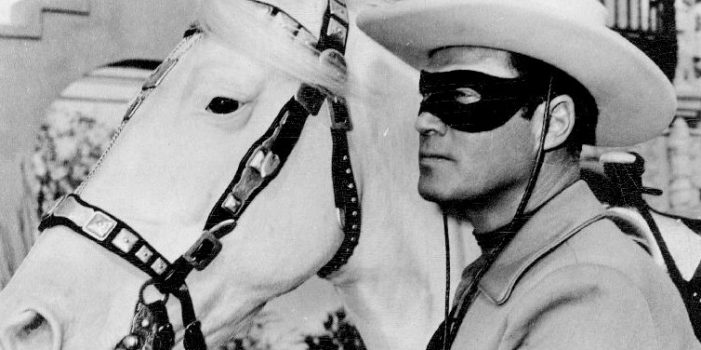
Regarding your top note on September 14th, this was an interesting story on The Lone Ranger and Houston. I worked for the Houston Post Newspaper at the time when this happened. A Southwest Airlines baggage handler stole his luggage, guns, and all. It was a slow news day I guess, so every newspaper and TV station covered it. The city of Houston had probably half the city detectives out looking for the luggage. The mayor, the governor, everybody was in an uproar. The governor even sent out some Texas Rangers to help on the case. Some years later I spoke with a customer who was a retired Texas Ranger and had worked on this case. He told me that the Rangers took this theft VERY personally, as Clayton Moore was very well thought of by the Texas Rangers, as you can imagine. Clayton Moore was hugely popular in Texas and always was. I’m surprised the thief wasn’t given a capital sentence! After the guns were recovered, the mayor, police chief, and governor were all there when he was given his guns back at a news conference. The trial was a hoot. You can read some of it in the attached article above. He was good people, as my father would say. N.S.