Notes for Wednesday – August 03, 2016

August 3rd, 1846 is the day that the Donner party found a note warning the emigrants that their expected route through the mountains ahead was nearly impassable. Hastings, an unscrupulous trail guide, had created his own “short cut” route and wasn’t even at the meeting place at Fort Bridger but had left word for the party to continue on. Hastings had claimed easy passage through the rugged Wasatch Mountains but had left a note attached to a forked stick for the party explaining that the route was more difficult than he thought. Eventually reduced to cannibalism, only 45 of the original 89 emigrants reached California the following year.

o o o

SurvivalBlog would like to welcome AMTAC as a new advertiser. They specialize in “precision engineered silence” for your weapon of choice. Head on over to amtacsuppressors.com and check them out.

o o o

Today, we present another entry for Round 66 of the SurvivalBlog non-fiction writing contest. The nearly $12,000 worth of prizes for this round include:

First Prize:

  1. A Tactical Self-Contained 2-Series Solar Power Generator system from Always Empowered. This compact starter power system is packaged in a wheeled O.D. green EMP-shielded Pelican hard case (a $1,700 value),
  2. A Gunsite Academy Three Day Course Certificate that is good for any one, two, or three day course (a $1,195 value),
  3. A course certificate from onPoint Tactical for the prize winner’s choice of three-day civilian courses, excluding those restricted for military or government teams. Three day onPoint courses normally cost $795,
  4. DRD Tactical is providing a 5.56 NATO QD Billet upper with a hammer forged, chrome-lined barrel and a hard case to go with your own AR lower. It will allow any standard AR-type rifle to have a quick change barrel, which can be assembled in less than one minute without the use of any tools and a compact carry capability in a hard case or 3-day pack (an $1,100 value),
  5. Gun Mag Warehouse is providing 20 Magpul PMAG 30-rd Magazines (a value of $300) and a Gun Mag Warehouse T-Shirt; (an equivalent prize will be awarded for residents in states with magazine restrictions),
  6. Two cases of Mountain House freeze-dried assorted entrees in #10 cans, courtesy of Ready Made Resources (a $350 value),
  7. The Ark Institute is donating a non-GMO, non-hybrid vegetable seed package (enough for two families of four) plus seed storage materials, a CD-ROM of Geri Guidetti’s book “Build Your Ark! How to Prepare for Self Reliance in Uncertain Times”, and two bottles of Potassium Iodate (a $325 retail value),
  8. A $250 gift certificate good for any product from Sunflower Ammo,
  9. KellyKettleUSA.com is donating an AquaBrick water filtration kit with a retail value of $250, and
  10. Two cases of meals, Ready to Eat (MREs), courtesy of CampingSurvival.com (a $180 value).

Second Prize:

  1. A Glock form factor SIRT laser training pistol and a SIRT AR-15/M4 Laser Training Bolt, courtesy of Next Level Training, which have a combined retail value of $589,
  2. A transferable certificate for a two-day Ultimate Bug Out Course from Florida Firearms Training (a $400 value),
  3. A Model 175 Series Solar Generator provided by Quantum Harvest LLC (a $439 value),
  4. A Trekker IV™ Four-Person Emergency Kit from Emergency Essentials (a $250 value),
  5. A $200 gift certificate good towards any books published by PrepperPress.com,
  6. A pre-selected assortment of military surplus gear from CJL Enterprize (a $300 value),
  7. RepackBox is providing a $300 gift certificate to their site, and
  8. American Gunsmithing Institute (AGI) is providing a $300 certificate good towards any of their DVD training courses.

Third Prize:

  1. A Royal Berkey water filter, courtesy of Directive 21 (a $275 value),
  2. A $245 gift certificate from custom knife-maker Jon Kelly Designs, of Eureka, Montana,
  3. A large handmade clothes drying rack, a washboard, and a Homesteading for Beginners DVD, all courtesy of The Homestead Store, with a combined value of $206,
  4. Expanded sets of both washable feminine pads and liners, donated by Naturally Cozy (a $185 retail value),
  5. Two Super Survival Pack seed collections, a $150 value, courtesy of Seed for Security, LLC,
  6. Mayflower Trading is donating a $200 gift certificate for homesteading appliances,
  7. Montie Gear is donating a Precision Rest (a $249 value), and
  8. Two 1,000-foot spools of full mil-spec U.S.-made 750 paracord (in-stock colors only) from www.TOUGHGRID.com (a $240 value).

Round 66 ends on September 31st, so get busy writing and e-mail us your entry. Remember that there is a 1,500-word minimum, and that articles on practical “how to” skills for survival have an advantage in the judging.


How Do You Find A Good Survival Retreat Property?, by D.R. in TN

With global economic instability rising and personal security issues taking center stage in the U.S., consumer demand is increasing for remote properties that offer security and the ability to be self-contained. This could include providing your own electric power, drinking water, food, and personal protection. In other words, it’s the ability to live independently, in a self-sufficient manner, with renewable resources far from urban chaos.  Are you looking for a remote survival property?

Think very seriously about it. We did, and what follows is a checklist of considerations for finding a survival retreat. It is the culmination of a four-year process of searching, site visitations, and more searching. When we started our search 10 years ago, we were living about 100 miles from “ground zero” for every nutjob with a terrorist death wish. There was some urgency, even then. We knew we had to prepare to Get Out of Dodge. We were convinced that, when things go South, having a dedicated safe retreat for relocating our loved ones would put your minds at relative ease, and it did. It would make no difference what the SHTF crisis was. It could be man-made or a natural disaster that causes you to leave your immediate area; it could be a nationwide financial melt-down or a long-term security situation that could make returning to your primary residence perilous or impractical. Having a retreat, when facing TEOTWAWKI, provides you with a secure place to go that is far from inner city anarchy and where you can safely maintain food reserves and other supplies and start your life over again. If that sounds like a practical alternative to holing up in your house while looters with sledgehammers crack open nearby ATMs, then our experiences could be a good primer for you.

Where do you start in determining a good location for your survival retreat? Start by doing your own research. Understand that it’s going to take some time commitment to find what you want. It’s probably one of the most important purchases of your life and for your loved ones, so take the time to be thorough. Read up on what makes a good retreat property. James Wesley, Rawls’ book, Rawles on Retreats and Relocation, is a good place to start. Joel Skousen’s Strategic Relocation is another well-known reference. Use popular Internet sites (like SurvivalRealty.com) to select your top two or three areas of the country, and learn all you can about those locations. Be sure what you select is within your budget and is a practical choice for your family and/or retreat mates. Unless you have unlimited funds, there will be trade-offs and compromises in your selection process. Eventually, you’ll boil down to the lowest common denominator– the “must-haves” at your retreat property. Once you’ve really narrowed your choices to one single area, get some professional help. If you don’t buy and sell properties on a routine basis or have a very close friend who already lives in the area you’ve selected and is willing to help you, you’ll want to consider finding a seasoned real estate broker– a highly experienced expert in local retreat properties. Talk with all of the rural property brokers in the area you’ve identified. Research the brokers thoroughly, and talk to their past clients. Consider someone very familiar with the county courthouse and who can demonstrate a good track record of satisfying clients, not just having the most listings or selling the most houses. Remember, this person must be someone you trust to be knowledgeable, thorough, and discreet; you’re not looking for a fast-buck artist. An expert who understands pricing elasticity in your area can guide you to properties that you can afford and assist, if necessary, with finding owner-financed properties and other purchasing options to meet your needs. Of course, you must have your finances in order and be seriously ready to pull the trigger when you find the property that you want.

Significant Points to Consider

Once you have pinpointed a short list of properties in your chosen area, these are some significant points to consider. Later in this article, I’ve included a fairly complete checklist of critical considerations and questions. It’s not exhaustive, but based on our own experiences it can serve as a practical guide for most everyone. These are some initial questions to ask yourself about the best sites you’ve selected.

Location: The most important rule of real estate is always location, and this is the overriding consideration in choosing any retreat location. How will you get to this location in a disaster, if it’s a multi-state drive away? What’s the population of the local area? Is the property defensible? How far off the beaten path do you want to be? How close is it from major population centers and evacuation “lines of drift”? How many access points are there?

Water: You must have year-round reliable drinking water. Are there wells, streams, springs, rainwater collection potential, and/or ponds? You need redundant water sources that are independent from city water services. What will it cost to develop or remediate these? What are average rainfall amounts for the area?

Self-sufficiency: Is the site suitable for solar energy production, wind mills, or mini-hydro power applications? Is the soil favorable for growing your own food, if necessary, and for raising livestock? Is there plentiful wild game? Is their adequate timber for building and firewood for heating your home? If you need it, what would it take to get central station electricity and city water, natural gas, and sewer to the location?

Cost of living: Can you find employment in the area? What’s the zoning situation, and how about property taxes? What are insurance costs? What sources are available locally for various services, such as hospitals, diesel mechanics, electricians, plumbers, and/or earth movers? Where are schools and churches?

Finally, don’t procrastinate. If you’re reading this, you already recognize a serious need for the security of your loved ones and close friends, should a disaster occur. Get started now. Identify a general location that is accessible and well suited to your needs. As noted in other SurvivalBlog posts, you can use City-Data.com as an effective tool to pare down your location choices. Contact a local real estate expert that specializes in retreat properties from your chosen area. Good luck and good hunting.

Checklist for Choosing Remote “Retreat” Property

  • How will you get to the retreat location in a disaster? ls your vehicle reliable and well-outfitted?
  • Do you have a refueling plan if it’s a multi-state drive away? Will you have backup supplies along the way?
  • How defensible is it? Is there high ground to control access and maintain security? Mountainous, rocky terrain limits access, but is it also suitable for planting a garden, digging a root cellar, or building a tornado shelter?
  • What are the prevailing area weather patterns? What’s the average rainfall? Length of seasons?
  • Is your site near an earthquake zone or susceptible to river flooding and/or mudslides?
  • Will any structures be visible from the nearest county road? Is there high ground from which to overlook and control your access points or build an LPOP?
  • Is there more than one ingress or egress point? Is it a private entrance or a county-maintained roadway? Does it require 4WD to access? Does the property entrance look inviting to solicitors, spooners, hunters, or other uninvited individuals? A county road sign (ie: Shady Cove Ln) is an invitation to wanderers. You do not want “curb appeal” at your retreat.
  • ls there year-round fresh drinking water– wells, streams, springs, rainwater collection, or ponds? Look for multiple water sources independent from convention city water services. What will it cost to develop or remediate these?
  • Will the soil need to be amended for agriculture or is it adequate for growing crops now?
  • What is the year round climate, and will you be able to tolerate it (for yourself and for your garden and livestock)?
  • Is there plentiful wild game? Rural areas are home to many insects, rodents, and other indigenous critters that you may not be familiar with. What are the natural predators in the area? Feral hogs and coyotes are growing into a nuisance in the South. Learn what to look for so you’ll not be surprised at what already lives on your selected property.
  • How far is your site from a major metro area or large city? What is the population of the local area, the county, the closest town, and how close is it to migratory “lines of drift” from major population centers. During a crisis, areas with high population densities generally can experience the most crime, social unrest, looting, highest likelihood for diseases, and the highest death tolls due to anarchy, depleted resources, and poor sanitation.  Avoid proximity to these areas.
  • If your site is just a raw tract of land, what are the local zoning restrictions for building? Can you have an airplane landing strip? Can you have fuel storage tanks? Can you build a lake or dam a stream? Can you drill for oil or natural gas on the property? You do plan to buy with all of the mineral rights intact, right?
  • Is there adequate road access for bringing in building materials if needed? Are there fences and gates on the property, and what is their condition?
  • Will you have to install a septic system, and if so, has the soil been perc tested? If not, what is the confidence of passing a percolation test?
  • Is there electricity nearby? Do you know the cost of bringing electricity to the building location? Will you need back-up generation capability? Which fuels (propane, natural gas, et cetera) are available?
  • Will you consider solar power? Is the site suitable for photovoltaic energy production, wind mills, or mini-hydro power applications? If so, check for adequate sun exposure near the building location (South-facing exposure for Northern Hemisphere).
  • Is there plentiful timber for building and/or firewood for heating your home?
  • Are you at least 50 miles from the nearest nuclear power plant? What are the seasonal prevailing wind directions from that plant?
  • Do you or your family need professional medical services? Occasionally, you may need medical treatment from a metro center, e.g. special health care). You might not want to live too far away from a city but beyond the reach of an evacuating mob. We like a 50 mile minimum, but further (75 miles or more) is much better. What about local ambulance service? Do you or your family members have allergies to any environmental (natural or otherwise) elements that could be aggravated at your selected location?
  • What is the general cost of living in the area? What are the median income and education levels?
  • How expensive are the property taxes? What’s the local regulatory climate?
  • What are the State and Local taxes? Is there a state income tax?
  • What about educational opportunity for school-age children? How far away are the schools?
  • What religious affiliations are prominent in the area? Where are the churches?
  • Will you live on site full time? Unless you have enough funds in reserve or lucrative investments, are you going to be able to find employment? Will the location provide a supplemental income? Will it be enough to get by?
  • If you don’t live on-site full-time, who will be looking after your property? Do you have a trustworthy neighbor to look in on the property routinely and report back?
  • What’s the attitude of local law enforcement? How about the local elected Sheriff? The local Road Commissioner is also good to check out.
  • What are the crime statistics for the county your property is in? Review the local newspaper and consider prevalent arrest statistics.
  • Who are your neighbors, and might they be like minded? Stop and visit them prior to any purchase. Make a good first impression; your life may depend on your neighbor’s good will at some point.
  • What is the political climate of the state and in the nearest town that you are considering? Will you be able to tolerate it?
  • What will it cost to insure your property for fire loss and weather-related damage.
  • Are you surrounded by other private property owners or do you have some natural boundaries or Government, National/State Forest, or BLM boundaries? This could be advantageous or not, as some Western ranchers have recently discovered.
  • How far is the location from the nearest small town? (You will need to occasionally replenish your supplies.)
  • How far is the location from the nearest mid-sized town? (They will have special services that you may require from time to time, like refilling your buried propane tanks.)
  • Would it bother you much if a high percentage of county residents were illiterate? What other characteristics of a local population should you be concerned about?
  • What sources are available locally for mechanical services, such as electricians, plumbers, earth movers, and vehicle repairs? If these are scarce, how far would providers have to come to help you, and at what cost? Can you learn to handle property maintenance work and minor medical crises yourself? Are you physically able to handle manual labor and DYI projects common in a remote setting?

There’s a lot to consider in seeking a survival property, but take it one step at a time and you won’t be overwhelmed. You’ll find it’s a lot like prepping; you start with your top survival priorities and work at it with conviction and patience over time until you have assembled what you need and learned how to deploy your acquired resources. A survival property search can be fun and very rewarding, even though it can be a long, thoughtful, decision-making process that you and your family do not enter into lightly. Sure, finding the “right” property for your needs and budget takes some time, but don’t drag your feet on starting your search process. Consider the alternatives; they are not pleasant. Leaving the city at the last minute with your family and a car full of luggage is definitely not a smart strategy. You need a specific safe destination and a solid plan (or two or three or four plans) to get to your retreat. Being aimless and mobile is high risk for even the best prepared individuals. Believe me, most city dwellers assume they are safe if they stay in their cozy house. That’s their survival plan. The error of this supposition becomes sadly obvious when the first well-armed looters invade their neighborhood. These pillagers definitely had their own plan all along, which was to take what you have as a means for their own survival. Of course, there are other city folks who really believe they can “head for the hills” and survive with their old “Boy Scout” skills. That scenario does not have a happy ending. What’s left is about 97% of the population clueless and totally unprepared. By the time they figure out there’s a serious problem and no one is coming to help them, the Seven-11’s are already empty. Be smart; be among the 3% that have a secure retreat location in advance and a plan to get to it in an emergency if you are not already living on site. In fact, have multiple backup plans to reach your retreat expeditiously, with the fuel reserves for a reliable vehicle to transport you and loved ones there as safely as possible.

Finding a good survival retreat location is not a difficult task. But putting off your search will only ensure that you’ll likely not have a safe retreat when you or your family needs it most. Start your research now. Select a general retreat location (multi-county) in a region you like, look over these checklist questions, and contact a local expert in survival retreat properties. Good luck on your journey, and God bless.


Letter Re: The Profile of Wounding in Civilian Public Mass Shooting Fatalities

Dear Sirs,

I read the excellent study (“The profile of wounding in civilian public mass shooting fatalities“) linked from SurvivalBlog on 7/30/16. The only criticism I have is the premise that civilian public mass shootings (CPMS) victims could receive prehospital care within 10 minutes and trauma center care within 60 minutes of injury. As we have seen in events such as the Orlando and Paris Bataclan nightclub capers, these goals are sometimes stymied. Insights I gleaned from the study are as follows:

  1. Blindly following an algorithmic approach to trauma care may lead you to select the wrong algorithm for the situation. As the study pointed out, the differences in weapons, distance between combatants, and presence or absence of body and/or head armor all significantly change the wounding patterns and therefore the immediate approach to care.
  2. While I don’t know if the individual combatant thinks much about this at the time, in war a strategy of wounding slows the enemy more and causes them to use more resources than a strategy of killing. It was apparent to the authors that the strategy in CPMS events was to maximize killing. It was very revealing that the study authors could only identify 9 of 125 CPMS victims (7%) with potentially survivable injuries.
  3. The authors confined themselves to examining medical options for dealing with CPMS injuries. Since so few victims can be expected to survive, even with quick and appropriate care, the more successful strategy in CPMS may be in limiting casualties by stopping the attack quicker. It is clear that gun free zones do not work (and seem to be a magnet for such attacks). Expanding a failed strategy never results in its subsequent success.
  4. About 6% of our population has concealed carry permits. To obtain them they demonstrated knowledge in weapons law as well as proficiency in handling a handgun. In addition, they passed a background check. Statistically, it has been determined this group of people are less likely to commit a crime than are police officers. If one out of every 18-19 people did routinely carry their handgun, maintained proficiency with it, and there was a reduction in “gun free zones”, it is likely that the overall death rate from CPMS would decline.
  5. For those squeamish about the idea of an armed citizenry, I would like to draw an analogy. Though I have only used the fire extinguisher in my car once in the last 30 years, I continue to carry one. I do not look for fires to put out, and I would not use it on fires that it would not extinguish or whose progress it would not significantly impede. I certainly do not start fires to put out with my fire extinguisher. I view equally inanimate objects (like firearms) the same way.
  6. Though medicine has evolved greatly and continues to progress, it may be less responsible for declining death rates over time than good hygiene, waste disposal, and modern food packaging practices. We should not depend entirely on the medical profession to mitigate the damage from CPMS events. – Kris


Economics and Investing:

You Can’t Eat Gold. “The point is that simple statements such as “You can’t eat gold” are a useless DISTRACTION.”

o o o

End of Driving Season Could Send Oil Back to February Lows. Oil prices are about to face even more downside as the end of a somewhat disappointing driving season is nearing.

o o o

We May Not See A Total Meltdown Of Global Currencies But This Will Definitely Collapse

o o o

Admitting a Weak Economy, the Fed Keeps Rates Low

o o o

SurvivalBlog and its editors are not paid investment counselors or advisers. Please see our Provisos page for details.


Readers’ Recommendations of the Week:

Reader J.B. recommended the Hardy Boys series:

I’ve been reading the Hardy Boys series aloud to my children (three boys, one girl, ages 4,7,8,10), and I think I enjoy them as much as they do. Not only entertaining, it is quite refreshing to read how they solve problems with only their ingenuity and their bare hands. The boys are smart, funny, hard-working, and chivalrous to their young lady friends. They respect their parents. They know when and how to fight, build a fire, and track animals and people. They take the blame when necessary and work hard to make their mistakes right without complaining. These stories provide an excellent opportunity to engage discussions in science, nature, bullies, history, manliness, respect, and emergency preparedness.

o o o

Reader S.R. suggested Wild by Nature: From Siberia to Australia, Three Years Alone in the Wilderness on Foot by Sarah Marquis. A female’s ten-thousand-mile solo hike surviving extreme temperatures, thieves, dehydration, an abscess, and more. Not a continuous journey and she had help, but still an educational read.

o o o

H.L. suggested War Day by Whitley Streiber and James Kunetka. Written in 1984, it’s the first novel to deal with the aftereffects of an EMP attack and strikes on our ICBM fields. Five years after war day two Dallas reporters travel the country, trying to put together a coherent picture of how the USA is doing, with interviews with many different folks. Very thoughtful book, all in all.

o o o

R.T. suggested The Marvelous Pigness of Pigs: Respecting and Caring for All God’s Creation by Joel Salatin

Unfortunately mis-titled, it’s not about pigs. Its target audience is denominational Christian farmers who subscribe to corporate-style farming.


Odds ‘n Sods:

Tim Kaine’s stance on firearms has shifted along with events.

This article in the leftist Washington Post seems to praise him for lying to his constituents about his intention to disarm them. So this is Hitlery’s running mate? All that I see is typical political opportunism, statism, and prevarication. I hope that the American electorate sees through the shrewd lies of Hillary Rodham Clinton and Timothy Michael Kaine. – JWR

o o o

I was sent this video for Armageddon Gear (Made in America) by reader G.S. This has to be one of the most inspiring videos I’ve seen in a long time: Armageddon Gear American Made

o o o

ATF forgot to comply with policy, accidentally creating gun owner database – DSV

o o o

CBP ‘Secure Locations FAQ’ Is Guide For Avoiding Deportation – B.B

o o o

Number of Americans renouncing their citizenship near record highs – G.G.


Hugh’s Quote of the Day:

Maxim LIX (59): “There are five things the soldier should never be without–his musket, his ammunition, his knapsack, his provisions (for at least four days), and his entrenching tool. The knapsack may be reduced to the smallest size possible, if it be thought proper, but the soldier should always have it with him.” – Napoleon Bonaparte


Notes for Tuesday – August 02, 2016

On August 2nd, 1776, the members of Congress affixed their signatures to an enlarged copy of the Declaration of Independence. Congress had decided to produce a handwritten copy to bear all of the delegates’ signatures. Fifty-six congressional delegates in total signed the document, including some who were not present at the vote approving the declaration. News of the Declaration of Independence arrived in London eight days later, on August 10.


Pat Cascio’s Product Review: Springfield Armory, Range Office Champion

I love taking folks out shooting who have never shot a gun before in their lives. I especially love taking anti-gunners out shooting for the first time. I was working as the Youth Minister for the Salvation Army down in Klamath Falls, Oregon back in 1988-1989 and also ran their Youth Center. The Officer (Pastor) there was a fairly young fellow, younger than me, and just out of training school. He was totally against “assault rifles” of any kind and had never shot any type of gun in his life. I took him out to my brother-in-law’s ranch and introduced him to a Colt AR-15 rifle, and he had the time of his life. He burned up a lot of ammo. When we were done for the day, he commented, “I don’t know if there is a legitimate purpose for owning one of these guns, but it sure is fun to shoot.” That’s the end of that story. He answered his own question. You don’t have to have a legit reason to own any kind of gun. You can just own one because!
DSCF0174

The local Mexican restaurant in one of the small towns near us was recently purchased by a nice couple, and we frequent it often, all too often I would say. My wife, our oldest daughter, and I have become good friends with the new owners. We often take them some meals to eat. My wife makes the best Italian meatballs in the world, and I’m a good cook myself. As we got to know the new owners, the conversation turned to what we do for a living– my wife is an elementary grade teacher, my daughter is head of security at the local Walmart, and I’m a writer who is always testing firearms, knives, and camping/survival gear.

Both Jovita and Julio asked me if I would take them out and teach them to shoot. I was more than happy to comply with that request. Jovita is a tiny little gal, standing about 4’11” and weighing about a hundred pounds. Julio is about my size but weighs less than I do. We sometimes have a communication problem, since my Spanish is a bit rusty and Jovita’s English is sometimes lacking, but we managed to set a time to meet and go shooting.
DSCF0181

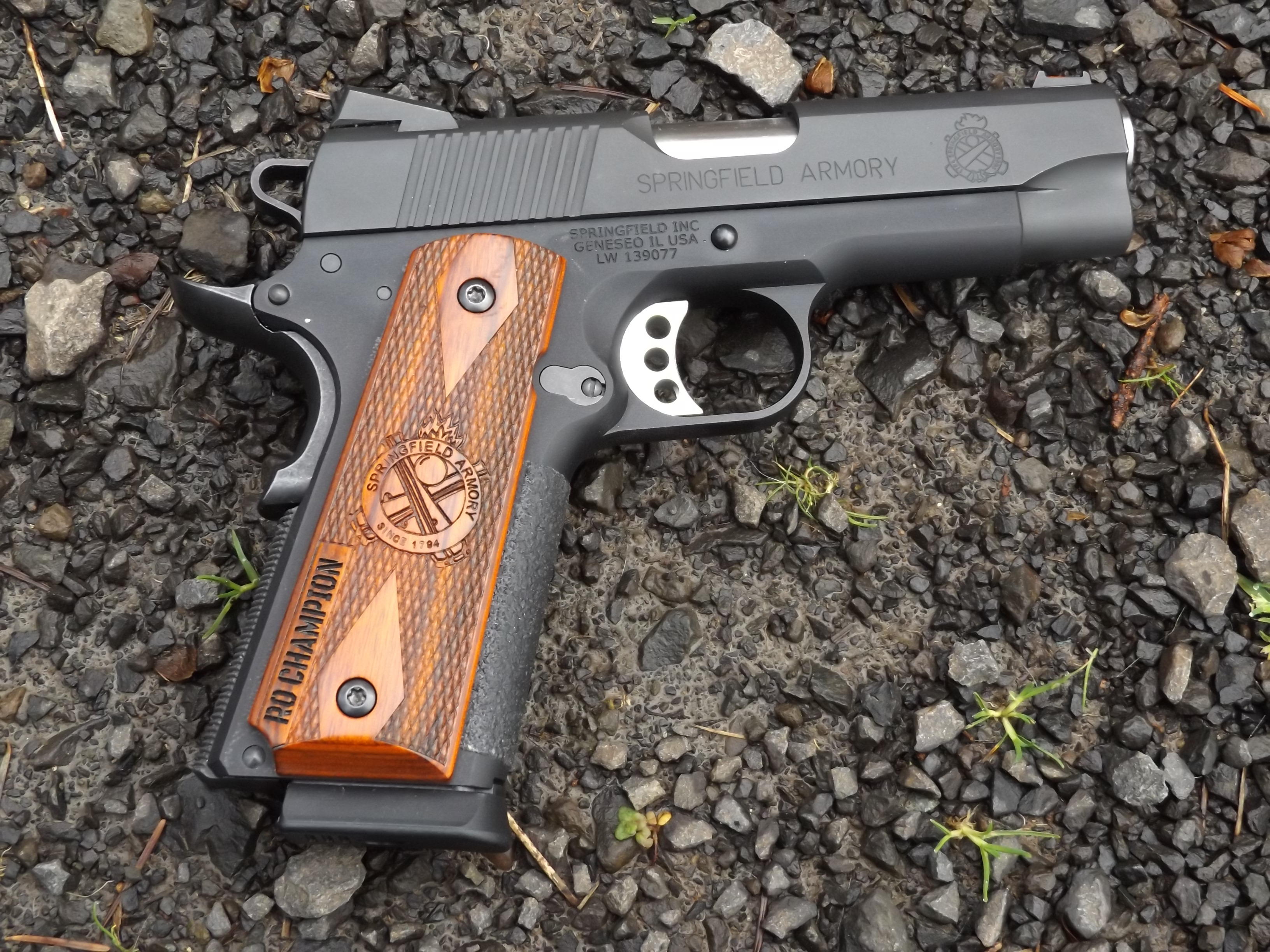
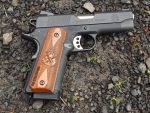
I took a number of handguns and rifles when I took this nice couple out to go shooting for the very first time. Jovita has always had a fear of guns, so we started her on a .22 pistol, and she loved it. The only other gun she was willing to try was a .22 LR rifle. Julio, on the other hand, was willing to try anything, and that brings us to the subject of this particular gun article– the Springfield Armory Range Officer Light-weight Champion 1911.

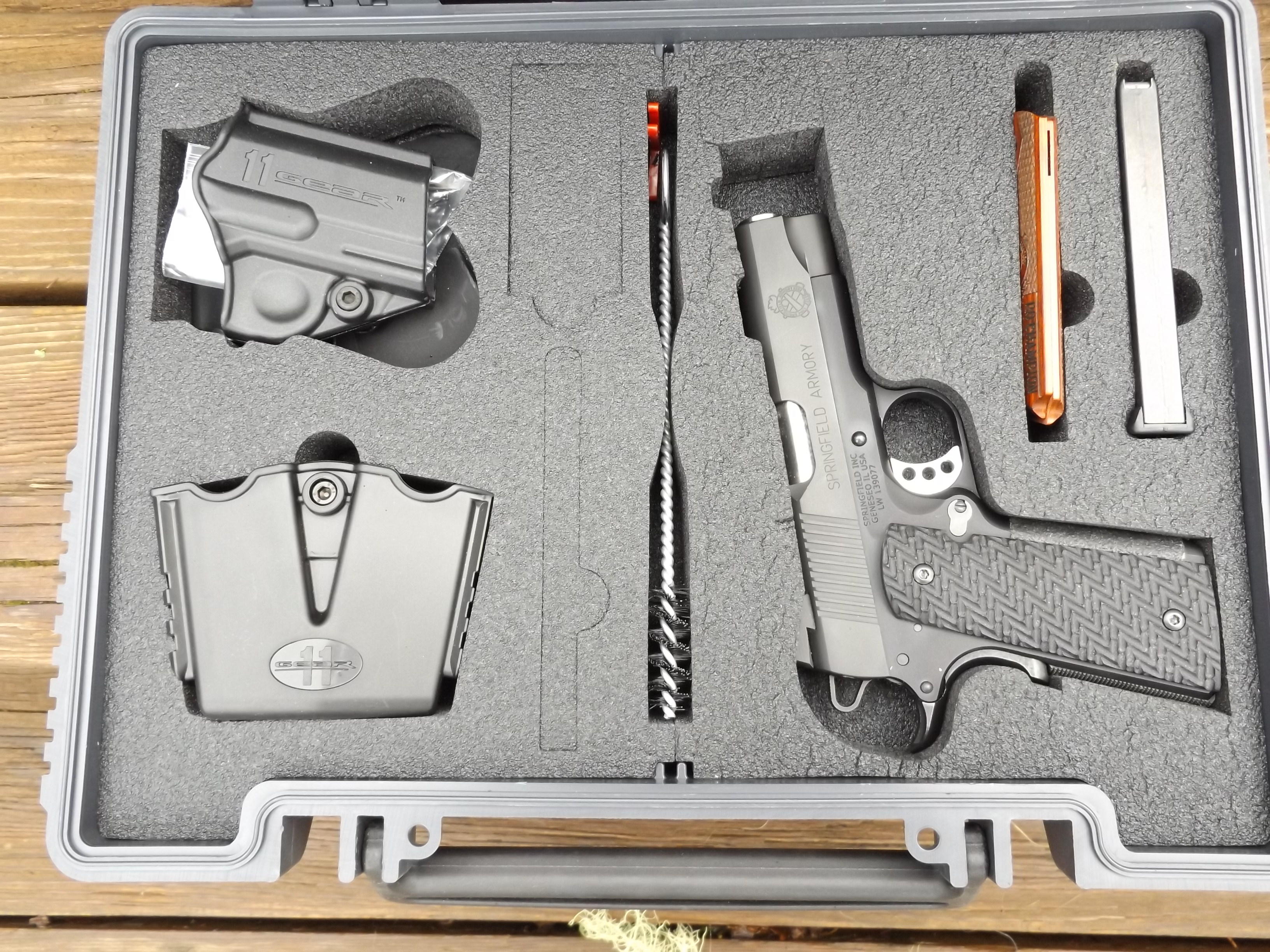
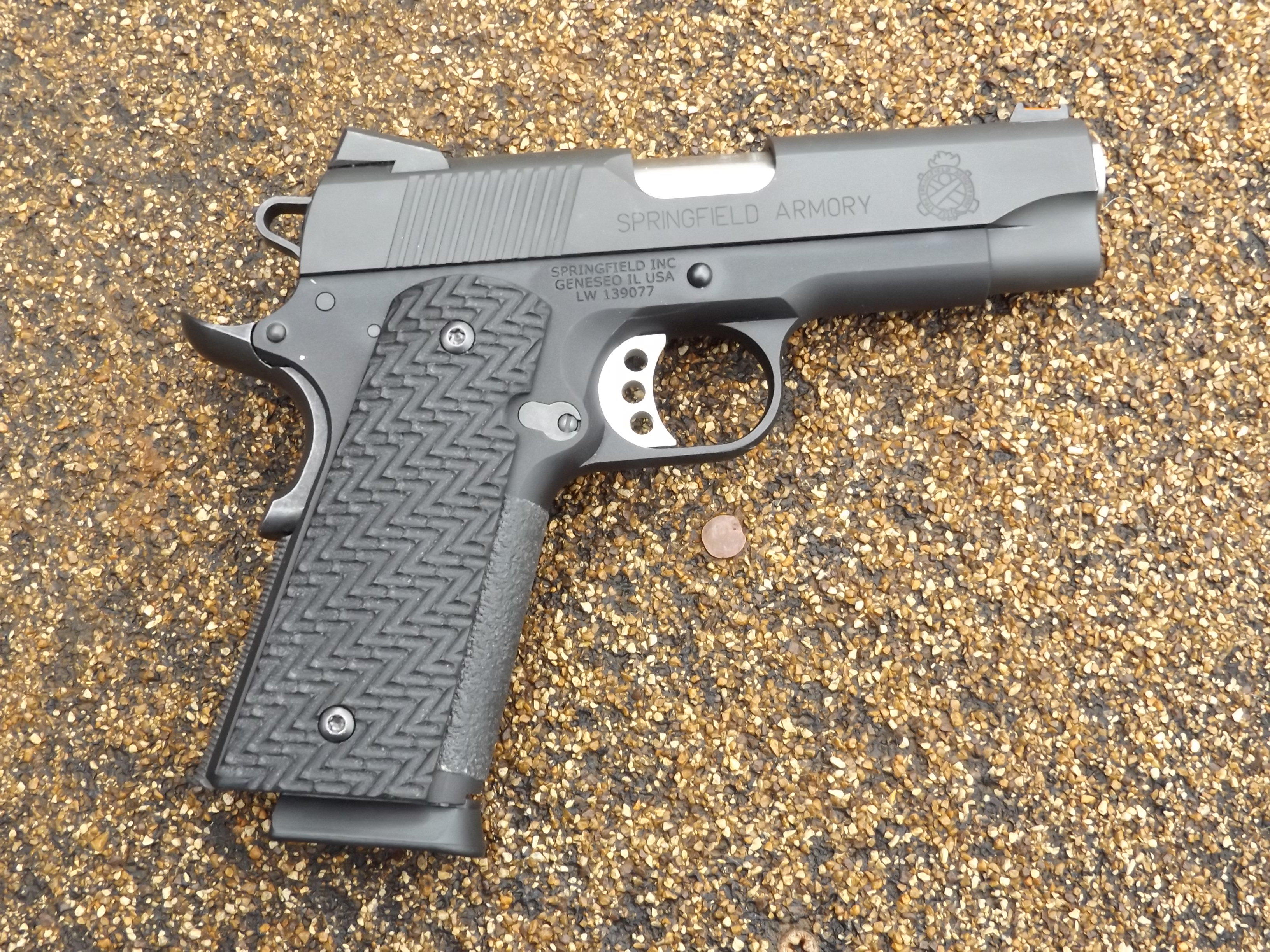
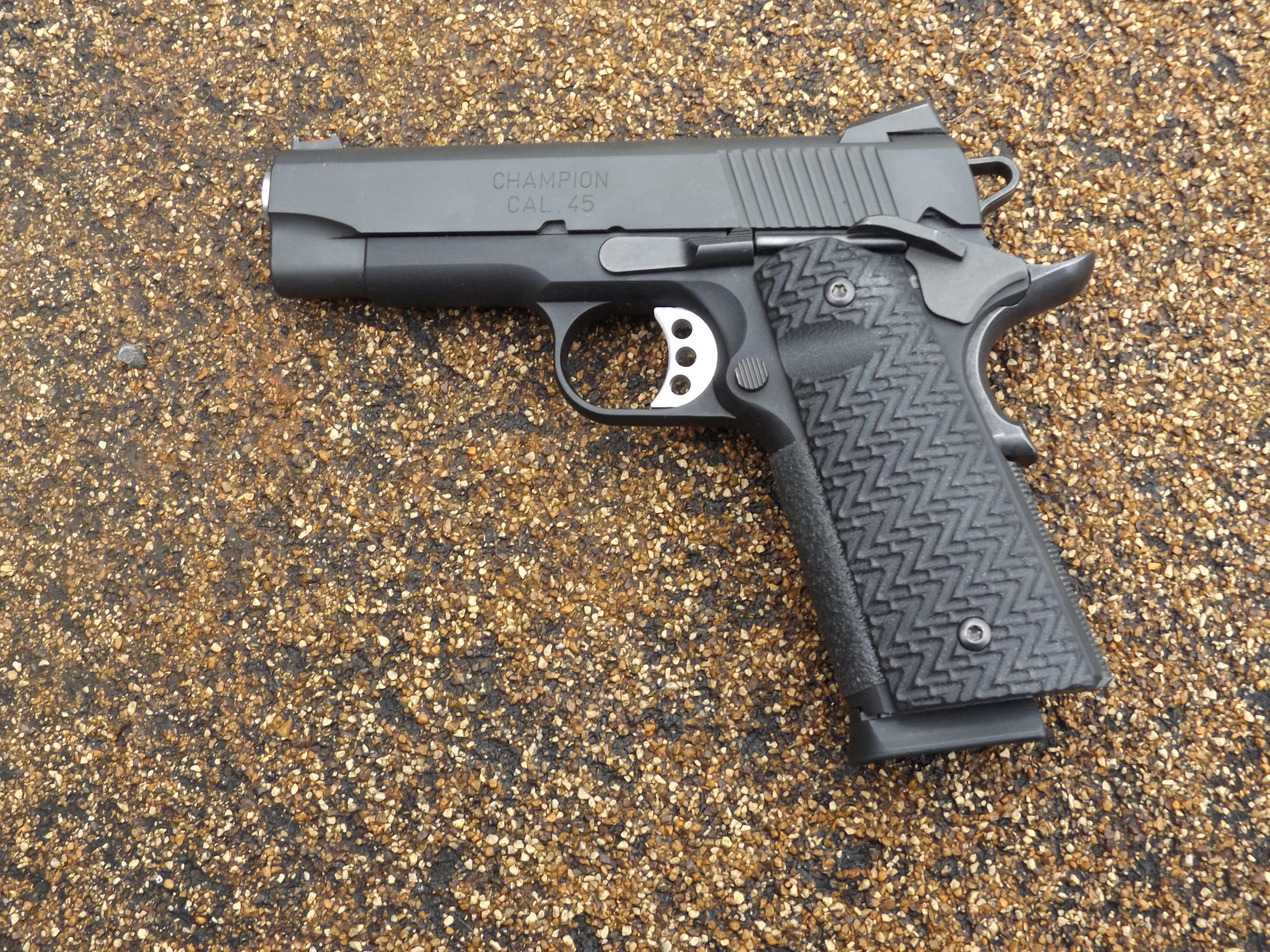
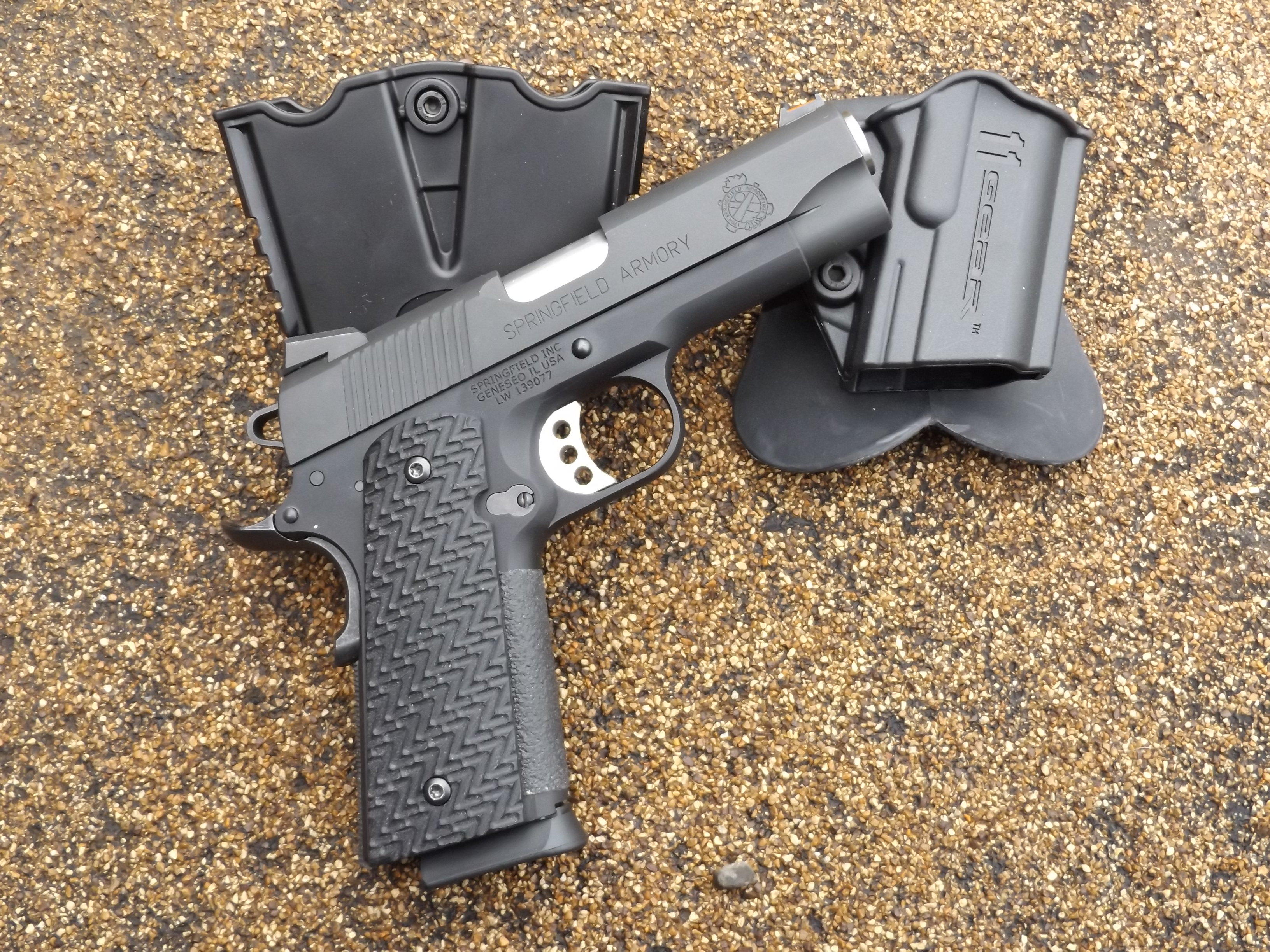
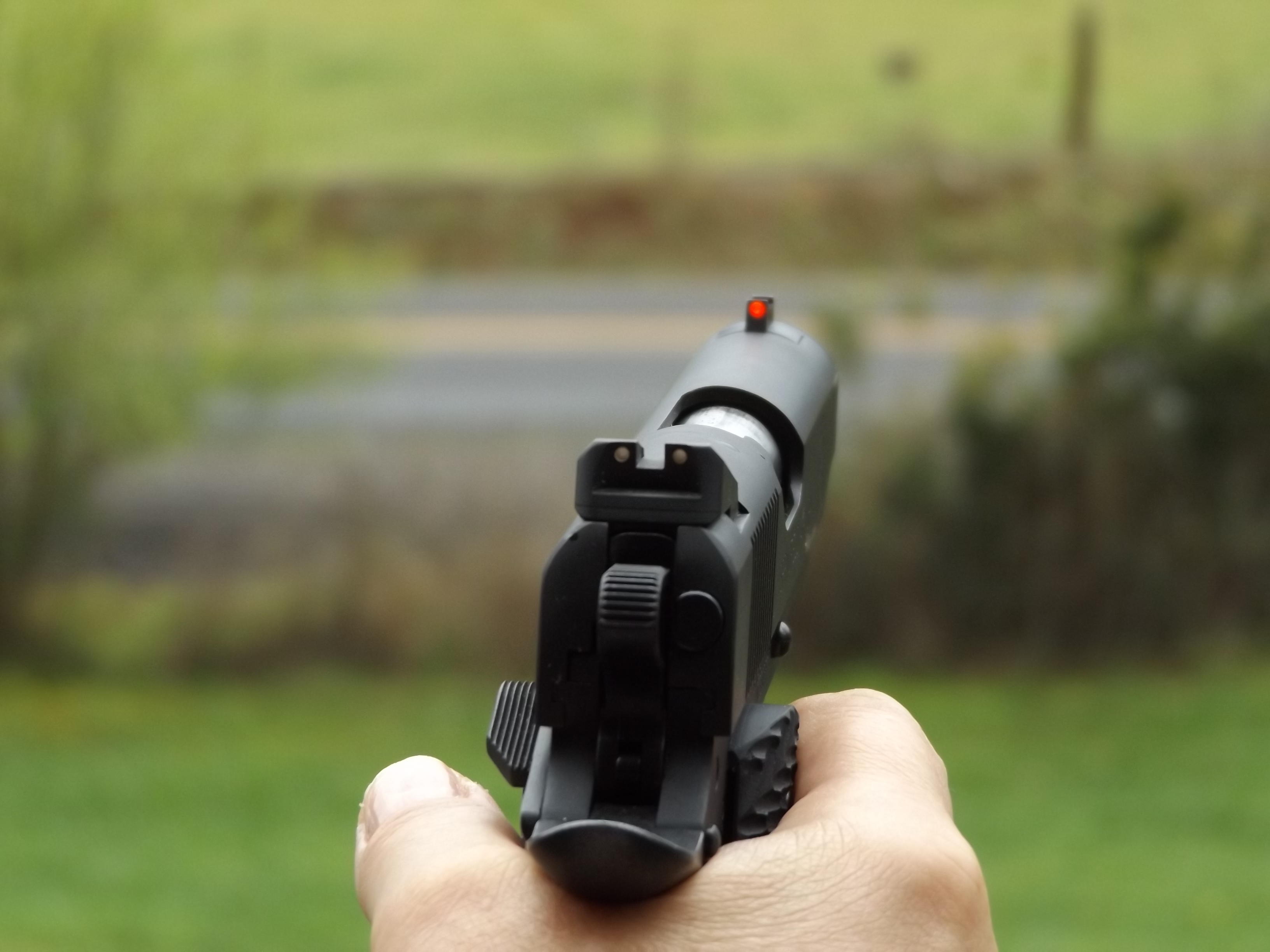
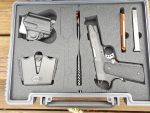
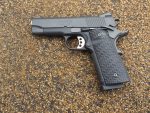
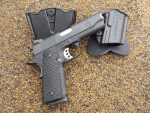
The new Range Officer from Springfield Armory sports a 4” stainless steel heavy bull barrel. The gun has a new full length recoil guide dual recoil spring setup that is in the process of being changed to something different. The slide is forged steel, parkerized, and the frame is forged aluminum, anodized black/gray. The front sight is a red fiber optic that can also be changed to a green one. Springfield provides spare fiber optic material for this. The rear sight is the popular Novak combat sight with two white dots. The gun only weighs 30 ounces, thanks to the aluminum frame. The grip panels are Cocobolo with a double diamond pattern. Two 7-rd mags come with each gun, as well as a paddle holster, double magazine pouch, cleaning brush, and instruction manual. The Range Officer also has a combat speed hammer, wide beaver tail grip safety with speed bump, and single side safety, which is on the left side of the gun. The trigger is a match light-weight model, and the magazine well is slightly beveled for a faster reload. The flat mainspring housing is checkered for a sure hold on the gun. The front strap is smooth. I added some skate board friction tape to the front strap, which is something I do on many 1911s for a more secure grip. While there was nothing wrong with the Cocobolo grips that came on the gun, I swapped them out for my “Code Zero” 1911 grips, which I designed and are sold through Mil-Tac Knives & Tools.

DSCF0183

I shoot a lot of +P .45 ACP through 1911s when testing them, to see how well the gun will handle them and as part of my accuracy testing. So, I routinely change to a heavier recoil spring. It wasn’t possible with the Range Office, because of the new dual-recoil spring setup. However, I’m hoping with the upcoming change that I can install a heavier recoil spring.

After explaining the different operation procedures, different types of guns, and gun safety to Julio and Jovita, we started Julio out shooting the Range Officer. He absolutely loved the crisp single action trigger pull on my sample. It is right at 4.5 lbs, which is just about perfect for a gun meant for self defense use. No matter which guns Julio fired, he always went back to the Range Officer. Jovita stuck to the .22 LR pistol and rifle.

On another outing, Julio brought his sister along. She also owns a Mexican Restaurant and was new to shooting. She loved the Range Officer and kept going back to it again and again. The one thing that surprised me though was that she also loved a .357 Mag revolver I took out that day. Go figure?

I had the Springfield Armory Range Officer Champion for several months and have put at least a thousand rounds of various ammo through it, and it was totally broken-in. I had no feeding or functioning problems with the gun. Julio, on the other hand, refused to understand that you can’t “ride” the slide forward instead of retracting the slide and letting it go forward on its own. He’s watched too many Hollywood movies where they do this. Julio had many problems with the first round not fully chambering because he was riding the slide forward instead of releasing it. He finally understood what I was trying to tell him. After that, he had no more feeding problems.
DSCF0187

Many new shooters love the single-action trigger pull on a 1911, but it isn’t for everyone. It takes dedicated training to learn the operating manual of arms with a 1911. First is the short and light trigger pull, and secondly carrying a round in the chamber with the safety in the “on” position. Plus, there is the recoil factor. Many new shooters don’t like the recoil of full-power 230-gr .45 ACP loads. In more than 25 years as an NRA firearms instructor, more often than not many new shooters gravitate to a double-action only semiauto handgun, and I have no problem with that at all, so long as they train with the gun they’ve selected for carry and self defense.

Now, with the above said, it has been my experience that new shooters will usually hit the target they are aiming at with a 1911, with the short and light trigger pull, more often than with a double-action only semiauto. That says a lot about the John Moses Browning 1911, which was designed more than a hundred years ago. He was a very gifted gun designer. The 1911 is more popular today than ever before.
DSCF0190

I really took to the Range Officer Champion. I love that it only weighs 30 ounces unloaded, and the red fiber optic front sight is fast to pick up, even under low light conditions, and is very bright under sunny skies. The gun was easy to pack in a Blackhawk Products SERPA holster, using the belt attachment, not the paddle. I don’t like paddle holsters for some reason. I tested the gun for more than three months at this writing and have had no problems with it. Even my wife shot it and liked it.

During my testing period, I had ammo from Buffalo Bore Ammunition and Black Hills Ammunition. From Buffalo Bore, I had their 160-gr Low Recoil, Barnes TAC-XP all-copper hollow point, 185-gr FMJ FN–another low recoil load, 255-gr Hard Cast Outdoorsman load +P, 230-gr FMJ FN +P, 185-gr Barnes TAC-XP all-copper hollow point +P and their 200-gr JHP +P. From Black Hills, I had their outstanding 200-gr Match Semi Wadcutter load, 230-gr FMJ, 185-gr JHP, 230-gr JHP, 230-gr JHP +P and their 185-gr Barnes TAC-XP all-copper hollow point +P load. So, I had an outstanding assortment of ammo to run through the R.O. Champion. And, as mentioned, I had zero malfunctions of any type. The only problem was with Julio riding the slide forward, which was not the fault of the gun. It was an operator error, and he finally understood what I was trying to tell him about it.
DSCF0208

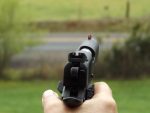
I “killed” a lot of rocks and pieces of wood during my function testing, as well as paper targets. Accuracy testing was done at 25yards, over the hood of my pickup, using a rolled up sleeping bag as a rest. None of the ammo tested shot groups over four inches, and many shot groups in the 3-inch area, if I was on my game. I had a couple groups below three inches; that was with the Black Hills 200-gr Match Semi Wadcutter load, which is always an accurate load for me, and the Buffalo Bore 160-gr Low Recoil Barnes TAC-XP load. Anytime you can get a combat handgun to shoot groups of four inches or less at 25 yards, that’s a keeper in my book. But when you get groups, many groups, around the 3-inch mark, that is a for sure keeper in my book.

Springfield Armory also has the Range Officer in a full-sized Government 5” Bbl model, as well as one in the Compact 4” Bbl with a shortened grip frame, and I’ve tested them all. You can’t go wrong with any of them. You can also get one in 9mm, as well as in stainless steel, and even some models have a Picatinny rail for lights or lasers. For everyday carry though, I think I’d stick with the light-weight Champion Range Officer. It has everything I need and nothing I don’t need. What’s not to like here? Full retail on my sample is $899, and you can pay more for other similar guns, but why?

– Senior Product Review Editor, Pat Cascio



Letter Re: Wounding Patterns

My disagreement with this report is more on the reasons behind rather than the method of the training. I believe in self care first, then buddy aid, then medics (EMTs), and then the hospitals. Prepping needs to hit all of these levels in regards to supplies and training. If the conclusion of the report is that tourniquets are not useful in an active shooter situation, then I think civilian medical training might have lost the reason the military emphasizes the tourniquet in its training.

This report states the current medical training emphasis on hemorrhage control for civilians is over-rated in the case of an active shooter scenario based on the injuries received from several documented examples. While I do agree with this report in as much as the types of wounds we are expecting for this type of scenario should be reevaluated, I disagree with the conclusion that the emphasis in training to stop blood loss from extremity wounds is over-rated. Current shooting situations, especially with active shooters, dictate certain shot pattern results. An unarmed populace (an active shooters’ preferred target) generally does not hide and or fight back very well. They are surprised to find themselves in this situation and tend to react poorly. This report does not address that most of the targets were either standing out in plain sight, stationary, or shot from close range where the shooter would be hard-pressed to miss center of mass and/or head shots.

An active shooter scenario also has a different shooting dynamic than combat. On the battlefield, you verify that it is indeed the enemy before you shoot, but once his/her location and general description is acquired, any movement in that vicinity is considered a valid target and shot. In combat, you do not always see a full profile in your sights. You may see a leg, an arm, the top of a head but not always the whole person. Clearing rooms, buildings, and streets where targets are jumping out, firing blindly, or aimed from around corners or barricades and in windows or from rooftops does not lend itself to shooting at the center mass of a human, another reason for the arm and leg wound patterns typical in combat shootings.

The actual emphasis in the military is self care. Tourniquets are taught as a form of quick and temporary self-medical care until wounds can be further evaluated under better medical treatment than what is available at the time of receiving the wound. The emphasis is self care. You can give yourself a tourniquet until the shooting stops and either continue to fight or keep your blood inside of you until someone with better knowledge, ability, and resources can help with that. Soldiers, Sailors, Airmen, and Marines do not place a tourniquet on everything. We know to apply pressure bandages on holes in the torso, how to check for and deal with fractures, look for exit wounds, and pack in bandages. But we also know that to apply that knowledge to yourself is hard. Do what you can for yourself.

Neither does this report address the total lack of body armor worn by civilians in active shooting scenarios, nor the tactical mindset of military training in such a scenario. Generally speaking, there are few instances where an individual, geared and prepared for combat, as they ostensibly are in a combat zone, would find themselves dealing with the situation of an active shooter scenario without access to tactics, training, and material that would mitigate the types of wounds received in a civilian active shooter scenario.

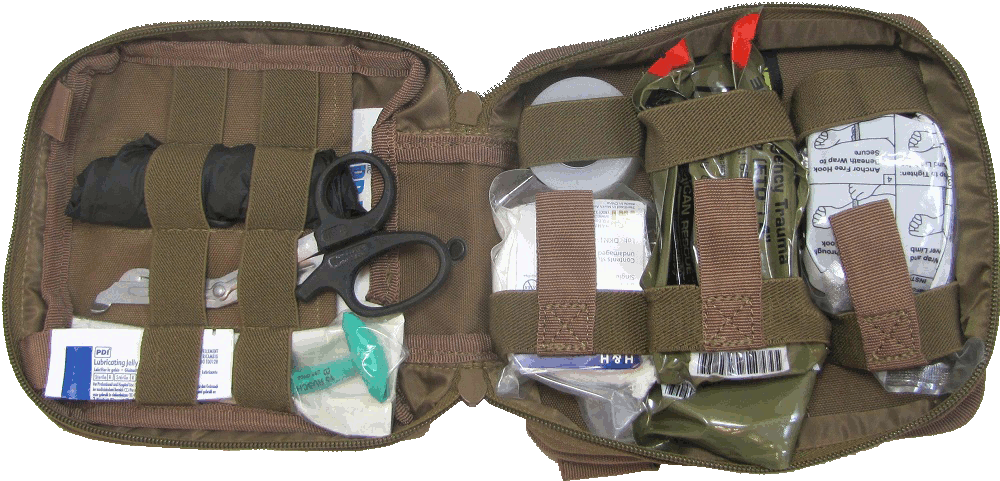
Finally we come to something the report completely fails to address: availability of medical supplies. The tourniquets mentioned in the report are not described as being purpose-made or improvised. Every military member in a combat zone has on them their own medical kit (Individual First Aid Kit or IFAK). Included are, at minimum: scissors, gauze, tape, tourniquet, pressure bandages, and painkillers. If current civil training is emphasized, the civilian care recommended in the report seems to recommend lots of trained individuals. In an active shooter scenario on the civilian populace, what kind of first aid kit do most people have, if any? Most schools have a minor medical kit and supplies dealing with band aids more than pressure bandages. What is required of a first aid kit in a movie theater or night club? How many people have a belt? It may be that people are using what they have and doing what they can.

If this report finds that civilian-based immediate care places too much emphasis on this specific treatment with substandard results, (against what standard are they substandard?), maybe civilian-based training needs to rethink why the military teaches this method of self care. – S.W.


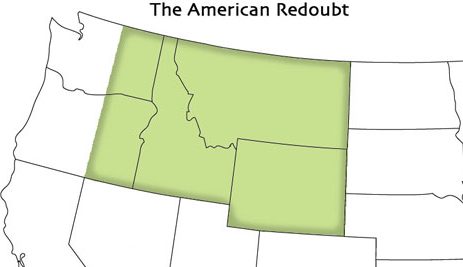
News From The American Redoubt:

I-84 Reopens After Wildfire

o o o

A coffee mule, literally: Café Mulé finds private land to serve coffee in Foothills – T.Z.

o o o

Reader J.H. sent in this link, remarking that the information is great for those who are new to the American Redoubt. This doctor covers everything from Rabies, insect bites, spiders, insect stings, and a host of other treatments: Pest TV

o o o

Cops Call Rancher for Help with a Bull and Then Murdered Him — No Charges, Paid Vacation – RBS


Economics and Investing:

Ireland jails three top bankers over 2008 banking meltdown – If only they would do that here – A.D.

o o o

NY Fed Finds 15% Of Americans Have Negative Net Worth. Excerpt: “As for the White House’s conclusion that ‘the growing stack of $1.3 trillion in student debt is helping, not hurting, the U.S. economy’… we would hate to see what Obama thinks is ‘hurting’ the US economy.” – G.G.

o o o

Foreign Appetite For U.S. Securities Has Taken a Drubbing – G.G.

o o o

Oil Prices Fall Below $40 As OPEC Ramps Up Output

o o o

SurvivalBlog and its editors are not paid investment counselors or advisers. Please see our Provisos page for details.


Odds ‘n Sods:

I just noticed that the price of the Rawles XL Voyager knife has been reduced by Cold Steel. it is now priced at $69.99 with free shipping for Amazon Prime members. The reviews that have been posted are overwhelmingly positive. Note that ALL of the profits from the sale of these knives are going to charity. Order yours before they sell out. (It is a limited edition knife.) – JWR

o o o

Wells Fargo to Hogue Inc: We won’t do business with weapons manufacturers. – G.G.

o o o

The trend continues: Biggest July to date for NICS background checks

o o o

Video: How to Tune a 1911 Extractor by Wilson Combat – Sent in by P.S.

o o o

The Coming Election Fraud – B.B.


Notes for Monday – August 01, 2016

August 1st is celebrated as Swiss Independence Day, in recognition of the signing of the Federal Charter of 1291, which united Switzerland’s first three cantons. As of 2014, Switzerland has been free and independent for 725 years. Having a well-armed populace has assured that.

August 1st is also remembered as the election day in 1946 that sparked the Battle of Athens, Tennessee, when returning World War II veterans took up arms to oust a corrupt local government that was rigging an election.