Two Letters Re: Dehydrators

Hugh,

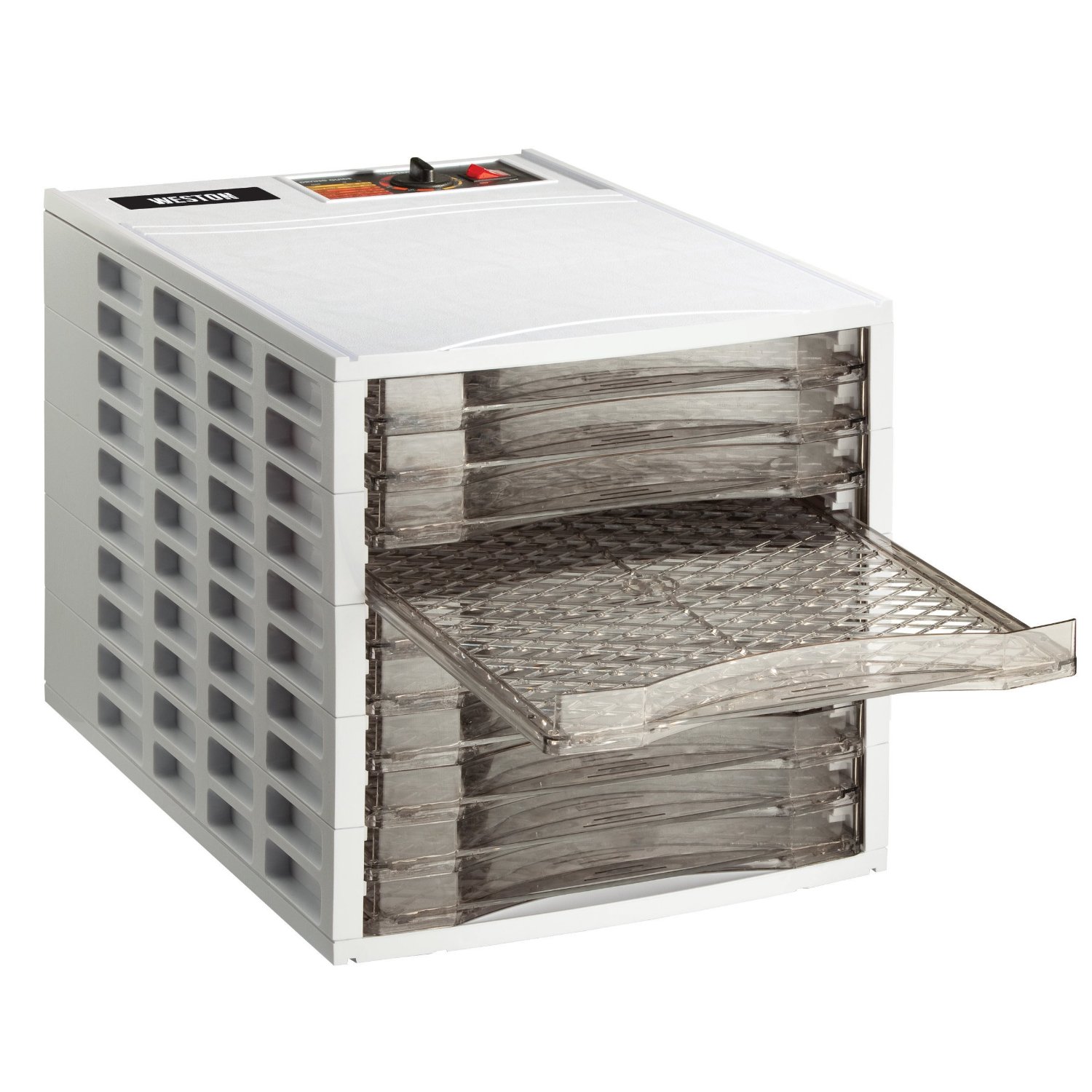
The article about dehydrating foods was very well written, thanks. Subsequent comments about preventing small foods from falling through the trays prompts me to offer my solution. I use an ordinary American Harvest dehydrator with stacking trays. I line the trays with parchment paper that I have ventilated by punching holes through the paper, using an ordinary hole punch with the paper folded prior to punching, like making paper “snowflakes.” I lightly oil the paper with coconut oil, and find I can reuse them many times before they need to be replaced. Thanks for all the very informative articles. -J.J.

o o o

HJL,

I have used needlepoint plastic mesh on a rack. It allows air through, and small items like peas and berries stay put. It’s reusable and washable. – C.N.


Economics and Investing:

Can The Various Pension And Benefit Ponzis Survive The Coming Wave Of Baby Boomer Retirements? – H.L.

o o o

Four more mega-banks join the anti-dollar alliance – G.S.

o o o

The US National Debt Load is Second-Worst in the World – M.N.

o o o

Viktor Shvets: ‘The Private Sector Will Never Recover’ – C.F.

o o o

SurvivalBlog and its editors are not paid investment counselors or advisers. Please see our Provisos page for details.


Odds ‘n Sods:

Where are the BOB bags? Italy earthquake: 159 dead, many missing as magnitude-6.2 tremor wipes out towns – A.S.

o o o

Venezuela Will “Purge” All State Workers Who Sign Maduro Recall Petition – H.L.

o o o

Here’s a video that shows you just never know when TSHTF. Stop for gas, end up in the middle of a gunfight, and get wounded. It’s a crazy world already, and society hasn’t even “collapsed”! The terrifying moment a woman bystander is caught in the crossfire of terrifying machine gun shootout at Atlanta gas station – T.P.

o o o

The American people don’t need gun control. The government does, however. Guns sold, guns lost: What Pentagon sent to Iraq & Afghanistan after 9/11

o o o

College Campus Lunacy


Notes for Wednesday – August 24, 2016

On August 24th, 410, Rome was overrun by the Visigoths in an event that symbolized the fall of the Western Roman Empire. This is a moment in history that we would do well to remember. An empire that ruled the world was corrupted from the inside to the point that they could not defend themselves from a much weaker enemy. This could conceivably be the beginning of the dark middle ages.

o o o

Today, we present another entry for Round 66 of the SurvivalBlog non-fiction writing contest. The nearly $12,000 worth of prizes for this round include:

First Prize:

  1. A Tactical Self-Contained 2-Series Solar Power Generator system from Always Empowered. This compact starter power system is packaged in a wheeled O.D. green EMP-shielded Pelican hard case (a $1,700 value),
  2. A Gunsite Academy Three Day Course Certificate that is good for any one, two, or three day course (a $1,195 value),
  3. A course certificate from onPoint Tactical for the prize winner’s choice of three-day civilian courses, excluding those restricted for military or government teams. Three day onPoint courses normally cost $795,
  4. DRD Tactical is providing a 5.56 NATO QD Billet upper with a hammer forged, chrome-lined barrel and a hard case to go with your own AR lower. It will allow any standard AR-type rifle to have a quick change barrel, which can be assembled in less than one minute without the use of any tools and a compact carry capability in a hard case or 3-day pack (an $1,100 value),
  5. Gun Mag Warehouse is providing 20 Magpul PMAG 30-rd Magazines (a value of $300) and a Gun Mag Warehouse T-Shirt; (an equivalent prize will be awarded for residents in states with magazine restrictions),
  6. Two cases of Mountain House freeze-dried assorted entrees in #10 cans, courtesy of Ready Made Resources (a $350 value),
  7. The Ark Institute is donating a non-GMO, non-hybrid vegetable seed package (enough for two families of four) plus seed storage materials, a CD-ROM of Geri Guidetti’s book “Build Your Ark! How to Prepare for Self Reliance in Uncertain Times”, and two bottles of Potassium Iodate (a $325 retail value),
  8. A $250 gift certificate good for any product from Sunflower Ammo,
  9. KellyKettleUSA.com is donating an AquaBrick water filtration kit with a retail value of $250, and
  10. Two cases of meals, Ready to Eat (MREs), courtesy of CampingSurvival.com (a $180 value).

Second Prize:

  1. A Glock form factor SIRT laser training pistol and a SIRT AR-15/M4 Laser Training Bolt, courtesy of Next Level Training, which have a combined retail value of $589,
  2. A transferable certificate for a two-day Ultimate Bug Out Course from Florida Firearms Training (a $400 value),
  3. A Model 175 Series Solar Generator provided by Quantum Harvest LLC (a $439 value),
  4. A Trekker IV™ Four-Person Emergency Kit from Emergency Essentials (a $250 value),
  5. A $200 gift certificate good towards any books published by PrepperPress.com,
  6. A pre-selected assortment of military surplus gear from CJL Enterprize (a $300 value),
  7. RepackBox is providing a $300 gift certificate to their site, and
  8. American Gunsmithing Institute (AGI) is providing a $300 certificate good towards any of their DVD training courses.

Third Prize:

  1. A Royal Berkey water filter, courtesy of Directive 21 (a $275 value),
  2. A $245 gift certificate from custom knife-maker Jon Kelly Designs, of Eureka, Montana,
  3. A large handmade clothes drying rack, a washboard, and a Homesteading for Beginners DVD, all courtesy of The Homestead Store, with a combined value of $206,
  4. Expanded sets of both washable feminine pads and liners, donated by Naturally Cozy (a $185 retail value),
  5. Two Super Survival Pack seed collections, a $150 value, courtesy of Seed for Security, LLC,
  6. Mayflower Trading is donating a $200 gift certificate for homesteading appliances,
  7. Montie Gear is donating a Precision Rest (a $249 value), and
  8. Two 1,000-foot spools of full mil-spec U.S.-made 750 paracord (in-stock colors only) from www.TOUGHGRID.com (a $240 value).

Round 66 ends on September 31st, so get busy writing and e-mail us your entry. Remember that there is a 1,500-word minimum, and that articles on practical “how to” skills for survival have an advantage in the judging.


I’m Not In The Position To Right Now- Part 1, by D.D.

Bring up disaster preparedness and you’ll get a variety of reactions, everything from concern to amusement. Awhile after you start this discussion you’ll usually receive a comment like “I’m coming to your house.” This last declaration being an entirely different issue in and of itself, it’s a statement to the effect of “I don’t have to do anything because you’re doing it all for me. I will continue on my merry life while you make the sacrifices necessary to save me if anything goes wrong. You save, you train, and you go without. We’re friends, and I’m special.”

Here are some common stated problems followed by their causes or meanings:

“I don’t know.” I refuse to learn.

“I can’t afford to, not even a single can of soup can be put aside a month.” This is often spoken by people with a staggering cable bill.

“I am physically unable.” I will not plan. I will not read to educate myself.

“I have somewhere to go.” Someone else will take care of my uneducated mind and unprepared body when I show up empty-handed.

“I can’t change my life. I need to be happy and live!” I’ll spend my money and time on all of the little things that bring me happiness. You spend your money and time on all of things that will keep me alive.

“I’m not in a position to right now.” I will never be in a position to.

I’m Not In A Position To Right Now

“I’m not in a position to right now” is a foolish statement and an excuse. No one reading this is dumb enough to believe that the person saying it has actually dedicated any thought to the statement before speaking. No one thinks this person actually sat down and contemplated all the ways, however small, that they could get better prepared for an emergency to finally come to the conclusion that they just weren’t in a position to do anything. The real reason they don’t is that they don’t want to. It is far easier to hide from the truth and assume someone else will take care of them than it is to go through the effort of getting ready to take care of themselves. It is far easier to do nothing. They know that they aren’t ready and look stupid for it, so they attempt to cover up their laziness by claiming it can’t be done right now. If it can’t be done, they can’t be blamed for it not getting it done.

I Have Someone Who Will Take Care of Me

“I have someone who will take care of me.” This is one of the most selfish things said without the slightest bit of thought. It the same as saying “Love exists in the mind of some other person, so that person is morally bound to care for me.” Not the slightest bit of thought is put towards the effort or burden that will be placed on those loved ones. The only feelings these leeches have is the satisfaction of insurance and security when they think of the person they can run to when their world falls apart and they are unable to take care of themselves. Love of this kind only works one way– their way. It is not the kind of love that ensures they show up as ready as they can be in mind, body, and material, so that everyone can pool resources and work together. It is the kind of love that means you get ready and sacrifice while I spend money on living it up so that I will show up at your door as useless as possible causing all of us to die together.

“My son/brother/mother/uncle/neighbor has a farm, and we’ll go there. We’ll be fine.” I almost always ask this person if their benefactor is planning on taking them in. An answer of “of course” always follows. I clarify by asking, “Is your brother planning to support you with food and water while protecting you? Does he have those preparations in mind and is actively working for you as well as his own right now?”. The answers become more unsure at this point, but their response is still along the lines of “We’ll be fine.”

Many people say “I” have somewhere to go. What they mean by “I” is “Me and my family of four as well as our two dogs”. “I” may include two children, a husband or wife, grandma Sue, and possibly some neighbors. Let’s just say it will be three people for argument’s sake.

I’ll Go To My Brother’s House

If their response is “I’ll go to my brother’s house”, I ask where he is. He is often many miles or a few states away. When I ask how they are going to get there, the answer is almost aways that they plan on driving. So, I’ll bring up that ATM machines may not work, there may be massive power outages with no gasoline available to buy, and roads may be clogged with broken down vehicles and the traffic of fleeing people or things such as tornadoes. Phones may not work. They will claim that they know the way, but when I ask if they know more than one way to get to their brother’s house, I’ll usually get a blank look. Things such as road blocks, downed trees and power lines, flooding, stalled cars on a bridge, et cetera may obstruct their known path, but they are in no position to get a $2 map and mark out more than one route, to have a tank’s worth of gas in cash set aside, to fill up a small gas can with extra fuel, et cetera. They are in no position to learn how to change a tire or to set up a schedule to make sure their car stays maintained or at half a tank of gas.

I Will Show Up

Let’s just say you get there and that there is enough food and water to sustain you long term, and you are provided with shelter and protection. What problems are you bringing? What special medical needs do you have? Do you have dietary restrictions or require medication? Do you turn into a mental basket case when it comes to stress? Is your body as prepared as it can be? Are any of these things a concern for anyone you brought with you? If you or one of your children has chronic ear infections, I’m sure your brother is going to laugh it off when you plow through his supply of antibiotics. Maybe your method of parenting is to shut your kids up with gaming consoles and a TV. Have your kids spent any real time outside? Without the constant digital distractions that are so common to kids these day, what will happen when all of that is gone? What are you actually bringing to your brother’s doorstep?

Some people are so severely addicted to coffee that they can’t function without it; they literally cannot focus. However, you’re not in a position to research alternative medications that see to your needs or stock up on the vital ones. You’re not in a position to eat just a little more healthy or exercise in even the smallest way. You absolutely can’t break your addictions now or in the very least put a packet of instant coffee singles in your glove compartment to get you through the drive over there.

Water

I clarify further by asking a series of questions: “Because most sources call for one gallon of water a day per person, is your brother storing an extra three gallons of water for every day you’ll be there for an indefinite amount of time? If your brother isn’t storing it, does he have the ability to procure and purify that much extra water every day? Has he stocked up on the water purification equipment and/or water purification chemicals needed for all of that water? Is there a realistic and plentiful source of water?”. This is usually when the other person begins to run from the argument. They have begun to understand that they have no plan at all and haven’t done any thinking on the subject. They once again start making statements about being fine, et cetera. Sometimes they’ll dodge with a change of subject by saying something like, “It sounds like you’re worried about me. I’m flattered.”

Water is a very important resource. The potential lack it, which can cause death in days, hasn’t once entered their minds as to whether it is actually available at their safe haven, much less the thought of what it would take to provide this for them and their family. “We would boil our water.” This is the fastest reply to come, and it is usually uneducated as well. “So assuming there is an unlimited supply of water that you can get to the point where boiling will make a difference, what are you going to boil it with? Do you have a clue how much burnable material it takes to boil a gallon of water? Actually it’s seven gallons every day if the main means of purification for his four and your three is boiling (not including animals). This, of course, is taking away from burnable material needed to cook enough food for that many people. By the way, what are you going to start that fire with day after day after day, and how are you going to do it if you aren’t in the position to get a single packet of chemical purifiers, a case of bottled water, or in the very least learn how to build a fire or find out how long it takes to boil water for purification?” You can guess how the conversation usually goes after this.

“How is your brother going to water his farm?” I live in a farming community. I do not know of a single farmer who has a solar-powered well system capable of watering their entire farm…not a single one. Every one of them relies on grid power to run their pumps and crop watering systems. When the power goes out, all of that goes away. That means dead plants or plants that severely under produce. It means dead animals. It means dead farmers, if they don’t have water stored.


Letter Re: Dehydrating Food – A Low Tech Method

Hugh,

Just wanted to mention that in the absence of electric power to run dehydrators, you can also dehydrate leafy greens and salted tomatoes in the back seat of a closed car on a hot day. I have had good success using a muslin dishtowel placed on a cookie sheet (do not allow greens and tomatoes to touch metal during the drying process as this will turn them brown and icky) and just place the washed and patted dry greens (preferably not touching each other, place each leaf or slice singly not overlapping) and put the tray(s) on the back seat of a closed car on a hot day. Takes about 6-8 hours depending on the wetness of the things being dehydrated. Once dry and crackly to the touch they can be crumbled and stored in jars with oxygen absorbers. I would appreciate more “low tech” articles. For those of us with limited storage space and income, a list of the best bulk (carbs and proteins) foods for long term survival would be helpful. I have been focusing on oatmeal and pasta in bulk with cans of chicken and foil pouches of tuna, but could use some pointers. The Mountain House meals seem way too salty for me and dried egg product is too expensive, and beans unless in a can take too long and use too much fuel to cook.


JWR’s Recommendations of the Week:

Books

Crisis Preparedness Handbook: A Comprehensive Guide to Home Storage and Physical Survival by Jack A. Spigarelli

Preparedness Now!: An Emergency Survival Guide (Expanded and Revised Edition) by Aton Edwards

Fiction

Vandenberg by Oliver Lange (Invasion scenario. Note: It was later republished under the title: Defiance: An American Novel)

Movies

Amazing Grace (Biography of the abolitionist William Wilberforce)

The Thing (Has some horrific scenes, but it is thought-provoking. NOT for kids!)


Odds ‘n Sods:

The Pentagon Takes Aim at Bomb-Carrying Consumer Drones

o o o

‘They’ll kill for it’: Ramen has become the black-market currency in American prisons. Alternative currencies are fascinating. Chocolate, cigarettes, silk stockings and now Ramen noodles.

Who knows maybe some smart debt bound college student will find his niche on campus and pay off their student loans. – RBS

o o o

Something Has Gone Wrong – B.B.

o o o

Situational awareness is becoming more important, including some form of legal EDC. Knife attack in Virginia – P.S.

o o o

Bingo hall raid turns up ‘doomsdayish’ cache of guns, ammo, body armor. Rule number one, don’t place your cache at the same place as you “possibly” illegal business! – DMS


Notes for Tuesday – August 23, 2016

August 23rd is the anniversary of the declaration of the independent state of “Franklin” in Eastern Tennessee by the settlers there in 1784. Unfortunately, the Continental Congress rejected it, so the state of Franklin never became a reality.

In 1833, Britain abolished slavery in the colonies and 700,000 slaves were freed. I can’t help but wonder; Had Abraham Lincoln allowed the political process to run its course, as it did in England, and slavery was abolished by the will of the people, as it would have been, rather than executive order, would we have the racial tensions we have today?


Guest Article: SHTF Intelligence – Getting Started- Part Three, by Samuel Culper

This is the third article in a series about using intelligence for preparedness. I’m starting from square zero in order to introduce a new crop of Americans to the concept of using intelligence, to prove that there’s a need for intelligence and to get readers quickly up to speed on how to incorporate it into their security planning. For a better foundation, be sure to read Part One and Part Two and check out the Ultimate ACE Startup Guide, too.

Brief Recap

In the first article, we established that prepared communities need intelligence because they’re going to have blind spots during an emergency or disaster. I recommended writing out a list called Intelligence Requirements. Before we build a house, we need to be organized with the right tools and materials. The same is true of intelligence, and our requirements prepare for us the path ahead. In the second article, I talked about shopping at the hardware store for our materials list. Once we have our requirements, we need to start satisfying them through intelligence gathering. I wanted to stress that we have to automate collection as much as possible, and I offered some strategies on how to accomplish that. The second article was about how to collect information now while it’s inexpensive, easy, and readily available.

Today, I’m going to focus on the zero-hour, power/Internet goes down, what-should-we-do approach to intelligence gathering. While reading this, you’re going to realize that we need a small team to tackle intelligence. You can’t do it all by yourself. (I recommend forming a community watch group to find the individuals who are already geared towards community security. They may not be preppers yet, but as active and interested members of the community watch they’re already halfway there.)

First things first, we have to get eyes on the surrounding area and/or the neighborhood. In a worst-case SHTF scenario, that typically means getting an elevated vantage point, being in a forward position to look for threats, or setting up an listening post / observation post (LP/OP). The last thing we want to do in intelligence is to be surprised. And since “finding, knowing, and never losing” the threat is our job, that means that we have to be proactive. The most immediate threats are going to have the greatest proximity, so the quickest way to identify potential threats is to get them in our view before we’re in theirs. (I recommend the Motorola DTR550 for area communications, like back and forth to an LP/OP. It’s frequency-hopping capabilities ensure that we don’t come up on anyone else’s scanners, except for high-end state-sponsored platforms. If that’s your concern, then get an old school military field phone with sufficient wire.)

Simultaneously, we need to power up our police scanners and software defined radio (SDR) platform. (See the Ultimate ACE Startup Guide for detailed information.) Our police scanners already need to be programmed for our area, which is why I recommend the Uniden HomePatrol2. I’d set someone at a desk with earphones plugged into the police scanner. During a SHTF scenario, we should have 24/7 coverage on the police scanner. If we’re going to get consistent, authoritative intelligence information about events in the area, it’s most likely to originate from emergency services. On Forward Observer Podcast 44 – Battle Tracking Basics, I give a rundown about how this process works.

Next, I also recommend putting someone on the SDR platform to search out transmissions on radio frequencies that our police scanner won’t pick up. This could be a goldmine of information, especially if we can listen into a conversation. Be sure to log the times, frequencies, and call signs of these communications. (By the way, I routinely do this at home and work and have a list of frequencies in use by Ham radio operators. I recommend doing the same now, so that during an SHTF event, we can quickly tune to where the conversations are mostly like to occur. Practice now to avoid failure in the future. Also, check out our good friends at AmRRON.)

If we can begin visually monitoring the area around our home, listening to the police scanner, and begin searching for frequencies in use around us, then we have a really good start on gathering information about what’s going on around us. The next thing I would do in my neighborhood is start contacting neighbors door to door. My goal would be to get them to contact me if they see or hear anything; that way if things got really bad, I’ve already established contact with them and can bring them on board for community security. I live in a pretty good neighborhood in a pretty safe area. Chances are good that most folks want to keep it that way, so I’m offering a solution to that problem. I expect most will volunteer to help me.

Remember that every set of eyes and ears in your neighborhood is a sensor. I want to make sure that I can collect as much of what’s seen and heard as possible. That means that I need to influence them or otherwise gain their cooperation to feed me information. As a former intelligence analyst, that’s been an easy sell to my prepping neighbors. Should you be in a similar situation with preppers already on the block, as a group you should nominate a person in charge of collating information and building out the security picture.

We’re now getting into the world of very basic Human Intelligence, called HUMINT. Plainly stated, that’s gathering information from conversations with humans. That means getting out and talking to people. Beyond what we can sit back and collect passively through observation or listening, we may have to be more aggressive in collecting information through human sources.

With the Internet, radios, and scanners, we can be very wide and very deep in our intelligence gathering. That’s a 1:n ratio. We have one collection platform, in this case a radio receiver, and we can scan a very wide band to collect information from anyone who is transmitting. But when we deal with human intelligence, we’re often on a 1:1 ratio; that is, one collector speaking to one source at any given time. That’s a very slow and difficult way to do business, and this underscores a real need for us to be out in our community getting to know folks before an SHTF event.

Instead of a typical 1:1, I want you to consider the scalability of that ratio. If one person is limited to gathering intelligence information from one person at a time, wouldn’t it make sense to scale that ratio to 10:10 or 100:100? It absolutely would. Every set of eyes and ears is a sensor, so we as an intelligence element tasked with providing intelligence for community security should absolutely be interested in encouraging community members to passively collect lots of information. All that information is reported back to us, and then we’re engaged in the arduous task of compiling and evaluating that information in order to create intelligence.

Intelligence doesn’t produce itself, so it’s incumbent on us to build that capability. The more accurate information we have, the more well-informed we can be. Without first being well-informed, making high-risk, time-sensitive decisions just got a whole lot more complicated. In Part Four of this series, I’ll be discussing the last two phases of the Intelligence Cycle: Production and Dissemination. I’ll point out different intelligence products we may need to produce and then how to ensure that our threat intelligence is distributed to people in the community who need to know.

Samuel Culper is the Director of Forward Observer and the SHTF Intelligence Center. He was an Army and contract Intelligence analyst with multiple tours in Iraq and Afghanistan, and is the author of SHTF Intelligence: An Intelligence Analyst’s Guide to Community Security.


Letter Re: Dehydrating Foods

Hugh,

In regards to what to use to keep your small foods from falling through the cracks of the screens, I have an answer that may or may not be safe, but I’ve have years of good luck. I put tin foil on the screen, then put a spritz of Pam cooking spray, then use a bit of paper towel to make sure the foil gets covered. I don’t spray the foil completely because I don’t care for the oily texture that remains after dehydration. When I use foil, I only use every other tray giving my machine ample air flow. When my process is done, my project slides off and into a Ball or Mason jar where I air seal it. Examples of food I use this on is corn, peas, scrambled eggs, cabbage, et cetera, whatever I’m slicing and dicing small or is rather soft. Out of all my canning and prepping items I have purchased and obtained over the years, my dehydrator was my most expensive. It is my favorite gadget though. I use it the most. My family never has a clue that I’m cooking with dehydrated food, and I enjoy the wonderful aromas my house has when my machine is running. If you don’t have a dehydrator in your kitchen tool kit, treat yourself. Dehydrate some banana slices sprinkled with cinnamon. Oh my! Time is short. Get your machine going while the fall harvest season approaches and there is abundance. Put up all you are able. Your machine needs to run 24/7 right now. Blessings. – J.


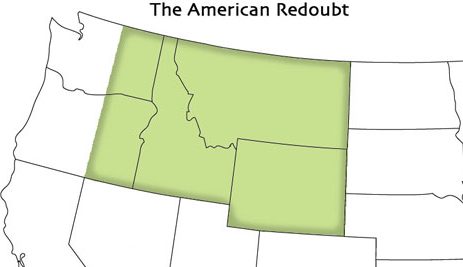
News From The American Redoubt:

Miles from nowhere… Video of a family’s life at the end of the road: Living in Idaho Back Country

o o o

Ten-Minute Video: North Idaho Wilderness Beauty.

o o o

The editors of the leftward-leaning Coeur d’Alene Press put their spin on the recent widely-read feature article in The Economist: Welcome to the American Redoubt

o o o

Wyoming Now Claiming It Owns the Wind – Taxes Energy Created by Mother Nature

o o o

From a SurvivalBlog reader:

The employees of the largest employer in our Eastern Oregon county were made aware of this little gem today. It would cost our firm at least 4-5 million dollars annually in additional tax penalties. Our county has one of if not the highest poverty and unemployment rates in the state. Times are hard enough in the resource dependent rural areas of the Oregon as it is. This comes at a time when our parent owner is slashing every cost and job position they can to try and stay profitable and please their global shareholders. Really!? A productivity tax? Amazingly stupid in an age of so-called economic enlightenment. Once again brilliance like this can only be birthed in an environment of income re-distribution and rabid socialism. Multanoma and Washington Counties must be overflowing with a breed of the most ardent of Marxist Communist. One has to wonder if they don’t proudly salute their local statue of Lenin each day at sunrise. If there is no such figure in the Greater Salem area then perhaps the money they gain from this new “prosperity tax” would get them one. I am sure there is at least one of these “gems” still sitting around in a Moscow scrap yard somewhere that escaped the melting pot. And some newly minted Capitalist who would surely give them a good deal on it as well.