- Good things come in small packages: A fine watch, a Faberge egg, or a new baby are all precious gifts.
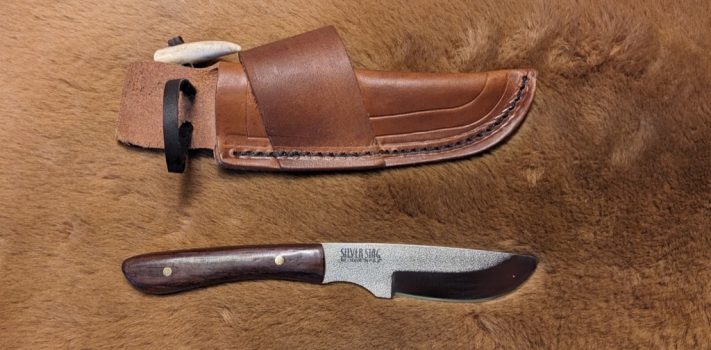
The Silver Stag WTS2.5C Trapper is another good thing that comes in a small package. With a 2.5 inch, full-tang, hollow-ground D2 blade, and a cocobolo handle, the knife is an ideal size and shape for skinning, caping and game processing. With the textured mill scale which is left on the flat of the blade, the mirror polish of the bevel, the rich glow of the cocobolo handle, and the accent of the brass pins, the knife is also a work of art.
Silver Stag has a way of producing knives that are almost too beautiful to use. But I sure used this one a lot. I carried it long enough to stain the included high-quality-leather sheath dark with sweat on the side facing my body and to blacken that sheath with ground-in dirt on the side facing away from my body.Continue reading“Silver Stag WTS2.5C Trapper, by Thomas Christianson”