Notes for Wednesday – September 07, 2016

This is the birthday of novelist Taylor Caldwell (born 1900 – August 30, 1985).

Today is also the birthday of Dr. Ludwig Vorgrimler (born 1912 in Freiburg, Germany; died 1983). Vorgrimler was the designer of the Spanish CETME rifle, from which sprang a plethora of roller-lock descendants from HK, including the G3, HK21, and MP5. His bolt design was also copied by the Swiss for their excellent PE57 and SIG 510 rifles. (Although the Swiss felt obliged to mount a “beer keg” charging handle on the right side of the receiver, for the sake of familiarity to Schmidt-Rubin shooters.)

o o o

Dont forget to check out Camping Survival’s Mountain House sale. Discounts of up to 45% of are available and it only runs through the September 11th.

o o o

Today, we present another entry for Round 66 of the SurvivalBlog non-fiction writing contest. The nearly $12,000 worth of prizes for this round include:

First Prize:

  1. A Tactical Self-Contained 2-Series Solar Power Generator system from Always Empowered. This compact starter power system is packaged in a wheeled O.D. green EMP-shielded Pelican hard case (a $1,700 value),
  2. A Gunsite Academy Three Day Course Certificate that is good for any one, two, or three day course (a $1,195 value),
  3. A course certificate from onPoint Tactical for the prize winner’s choice of three-day civilian courses, excluding those restricted for military or government teams. Three day onPoint courses normally cost $795,
  4. DRD Tactical is providing a 5.56 NATO QD Billet upper with a hammer forged, chrome-lined barrel and a hard case to go with your own AR lower. It will allow any standard AR-type rifle to have a quick change barrel, which can be assembled in less than one minute without the use of any tools and a compact carry capability in a hard case or 3-day pack (an $1,100 value),
  5. Gun Mag Warehouse is providing 20 Magpul PMAG 30-rd Magazines (a value of $300) and a Gun Mag Warehouse T-Shirt; (an equivalent prize will be awarded for residents in states with magazine restrictions),
  6. Two cases of Mountain House freeze-dried assorted entrees in #10 cans, courtesy of Ready Made Resources (a $350 value),
  7. The Ark Institute is donating a non-GMO, non-hybrid vegetable seed package (enough for two families of four) plus seed storage materials, a CD-ROM of Geri Guidetti’s book “Build Your Ark! How to Prepare for Self Reliance in Uncertain Times”, and two bottles of Potassium Iodate (a $325 retail value),
  8. A $250 gift certificate good for any product from Sunflower Ammo,
  9. KellyKettleUSA.com is donating an AquaBrick water filtration kit with a retail value of $250, and
  10. Two cases of meals, Ready to Eat (MREs), courtesy of CampingSurvival.com (a $180 value).

Second Prize:

  1. A Glock form factor SIRT laser training pistol and a SIRT AR-15/M4 Laser Training Bolt, courtesy of Next Level Training, which have a combined retail value of $589,
  2. A transferable certificate for a two-day Ultimate Bug Out Course from Florida Firearms Training (a $400 value),
  3. A Model 175 Series Solar Generator provided by Quantum Harvest LLC (a $439 value),
  4. A Trekker IV™ Four-Person Emergency Kit from Emergency Essentials (a $250 value),
  5. A $200 gift certificate good towards any books published by PrepperPress.com,
  6. A pre-selected assortment of military surplus gear from CJL Enterprize (a $300 value),
  7. RepackBox is providing a $300 gift certificate to their site, and
  8. American Gunsmithing Institute (AGI) is providing a $300 certificate good towards any of their DVD training courses.

Third Prize:

  1. A Royal Berkey water filter, courtesy of Directive 21 (a $275 value),
  2. A $245 gift certificate from custom knife-maker Jon Kelly Designs, of Eureka, Montana,
  3. A large handmade clothes drying rack, a washboard, and a Homesteading for Beginners DVD, all courtesy of The Homestead Store, with a combined value of $206,
  4. Expanded sets of both washable feminine pads and liners, donated by Naturally Cozy (a $185 retail value),
  5. Two Super Survival Pack seed collections, a $150 value, courtesy of Seed for Security, LLC,
  6. Mayflower Trading is donating a $200 gift certificate for homesteading appliances,
  7. Montie Gear is donating a Precision Rest (a $249 value), and
  8. Two 1,000-foot spools of full mil-spec U.S.-made 750 paracord (in-stock colors only) from www.TOUGHGRID.com (a $240 value).

Round 66 ends on September 31st, so get busy writing and e-mail us your entry. Remember that there is a 1,500-word minimum, and that articles on practical “how to” skills for survival have an advantage in the judging.



A Plea to Those Still Dependant Upon the Banking System, by G.S.

Recently, I discovered the last local bank in the area is being bought by a bank with eight times more exposure to derivatives. As I attempted to explain the dangers of this increased exposure to my family one evening, I realized my father may have more than the current FDIC insured limit stashed in this one bank.

In an attempt to make the case for him to at least spread out his savings, I have been researching the many reasons he should consider changing where his money is kept. I believe it is important for everyone to recognize the danger associated with having too much money in the banks, as well as the even greater danger of having it all in one bank.

Reason One: You might need your money and not be able to get it out.

When you deposit your money in the bank, they give you an IOU, and it is theirs to do what they wish. They don’t hold it in the vault you see in the front lobby. The money is lent to other people to buy homes and cars so the bank can earn interest, or the money is invested in other investments, such as bonds, to earn a return. The bottom line is, the bank only has access to a small percentage of the money needed to cover all of their deposits. Historically, when a bank runs into a crisis where more people want to withdraw money than the bank has on hand, the bank limits how much can be withdrawn. A recent example from a large bank can be seen from HSBC, as reported by BBC “HSBS Imposes Restrictions on Large Cash Withdrawals”. If you cannot withdraw your money, what good is it?

Reason Two: The days of earning money by having it in an interest bearing account are long gone.

Here in the U.S., I guess we are still fortunate. In my interest bearing savings account, I am earning 0.19 percent. Make sure you read that right. That is not 19 percent. That is a little less than one fifth of one percent. In some parts of the world, the negative interest rates make it so bank depositors actually pay the bank to take their money. It really does not matter if you earn interest though, because it is nearly impossible to find a bank account paying more than inflation. If you have $100,000 in your account this year and earn .19 percent, at the end of the year you will have $100,190. Let’s say we use the current, laughable, inflation rate for the last twelve months published by the U.S. government of 1%. (It is much higher in reality.) This means your $100,000 deposit today is worth $99,190 after a year. Our money is worth less as time goes on, even though we might earn a little interest.

References:

Negative Interest Rates – Less Than Zero

Inflation Hidden in Plain Sight

Reason Three: Banks have been given permission to steal their depositor’s money.

The Bail-Outs of the big banks after the 2008 crisis did not go over very well. The government used taxpayer money to make sure banks, who made terrible investment decisions, did not suffer any consequences. (Watch The Big Short movie.) Since then, the Dodd-Frank bill was passed to assure the next crisis will take a much larger toll on me and you, the average bank depositor. Essentially, if there is a crisis, instead of getting money from the government (taxpayers), the banks now have permission to take money directly from their depositors. We know this was done in Cyprus, but we need to realize legislation has already been passed in the U.S. for the same type of Bail-In.

Check out the following article on Dodd-Frank. It clearly lays out the disturbing list of who banks are responsible for reimbursing in the event of a crisis, and in what order. Unsecured debts, such as checking and savings account are eighth in line, behind the government and banking executive salaries.

If You Have Money In A US Bank Account Be Aware

Reason Four: Your money in the bank is not as insured as you think it is.

I want to go back to Cyprus for a moment. Did you know the money in those accounts was also insured, just as the FDIC insures yours? Read

Cyprus: What Happened to the Sanctity of Insured Deposits?

More disturbing to me is the FDIC can only afford to cover a small portion of bank account deposits they currently claim to insure. They cannot possibly meet their obligation of up to $250,000 per account in a major crisis with the money they show as available. In addition, they do not know how much each bank would need, and their antiquated systems would not be able to handle the distribution of the money they do have. “Even FDIC Admits It’s Not Ready For Next Banking Crisis

If you want more detailed information, Here is the actual document where the FDIC admits their inadequacy.

The FDIC is the federal government. Are we supposed to believe the government, who is somewhere between $14 Trillion and $20 Trillion in debt (that they admit to), will actually cover all of the insured accounts? If they are forced to, I imagine they will just insert another Trillion dollars into their balance sheet, essentially adding it to the taxpayer’s burden, and send that even more worthless money to cover the accounts. We live in the United States of Insolvency

Reason Five: Money in the bank is all electronic now, making it vulnerable to hackers.

Hackers these days are very good. We hear about new data breaches all the time. Were you aware even the FDIC has been hacked? The Washington Post reportsInadvertent Cyber Breach Hits 44000 FDIC Customers.

The troubling thought I have about hackers is their ultimate goal is not to let anyone know they are hacking. Think about this… if a hacker currently has access to any financial system, are they going to announce it, or are they going to keep quietly gaining access to the information for as long as possible? I have a feeling, for every instance of stolen information, there are many others we never know about. Guess what? “No, the FDIC Doesn’t Insure Your Bank Account Against Cybercrime”.

Reason Six: With your money in the bank, the government has access to your financial information.

Have you tried withdrawing more than $10,000? In 1970 the government passed a law saying banks had to get ID and file a report for any withdrawal, or deposit, over $10,000. Recently, I have been grilled by the bank teller for even smaller withdrawals. The tin foil hat wearing part of me wants to believe this paper trail is actually unnecessary anyway. I believe we are kidding ourselves if we think the NSA does not have access to all financial transactions within the banking system. If they eventually manage to get rid of cash, you will not be able to buy a pack of gum without the government knowing about it. In addition, the second article linked below makes another good point about removing cash. If they implement negative interest rates, you will not be able to avoid paying these negative interest rates by keeping cash outside of the banking system. Two articles: “Federal Banking Rules on Withdrawing Large Sums of Cash” and “Why Governments Want to Eliminate Cash”.

In Reason Two above, I pointed out with a $100,000 deposit that I will potentially earn $190 in interest. The only question I (and you) need to answer is this… is it worth $190 to expose my $100,000 deposit to Bail-Ins (legal theft), hackers, government meddling, and government access to my financial transactions? The answer for me, and hopefully for anyone after reading this, is “no”.

I would recommend having a portion of your money in cash outside of the banking system where you have access to it when needed. When I proposed this option to my wife, she was concerned this would expose the money to theft if there was ever a break in, or destruction if there was a fire or other natural disaster. For these reasons, I would suggest dividing your money and storing it in multiple locations. You will probably want a portion in a fire resistant home safe, where you have immediate access if needed. Another portion could be stored with a trusted relative. You may also consider keeping some outside the home, safely buried. See this article for tips on preparing a buried cache.

I would also recommend not leaving more than $50,000 in any single bank, if you decide to use the banking system. My reasoning for this is simple. Every time the government says they are doing something for the people, they promise to “take from the rich people” to make it happen. If they do implement a Bail-In, I believe there is a good chance they will have a floor where people with under a certain amount in deposits will have less stolen by the Bail-In than everyone else. In Cyprus, bank accounts with less than 100,000 Euro were penalized at a lower percentage. I don’t know what the amount will be here if it happens, but they have to keep the people who vote for them happy if they want to get reelected, so I expect some benefit to be given to those with smaller deposit amounts.


Economics and Investing:

When they say ‘hoarding’ instead of ‘saving’ you know you’re in trouble

o o o

Cash in a Box Catches On as Swiss Negative Rates Bite – G.G.

o o o

Items from Mr. Econocobas:

Sorry Losers! how the Fed Screwed the Many to Benefit the Few – From the folks at Peak Prosperity, good read for sure

Cash in a Box Catches On as Swiss Negative Rates Bite

o o o

SurvivalBlog and its editors are not paid investment counselors or advisers. Please see our Provisos page for details.


Odds ‘n Sods:

WE’RE ALL GONNA DIE! Brady Campaign Goes Into Hysterics Pushing Gun Control As Congress Returns From Recess – DSV

o o o

Is the Clock Running out on the United States Devolves into an Armed Revolt? – B.B.

o o o

Build a Bat House – With mosquito borne diseases on the rise, and the fact that these critters will eat as many as 3000 mosquitoes a night, This sure seems like a good thing. Link provided by DSV.

o o o

The Tyranny of 9/11: The Building Blocks of the American Police State from A-Z – W.C.

o o o

Calais chaos: Truckers driving near ‘Jungle’ camp violently attacked by migrants – P.R.


Notes for Tuesday – September 06, 2016

September 6th, 1757 is the birthday of Marquis de Lafayette (often known simply as Lafayette), a French aristocrat and military officer who fought in the American Revolutionary War. He was a close friend of George Washington, Alexander Hamilton and Thomas Jefferson. George Washington met him through his connections in the Free Masons and was impressed with him. After he offered to serve without pay, Congress commissioned him as a Major General and he was an integral part of the battles at Brandywine and Valley Forge.

o o o

Today, we present another entry for Round 66 of the SurvivalBlog non-fiction writing contest. The nearly $12,000 worth of prizes for this round include:

First Prize:

  1. A Tactical Self-Contained 2-Series Solar Power Generator system from Always Empowered. This compact starter power system is packaged in a wheeled O.D. green EMP-shielded Pelican hard case (a $1,700 value),
  2. A Gunsite Academy Three Day Course Certificate that is good for any one, two, or three day course (a $1,195 value),
  3. A course certificate from onPoint Tactical for the prize winner’s choice of three-day civilian courses, excluding those restricted for military or government teams. Three day onPoint courses normally cost $795,
  4. DRD Tactical is providing a 5.56 NATO QD Billet upper with a hammer forged, chrome-lined barrel and a hard case to go with your own AR lower. It will allow any standard AR-type rifle to have a quick change barrel, which can be assembled in less than one minute without the use of any tools and a compact carry capability in a hard case or 3-day pack (an $1,100 value),
  5. Gun Mag Warehouse is providing 20 Magpul PMAG 30-rd Magazines (a value of $300) and a Gun Mag Warehouse T-Shirt; (an equivalent prize will be awarded for residents in states with magazine restrictions),
  6. Two cases of Mountain House freeze-dried assorted entrees in #10 cans, courtesy of Ready Made Resources (a $350 value),
  7. The Ark Institute is donating a non-GMO, non-hybrid vegetable seed package (enough for two families of four) plus seed storage materials, a CD-ROM of Geri Guidetti’s book “Build Your Ark! How to Prepare for Self Reliance in Uncertain Times”, and two bottles of Potassium Iodate (a $325 retail value),
  8. A $250 gift certificate good for any product from Sunflower Ammo,
  9. KellyKettleUSA.com is donating an AquaBrick water filtration kit with a retail value of $250, and
  10. Two cases of meals, Ready to Eat (MREs), courtesy of CampingSurvival.com (a $180 value).

Second Prize:

  1. A Glock form factor SIRT laser training pistol and a SIRT AR-15/M4 Laser Training Bolt, courtesy of Next Level Training, which have a combined retail value of $589,
  2. A transferable certificate for a two-day Ultimate Bug Out Course from Florida Firearms Training (a $400 value),
  3. A Model 175 Series Solar Generator provided by Quantum Harvest LLC (a $439 value),
  4. A Trekker IV™ Four-Person Emergency Kit from Emergency Essentials (a $250 value),
  5. A $200 gift certificate good towards any books published by PrepperPress.com,
  6. A pre-selected assortment of military surplus gear from CJL Enterprize (a $300 value),
  7. RepackBox is providing a $300 gift certificate to their site, and
  8. American Gunsmithing Institute (AGI) is providing a $300 certificate good towards any of their DVD training courses.

Third Prize:

  1. A Royal Berkey water filter, courtesy of Directive 21 (a $275 value),
  2. A $245 gift certificate from custom knife-maker Jon Kelly Designs, of Eureka, Montana,
  3. A large handmade clothes drying rack, a washboard, and a Homesteading for Beginners DVD, all courtesy of The Homestead Store, with a combined value of $206,
  4. Expanded sets of both washable feminine pads and liners, donated by Naturally Cozy (a $185 retail value),
  5. Two Super Survival Pack seed collections, a $150 value, courtesy of Seed for Security, LLC,
  6. Mayflower Trading is donating a $200 gift certificate for homesteading appliances,
  7. Montie Gear is donating a Precision Rest (a $249 value), and
  8. Two 1,000-foot spools of full mil-spec U.S.-made 750 paracord (in-stock colors only) from www.TOUGHGRID.com (a $240 value).

Round 66 ends on September 31st, so get busy writing and e-mail us your entry. Remember that there is a 1,500-word minimum, and that articles on practical “how to” skills for survival have an advantage in the judging.


Quick Reference Manual Regarding Disaster Survival and Recovery on the Road- Part 1, by J.P.R.

Preface

I wrote this manual for those family and friends who don’t believe we need to be prepared for anything huge happening. I still feel responsible for these people in my life and wish the best for them as they travel about in our uncertain world. The other reason I wrote it was to subtly introduce them to the impact of what may occur in each scenario in an effort to ignite their personal journey towards preparedness and independence. I hope many more find it a useful tool in helping others handle adversity with knowledge rather than fear.

TRAVEL REFERENCE ONLY

Dear Family and Friends,

In these uncertain times, it is important to remain vigilant and prepared. The likelihood of one of the following unpredictable events has continued to grow over time, and my primary goal in getting this information into your hands is to offer you knowledge that could be of aid if we were ever to have to deal with a disaster personally. If you think this manual could be useful, keep a copy in each car, as well as at home. I do hope you take steps ahead of time to be as prepared as possible for any of these possible events.

Wherever my wife or family travel, local or distance, we always travel with the thought in mind that a day may come when we will have to return home on foot. Keeping some basics in each car, like a gallon jug of water, walking shoes, blanket, and flashlight can come in handy for daily needs or help save you in the case of a disaster. Our rule of thumb is to always leave the house dressed for being stuck outdoors for several hours to a full day, and on a trip carry $200 or more in cash.

#1 Disaster Response: National Bank Failure

A financial panic has ensued, the banks have closed, and you cannot get cash out electronically or over the counter. The news is saying the government has declared a bank holiday for a short period, and then they will reopen. This is a full-scale economic breakdown in progress. Know that for a period of time there will be shortages of things, and it could last for days, weeks, months, or years. When the bank reopens, your deposits will still be there, but they will be valued differently in the market, and prices on most goods will likely skyrocket overnight. As soon as you are aware of what is going on, be sure to take the following steps.

IF IT HAPPENS ON A TRIP:

  • If you are on the road, stop and fill up your tank immediately! If you can buy and haul an extra can of gas in the trunk, do so now! Do not allow your tank to go below half full. Keep refilling along the way in case supply runs out.
  • You need to stock up on food and water immediately. Two to three days from now (or less), stores and restaurants may close due to lack of supplies. Prepare for this. Don’t wait for a few minutes or hours, stop and stock up now!
  • If you are on a trip, call home and let family know where you are and what route you plan to follow. If your home is in a vulnerable area and will be unoccupied, make plans to get help or turn on lights until you arrive.
  • Do not stop along the way unless you have to. Plan to drive straight home as quickly as possible. The longer you’re away, the more likely you will be delayed from getting back, and the complications of this will begin to multiply.
  • Avoid major highways through big cities. Try to stay away from heavily populated areas, and plan to take smaller highways on the way back. Seek out news sources to know what you are driving into.
  • Drive cautiously and stay alert. Other drivers are likely to be distracted or emotionally stressed. Avoid accidents and altercations, as much as possible.
  • Keep yourself calm. Pray with your family. Get focused on God’s work in and about your life at this time. Recognize and accept that you and everyone else is in uncharted territory, and determine to move ahead.

#2 Disaster Response: Electrical Power Failure

The main problem with a power failure is that you suddenly may not have any access to information. This is why you need to know about the three levels of power failure that could happen, because you need to respond differently to each type.

A. LOCAL, REGIONAL, OR MULTI-REGIONAL POWER FAILURE

Identify Level of Failure

  • Your land line phone still works
  • Your cell phone may still work
  • Your car still runs
  • You find out through someone who has access to news that the power outage is local or regional

This kind of disruption may last for a few days to several weeks. You need to prepare accordingly, and if it is winter, you need to seek shelter with a heat source.

IF IT HAPPENS ON A TRIP:

  • If you are on a trip, begin with cautious driving, and check your gas gauge to determine your plans. Unless you find a gas station with a generator for the pumps, there will be no gas available in the grid-down areas.
  • Try to determine the area of the outage and how close you are to unaffected areas.
  • Try to make a call to let a loved one know where you are, your plan, and your route.
  • Avoid congested areas with many traffic signals. If you are stuck in one, shut off the engine if you are in a traffic jam and just sitting. Avoid using the air conditioning if you think your fuel will run low before arriving home.
  • If you can’t make it out of affected areas and you know someone nearby and can contact them, go there to wait it out. Otherwise, check into a hotel and wait it out.
  • Remain extra cautious, if you plan to travel at night. You must have sufficient fuel, food, and water. Understand that emergency response services will be strained already if you were to have a problem, and things are not what they usually are without traffic signals. Traveling at night, in the winter, raises the odds against you.
  • As soon as the power comes on, gas up and get home. Plan for additional interruptions on the way home. Keep your tank half full or more, and keep your family supplied.

B. MODERATE EMP (ELECTRO-MAGNETIC PULSE) ELECTRICAL FAILURE OR TERRORIST ATTACK ON THE GRID

Identify Level of Failure

  • The power grid is down
  • Your cell phone is dead
  • Your land line may or may not work
  • Some electronic devices work or are impaired
  • Your car may still start
  • Battery-powered radio works
  • News says it was an EMP

This is a different event than a regular power failure. In this case, the power grid and many electronic devices have been permanently damaged by an electromagnetic pulse of energy. This is more serious than a power grid failure, depending on whether it is in a small or large area. You may not have any access to communications, and if it is due to solar flares, the damage may still increase. Wherever you are, you need to prepare as your survival may depend on it. If it damaged a large area, you will not have power restored for a longer period of time. If it is winter, seek out a shelter with a heat source, like a fireplace or woodstove.

Check to see if your car starts. If so, you’re going to need to make some choices: prepare, stock up and stay, or go to a safer unpopulated location.

IF IT HAPPENS ON A TRIP:

  • If you are on a trip, begin with cautious driving and check your gas gauge to determine your plans. Unless you find a gas station with a generator for the pumps, there will be little to no gas available in the grid-down areas.
  • Avoid congested areas with many traffic signals. If you are stuck in one, shut off the engine if you are in a traffic jam and just sitting. Avoid using the air conditioning if you think your fuel will run low before arriving home.
  • Seek out additional food and supplies as soon as you see them. If stores take cash, purchase extra water, food, protection, and cooking supplies first.
  • If you know someone nearby and can contact them, go there to wait it out. Otherwise, check into a hotel and wait it out.
  • Remain extra cautious if you plan to travel at night. You must have sufficient fuel, food, and water. Understand that emergency response services will be strained already if you had a problem, and things are not what they usually are without traffic signals. Traveling at night, in the winter raises the odds against you.
  • As soon as the power comes on, gas up and get home. Plan for additional interruptions on the way home. Keep your tank half full or more, and keep your family supplied.


Letter Re: Euthanizing Pets Who Can’t Bug Out

Hugh,

I have searched the internet for a humane manner in which to euthanize a pet who can’t bug out. Is there anything other than a bullet to take care of this? – T.B.

HJL Comments: This is a tough situation and should be a call for people to evaluate their “need” for pets before they take on that responsibility. A pet is usually entirely dependent on it’s owner for survival and that is not a responsibility that should be taken lightly. I highly suspect that if such a situation were to occur, most pet owners would simply turn their pets out expecting them to make their own way. This, of course, would result in packs of feral animals who make life challenging for everyone else while they suffer and compete for resources. However, your options for euthanizing them are somewhat limited. Poisons are dangerous and often carry inhumane side effects. If you have access to veterinary care , the most humane method is typically the two injection method. Baring access to medicines, a bullet is usually the most expedient and painless method. Living on a farm, I have used whatever method was at hand when the euthanizing of an animal was needed. Shovels are particularly effective on smaller animals, but somewhat gruesome and require a significant application of deliberate force. (No, I don’t kill pets with shovels. I dispatched a skunk whose back was broken.) I would not recommend bludgeoning as it also requires significant force and is generally not humane. A word of caution: I recently had to euthanize an old friend who had been with us for nearly 13 years. After the family said goodbye, we took a short trip to an isolated spot where I said goodbye. Afterwords, I held her and cried for quite some time. Dispatching a pet is one of the emotionally hardest things I have done. Compounding the issue of using a firearm is the fact that even after the pet is gone, the end is so sudden that the body continues to function for several seconds. Those few seconds where the heart continued to beat seemed like forever to me. It can be very traumatic.


News From The American Redoubt:

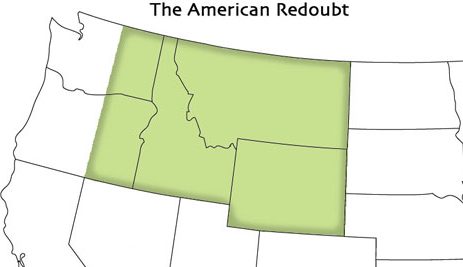
Right Side Blog: Western Dakotas Belong in the American Redoubt

o o o

In fire’s wake, sheep farmer overwhelmed by community support

o o o

Long-time reloading machine maker and reloading components dealer Ponsness/Warren, in Rathdrum, Idaho has recently expanded their product line to include Grizzly brand polished once-fired polished rifle and pistol brass. Calibers include 5.56 NATO, 7.62 NATO, .38 Special, 9mm, and .40 S&W, and .45 ACP.

o o o

Montana: First snow of the season hits the mountains

o o o

Wyoming stands to lose $900M if Feds keep minerals in the ground


Odds ‘n Sods:

The good folks over at Alt-Market are offering a practical and affordable FLIR evasion camouflage ensemble.

o o o

Is your rental car spying on you? FTC warns drivers over smartphone connections – DSV

o o o

The Rand Corp think tank has released a study on War with China, thinking through the unthinkable. – A.W.

o o o

Zika? Florida legislation passed to force vaccinate and “quarantine” under “health emergency” – G.M.

o o o

CIA using Pokemon Go for mass surveillance – B.B.