


(Continued from Part 1. This concludes the article.)
Storage
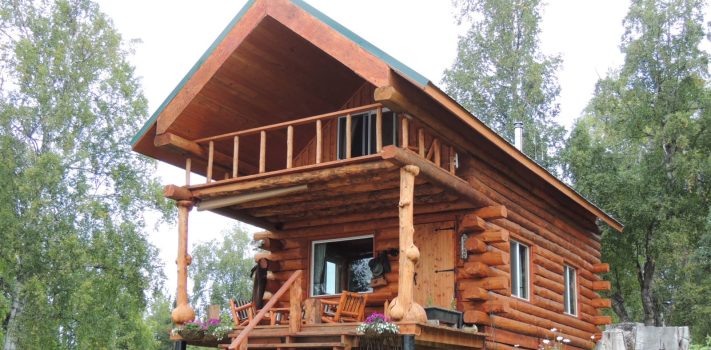
A big challenge when living in small homes is storage space. In a climate with dramatic temperature swings like ours, we have, for example, different mittens, boots, parkas and hats for +30, 0, and -30 degrees. All of these are bulky. We also have special clothing for hunting, fishing, and rain, and various accoutrements for outdoor activities. So, we built lots of storage shelves in various outbuildings to hold labeled totes of out-of-season clothes. In our cabin, I store things under, over, behind, and beside furniture. For example, my husband built long, plank bookcases under the windows and at the top of the pony walls (3.5 feet) below the steep roofline. I curtained the space beneath the bookcase to store medical and office supplies. Fermenting beer and wine are stored between a loveseat and cabinet. Long cooking utensils hang on cup cooks inside cabinet doors. Potatoes are stored behind a corner chair. Since I have only two drawers in the kitchen, I hang wicker creels from the spiral staircase to corral small items.
I consider outside “rooms” very important, too, even in a cold weather climate, but surely more so in hot and rainy regions. Outside, we enjoy two 10 x 16 decks upstairs and down, and a 6 x 16, unheated arctic entry (combination mud room and food pantry) that leads to a 10x 10 deck with the cedar soaking tub. We move among our three decks and living room based on sun, shade, rain, and wind.
While our home is designed for heating, a home in hot climate should be designed for efficient cooling, especially in off-grid situations. Helpful examples from older traditions and new abound. For example, in the rural South, many homes were historically designed as “dog trot” houses. The living space was on one side, the kitchen (which would heat up) was in an adjacent but separate building. The two were connected by a covered, shaded porch called a breezeway, because it was oriented so the prevailing wind blew through that space. I see many attractive, contemporary house designs that retain this division, with bedrooms on one side and the kitchen and living room on the other side of a central porch. Even if the home is air-conditioned, this division supports efficient use of zoned utilities.
Another useful idea is an attic fan. When I grew up in Chicago, in a home without central air conditioning, the attic had an enormous and powerful fan. On summer afternoons, we left the door to the attic open so that it pulled much of the interior heat and humidity out of the house. Many attics have passive “whirly gigs” installed on the roof. The mechanism turns from the interior heat rising and expiates it, just like my woodstove fans. Another home had screened porches off bedrooms where people slept in hot, humid weather, under the relief of a ceiling fan. I do not recall anyone utilizing the basement as a cool place to sleep, but that seems logical to me.
Another idea: my greenhouse has windows on paraffin-lift springs that automatically open when the interior temperature rises above some level. Maybe there is something similar for off-grid homes. Houses with deep verandas or awnings over windows enjoy pretty views without the sun directly penetrating the glass and warming the interior. Another option, when positioning a hot weather home is to orient large windows to the north and smaller windows or doors to the south. Cross ventilation and humidity remediation are essential. Ceiling and window fans require little energy and can be quite effective. Deep eaves, thick walls and insulation, judiciously chosen window coverings, and double-paned windows make just as much sense in hot climates as cold ones. Without these advantages, the cost of comfort will be higher.
Drainage
In regions with a history of flooding or even heavy rains, well-designed homes are built with a ground floor that can be sacrificed to the water, with living spaces, appliances, heaters, and air conditioners on the second and third floors. This is a prudent design for houses on beaches, rivers, and in known flood plains. When we lived in Houston, TX, we would see affluent homes elevated 8 – 12 feet. Even the most modest, older shotgun homes were elevated on brick or cement piers a foot or more above ground level. However, many newer homes in subdivisions were practically at the same level as the sidewalk. No surprise: these are the neighborhoods that flood during hurricanes. So, research whether your remote property is in a flood plain. Scrutinize your terrain. Do not position any ground-hugging buildings (even sheds) in natural drainage locations.
Shade
Plants have historically been very effective as coolants, as well as attractive. About Vines: When, for some reason, my daughter-in-law removed all the ivy from the west side of her brick townhouse, the temperature in the family room jumped up 10 degrees, and her electricity bill rose. Fast-growing, attractive vines are a no-brainer for shade. Every summer, I grow pretty and edible scarlet runner bean plants one foot apart along the south side of my front porch. Some die, some live, but the fast-growing “green screen” is just as effective as the bamboo-like screens that I raise and lower before the plants get tall. I love the breezy movement of the leaves, as well as the pretty red flowers and subsequently tasty beans.
The honeysuckle, clematis, and kiwi vines I planted twice died, but I should try these attractive plants again. Despite its name, Virginia Creeper is an attractive perennial vine that survives up here in Alaska. Its lovely burgundy fall foliage covers many pergolas and fences. Property owners in more southerly climes have far more choices than we do. I encourage exploration to see which vines work best in your soil and weather conditions. For $2 worth of seeds or $20 for a plant, you can increase shade and reduce temperatures for many years in a lovely way.
Bushes protect buildings from the sun. I re-stain our log cabin every few years, more often on the southern and western sides. The logs below the level of the haskap (honeyberry) bushes do not require new stain.
Trees are important in both cold and warm climates. In Alaska, we want more conifers to the north of our buildings as a wind/snow break. They confer a 20:1 benefit. That is to say that a 10 foot tree blocks wind and snow for 200 feet. Obviously, a densely packed line of conifers can make a tremendous difference. Short trees block horizontally blown snow. Tall trees block higher angles of blowing snow. People in treeless areas set out snow fences for this purpose. But I have lovely trees.
We value deciduous trees to the south of us, to let the sun in during the winter. Hot climates might do the opposite: plant conifers or other leafy trees to their south, and few trees to their north.
On the one hand, a property developer, especially in a hot climate, might think that surrounding the house or cabin with a lot of fast-growing shady trees is a good idea. On the other hand, weak and aged trees have a dangerous tendency to shed heavy boughs or whole trunks in hurricanes, floods, lightning strikes, and earthquakes.
Here, soft-wooded cottonwood trees are considered to be a nuisance (although I love the springtime scent of their buds). Tree damage to structures can be expensive and inconvenient. Been there; done that. Property damage for remote, off-grid properties is especially problematic since many properties out of reach by fire services may be ineligible for insurance. Storing extra tarps, roofing materials, windows, plastic sheeting are all good investments for untimely repairs or patches.
Furthermore, some kinds of trees are known fire hazards. Check knowledgeable people in your ecosystem. Old, rotting and hollow trees are perfect homes for wasps and bees. You surely do not want those close to your house, either. We have identified one that we need to cull before spring.
My recommendation (and that of firemen) is to take down any old, big, heavy trees within damaging distance of where you want to place your home and important buildings. Thin trees are OK. For example, I love the birch trees that grow here. I let them grow close to our buildings for a decade or more until they reach a certain girth and height and then I cull them to use in other purposes, like banisters, chair rails and garden stakes.
Transportation
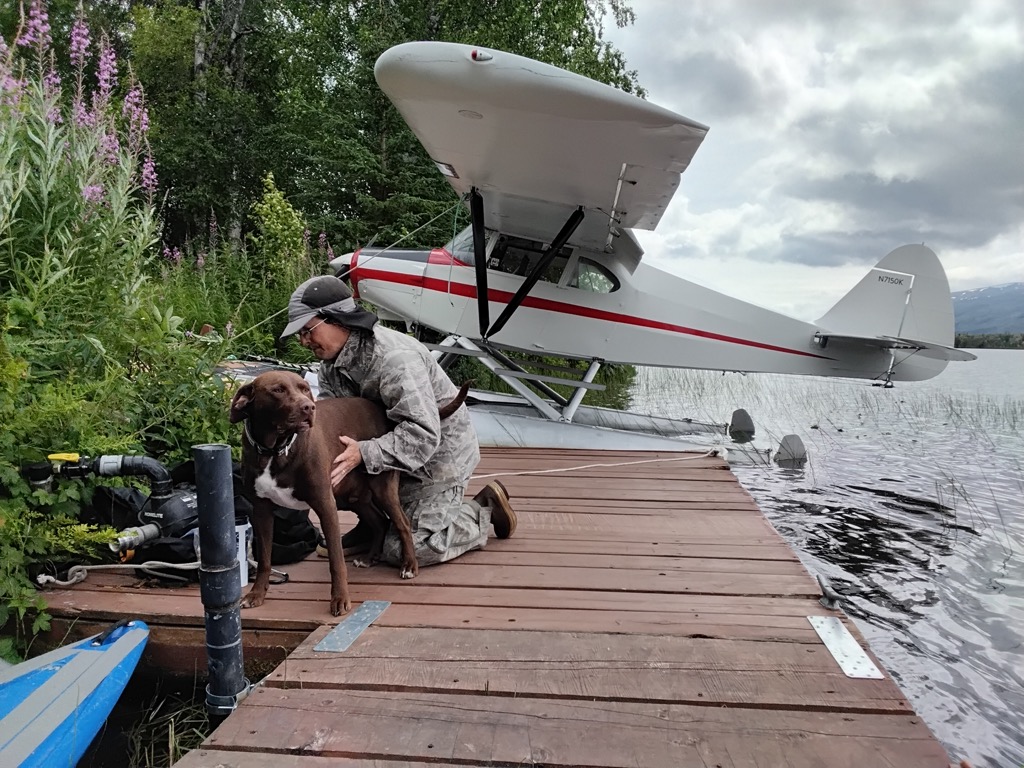 We walk a lot here. We pull plastic sleds year-round and wheelbarrows in summer up and down hill. We also rely on ATVs and snowmachines that sip gasoline and provide yeoman service for heavy loads, like logs, mucky chicken straw, and any supplies delivered by float plane. The most challenging transportation issues we have here, that Southern rural properties do not, is that we have to create hard-packed snow paths to walk and “drive” on. You can’t walk through waist-high soft snow to the out house, food shed, or wash house. Moving through soft snow is arduous. We don’t dig down to sidewalks. (We do not have sidewalks!) We read the temperature and snow conditions and when appropriate, we pat out paths in snowshoes, let them harden, and then, after a few nights of deep cold, Bryan grooms the trails with snowmachine and a passively dragged groomer that cuts off icy peaks and sweeps loose snow into crevices.
Conclusion
A home is a big investment, and a remote, off-grid home is obviously far from convenient resources. If you develop a property from scratch, you can make well-informed decisions by observing design and construction in the region, especially of old homes built before the utilities we take for granted in cities.
Research flood plains, amount of snow and rain, assess drainage, determine the prevailing wind directions and the arc of the sun to position your buildings, windows, and doors for comfort, beauty, and efficient heating and cooling. Consider techniques like planting bushes and vines, adding deep porches or awnings for beauty and comfort. Plan wisely on things you never want to dig up (like pipes) or tear out (like insulation) ever again! As you get older, think about ways to age in place. What can you do to make necessary chores easier? For me, now 68, repositioning gardens and buying a wider snowmachine are two issues. But for the rest? I love my peaceful and beautiful home and setting.
—
About the Author: “Mrs. Alaska” and her husband live at a very remote Alaska homestead. She blogs at Alaska Bush Life, Off-Road, Off-Grid, and she is the author of Log Cabin Reflections, available as an E-book on Kindle for $5.) She can be contacted at Alaskauu1@gmail.com