Small Farm Dairy Cattle – Part 5, by SaraSue

(Continued from Part 4. This concludes the article.) Medical needs I don’t often have to call a vet, but establishing a relationship with a large animal vet is crucial.  If you don’t have a relationship, you will have a terrible time getting help when you need it.  It’s worth it to spend money with the Veterinarian.  I use them for my cats and dogs, as well as my cows.  We are on a first name basis now.  I needed them when my first cow went down hard with milk fever.  I know how to prevent that now.  I needed them …


Small Farm Dairy Cattle – Part 4, by SaraSue

(Continued from Part 3.) Calving I have been very fortunate that all my cows have calved without assistance until this last one.  I’m praying that disaster does not happen again.  I could not have saved that calf by myself, and there was only one available Veterinarian on call at the time.  She also could not have done it by herself.  I am thankful for good friends who would drop everything to come over and assist.  While we saved the heifer, we lost the calf.  The heifer has recovered beautifully due to our intervention, and she’s doing well.  I have three …


Small Farm Dairy Cattle – Part 3, by SaraSue

(Continued from Part 2.) Winter housing When I bought this farm, there was an existing small barn and a two car garage sized shed that the door had broken off of.  The property was completely fenced, and cross fenced, and there were even a couple of water troughs, which had to be replaced because they leaked.  But, all in all, there was some structure to start with.  Back then, I had no plans to obtain dairy cows, but I probably would not have gone with large livestock without adequate fencing and buildings.  There is no water or electricity to the …


Small Farm Dairy Cattle – Part 2, by SaraSue

(Continued from Part 1.) Feeding and Condition This year started out in drought, so I will feed hay until such time as the fields are abundant in grass.  Last year, I did not have to feed hay year round, but the year before I did.  I don’t know how this year will go, but so far the cows have plentiful hay available to them.  When I first started with dairy cows, I fed the cows square bales, but soon found that to be a lot of work and not cost efficient with more than one cow to feed.  I purchased …


Small Farm Dairy Cattle – Part 1, by SaraSue

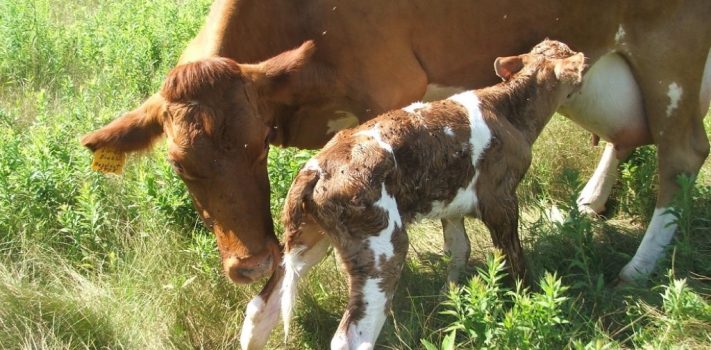
I believe I’m going into my sixth year raising dairy cattle on a very small scale.  Every time I think I’ve got this figured out, something surprises me.  I thought I would share an update, a general overview, of things I’ve learned so far.  Remember that I have a very small farm, and knew absolutely nothing when I started.  This is not a “How To”, as there are far more experienced folks than I am. My dad was an engineer and my mom was a school teacher, so I grew up in suburbia.  In my grandparents’ generation, the fathers were …


Editors’ Prepping Progress

To be prepared for a crisis, every Prepper must establish goals and make both long-term and short-term plans. In this column, the SurvivalBlog editors review their week’s prep activities and planned prep activities for the coming week. These range from healthcare and gear purchases to gardening, ranch improvements, bug-out bag fine-tuning, and food storage. This is something akin to our Retreat Owner Profiles, but written incrementally and in detail, throughout the year.  We always welcome you to share your own successes and wisdom in your e-mailed letters. We post many of those — or excerpts thereof — in the Odds …


Livestock or “Deadstock”?, by SaraSue

I’m still reeling over what happened on the recent Easter Sunday.  It was early in the day when I trekked down to the barn to check on one of my heifers that was due to calve.  I had been watching her carefully as we got closer to her due date.  She wasn’t over-due.  In fact, she was right on time.  I had purposefully not made any Easter plans so I could be home if there was trouble.  And indeed, there was trouble. Her water broke at about 7:30 a.m. and I waited and waited for those two little hooves to …


The Price of Beef, by Patrice Lewis

Editor’s Introductory Note:  This guest article was written by our friend and fellow blogger, Patrice Lewis. Her entertaining and informative Rural Revolution blog has been published several times a week since 2009. We highly recommend bookmarking it. – JWR — The price of beef has been on everyone’s mind lately. According to the USDA, the average price of beef jumped from $8.40 per pound in March to $10.10 by December 2025. A number of recent articles reflect these concerns: Food inflation in America RFK Jr. Urges U.S. Ranchers to Ramp Up Beef Production The cost of this grocery staple is …


Editors’ Prepping Progress

To be prepared for a crisis, every Prepper must establish goals and make both long-term and short-term plans. In this column, the SurvivalBlog editors review their week’s prep activities and planned prep activities for the coming week. These range from healthcare and gear purchases to gardening, ranch improvements, bug-out bag fine-tuning, and food storage. This is something akin to our Retreat Owner Profiles, but written incrementally and in detail, throughout the year.  We always welcome you to share your own successes and wisdom in your e-mailed letters. We post many of those — or excerpts thereof — in the Odds …


What I’m Growing This Year – Part 2, by SaraSue

(Continued from Part 1. This concludes the article.) Meat, Dairy, and Eggs My first cow to calve this year is due in a couple of weeks, and being that she is a first time heifer, she could calve any time now.  So, I’m trying to finish up house projects, cleaning the farmhouse top to bottom. and get the garden going before I need to ensure a healthy calf, and train its mother to the milking machine.  I’ll be honest.  I’m apprehensive about training this particular heifer.  She’s a big Guernsey, taller than me, and has long “kickers”/legs, and she’s a little skittish.  Some heifers settle …


Raising, Hunting, and Harvesting Animals – Part 3, by Lodge Pole

(Continued from Part 2.) Water for the Flock For the first several years of raising fowl, I had a 20-gallon rubber water tote in the chicken coop. Every couple of days, I would have to dump all the water out and refill it because the chickens would sit on the edges of the tote and defecate into the water. In the heat of summer, the water would turn green within a day or two, spoiling all the fresh water. I was wasting more water and time than necessary. I began designing a gravity fed water system with a livestock auto-feeder …


Raising, Hunting, and Harvesting Animals – Part 2, by Lodge Pole

(Continued from Part 1.) The following are the basic tools I use to harvest and butcher fowl: Large stainless steel bowl. I put several quarts of water in the pot (the amount of water varies on how many birds I am harvesting) to keep the meat from drying out and to help keep flies away if they are present. I also butcher where running water is easily accessible to wash my hands when necessary. Sharp knife. My preferred knife for cleaning and butchering is a medium-sized, antique, high-carbon steel butcher knife with a very thin blade. This knife is from …


Raising, Hunting, and Harvesting Animals – Part 1, by Lodge Pole

In late 1929, when the stock market crashed and the Great Depression began, the population of the United States was around 121.7 million people. All through the Great Depression, it was unheard of to leave roadkill on the side of the road left to rot. With high unemployment,  the hunting pressure was heavy. Small game, like rabbits and squirrels, nearly went extinct in large parts of the United States from being over-hunted, to feed desperate families. Today, in 2026, the estimated population of the US is 348.3 million. If animals were being hunted to near extinction when the population was …


Establishing Relationships in Your New Locale, by SaraSue

I have been on my farm for about five years, give or take.  I live outside a small town in rural Tennessee.  I didn’t know anyone when I moved here.  The closest neighbor is about half a mile away, and the rest are many miles down the road. If you are planning on moving from the suburbs or cities to the countryside, you might glean something from my experiences.  I hope this helps. The first neighbor I met was an older widow, and the circumstances weren’t great.  My big dogs (German Shepherds) had a habit of escaping the property and …


Balancing Farm Life for Success, by SaraSue

2025 was a difficult year to get through.  By the end of the year, I was not enjoying any of it.  In fact, I wanted to quit (do I feel this way at the end of every year?).  You have to laugh and find your sense of humor or you won’t make it through anything that is slightly difficult.  There were so many things that went wrong, so I had to sit down and list accomplishments to remind myself that a lot of things went right.  And once reminded of all the good, I can face the next year in …