The Survivalist’s Odds ‘n Sods

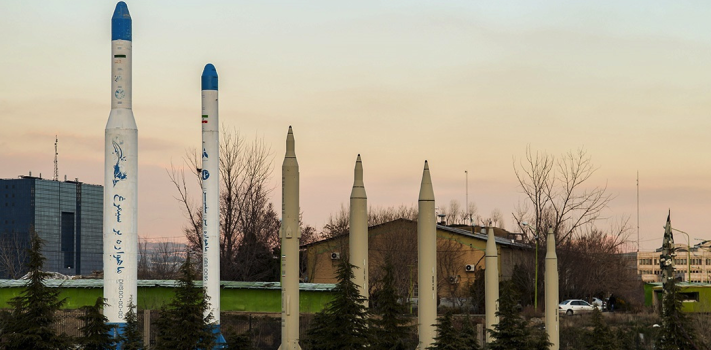
SurvivalBlog presents another edition of The Survivalist’s Odds ‘n Sods. This column is a collection of news bits and pieces that are relevant to the modern survivalist and prepper from JWR. Our goal is to educate our readers, to help them to recognize emerging threats, and to be better prepared for both disasters and negative societal trends. You can’t mitigate a risk if you haven’t first identified a risk. In today’s column: The Iran War and still more AI threats. The Iran Missile and Drone War Iran’s missile math: $20,000 drones take on $4 million Patriots.  Here is a key …
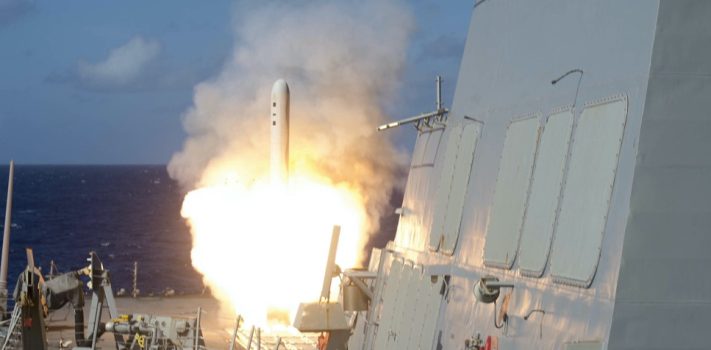


What Happens Next in Iran? Decapitation, Quagmire, or WWIII?, by Brandon Smith

Before I begin this analysis of the situation in the Middle East and its consequences, I want to warn people that this examination is going to be largely secular and nuanced; which means people on both sides of the divide are going to be perturbed and moan about it. Frankly, I don’t care. To be clear, I’m not interested in the “plight” of the Palestinians, the Islamic regime in Iran or the conspiracy theories of “groypers.” I find appeals of empathy and compassion for Islamic societies to be naive – They are perfectly indifferent and hostile to the west, they …


SurvivalBlog Graphic of the Week

Today’s graphic: Percent of Population without Health Insurance, by County (U.S.). (Graphic courtesy of Reddit and ZipCrawl.) The thumbnail below is click-expandable.     From the ZipCrawl website: NOTE: Gray indicates insufficient data or a suppressed estimate. Explore the geographic distribution of uninsured Americans across every county in the United States. This map traces the consequences of Medicaid expansion decisions, immigration patterns, and labor market structures – revealing how a single state policy choice created dramatic coverage disparities at state borders, and how the Texas-Mexico corridor has become the uninsured capital of the developed world. JWR Adds:  Illegal immigration is …


It’s Time To Accept That Civil War 2.0 Has Already Started, by Brandon Smith

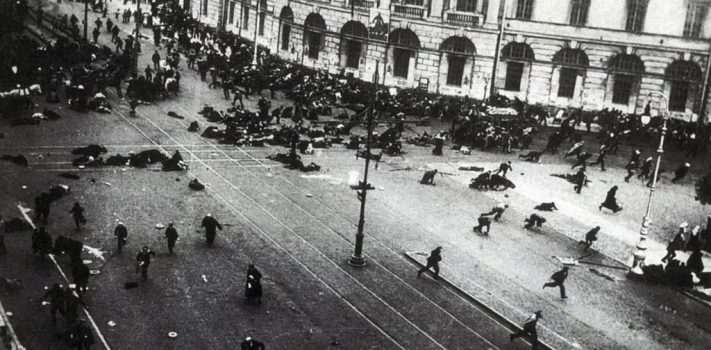
In July of 1917 as the fires of WWI raged across Europe, the Russian city of Petrograd was facing its own special turmoil in the form of a large scale Bolshevik insurgency. Up to 500,000 protesters, agitators and provocateurs had entered the city from across the country, many of them armed. They took over large swaths of the metropolis, hijacked private vehicles and confiscated private buildings. Some soviet leaders including Vladimir Lenin called the event “premature” and did not publicly endorse it, which may have been a calculated attempt to avoid direct blowback. The official historical explanation is that the …


Raising, Hunting, and Harvesting Animals – Part 1, by Lodge Pole

In late 1929, when the stock market crashed and the Great Depression began, the population of the United States was around 121.7 million people. All through the Great Depression, it was unheard of to leave roadkill on the side of the road left to rot. With high unemployment,  the hunting pressure was heavy. Small game, like rabbits and squirrels, nearly went extinct in large parts of the United States from being over-hunted, to feed desperate families. Today, in 2026, the estimated population of the US is 348.3 million. If animals were being hunted to near extinction when the population was …


Are You Emotionally Ready for the Coming Collapse? – Part 3, by Peter Cannon

(Continued from Part 2.) In Part 2 of this series, we reviewed the Trumpet Judgments, and how the people on earth will be affected by these catastrophic events. I sincerely hope that the pre-Tribulation rapture believers are correct, and that Christians will be gone to heaven by this point. However, what if Christians end up having to endure part or all of the Tribulation? If so, are you emotionally prepared for this possibility? In this installment, we will look at some of the specific events associated with the False Prophet, the Antichrist, the Mark of the Beast and the One-World …


Detecting AI-Written Slop Before You Buy Books, by Jennifer Rader

Editor’s Introductory Note:  The alarming trend that is described in this article is also taking place in many other book genres. It is possible that at least one of the author names cited in this article may be genuine, so I’m preemptively stating: Jennifer Rader’s article is an attempt to accurately describe the extent of A.I.-generated trickery in contemporary publishing. If the she has mentioned any actual living human authors by mistake, our apologies. We will be glad to update this article with corrections or clarifications. – JWR — As a preparedness author, the meteoric rise in the number of …


Lessons From a Fight at a Restaurant, by Robert E. Downing

(The photo above, courtesy of Openverse, was taken by “Terren in Virginia“, a witness to a 2008 baseball team “fan rivalry” brawl at a New York sports stadium.) The following is what I learned about security at lunch one day: Scenario One Tuesday, about six weeks ago, I stopped for a late lunch at a local upscale family restaurant in Virginia Beach, Virginia, that is part of a well-known chain.  It was about 3 o’clock in the afternoon and it seemed to be a quiet place to have lunch and prepare my Sunday school lesson. I selected a seat near …


Prelude to World War – Part 3, by 3AD Scout

(Continued from Part 2. This concludes the article.) Timelines Given As we listen to all the chatter, day in and day out about a widening war in Europe and war with China, we can see some recurring messages in the reporting.  How many times have you heard that NATO needs to be ready for a war with Russian in 3-5 years or that China will likely invade Taiwan by 2030.  There are a few variations of the dates but regardless of the actual dates we need to ask why NATO and our Asia-Pacific Allies need to be ready by those …


Prelude to World War – Part 2, by 3AD Scout

(Continued from Part 1.) Defense Production Act The Defense Production Act was passed in 1950.  It is an important piece of legislation that we should all know about.  Why?  Before the bombing of Pearl Harbor part of Congress (GOP) was advocating an isolationist stance regarding the war in Europe.  Since Congress controls the budget, it made providing military aid to our Allies extremely hard.  The Defense Production Act aimed at making it easier for a U.S. president to prepare the U.S. for war without “permission” from Congress.  One key part of the act is the ability of the president to …


A Systematic Framework for Identifying Real-World Threats, by Danield MacLeod

Many preppers have their priorities out of alignment. From my experience, many focus almost entirely on the how of preparedness—what supplies to stockpile, what gear to buy, or what skills to learn. Much of this is driven by one-size-fits-all recommendations that may not fit their specific situation. At the same time, attention is often focused on dramatic, low-probability events such as economic collapse, EMPs, or pandemics, while far more likely threats are overlooked. Now, I’m not saying that supplies, gear, skills, and major threats aren’t important—they are all extremely important for preparedness. Food, water, medical capability, tools, and training are …


America’s Poison Melting Pot and the Luxury of Tolerance, by Brandon Smith

Modern western culture is an absolute anomaly in the history of human civilization. If one studies the principles and doctrines of nearly every other society and empire around the world, you will not find one that allows mass immigration of foreigners with contrary ideologies. You will not find one that allows foreigners to migrate without strict assimilation and loyalty. From the Arab states, to China, South Korea, and Japan (until recently), to India and beyond, every culture maintains a sense of cultural supremacy. There is an absolute expectation that newcomers will adapt to political policies, belief systems, social norms, etc. …


America’s Future Can Be Seen in Spain’s Past

My goal in the essay is to use a well-known historical precedent to illustrate the U.S. Federal government’s untenable indebtedness predicament. Spain, 1500-1590 In 1500, the New World had just recently been discovered, and Spain had just recently forced the Moorish invaders from the Iberian Peninsula. Expanding their army, expanding their navy, and the lengthy campaign to kick out the Moors had been expensive for the Spanish crown. They also needed to maintain a large army to keep the Islamic North Africans from returning. There were also the expenses of building and supplying a large fleet of ships, in the …


Kanban: America’s Ubiquitous “Just in Time” Inventory System: A Fragile House of Cards

JWR’s Introductory Note: This is an update to an article that I wrote for SurvivalBlog in February, 2007. It is part of a series of SurvivalBlog 20th Anniversary update re-posts, in recognition of the fact that the majority of readers did not join us until recent years. — When I give lectures or do radio interviews, I’m often asked for examples when I mention that “we live in a fragile society.” Here is one prime example: kanban. The kanban or “just in time” inventory control system was developed in Japan, and became popular in America starting in the 1970s. It …


Is Global Technocracy Inevitable Or Dangerously Delusional?, by Brandon Smith

The bewildering truth behind human technological enslavement is that it is impossible without the voluntary participation of the intended slaves. People must welcome technocracy into their lives in order for it to succeed. The populace has to believe, blindly, that they cannot live without it, or that authoritarianism by algorithmic consensus is “inevitable.” For example, the average person living in a first world economy voluntarily carries a cell phone everywhere they go at all times without fail. To be without it, in their minds, is to be naked, at risk, unprepared and disconnected from civilization. I grew up in the …