Photovoltaic Power and Prepping – Part 1, by B.S.V.

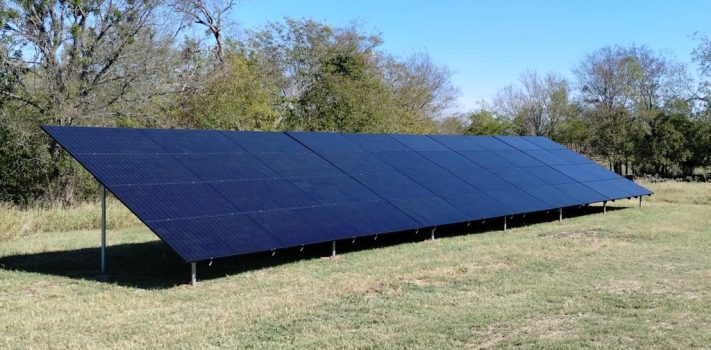
Preparedness comes in many shapes and sizes. Where we get a little extra complexity is when we have to prepare to prepare. I encountered this in one of my recent large endeavors, and found myself somewhat lacking. It worked out, but it could have gone smoother. Hopefully this article will help you avoid a similar situation. In a recent SurvivalBlog article, I discussed some strategies for using solar backup. Since then, my wife and I decided to move forward with setting ourselves up a bit better and entering the solar arena with a whole-house system. Before you think that this …


Putting Down My Dog, by SaraSue

I had no sooner sent in my positive update to the blog last week than a near catastrophe occurred. I am sharing this, even though it hurts to write about it. I’m doing so because I think it’s important to recognize that country living has pitfalls, as does self-sufficiency. Your preps and relationships become very important and not just for the obvious reasons. In this case, I needed plentiful first aid supplies, a clear head, and neighbors I could call in an Emergency. I will tell you the story. Warning: This is a graphic heart-wrenching story. Please skip over it …


Thoughts on Retreats: History and Land – Part 5, by Single Farmer

Editor’s Introductory Note: This is the last part of a multi-part article series on retreats written by a Christian farmer who is praying and searching for a wife. Please prayerfully consider all of the topics that he discusses. (Continued from Part 4. This concludes the article.) Solutions: The Journey for Possible Future Retreat Owners It would be nice if there were other easy solutions out there. But for a family man the road of hard work done intelligently will often yield good results over many years. There are some who claim that you cannot save to afford land without a …


Thoughts on Retreats: History and Land – Part 4, by Single Farmer

Editor’s Introductory Note: This is part of a multi-part article series on retreats written by a Christian farmer who is praying and searching for a wife. Please prayerfully consider all of the topics that he discusses. — Economics of Land in the 21st Century Arable land is no longer free nor available at reduced cost. As you learned in Part 2, over a hundred million acres of land in our country were sold for some sweat, initiative, and a small filing fee during the main Homestead years from the 1860s to the 1930s. Even earlier, land was available for a …


Thoughts on Retreats: History and Land – Part 3, by Single Farmer

Editor’s Introductory Note: This is part of a multi-part article series on retreats written by a Christian farmer who is praying and searching for a wife. Please prayerfully consider all of the topics that he discusses. — Economics for Farmers The first lesson that I’d like to address in this installment is that our family is very conservative, economically. We chose to avoid all debt. Yes, it is a choice for most people. Debt is no longer passed down intergenerationally as it was previously in American history. As Christians, we are taught to avoid debt. In Proverbs, we are warned: …


Thoughts on Retreats: History and Land – Part 2, by Single Farmer

Editor’s Introductory Note: This is part of a multi-part article series on retreats written by a Christian farmer who is praying and searching for a wife. Please prayerfully consider all of the topics that he discusses. — The Land: Your Base of Operations Our farm can support the core food needs of hundreds of people. Farm productivity has been increasing much faster than the population. Over the space of two centuries, the number of people who are living on farms has decreased from almost universal to around two percent. Since the number of people who now live on farms is …


Thoughts on Retreats: History and Land – Part 1, by Single Farmer

Editor’s Introductory Note: This is part one of a multi-part article series on retreats written by a Christian farmer who is praying and searching for a wife. Please prayerfully consider all of the topics that he will discuss. — Preparedness Terminology History My family preparedness history goes back generations. Before the term “prepper” was used, people who were into preparedness were known as “survivalists” and even before then people were known as “retreaters.” Our survival library is very extensive covering preparedness-related subjects including original civil defense publications from the 1950s until today. I have spent many hours reading the articles …


Backyard Chicken Tips, by Tractorguy

Keeping laying hens is an excellent idea for preppers, if you have the space and ability to do so. They are an excellent source of nutrition, particularly fats, which can be problematic to store in a grid-down or survival situation. Back in the early part of the 20th Century, during two world wars, the US government encouraged all households to keep laying hens. It is sage advice. Keeping hens to provide eggs is not hard, and does not require a large amount of time and attention. Much information is available online about raising chickens. This is not meant to be …


Making Dosa the Old School Way, by E.P.

I have been making dosa — an unleavened fermented Indian bread — for more than 30 years. It has been a staple part of my diet. Years ago my sister-in-law, who lives in India, brought me two wet grinders that she purchased in India. Back in 2020 I wrote an article for SurvivalBlog explaining how these work and how to make dosa dough using them: Making Dosa – Indian Fermented Bread, by E.P. Since they have an electric motor, and because of the way they are designed, they are not usable without electricity. I began to think about a way …


Lessons From Hurricane Helene – Part 4, by A.F.

(Continued from Part 3. This concludes the article.) After securing water and safety, climate control was my next concern. Prior to the storm, we had weather in the 80s and low 90s. Our home sits in a field along a north-to-south bearing. Morning sun isn’t too intense but the long evenings, lots of floor-to-ceiling windows and western exposure were making me nervous about getting the house cool enough to be comfortable in. I was also concerned about the potential for mildew to take hold given the humidity and lack of central air conditioning. Fortunately, the temperatures stayed mild and the …


Lessons From Hurricane Helene – Part 3, by A.F.

(Continued from Part 2.) Other than cutting the fallen trees off of our state road to gain access to the greater community, the only additional sawing we did was to clear the brush from our access to the larger hen house. Seeing that a massive white oak was bearing down on the fair-sized pine resting on the chicken run, I used two adjacent stacks of 12-inch block tied together with lumber and ratchet straps to pick up the load until I could remove the tree.   I want to give a huge shoutout and thanks to Thomas Christianson for his …


Lessons From Hurricane Helene – Part 2, by A.F.

(Continued from Part 1.) Back to the Friday morning of the storm: The rain stopped here around 10 A.M.. According to our rain gauge, we received 5.6” overnight. As I walked our property, I found a tangle of trees had fallen with a very large white oak knocking over a decent-sized pine, and that in turn landed on one of our chicken coops. A sycamore had fallen from our side of the property line and damaged a section of our neighbor’s pasture fence, the top of a white oak had broken out and blocked one of our internal roads, a …


Lessons From Hurricane Helene – Part 1, by A.F.

The following recounts some Hurricane Helene lessons learned from Western South Carolina. Our power went off for the final time around 5:30 on Friday morning. It had blinked on and off twice earlier in the night, but I didn’t pay the warnings any attention. In the end, we were without power for nine days and only tonight as I’m writing this, 26 days post-storm did we get our regular Internet service back. I am fully aware that these are First World problems and compared to so many, Helene took it easy on us. Beyond ensuring that our vehicles were fueled, …


Are You Prepared? For What?, by Mrs. Alaska

Throughout the country, kind people volunteer their time and talents to help others harmed by natural or personal disasters. However, we can only help others if we are first prepared to take care of ourselves and our families. The following are real situations that have happened to us, or people that we or our friends and relatives know. What would you do in this or an analogous situation where you live? Perhaps these questions could prompt useful and interesting discussions among family or other groups. In ice-fog conditions, your car goes off the road and down into a ditch where …


Chainsaws for a Decade of Service – Part 4, by Tunnel Rabbit

(Continued from Part 3.  This concludes the article.) Critical Replacement Parts for the Long Term The single most common reasons small engines fail to operate at all or correctly is attributed to their fuel system that include water in the fuel, old fuel, or cracked fuel lines. And number one for chainsaw problems: old, dry and brittle fuel pump diaphragms inside the carburetor.  At one time the only affordable way to correct these problems was to install a rebuild kit.  However, there are other causes that make a carburetor less able to function such as fine deposits and internal corrosion. …