


I’m sure most everyone is familiar now with the seemingly sudden change in the Food Pyramid. The Food Pyramid has essentially been flipped on its head. Whereas, grains were considered a “foundational” food, meats (proteins), vegetables, and dairy are now considered to be foundational. I am very pleased to see this change at the federal government level because it’s going to impact all federal programs for the better, in my opinion, such as feeding children, the less fortunate, healthcare, and nutrition guidelines.
Have you ever (unkindly) thought “they could afford to lose some weight” when witnessing someone purchasing groceries with SNAP benefits? Do you want to know why there are so many obese people in our country? They aren’t over-eating. They are purchasing the cheapest available foods, which are highly processed, low in nutritional value, and high in calories. Their bodies are literally starving for real food. Manufactured food is what is responsible for packing on the weight while not nourishing the body. In my opinion, our food system has been a horrible disaster for the health and welfare of this country. Which is why I am very happy to see the changes that are in process. Real food doesn’t cause obesity and illness. Real food is nourishing and makes for strong bodies.
When Health & Human Services announced the change, my first thought was “It’s about time!”, and my second thought was, “How are people going to afford this?” The cost of protein via meats has been rising year after year after year. Beef prices in particular are through the roof and may remain high for years to come as the beef herds in the United States are rebuilt after years of drought. And if you can source cheap meat, where did it come from (always the question in my mind)?
Let me back up just a bit. I flipped the food pyramid a long time ago. Actually, I ignored it completely and have restored much of my health as a result. When you go on a “self-sufficiency” journey and learn to raise your own food, you also learn to ditch the grocery store. By default, the pyramid gets flipped, because the most bang for your food bucks is protein on a farm. The chickens provide meat and eggs. The cows provide beef and all things dairy. Once you raise chickens, you can learn to raise the other fowl (ducks, turkeys, quail, etc.). You may decide to raise sheep, goats, rabbits, pigs, etc. The gardens and orchards, while a wonderful supplement, are not quite as important as the proteins for building strong bodies. And yes, I am aware that vegetarians are quite good at getting proteins from other sources (beans, lentils, wheat). I appreciate those foods too and it’s very important to know how to get protein from other sources. Beans and lentils are an important part of a food storage strategy due to their shelf life, fiber, and protein.
So back to, how are regular Americans going to afford this new Food Pyramid? I guess Pop Tarts and Fruit Loops aren’t for breakfast anymore. Even “Heart-Healthy Cheerios” are probably out the door, or could be considered a rare treat. It’s steak and eggs now! But, who can afford that? I’m sincerely concerned.
I have been fascinated by the problems around sourcing real food from real people and not mega corporations. I asked one of my daughters what their grocery bill is weekly for 6 people. She told me that she spends about $300 each week, and that doesn’t include meat because I supply the meat (beef, pork, chicken). So that is $1,200+ per month for groceries and household supplies without the proteins. I was shocked. Because I have a farm and live in a farming community, I rarely go to a grocery store. I’ve learned to “eat with the seasons”, as in, eat what is available during the season in which it grows. And I have learned to preserve what is in season for off-season eating. Most rural towns have Farmer’s Markets or neighbors trade with neighbors. And the prices are not like the bourgeois Farmer’s Markets near the metro areas. Those Farmer’s Markets have much higher prices and cater to the “city folk” who can afford that.
In rural America, one person may be really good at growing green beans and tomatoes, another potatoes, another carrots, or corn, and another various meats. The price of those things at a local farmer’s market in a farming community are very competitive. One could even say “cheap”. I don’t even think my favorite rancher has raised his beef prices in years. If you bought a half or whole cow from him, the average price of the finished product was about $5/lb, which includes roasts, steaks, brisket, and hamburger. And it is the highest quality Angus beef I can buy, other than raising my own.
Having said that, I have seen some of the younger “homesteaders” charging crazy high prices for their products. I’ve often heard, “I should be paid for my time!” Well, none of the long time farmers and ranchers are saying that. A local example here was pasture-raised turkey with a price tag of $174. That was for just one turkey. Wow. When you can get a turkey at Walmart for around $0.90/lb, or less, who in their right mind would buy a local pasture-raised turkey? Some people do, of course, but not this girl (and I won’t buy a Walmart turkey either!). I immediately started searching my favorite hatcheries online for turkey poults. One day, one of the hatcheries I trust, put their turkey poults on sale for around $8/poult. The last few years, turkey poults were running close to $20/each and I wasn’t going to pay that much for a tiny bird who could die on me in the first 48 hours. $8 was a steal, so I put in my order for a summer hatch date.
I called one of my neighbors and asked her if she wanted to help me butcher turkeys in exchange for a few. She said, “Absolutely!” I’ve never tried to raise turkeys, so we’ll see what happens. I hear they are very fragile as poults, unlike most chickens. There are a lot of more “reasonably priced” products in my area from local farms. I just saw an ad from a local farmer who is selling half and whole beef for $6/lb (hanging weight). I have purchased whole chickens from another farmer for about $3/lb, while some are charging $7/lb for pasture-raised chickens. Prices are all over the map, so you have to be diligent in searching out a source. Many people where I live will trade beef for pork, or pork for chicken, (venison is often traded), etc.
All that to say, good, farm-raised, local food is available at reasonable prices, but you may have to go find those sources if you don’t live in the country. Another example is that across my state, Tennessee, raw milk is readily available, but the price varies significantly. You can buy it from the Amish for a very reasonable price (say $4-6/gallon), or you can buy it from a “fancy farm” (that’s what I call people charging an arm and a leg for their products) for around $25/gallon or you can do your research and buy it from a local farm for around $10-12/gallon. Having lived here for about 5 years, I’ve learned who grows what and what is available and when it is available. I have a neighbor who grows the sweetest corn and the juiciest tomatoes I’ve ever tasted in my life. Even though I can grow the above, I have learned that some of my neighbors do it way better than I ever could. I just made a huge blackberry cobbler for a family dessert. I had picked the blackberries wild myself when they were in season, and purchased some from a neighbor, and stored them in the freezer. I had also frozen some cream from one of my milk cows, and was able to whip it up with some sugar for the topping. It tasted as fresh as the day the berries were picked and the cow was milked. A real treat.
I have been watching with casual interest how my adult children go about sourcing their food since their mom so radically changed her life (from city girl to farm girl). They all live in different states. I noticed that one family just bought a side of beef from a local rancher, another bought half of a pig (pork) from a friend of a friend, another friend sources beef from a neighboring state. I thought, good for them! It’s not convenient. But, it can be fun to spend family time hunting down resources, making trips to pick up food, trying various farms and what they offer. In my community, and due to our growing zone, it’s very hard to grow peaches, and last year apples were a hit and miss. There is a group of people I know that get together and drive South once a year and do a bulk purchase of peaches and apples at very competitive prices. They make a day of it and have fun. The Amish transport in a lot of peaches and apples too. I thought the peaches tasted awful, so I won’t buy peaches from them again. The apples were good though, and I put up all things apples: apple butter, apple sauce, etc.
I remember as a child, my parents taking us to a butcher shop way out in the country with some friends. Together they purchased bulk beef and cheese, brought it all home, divided it up, and were pleased with their purchases. That can still be done today! I recently became aware that you can purchase bulk beef cuts at Costco for very good prices, bring it home, and slice it into the cuts you want thereby saving a significant amount of money. I didn’t know Costco even offered that, but that would be a great choice for a lot of people who have no time to be driving through the countryside trying to find farms.
Most states in the U.S. will have a website specifically devoted to advertising its agricultural products and producers. Here, that website is called Pick Tennessee Products. Not all farmers and producers advertise there, but it’s a good place to start. Another way to search is by using FaceBook or Google to find farms, their websites, and farmers’ markets. I despise social media, but in this day and age, it’s very difficult to find resources without using social media. FaceBook offers limitless groups of people who are interested in any particular topic. Google, along with Location Services, allows you to type in something like “Farmers markets near me”. Hunting down resources has been made easier. The hard part is finding the right farmer or farms to meet your family’s needs at the price you want. Remember that, generally speaking, the further you go, away from the metro areas, the less expensive things will be.
Why go to all that trouble? I can guarantee you that local produce is far superior, in flavor and nutrition, than what gets shipped in from other countries to your local grocery store. Grocery store produce is generally sprayed to preserve “freshness”, even the organic produce. I’ve gotten to the point that I won’t purchase any meats from a grocery store. After experiencing fresh and local, it’s really hard to go back to mass-produced food. There’s just no comparison. As an aside, when I switched to whole foods and ditched the grocery store, I naturally lost a lot of excess weight. And while I struggle with several physical ailments, I am in much better condition than I was a decade ago.
It may take a little work on the front end to source fresh and local whole foods. Purchasing in bulk might be difficult financially at first, but if you plan to do that, say, over a year’s time, you will have full freezers and pantries. Learning to “put up” (dehydrating, canning, freezing, etc.) is well worth your time. Many farmer’s markets or local CSAs (Community Supported Agriculture) will take SNAP benefits. Over time, your health will improve, as will your wallet.
I hope that in the near future, we will have the same quality of food in our grocery stores as they do in Europe. Many European countries have banned GMOs and the attitude about food is different than what we have here. Our mindset has been, generally speaking, that to find the cheapest food (on sale!) is the goal. But, I fear, that mindset has been to our physical detriment. It should be, where can I find the most nutrient-dense local food to feed my family. Finding “real food” is a lifestyle change, but a change for the better.
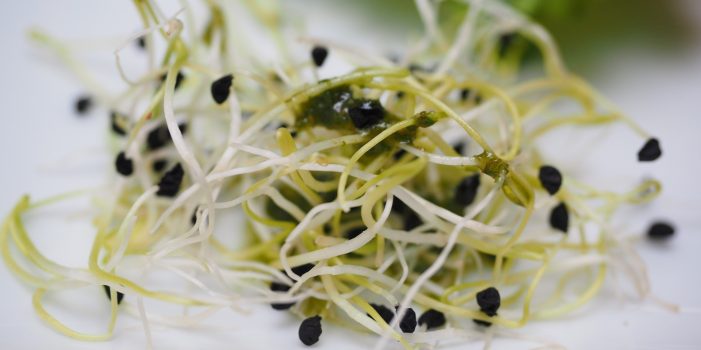
JWR Adds: Even someone who lives in a studio apartment has enough room for jar sproting. See the SurvivalBlog archives, using the search words “sprouts” and “sprouting”.