


I recently re-read The Wine-Dark Sea by Patrick O’Brian. It is book 16 in the Aubrey/Maturin series. One episode in the novel describes Dr. Stephen Maturin riding a mule into the Andes to meet with conspirators who are plotting the overthrow of the Spanish government in Peru. As Maturin rides higher into the Andes, the temperature falls, and he pauses in his journey to put on a poncho.
I suspect that the poncho that O’Brian had in mind as he penned his novel looked something like the one worn by Clint Eastwood in all three films of the Dollars Trilogy.
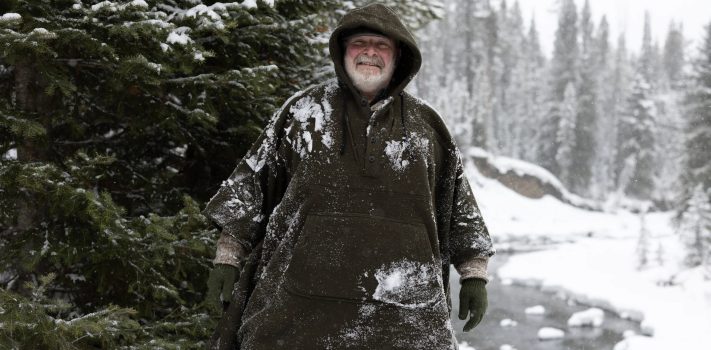
The WeatherWool poncho that I recently tested was shaped more like the ones worn by the soldiers portrayed in the statues of the Korean War Veterans Memorial. It was made of heavyweight Merino wool rather than the coated nylon twill of the Korean War era.
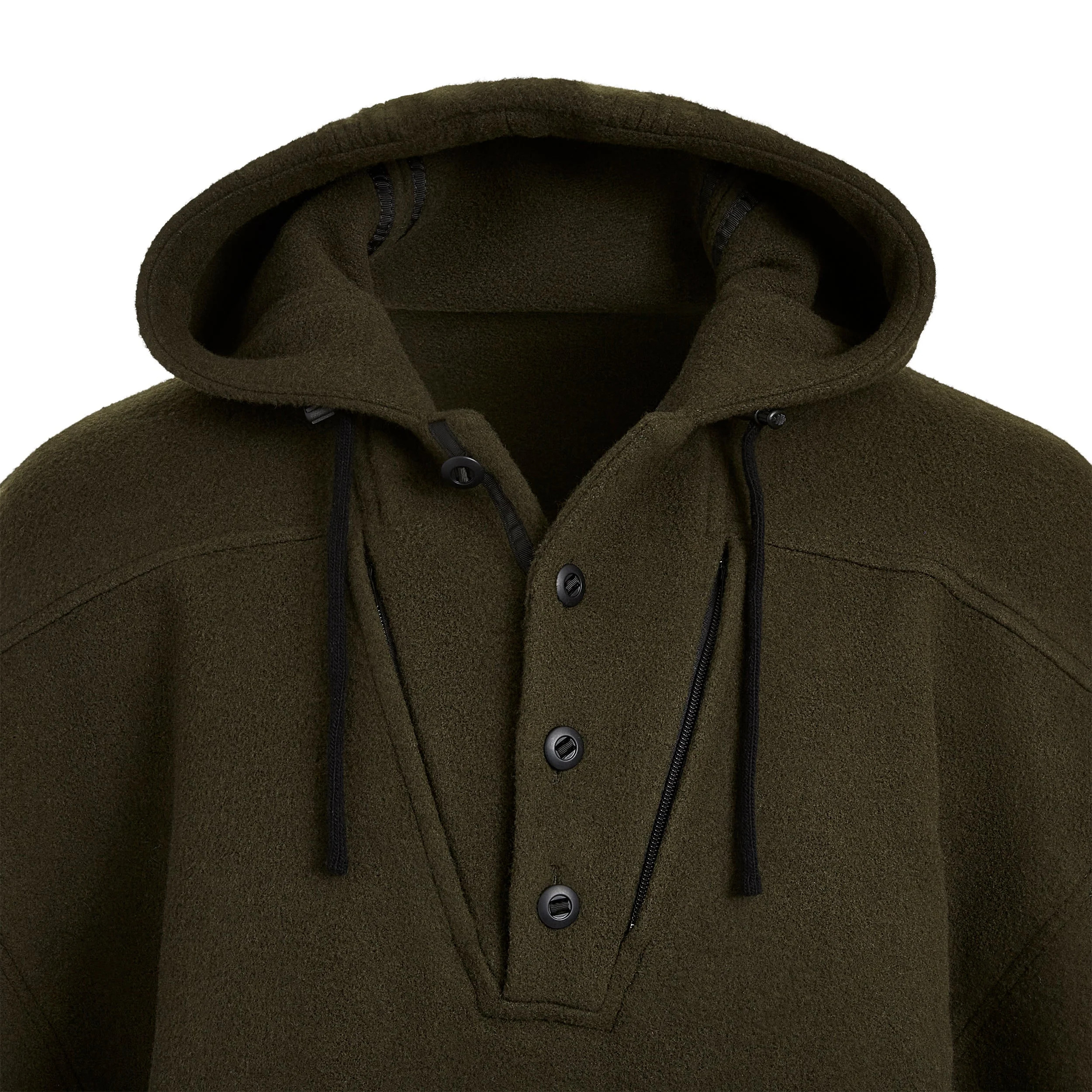
 The poncho was comfortable in temperatures ranging from 40 to 15 degrees Fahrenheit in both still and breezy conditions when worn over standard winter-weight indoor clothing (long johns, pants, wool socks, t-shirt, long-sleeved shirt, and wool sweater). But the beauty of the poncho is its versatility: there is plenty of room inside of it to add additional layers: a down vest, insulated overalls, extra base layers, etc. Lighter clothing can also be worn under the poncho. This makes the garment adaptable to almost any conditions.
The garment is rugged, the workmanship is excellent, and the fabric is surprisingly soft. The poncho is available in black, brown, drab green, lynx pattern, and natural white. It is also made 100% in the USA in both materials and labor.
The poncho is expensive. It cost $795 at the time of this writing at weatherwool.com. If you can afford the best, it might be worth your while to take a look at WeatherWool website. They have fine, American-made wool garments the likes of which cannot be found elsewhere.
Background
I generally avoid the use of artificial intelligence whenever it is possible to do so. The one exception is when investigating the country of origin of various items. AI might not always be accurate when it tells me that an item is manufactured in the United States. But it is almost never wrong when it tells me that an item is manufactured in mainland China.
In any case, I was searching for American-made, Merino-wool base layers. The AI assistant in my Brave browser mentioned WeatherWool as a company that produced such products. I was not familiar with WeatherWool, so I went to their website to take a look.
Suddenly, I felt like a kid in a candy store. They had American-made wool shirts of various weights and styles, jackets, coats, wool denim jeans, vests, Jacquard pants, caps, hoods, scarves, and a host of other products. I did not know that any American company was making some of these woolen garments anymore. I was thrilled.
I contacted Ralph DiMeo, Founder, President, and Customer Service Representative of WeatherWool, to see if he would be willing to provide me with a garment for testing and evaluation. Ralph kindly agreed to loan me a Selvedge Poncho. Soon afterward, a box arrived via UPS Ground from WeatherWool, 144 Ralston Avenue, South Orange, NJ 07079.
First Impressions
 The 24 x 14.25 x 8.5 inch shipping box was somewhat battered in transport. It contained a note from Ralph: “Testing Sample. I packed this myself, so the packing job is UGLY—but at least it ships NOW! –Ralph.” In addition to the poncho, the box also contained a return shipping label so that I could send the poncho back when I was done testing it. There was a paper tag wired to a buttonhole on the poncho. The tag read, “Only One. Do Not Sell. (Ralph’s).” Ralph had already explained that the poncho was the last of a previous run, and that it was to be used as the model for the next run.
The poncho was the olive drab color of an old army blanket, but the fabric was amazingly thick and soft. No poor GI ever had a blanket made of material this nice. The material is full-weight Jacquard fabric, which weighs about 18.5 ounces per square yard (not just per running yard).
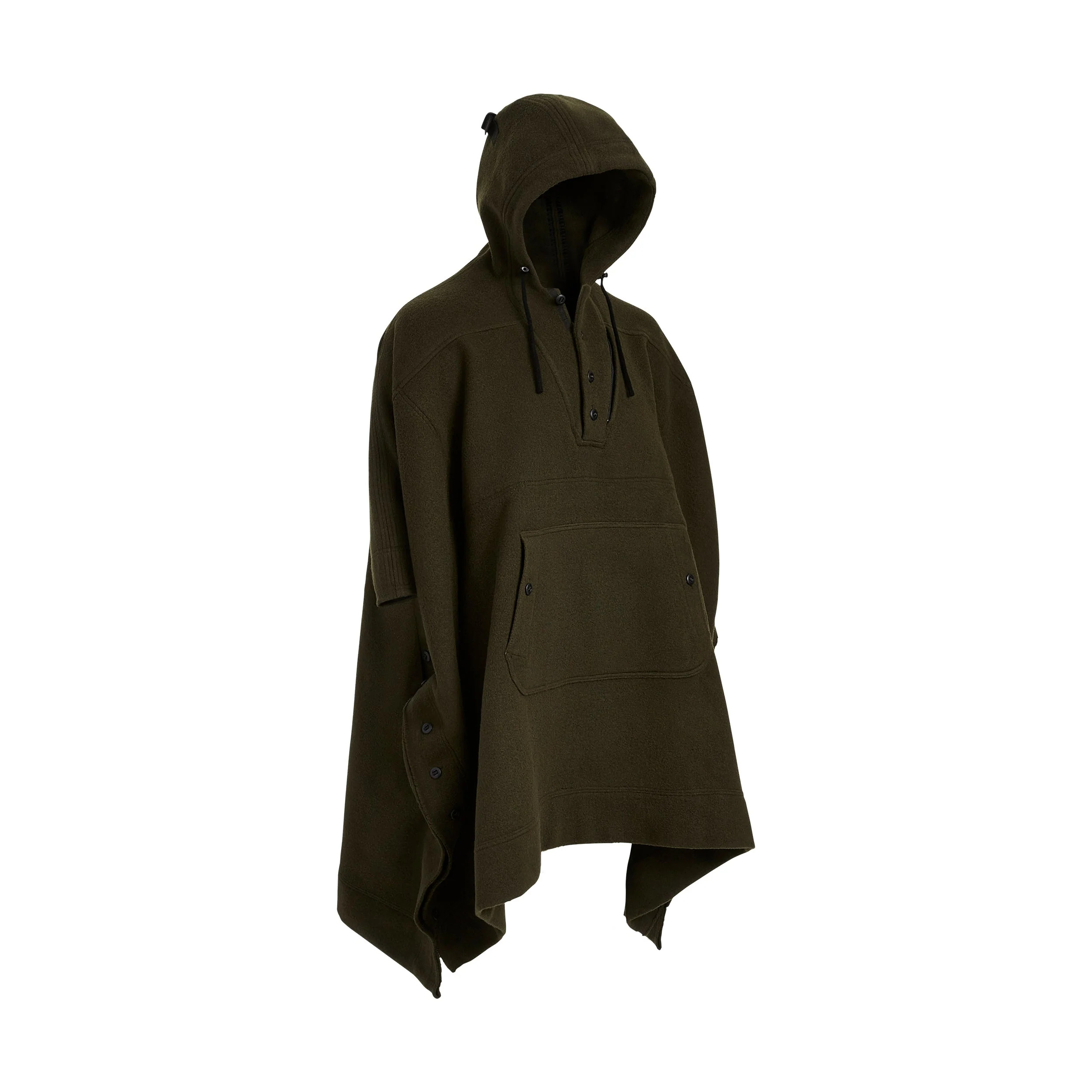
The garment is basically an 80 x 57 inch heavy Merino wool blanket with a hole in the middle with a hood. There are 11 buttons along each side of the poncho to hold the sides together. There is rugged reinforcing material on the seams, by the buttons, behind the buttonholes, and across the chest. Between the heavy fabric and the rugged reinforcing material, this is one very durable garment.
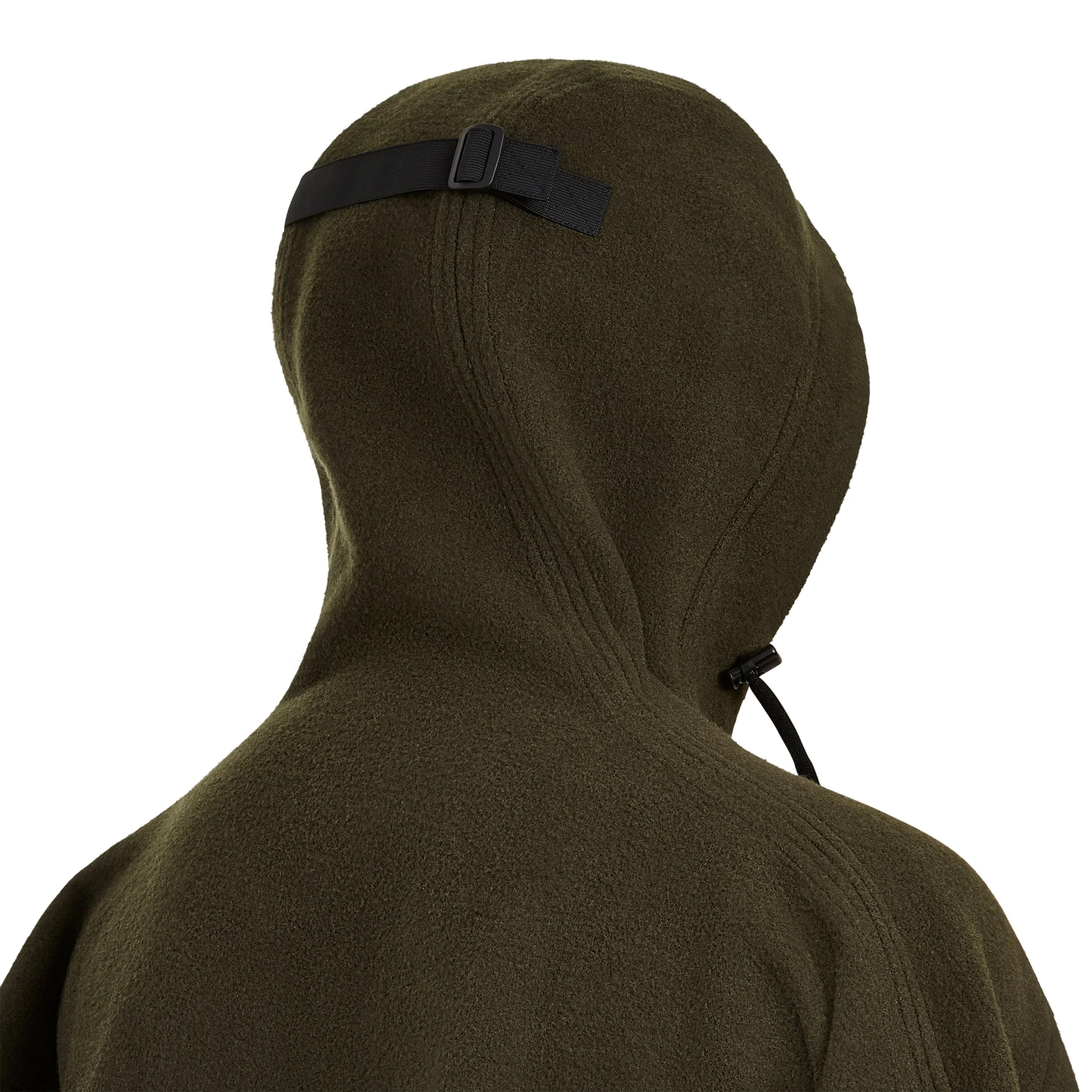
There is a drawstring on the hood to seal around the face and a strap on the back of the hood to adjust for size. A slit on the front of the yoke allows for the garment to be more comfortably pulled over the head. The slit can be closed by a series of buttons and buttonholes supported by additional rugged reinforcing material. There is a roomy, zippered chest pocket on each side of the yoke.
There is a double kangaroo-pocket on the front of the poncho. A single button on each end of the outer opening allows it to be fastened securely shut. An elastic utility strip with two openings is stitched inside the outer pocket to allow items to be secured within the pouch. A corresponding kangaroo-pocket is sewn inside the poncho. There is a zipped inner pocket inside the inner pouch, which allows valuables to be secured.
The multitude of buttons along the side of the poncho require some time to fasten and unfasten, but they provide a great deal of versatility in how much air circulation the wearer wishes to allow through the garment. Many will prefer to keep most or all of the buttons unfastened. If it is desirable to have very many of the side buttons fastened, it may be easiest to fasten them before putting on the poncho.
There is a channel at each end of the poncho. A pole can be run through this channel to fashion a lean-to.
Blanket Use
I threw the poncho over the back of the couch. I often move to the couch during the night if my joints are aching, and I want some support for my back as I lay on my side. I knew that this would give me a chance to test the poncho as a blanket.
I knew that if I tried to wrap myself in the poncho it would be either too short or too narrow. So when I moved to the couch, I placed a second blanket under me and covered myself with the poncho.
The dog quickly joined me on the couch, as he frequently does. I am going to need to remove some beagle hair before I send the poncho back.
The poncho was not quite as warm as the comforter that I typically use, although throwing the hood over the opening the middle helped a lot with the draft. Overall, as a blanket, the poncho was impressively warm and soft.
A Fashion Statement
In town, the poncho qualifies as a fashion statement. I did not see anyone else wearing anything like it during the entire testing period.
In general, I try to avoid making fashion statements. The one exception is clothing from the country where I served as a missionary. My field of service has some incredibly comfortable garments. I tend to wear them without thinking about it when the weather is right.
One time, I was testifying before a governmental body at a public hearing. I had put on a garment from my field of service that morning without giving it any thought. There was an article about the hearing in the local paper the next day. In the article, the reporter wrote more about what I wore to the hearing than what I had said.
In any case, I tried to avoid wearing the poncho in a civilized context. I wore it for things like driving back and forth to work or walking the dog. One day at work, I remembered that I needed to go to the bank. I decided wait to go to the bank another day. I did not want to stand out in the crowd.
In the field, on the other hand, the only important question is how effective a garment is. There are few people in the boonies to observe how a given garment looks. Those few are usually more interested in how something functions than how it looks. I enjoyed wearing the poncho in the field, and will be sorry to send it back.
Testing
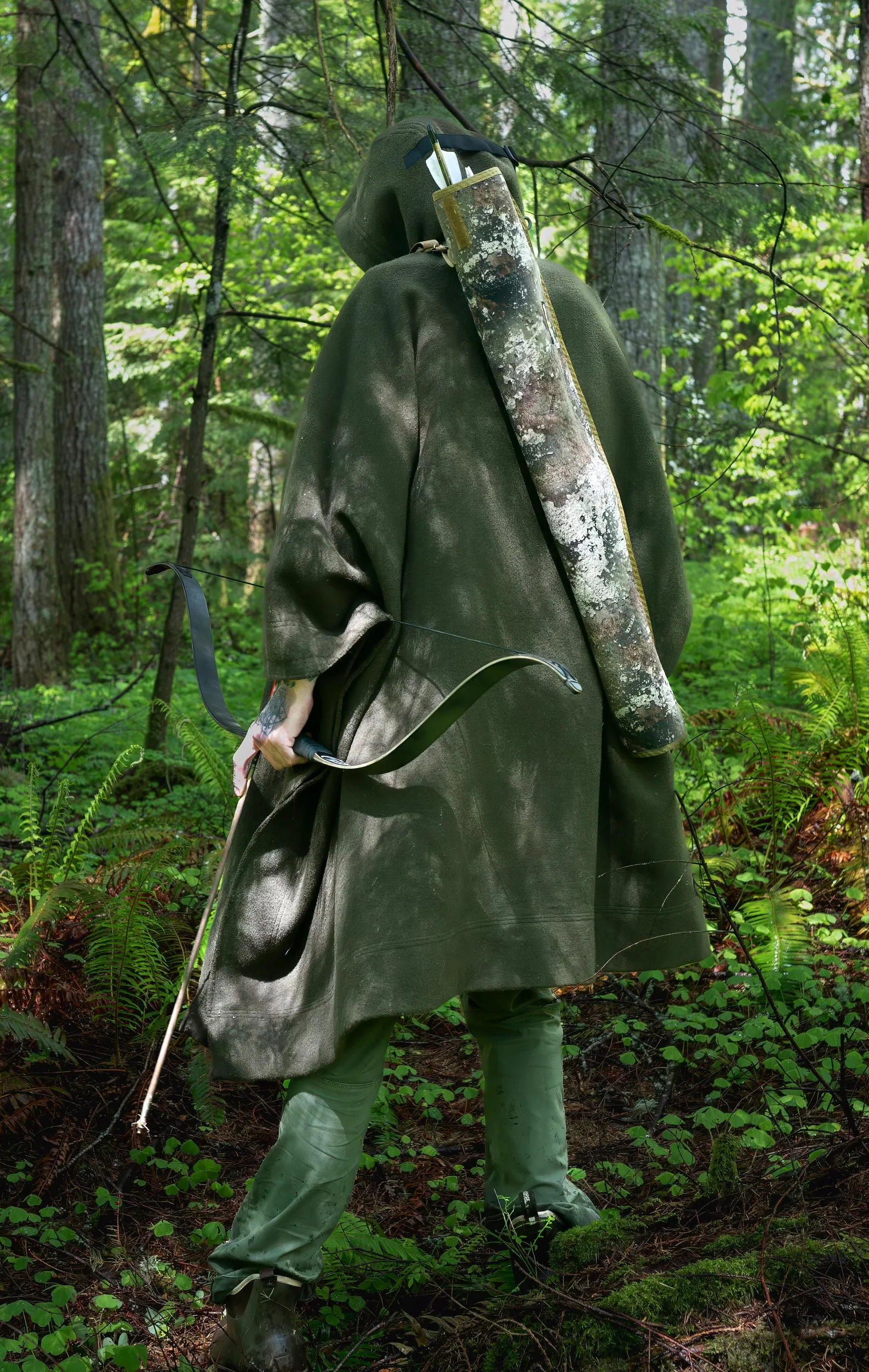 As I mentioned above, I found the poncho to be comfortable for temperatures from the mid-teens to the forties in breezy or still conditions. I could easily have layered additional garments under the poncho to remain comfortable at even lower temperatures, or worn lighter garments under the poncho to remain comfortable at higher temperatures. I also found the poncho to be effective at shedding rain.
Conclusions
WeatherWool makes well-designed garments from outstanding fabrics using excellent craftsmanship. I am glad that well-made wool garments that are manufactured in the USA are still available. Such garments, however, tend to be somewhat expensive. Due to the superior qualities of wool, it may be worthwhile to invest in a few carefully selected woolen garments for field use. For everyday use around the house and around town, less expensive garments of lower quality may be sufficient.
Disclaimer
WeatherWool loaned me a sample of their Selvedge Poncho for testing and evaluation. I tried not to allow their kindness to interfere with my objectivity in this review, and I believe that I have succeeded. I did not receive any other financial or other inducement to mention any vendor, product, or service in this article.