


(Continued from Part 2. This concludes the article.)
Timelines Given
As we listen to all the chatter, day in and day out about a widening war in Europe and war with China, we can see some recurring messages in the reporting. How many times have you heard that NATO needs to be ready for a war with Russian in 3-5 years or that China will likely invade Taiwan by 2030. There are a few variations of the dates but regardless of the actual dates we need to ask why NATO and our Asia-Pacific Allies need to be ready by those dates. Is there intelligence that our foes are actually planning for attacks in these years? If so, why let our adversaries know? Or perhaps these are dates when NATO and other Allies will take a harder stance against Russian and Chinese Hybrid warfare. That is, NATO will shoot down Russian drones/jets violating NATO airspace and challenge Chinese naval aggression in and around the South China Sea? These dates should be a major clue that we will see significant escalation in a few short years UNLESS there is some serious deescalation actions.
Europe Already Knows
With NATO nations renewing civil defense programs in a frenzy and NATO defense spending skyrocketing, the political leaders of NATO maybe signaling the inevitable. But if renewed civil defense programs and skyrocketing defense spending does not show the clear path to war perhaps the words “We are at war” coming from NATO military leaders such as Admiral Giuseppe Cabo Dragone, maybe convincing enough to where we are headed. In the end of November 2025, Admiral Giuseppe Cavo Dragone stated that NATO was contemplating the idea of “being more aggressive or being proactive instead of reactive.” Dragone went on to say retaliatory cyber attacks is an option. Again, we are not seeing any de-escalation.
So What?
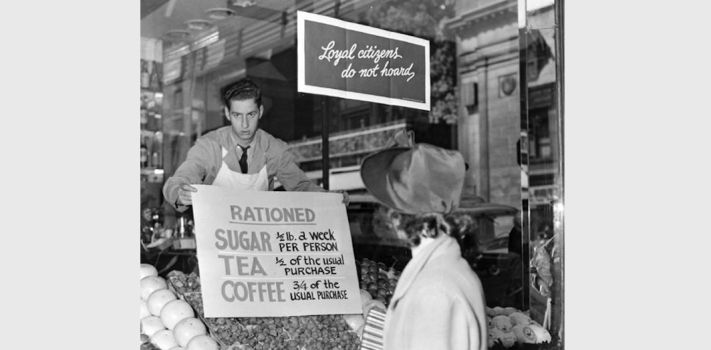
Accepting that war is coming, and perhaps with a scale of damage and destruction never seen before, allows us to use our time and other resources wisely. Anticipating government actions will allow us to mitigate future negative impacts. For example, if war breaks out we could see rationing well beyond what our ancestors did in World War II. Besides rationing, we can see shortages caused by manufacturing resorting to war time production and/or lack of imports due to embargoes and lack of shipping (merchant ships being sunk and/or pressed into military service). During World War Two basically no cars were manufactured for civilian use (records indicate that 749 civilian cars were manufactured in 1943 and 1944). Ammunition was available but civilian ammunition production was cut to only 1/6th of the amount. Most of the ammunition made for civilians went to police departments and farmers to deal with predators. A good planning assumption is what is not rationed will just not be available. That is just about all consumer goods. Considering our lack of domestic production we can see essentials like toothpaste, first aid supplies, over the counter drugs (also going to the war effort), soap and other household cleaning supplies not being available or highly rationed.
Big Brother
There were certainly black market goods and cheating within the World War 1 and World War 2 rationing programs. I suspect that it will be more difficult as the digital tools will be used to track and allocate rationed items. Will networked cameras be installed by the war production board on farms to ensure farmer Brown does not sell a pig to the neighbors? Will there be a bigger push to adopt a cashless society in the name of the war effort and to stifle black market trade? Periods of war have always caused an erosion of our rights, so be ready.
Strategic Metals
Prior to World War Two, the world was facing the Great Depression. In the lead-up to the next Great War we may see more economic hardships as nations implement economic warfare before kinetic warfare. Could hostile nations weaken the U.S. dollar? Could we see the federal government once again outlaw the private possession of non-numismatic gold as FDR did in 1933? Consider that FDR made everyone turn in their gold and paid them $20.67 an ounce but then raised the price of gold to $35 per ounce. Many preppers put away gold and silver in case there is another economic crisis. If we see history repeat itself, could preppers be labeled “criminals”, for hoarding gold? Unlike World War Two, we could even see silver added to the mix.
In the Fall of 2025 the United States classified silver as a strategic mineral. The exact amount of silver used in various U.S. weapons is not publicly available, however most believe each missile uses 10-15 ounces of silver. There are reports of up to 500 ounces in a Tomahawk cruise missile but those claims have been questioned. Regardless, the U.S. has deemed silver a strategic mineral and therefore we could see its confiscation.
During World War Two, scrap metal drives were conducted to gather iron, tin, and other metals for the war effort. Citizens donated their scrap metals as their patriotic duty. Could we see mandatory metals turn-ins in the next war? Due to environmental regulations, many mining operations have been shut down. There are 3 (with one additional to become operational at the end of 2025) copper smelters and 11 lead smelters in the U.S.. None of these smelters are for smelting ore but rather for melting recycled metals. With no domestic mining operations we could see Uncle Sam demanding we turn in our copper, aluminum, silver, lead, and whatever else they can make weapons of war with. Better throw lithium into that list as well.
How might this impact preppers and homesteaders? Will we be limited to the number of tractors, implements et cetera on our homesteads? If we do not produce food for sale, will our tractor be deemed illegal? These may sound like stupid questions, but nations have been known to do some pretty draconian and stupid things in wartime. My point is to anticipate these actions and prepare as best as possible.
Are you Ready?
As preppers, we are ready, right? But are we? World War Two lasted four years for Americans but much longer for many other nations. [JWR Adds: And the effects carried over into the post-war years. England did not end food rationing until 1954!] Looking at Prepper “norms” we see some common themes when it comes to food storage. We see 3 days of food/water in a go bag, 2 weeks, 3 months, 6 months and then a year’s worth of food/water as common milestones. There are some preppers who have more than one year of food but they are probably a smaller percentage. Putting away sugar, salt, wheat berries/flour and some baking powder (or ingredients to make your own) might be a wise investment moving forward. Being prepared to supplement your food stores with victory gardens, orchards and from animals on the homestead will stretch how long your stored foods will last. Over the counter medicines like pain relievers and cold medicines should be stocked up on as well. Food and medicines are the bare minimum areas that you will want to boost on-hand supplies of.
The coming war will make everything but misery and despair be in short supply. I do not say that to scare anyone or to be dramatic but rather to make everyone grasp the reality of just in time deliveries and the ramifications of moving our manufacturing overseas. I believe you cannot go wrong in stocking up on consumable manufactured goods. Nails, screws, wire, light bulbs, fuses, rope, webbing, solder, pipe and pipe fitting, tools, drill bits, saw blades, screw driver bits, and anything else found at a hardware store. Why a hardware store specifically? Because, like our ancestors, who survived World War II, we are going to have to make do with what we have or do without. If something breaks then we won’t be able to go down to the local big box store and pick up a replacement.
Being able to repair, and make our own “things” is what is going to get us through the coming hard times. Given how many products are designed and manufactured with planned obsolescence, we could see many items we depend upon daily break and stores will have no replacements. In my household, we have been stocking up on more household cleaning items and home repair parts/supplies.
Electricity
With the rise of data centers needed for A.I., the supply of reliable and cheap electricity in the future is questionable. Throw a war into the mix and now we have additional variables that can wreak havoc on our electric power grid. Cyber attacks, sabotage, additional power demands for AI due to the war, and let us not forget about Electromagnetic Pulses (EMPs) if things get really out of hand. The good news is that Ukraine still has power in large areas even after targeted attacks on their power grid for three years.
Power will probably be on for the most part, but I can see rolling blackouts to conserve power and isolated outages due to sabotage or cyber attacks. One other thing to consider is that Ukraine has had hundreds of power plants (large generators) brought in from the European Union’s civil defense stocks. What country is going to send power plants to the United States? Thinking about Big Brother and draconian measures could we see power in residential areas turned on only during certain times of the day? With smart grids and smart meters it will be easy to turn power off to residential home while leaving power on to war factories. Living without power will be challenging so preppers should be looking to ensure they have the ability to heat/cool their homes and if using well water, having a backup means to obtain water.
Act Now
Do not wait for open hostilities to break out before you start prepping or you upping your preparedness. Just about any essential consumable manufactured good is a good idea to stock up on. Be diversified in the goods you stock up. Sit down and make a list of items needed for maintenance of your equipment that is essential to your survival (physical and economic). Things like filters and fluids for vehicles and other pieces of equipment with engines, if not already well stocked, should be acquired. As mentioned earlier, we have started to stock more repairs/maintenance items for our home. Lightbulbs, furnace and water filters, toilet, sink and shower repair parts. Fuses and breakers, and parts for our home’s well water system such as extra pipe, pressure switches, and gauges. We are also looking to re-insulate our home and to replace our wood-burning furnace so that we need less energy which will cost more in the coming years (war or no war). Time is one of the prepper’s most valuable resources, so use it wisely.