Preparedness Notes for Thursday — February 12, 2026

February 12, 1935: The 785-foot long rigid airship USS Macon (pictured above, at Moffett Field, Sunnyvale, California) was downed in a storm off Point Sur, California, with the loss of two lives, and 64 people rescued.

On February 12, 1873 US Congress passed the Coinage Act of 1873, abolishing bimetallism and placing the country on the gold standard.

SurvivalBlog Writing Contest

Today we present another entry for Round 123 of the SurvivalBlog non-fiction writing contest. The prizes for this round include:

First Prize:

  1. A Gunsite Academy Three-Day Course Certificate. This can be used for any of their one, two, or three-day course (a $1,095 value),
  2. American Gunsmithing Institute (AGI) is providing a $300 certificate good towards any of their DVD training courses. Their course catalog now includes their latest Survival Gunsmithing course.
  3. HSM Ammunition in Montana is providing a $350 gift certificate. The certificate can be used for any of their products.
  4. Harvest Guard is providing a 200-Piece Bulk Mix Pack of their Regular and Wide-Mouth Reusable Canning Jar Lids & Gaskets. This is a $161 + shipping value.

Second Prize:

  1. A SIRT STIC AR-15/M4 Laser Training Package, courtesy of Next Level Training, that has a combined retail value of $679
  2. Two 1,000-foot spools of full mil-spec U.S.-made 750 paracord (in-stock colors only) from TOUGHGRID.com (a $287 value).
  3. Preparedness author Jennifer Rader is providing a $200 purchase credit for any of her eight published food storage and medical preparedness books, including the Good Eats at the TEOTWAWKI Café series, the Armageddon Pharmacy series, and the Medicine Surrounds Us series.
  4. A transferable $150 FRN purchase credit from Elk Creek Company, toward the purchase of any pre-1899 antique gun. There is no paperwork required for delivery of pre-1899 guns into most states, making them the last bastion of gun purchasing privacy!

Third Prize:

  1. A Berkey Light water filter, courtesy of USA Berkey Filters (a $305 value),
  2. Two sets of The Civil Defense Manual, (in two volumes) — a $193 value — kindly donated by the author, Jack Lawson.
  3. A $200 credit from Military Surplus LLC that can be applied to purchase and/or shipping costs for any of their in-stock merchandise, including full mil-spec ammo cans, Rothco clothing and field gear, backpacks, optics, compact solar panels, first aid kits, and more.
  4. A transferable $150 FRN purchase credit from Elk Creek Company, toward the purchase of any pre-1899 antique gun.

More than $981,000 worth of prizes have been awarded since we started running this contest.  Round 123 ends on March 31st, so get busy writing and e-mail us your entry. Remember that there is a 1,500-word minimum, and that articles on practical “how-to” skills for survival have an advantage in the judging. In 2023, we polled blog readers, asking for suggested article topics. Please refer to that poll if you haven’t yet chosen an article topic.


Raising, Hunting, and Harvesting Animals – Part 2, by Lodge Pole

(Continued from Part 1.)

The following are the basic tools I use to harvest and butcher fowl:

  • Large stainless steel bowl. I put several quarts of water in the pot (the amount of water varies on how many birds I am harvesting) to keep the meat from drying out and to help keep flies away if they are present. I also butcher where running water is easily accessible to wash my hands when necessary.
  • Sharp knife. My preferred knife for cleaning and butchering is a medium-sized, antique, high-carbon steel butcher knife with a very thin blade. This knife is from the 1920s and does a fantastic job breasting and quartering because of its size and curved blade.
  • Knife sharpener. Anyone who has ever butchered knows how fast knives can/will dull. This is true even with chickens. I use several different types of knife sharpeners, but the best, especially for my thin, high-carbon steel blades are ceramic sharpening rods, making a “V” shape that are inletted into a wood block. A few swipes at the correct angle make my blades razor sharp.
  • Nails. As I previously stated, I hammered two, ten-penny nails into the stump. I use nails rather than screws for the sole reason that hammering the nails into the stump is easier with the back side of the axe instead of finding a drill or screwdriver. On occasion, a nail may come loose or need to be adjusted in width for a larger bird, like a turkey or duck.
  • Shovel. This is for burying the carcasses. Nothing goes to waste.
  • Axe. I use a two-pound wood splitting axe. I shortened the handle to eighteen inches which made the axe heavy enough to assist with chopping, yet short enough to easily handle and maneuver. Make sure the axe is sharp before you dispatch any fowl.
Incubating

About a year into having chickens, we decided to hatch our own chicks “to save money.” That was more chicken math. I bought my wife a twenty-four egg incubator for Valentine’s Day, (romantic, I know) and we saved the variety of eggs she wanted for about a week. If you do not wash your eggs, and keep them at room temperature, you can save eggs for about a week before incubating. I have used seven day old eggs in the past, with success, but I don’t want to risk spending three weeks incubating an egg that was past its prime when I started. Five-day old eggs are the maximum age for me to incubate.

When we started incubating eggs, I read the success rate for hatching was between fifty and seventy percent. Well, my first several incubation sessions had a one hundred percent success hatch rate. I started each batch with twenty-four eggs, and in twenty one days, I had twenty four chicks. Once they hatched, I moved them to a horse trough with a heat lamp in the barn where they stayed for a couple weeks until they had most of their feathers. After that, the pullets went into a chicken tractor I made until they were big enough to fend for themselves in the general population coop, roosters aside. I have found the pecking order is lessened by the older birds if an influx of newer, younger birds are introduced all at once. I am not sure if this is because the older birds are overwhelmed with whom to pick on, or if there is strength in numbers. Regardless, I have never had a new bird introduction go bad. The older birds get their pecks in here and there for a couple days and then they’re all cohabitating nicely.

After a few times of using the incubator, I got tired of the constant monitoring, the smell and the expense of running it and the heat lamp for several weeks after the hatch. That is when I dubbed the phrase, “never let a broody hen go to waste.” A broody hen does everything for you, rather for her chicks. Early on, I had some hens stay broody over two months, not laying that entire time. Instead of letting them sit and incubate eggs, I pushed them off the eggs daily, usually getting pecked in the process. Now, if a hen is broody and not super aggressive (allows me to pick her up without getting pecked), I let her sit on eggs until they hatch. I pick out the number of eggs I want to hatch and mark the egg(s) with a black Sharpie marking pen. I take the sharpie and draw two circles around the entire egg: one circle on top, one on the bottom. This way, no matter where the egg is sitting under the hen, I can see which eggs to grab and which ones to leave. Do not use a pencil because the markings will get harder to see the closer you get to hatching. You do not want to accidentally grab an egg that is about to hatch and sell it as a farm-fresh egg. Yes, I learned that lesson the hard way.

I never let a hen sit on more than seven eggs at a time. Each time I have a broody hen sit on eggs, I lose a couple to cracking from other eggs being laid on them. Sometimes, I have had overly aggressive broody hens start pecking the eggs if I am gathering the unmarked, fresh eggs under her. It’s almost a “if I can’t have them, no one can” response. In my experience, I generally lose about twenty to forty percent of the eggs I start with before hatching. Historically, I have never moved my broody hens sitting on eggs to a brooding box. The hens and eggs have always stayed in the general population chicken coop until all the eggs have hatched. (This year, I am building a brooding box and placing it in a separate area, away from all the other birds.) Once hatched, I move the mother and chicks to the mobile chicken tractor until the chicks are mostly feathered out. That’s when they go back to general population or being their free-ranging experience.

My phrase of “never let a broody hen go to waste” is not limited to a hen just sitting on eggs. It is also true for after the eggs hatch. A mother chicken, to me, is one of the most affectionate animals to watch. Instinctively, she starts mothering her chicks immediately. She shows them how to scratch and find food, where the water is and ensures the chicks are clean, warm and protected. When allowing a hen to care for the chicks instead of raising them under a heat lamp, you never have to worry about your electricity going out or a heat lamp bulb breaking possibly killing the chicks. You also never need to worry about the chick(s) getting “pasty butt”. Pasty butt is when the chicks poop attaches to and accumulates to the fluff around their vent effectively blocking the ability to poop in the future. A few days of pasty butt not being taken treated will kill the young bird. Once the chicks hatch with a hen, all I do is ensure they have food and water and then I am hands-off until it’s time to move them back to general population.

If I am raising chicks under a heat lamp, without a mother hen, and one develops pasty butt, I get a bowl of warm, not hot, water and a paper towel. I submerge the chick’s butt in the water for about a minute until the caked on feces is loosened. I then use the paper towel to gently wipe the built-up poop away. After all the buildup is removed, I immediately place the bird under the heat lamp to dry out and warm up.

This past summer was the worst survival rate of chicks that I have ever experienced. In July, I had a broody hen sitting on seven eggs. She ended up abandoning three eggs that were pipping (pecking the shell open) once four chicks had fully hatched and were wandering around. Over the next two days, this hen smothered two of the chicks while sleeping. Later in the summer, I incubated twenty four eggs and had eighteen hatch. After several weeks under the heat lamp, the birds were almost fully feathered, and with the warm nights, I put the birds outside, like I have done for years. Three days later, I came outside to feed them and ten of them were dead, lying all around. At first, I thought some animal, had gotten in and killed them. Upon further investigation, every single bird, dead and living, had giant lumps below their neck, above their breast. I had never seen anything like it. My wife, who previously worked at a veterinary clinic, told me this abnormally large bulge is called Impacted Crop (Croupe).

Impacted Crop is the result of overeating and the inability of the crop, gizzard, and digestive system to keep up with the amount of food being consumed. My chicks had literally eaten themselves to death. After some research, I placed the remaining chicks back in the horse trough, with a heat lamp and without food, only water. After thirty-six hours, not one bird had Impacted Crop. I placed the birds back outside, and that night, we had a freak cold snap which killed off all but two birds. Since the nights became unseasonably cool, I brought the remaining two back to the horse trough, with the heat lamp. After two weeks, I put them in the general population coop where they lived happily until a Cooper’s Hawk snatched one and my dog got the other. These lessons, though unfortunate, taught me a lot and showed me that unforeseen circumstances happen when you least expect them.

(To be continued tomorrow, in Part 3.)



The Survivalist’s Odds ‘n Sods

SurvivalBlog presents another edition of The Survivalist’s Odds ‘n Sods. This column is a collection of news bits and pieces that are relevant to the modern survivalist and prepper from JWR. Our goal is to educate our readers, to help them to recognize emerging threats, and to be better prepared for both disasters and negative societal trends. You can’t mitigate a risk if you haven’t first identified a risk. In today’s column, Washington state’s knife ban legislation.

A Knife Ban is Planned in Washington

Reader D.S.V.  spotted this: Draconian Knife Ban Bill Rises from the Dead in Washington. A pericope:

“The original bill that would ban possession of “any knife” on over 6.5 million acres of public land in Washington, including parks and such, absent the House amendment, has again passed the Democratic controlled Senate by a vote of 29 to 20 and has been sent to the House.”

Japan is Preparing for an Attack by China

I found this UK Telegraph article linked over at the Whatfinger.com news aggregation site:  Deep underground, Japan is preparing for an attack by China.

Continue reading“The Survivalist’s Odds ‘n Sods”


The Editors’ Quote Of The Day:

“Hunting forces a person to endure, to master themselves, even to truly get to know the wild environment. Actually, along the way, hunting and fishing makes you fall in love with the natural world. This is why hunters so often give back by contributing to conservation.” – Donald Trump, Jr.


Preparedness Notes for Wednesday — February 11, 2026

On February 11th, 1812, Massachusetts Governor Elbridge Gerry signed a redistricting bill. This was the origin of the word “Gerrymander”.

February 11, 2016: Confirmation of gravitational wave theory (through the observed collision of two black holes) announced by physicists from the Laser Interferometer Gravitational-Wave Observatory (LIGO).

SurvivalBlog Writing Contest

Today we present another entry for Round 123 of the SurvivalBlog non-fiction writing contest. The prizes for this round include:

First Prize:

  1. A Gunsite Academy Three-Day Course Certificate. This can be used for any of their one, two, or three-day course (a $1,095 value),
  2. American Gunsmithing Institute (AGI) is providing a $300 certificate good towards any of their DVD training courses. Their course catalog now includes their latest Survival Gunsmithing course.
  3. HSM Ammunition in Montana is providing a $350 gift certificate. The certificate can be used for any of their products.
  4. Harvest Guard is providing a 200-Piece Bulk Mix Pack of their Regular and Wide-Mouth Reusable Canning Jar Lids & Gaskets. This is a $161 + shipping value.

Second Prize:

  1. A SIRT STIC AR-15/M4 Laser Training Package, courtesy of Next Level Training, that has a combined retail value of $679
  2. Two 1,000-foot spools of full mil-spec U.S.-made 750 paracord (in-stock colors only) from TOUGHGRID.com (a $287 value).
  3. Preparedness author Jennifer Rader is providing a $200 purchase credit for any of her eight published food storage and medical preparedness books, including the Good Eats at the TEOTWAWKI Café series, the Armageddon Pharmacy series, and the Medicine Surrounds Us series.
  4. A transferable $150 FRN purchase credit from Elk Creek Company, toward the purchase of any pre-1899 antique gun. There is no paperwork required for delivery of pre-1899 guns into most states, making them the last bastion of gun purchasing privacy!

Third Prize:

  1. A Berkey Light water filter, courtesy of USA Berkey Filters (a $305 value),
  2. Two sets of The Civil Defense Manual, (in two volumes) — a $193 value — kindly donated by the author, Jack Lawson.
  3. A $200 credit from Military Surplus LLC that can be applied to purchase and/or shipping costs for any of their in-stock merchandise, including full mil-spec ammo cans, Rothco clothing and field gear, backpacks, optics, compact solar panels, first aid kits, and more.
  4. A transferable $150 FRN purchase credit from Elk Creek Company, toward the purchase of any pre-1899 antique gun.


Raising, Hunting, and Harvesting Animals – Part 1, by Lodge Pole

In late 1929, when the stock market crashed and the Great Depression began, the population of the United States was around 121.7 million people. All through the Great Depression, it was unheard of to leave roadkill on the side of the road left to rot. With high unemployment,  the hunting pressure was heavy. Small game, like rabbits and squirrels, nearly went extinct in large parts of the United States from being over-hunted, to feed desperate families. Today, in 2026, the estimated population of the US is 348.3 million. If animals were being hunted to near extinction when the population was less than half of what it is now, then what do you think will happen when the SHTF? (And take note that the current census “official” population does not take into account all the millions of “visitors” from other countries.)

I am almost certain that fish, fowl, small game, and large game will disappear rapidly and will probably not make a comeback for decades. Human beings will do whatever it takes to feed their families. Local, state and federal laws protecting animals, hunting seasons, daily harvest limits, and so forth will not be followed. Nor will laws on caliber requirements, magazine capacity, or whether ammunition is lead-free be respected. Hungry and desperate people will obtain food by whatever means possible. Procuring food will simply be without the rule of law.Continue reading“Raising, Hunting, and Harvesting Animals – Part 1, by Lodge Pole”


SurvivalBlog Readers’ & Editors’ Snippets

Our weekly Snippets column is a collection of short items: responses to posted articles, practical self-sufficiency items, how-tos, lessons learned, tips and tricks, and news items — both from readers and from SurvivalBlog’s editors. Note that we may select some long e-mails for posting as separate letters.

Reader M.B. mentioned this Stars & Stripes article: Navy pilot who shot down four Soviet fighter jets during Korean War to receive Medal of Honor. Royce Williams will celebrate his 101st birthday on April 4th, 2026. Here is an excerpt:

“On Nov. 18, 1952, Williams was piloting an F9F-5 Panther when he encountered seven Soviet MiG-15s. Williams, a lieutenant at the time, shot down four of the fighters and survived a 37-millimeter round to his fuselage. Though his plane was badly damaged, he managed to make a safe landing on the deck of the USS Oriskany aircraft carrier off the North Korean coast.

After the mission, he was directed to keep silent about the high-stakes dogfight that pitted him against Soviet aviators at the peak of the Cold War.”

o  o  o

In a recent video, conservative commentator Nick Freitas had some cogent observations on the rationale for interstate relocation: Should I Stay or Should I Go?

o  o  o

From our blogging friend Tamara K.: Thinking Of Tinkering? Be Honest About Your Reasons.

o  o  o

Gun Ownership by Political Party: A 2026 Analysis.

Continue reading“SurvivalBlog Readers’ & Editors’ Snippets”


The Editors’ Quote Of The Day:

“Resolve not to be poor: whatever you have, spend less. Poverty is a great enemy to human happiness; it certainly destroys liberty, and it makes some virtues impracticable, and others extremely difficult.”- Samuel Johnson


Preparedness Notes for Tuesday — February 10, 2026

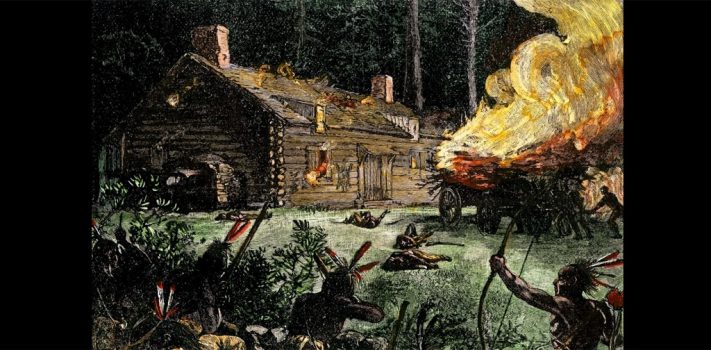
On February 10th, 1676, in King Philip’s War: A force of 1,500 Wampanoag, Nipmuc, and Narragansett Indians killed more than 30 men and destroyed buildings in Lancaster, Massachusetts. King Philip’s War, sometimes called the First Indian War, Metacom’s War, Pometacomet’s Rebellion, or Metacom’s Rebellion, was fought from 1675 to 1678. Even the leftist/apologist Wikipedia concedes: “King Philip’s War was the last-ditch effort by Native tribes to expel the colonists from New England. Instead, it turned out to be the beginning of the development of an independent American identity. The New England colonists faced their enemies without support from any European government or military, and this began to give them a group identity separate and distinct from England.”

February 10, 1918: In Finland, General Carl Gustaf Emil Von Mannerheim began to gather an army known as the ‘White Guard’ to mount a counter-revolution against the Bolshevik ‘Red Guard’.

And on February 10, 1943, members of the Van der Veen Resistance group started a fire in the Amsterdam Employment Bureau. This arson was aimed at destroying records to disrupt Germany’s drafting of Dutch workers to be forced to work at factories in Germany.

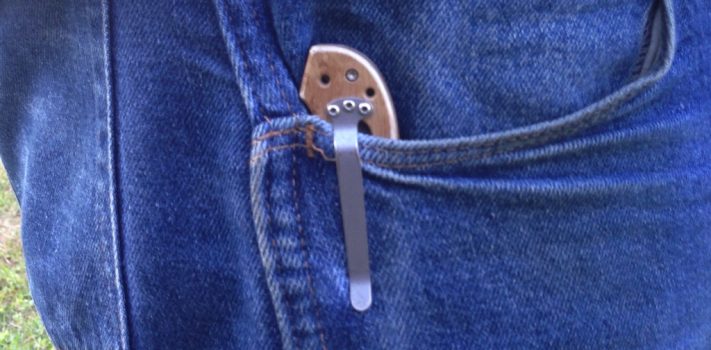
A gent that I know personally has decided to sell most of his stack of Rawles XL Voyager knives.  Since these are now fetching $220+ each in auctions, his set price of $150 postage paid is a relative bargain. I can vouch that the knives from this particular seller are genuine.  (The majority that you see on eBay from other sellers are shoddy Mainland China fakes.)  Also note that I gave him permission to re-use the photos from Pat Cascio’s review of the knife design that was published in SurvivalBlog.

Today’s feature piece is a review written by SurvivalBlog staffer Tom Christianson.

We need more entries for Round 123 of the SurvivalBlog non-fiction writing contest. More than $981,000 worth of prizes have been awarded since we started running this contest.  Round 123 ends on March 31st, so get busy writing and e-mail us your entry. Remember that there is a 1,500-word minimum, and that articles on practical “how-to” skills for survival have an advantage in the judging. In 2023, we polled blog readers, asking for suggested article topics. Please refer to that poll if you haven’t yet chosen an article topic.


Traditions Nitrobolt Rifle, by Thomas Christianson

This will sound self-contradictory, but it is not: the Traditions Firearms Nitrobolt Rifle is a bolt-action muzzle-loader. The primer and the powder charge cartridge are loaded through the breech via bolt action. The bullet is loaded through the muzzle with a ramrod. This hybrid action offers the powder-charge-consistency and weather-resistance of a breechloading rifle while being legal to use during muzzleloading season in 29 states at the time of this writing.

The Nitrobolt uses Federal Premium FireStick polymer encapsulated powder charges. The FireStick charges use Hodgdon Triple Eight powder. Triple Eight burns more cleanly than black powder or other black powder substitutes. This eliminates the blinding clouds of powder smoke that follow the discharge of most muzzle-loaders.

I found the Nitrobolt to be accurate, reliable, well-machined, and attractive. It is able to propel .50 caliber bullets at velocities that deliver more than enough energy-on-target to humanely harvest all types of medium to large North American game animals.

Because it loads its charge from the breech, the Nitrobolt is considered a modern firearm by the ATF. As such it requires the completion of a Form 4473 when purchased from a dealer.

The Nitrobolt had a manufacturer-suggested retail price of $1,095.95 at the time of this writing. It is made in Spain.Continue reading“Traditions Nitrobolt Rifle, by Thomas Christianson”


SurvivalBlog’s American Redoubt Media of the Week

This weekly column features media from around the American Redoubt region. (Idaho, Montana, eastern Oregon, eastern Washington, and Wyoming.) Much of the region is also more commonly known as The Inland Northwest.

Send Your Media Links

Please send your links to media from the American Redoubt region to JWR. Any photos that are posted or re-posted must be uncopyrighted. You can do so either via e-mail or via our Contact form.


The Editors’ Quote Of The Day:

“My family’s lineage, we are warriors. The McGregor clan, we are warriors all through. We are famous all through the world for our fighting capabilities of all generations. So I have no doubt that’s stood to me and that led me down this path and gave me what I have.” – Conor McGregor


Preparedness Notes for Monday — February 9, 2026

On February 9th, 1540: The first recorded horse race meeting in England was held at Roodee Fields in Chester. Horse races are still regularly held there.

February 9th, 1555:  My 17th great-grandfather, Dr. Rowland Taylor (born 6 October 1510) was burned alive at the stake during the Marian Persecutions, for professing that Bible scripture is inerrant. He died singing hymns. His martyrdom is described in Foxe’s Book of Martyrs. – JWR

February 9th is the birthday of gun writer Major George Charles Nonte Jr. (Born 1926, died June 30, 1978.)

SurvivalBlog Writing Contest

Today we present another entry for Round 123 of the SurvivalBlog non-fiction writing contest. The prizes for this round include:

First Prize:

  1. A Gunsite Academy Three-Day Course Certificate. This can be used for any of their one, two, or three-day course (a $1,095 value),
  2. American Gunsmithing Institute (AGI) is providing a $300 certificate good towards any of their DVD training courses. Their course catalog now includes their latest Survival Gunsmithing course.
  3. HSM Ammunition in Montana is providing a $350 gift certificate. The certificate can be used for any of their products.
  4. Harvest Guard is providing a 200-Piece Bulk Mix Pack of their Regular and Wide-Mouth Reusable Canning Jar Lids & Gaskets. This is a $161 + shipping value.

Second Prize:

  1. A SIRT STIC AR-15/M4 Laser Training Package, courtesy of Next Level Training, that has a combined retail value of $679
  2. Two 1,000-foot spools of full mil-spec U.S.-made 750 paracord (in-stock colors only) from TOUGHGRID.com (a $287 value).
  3. Preparedness author Jennifer Rader is providing a $200 purchase credit for any of her eight published food storage and medical preparedness books, including the Good Eats at the TEOTWAWKI Café series, the Armageddon Pharmacy series, and the Medicine Surrounds Us series.
  4. A transferable $150 FRN purchase credit from Elk Creek Company, toward the purchase of any pre-1899 antique gun. There is no paperwork required for delivery of pre-1899 guns into most states, making them the last bastion of gun purchasing privacy!

Third Prize:

  1. A Berkey Light water filter, courtesy of USA Berkey Filters (a $305 value),
  2. Two sets of The Civil Defense Manual, (in two volumes) — a $193 value — kindly donated by the author, Jack Lawson.
  3. A $200 credit from Military Surplus LLC that can be applied to purchase and/or shipping costs for any of their in-stock merchandise, including full mil-spec ammo cans, Rothco clothing and field gear, backpacks, optics, compact solar panels, first aid kits, and more.
  4. A transferable $150 FRN purchase credit from Elk Creek Company, toward the purchase of any pre-1899 antique gun.

More than $981,000 worth of prizes have been awarded since we started running this contest.  Round 123 ends on March 31st, so get busy writing and e-mail us your entry. Remember that there is a 1,500-word minimum, and that articles on practical “how-to” skills for survival have an advantage in the judging. In 2023, we polled blog readers, asking for suggested article topics. Please refer to that poll if you haven’t yet chosen an article topic.


The AR Super Safety – Part 2, by St. Leibowitz

(Continued from Part 1. This concludes the article.)

In Part 1, I presented an overview of the Super Safety and why it was chosen. Now, I will move on to describing some details on installation and function checking. This will cover the modifications to install a Super Safety on only a standard 5.56mm AR-15. The MP5 and AR9 models of the Super Safety are very popular but do require extra parts as well as some other considerations. A successful 5.56 install will help you get used to what you’re dealing with, since it is by far the most straightforward.

Parts List

You will need:

1. A Super Safety, (cam and lever)
2. A mil-spec low-shelf or M16-pocket AR15 with a full-auto BCG and mil-spec fire control group. Be advised that the Super Safety is compatible with low-shelf or no-shelf AR lower receivers ONLY. A high shelf lower cannot accommodate them. If the shelf in your lower behind the safety sits right up next to your takedown pin hole you have a high shelf lower and are out of luck unless you are comfortable with removing some material.
The trsnsition to a “high shelf” was done on some older-fashioned ARs to deter would-be rapid-fire enthusiasts from drilling the third hole or installing a drop-in autosear (DIAS). I believe that older Bushmasters and some Colts are like this. PSA, BCM, all 80% lowers, and Aero precision lowers are low-shelf or M16 cut, but double-check yours to make sure as manufacturing specifications can change, over time.
3. A modified AR-15 trigger and a modified AR-15 safety detent (we will get to the modifications shortly).
4. A Dremel miniature grinding/sanding tool with some basic grinding wheels and sanding drums as well as a polishing end. Hoffman’s own guide suggests 320, 600, and 1500 grit sandpaper as well as polishing compound.
5. Basic punches, wrenches et cetera for working on an AR-15.Continue reading“The AR Super Safety – Part 2, by St. Leibowitz”


Recipe of the Week:

The following recipe for Sauerkraut is from SurvivalBlog reader Mrs. Alaska. She writes:

“You can ferment any vegetables, but perhaps the best known is cabbage.
This is easy to do, and worthwhile. It will last for months in a refrigerator (or cool space).
Fermented vegetables of any kind (like kimchi) benefit our gut biome, digestion, and immune system.
Note 1: you will need more cabbage than you expect, because salting it will diminish the volume.
Note 2: Different types of cabbage will impact the final volume and crunchiness. So use what you have for a first batch, and then try some variations in the future.
Recipe for one mason jar
Clean two cabbages and then remove an outer leaf (as whole as possible) for use on the top of the sauerkraut in the mason jar to keep air out.
Finely chop about 1 +3/4 medium sized cabbages (put the core and any other veggies into a pot to make vegetable broth)
Dump cabbage into a big bowl.
Sprinkle with 1 tablespoon of salt. (Many recipes suggest avoiding iodized salt, which can interfere with fermentation. Use what you have and see what transpires).
Massage cabbage vigorously to mix the salt into the leaves.
Leave the bowl alone for about 30 – 60 minutes. You will see that some brine has formed, leaching liquid from the leaves.
Massage again.
Fill a mason jar with the cabbage, pressing down firmly with each addition. Pour in the brine.
Leave an inch or more gap at the top.

For aging
It is important to keep oxygen from reaching the cabbage or it will mold. Use a double form of defense.
Lay the reserved cabbage leaf across the top of the “soon to be sauerkraut.” I generally need to cut out the stiff spine and trim the leaf to a smaller size. Alternatively, use parchment paper.
Place a weight of some kind on top of the leaf. A friend uses a washed rock. I use glass weights that fit inside mason jars. Others use narrow, one cup mason jars filled with water.
Cap the jar loosely. Set it where you can see it, but not in direct sun. More and more brine will form and the cabbage will diminish further, providing additional inches of protection for the leaves.
Taste it at 5, 7, 9 days until you get the flavor you like.
When you refrigerate it (or store it in a cool cellar), it will continue to ferment but slowly.

Options: You can add additional flavors, as you choose. Some people like to sweeten sauerkraut with some sugar or diced apples. I like to add diced onions and garlic, and caraway seeds.”

About Mrs. Alaska

“Mrs. Alaska” and her husband live at a very remote Alaska homestead.  She blogs at Alaska Bush Life, Off-Road, Off-Grid, and she is the author of Log Cabin Reflections, available as an E-book on Kindle for just $5.  She can be contacted at Alaskauu1@gmail.com

Do you have a well-tested recipe that would be of interest to SurvivalBlog readers? In this weekly recipe column, we place emphasis on recipes that use long-term storage foods, recipes for wild game, dutch oven recipes, slow cooker recipes, and any recipes that use home garden produce. If you have any favorite recipes, then please send them via e-mail. Thanks!