Preparedness Notes for Friday — January 9, 2026

On January 9th, 1580, Francis Drake‘s ship the Golden Hind struck a reef off the Celebes islands. It fortuitously slipped off the reef at high tide the next day and sailed onward to Java, and then around the Cape of Good Hope and back to Plymouth, England.

January 9, 1839: Louis Daguerre demonstrated his ‘daguerreotype‘ photographic process to the French Academy of Sciences.

The 20th Anniversary SurvivalBlog 2005-2025 Waterproof/EMP-Resistant Archive USB sticks are selling rapidly, in pre-ordering.  The limited number of them packaged in steel keepsake tins have nearly sold out.  Orders should start to be mailed in the third week of January.  To be sure that you get yours, order soon!


Introducing Your Community to Emergency Preparedness – Part 2, by A.F.

(Continued from Part 1.)

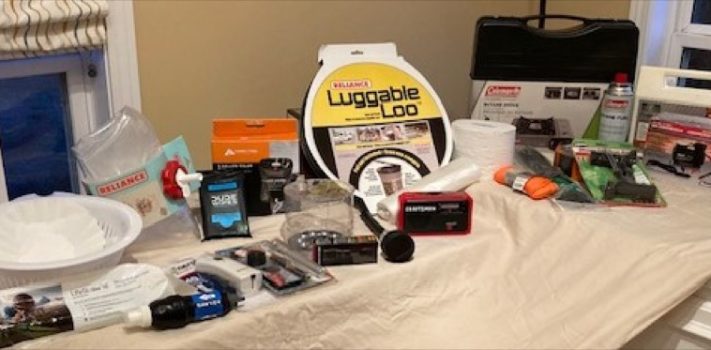
The next topic is water. I begin with the low hanging fruit of having water stored at all times. It hurts my soul to thoughtlessly parrot the “one gallon per person per day minimum” tripe we have all heard so many times. My recommendation is to store no less than three gallons per person per day or ten gallons each. I follow this up by encouraging each family set a goal of having a five-gallon water jug set aside for last minute filling for each person. For those who lament storage space, I recommend the collapsible Reliance jugs and pass around a Aqua Pod to show how easy last minute bulk storage can be. Some of the details surrounding water storage we discuss include the weight of water (8.33 pounds per gallon) so a full five gallon jug will be roughly 43 pounds, ensuring that your stored water is in small enough increments that you can easily move it, making sure your storage containers are easy to dispense from, rotating out stored water, and the value of spending a little bit more for brands that use thicker plastic if you choose to store cases of purchased bottles.

Inevitably during the early discussion of water someone will comment on harvesting from their water heater. I have drained dozens of water heaters in preparation for winterizing or replacing. Unless the tank is routinely drained, then it likely has a heavy buildup of gunk resting inside. Nonetheless, I acknowledge it might be a source and let the group know to turn off the gas/electricity to the unit prior to draining and remind them that a short garden hose will be useful.

I transition to making collected water safe for consumption over the next trio of slides. On the first slide I discuss all in one filters such as the Berkey, Sawyer and Life Straw. The next pair of slides cover filtering out solids and disinfection by boiling (one minute at a rolling boil) or chemical methods such as plain bleach and Aquamira. I take time after mentioning chemical disinfection to explain the requirement for a waiting period (contact time) prior to consumption. The final point I always make in the discussion of treating surface water is that a “Brita” type filter pitcher is not suitable for removing pathogens from natural waters.
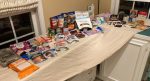
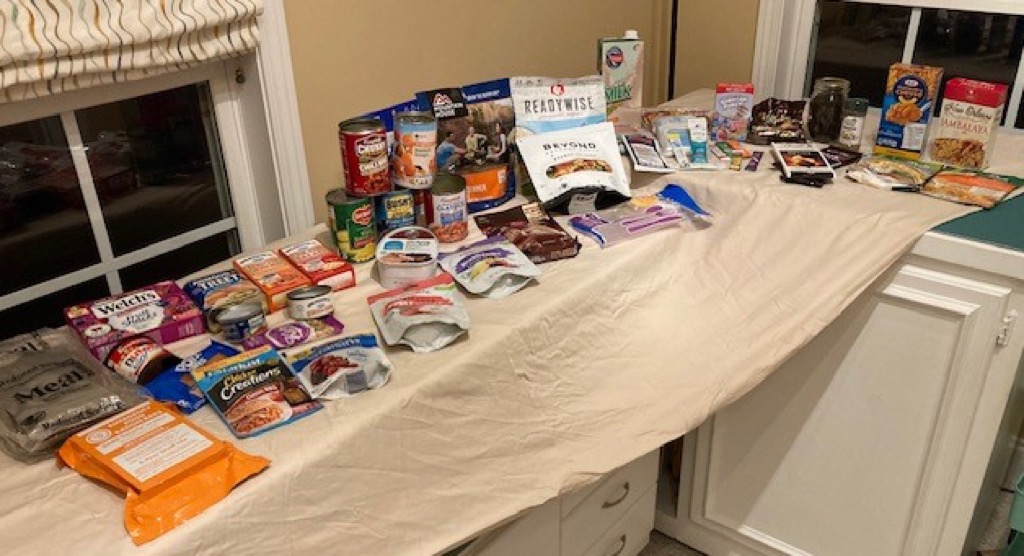
Food is the next emergency kit item to be discussed, and I present options in five groupings. The first are open and eat foods such as trail mix, PB&J, canned or foil packed meats, MREs and snacks such as jerky or granola. The second group discussed are the heat and eat canned foods that line our grocery shelves. It is true that any of these can be eaten cold but other than fruits, the other plethora of options benefits from heating. I remind the attendees that heating is different from true cooking and point out that by removing the paper labels and venting/removing the can tops that it is possible to heat these foods in their container. At this time, we also discuss the need to keep mechanical can openers, pot holders and disposable plates and utensils on hand to preserve water and be able to handle heated foods safely.

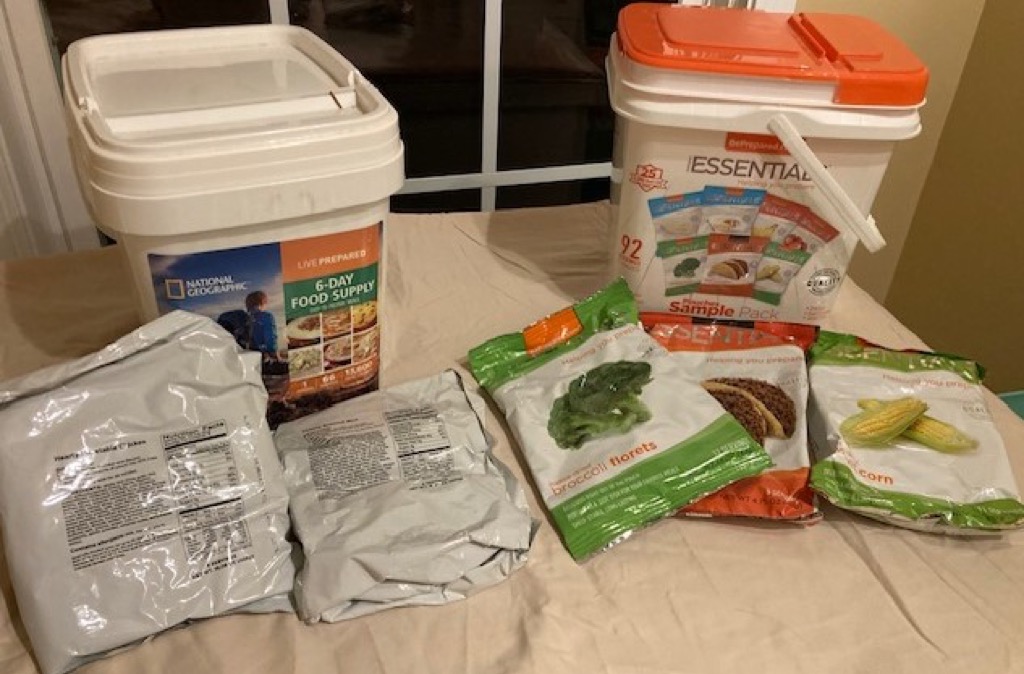
The third grouping of food stuffs we discuss are the “add hot water and wait” items. These include instant oatmeal, instant mashed potatoes, freeze dried foods and some varieties of pasta or rice sides. During this discussion I explain how freeze dried and dehydrated foods are not the same and bring up survival food buckets. I have a sample bucket purchased from Emergency Essentials that contains freeze dried ground beef, broccoli, sweet corn, strawberries and bananas. I also point out several back packer meals from Peak and Mountain House. I ask a volunteer to read the preparation instruction from a couple of these packages and also ask them to share the serving size. Once this has been done, I bring up the fourth group of emergency food.
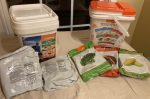
The fourth group of emergency foods we discuss are the foods that cook in/with boiling water. I hold up a small “survival food bucket” containing five entrees touted to be a 6-day food supply for one person. As any of you reading this already know, these kits contain highly processed soups, pasta and rice dishes. I stop short of telling my audience that there is no value to these meal kits, but I do point out them that the marketing behind them is deceptive. I once again ask someone to read the preparation instructions and to share the serving information. The three primary take aways I stress are that these meals require substantially more energy to prepare than similar packaged freeze-dried meals, that these survival foods are not packaged for easy partial package preparation and what the manufacturer calls a serving can be whatever quantity they choose to define it as. Case in point, the “cheesy broccoli rice” entrée instructions call for adding “the entire contents of the pouch into 8-1/4 cups of boiling water then simmer on low heat for 20 minutes”. The label also indicates that the package makes 8 half cup servings of rice. The follow up discussion then focuses on an inability during a disaster to store cooked food and what is the realistic benefit to this small portion, highly processed, high salt and predominately carbohydrate option.

The final grouping of emergency foods discussed are drinks and morale boosters. For simple hot drinks, there are teas, coffee and hot chocolate. Since most of my audience has a coffee habit, we look at the Folgers singles (that resemble a tea bag), single serving dried coffee or bulk freeze-dried coffee. Another low energy option mentioned is the French press coffee maker that uses regular ground coffee to make a couple of cups at a time. For cold drinks focus is given to electrolyte replacers such as Liquid IV and water flavoring packets such as Crystal Light, Flavoraid or Wylers. Shelf stable milk is the last beverage I mention.

In transitioning from food types to cooking methods I show a slide that offers the following well established preparedness tips. Plan around foods you already eat regularly, eat the most perishable foods you have on hand first and be sure to include foods that are high in energy and protein.

We next discuss cooking methods that do not require electricity. Gas or charcoal grills are household mainstays, the primary point we discuss here is how grills provide a dispersed heat source so best practice could involve masking off the area over part of the cooking surface to minimize heat loss and fuel consumption, especially if trying to bring water to a boil when the grill lid cannot be lowered. The “cooking” slide also shows a photo of the original Coleman white gas stove and I mention that propane versions are more common today than the gas units of old. There is also a picture of the butane “caterers’” single burner stove, as well as one of these units on the display table. Then the last photo on this slide is of a basic multi burner propane cooker. I remind those in attendance that if their home range uses propane or natural gas then chances are it can be lit manually.

(To be concluded tomorrow, in Part 3.)



Economics & Investing Media of the Week

After some huge price swings in the last week of the year, the Silver Bull has resumed his charge. As of Tuesday afternoon (January 6, 2026), spot silver was at $82.06 USD per Troy ounce.  I expect a few gasps of short-selling today, but $70 seems to be the new floor for silver.

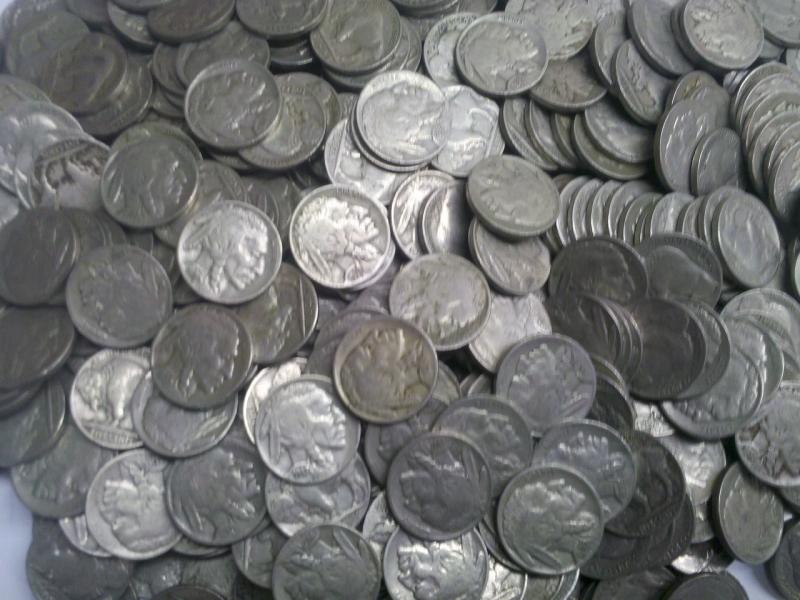
I’m holding to my prediction that silver and platinum will continue to outperform gold’s gains. The formerly languishing price of nickel has spiked.  Surprisingly, we still have the opportunity to stack Nickels (U.S. 5-cent pieces) at face value.  The U.S. Mint recently stopped producing pennies.  I believe that Nickels will be next.  The melt value of a nickel is now 7 cents, and climbing.  If you have any extra storage space in your home that is secure, then acquire nickels in 50-roll bank teller boxes ($100 face value), and stack them deep. By the way, 20+ boxes of nickels will make great “ballast ” for the bottom of a gun vault, to help keep burglars from hauling your vault away.

Consider this your “last call”, to get nickels at face value.

Economics & Investing Links of Interest

Economics & Investing Media Tips:

Please send your economics and investing links to JWR. (Either via e-mail or via our Contact form.) Thanks!


The Editors’ Quote Of The Day:

“If your determination is fixed, I do not counsel you to despair. Few things are impossible to diligence and skill. Great works are performed not by strength, but perseverance.” – Samuel Johnson


Preparedness Notes for Thursday — January 8, 2026

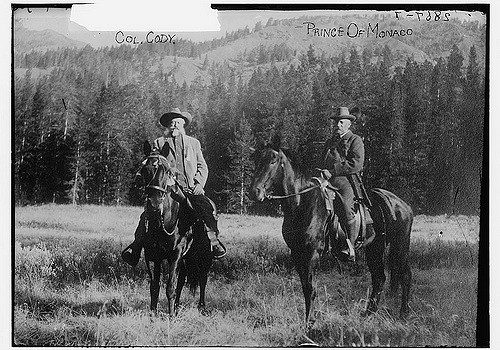
On January 8, 1297, Monaco gained its independence. Pictured are Buffalo Bill Cody and Prince Albert I of Monaco, in 1913. He was the first reigning European monarch to visit the United States.

On January 8, 1610,  German astronomer Simon Marius independently discovered the first four moons of Jupiter, just one day after Galileo‘s lunar discovery.

The 20th Anniversary SurvivalBlog 2005-2025 Waterproof/EMP-Resistant Archive USB sticks are available for Pre-Ordering. This year, we are also offering a limited number of them in steel keepsake tins, with keychains.  Both types have been selling very rapidly. Orders should start to be mailed in the third week of January.  To be sure that you get yours, order soon!

SurvivalBlog Writing Contest

Today we present another entry for Round 122 of the SurvivalBlog non-fiction writing contest. The prizes for this round include:

First Prize:

  1. A Gunsite Academy Three-Day Course Certificate. This can be used for any of their one, two, or three-day course (a $1,095 value),
  2. A Peak Refuel “Wasatch Pack” variety of 60 servings of premium freeze-dried breakfasts and dinners in individual meal pouches — a whopping 21,970 calories, all made and packaged in the USA — courtesy of Ready Made Resources (a $350 value),
  3. American Gunsmithing Institute (AGI) is providing a $300 certificate good towards any of their DVD training courses. Their course catalog now includes their latest Survival Gunsmithing course.
  4. HSM Ammunition in Montana is providing a $350 gift certificate. The certificate can be used for any of their products.
  5. Harvest Guard is providing a 200-Piece Bulk Mix Pack of their Regular and Wide-Mouth Reusable Canning Jar Lids & Gaskets. This is a $161 + shipping value.

Second Prize:

  1. A SIRT STIC AR-15/M4 Laser Training Package, courtesy of Next Level Training, that has a combined retail value of $679
  2. Two 1,000-foot spools of full mil-spec U.S.-made 750 paracord (in-stock colors only) from TOUGHGRID.com (a $287 value).
  3. Preparedness author Jennifer Rader is offering a $200 purchase credit for any of her eight published food storage and medical preparedness books, including the Good Eats at the TEOTWAWKI Café series, the Armageddon Pharmacy series, and the Medicine Surrounds Us series.
  4. A transferable $150 FRN purchase credit from Elk Creek Company, toward the purchase of any pre-1899 antique gun. There is no paperwork required for delivery of pre-1899 guns into most states, making them the last bastion of gun purchasing privacy!

Third Prize:

  1. A Berkey Light water filter, courtesy of USA Berkey Filters (a $305 value),
  2. Two sets of The Civil Defense Manual, (in two volumes) — a $193 value — kindly donated by the author, Jack Lawson.
  3. A $200 credit from Military Surplus LLC that can be applied to purchase and/or shipping costs for any of their in-stock merchandise, including full mil-spec ammo cans, Rothco clothing and field gear, backpacks, optics, compact solar panels, first aid kits, and more.
  4. A transferable $150 FRN purchase credit from Elk Creek Company, toward the purchase of any pre-1899 antique gun.

More than $978,000 worth of prizes have been awarded since we started running this contest.  Round 122 ends on January 31st, so get busy writing and e-mail us your entry. Remember that there is a 1,500-word minimum, and that articles on practical “how-to” skills for survival have an advantage in the judging. In 2023, we polled blog readers, asking for suggested article topics. Please refer to that poll if you haven’t yet chosen an article topic.


Introducing Your Community to Emergency Preparedness – Part 1, by A.F.

Back in 2016, the organizer for a local church’s senior citizen ministry approached me regarding a program she wanted someone to present on family emergency preparedness. In the two previous years our area experienced a “thousand-year flood” and the wind effects from a passing hurricane. Several of the seniors had requested a speaker who could help them think through steps that could be taken to minimize the impacts of another storm or similar short-term disaster.

This article is a summary of what that presentation has become after multiple iterations over the past ten years. My hope in sharing is that it might serve as the blueprint for a similar seminar/talk or class from which you could share your preparedness views and experience with others in your own community for the purpose of enhancing your community’s overall emergency readiness.Continue reading“Introducing Your Community to Emergency Preparedness – Part 1, by A.F.”


The Survivalist’s Odds ‘n Sods

SurvivalBlog presents another edition of The Survivalist’s Odds ‘n Sods. This column is a collection of news bits and pieces that are relevant to the modern survivalist and prepper from JWR. Our goal is to educate our readers, to help them to recognize emerging threats, and to be better prepared for both disasters and negative societal trends. You can’t mitigate a risk if you haven’t first identified a risk. In today’s column, an increase in fallow farm ground.

Georgia Farmer Warns of Fallow Farm Ground

Reader Robert W. sent us this: Farmland Shock: Georgia Grower Drops 3,000 Acres, Warns of Unplanted Ground in 2026.

And, in related news: US soy to take nearly 4mn acres from corn in 2026.

Is a Civil War or a Coup Brewing in Venezuela?

Civil war fears grow as heavily armed far-left militias take over streets of Caracas.Continue reading“The Survivalist’s Odds ‘n Sods”


The Editors’ Quote Of The Day:

“When America’s early pioneers first turned their eyes toward the West, they did not demand that somebody take care of them if they got ill or got old. They did not demand maximum pay for minimum work, and even pay for no work at all.” – Paul Harvey


Preparedness Notes for Wednesday — January 7, 2026

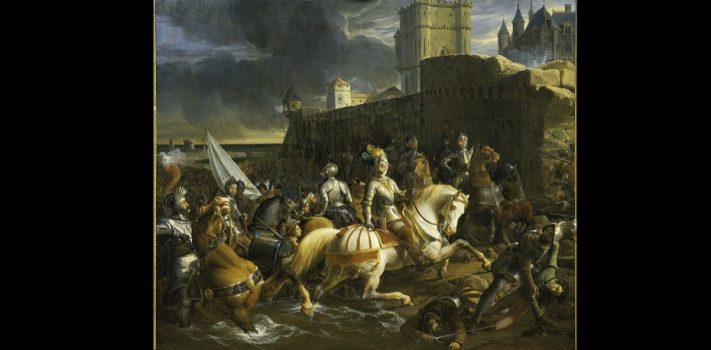
On January 7th, 1558, Calais, the last English possession in France, was retaken by French troops under Duc de Guise. (The Pale of Calais had been an exclave and parliamentary borough of England across the Strait of Dover from 1347 to 1558.) The painting above, The Siege of Calais was completed by François-Édouard Picot in 1838.

January 7th, 1610, Galileo Galilei discovered the first three moons of Jupiter: Io, Europa and Ganymede.

And on January 7th, 1930, French physicist Marguerite Perey discovered Francium (Fr), the last naturally occurring element to be found.

Today’s feature article is a guest post that was written by one of our writing contest prize sponsors.

We need more entries for Round 122 of the SurvivalBlog non-fiction writing contest. More than $978,000 worth of prizes have been awarded since we started running this contest.  Round 122 ends on January 31st, so get busy writing and e-mail us your entry. Remember that there is a 1,500-word minimum, and that articles on practical “how-to” skills for survival have an advantage in the judging. In 2023, we polled blog readers, asking for suggested article topics. Please refer to that poll if you haven’t yet chosen an article topic.


Detecting AI-Written Slop Before You Buy Books, by Jennifer Rader

Editor’s Introductory Note:  The alarming trend that is described in this article is also taking place in many other book genres. It is possible that at least one of the author names cited in this article may be genuine, so I’m preemptively stating: Jennifer Rader’s article is an attempt to accurately describe the extent of A.I.-generated trickery in contemporary publishing. If the she has mentioned any actual living human authors by mistake, our apologies. We will be glad to update this article with corrections or clarifications. – JWR

As a preparedness author, the meteoric rise in the number of AI-written books on the market disturbs me. The hit to my profit isn’t substantial. However, I am bothered that good people will be deceived and may even employ fallacious herbal remedies that do more harm than good. While the following information pertains to herbal medicine references, most principles can be applied to preparedness and survival books which are also flooding the market.

According to Michael Fraiman, writing at Originality.ai: “82% of Amazon ‘Herbal Remedies’ Books in 2025 Were Likely AI-Written.”

Fraiman’s November, 2025 article confirmed my suspicions. I hadn’t realized how rampant the problem was.  As I’ve contemplated the issue, I’ve become both disgusted and alarmed, because I see how AI corrupts writing.  My children have queried ChatGPT about my own research. And while the responses they have received are about 85% accurate, there are also outright fabrications. How many people find a 15% error rate acceptable with medical information, of any sort? There’s no reason to believe that AI won’t corrupt herbal remedies. AI could make them ineffective, less effective, or lethal. And the reader won’t have any idea that the book they are reading is a fabrication, especially as AI improves.

[JWR Adds: Ironically,  Michael Fraiman used AI-driven AI detection tools to research the article.]Continue reading“Detecting AI-Written Slop Before You Buy Books, by Jennifer Rader”


SurvivalBlog Readers’ & Editors’ Snippets

Our weekly Snippets column is a collection of short items: responses to posted articles, practical self-sufficiency items, how-tos, lessons learned, tips and tricks, and news items — both from readers and from SurvivalBlog’s editors. Note that we may select some long e-mails for posting as separate letters.

Federal court strikes down California open carry gun ban as unconstitutional. Here is an excerpt from the   article:

“A federal court in California on Friday struck down the state’s law that prohibits people from openly carrying guns in most public places, ruling that the state law was unconstitutional because it violated the Second Amendment.

The San Francisco-based Ninth Circuit Court of Appeals cited a 2022 Supreme Court ruling that struck down a New York law that required people applying for a license to carry a concealed weapon prove they have “proper cause” to carry a gun.

The California law in question banned openly carrying guns in counties with a population greater than 200,000 people.

The appeals court’s 2-1 decision said the California case ‘unquestionably involves a historical practice — open carry — that predates ratification of the Bill of Rights in 1791,’ and that ‘historical record makes unmistakably plain that open carry is part of this Nation’s history and tradition.'”

JWR’s Comment: I predict that California will waste more California taxpayers’ money, appealing this all the way to the Supreme Court. And there, they will lose.

o  o  o

An Archive USB Stick Production Update:  We heard from the manufacturer that the 20th Anniversary blog archive USB stick presentation tins will be laser-engraved in a gray-on-silver monotone, rather than a multicolor silkscreen. Those engravings won’t have ultra-detailed resolution, but they will last much, much longer than painted labels.

o  o  o

In The WSJ:  The Hottest High Schools in Massachusetts Are Trade Schools.

o  o  o

A very useful video from Magic Prepper: The Suppressors I Should’ve Started With to Save Time and Money.

o  o  o

Colorado Springs woman mauled to death by mountain lion during hike.

And here is a related news article: Mountain lions menaced hikers, pets for months near national park before fatal attack.

Continue reading“SurvivalBlog Readers’ & Editors’ Snippets”


The Editors’ Quote Of The Day:

“The Great Depression, like most other periods of severe unemployment, was produced by government mismanagement rather than by any inherent instability of the private economy.” – Milton Friedman


Preparedness Notes for Tuesday — January 6, 2026

January 6, 1799 was the birthday of Jedediah Strong Smith, one of America’s greatest trapper-explorers. He was born in Bainbridge, New York. Smith explored a huge area of the American West during his short life.

“He began his western voyages in 1822, when he joined the pioneering fur trader William Ashley on a trip up the Missouri River. Unlike earlier fur traders, who depended on Native Americans to actually trap or hunt the furs, Ashley eliminated the Natives as middlemen and instead sent out independent white trappers like Smith to do the job.

To escape dependence on Native Americans, though, Ashley needed to find his own sources of beaver and otter in the West, and Smith became one of his best explorers. A year after his first trip up the Missouri, Smith set out with a small band of mountain men to explore the Black Hills region of the Dakotas at Ashley’s behest. Despite being mauled by a grizzly bear in the Black Hills, Smith continued westward to the site of modern-day Dubois, Wyoming, where he and his men camped for the winter.

During his long forced halt at Dubois, Smith learned from Crow Native Americans of an easy pass through the Rocky Mountains. The following spring, Smith and his men followed the route outlined by the Crow and discovered that they could cross the mighty Rockies with little effort. Later named the “South Pass,” Smith’s new route was a high plain that gradually rose like a shallow ramp to provide an easy crossing of the Continental Divide.”

SurvivalBlog Writing Contest

Today we present another entry for Round 122 of the SurvivalBlog non-fiction writing contest. The prizes for this round include:

First Prize:

  1. A Gunsite Academy Three-Day Course Certificate. This can be used for any of their one, two, or three-day course (a $1,095 value),
  2. A Peak Refuel “Wasatch Pack” variety of 60 servings of premium freeze-dried breakfasts and dinners in individual meal pouches — a whopping 21,970 calories, all made and packaged in the USA — courtesy of Ready Made Resources (a $350 value),
  3. American Gunsmithing Institute (AGI) is providing a $300 certificate good towards any of their DVD training courses. Their course catalog now includes their latest Survival Gunsmithing course.
  4. HSM Ammunition in Montana is providing a $350 gift certificate. The certificate can be used for any of their products.
  5. Harvest Guard is providing a 200-Piece Bulk Mix Pack of their Regular and Wide-Mouth Reusable Canning Jar Lids & Gaskets. This is a $161 + shipping value.

Second Prize:

  1. A SIRT STIC AR-15/M4 Laser Training Package, courtesy of Next Level Training, that has a combined retail value of $679
  2. Two 1,000-foot spools of full mil-spec U.S.-made 750 paracord (in-stock colors only) from TOUGHGRID.com (a $287 value).
  3. Preparedness author Jennifer Rader is offering a $200 purchase credit for any of her eight published food storage and medical preparedness books, including the Good Eats at the TEOTWAWKI Café series, the Armageddon Pharmacy series, and the Medicine Surrounds Us series.
  4. A transferable $150 FRN purchase credit from Elk Creek Company, toward the purchase of any pre-1899 antique gun. There is no paperwork required for delivery of pre-1899 guns into most states, making them the last bastion of gun purchasing privacy!

Third Prize:

  1. A Berkey Light water filter, courtesy of USA Berkey Filters (a $305 value),
  2. Two sets of The Civil Defense Manual, (in two volumes) — a $193 value — kindly donated by the author, Jack Lawson.
  3. A $200 credit from Military Surplus LLC that can be applied to purchase and/or shipping costs for any of their in-stock merchandise, including full mil-spec ammo cans, Rothco clothing and field gear, backpacks, optics, compact solar panels, first aid kits, and more.
  4. A transferable $150 FRN purchase credit from Elk Creek Company, toward the purchase of any pre-1899 antique gun.

More than $978,000 worth of prizes have been awarded since we started running this contest.  Round 122 ends on January 31st, so get busy writing and e-mail us your entry. Remember that there is a 1,500-word minimum, and that articles on practical “how-to” skills for survival have an advantage in the judging. In 2023, we polled blog readers, asking for suggested article topics. Please refer to that poll if you haven’t yet chosen an article topic.


Lessons From a Fight at a Restaurant, by Robert E. Downing

(The photo above, courtesy of Openverse, was taken by “Terren in Virginia“, a witness to a 2008 baseball team “fan rivalry” brawl at a New York sports stadium.)

The following is what I learned about security at lunch one day:

Scenario

One Tuesday, about six weeks ago, I stopped for a late lunch at a local upscale family restaurant in Virginia Beach, Virginia, that is part of a well-known chain.  It was about 3 o’clock in the afternoon and it seemed to be a quiet place to have lunch and prepare my Sunday school lesson.

I selected a seat near the back of the restaurant with good light that was coming in from the windows.

After about 45 minutes, a lady that was seated at another table facing my direction, suddenly became agitated and said loudly: “You can’t do that here.” She seemed to be speaking to someone behind me and slightly to my left. It turned out that she was the manager.

As I turned to see who she was talking to, it was obvious there was some sort of disturbance going on. An older gentleman seemed to have been knocked down, and there was something happening underneath a couple of tables. Additionally, a lady in her booth was moving to her far left – away from whatever was going on. Almost immediately, two older gentlemen who were close to the disturbance tried to separate two young men who were fighting.Continue reading“Lessons From a Fight at a Restaurant, by Robert E. Downing”


SurvivalBlog’s American Redoubt Media of the Week

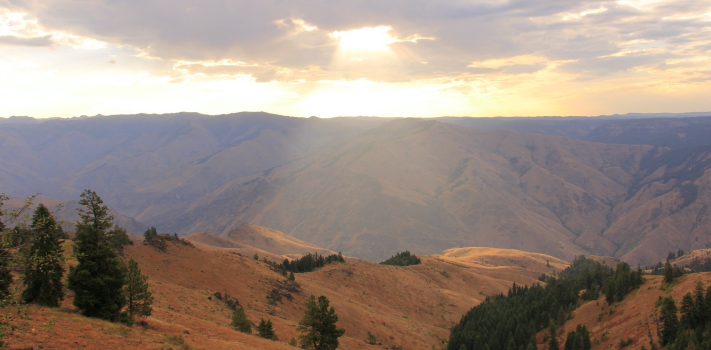
This weekly column features media from around the American Redoubt region. (Idaho, Montana, eastern Oregon, eastern Washington, and Wyoming.) Much of the region is also more commonly known as The Inland Northwest. The photo above was shot from the east side of the Snake River Canyon. The United States Congress designated the Hells Canyon Wilderness in 1975. It measures 217,927 acres, with about 83,811 acres in Idaho, and 134,116 acres Oregon. The wilderness is jointly managed by the Bureau of Land Management (BLM) and the U.S. Forest Service. (Photo courtesy of the BLM.)

Send Your Media Links

Please send your links to media from the American Redoubt region to JWR. Any photos that are posted or re-posted must be uncopyrighted. You can do so either via e-mail or via our Contact form.