Preparedness Notes for Thursday — February 5, 2026

On February 5, 1736 British Methodist ministers John Wesley (pictured) and Charles Wesley arrived in Savannah, Georgia.

Today is the birthday of Sir Hiram Stevens Maxim (5 February 1840 – 24 November 1916). He was an American-British inventor best known as the creator of the first truly automatic machine gun, the Maxim gun. Maxim also held patents on numerous mechanical devices such as hair-curling irons, a mousetrap, and steam pumps. Maxim claimed to invented the lightbulb. He was the father of Hiram Percy Maxim, who founded the ARRL.

SurvivalBlog Writing Contest

Today we present another entry for Round 122 of the SurvivalBlog non-fiction writing contest. The prizes for this round include:

First Prize:

  1. A Gunsite Academy Three-Day Course Certificate. This can be used for any of their one, two, or three-day course (a $1,095 value),
  2. American Gunsmithing Institute (AGI) is providing a $300 certificate good towards any of their DVD training courses. Their course catalog now includes their latest Survival Gunsmithing course.
  3. HSM Ammunition in Montana is providing a $350 gift certificate. The certificate can be used for any of their products.
  4. Harvest Guard is providing a 200-Piece Bulk Mix Pack of their Regular and Wide-Mouth Reusable Canning Jar Lids & Gaskets. This is a $161 + shipping value.

Second Prize:

  1. A SIRT STIC AR-15/M4 Laser Training Package, courtesy of Next Level Training, that has a combined retail value of $679
  2. Two 1,000-foot spools of full mil-spec U.S.-made 750 paracord (in-stock colors only) from TOUGHGRID.com (a $287 value).
  3. Preparedness author Jennifer Rader is providing a $200 purchase credit for any of her eight published food storage and medical preparedness books, including the Good Eats at the TEOTWAWKI Café series, the Armageddon Pharmacy series, and the Medicine Surrounds Us series.
  4. A transferable $150 FRN purchase credit from Elk Creek Company, toward the purchase of any pre-1899 antique gun. There is no paperwork required for delivery of pre-1899 guns into most states, making them the last bastion of gun purchasing privacy!

Third Prize:

  1. A Berkey Light water filter, courtesy of USA Berkey Filters (a $305 value),
  2. Two sets of The Civil Defense Manual, (in two volumes) — a $193 value — kindly donated by the author, Jack Lawson.
  3. A $200 credit from Military Surplus LLC that can be applied to purchase and/or shipping costs for any of their in-stock merchandise, including full mil-spec ammo cans, Rothco clothing and field gear, backpacks, optics, compact solar panels, first aid kits, and more.
  4. A transferable $150 FRN purchase credit from Elk Creek Company, toward the purchase of any pre-1899 antique gun.

More than $981,000 worth of prizes have been awarded since we started running this contest.  Round 123 ends on March 31st, so get busy writing and e-mail us your entry. Remember that there is a 1,500-word minimum, and that articles on practical “how-to” skills for survival have an advantage in the judging. In 2023, we polled blog readers, asking for suggested article topics. Please refer to that poll if you haven’t yet chosen an article topic.


Antenna Building: Theory and Practice – Part 2, by Hoofer

(Continued from  Part 1.)

A typical Trucker’s dual-mount CB antenna has 2 coaxes down to one connection to the radio.  We want the signal from both antennas, unified exactly for a nice strong signal / in phase voltage pulse, into the radio. Because the antennas are on the sides, like mirror mounts, the strongest, best signal (in phase), will come from the front and rear of the truck, while signals from either side, will Cancel each other out (a little bit).
The same thing happens with our Vertical antennas, 2-3-4-5-6-7-8 of them.  We want to get rid of the noise and interference to hear cleanly in one direction.  These verticals can be arranged in a circle, straight line, triangle, all kinds of shapes.  While most people *think* the signal is being concentrated (it is), the biggest advantage is Nulling out the unwanted junk.  By combining the antennas, switching in shorter / longer / equal coaxes which tie them together, we can change the shape of our broadcast / receive signal.  An example…
At a recent Hamfest, we set up three 20-meter vertical antennas.  Everyone who commented, said, “That’s not gonna pick up anything but that noisy transformer”, some 100 feet away.  True, you could hear it crackling, like it has a corroded connector.  With the right switching, we had 10 different receive / broadcast patterns.  Omnidirectional (all directions), Broadside (3 directions), 2 Inline (6 directions).  Without looking at the controller, we just rotated the pattern, and in 2 of the positions, the transformer was totally silent.  For the rest of the day, we made contact after contact, with ease, the transformer still humming and buzzing away.  It’s why the NULL is so important!  That could spare your relationship with a neighbor who has a cheap TV, lacking proper filtering.  By the way, every electronic device is required to be properly filtered to avoid cranking out electrical noise or receiving it outside of its intended frequencies!  If the neighbor says you’re bleeding over their TV set, and your radio is ‘stock’, as the manufacturer designed and built – it’s their problem, not yours.  Still, I’d offer them some help fixing, grounding, etc.
That’s the fun of ham radio for us, we love building and experimenting, with the minimal tools at our disposal.
What is a “Dipole” Antenna?  You’ve probably seen the parallel wires that form a “T” and hook up to a FM radio.  We can do the same thing, with a ham band antenna – they get up to 360′ long on 160 meters, but pretty short as the bands / frequency go up…  Again, we can combine signals to a single feed point, and tune the antenna to maximize certain frequencies on desired Bands.  A Fan Dipole is one such antenna, stacking 2-3-4-5 horizontal wires, each cut for a different band, to maximize desired signal and minimize interference.
What’s interesting about a Dipole antenna, but similar to all antennas, they are Deaf, or NULL when looking at the end, down the length of the wire(s).  Strongest signal is broadside – the receive / transmit pattern looks like a figure-8, at a good elevation.  The lower the antenna, the more energy is focused directly UP instead of OUT sideways.  Dipoles are generally cut as 2x 1/4wl antennas, or 1/2wl overall.  Dipoles, like Verticals and Long wires are easy and quick to make.
A note on materials ad junctions / connectors.  Anytime dissimilar metals are stuck together, like Stainless Steel (makes a poor antenna) to copper, there are inherent losses.  Each joint, held together by soldier, crimped, formed, stainless steel screws, adds to the loss. The ideal antenna is one continuous length of wire, pipe, whatever.  There is a thing we call “Skin Effect”.  The signal flows over the top layers of the metal, like on the surface. Lower frequencies go deepest into the metal, highest frequencies more on the surface.  Before someone suggests, “Oh, my, those losses are so minimal!!!”  In 2013, we won 3 divisions in the Virginia QSO party (a contest) with an antenna I built for mobile, cut to tune on a single frequency.  After making multiple contacts with QRP (low power, <5 watts), another guy following about a mile or two behind, broke in, “Who are you talking to?  I can’t even hear them!”  He had a $500 commercial antenna, a big one which covered ALL the Bands … poorly.
If you can’t hear ’em, you can’t work ’em!  All of these expensive antennas are built by fellow hams, some are good, most are just made to attract buyers.  The real performers are built by people like yourselves, who take a little time, understand ‘how it works’, and build accordingly.  The test tool we started with was a $150 Standing Wave Ratio (SWR) meter (a waste of time and money, plotting all those data points of graph paper), and then we purchased a $500 AIM UHF antenna analyzer (hooks up to a computer).  The time-testing and  experimenting was compressed from weeks to hours.  It did all the graphing, showed us Resonance, Impedence, SWR at the same time, and best of all, we could save and load multiple scans over the top of each other.  For the experimenter, the learning curve was immediate, ‘If I do THIS, I see THAT affects this and that… Okay, let’s try this instead…’.
So, each antenna typically has a single ‘sweet spot’, a Resonant frequency, what it’s tuned to, hears the best.  SWR is a funny thing, Standing Wave Ratio – the amount of signal reflected back from the antenna towards your Transmitting Radio (Transceiver).  The Transmitter likes to see a 50 ohm load, but also in phase to the antenna.  If we cut the Coax at random lengths, it changes the Impedance the Radio sees, regardless of the actual Impedance of the antenna.  That translates into LOSS of signal, or poorer Signal to Noise.  We want the signal to be much louder / stronger than the noise, static, snap-crackle-pops.
The ideal SWR is 1.0:1, we can build a good antenna, couple it to a frequency-insensitive Coax, and get performance.  The goal is to make the Coax (transmission line) invisible between the Radio and  Antenna… then we can use 75 ohm TV coax, or 50 ohm CB/Ham coax – just gotta cut it to the length that favors our Frequency / Band.  SHORT is not better, Tuned is better.  Another example.
A guy from the UK is calling CQ (hello, is anyone out there?), on 80 meters.  I answer him with 4 watts, running to 2x 80 meter verticals, phased and pointed right at him.  He’s stunned.  I confirm, via my SWR/Watt meter (an expensive digital unit), just under 4 watts.  “Sounds like several hundred – what you got there?”  “Two 80 meter verticals, phased, aimed right towards the Europe and United Kingdom.”  We talked for a while, but I couldn’t hear anyone else north or south of me, the radiation pattern was tight.  The antenna spacing, both antennas were right on frequency, the coax was cut for 1/2wl of the frequency – near perfect match, all my power was aimed right at him, all 4 watts.  The point is, give yourself every advantage you can, a little knowledge & experimenting can give you a superior system.
What is all this darn Black, sparkly stuff everywhere around the house… I wondered.  While hooking up an extension cord for the parents motor home, I pulled out the VOM (volt-ohm-meter), and checked for voltage.  One of the leads fell to the ground, the meter immediately showed near 100 volts!  The tip was just in the dust, this black dust…  Grass didn’t like growing in it, but, it makes an excellent ‘Ground Plane” (like a grounding system) for Vertical Antennas.  Magnetite!  A ham’s dream come true!  It also explained the frequent lightning strikes.  This altered or modified a lot of plans – do I fight this terrible ground, or use it to some advantage?  I love Vertical Antennas, my ground loves Vertical antennas.  Since the trees around the house are +400’ away, that’s gonna be big wire, lots of weight, and with the Ice Storms, lots of broken wire.
“What works for me, might not work for you, at your location!”  No antenna seems ‘perfect’ for every location.
Early on, we built OMTA 40-20-15 meter Vertical Antennas.  3 Bands, a rather unique arrangement.  Just one of the verticals are actually tied to the Coax, the other 2 verticals are free floating, but spaced at the optimal distance to ‘re-radiate’ their signal into the other antenna.  These are tremendous performers for us.  We’ve talked around the Globe on all 3 Bands, Thousands of contacts.  All Aluminum pipe.  They work Great at my QTH (home location), but utterly suck at another location – didn’t make sense…  I’ve got good ground for antennas, he has Rock… everywhere.  So bad, we gave up on the Vertical, and tried a 160 meter Horizontal Loop, also known as a “Cloud Burner”.  “Hey man, you gotta try this!!!”  I did, and it sucked at my QTH (my house).  To help him with correct matching, we had to build a Balun, a RF Transformer.  At the time, I had a bunch of 10 gauge Silver wire, with a Teflon insulation – it came from a MRI Imaging machine install.  This transformer weighed close to 10lbs, and had to hang in the air.  He liked to run ‘lots of power’.  One fateful night, he calls me on the phone, “It blew up!  The Balun blew up!  I looked out the window, noticed a strange red/orange glow while transmitting (excess power), and “BANG!””  I thought that Balun / Transformer could handle 5Kw (5000 watts), sure it could, when ‘on frequency’.  Closer examination, the Loop broke, one end hit the ground, nothing was working as intended, he was lucky his massive Amplifier was still intact.
The lesson:  There are limits to everyone and everything, with the exception of Jesus Christ.

Okay, so that’s the idea, how about the nuts and bolts, how to build something inexpensive for my CB radio, that performs like a $250 antenna…?  Yes, we can do that!  The main point to remember, Build for Resonance, SWR is the match (can be done later), and use Coax that’s invisible to the system, (Cable TV coax has some real advantages!)

(To be continued tomorrow, in Part 3.)



The Survivalist’s Odds ‘n Sods

SurvivalBlog presents another edition of The Survivalist’s Odds ‘n Sods. This column is a collection of news bits and pieces that are relevant to the modern survivalist and prepper from JWR. Our goal is to educate our readers, to help them to recognize emerging threats, and to be better prepared for both disasters and negative societal trends. You can’t mitigate a risk if you haven’t first identified a risk. In today’s column, a report on some odd Russian snow camouflage.

Continue reading“The Survivalist’s Odds ‘n Sods”


The Editors’ Quote Of The Day:

“Government has three primary functions. It should provide for military defense of the nation. It should enforce contracts between individuals. It should protect citizens from crimes against themselves or their property.” – Milton Friedman


Preparedness Notes for Wednesday — February 4, 2026

On February 4, 211, Roman Emperor Septimius Severus died in Eboracum (York) in England, leaving the Roman Empire in the hands of his two quarrelsome sons, Caracalla and Geta. From his biography:

“Septimius Severus was the first Roman Emperor from Africa. He ruled from 193 to 211 AD and is known for having expanded the Roman Empire through military campaigns.

Severus began his career in the Roman government, rising through the ranks during a period of political instability. He became emperor in 193 AD, a year known as the Year of the Five Emperors due to its rapid succession of rulers. Severus defeated rival claimants to secure his position.

As emperor, Severus led successful military campaigns. He annexed new territories and strengthened Roman borders. His victories included defeating the Parthian Empire and capturing their capital, Ctesiphon.

Severus implemented significant changes to the Roman military. He increased the number of soldiers and raised their pay. To fund these changes, however, he had to reduce the purity of Roman coins, a debasement of coinage which had long-term economic consequences.”

And on February 4, 1789, the first US Electoral College chose George Washington as President and John Adams as Vice President.

SurvivalBlog Writing Contest

Today we present another entry for Round 122 of the SurvivalBlog non-fiction writing contest. The prizes for this round include:

First Prize:

  1. A Gunsite Academy Three-Day Course Certificate. This can be used for any of their one, two, or three-day course (a $1,095 value),
  2. American Gunsmithing Institute (AGI) is providing a $300 certificate good towards any of their DVD training courses. Their course catalog now includes their latest Survival Gunsmithing course.
  3. HSM Ammunition in Montana is providing a $350 gift certificate. The certificate can be used for any of their products.
  4. Harvest Guard is providing a 200-Piece Bulk Mix Pack of their Regular and Wide-Mouth Reusable Canning Jar Lids & Gaskets. This is a $161 + shipping value.

Second Prize:

  1. A SIRT STIC AR-15/M4 Laser Training Package, courtesy of Next Level Training, that has a combined retail value of $679
  2. Two 1,000-foot spools of full mil-spec U.S.-made 750 paracord (in-stock colors only) from TOUGHGRID.com (a $287 value).
  3. Preparedness author Jennifer Rader is providing a $200 purchase credit for any of her eight published food storage and medical preparedness books, including the Good Eats at the TEOTWAWKI Café series, the Armageddon Pharmacy series, and the Medicine Surrounds Us series.
  4. A transferable $150 FRN purchase credit from Elk Creek Company, toward the purchase of any pre-1899 antique gun. There is no paperwork required for delivery of pre-1899 guns into most states, making them the last bastion of gun purchasing privacy!

Third Prize:

  1. A Berkey Light water filter, courtesy of USA Berkey Filters (a $305 value),
  2. Two sets of The Civil Defense Manual, (in two volumes) — a $193 value — kindly donated by the author, Jack Lawson.
  3. A $200 credit from Military Surplus LLC that can be applied to purchase and/or shipping costs for any of their in-stock merchandise, including full mil-spec ammo cans, Rothco clothing and field gear, backpacks, optics, compact solar panels, first aid kits, and more.
  4. A transferable $150 FRN purchase credit from Elk Creek Company, toward the purchase of any pre-1899 antique gun.

More than $981,000 worth of prizes have been awarded since we started running this contest.  Round 123 ends on March 31st, so get busy writing and e-mail us your entry. Remember that there is a 1,500-word minimum, and that articles on practical “how-to” skills for survival have an advantage in the judging. In 2023, we polled blog readers, asking for suggested article topics. Please refer to that poll if you haven’t yet chosen an article topic.


Antenna Building: Theory and Practice – Part 1, by Hoofer

As an introduction, I started building Vertical & Yagi Beam antennas in the early 1980s for CB radio.  When the FCC dropped the ‘Morse Code’ requirement in 2007, many ‘tone deaf’ people like myself, transitioned to ham radio. My entire family are either General or Extra Class hams.  Having this license and operating ability is an essential ‘Life Skill’, like the ability to read, write and speak the native language.

No tool is useful, in unskilled hands – unless you’re planning on selling/bartering it away, right?  Our family and I have taught Technician, General, and Extra classes – but, none of us consider ourselves Super Duper hams nor engineers, just dedicated hams.  Show us a radio, and any one of us can get on the air, make contacts, work a Contest, pass mail, and train others to do the same.  That’s what hobbies are about, having fun, bringing in others, sharpening the skills, and in the case of ham radio, or Distance Exchange (DX), like Short Wave Listening (SWL) – you’ll need to train your ears and brain to effectively operate / communicate / carry on a conversation.  CB radio is Grade School, ham radio is High School.Continue reading“Antenna Building: Theory and Practice – Part 1, by Hoofer”


SurvivalBlog Readers’ & Editors’ Snippets

Our weekly Snippets column is a collection of short items: responses to posted articles, practical self-sufficiency items, how-tos, lessons learned, tips and tricks, and news items — both from readers and from SurvivalBlog’s editors. Note that we may select some long e-mails for posting as separate letters.

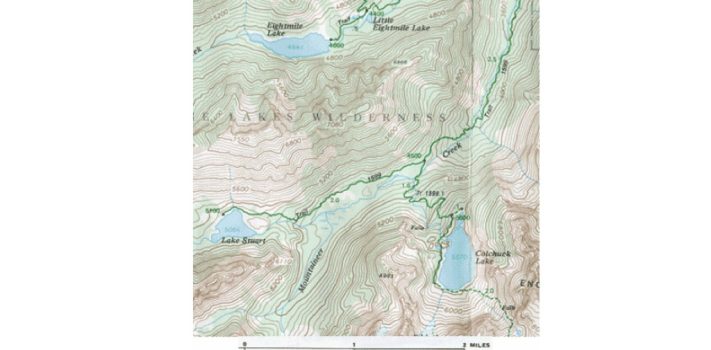
Reader H.B. suggested a Facebook reel on how to make your own local topo maps.

o  o  o

At our friend Jack Lawson’s website: Do It Yourself! Building a 3500-Watt Portable Battery Bank Solar Power Unit.

o  o  o

Here is a free short story based rooted in an ancient legend, with a useful introduction. It was co-authored by SurvivalBlog’s Editor At Large, Michael Z. Williamson and his wife: Skjaldmóðir.

o  o  o

Continue reading“SurvivalBlog Readers’ & Editors’ Snippets”


Preparedness Notes for Tuesday — February 3, 2026

On February 3, 1863 Samuel Clemens first used the pen name Mark Twain in a Virginia City newspaper, the “Territorial Enterprise“.

And on February 3, 1931, New Zealand’s worst natural disaster, the Hawke’s Bay earthquake, which killed 256 and injurds thousands, devastating Napier and the Hawke’s Bay regio.

SurvivalBlog Writing Contest

Today we present another entry for Round 122 of the SurvivalBlog non-fiction writing contest. The prizes for this round include:

First Prize:

  1. A Gunsite Academy Three-Day Course Certificate. This can be used for any of their one, two, or three-day course (a $1,095 value),
  2. American Gunsmithing Institute (AGI) is providing a $300 certificate good towards any of their DVD training courses. Their course catalog now includes their latest Survival Gunsmithing course.
  3. HSM Ammunition in Montana is providing a $350 gift certificate. The certificate can be used for any of their products.
  4. Harvest Guard is providing a 200-Piece Bulk Mix Pack of their Regular and Wide-Mouth Reusable Canning Jar Lids & Gaskets. This is a $161 + shipping value.

Second Prize:

  1. A SIRT STIC AR-15/M4 Laser Training Package, courtesy of Next Level Training, that has a combined retail value of $679
  2. Two 1,000-foot spools of full mil-spec U.S.-made 750 paracord (in-stock colors only) from TOUGHGRID.com (a $287 value).
  3. Preparedness author Jennifer Rader is providing a $200 purchase credit for any of her eight published food storage and medical preparedness books, including the Good Eats at the TEOTWAWKI Café series, the Armageddon Pharmacy series, and the Medicine Surrounds Us series.
  4. A transferable $150 FRN purchase credit from Elk Creek Company, toward the purchase of any pre-1899 antique gun. There is no paperwork required for delivery of pre-1899 guns into most states, making them the last bastion of gun purchasing privacy!

Third Prize:

  1. A Berkey Light water filter, courtesy of USA Berkey Filters (a $305 value),
  2. Two sets of The Civil Defense Manual, (in two volumes) — a $193 value — kindly donated by the author, Jack Lawson.
  3. A $200 credit from Military Surplus LLC that can be applied to purchase and/or shipping costs for any of their in-stock merchandise, including full mil-spec ammo cans, Rothco clothing and field gear, backpacks, optics, compact solar panels, first aid kits, and more.
  4. A transferable $150 FRN purchase credit from Elk Creek Company, toward the purchase of any pre-1899 antique gun.

More than $981,000 worth of prizes have been awarded since we started running this contest.  Round 123 ends on March 31st, so get busy writing and e-mail us your entry. Remember that there is a 1,500-word minimum, and that articles on practical “how-to” skills for survival have an advantage in the judging. In 2023, we polled blog readers, asking for suggested article topics. Please refer to that poll if you haven’t yet chosen an article topic.


Some Thoughts on Batteries and Flashlights, by Hoofer

We’ve read SurvivalBlog for several years, my wife first (she’s the farmer), and more recently, me… the last 4-5 years. (I’m the farmer’s husband, but, grew up on 250 acres, farming).

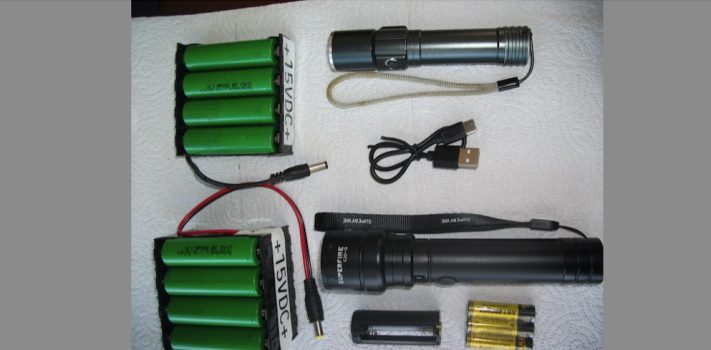
I took particular note of the recommendation ‘not’ to use/buy appliances which use 18650 batteries (Li-ion rechargeable). We bought four of these 18650 batteries 2.5 years ago, and use them nearly every day. This particular variety is not in stock on Amazon – however, the replacements are well worth considering, if you’re actively using flashlights.

Our old standard flashlights, were Mag-Lites, 3, 4, 6 D-cell versions, which we’d had for at +30 years, and used hundreds of batteries, and a few bulbs. Started with the standard bulb, then the brighter halogen bulb – and of course Alkaline batteries, which made the Mag-lites quite heavy, the 6 D-cell has a particular name among law enforcement, also served as a handy “bat”… Whenever I got a call after dark to work an outage in some Milwaukee neighborhoods, I took the 6-cell Mag-lite, over my shoulder, like a baseball bat – people moved away from me, instead of getting in my face.

The first 18560 flashlight was this little compact model, which I first used at work, in poorly lit Telephone Central Offices, and of course on the farm. We bought 6 of them, only 4 of them remain in use.Continue reading“Some Thoughts on Batteries and Flashlights, by Hoofer”


SurvivalBlog’s American Redoubt Media of the Week

This weekly column features media from around the American Redoubt region. (Idaho, Montana, eastern Oregon, eastern Washington, and Wyoming.) Much of the region is also more commonly known as The Inland Northwest.  Today, a photo of Stanley Lake and McGown Peak, Idaho, in the heart of the Sawtooth Mountain Range.  (A 2009 public domain photo by Frank Kovalchek.)

American Redoubt News Links

Send Your Media Links

Please send your links to media from the American Redoubt region to JWR. Any photos that are posted or re-posted must be uncopyrighted. You can do so either via e-mail or via our Contact form.

Send Your Media Links

Please send your links to media from the American Redoubt region to JWR. Any photos that are posted or re-posted must be uncopyrighted. You can do so either via e-mail or via our Contact form.


Preparedness Notes for Monday — February 2, 2026

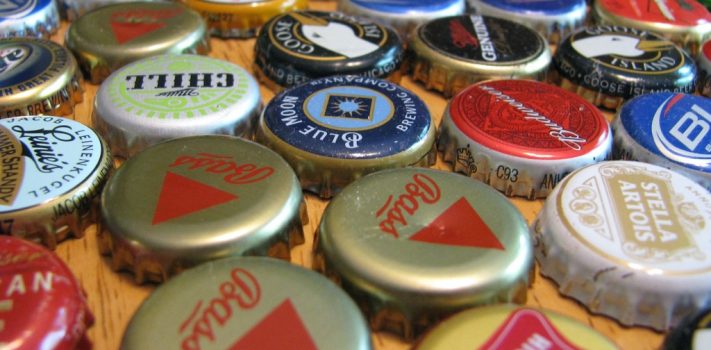
On February 2, 1892, the bottle cap for beverages was patented by US inventor William Painter and is still used today.

On this day in 1974: The F-16 Fighting Falcon flew for the first time.

Today’s feature piece is by SurvivalBlog staffer Tom Chistianson.

We are now seeking entries for Round 123 of our nonfiction writing contest. Round 123 ends on March 31st, so get busy writing and e-mail us your entry. Remember that there is a 1,500-word minimum, and that articles on practical “how-to” skills for survival have an advantage in the judging. In 2023, we polled blog readers, asking for suggested article topics. Please refer to that poll if you haven’t yet chosen an article topic.


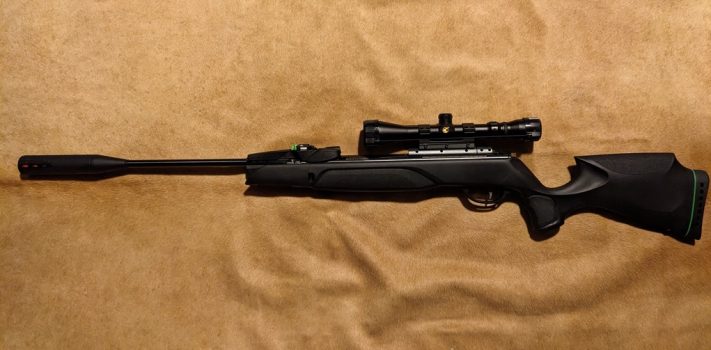
Gamo Swarm Magnum Pro Gen 3i in .22 Caliber, by Thomas Christianson

The Gamo Swarm Magnum Pro is a break-barrel air rifle that loads from a 10-shot magazine whenever it is cocked. This significantly speeds the pellet loading process. The Swarm has a two-stage adjustable trigger, comes with a surprisingly good 3-9x40mm scope, features a suppressor integrated into the barrel, and includes a well-designed glass-filled-nylon (GFN) stock.

Designed for small-game hunting, pest control, and target shooting, the rifle is reasonably accurate, reliable, easy to use and economical to operate.Continue reading“Gamo Swarm Magnum Pro Gen 3i in .22 Caliber, by Thomas Christianson”


Recipe of the Week:

The following recipes for Jam Pie and a requisite Rich Pie Crust are from SurvivalBlog reader and fellow blogger Jennifer Rader.

Jam Pie

Ingredients
  • 1 rich single-crust pie shell (see included recipe, below)
  • 1 pint of jelly or jam
  • 1 cup whipping cream
  • 2 tablespoons sugar
  • 1 teaspoon vanilla extract
Directions
  1. Spread jam on the hot pie crust.  Let cool completely.
  2. In a small, chilled bowl, combine cream, sugar, and vanilla.  Whip until stiff peaks form.  Spread onto cooled jam.
  3. Refrigerate the pie for 3 hours before serving.

Rich Pie Crust

Ingredients
  • 2 cups all-purpose flour
  • 1/8 teaspoon baking powder
  • Pinch of salt
  • ½ cup lard
  • 5-6 tablespoons cold water, enough to form dough
Directions
  1. Preheat oven to 400°F.
  2. In a small bowl, combine the flour, baking powder, and salt.
  3. Cut in the lard until mixture resembles fine cornmeal.
  4. Gradually stir in the cold water until dough forms into a ball.  Divide in half.
  5. Roll each half out between two sheets of waxed paper.
  6. Transfer bottom crust to a pie tin.
  7. Bake per instructions for the pie you are making.  Otherwise, bake bottom crust for 15 minutes.

Do you have a well-tested recipe that would be of interest to SurvivalBlog readers? In this weekly recipe column, we place emphasis on recipes that use long-term storage foods, recipes for wild game, dutch oven recipes, slow cooker recipes, and any recipes that use home garden produce. If you have any favorite recipes, then please send them via e-mail. Thanks!