
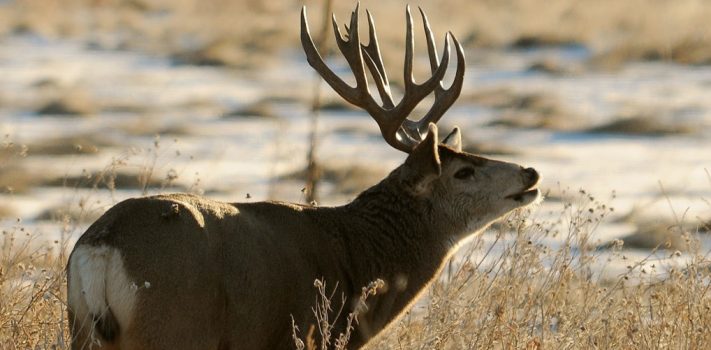


In late 1929, when the stock market crashed and the Great Depression began, the population of the United States was around 121.7 million people. All through the Great Depression, it was unheard of to leave roadkill on the side of the road left to rot. With high unemployment, the hunting pressure was heavy. Small game, like rabbits and squirrels, nearly went extinct in large parts of the United States from being over-hunted, to feed desperate families. Today, in 2026, the estimated population of the US is 348.3 million. If animals were being hunted to near extinction when the population was less than half of what it is now, then what do you think will happen when the SHTF? (And take note that the current census “official” population does not take into account all the millions of “visitors” from other countries.)
I am almost certain that fish, fowl, small game, and large game will disappear rapidly and will probably not make a comeback for decades. Human beings will do whatever it takes to feed their families. Local, state and federal laws protecting animals, hunting seasons, daily harvest limits, and so forth will not be followed. Nor will laws on caliber requirements, magazine capacity, or whether ammunition is lead-free be respected. Hungry and desperate people will obtain food by whatever means possible. Procuring food will simply be without the rule of law.
In the meantime, while animals are still plentiful and before the proverbial Schumer ever hits the fan, I suggest getting out and becoming proficient in small game hunting with small arms. Learning the habits and signs and pursuing small game such as squirrels, rabbits, raccoons, opossums, foxes, coyotes and other critters, depending on your area and restrictions, is an excellent way to keep your marksmanship skills polished, put meat in the freezer and if you desire, fur in your collection. The same can be said about upland game bird hunting, trapping, and fishing.
All critters have their own idiosyncrasies, so getting inside their minds and learning what makes them tick is a must before they become heavily pursued. I often think about how spooked and educated the waterfowl are, towards the end of hunting season in my area. They are very wary from being pressured by hunters who call too much, shoot too often, usually at unrealistic distances, and are cautious about most decoy spreads. Dust off the hunting and fishing gear, make sure everything is working properly, and get in the field. It is too easy to make excuses for all the reasons not to go out, but once you are in the field again, you’re carrying on a tradition as old as man, providing for you and yours with everything the natural world has to offer.
Food for the Freezer
As most of you know, raising and growing food can be difficult. Sometimes it seems nearly impossible when nature doesn’t seem to cut you any slack. I’ve lost entire gardens to an unforeseen frost a month after any recorded frost in our area. I have lost most of my garden two years in a row, when the well pump and well control box went out for no reason, both over the July 4th weekend during heat waves that broke records. We can prepare as much as possible for any scenario, but unless you are also prepared and capable of fixing issues that arise and have backup plans to your backup plans, you will go through your food and water stores quickly.
Raising and growing as much as you physically, mentally and emotionally can, will not only provide you with sustenance, but will likely be healthier than anything you will find in the store. Producing and providing for yourself and your family will change year to year, season to season and item by item. One year, you may have an amazing carrot crop; the next it could be terrible or wiped out by varmints. Or, as your first round of beautiful tomatoes are just about ripe, your well pump goes out while you’re gone for two days, and the record-breaking heat wave arrives, killing off all your plants. Nothing in homesteading, or life for that matter, is guaranteed. The more we can plan and have redundancies, the better our chances are outlasting the things thrown at us.
For a lot of people, fruit and vegetable gardening is a seasonal hobby more than a necessity. For my family, gardening and raising livestock is past the hobby farm stage and is becoming a way of life. During the spring, summer and fall months, we attempt to grow enough food for our own consumption as well as for the animals we are raising. During these bountiful months in the orchard and garden, the poultry are either exclusively free ranging, with little to no external feed being given to them, or they are being fed fresh fruit and vegetables in their pens. Yes, the feed stores are only a few miles away, and processed food is not too expensive, but I am trying to live my life simply and to show my children how to be self-sufficient, in the instance we had to live that way long term. This mindset will serve us greatly if/when the trucks stop running, the roads are closed off and/or people are rioting.
Do you remember the chaos when the pandemic started and the 2020 riots occurred? As the famous quote goes, “There are only nine meals between civilization and anarchy.” Why not prepare now while the getting is good and avoid the masses of people getting into fights over toilet paper and cans of soup?
My mindset to livestock and gardening is identical to hunting and fishing. Get out there and grow, raise and harvest as much as you physically, mentally and emotionally can handle. Getting out into the garden, or into the wilderness, builds confidence and resilience. For me, getting out into nature and/or my garden, and including my kids, is strengthening their emotional fortitude and ability to take care of themselves without any thought or hesitation. My son, age 6, regularly helps me harvest and butcher animals on our small farm. He regularly picks fresh produce from the garden for snacks or meals. If I cannot find him, it is safe to assume he is grazing from tree to tree in our fruit orchard, picking fresh food in the garden, or practicing shooting with his archery equipment or his BB gun. This is the lifestyle he is familiar with and confident in. Recently, he has taken up an interest in trapping. (I wonder where that came from.) Now, when I set traps of any kind around our home, he begs to tag along, helps me mix up the bait, and assists me in trap-setting. I rest soundly at night knowing, as time goes on, he will have complete confidence and the capability to provide for himself.
Raising Fowl for Meat
One of the areas where my family and I have invested a lot of time, effort, and money is our chicken flock. We started out thinking six chickens would be the perfect number of birds for our family. We bought our first six chicks from the local feed store. A few days later, my wife found a couple chicks she had to have because of the colored eggs they would lay. A couple of days after that, while at the feed store, I thought, why not get a few more birds. A couple of months later, we had 45 birds! That is called chicken math!
At any given time, I only keep one rooster with all my hens, for protection and to fertilize the eggs, unless he is too rough on them, in which case I will replace him with another rooster who has been free-ranging outside the pen. When we incubate and/or let eggs hatch naturally, about 80-90% are male. As they grow and become fully feathered, I kick them out of the general chicken population pen and let them free roam. These roosters are expendable. They do an incredible job keeping the weed and bug population down, but if they get eaten by a predator or wander away, I don’t lose any sleep. Before the fruit trees blossom in spring, and occasionally in the fall if I have too many, I harvest the free-ranging roosters for meat and to fertilize the garden. These roosters are always plump and healthy from all their foraging. They never wander far from the main flock of chickens.
Each night, if the main flock is locked up in the chicken pen, they roost in one of the trees closest to the coop, so they are not too hard to catch when it comes time for harvest. If I do not feel like chasing them down, I will let the roosters free range with the entire flock for a day and that night, after all the birds return to the coop, I close the pen door. The next day, when all the birds are out of the coop, I shut the coop door and start grabbing the roosters one by one. I rarely harvest hens unless they are over three years old or are egg eaters. Three years old is the age when most hens egg production starts slowing down. If I suspect a hen is eating eggs, I separate her from the rest of the flock and put her in a different pen with a few eggs in the laying box of that pen. It does not take long to figure out if she is an egg eater or not.
Dispatching Methods
If you have a book or look online, there are unlimited ways to dispatch fowl. When we first started harvesting birds, I tried the DIY kill cone method. I took a five-gallon bucket, drilled a two and a half inch hole in the bottom and hung it from a tree branch. The first time I used it, was to harvest a meat turkey that weighed over thirty pounds. The bird was so large that it wouldn’t fit in the bucket! Roosters and chickens fit with no problem, but getting the bird in the bucket, feeding the head through the hole grabbing it on the other end then raising the bucket up with a rope was extremely difficult. It is possible to do it alone, but it is unnecessarily difficult.
After a few times of the DIY kill cone bucket method, I quickly found a more traditional method that works best for me. (We do not raise meat chickens. Someday, when we do, I will invest in the metal kill cones that are designed for that purpose.)
The day after I bought my house, I cut down an old knotty pine tree that butts up against the chicken coop. I intentionally left the stump about three feet high. Six inches in from the outside edge of the stump, I hammered in two, ten penny nails making a “V” shape. (Normally, the nails are six inches from the edge, but if I am harvesting a turkey, I will move the nails in a couple inches further. These distances provide enough room for the axe head to land and stick into the wood without the possibility of it deflecting and hitting me in the leg or hand.) I put the birds head between the nails, and hold the bird in place with my left hand and my left thigh. I slightly pull on the bird’s body, making the neck taut, which exposes as much of the neck as possible. I then use a sharp axe and decapitate the bird. It’s fast and humane. After dispatching the bird(s), I begin butchering.
I prefer butchering in the early spring, while it’s still cool out, so the flies are not a bother. On occasion, I will tie a length of paracord to a low-hanging tree branch, about eye level, and hang a bird from one foot. Hanging a bird by a single foot allows for more movement and dexterity while dressing. Most of the meat on these birds is in the breasts. With both hands, I pinch the skin above the breasts, and tear the skin, exposing the meat. I never pluck any feathers.
Once I am through butchering the bird(s), I bury the carcass(es) somewhere in the orchard, next to a fruit tree, or in the garden beds. If I bury a carcass in a garden bed, I keep that bed fallow for a month or two to avoid having healthy, mature plants dug up by critters who catch a whiff of the decomposing carcasses. Burying carcasses leads me to my next point. I always have a large hole dug somewhere on my property. The hole is usually several feet deep and is used for organic waste only. I dig my holes near fruit trees so as the organic material breaks down, the trees benefit from the nutrients and microbial life that is present. I do not usually put fruit and/or vegetable scraps in these holes, just animal carcasses. Green waste scraps go into the compost or to the birds. As a plus, after the carcasses have been decomposing for a while, I tell my kids, my niece and my nephew that I found dinosaur bones while out back. You should see their faces when we dig up a raccoon “Racasaurous”, a fox “Foxasaurous”, or a goat “Goatasaurous” skull!
(To be continued tomorrow, in Part 2.)