Antenna Building: Theory and Practice – Part 3, by Hoofer

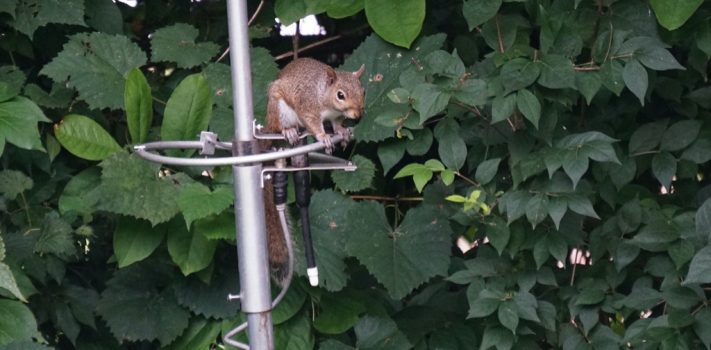
(Continued from Part 2.  This concludes the article.) In Part 1 and Part 2, we hit a few of the “How it works” or “Why it works” stuff.  Proven by experience, or our family ham antenna business would have failed immediately.  So, what do you have laying around the house, farm, garage – that can be turned into a high performance antenna for just listening? In the basement / garage, Metallic stuff, old copper pipe that burst from freezing, Telephone wire, cable TV wire, Ethernet cable (4,6,8 strand stuff), Iron pipe… will work, again not as good. Old extension cords! …


Antenna Building: Theory and Practice – Part 2, by Hoofer

(Continued from  Part 1.) A typical Trucker’s dual-mount CB antenna has 2 coaxes down to one connection to the radio.  We want the signal from both antennas, unified exactly for a nice strong signal / in phase voltage pulse, into the radio. Because the antennas are on the sides, like mirror mounts, the strongest, best signal (in phase), will come from the front and rear of the truck, while signals from either side, will cancel each other out (a little bit). The same thing happens with our Vertical antennas, 2-3-4-5-6-7-8 of them.  We want to get rid of the noise …


Antenna Building: Theory and Practice – Part 1, by Hoofer

As an introduction, I started building Vertical & Yagi Beam antennas in the early 1980s for CB radio.  When the FCC dropped the ‘Morse Code’ requirement in 2007, many ‘tone deaf’ people like myself, transitioned to ham radio. My entire family are either General or Extra Class hams.  Having this license and operating ability is an essential ‘Life Skill’, like the ability to read, write and speak the native language. No tool is useful, in unskilled hands – unless you’re planning on selling/bartering it away, right?  Our family and I have taught Technician, General, and Extra classes – but, none …


The Elenco AM/FM-108CK Radio Kit – Part 2, by Mike in Alaska

(Continued from Part 1. This concludes the article.) C45 INSTALLED UNDER PCB (LEFT) IC1 SOCKET PINS IDENTIFIED (RIGHT) There will be many other such steps in this process, so I’m now going to fast forward to pages 9 through 14 after completing all the installation of parts in those pages and report on the tests that are part of the process up to that point. (NOTE: the top of page 12 indicates that if you don’t have the audio generator and the oscilloscope to skip to part 1B) I chose to do the tests and report my findings for the …


The Elenco AM/FM-108CK Radio Kit – Part 1, by Mike in Alaska

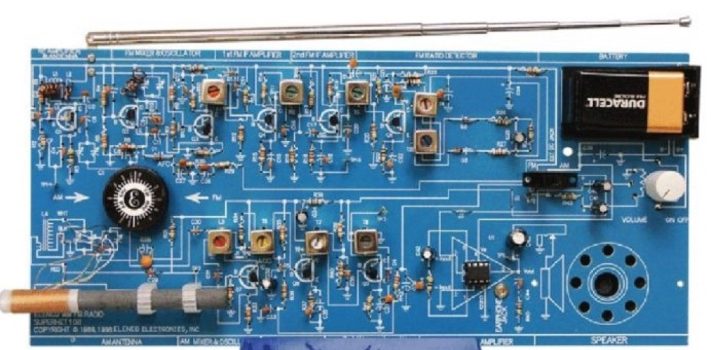
Disclaimer: I bought this kit and built it for the purpose of sharing the knowledge and skills you may obtain from the kit if you choose to build one. Elenco has not sponsored this activity and did not contribute financially to this effort. I want to point out up front that this is not just a project build kit, it is a full-blown course in radio theory, electronics education, and a fun opportunity to build your skill set. The “Builders Manual” is in reality a course in electronic theory, assembly, and testing. It has much to learn so this is …


The Elenco Two-IC AM Radio Kit – Part 2, by Mike in Alaska

(Continued from Part 1. This concludes the article.) In a previous article I had described a possible need for having some form of radio communications receiver in a TEOTWAWKI situation. It is just good policy to have something you can hide, run on very low voltage, and in the case of this radio, a battery that you can recharge using a solar panel to generate a charge into a battery bank. This radio is an AM receiver set only. However, the chip set can work at much higher shortwave (SW) frequencies and I am researching the possibility of using it …


The Elenco Two-IC AM Radio Kit – Part 1, by Mike in Alaska

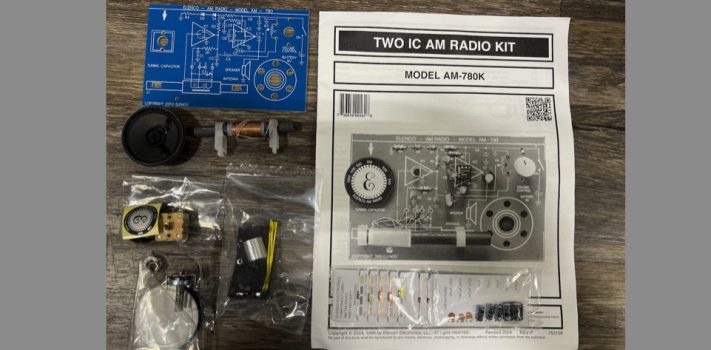
Introductory Note: I purchased this kit for this article and I do not represent the Elenco Company. They have not paid me or provided any materiel for writing this article. This article is a review on the Elenco Model AM-780K AM radio kit. It was designed for students in an electronics lab class, and when I was working on my associate’s degree in Electronics Engineering the college I was attending issued us both the AM radio kit from this company as well as the AM/FM version of it. The knowledge I want to pass on here is that should you …


A Crystal Radio Kit for TEOTWAWKI – Part 2, by Mike in Alaska

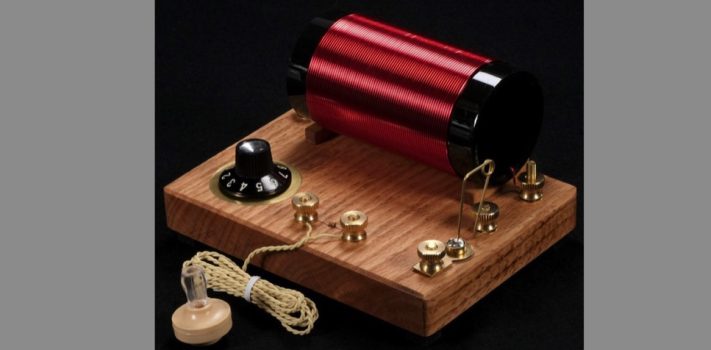
(Continued from Part 1. This concludes the article.) Once you have cut, stripped, and made the proper ring terminal connections to the wires, then the  next job is to solder them to the various locations as required; this will involve soldering the 6.0” wire and two other wires twisted together as one wire onto the variable capacitor of the kit. I used a dab of Kester 186 solder flux on the wires before I tinned them and then after I crimped the wires onto the terminals, I put a very small drop of the flux on the crimp connection and …


SWL Receiver Considerations and Buying Advice, by Sarge B.

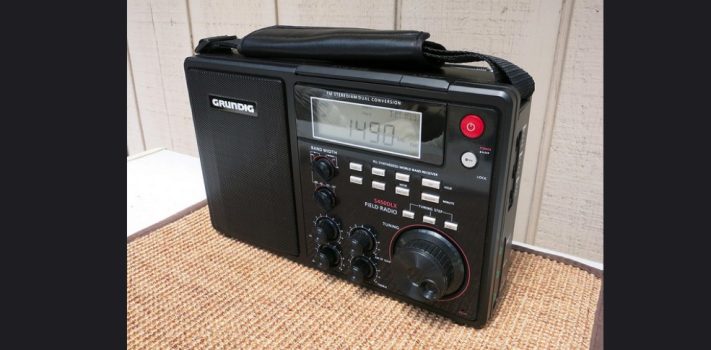
The following is my list of recommended features and some features to avoid, when looking  for a general coverage receiver. This is based upon my personal experience over the years as a shortwave listener (SWL) and Amateur Radio operator. Frequency Coverage: Look for a minimum frequency coverage of 500 kHz to 30 MHz. This covers the AM broadcast band (520 – 1710 kHz) and all of the shortwave broadcast bands (2 – 30 MHz). Coverage of the FM broadcast band (88-108 MHz) is also highly desirable. Digital frequency display: Allows precise tuning to a specific frequency. Avoid any radios with …


Building a Simple One-Tube Radio Kit – Part 1, by Mike in Alaska

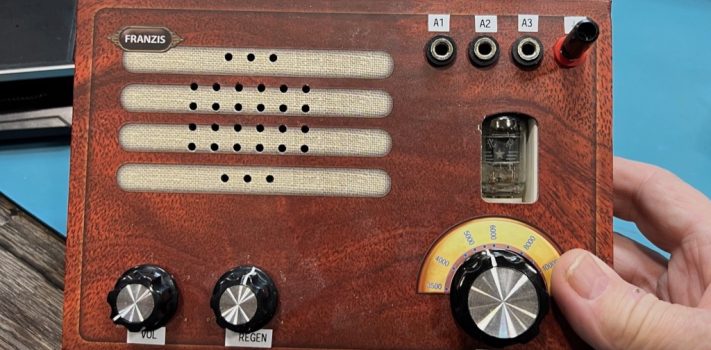
Introductory Disclaimer: I have not been paid for writing this article, and I own the radio being reviewed. Scenario: The world has gone mad, it is now TEOTWAWKI and it’s just not a pretty picture folks. And if that wasn’t bad enough, what with the power grid being down, looters and such, and some bozo declaring martial law effectively shutting down all radio, internet, and anything capable of receiving any information except what “THEY” want you to hear … hard to imagine? If you can find a holocaust survivor, or anyone who lived during WWII ask them if that sounds …


Update: Critical Capabilities for Retreat Defense: “Move, Shoot, and Communicate”

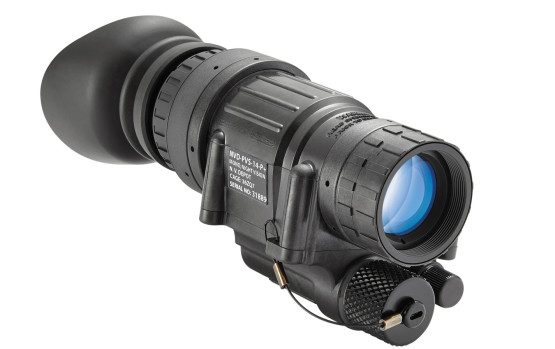
JWR’s Introductory Note: This is an update to an article that I wrote for SurvivalBlog in December, 2005. It is part of a series of SurvivalBlog 20th Anniversary update re-posts, in recognition of the fact that the majority of readers did not join us until recent years. — As an Army officer, I learned that in order to be effective, any army must have three key abilities: To move, shoot, and communicate. Take away any one of them, and you are ineffective. But if you get all three right, and you can absolutely devastate an opponent–even one that has superior …


Dakota Power Bank and PV Panel – Part 1, by Mike in Alaska

As the saying goes “One is none, two is one, three is two …. and if you are building your preparations with only one back up then you have failed to prepare.” Disclaimer: I purchased the system with my own funds. I am not being paid by the company for this article. We live in the Arctic area of Alaska. Our winters here are long and dark, and they can be brutal. For us it starts in mid-August when the sun begins to set earlier and rise later in the day, and the truth be known, it starts June 21st …


My Most Recent Lesson in Logistics, by Reltney McFee

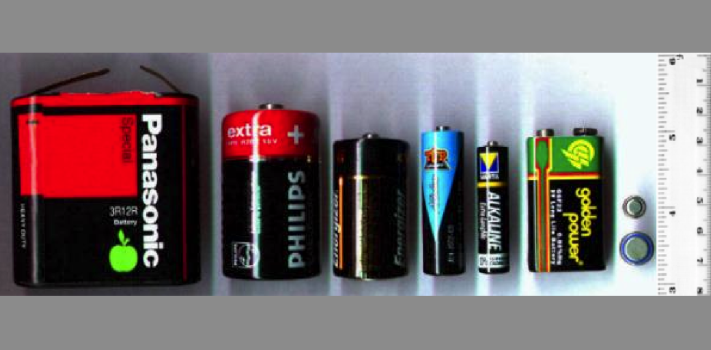
Last weekend, I was performing my periodic battery survey, assessment and replacement ritual. I have a list of (I had thought) every battery device, and its location, along with a hidey-hole for the batteries to replace those that require them. This list, in the summer 2025 edition, runs 3 pages of 14 point type. On my yearly planner, it is slated for January. (Yes, I am aware that this is September. Let us consider the gulf between plans, and actions, shall we?) As it developed, as I was working my way through each page, I would pass one shelf in …


Text Comms in a Post-Disaster World – Part 5, by J.M.

(Continued from Part 4. This concludes the article.) There are a lot of different complicated characteristics in the LoRa radio configuration that can be changed that impact range and transfer speed, so Meshtastic has defined a number of preset configurations so you don’t need to mess with the technical details. The first word of the preset defines range, and the second defines bandwidth, with ‘Long Fast’ being the default. I strongly recommend that you stick with the ‘Long Fast’ preset until you gain more experience with Meshtastic, so make sure the ‘Modem Preset’ field says ‘Long Fast’. Once you’ve selected …