
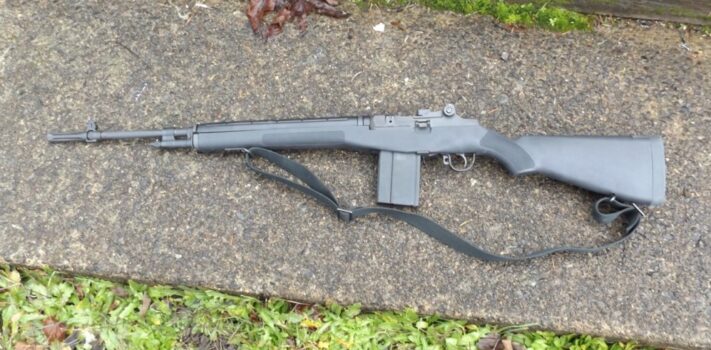


I was introduced to the M14 rifle in Basic Combat Training (BCT) in the summer of 1969, at Fort Ord, California and I fell in love with it. I was only 17 years old and weighed a whopping 135 pounds at the time. But when I graduated from Infantry School in December of 1969. I had beefed up to 165 pounds. I longed for my very own M14 – however it was not to be, you see the US military M14 was a select-fire rifle, capable of fully automatic fire. When I returned to my National Guard unit in Chicago, I became a member of the Illinois Rifle & Pistol team and I was issued a match-grade M14 and I competed in a number of rifle matches after that – winning all of them in my class. I fired Expert with the M14 when time came to qualify with it.
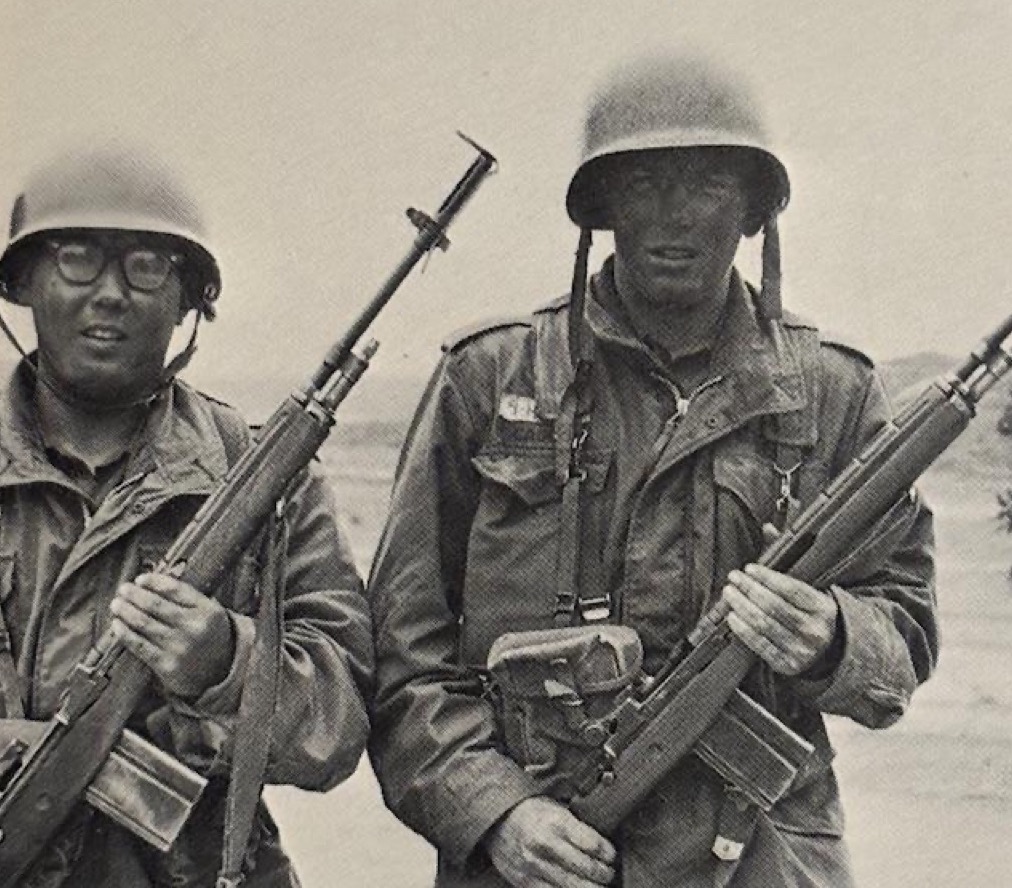
I thought it was great, I worked full-time for the National Guard and I was also psid to go to those shooting matches, Plus, I had all the match-grade ammo I wanted. When I left the Guard, I had to turn in my Match-grade M14. Over the years, I owned several Chinese-made M14 clones – they were all nice shooters, but they weren’t American-made M14s. The Chinese clones were plagued by soft steel in their bolts. Some years ago, I managed to get my hands on a Springfield Armory American-made M1A. That is Springfield’s name for theie semi-auto-only version of the M14. I loved that M1A rifle. Unfortunately, due to financial circumstances I was forced to sell it, to help out a family member.
Several months ago, I requested another M1A sample from Springfield Armory for this article – and I just finished paying for my sample – the gun is now mine. The only significant difference between the M1A and the military-issue M14 is that the M1A is only semi-auto. I should mention that because of their traditional sock design, the standard select-fire M14 was not controllable in full-auto fire.
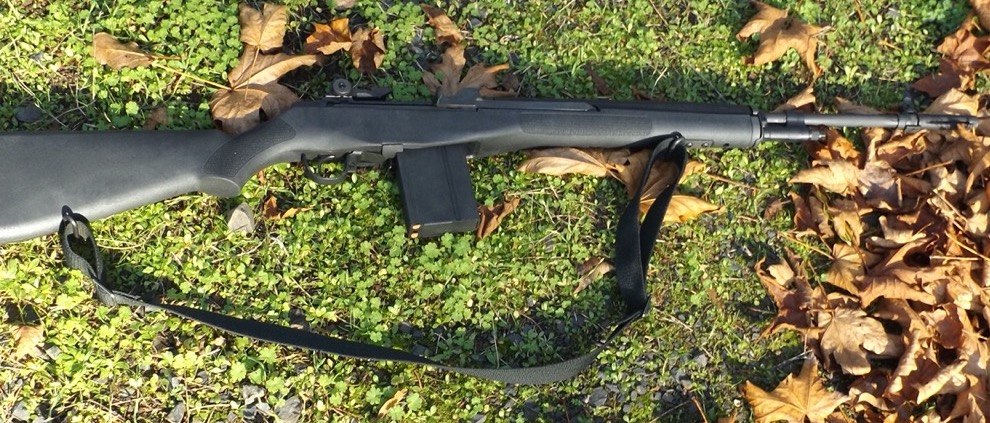
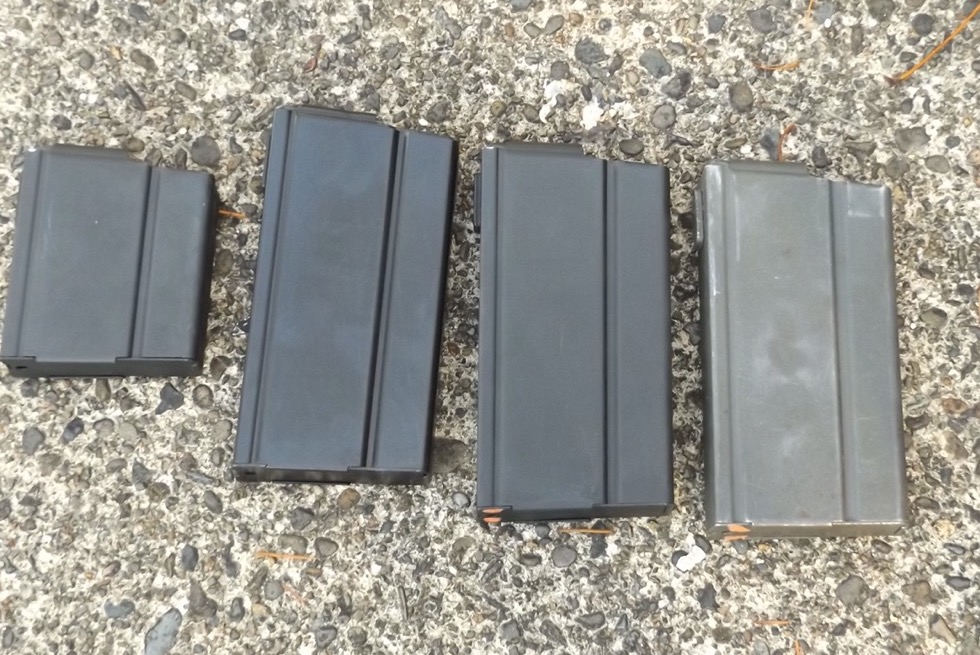 The M1A sample I received was the black synthetic stock version and it is about a pound lighter than the wood-stocked version. It also has a thick rubber butt pad on it instead of the all-steel military version. The M1A now comes with a 10-round magazine for some reason. I assume that this is because any states will only allow a 10-round magazine. I have since added a good number of 20-round magazines of three varieties: Some are Springfield Armory factory made, some are after-market from ProMag, and some are old genuine military surplus – in like-new condition. The military surplus 20-rd magazines seem to be slightly heavier made then the others – not a bad thing.
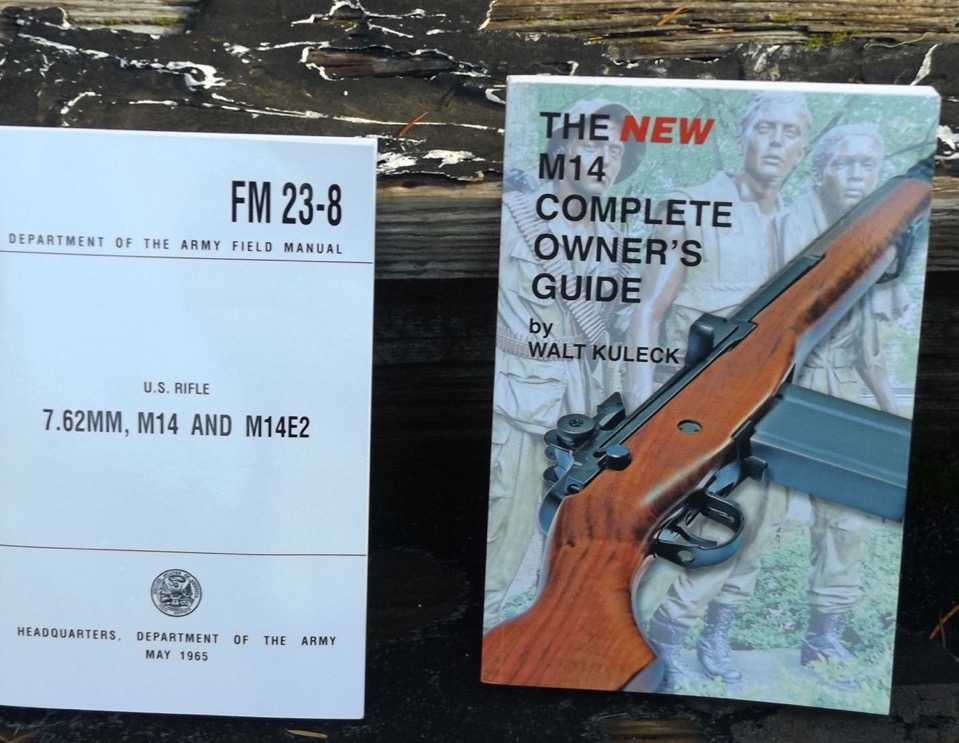 No sling came with the M1A. However, I added a heavy-duty black Nylon sling. No owners manual was included. You can download the 80+ page version of the manual, free from Springfield Armory. I opted to order a US M M14 field manual, and that is all you will ever need. I ordered the newest M14 manual: The M14 Rifle Complete Assembly Guide (M14 EBR Rifle) by Walt Kuleck and Clint McKee had more M14/M1A information that you will ever need. It is essentially the M14 “bible”. I attended the M1 and M14 armorers’ school, and I wish I had this book back them.
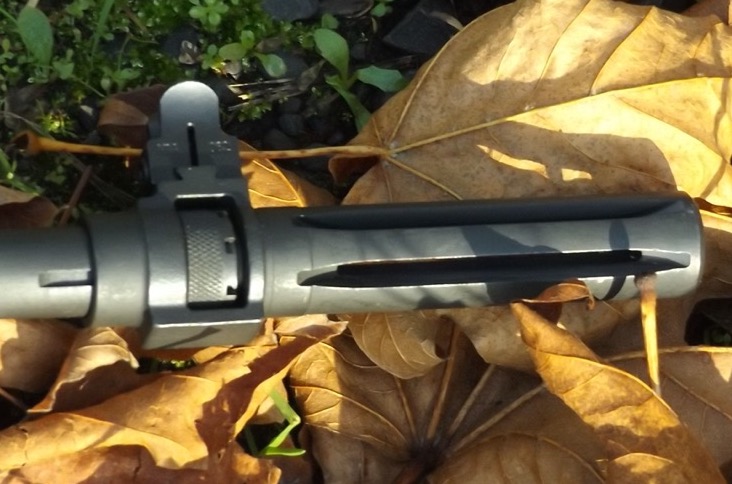 The M14 is a greatly updated version of the M1 Garand – it uses derivations of the M1’s bolt, operating rod, trigger assembly, and rear sight. The biggest advantage over the M1 Garand is instead of an en bloc 8-round top-loading clip, it uses a 20-round bottom-loading detachable magazine.
The M14/M1A is a little bit slower to reload than an AR, since the magazine has to be rocked in place, with the front of it going in the magazine well first and then rocked toward the rear until it clicks. But with practice you can load the M1A in about a second and a half.
The rear sight on the M1A is pure M1 Garand – one of the best battle rifle sights ever made. It is very easy to zero without tools. I have a 300-yard zero my M1A sample, but it is easy to change sight elevation. The barrel on the M1A is 22-inches with a roughly 2.5-inch-long flash suppressor on the end. This actually works very well to hide the flash then you fire the rifle.
One disadvantage of the M1A is its long barrel – not a good gun for house-clearing, in my opinion. The gun is hard to maneuver in tight spaces. In all, the rifle is just over 44-inches long.
The M1A is chambered in 7.62×51 NATO. However, you can shoot standard 150-grain commercial .308 Winchester soft nose spire point hunting ammo through it. The U.S. military has a 168-grain match grade 7.62×51 NATO load. But note that the .308 is generally hotter than the 7.62×51 NATO, so Springfield Armory discourages the use of .308 Winchester ammunition with bullets weighing more than 150 grains. The trigger is a two-stage trigger. My sample arrived with a 5 and a half pound trigger pull. After firing more than 500 rounds, it settled in at 5.25 pounds.
The safety is in the front of the trigger guard – again it is an M1 Garand design variation. To apply the safety, pull back on it. To fire the rifle, you must first push the safety forward with the front of your trigger finger. A lot of people don’t like this set-up, but I do. The safety was very stiff on my sample, but it loosened up, with use.
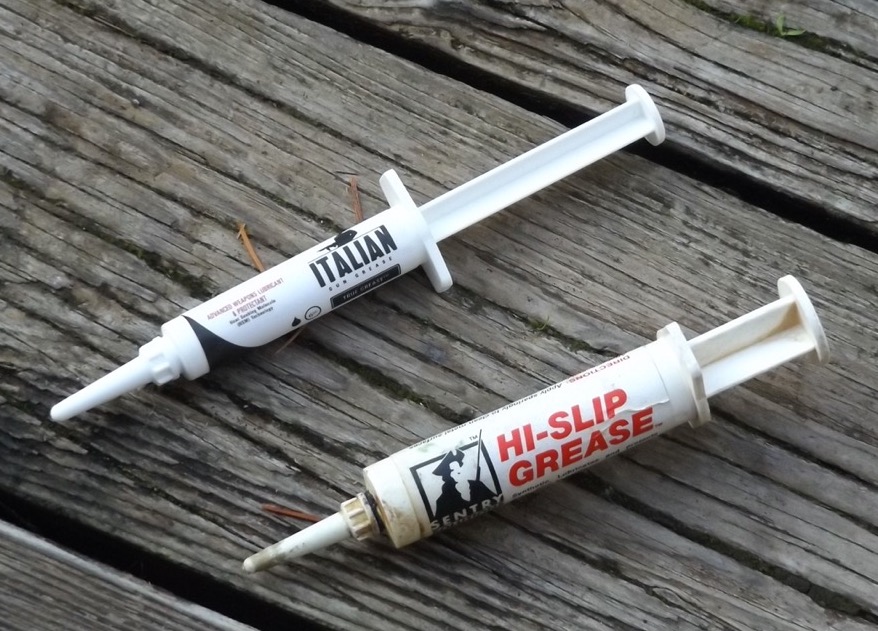 In my experience, the M1A doesn’t require a lot of maintenance. There is a roller on the bolt that goes into the charging handle. Keep it lubed with gun grease – not gun oil, easy enough to do. Keep the barrel clean and lubed with a lubricant like BreakFree CLP and the gun is good to go. The chamber should be left nearly dry.
My M1A sample came in a nice black Nylon tactical gun case – a nice touch. I keep a magazine in the gun and two spare 20-round mags in the case – along with three boxes of .308 Winchester ammo.
I hate to admit it, but I’m getting old – I just turned 74 a few months back and my health isn’t what it should be. I suffer from high blood pressure, Diabetes Type 2, as well as osteoarthritis in my lower back. I simply can not stand for more than a minute or two. Nothing seems to help. I also have Atrial Fibrillation (“A-Fib”) caused by enlarged heart. I don’t want heart surgery at my age. I’ve lived a good, long life.
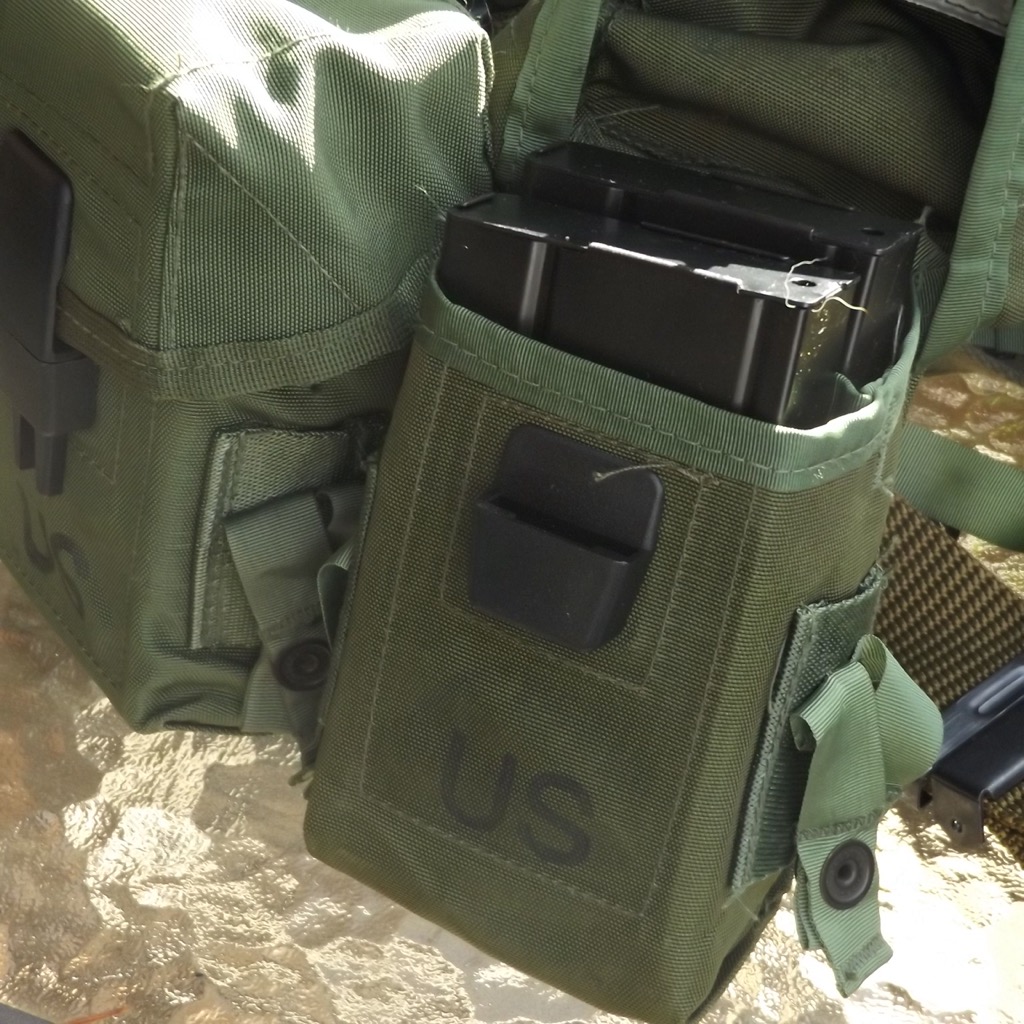
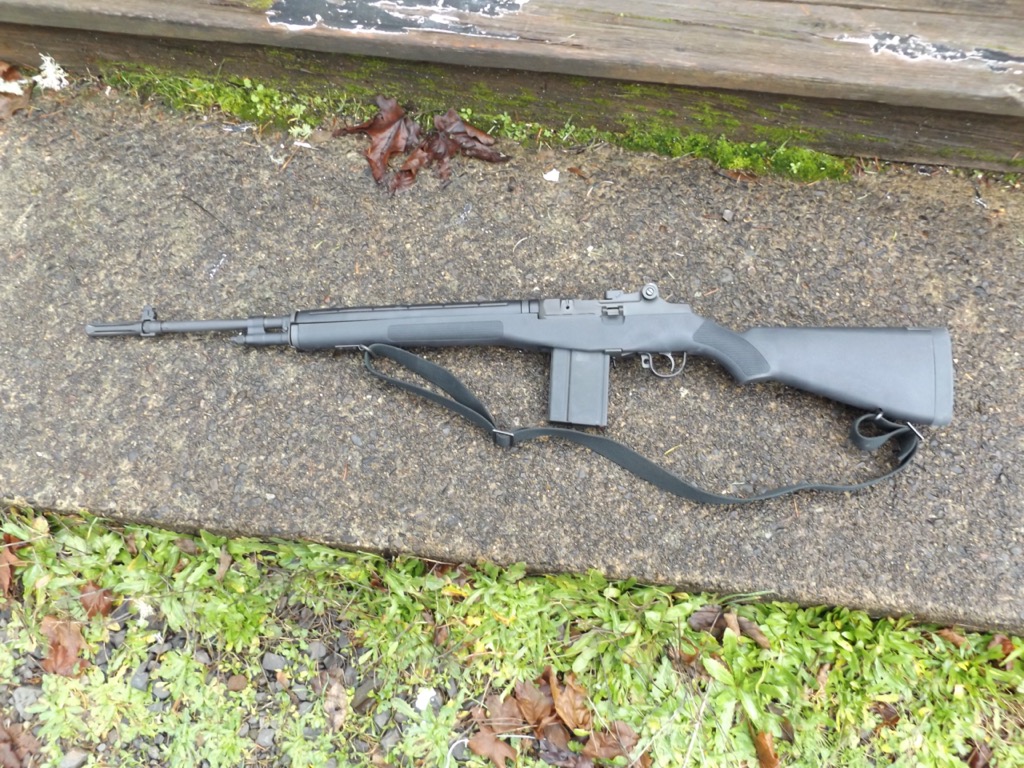 I don’t plan on having to bug out. But one never knows what might happen. If I only had a few minutes to run, the first rifle that I’d gra would be the M1A. I’d also grab my Springfield Armory Echelon 9mm. I have several pistol belts (ALICE) set up for various guns. In my M1A set-up I have 8 loaded magazines plus one in my rifle – and that will give me 180 rounds on-hand. That is enough for most situations. For my Echelon, I have one loaded 20-round magazine – along with three more loaded 20-round mags. I hope it never have to bug out. I had hopes of moving to Alaska, but that is not going to happen.
Now, on to testing the M1A. There are never a shortage of guys willing to help me, when I supply a gun and ammo. One of the guys who works at the local FFL gun shop offered to buy my sample when I picked it up. My other testers also asked to buy my sample. I told them all that this gun was not for sale – ever. I have more guns than I need, but this will be the very last gun that I’ll sell if if comes down to it. I recently decided to scale back my gun collection, but when it was all said and done, I actually ended up with two more AR-style guns than I started with. Go figure.
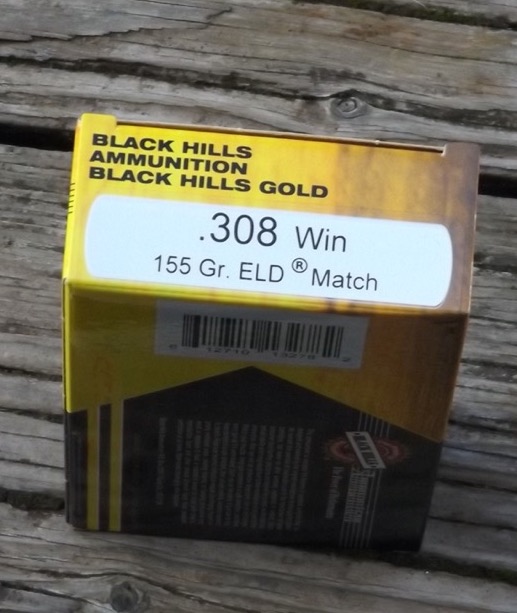 The nice folks at Black Hills Ammunition sent me a great supply of .308 ammo for testing this rifle. I got their 155-grain ELD Match round, as well, as their 168-grain JHP Match. When I zeroed the rifle, I used the 155-grain ELD and it proved to be a great shooter – I was getting half-inch groups at 50 yards. You can’t ask for better than that – everyone loved this round. The heavier round grouped a little bit high, but that was to be expected. Everyone commented on how accurate the M1A was – they were hitting everything that they aimed at.
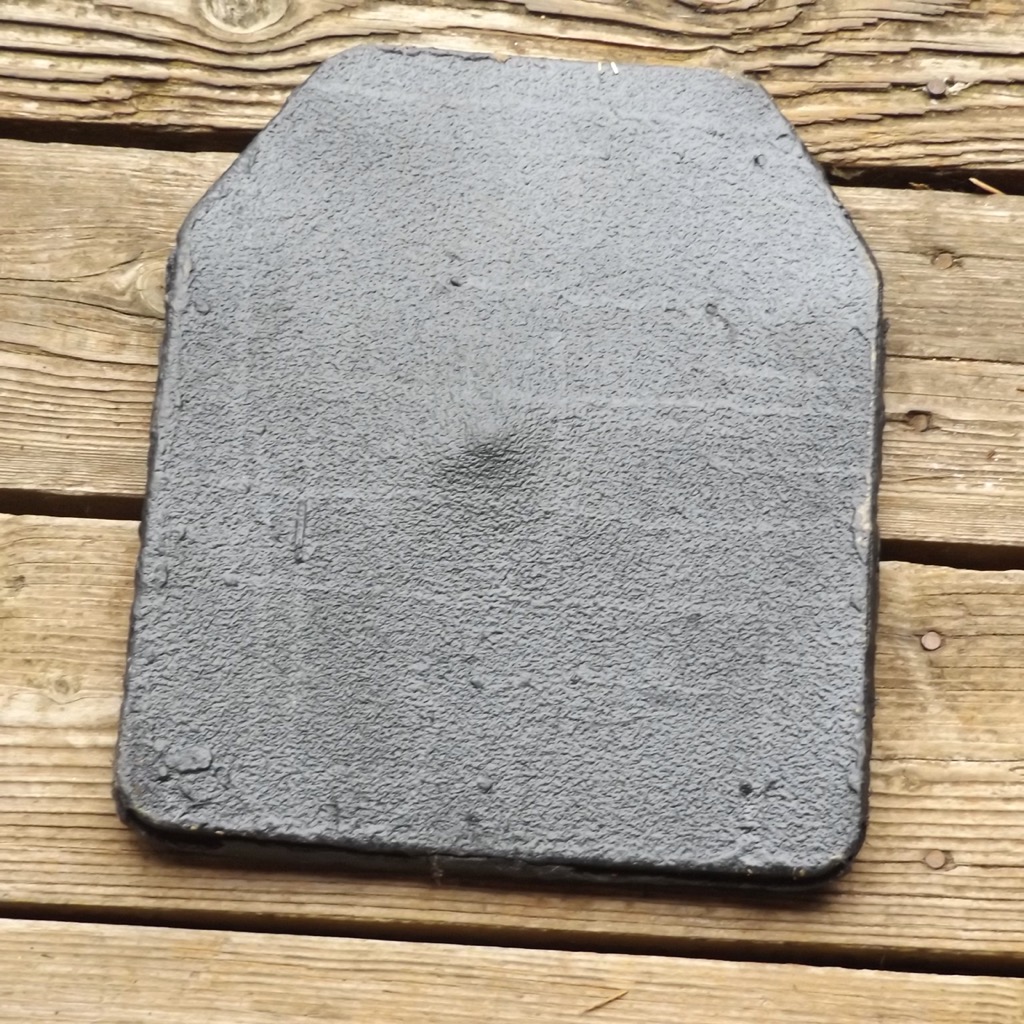 I had some PMC 7.62 NATO ammo on hand, and I tested it against a body armor steel plate. I fired at 25 yards and hit the plate 20 times, and it only got a small dimples in it. However, the .308 round will penetrate a lot of things. This is a “battle” gun – not an “assault” rifle. It will get the job done.
Retail on the standard grade synthetic stock Springfield Armory M1A is slightly over $1,800 and it is worth every red cent, if you ask me. Springfield also has variants of the M1A in shorter barrel lengths, and in match grade, as well.
However, as I told everyone else, this sample is not for sale, since it is my main bug-out rifle. I cut my teeth on the US military M14 and it has been a long time since I last owned an M1A. Get your hands on an M1A. You’ll love it!