This weekly column is a collection of short snippets: practical self-sufficiency items, how-tos, lessons learned, tips and tricks, and news items — both from readers and from SurvivalBlog’s editors. We may select some long e-mails for posting as separate letters.
—
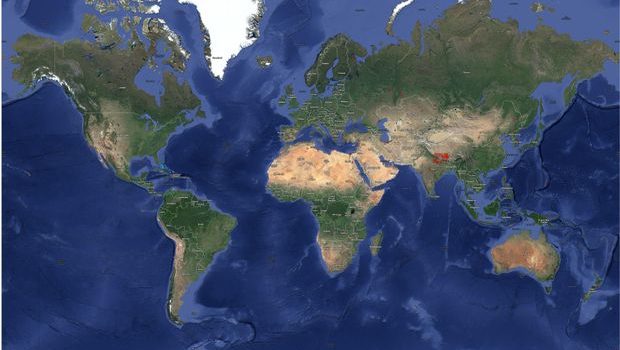
First, and foremost is an incredible global radio listening map, sent to us by H.L.: Radio Garden. H.L describes it: “The green dots on this Google Earth map represent radio stations all over the world. Click on any one of the dots and you will immediately hear that station with very good reception.”
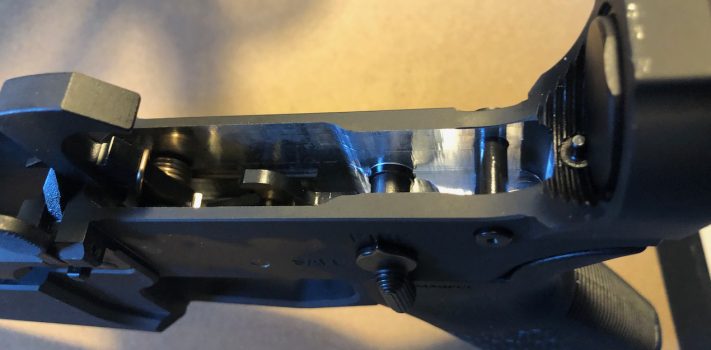
JWR’s Comment: I also found this fascinating. It is obvious that NPR stations are over-represented versus Christian and small independent stations, but it is still an amazing tool. Take the time to “tour” The American Redoubt via Radio Garden. Not only will it give you an appreciation of how vast and lightly-populated the region is, but also how delightfully old-fashioned and conservative the populace is. I randomly clicked on a station in Billings, Montana, and soon heard an ad for a hardware store extolling: “We have a good selection of ARs and stripped AR lowers.” You’ve gotta love the Redoubt!
o o o
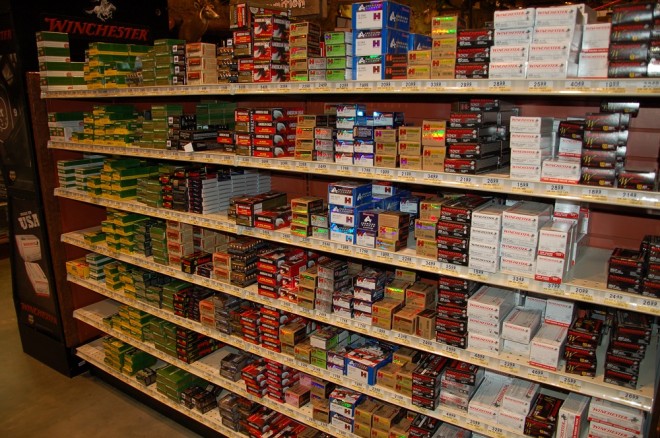
Our own Pat Cascio spotted this: New Gun Control Bill Expected To Pass Requires Background Checks to Purchase Ammo.
o o o
Duane sent this note:
“Tunnel Rabbit’s informative article on solar power is helpful for someone just starting and trying to keep some lights on with minimal cash outlay. I’ve lived off grid for 23 years and have over 4KW of panels, many on a tracker, and a large Iron Edison battery bank. Also have 1095 watts of solar on my RV using linear actuators to raise the panels. {Available from W.W. Grainger} I’m writing to explain something most solar installers don’t consider. There is a difference between AC and DC voltage. AC starts at zero and follows a sine wave to maximum and then returns to zero and follows a sine wave to maximum in the opposite direction and returns to zero. You can measure the area under the curve and play with the numbers, but the bottom line means you need larger wire for DC which stays at one voltage and amperage. The wire size ratings from Underwriters Lab are for fire prevention on AC circuits, not efficiency. They say #14 will carry 15 amps, #12 20 amps, #10 30 amps, #6 60 amps. For a continuous load, such as lights, decrease #12 from 20 amps to 16 amps. For efficient DC, such as from solar panels to the controller, triple the wire size. Instead of #12 for 20 amps, use #6.
A favorite trick of solar panel installers on RVs is to use small wire on the DC circuits so they can sell more panels to get enough power. A small voltage drop from the panel to the solar controller will make a large drop in the output because batteries need a voltage above their rated voltage to charge them. Like many things in life, it comes down to money. If you are starting with a small system and think you will add more panels later, install larger wire now. If you are using a large enough system to wire the solar panels in series for 24 volts or 48 volts, you will save on wire because raising the voltage decreases the amperage. Consider this when buying a solar controller. Most people are impressed with free energy from solar and like no electric bill every month. If the solar controller, wire, and inverter are sized properly it is easy to add a couple solar panels and more batteries later. Prior planning prevents poor performance.”
o o o
Reader D.S.V. wrote to mention this news: Supreme Court Takes Up Major NRA-Backed Gun Rights Case