

“You do not rise to the occasion in combat, you sink to the level of your training. Do not expect the combat fairy to come bonk you with the combat wand and suddenly make you capable of doing things that you never rehearsed before. It will not happen.” – Lt. Col. Dave Grossman, On Combat
- Ad USA Berkey Water Filters - Start Drinking Purified Water Today!#1 Trusted Gravity Water Purification System! Start Drinking Purified Water now with a Berkey water filtration system. Find systems, replacement filters, parts and more here.
- Ad Survival RealtyFind your secure and sustainable home. The leading marketplace for rural, remote, and off-grid properties worldwide. Affordable ads. No commissions are charged!

Preparedness Notes for Thursday — December 8, 2022
Today marks the birthday of Eli Whitney, (1765–1825) the inventor of the labor-saving cotton gin, several firearms, and dozens of other mechanical devices. He was the first to demonstrate the advantages of fully interchangeable parts, in firearms manufacture.
—
We are in great need of entries for Round 104 of the SurvivalBlog non-fiction writing contest. More than $750,000 worth of prizes have been awarded since we started running this contest. Round 104 ends on January 31st, so get busy writing and e-mail us your entry. Remember that there is a 1,500-word minimum, and that articles on practical “how-to” skills for survival have an advantage in the judging.
- Ad Elk Creek Company - Percussion Blackpowder Guns - No FFL Required.Elk Creek Company - Percussion Blackpowder Guns - Pre-1899 Guns - Knives - Bayonets - Magazines - The last bastion of privacy!
- Ad California Legal Rifles & Pistols!WBT makes all popular rifles compliant for your restrictive state. Choose from a wide range of top brands made compliant for your state.

Update: A Home-Based Business — Your Ticket to The Boonies
JWR’s Introductory Note: This article is an update and substantial expansion to a piece that I wrote back in December of 2005.
—
The majority of SurvivalBlog readers that I talk and correspond with tell me that they live in cities or suburbs, but they would like to live full-time at a retreat in a rural area. Their complaint is almost always the same: “…but I’m not self-employed. I can’t afford to live in the country because I can’t find work there, and the nature of my work doesn’t allow telecommuting.” They feel stuck.
The recent Wu Flu pandemic proved that a huge number of office-setting jobs can indeed be handled from home. High-speed Internet now predominates, via DSL. And Starlink — which is much faster than DSL — will soon be rolling out in even the most remote parts of the United States. Starlink is now available in 32 countries, including Canada and Mexico. There are now videoconferencing tools like Skype, Zoom, GoTo Meeting, and Facetime. Many of these are available free of charge.
Don’t Just Move First, And Hope
Over the years I’ve seen lots of people “pull the plug” and move to the boonies with the hope that they’ll find local work once they get there. That usually doesn’t work. Folks find that most rural jobs typically pay little more than minimum wage and they are often informally reserved for folks that were born and raised in the area. Newcomers from the big city certainly don’t have hiring priority!Continue reading“Update: A Home-Based Business — Your Ticket to The Boonies”
- Ad Even in permissive states guns are often locked up - a glaring security gap which must be filled with a dependable tool. Pepper sprays & stun guns fail often. Stunning travel-anywhere SIEGE Belts have been a proven life-saver over decades. Made in USASIEGE STOVES: Get ready for summer in the great outdoors with the ultimate portable stove. In a fuel crisis twigs are FREE. Use code "SBLOG" at checkout for $20 off BELTS!
- Ad Most “Healthy” Food Isn’t What It ClaimsMost stored food isn’t meant for daily use. If you’ve ever questioned what you’re eating, this shows a clean option you can rely on every day, and even store for years.

The Survivalist’s Odds ‘n Sods
SurvivalBlog presents another edition of The Survivalist’s Odds ‘n Sods— a collection of news bits and pieces that are relevant to the modern survivalist and prepper from “JWR”. Our goal is to educate our readers, to help them to recognize emerging threats, and to be better prepared for both disasters and negative societal trends. You can’t mitigate a risk if you haven’t first identified a risk. Today, we look at the North Carolina Substations Attacks.
Netherlands to Shut Down 3,000 Farms
First up, SurvivaBlog reader D.S.V. found this piece at Australia’s SkyNews: ‘War against humanity’: Netherlands to shut down 3,000 farms. Here is a quote:
“Webster University assistant professor Ralph Schoellhammer says the Dutch government’s plan to shut down 3,000 farms in a bid to comply with EU emissions standards is a “war against humanity”.
Mr Schoellhammer said these decisions are made due to a “cultish ideology”.
‘We get the promises that ‘oh this is not going to be a problem, we are going to move to alternate modes of production’, be it energy or agriculture,’ he told Sky News Australia.
‘In the end, it never works.'”
What Really Happened in the NC Substations Attack?
Over at The Organic Prepper: What Really Happened in the NC Substations Attack? JWR’s Comment: Yes, perhaps it had suspicious timing. But keep in mind that by itself, time correlation does not prove causation. It is noteworthy that the entire region is famous for its perennial Robin Sage exercises, which often employ local civilians for role-playing.
Blog reader and frequent feature article contributor “3AD Scout” had this comment:
“I think the rush to point blame on drag queen protesters is only going to lead to more attacks if investigators only focus on one theory and that theory turns out to be wrong.
The area impacted is in the heart of the US Army Special Forces training area. Southern Pines is the town by Camp Mackall. Fort Bragg is a few miles away. It isn’t a leap of logic to think Russia might attack the area if their attempts to use cyber attacks on our grid were met with a good defense. Just deploy a few “little green men” just like Russia did when they invaded Crimea in 2014.
Logistics wins wars, and right now the logistics from the US is helping to win the war in Ukraine. Logistics requires electricity so without it, logistics collapse. During WWI there were at least 100 acts of sabotage on American soil by the Germans. Why are we so ignorant to think our enemies won’t do it again? Our nation seems to have a habit of not realizing when others are at war with us. But hey, when turning a blind eye helps with your woke political agenda, why not ignore any other possible causes of an attack.”
US Agencies Acquiring Tech to Hack Private Autos
Reader D.B. sent us this, from NewsMax: US Government Agencies Acquiring Tech to Hack Private Autos.
- Ad Click Here --> Civil Defense ManualNOW BACK IN STOCK How to protect, you, your family, friends and neighborhood in coming times of civil unrest… and much more!
- Ad SurvivalRealty.com: Sell Your Remote LandAdvertise your hard-to-sell remote land to eager buters. We specialize in rural, remote, and off-grid properties worldwide. Affordable ads. No commissions are charged!

The Editors’ Quote of the Day:
“The possession of unnecessary implements makes difficult the collection of taxes and dues and tends to foment uprisings.” – Toyotomi Hideyoshi, during Japan’s Great Sword Hunt
- Ad Survival RealtyFind your secure and sustainable home. The leading marketplace for rural, remote, and off-grid properties worldwide. Affordable ads. No commissions are charged!
- Ad STRATEGIC RELOCATION REALTYFOR SALE: Self-sustaining Rural Property situated meticulously in serene locales distant from densely populated sanctuary cities. Remember…HISTORY Favors the PREPARED!

Preparedness Notes for Wednesday — December 7, 2022
On a Sunday morning, in 1941, America was caught sleeping. Then, six decades later, there was that September morning, in 2001. Let’s pray that nothing like those days ever happens again. – JWR
—
The 2600 Upgrade PVS-14 night vision monocular/weapons sight sale at Ready Made Resources will end on Thursday, December 8, 2022. With this sale, you will save $400 off normal retail and receive what is normally a $200 upgrade to a 2600 FOM unit. They are in stock and ready to ship, at $3,595.
—
Special Note: Today’s feature article is a review written by our Field Gear Editor Emeritus, Pat Cascio. Pat has been in and out of the hospital twice in recent weeks with bleeding from diverticulitis. Please pray for healing and complete restoration of his health.
—
We are now in need of entries for Round 104 of the SurvivalBlog non-fiction writing contest. More than $750,000 worth of prizes have been awarded since we started running this contest. Round 104 ends on January 31st, so get busy writing and e-mail us your entry. Remember that there is a 1,500-word minimum, and that articles on practical “how-to” skills for survival have an advantage in the judging.
- Ad Elk Creek Company - Federally-Exempt No-Paperwork GunsPre-1899 Antique Cartridge Guns -- No FFL Required. Can be mailed to your doorstep with no Federal paperwork!
- Ad USA Berkey Water Filters - Start Drinking Purified Water Today!#1 Trusted Gravity Water Purification System! Start Drinking Purified Water now with a Berkey water filtration system. Find systems, replacement filters, parts and more here.

Springfield Armory Ronin 1911 10mm, by Pat Cascio
I requested a sample of the new Springfield Armory Ronin 1911 in 10mm as soon as I heard about it. Still, I had to sit and wait for my sample – this gun, in this caliber, is in great demand! Back in 1988, I owned the only 1911-pattern pistol chambered in 10mm at that time. I ended up selling it, because we just moved back to Oregon, and my wife wasn’t yet working as a teacher and I was on disability from an auto accident – collecting a whopping $125 per week. I thought I’d never own another 10mm in a 1911 configuration. That gun that I ended up selling, is no longer made. However, a quick check on GunBroker.com revealed that it is now selling for over $2,000.
As long-time readers will know, my end-of-the-world handgun is a Glock 19X. However, my all-time favorite handgun is a good ol’ 1911, and the chambering would be in .45 ACP. I have 1911s in several calibers, and love them all. However, I have a brand-new love affair with this Springfield Armory 1911 in 10mm – it would make an excellent gun for self-defense. And, one nice thing about the 10mm round is that you can pick and choose different ammo, for different chores. For defense, I’d go with the Black Hills Ammunition HoneyBadger 10mm round with a 115-gr all-copper bullet that is fluted. I believe it may just be the ultimate man-stopper. For dangerous game, a heavier bullet. And for target practice, I’d use a 180-gr FMJ bullet.Continue reading“Springfield Armory Ronin 1911 10mm, by Pat Cascio”
SurvivalBlog Readers’ & Editors’ Snippets
This weekly column is a collection of short snippets: responses to posted articles, practical self-sufficiency items, how-tos, lessons learned, tips and tricks, and news items — both from readers and from SurvivalBlog’s editors. Note that we may select some long e-mails for posting as separate letters.
—
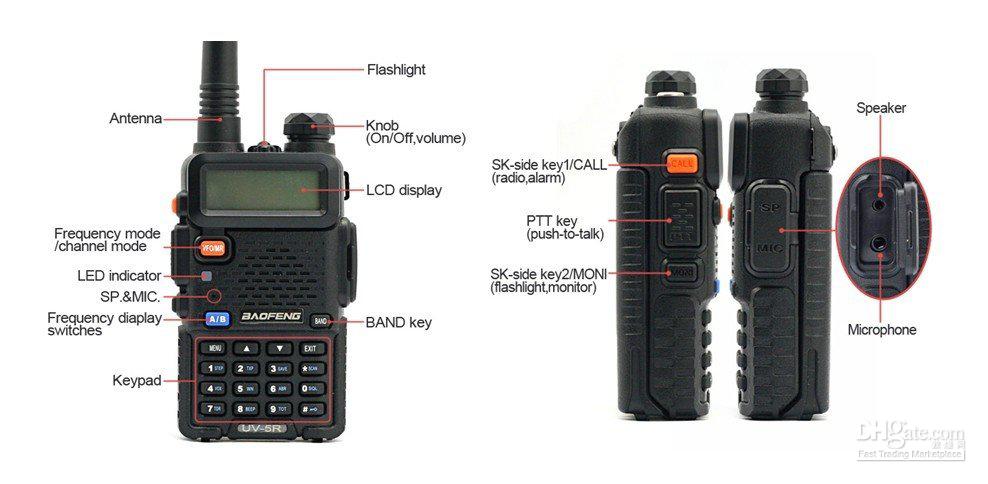
We’ll start out with this, at Brushbeater: The Guerrilla’s Guide To The Baofeng Radio Is Out!!
Canadian Provinces Refuse to Assist in Trudeau’s Gun Grab.
o o o
North Carolina power substations taken out by gunfire: sheriff. JWR’s Comment: Time correlation does not necessarily mean causation.
o o o
What Americans Must Do to Stop the Great Reset.
o o o
Fred The Valmetmeister sent this: HAM (Amateur Radio Documentary) Montana PBS [2022]
o o o
A fascinating tour, with narration: Palmetto State Armory Factory Tour! See how their AKs, ARs, JAKLs are made! (Full disclosure: Palmetto State Armory is one of our affiliate advertisers, so we earn a little piece of the action when you place an order that originates with the click of a PSA ad or text link at SurvivalBlog.)
o o o
A video suggestion from reader Tim J.: Hidden Danger in Fruit & Honey [ A1c Misses Fructose Damage ] 2022

The Editors’ Quote of the Day:
“I fear all we have done is to awaken a sleeping giant and fill him with a terrible resolve.” – Admiral Isoroku Yamamoto
Preparedness Notes for Tuesday — December 6, 2022
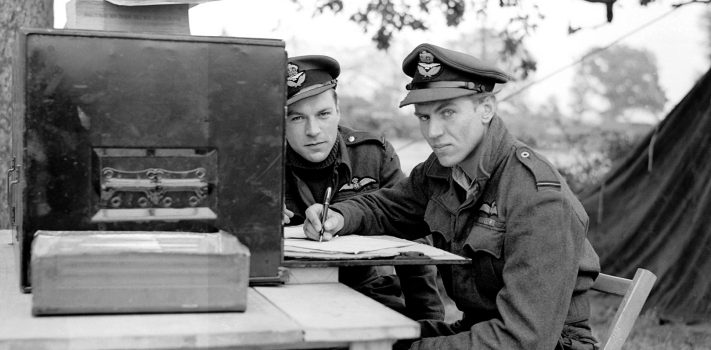
Today is the birthday of RAF and RCAF fighter ace George Frederick “Buzz” Beurling. He was born in Verdon, Quebec on December 6, 1921 and killed in Rome Italy, on May 20th, 1948. There are a few books about him and one worth mentioning is his autobiography Malta Spitfire which he wrote in 1943 during a Victory Bond tour in Canada. He left the RCAF in April,1944 with 31 aerial victories, most of them during the siege of Malta in the summer of 1942.
—
Today is the birthday of “claymation” artist and filmmaker Nick Park (born, 1958.) He is best known for his Wallace & Gromit films.
–
Today’s brief guest article was too short to be included in the judging for the SurvivalBlog non-fiction writing contest. Remember that there is a 1,500-word minimum, and that articles on practical “how-to” skills for survival have an advantage in the judging. More than $750,000 worth of prizes have been awarded since we started running this contest. Round 104 is now in progress and will end on January 31st, so get busy writing and e-mail us your entry.

Avoiding Complacence in Security, by Robert Downing
While visiting a local church, I had an interesting experience, from a Safety/Security standpoint. My wife and I attended an organ recital at a church after they had installed a massive new pipe organ.
The organ was centrally placed with a massive lighting system set up around it to highlight it. The overhead lights lit up the entire area around the organ and additional lights (perhaps as many as 40 small lights) were set up underneath the organ to highlight the various pedals used by the organist.
The organist (well-accomplished and semi-famous) explained to the audience the history of the new organ and what she would be playing. She then proceeded to play a number of different pieces and would occasionally stop to talk about additional pieces she would play.
Fortunately, or unfortunately, depending on your perspective, I quickly became distracted. As the organist would play the organ, I noticed that all the lights in the church would get dim on occasion. Lights dimmed on 12 different occasions throughout the performance.
It occurred to me that there was likely an electrical short or a current overload in the wiring system set up for the new organ. And, I mentioned to my wife I need to call this to the attention of someone at the church. Note: she asked me not to raise the concern as it would delay our leaving.
As we were leaving, I saw a gentleman that appeared to be in charge. I pulled him aside and made him aware that all of the lights in the church were dimming at various times throughout the performance. And, I indicated this might be an electrical issue (a safety concern).
He then stated that he noticed that the lights dimmed when the organ was playing. However, he didn’t realize there could be a safety issue. He further stated he knew exactly who to tell and that the problem would be corrected. He did not offer to close the loop and tell me when the problem was corrected.Continue reading“Avoiding Complacence in Security, by Robert Downing”

SurvivalBlog’s News From The American Redoubt
This weekly column features news stories and event announcements from around the American Redoubt region. (Idaho, Montana, eastern Oregon, eastern Washington, and Wyoming.) Much of the region is also more commonly known as The Inland Northwest. We also mention companies of interest to preppers and survivalists that are located in the American Redoubt region. Today, a few more details on the Idaho stabbings that have attracted national news attention. (See the Idaho section.)
Idaho
More about the unusual Moscow, Idaho stabbings from CBS: What we know so far about the investigation into the Idaho college student murders.
o o o
Newsweek: Idaho Murders Update: Roommates Break Silence, Victim’s Mom Shares Theory. Here is a passage from the news story:
“In recent days, police and the local prosecutor’s office have provided confusing, and at times contradictory, statements about whether the victims were “targeted.”
“We remain consistent in our belief that this was indeed a targeted attack but have not concluded if the target was the residence or its occupants,” Moscow Police spokeswoman Rachael Doniger told Newsweek on Thursday.
According to investigators, Goncalves and Mogen had gone to a local bar, stopped at a food truck and then caught a ride home with a private party at around 1:56 a.m. on November 13. Meanwhile, Chapin and Kernodle were seen at the Sigma Chi house, just a short walk from the rental house, and made it home around 1:45 a.m.
Police said the two surviving roommates were also out that evening, but returned home by 1 a.m. and did not wake up until later that morning. After waking up, they called friends to come to the house because they believed one of the victims found on the second floor had passed out and wasn’t waking up.
One of their cell phones was used to make a 911 call requesting aid at 11:58 a.m.
Officers arrived to find two of the victims on the second floor and the other two on the third floor. Police have said the roommates and people who were in the residence when the 911 call was made are not believed to be implicated in the crime.”
o o o
A Killer on the Loose Leaves an Idaho College Town Shaken.
o o o
Anonymous donor gives $10 million for ISU student scholarships.
o o o
State House committee seats assigned, Democrats lose spot on powerful budget committee.
Continue reading“SurvivalBlog’s News From The American Redoubt”

The Editors’ Quote of the Day:
“This country has a mental health problem disguised as a gun problem, and a tyranny problem disguised as a security problem.” – Joe Rogan

Preparedness Notes for Monday — December 5, 2022
On December 5th, 1964, the first Medal of Honor awarded to a serviceman for action in Vietnam was presented to Captain Roger Donlon of Saugerties, New York. Captain Donlon and his Special Forces team were manning Camp Nam Dong, a mountain outpost near the borders of Laos and North Vietnam. Just before two o’clock in the morning on July 6, 1964, hordes of Viet Cong attacked the camp. He was shot in the stomach, but Donlon stuffed a handkerchief into the wound, cinched up his belt, and kept fighting. He was wounded three more times, but he continued fighting–manning a mortar, throwing grenades at the enemy, and refusing medical attention.
—
As you do your Hanukkah or Christmas gift shopping, please give priority to our paid banner advertisers and to the prize sponsors for our ongoing nonfiction writing contest. Please let them know that you found them through SurvivalBlog. Thanks!
—
Today’s feature article is a review written by Field Gear Editor Tom Christianson.

Mossberg Maverick 88 Smooth Bore Slug Gun, by Thomas Christianson
I recently tested the Mossberg Marverick 88 Deer Pump in 12 gauge. It has a 24-inch smooth bore slug barrel with adjustable rifle sights, a three inch chamber, and six shot capacity with 2.75 inch shells.
I found it to be a sturdy, reliable, and reasonably accurate option for hunting deer and other mid-to-large-sized game at slug ranges (50 yards or less). With a manufacturer-suggested retail price of only $245, it offers a highly versatile firearm at an extremely reasonable price.
The Backstory
A couple of decades ago, I was preparing for a hunt on my Uncle’s property, which bordered a state game area. My Uncle’s land was in a shotgun-only hunting zone, so I bought some slugs for my shotgun. It was a 12 gauge semiautomatic Winchester 1400 that I had received from my parents one Christmas many years before. Since the gun had always thrown shot reasonably straight while bird hunting and trap shooting, I assumed that it would throw slugs reasonably straight as well. By making that assumption, I broke a cardinal rule: always test your firearm with the ammo you plan to use before using them for something important.
Dawn several days into the hunt found me hunkered down in the woods watching a game trail about 40 yards away. I saw a good-sized doe approaching from my right along the trail. I had a doe permit, so I shouldered the shotgun, sighted roughly in the center of the doe’s chest, swung the gun gently to the left to allow for the doe’s movement, and squeezed the trigger. The doe jumped up in the air, and then started to run.
Confident that I had a solid hit, I waited a few minutes to give the doe time to lie down and bleed out. Then I walked over to the place where the doe had been walking when I fired. I was surprised to see just a small amount of blood in the new fallen snow. I had expected much more. I followed the doe’s tracks, and noticed that in the course of only about 100 yards the bleeding gradually slowed and then stopped. I continued to track her for about a mile, until I lost her trail among the tracks of a number of other deer. There was no further sign of blood after that first 100 yards or so.
I did not understand how I had just winged the doe from such a short distance. So I put up a large target, paced off 25 yards, and took a shot. The slug hit almost two feet to the left of my point of aim. Further shots gave similar results. The slugs grouped reasonably tightly, but hit consistently about two feet to the left of my point of aim. With no way to adjust the sights, I needed to look for a different slug gun.
I had inherited a Savage 220 from my Grandfather a number of years before. It was a hammerless, single-shot, break-open in 20 gauge. I picked up some 20 gauge slugs, set up a target on a creek bank, and took some shots. The slugs from the 20 gauge were nicely centered in terms of windage, but the elevation was about 6 inches low at 25 yards.
At the same time I tested my Dad’s Stevens Model 940 E. It was a hammered, single-shot, break-open in .410. It put slugs in a nice tight and well-centered group from 25 yards. But I was concerned about whether it had enough oomph to consistently and humanely put a deer down.
My biggest take away from the whole experience was a strong conviction that a slug gun should have adjustable sights. Not too long afterward, my Uncle and Aunt sold their land, and moved into a condo. I didn’t think again about hunting deer with a shotgun for about a decade.Continue reading“Mossberg Maverick 88 Smooth Bore Slug Gun, by Thomas Christianson”