Notes for Tuesday – December 30, 2014

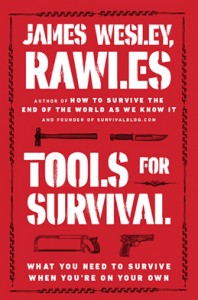
Today (December 30, 2014) is Book Bomb Day for Tools for Survival: What You Need to Survive When You’re on Your Own

For those of you who have been waiting, please go ahead and order your copies today. Tools for Survival: What You Need to Survive When You’re on Your Own. This paperback book is a guide to the selection, use, and care of tools. It is already also available as an e-book and audiobook. The paperbacks are packaged in cases of 16 copies by the publisher, for those who want to order in bulk.

When I last checked, the book was ranked at #64 overall on Amazon.com. I’m hoping that even though it is a nonfiction title, it will make it into their Top 50. -JWR

ToolsforSurvival_392

o o o

December 30, 1865 was the birthday of Rudyard Kipling. I should mention that his writings about Afghanistan have sparked a modern-day revival of interest in Kipling among British, Australian, and American officers and NCOs deployed to Afghanistan.

o o o

Today, we present another entry for Round 56 of the SurvivalBlog non-fiction writing contest. The $12,000+ worth of prizes for this round include:

First Prize:

  1. A Gunsite Academy Three Day Course Certificate, good for any one, two, or three course (a $1,195 value),
  2. A course certificate from onPoint Tactical. This certificate will be for the prize winner’s choice of three-day civilian courses. (Excluding those restricted for military or government teams.) Three day onPoint courses normally cost $795,
  3. DRD Tactical is providing a 5.56 NATO QD Billet upper with a hammer forged, chromlined barrel and a hard case to go with your own AR lower. It will allow any standard AR type rifle to have quick change barrel which can be assembled in less then one minute without the use of any tools and a compact carry capability in a hard case or 3-day pack (an $1,100 value),
  4. Gun Mag Warehouse is providing 30 DPMS AR-15 .223/5.56 30 Round Gray Mil Spec w/ Magpul Follower Magazines (a value of $448.95) and a Gun Mag Warehouse T-Shirt. An equivalent prize will be awarded for residents in states with magazine restrictions.
  5. Two cases of Mountain House freeze dried assorted entrees in #10 cans, courtesy of Ready Made Resources (a $350 value),
  6. A $300 gift certificate from CJL Enterprize, for any of their military surplus gear,
  7. A 9-Tray Excalibur Food Dehydrator from Safecastle.com (a $300 value),
  8. A $300 gift certificate from Freeze Dry Guy,
  9. A $250 gift certificate from Sunflower Ammo,
  10. KellyKettleUSA.com is donating both an AquaBrick water filtration kit and a Stainless Medium Scout Kelly Kettle Complete Kit with a combined retail value of $304,
  11. TexasgiBrass.com is providing a $300 gift certificate, and
  12. Two cases of meals, Ready to Eat (MREs), courtesy of CampingSurvival.com (a $180 value).

Second Prize:

  1. A Glock form factor SIRT laser training pistol and a SIRT AR-15/M4 Laser Training Bolt, courtesy of Next Level Training, which have a combined retail value of $589,


“Wild” Gifts For Children’s Survival, by Linda Runyon

Childhood these days is a lot different experience than when I was that young. I have photographs of me, as a baby, sitting on a blanket outside our home and looking at the weeds and grass around me. Even then I was fascinated with wild growing plants, and that was the foundation of my lifelong affinity for wild food survival. These days it seems that childhood is an ongoing assault on the senses, from TV to constant, loud music to vaccination needles that contain mercury, and on into school, where there’s the confusion of ill-advised curricula that discourages actual learning.

It’s no wonder that an ever-increasing number of conscientious parents are opting out of that. The number of parents who choose to homeschool their children has been steadily increasing over the last 13 years, according to the Home School Legal Defense Association– an organization dedicated to helping homeschooling parents deal with an intrusive government. The primary reason that parents choose that route is because they know that every child is an individual and therefore has distinct needs, aspirations, desires, and skills. Also, a homeschool environment allows the parent to choose and implement with their children’s basic survival skills that will be valuable to them throughout their lives. Knowledge of wild food is, in my opinion, one of those essential skills.

I say this because of my many years of homesteading in the wilderness, where a knowledge of which wild plants (naturally growing weeds and trees) kept me and my family from starvation countless times. The years I spent in the wilderness gave me a unique perspective on survival during very difficult times, and after I returned to civilization I became intent on sharing that information through wild survival classes, books, and so forth. However, that brings me to the point of this article– the fact that my most appreciative audiences were always the children. For all the years that I taught wild food classes and hosted wild food identification walks, the delight and wonder in a child’s eyes at holding up a clover blossom or a wild rose leaf and realizing each is edible just charmed me and their parents. Additionally, we knew that child would never go hungry.

One of my most successful activities for children centered around the red clover, since that blossom is so distinctive, as it has the white “V” pattern on the leaf. Often red clover and white clover are among the first wild edibles to come up in spring and will flourish all throughout the growing season. No matter how often a field is mowed, those pretty clover plants grow right back! Children quickly learn to identify red clover, and they love being handed their own “Clover Plate”– a paper plate that has been clearly marked into four equal sections. (This is also a great excuse for teaching fractions!) I would point out to them the four edible parts of the clover plant– the red blossom, the leaves with that “V” mark, the stem, and what I call “nectar pieces”, which are the separated individual blossom bits. Kids love games, and so they had fun running around and filling up their Clover Plate with those four edible parts. When everyone had plenty of each part, we went back home and ate our bounty. There is an entire wild food recipe section in my book– The Essential Wild Food Survival Guide, and one clover meal we made was clover soup. A particularly unusual appetizer and party-pleaser was battered and fried clover blossoms. Nobody had seen or tasted anything like them before! Plus, I never had any problem students while teaching them wild food survival skills.

A variation of the clover plate game is to locate an area where you can identify four different edible wild foods, and use one section of the plate per plant. For example, if you can spot dandelion, wild violets, chicory, and wood sorrel, you could have your students collect the flowers from each, bring them home, wash them thoroughly, and decorate a cake or pastry with them. Alternatively, you could include colorful bits of those flowers in popsicles for a decorative and nutritious summer treat. Very young children could be given a cup and shown the bright yellow dandelion flower to pick, so they can be included in the hunt as well. As the child gets bigger, give him or her a larger cup or bag, and tell them how many dandelion flowers they should pick, thus combining arithmetic with their outdoor adventure. It’s just never too early to start an interest in wild food and as young people add to their store of wild food survival knowledge. You will find them coming up with any number of entertaining, interesting, tasty, and useful ways to include wild food in their meals, snacks, and crafts. One decorative use of wild food is to have the children collect a number of wild leaves and flowers that appeal to their artistic sense and paste them to their “Wild Bag”– a large paper shopping bag with handles that they can carry their wild food bounty in.

There is an increasing number of highly skilled artists who create intricate patterns and designs using only wild plant pieces to make effective and pleasing framed art work or real life note cards, for example. Once a parent starts a child on the wild food path, there’s no telling how creative they can become with it, not to mention the survival benefit of harvesting and preparing their own wild food, to the betterment of their health and well-being.

I have found that teenagers have a particular affinity for the cattail plant, which is so much fun to harvest. On my cattail foraging trips I learned to bring with me shears, long boots, a plastic garbage bag, and a 4-foot board that would hold my weight, plus a towel, in case I fell in the boggy mud. The board was so I could surf the cattail mats and travel easily from one patch to the other, harvesting all the way. (I recommend that kids be supervised while harvesting cattails!) Inside the cattail stem is a whitish pith, and it’s a lot like a cucumber. At the height of summer those stems will be from ½ to 1 inch in diameter. You can peel the pith out, wash thoroughly, slice into 6-inch pieces and pickle them by adding hot cider vinegar and some pickling spices. My son loved them, and would eat them by the jar full.

Once I found out how much nutrition is in the cattail, I was grateful that my son found those pickles so flavorful. I was astonished to learn how much nutrition is in Nature’s free wild food, and so I have included a nutrition chart in The Essential Wild Food Survival Guide for everyone’s reference. (Much appreciation goes to Dr. James Duke, who compiled the original data.) The cattail is nicknamed the “supermarket of the swamp” because all parts of it are useful. The early cattail shoots can be eaten raw in salads; the early green heads can be eaten raw, or cooked and eaten like corn on the cob; the pollen can be included as a nutrient additive in baking; the roots can be dried and then ground into flour; and the leaves can be used for basket weaving and other crafts. Plus the stems make excellent popsicle sticks. (Of course, active children will find other uses for the stems, too!)

There are edible trees as well as the many edible plants that grow freely around us. I found so many food uses for six common ones– pine, birch, balsam, willow, maple, and beech. I collected so much useful information about them that we now have a tree book so others have access to that information too. In addition to the nutritional aspects of trees, such as the inner bark of pines and birch that can be harvested and ground into flour for baking, I also discovered a good use for the natural pine and balsam Christmas tree needles that can seem such a trial after the holiday is done. Here’s what you do: After all the lights and decorations have been removed from the tree, place a sheet completely around the base of the tree so that all the needles can fall or be knocked onto it. Any twigs or branches that fall into the sheet will need to be removed and this the children can do for you later, so that what you store in paper bags are just the needles and nothing else. Realize that those needles that you would have discarded along with the tree actually are a free nutrition source (vitamin C, to name one) for your family, and that along with hot pine tree tea during the coming winter months you are also teaching your children survival and sustainability.

Of course the maple is a favorite tree, not just because of its delicious syrup and those gorgeous fall leaves, but also because of the maple tree “helicopters”. Maple seeds are encased in the two balls in the middle of two “wings”, and to me that whole seed/wing form resembles a small helicopter. The reason for the wings is so that when the helicopter falls from the tree, the wings can get caught in the wind, which carries the seeds far enough away from the parent tree that a new maple will have enough room to grow up. I learned that those maple seeds can be collected up and made into really good seed cakes. I guess I’ve harvested thousands of those seeds in a season so I could make my seed cakes. What you do is once you separate the “brown and down” (on the ground) seeds from the wing, you next need to separate the seed from its little case. Children have a great time pinching on the seed case so the seed shoots out. They will happily collect a little mountain of the seeds so you all can make the seed cakes. My recipe was to take two cups of maple seeds and pound them until squishy. (You can delegate this job if you wish.) With clean hands, I made thin patties and then fried them up in some olive oil until browned on both sides. Then I would serve them with maple syrup on top. What a nice treat that was for everybody who pitched in to help. Or, you could just take the seeds and roast them for a healthy snack for the kids to have with them for nourishment on an outing.

I derived so much personal benefit and joy from teaching children, that even in my older years I spent many rewarding hours in the summer teaching wild food to children and adults at a camp near where I lived at the time. Each of the plants we studied in those classes was in its own pot, which made it easy to bring them out every summer to have on hand. We had everything right there so everyone could learn their plant identification up close. Then we could store them in a safe place during the rest of the year. Previously I had taught folks how to benefit from potted wild food even while living in small apartments, so it was easy for me to create the potted wild edibles for those summer classes. Then, of course, the class attendees would go out to a wild area and identify and harvest the free wild food they had learned about in class, or they would go home and create their own area in their yard for wild food. The opportunities for fun and finding free wild food in the dirt are limitless.

I recently received a note, from a 14-year old homeschooled girl, who wrote, “When I say wild foods I basically mean plants that are edible. Most people would consider these plants weeds. You can find wild foods in fields, woods, gardens, pots, and any space where a weed can grow. Why do I do wild foods? Well, there are lots of reasons. The top three are probably health, exercise, and independence. The grocery stores are selling fruits and vegetables, but they are usually shipped from far away, genetically modified, and sprayed with bug poison. All of these things are not good for our bodies! But with wild foods, we know where our food is coming from, we know that they are fresh, we know that they are not genetically modified, and, if we are careful of where we harvest, we know that they are not sprayed with harmful things. Another reason I enjoy wild foods is the exercise. Exercise is important, and when you are digging up all different kinds of roots, you are definitely getting some good exercise! The last main reason is independence. Wild foods are even more sustainable than gardening. So, if there was to be some kind of disaster, I know that my family would not starve. I love to touch things, taste things, and smell things. This is a perfect hobby for me, because I can touch the fluffy milkweed seeds, I can taste the fragrant peppermint leaves, and smell the sweet milkweed blossoms. The last reason I love it is that I just love being outside. I love the sunshine and fresh air. It is a great way to get my energy out. Wild foods are important to me, and I hope that I have shared why. And I also hope that other people will be inspired to pursue wild foods.”

This girl, obviously very well educated at home, learned her wild food lessons from a woman who is a very good friend of mine, and I cannot put into words how important the communication from this girl is to me. It reaffirms my belief that everyone, and most especially the children, delight in becoming proficient in wild food identification. My years in the wilderness, and the subsequent many years of teaching, both in New England and in the warm desert area of Phoenix, Arizona, gave me a formidable amount of wild food information, adventures, and experiences with all ages of interested folks. As a result, I have been able to contribute a worthwhile quantity of bona fide wild food materials because I lived it all for many years and then shared what I’d learned– the good, the not-so-good, and the downright hilarious.

Only recently did I produce enough breadth to my wild food informational output to be able to put together a comprehensive selection of materials for homeschool parents. This is my “Wild Food Homeschool Package”, available at my website, OfTheField.com. Items in that package include the coloring book I created titled “Wild Foods and Animals”, and I have photographs of younger children entertaining themselves with that coloring book while learning about wild food. I know they love having their art work posted where others can see and appreciate it. Children (and adults) can play just about any card game they can imagine using our “Wild Cards” card deck, while learning about a different wild plant that is pictured on the picture side of every card. In Homestead Memories there are my hard-to-believe adventures with wild food (and bears, and beavers, and coy dogs, and very cold winters, and more), and I include some key wild plant medicinal information as well. A number of parents have written to me to say how much their children love hearing those wild stories at bedtime!

In my book Create Wild Food Certainty through Plant Identification Walks, children can find out how to build their own small (or large, if they are so inclined) wild food walk, where they can put identification markers beside each wild edible they have planted (or that grows there naturally), and teach other kids about wild food. It’s quite something when a child educated in wild food identification goes into a back yard or park area and sees growing wild the very plant they’ve been studying. The light goes on that yes, free food really is everywhere, and yes, they are never going to starve no matter what happens with the regular food that is sold in stores. It is empowering to them.

I do believe that the future of this planet depends on how truly well-informed our children become and how responsible they feel towards their stewardship of the Earth. Getting to the truth is often a tricky proposition in this era of mass media, but Mother Nature does not lie, and she has provided us generously with an incredible variety of interesting, nutritional, and free edible plants and trees. And yes, it is fine to take the time to stop and smell (and forage on) the beautiful and naturally growing roses along the way.

About The Author:

Linda Runyon is the editor of the “OfTheField.com” website and the author of many wild plant books and instructional materials. She extends a special discount for Survival Blog readers using coupon code “redoubt”, good for a limited time.

THE RULES OF FORAGING

These rules are for your own protection when investigating plants that are new to you. If followed closely, they will protect you in the field.

  1. DO NOT collect plants closer than 200 feet from a car path or contaminated area.
  2. NEVER collect from areas sprayed with herbicides, pesticides, or other chemicals.
  3. DO NOT collect plants with RED STEMS, or red striations or stripes.
  4. ALWAYS BE FAMILIAR with all dangerous plants in YOUR area of collection.
  5. POSITIVELY IDENTIFY all plants you intend to use for food.
  6. Take a piece off the plant and roll between your fingers. SNIFF CAREFULLY. Does it smell like something you would eat? If it doesn’t, DISCARD IMMEDIATELY. If it does, go to rule 7.
  7. Take another piece off the plant and roll until juicy. RUB the tiny piece on your gum above your teeth.
  8. WAIT 20 minutes.
  9. DOES YOUR GUM ITCH, BURN, TINGLE, SWELL OR STING? If no reaction occurs, go on to rule 10.
  10. Take another piece of the plant and put in a teacup. Add boiling water and steep for 5 minutes. SIP SLOWLY for 20 more minutes. WATCH FOR NAUSEA, BURNING, DISCOMFORT. If no reaction occurs, you may ingest a small amount.
  11. WAIT ANOTHER 20 MINUTES and watch for any reaction.
  12. Keep all samples AWAY from children or pets.
  13. Store all seeds and bulbs AWAY from children and pets.
  14. Teach children to keep all plants AWAY from their mouths and DO NOT ALLOW children chew or suck nectar from any unknown plants.
  15. AVOID smoke from burning plants. Smoke may irritate the eyes or cause allergic reactions QUICKLY.
  16. BE AWARE of your neighbor’s habits with chemicals, pesticides and herbicides.
  17. BEWARE: heating or boiling doesn’t always destroy toxicity.

DISCLAIMER: This is information about wild food. The editors of SurvivalBlog nor the author make no claims as to the correctness, safety, or usability of the data.

The information contained herein is intended to be an educational tool for gathering and using wild plants. The information presented is for use as a supplement to a healthy, well-rounded lifestyle. The nutritional requirements of individuals may vary greatly; therefore, the author and publisher take no responsibility for an individual using and ingesting wild plants.

All data is to be used at your own risk. Using the Rules of Foraging greatly helps to reduce that risk, but even they are not foolproof.


Letter Re: Water Well

Hugh and JWR,

I want to comment on the topic of well pumps. I also had some issues finding answers to questions regarding the subject. The Internet, YouTube, and my closest library (second largest in the state) didn’t have all the answers I needed. I was able to find out some information from a third generation well driller and by driving an hour away to speak with an Amish man that deals with windmills and water pumps. Here are a couple of things I learned along the way that might help your readers:

Tip # 1- You need a deep well pump if your water is over 25 ft down. The old way of connecting the pump body to the pump cylinder was threaded galvanized steel pipe. This gets very HEAVY very quick. With the first well I only needed 60 feet of pipe to make it 15 feet below my static water level. It took my dad, two neighbors, and I everything we had to lower and pull it out of the ground. That was the last time I used the galvanized pipe. I bought threaded PVC from a well guy and haven’t looked back. Sure, the galvanized pipe might last longer, but the weight of the pipe and the rust that accumulates in the pipes over time does not make it worth it for me. I’d rather have some extra PVC pipe in the shed and know I can pull the pump by myself, if needed. Just make sure you drill a 1/16 inch hole in the pipe about five feet down, so water leaks out and it doesn’t freeze in winter.

Tip # 2- Static water level is the distance between the ground and your water table. This level fluctuates from year to year. I was told to make sure your pump cylinder is at least 15 feet below your water table. This is where money can be saved. When my well driller told me that we could have crystal clear water at 100 feet, my mind started adding up how many sucker rods and threaded PVC pipes I needed to go 100 feet. I, like most newbies, thought that the pump cylinder had to go to the bottom of the well. This isn’t true, and knowing where your static water level can save you money.

My cost to have everything done:

  • $1,500 for a well driller to come out on the weekend (He gave me a discount for paying with cash and .223 bullets.)
  • $180 for hand pump well from eBay
  • $150 to have well pump power coated. (I didn’t have mine repainted the traditional red, because it stands out like a sore thumb. When people need water, you don’t want them thinking about where they saw that nice red water pump!)
  • $200 for brass pump cylinder and sucker rods
  • $20 to pour concrete pad myself to mount well pump on.

I’m a little over $2000 for peace of mind! Well, I’ve spent $2,200, if you count the Big Berkey I pour it into! – P.H.


How To Be As Prepared On The Inside As On The Outside, by A.K.

So, you have made your basement bomb-proof, installed solar panels, dug a well, and canned enough food to last ten years. You’ve engineered, on your own, a heating system that is not reliant on electricity, and you’ve rigged a longer-lasting septic system. You’ve stocked up on guns and ammo, bought night vision goggles, mapped all your exits, created an EMP-proof shelter for your electronics, stocked up on medicine and herbs, planted a garden, invested in silver, got a gas mask, and bought enough nutella and coffee for trading value.

But…are you ready?

Most prepers would reply, “More ready than that.” It may be so. That is, to say, in material needs. However, the question is: what are you preparing for? A short burst of chaos? A season of trials? A period of transition? Perhaps you’ve been preparing with the thought, just in case, while continuing to make plans for your future. Or, maybe there’s the thought in your mind that you are so well prepared that even if things go drastically bad, you’ll hardly even notice. There will be no ripples in your pond.

However, have you prepared your mind or more importantly your spirit? A season of change is upon us, and most people can feel the vibe in the air, like the static before a big storm. We all know it’s coming. It will rip through our comfortable lives and change the world we have become accustomed to; a world that has been shifting and moving through the ages but always seems to get itself upright in the end.

So, you’re ready, right?

There will inevitably come an age in human history where the world will not set itself upright again; everything will not “get better” but progressively slide downhill– all the way downhill. Are you prepared to live in a world like that? Will your water, food, and fire be enough reason for you to wake up every morning and keep going, when the chance of college, traveling, owning a home, having children or watching them grow, earning good money– everything you’ve been hoping for– have been swiped away for good?

For they that are after the flesh do mind the things of the flesh; but they that are after the Spirit the things of the Spirit. For to be carnally minded is death; but to be spiritually minded is life and peace. (Rom. 8:5-6)

Think about what category you would place yourself in; is it the carnal or the spiritual?

After the food dwindles and nothing gets better, the streets are unsafe, there’s no longer a movie theater or a bar, there is no more facebook or youtube, and after people you know have died and winters seem colder than you remember, will you still feel prepared to live this way for the rest of your life?

If you scoffed and said you have enough to even survive a zombie apocalypse, I have four words for you…

You are not ready.

And there shall be signs in the sun, and in the moon, and in the stars; and upon the earth distress of nations, with perplexity; the sea and the waves roaring; men’s hearts failing them for fear, and looking after those things which are coming on the earth: for the power of heaven shall be shaken. (Luke 21:25-26)

What you are preparing for, physically, is not enough to carry you through, mentally and spiritually. Jesus said, men will quite literally die from fear of what is happening on the earth. As I look around, I see so much violence– ISIS, the threat of a world war, pandemics, government control, economic instability, and I can’t help but think we are already approaching the horizon where many people are scared of the future. So what do you have to hold onto that will supersede this material and flammable world? What will remain unchanged– strengthened even– when everything else has irreversibly been changed?

In such times of uncertainty, your spiritual state of being and what you have placed your faith in will ultimately determine how you will fare and whether you will survive. Jesus said:

These things I have spoken unto you, that in me ye might have peace. In the world ye shall have tribulation: but be of good cheer; I have overcome the world. (John 16:33)

As I walk forward toward the horizon, I walk with my God– a God who has overcome the world so it cannot overcome me. A God who will part the sea for me to walk through. A God who will guide me through to green pastures. A God who gives me eternal life, even after this world has passed. He is a loving God, who lets me call Him Father.

I am prepared.


Scot’s Product Review: MRE Depot Foods

MRE Depot is one of a number of vendors that sell storage foods aimed at preppers. As the name implies, they sell MRE’s, but they also carry a number of other items of interest. While MRE’s are useful, and I think everyone should have some, the other items are, in my view, more important, as MRE’s alone are going to make for a boring diet. MRE Depot was kind enough to send six different items for me to review, and I added a seventh from my personal stores.

When I write about food, I need to give more than just my opinion. The taste panel I can conveniently herd together consists of my wife, my son, and my sister, along with myself. I figure a rundown of our tastes would be helpful. Some of this will be repetitive from past reviews, so you can skip ahead a bit if you have read those. On the other hand, if you didn’t, it might help you determine how valuable our comments are for your own needs. Please remember that everyone has different tastes, and you may love stuff we hate. That’s why I have tried a panel approach, though it is a limited panel.

I am probably the closest to a tasteless barbarian of the lot. I like a well-prepared tasty meal with fresh ingredients assembled by a talented cook, but I can get by on far less as long as mushrooms, raw tomatoes, and kimchi are out of sight. I can handle most MRE’s, but do get bored with them. Mountain House freeze-dried meals are generally satisfying as a baseline meal, though they sure don’t compare to my wife’s excellent cooking. As long as I have a good recipe, I can prepare a decent meal, though I panic over judging whether fish and meats are cooked enough, and having to improvise sends me screaming in terror from the kitchen.

My wife is on the gourmet end of the spectrum and an accomplished cook. She doesn’t need any stinking recipes to toss together a very pleasant meal from whatever she can scrounge from the kitchen. I suspect she could make something tasty from the sponge by the sink. She bores if she has the same thing too many times, which is probably about twice. She spent a fair amount of time as a French Canadian and also as an American gobbling up Maine lobsters and getting to eat in good restaurants that had chefs rather than cooks. She can spend hours watching cooking shows. MRE’s provoke threatening looks from her. She truly enjoys exotic foods from around the world, and there is little she won’t try.

My ten-year-old son likes Vietnamese and Chinese foods and will go for a number of dishes his peers panic over. He has had bouts of suspicion over some of the storage foods we have tried, as a couple of them weren’t so hot, but he seems to be getting over it. He makes some good observations on meals that surprise me with their sophistication. He does have some typical ten-year-old boy aversions to vegetables, but he likes meat in most every form. When he likes something, he will eat it for days without end. He trusts his mom’s cooking more than his dad’s and will even watch a cooking show with her.

My sister might be a cross between me and my wife. She will eat most anything but really likes quality food. She spent a lot of time living in Europe and was exposed to many cuisines. Although she is good in the kitchen, she doesn’t cook much herself, as my brother-in-law fancies himself a chef (and he is actually good at it).

Getting back to the food itself, all items except the bacon were in #2.5 cans. I like this size for my family, as we can use the food up before it goes bad or anyone gets sick of it. The bacon was in the #1 size can. While larger cans are more economical, food fatigue sometimes leads to things being thrown out. This is probably more of an issue when it is being eaten as part of rotation in normal times, rather than surviving when things have gone wrong. Your own mileage will vary according to the size and tastes of your family.

This is also repetitive from other reviews and can be skipped too, but I have decided to stop buying foods we won’t eat in normal times. It is my prayer that we never have to use this stuff in a crunch, but I have too much money tied up in it to throw it away or donate it. It has to be food we are willing to use when the time comes to rotate it. Additionally, having food that we would eat in normal times will be a huge comfort in bad ones.

Yoders Meats

The Yoders meat variety pack consists of 12 cans of meat totaling about 21 pounds of food. You get:

  • 2 Cans of Beef chunks, 14 servings of 170 calories each
  • 2 Cans Chicken chunks 14 servings of 80 calories each
  • 2 Cans Turkey chunk 14 servings of 70 calories each
  • 2 Cans Pork chunks 14 servings of 100 calories each
  • 2 Cans Hamburger 14 servings of 80 calories each
  • 2 Cans Pork Sausage 14 servings of 160 calories each

Each can has 28 Ounces in “U.S. Raised and Commercially Canned meats per can, fully cooked and ready to eat.” MRE Depot says to expect ten years of storage, and the case costs $110.00 plus shipping. All of the meats provide a fair number of calories from fat, which is something lacking from many storage kits. So if you have purchased one of those, something like this could be an excellent addition to those containers of wheat and rice as well as providing some variety in your meals.

One thing to note here is serving size. They use two ounces for a serving. Also look at the calorie count. My wife and I agreed that we would double or triple the servings, and if we were doing a lot of manual labor, would probably keep multiplying. This will vary from person to person, and these observations hold true for many other packaged food products. Think hard when you study servings and portions promised on any can.

The first thing we tried was the Pork Sausage, and it was a success. All of us liked it. It wasn’t as good as the patties our butcher made for us from the hogs we shot recently, but the stuff is tasty and enjoyable, as a breakfast side dish or for the main course for lunch or dinner. You could combine it with any number of foods. My wife thought of potatoes, and I thought of BBQ sauce and a bun. My son liked it and happily scarfed it down. My sister didn’t get to sample it, until after it had been in the fridge for four days and had, in my view, had lost some flavor, but she still approved. She didn’t like it as much as we did, but said she would have no trouble using it in rotation or in a crunch. It comes out of the can as sort of a loaf; the next time we try a can, I plan to see if it can be sliced and then fried as a patty. Frying might add some nice texture.

Next up were the Chicken Chunks. Again, it was approved by all, though we all felt it needed salt. My wife’s first reaction was “I can really make something with this!”, which was magic to my ears. Anytime she feels she can work with a food, it is a victory in my column. She gets a lot of pleasure from converting raw materials into a tasty meal, and when she approves of the ingredients I am home free. My son immediately hit it with soy sauce (I think he will drink the stuff as he does tabasco) and was well pleased. I added a bit of soy and some BBQ sauce (my universal solution to food, apparently) and was also happy. My wife sautéed potatoes and spinach, added some salt and was immediately pleased, both by her efforts and by the chicken. As usual, she made a nice meal out of things that I would have been lost with. My sister got to sample a taste of the chicken from the can and agreed it needed salt, but she said it was quite decent. The chicken itself seemed to be all white meat and was compressed into the can, which I think improved the texture. There was some broth which could have been made into a soup or ladled on to rice with good effect.

While the hamburger did not meet with quite as much favor as the chicken or pork sausage, my wife agreed that it would never go to waste. I thought it was fine but did need salt. My son became suspicious and refused to eat it as is, but suggested it would be good for a sloppy Joe. My wife then cooked some noodles and concocted a stroganoff-like sauce and combined it all into a very nice meal. My son stated that he refused to eat the hamburger by itself, but he devoured two huge servings and said it was good with the noodles and sauce. Ten-year-old boys, sigh. My sister was not around, so she didn’t get to try it, as the whole thing was consumed quickly, which means my family of three consumed the whole can along with a healthy portion of pasta. See my comments on serving size!

This report is probably starting to sound repetitive. We liked the Turkey Chunks too. They aren’t as pretty when they come from the can as the chicken. The can we sampled was mainly dark meat. My son was suspicious of the appearance, but when I used the recipe on the side of the can that called for some Worcestershire and soy sauce along with some cornstarch to thicken the broth, he gobbled up a good-sized serving and said he liked it. I did triple the amount of called for soy sauce, as he loves the stuff, and I felt it needed the saltiness. My sister liked it better straight from the can and said it would work fine in their home. She felt I had added too much soy to the broth, though. I liked it either way as did my wife.

Lest this continue to excess, the beef and pork chunks met with essentially the same reactions as the other meats. They tasted fine from the can, though bland, and my wife felt they made a “fabulous” base to work her magic on. She added BBQ sauce to the beef and made sandwiches we all enjoyed for lunch, and the pork got served with scalloped potatoes and a salad and also won culinary approval for dinner from all involved. My sister, alas, missed out on both.

Yoders Bacon

The Yoders Bacon doesn’t come in the variety case of meats but can be purchased separately at $170 for a case of 12 cans plus shipping. The bacon had what I consider the most accurate serving information. Each can has 9 ounces of bacon with 40-50 slices per can and says that there are three slices per serving at 60 calories per serving. I generally see bacon as a side dish; I’m pretty happy with the idea of three or so slices with breakfast, though I can almost always eat more of the stuff. We tried a can that has been stored for five years, and it was exactly how I remembered when we tried a can when the case first arrived. It is pre-cooked and could be eaten right out of the can, but cold bacon is a bit yucky to me. It reminds me of the pre-cooked stuff my wife sometimes buys for camping that we heat up in a pan and then devour. Neither the Yoders nor the grocery store pre-cooked bacon is as good as fresh, raw bacon sizzled to one’s taste for crispness in a frying pan, but it is still tasty and enjoyable, so there is no fear whatsoever that it won’t be eaten. A 10 year plus storage life is promised. We tried it microwaved but liked it better heated in a frying pan. I had been just getting it hot before eating it. However, my son made some and actually cooked it a bit further, and it was a lot better.

One thought that occurred to me is that cooking bacon produces great aromas, which could be a disadvantage in a survival situation. Far less is produced with this stuff since all you have to do is heat it and cook it a little, and that means you are less likely to draw the attention of those who may not be welcome for dinner. It’s one thing to invite guests’ it’s another to have unwelcome ones arrive.

Overall, we were quite pleased with all of the Yoder meats. I had already been keeping some of the bacon on hand and plan to add the other meats when the budget allows. It is bland out of the can, but that allows you to season it to your tastes, which is a good thing in my book. The primary caveat is that the servings are small, even if you aren’t doing much. If you are feeding a group of folks doing hard, manual labor, it isn’t going to go far. That said, the costs are pretty reasonable compared to what you can find in the grocery store, which will have a shorter shelf life and are usually in smaller containers.

– SurvivalBlog Field Gear Editor, Scot Frank Erie


Recipe of the Week: Chicken Pot Pie Using Mostly Storage Foods, by E.S.

I don’t do much measuring when I cook, but I did my best to get pretty close measurements so I could share this. Pretty much any veggies would work in this.

Ingredients:

  • 2 poached or otherwise cooked chicken breasts, cut into bite-sized pieces
  • 1 1/3 c. Augason Farms (or other) Cream of Chicken Soup Mix
  • 1 Tbs dehydrated onions
  • 3 c. water
  • 1 c. Pioneer Baking Mix (or Bisquick, or homemade version)
  • 1/2 c. milk
  • 1 egg
  • olive oil or butter
  • 1/2 of a 14.5oz. can chopped carrots
  • 3/4 of a 14.5oz can red potatoes (I use all but three of the small potatoes in the can)
  • 1/2 of a 15-oz can peas
  • 1 each small red, orange, and yellow peppers, sliced
  • 3 scallions, chopped

Directions:

  1. Bring water to a boil in a medium-sized sauce pan. Whisk in cream of chicken soup mix and dehydrated onion, reduce heat and let simmer 15 minutes.
  2. In a mixing bowl, mix the baking mix, the milk, and the egg. Set aside.
  3. Pre-heat oven to 400F.
  4. Heat a skillet over medium heat, add enough olive oil or butter, and sweat sliced bell peppers until they’re tender, about 5-8 minutes.
  5. Add the diced chicken, canned peas, carrots, and potatoes to the pan with the peppers and stir till everything is warmed through. (I deglazed the pan with a little white wine at this point.) Add the cream of chicken soup to the pan and stir to combine. (You will have leftover soup to use in something else.)
  6. Pour the chicken mixture into a greased stoneware, glass, or metal pie pan. Pour the biscuit batter over the top of the mixture in the dish.
  7. Bake 25-30 minutes or until golden brown.

o o o

Do you have a favorite recipe that would be of interest to SurvivalBlogreaders? Please send it via e-mail. Thanks!


Two Letters Re: Unified Crime Reporting

Hugh,

I work in law enforcement intelligence, and my team frequently creates policy papers, reports, and so forth that focus on crime trends. It is often tempting to use Unified Crime Reporting (UCR) statistics to make a point. Our policy is to only use that source if no other information is available, due to lack of reliability.

UCR data is collected from local, state, and federal law enforcement agency reporting. We find considerable variations in reporting standards, timing, and reliability. Different jurisdictions categorize crimes differently, and this variation causes serious doubts in the validity of UCR data.

Researchers and your readers should take studies using UCR data with a grain of salt. – ARM

o o o

Hi guys,

The data from the UCR has a major skew resulting in the first of several downward movements resulting in changes to how crimes are defined and coded. In 1993, the DOJ changed the definitions of just about every crime, and the results begin showing in 1994. How can I know this? There are several ways; the easiest non-inside police circle secret squirrel way is to go to the UCR table tool, enter a state and all crimes, and look at the trend approaching 1994, then loom at the data for 1994. Do this for the same state for discrete crimes, such as murder, and you will see a huge decrease from 1993 to 1994.

Those stats are raw and not based on per capita. So with some analysis, the truth behind the data shows just about all crime rates are up for the last 30 years, not down. Run the per capita analysis and then glance at U.S. Census population figures for counties, and you see for yourself.

Here is an example. Texas is booming and has been for close to 20 years. Get the population for a county (Dallas County) and then take the same number of murders from the UCR for the same year, do some math to get a per capita (number of murders divided by 100,000, then multiplied up based on the population in increments of 10000). This takes 3-5 minutes per year per county. In every case you will see crime going up and up, and then as demonstrated in 1994 data, several hard corrections down, with no attributable reason.

I know the old saying “figures lie and liars figure”, but in this case some simple math will show anyone that crime rates are going up higher than per capita… except in gun rights friendly areas. – GJS