Notes for Sunday – January 17, 2016

In his farewell address to the nation on January 17th, 1961, President Dwight D. Eisenhower warned the American people to keep a careful eye on what he called the “military-industrial complex” that had developed in the post-World War II years. We didn’t do a very good job of listening to his warnings.

o o o

Today, we present another entry for Round 62 of the SurvivalBlog non-fiction writing contest. The nearly $12,000 worth of prizes for this round include:

First Prize:

  1. A Tactical Self-Contained 2-Series Solar Power Generator system from Always Empowered. This compact starter power system is packaged in a wheeled O.D. green EMP-shielded Pelican hard case (a $1,700 value),
  2. A Gunsite Academy Three Day Course Certificate that is good for any one, two, or three day course (a $1,195 value),
  3. A course certificate from onPoint Tactical for the prize winner’s choice of three-day civilian courses, excluding those restricted for military or government teams. Three day onPoint courses normally cost $795,
  4. DRD Tactical is providing a 5.56 NATO QD Billet upper with a hammer forged, chrome-lined barrel and a hard case to go with your own AR lower. It will allow any standard AR-type rifle to have a quick change barrel, which can be assembled in less than one minute without the use of any tools and a compact carry capability in a hard case or 3-day pack (an $1,100 value),
  5. Gun Mag Warehouse is providing 20 Magpul PMAG 30-rd Magazines (a value of $300) and a Gun Mag Warehouse T-Shirt; (an equivalent prize will be awarded for residents in states with magazine restrictions),
  6. Two cases of Mountain House freeze-dried assorted entrees in #10 cans, courtesy of Ready Made Resources (a $350 value),
  7. The Ark Institute is donating a non-GMO, non-hybrid vegetable seed package (enough for two families of four) plus seed storage materials, a CD-ROM of Geri Guidetti’s book “Build Your Ark! How to Prepare for Self Reliance in Uncertain Times”, and two bottles of Potassium Iodate (a $325 retail value),
  8. A $250 gift certificate good for any product from Sunflower Ammo,
  9. KellyKettleUSA.com is donating both an AquaBrick water filtration kit and a Stainless Medium Scout Kelly Kettle Complete Kit with a combined retail value of $304, and
  10. Two cases of meals, Ready to Eat (MREs), courtesy of CampingSurvival.com (a $180 value).

Second Prize:

  1. A Glock form factor SIRT laser training pistol and a SIRT AR-15/M4 Laser Training Bolt, courtesy of Next Level Training, which have a combined retail value of $589,
  2. A FloJak EarthStraw Code Red 100-foot well pump system (a $500 value), courtesy of FloJak.com,
  3. A transferable certificate for a two-day Ultimate Bug Out Course from Florida Firearms Training (a $400 value),
  4. A Model 175 Series Solar Generator provided by Quantum Harvest LLC (a $439 value),
  5. A Trekker IV™ Four-Person Emergency Kit from Emergency Essentials (a $250 value),
  6. A $200 gift certificate good towards any books published by PrepperPress.com,
  7. A pre-selected assortment of military surplus gear from CJL Enterprize (a $300 value),
  8. RepackBox is providing a $300 gift certificate to their site, and
  9. Safecastle is providing a package of 10 LifeStraws (a $200 value)

Third Prize:

  1. A Royal Berkey water filter, courtesy of Directive 21 (a $275 value),
  2. A $245 gift certificate from custom knife-maker Jon Kelly Designs, of Eureka, Montana,
  3. A large handmade clothes drying rack, a washboard, and a Homesteading for Beginners DVD, all courtesy of The Homestead Store, with a combined value of $206,
  4. Expanded sets of both washable feminine pads and liners, donated by Naturally Cozy (a $185 retail value),
  5. Two Super Survival Pack seed collections, a $150 value, courtesy of Seed for Security, LLC,
  6. Mayflower Trading is donating a $200 gift certificate for homesteading appliances,
  7. APEX Gun Parts is donating a $250 purchase credit,
  8. Montie Gear is donating a Precision Rest (a $249 value), and
  9. Two 1,000-foot spools of full mil-spec U.S.-made 750 paracord (in-stock colors only) from www.TOUGHGRID.com (a $240 value).

Round 62 ends on January 31st, so get busy writing and e-mail us your entry. Remember that there is a 1,500-word minimum, and that articles on practical “how to” skills for survival have an advantage in the judging.


Katrina– “A Wakeup Call”, by M.M.

Here’s a little insight for everyone. This is a brief synopsis of a firsthand account of why everyone should prepare for the unknown. I have been a police officer for most of my adult life in the New Orleans metro area and was working when Hurricane Katrina made landfall. The media focused mainly on the impoverished areas, but the world failed to see the whole picture.

I cannot begin to describe the stress present prior to the storm making landfall. Several questions consumed me during the week leading up to this event: Is this going to be bad enough to send my wife and children out of the region? If so, where is the best place for them to go? Will our home be lost? Should I say goodbye to my job and leave with my family? Will I survive this event? Looking back, I can only thank God the decision was reached for them to evacuate. I am from the area and had lived there all my life. I worked in the city I grew up in, which was approximately fifteen square miles with around 73,000 people. Since my childhood, I had experienced several intense storms and thought I was prepared, but I had no idea what was about to unfold.

While the storm was nearing landfall, all patrols were cancelled and all personnel were ordered to the police station to wait for the high winds to subside. During the night, the upper floors of the station (which by the way is constructed of all concrete and brick) were evacuated as a precaution after slight building sway was detected. It is hard to describe the power and noise of the winds that night. We watched as roofs were torn away and the streets became lanes for flying debris of all types.

After the sun came up, we quickly realized the majority of the city was not accessible due to high flood water and debris. “Search and Rescue” was the initial priority. The city only had a few high water vehicles, so it was a slow go operation. The fire department was on lock down, and initially we had no EMS services. The police department was performing the search and rescue operations with only a handful of officers having any prior training for the task.

From the beginning, it was obvious our command staff was not prepared to support the troops. Responding to calls for service was very difficult, because the terrain had changed drastically. Police radio communications were intermittent at best. During the first night of patrol, I spent the majority of my time in waist deep water pulling citizens from their flooded homes. At the beginning of the second night, the two patrol sergeants for our squad (for whom I had great respect) ordered us to assemble in a parking lot after roll call to set up a contingency plan for communication because the radios were down. The chief of police observed our squad in the lot shortly after roll call. After our sergeants attempted to explain why we had assembled, the chief accused our sergeants of being cowards and ordered them back to the station to work as guards. That was a real morale booster! At this point, a buddy and I decided to break the single man unit rule and ride as a two-man unit for officer safety.

As the days passed, we were able to patrol more areas of the city. The damage was overwhelming. Some businesses and houses were completely destroyed. Many streets could not be navigated. There were hundreds of trees and power lines down. There were natural gas leaks everywhere and no electricity, sewage, or water. The root systems of downed trees had destroyed large sections of sidewalks and large grassed areas were lifted like carpet. The odor of raw sewage and decomposition became unbearable in some areas. It was easy to get disoriented driving through neighborhoods I thought I knew very well, just because most street signs were gone, not to mention the darkness. I had worked the graveyard shift for my entire career and was used to conducting business in the dark. However, this was a whole new level of darkness. Imagine the only lights in the city being either your flashlight or headlights. Many houses burned to the ground because there was no water pressure to fight the fires. Many pets were left behind. The city was littered with decomposing animals. The smell of death began to overwhelm me at certain times.

The sound of generators became a beacon for investigation. Many were killed from carbon monoxide poisoning from running generators without proper ventilation. Within three days time, most convenience stores had been looted clean. The looting became widespread and entered into residential areas. The poor light discipline of looters became easy targets for our night sweeps of the neighborhoods. The sleep deprivation was brutal. We essentially operated on auto pilot.

The lack of coordination of government agencies was ridiculous. One of the nights we were called for backup at the New Orleans International Airport, which had been shut down and turned into a makeshift triage center. A military convoy containing several school buses filled with refugees from the Superdome had stopped in the roadway. There was a two hour standoff because the ranking convoy commander stated he had been given orders from his superior to drop the refugees at the airport. A fight ensued between a member of the military and my agency because we refused to accept the people from the buses. It’s a pretty intense moment when two different armed agencies are butting heads during an already intense situation. Many of the people on the buses were in bad shape suffering from heat exhaustion and dehydration and had to be removed for medical attention. Thank God a decision was made for them to continue on because we had no social services or vacant spots at our already overfilled shelters.

The city I worked for was located in Jefferson Parish and was approximately 13 miles outside of Orleans Parish (which sustained much higher flood waters). The area where the 17th street canal levy failed is the dividing line between Orleans and Jefferson Parish. We were the lucky ones, because the levy system failed on the Orleans Parish side of the canal. Just to put flood damage in perspective, the deepest flood water in my home was approximately eight inches. I also had roof collapse in two rooms. My home was a total loss due to mold. My home was only 2.5 miles from the police station, and it took three days for me to get to it to assess the damage. The only reason my city flooded was because the parish president gave an order to unman the pumping stations. By the way, he is currently serving time for felony payroll fraud. There’s sweet justice.

It is amazing how many people, even in this area, continue to live in a bubble. People, even some members of my own family, seem to forget things too quickly. Many of them evacuated to Florida during Katrina and spent a few weeks vacationing on the beach. Some of them returned home after the horrors had ended with minimal or no damage to their property and still have a false sense of security.

My city recovered fairly quickly after the flood waters subsided. Most social services were back online after three or four weeks. However, the effects were long lasting. Many were forced to live in FEMA trailers for over a year while they repaired and rebuilt their homes. During this event, the local and federal governments were ill prepared, and this was just an isolated geographical area. The local police, fire, and EMS could not provide sufficient services, even though the majority of the people evacuated. Our (the police) living conditions were horrible, and we had assets and a large group of people working together (sort of). After experiencing this event, it is difficult to imagine a much worse man-made event.

This account of what took place during Katrina is an edited version that excludes a lot of gory details and only briefly touches on some of the hardships that were experienced throughout this ordeal to give an idea of how unprepared and uncoordinated the authorities were in dealing with this natural disaster. This is an area of our country prone to this type of weather, and yet still the proper supplies and systems were not in place. New Orleans and the surrounding cities have been forever negatively impacted by this incident. Although 10 years have passed, several of the section 8 housing districts are still in disarray and have become abandoned. They have become havens for the illegal drug trade and have dispersed the ghetto community into the surrounding cities and neighborhoods, decreasing residential property values. The demand for reconstruction and roofing work following the disaster paved the way for a surge of the illegal alien community who never left. Warehouse districts are filled with illegal aliens who have been provided bunk space by construction companies looking to take advantage of cheap labor practices.

I would like to thank Mr. Rawles, the sponsors, and all of the folks who have written articles for this blog. It has been a wealth of information for my family and me and has helped us to better understand the need to pursue a prepared and self-sufficient lifestyle. It has been a long time coming, but I have finally been able to coordinate a move to the Redoubt. It is troubling to leave extended family and friends behind, especially the ones who are aware but are not in a position to relocate. I can only wish the best for them in the troubled times to come. If nothing else, I will have a place of refuge for family, if they are lucky enough to reach me after all TSHTF.


Letter Re: What’s for Dinner?

HJL,

Why peel potatoes? Here might be a helpful insight… In addition to aesthetics, the choice to peel potatoes may be related to Solanine toxin.

Quora: Why Do People Peel Potatoes?

Also a second link to the reference on Solanine toxin.

Here are also additional helpful links on Botulism… These provide informative reading on the subject important to the prevention of this terrible illness.

Mayo Clinic: Botulism Basics and Prevention

CDC and the National Center for Emerging and Zoonotic Infectious Diseases: Botulism

FoodSafety: Botulism

– T.A.


Economics and Investing:

Puerto Rico ‘in midst of economic collapse’ – G.G.

o o o

Keith Neumeyer – Triple Digit Silver Is Coming – The Daily Coin

o o o

Items from Professor Preponomics:

US News

Evidence Mounting that the Fed Made a Mistake (Washington Examiner) In light of the decisions made across many years involving everything from monetary and fiscal policy to international trade and other global financial agreements, it could easily be argued that any Fed decision at this point would have produced adverse consequences. The take home message may be that there is no easy way out of the economic conditions we have created, directly and indirectly, for ourselves. Excerpt: “Overall, the picture is one in which the Fed’s key premise — that inflation expectations are stable — is at risk of falling apart, and that the Fed may have signaled too much tightening.”

A Recession Worse than 2008 is Coming (CNBC) Excerpt: “… the ability of government to save the markets and the economy this time around will be extremely difficult, if not impossible.”

Arch Coal’s Bankruptcy Could Leave Millions in Clean-Up Costs to Taxpayers (Taxpayers for Common Sense) Excerpt: “Arch is also responsible for $640 million in reclamation bonds – which “guarantee” the company’s ability to pay for the clean-up (reclamation) of its mines.” …and $450 million of those are self-bonds which may not receive any priority over other obligations in a bankruptcy proceeding. Taxpayers should brace themselves for yet another bill, anticipating that the country will pick up the tab.

International News

Crude Dive Deepens as Markets Brace for More Iranian Oil (Reuters) Perhaps even more interesting than the question of oil prices from within this story are the implications for the ways in which oil is connected to changing geopolitical relationships around the world. Excerpt: “Tehran is expected to target India, Asia’s fastest-growing major oil market, as well as its old partners in Europe with increased exports once sanctions are lifted.”

Chinese GDP to Worry Central Banks at Home and Abroad (Reuters) Excerpt: “China is set to report its weakest full-year growth figure in 25 years on Tuesday on the back of slowing output and sagging investments, troubling news that will likely dominate discussion at the European Central Bank and Bank of Canada policy meetings.”

With Economy at Risk, Bank of Canada’s Stephen Poloz Remains on Dovish Path (Financial Post) Excerpt: “While many observers had already acknowledged the rout in global oil prices would hurt the economy, few appreciated at the time just how steep the collapse in growth would be, or how long it would linger.”

Personal Economics and Household Finance

Black Rock’s Larry Fink Expects Volatility to Lead to Lay-Offs (Business Insider) Learn to be a saver… Fink asks an interesting question in this article about why consumers aren’t spending their energy savings and wonders if this might be, at least in part, tied to the realization that they have too little in savings. We should all pray that lessons learned in this regard are not lessons learned too late.

5 Spendy Trends to Avoid (Clark Howard) Yet again, it’s hard to imagine… As you read through the list of “spendy trends”, you’ll understand ever more deeply why the country is in so much trouble.

o o o

SurvivalBlog is not a paid investment counselor or adviser. Please see our Provisos page for details.


Odds ‘n Sods:

SurvivalBlog reader K.S. wrote in with these links on how to re-pressurize spray cans. (This should work with anything in a spray can. As long as whatever is in it hasn’t dried up.) I don’t think he mentions it, but a basketball inflating needle would screwed into a blow gun would help.
This guy uses a tire valve. It just overpowers the built-in valve.
This guy refills the liquid while he is at it! (This would work well with anything you can buy as a liquid, like WD40 or maybe Rustolium?)

o o o

Reader W.A. sent in this link with an ingenious hand made water well pump.

o o o

NetFlix Reality Check did what?! You already knew (or at least suspected) that your cell phones were listening to you all the time. Reader C.P. sent in this link on how Symphony Advanced Media gathered data on what people watched by using their cell phone’s microphone to listen in. In this particular case, it was an opt-in program similar to Nielsen ratings, but still…this shows that the technology is already being used.

o o o

While we in America struggle with how many holes you can put in a burglar with your home defense weapon before it is considered excessive, across the big pond, they are dealing with something else entirely. Reader JBG sent in this link showing that the courts have actually struggled on whether you can even beat the burglar up: High Court: you can beat up a burglar without breaching their human rights

o o o

In Oklahoma, the bureaucrats have ruled that now foster parents can’t have guns – Sent in by D.S.


Hugh’s Quote of the Day:

“And he spake to his disciples, that a small ship should wait on him because of the multitude, lest they should throng him. For he had healed many; insomuch that they pressed upon him for to touch him, as many as had plagues. And unclean spirits, when they saw him, fell down before him, and cried, saying, Thou art the Son of God.” Mark 3:9-11 (KJV)


Notes for Saturday – January 16, 2016

CRKT is producing a knife designed by SurvivalBlog’s Senior Product Review Editor, Pat Cascio. Take a look at the OC3 on their website. Designed specifically for combat troops, it definitely looks like it will get the job done. If you are a “knife person”, we’d sure like to hear your thoughts on it if you get one.

o o o

Camping Survival has completed their move to North Carolina and, as a result, can now offer items that were barred by their former location (in New York), like Mace, Pepper Spray, and Animal Repellent.

o o o

Seed for Security is having a great sale. Their Super Survival Pack is now 20% off. A total of 4 pounds of survival seeds and 2 pints of healthful grains. All of their seed is heirloom, non GMO and none are hybrid. In these uncertain times heirloom seeds just may be more valuable than gold! This offer is for a limited time.

o o o

Today, we present another entry for Round 62 of the SurvivalBlog non-fiction writing contest. The nearly $12,000 worth of prizes for this round include:

First Prize:

  1. A Tactical Self-Contained 2-Series Solar Power Generator system from Always Empowered. This compact starter power system is packaged in a wheeled O.D. green EMP-shielded Pelican hard case (a $1,700 value),
  2. A Gunsite Academy Three Day Course Certificate that is good for any one, two, or three day course (a $1,195 value),
  3. A course certificate from onPoint Tactical for the prize winner’s choice of three-day civilian courses, excluding those restricted for military or government teams. Three day onPoint courses normally cost $795,
  4. DRD Tactical is providing a 5.56 NATO QD Billet upper with a hammer forged, chrome-lined barrel and a hard case to go with your own AR lower. It will allow any standard AR-type rifle to have a quick change barrel, which can be assembled in less than one minute without the use of any tools and a compact carry capability in a hard case or 3-day pack (an $1,100 value),
  5. Gun Mag Warehouse is providing 20 Magpul PMAG 30-rd Magazines (a value of $300) and a Gun Mag Warehouse T-Shirt; (an equivalent prize will be awarded for residents in states with magazine restrictions),
  6. Two cases of Mountain House freeze-dried assorted entrees in #10 cans, courtesy of Ready Made Resources (a $350 value),
  7. The Ark Institute is donating a non-GMO, non-hybrid vegetable seed package (enough for two families of four) plus seed storage materials, a CD-ROM of Geri Guidetti’s book “Build Your Ark! How to Prepare for Self Reliance in Uncertain Times”, and two bottles of Potassium Iodate (a $325 retail value),
  8. A $250 gift certificate good for any product from Sunflower Ammo,
  9. KellyKettleUSA.com is donating both an AquaBrick water filtration kit and a Stainless Medium Scout Kelly Kettle Complete Kit with a combined retail value of $304, and
  10. Two cases of meals, Ready to Eat (MREs), courtesy of CampingSurvival.com (a $180 value).

Second Prize:

  1. A Glock form factor SIRT laser training pistol and a SIRT AR-15/M4 Laser Training Bolt, courtesy of Next Level Training, which have a combined retail value of $589,
  2. A FloJak EarthStraw Code Red 100-foot well pump system (a $500 value), courtesy of FloJak.com,
  3. A transferable certificate for a two-day Ultimate Bug Out Course from Florida Firearms Training (a $400 value),
  4. A Model 175 Series Solar Generator provided by Quantum Harvest LLC (a $439 value),
  5. A Trekker IV™ Four-Person Emergency Kit from Emergency Essentials (a $250 value),
  6. A $200 gift certificate good towards any books published by PrepperPress.com,
  7. A pre-selected assortment of military surplus gear from CJL Enterprize (a $300 value),
  8. RepackBox is providing a $300 gift certificate to their site, and
  9. Safecastle is providing a package of 10 LifeStraws (a $200 value)

Third Prize:

  1. A Royal Berkey water filter, courtesy of Directive 21 (a $275 value),
  2. A $245 gift certificate from custom knife-maker Jon Kelly Designs, of Eureka, Montana,
  3. A large handmade clothes drying rack, a washboard, and a Homesteading for Beginners DVD, all courtesy of The Homestead Store, with a combined value of $206,
  4. Expanded sets of both washable feminine pads and liners, donated by Naturally Cozy (a $185 retail value),
  5. Two Super Survival Pack seed collections, a $150 value, courtesy of Seed for Security, LLC,
  6. Mayflower Trading is donating a $200 gift certificate for homesteading appliances,
  7. APEX Gun Parts is donating a $250 purchase credit,
  8. Montie Gear is donating a Precision Rest (a $249 value), and
  9. Two 1,000-foot spools of full mil-spec U.S.-made 750 paracord (in-stock colors only) from www.TOUGHGRID.com (a $240 value).

Round 62 ends on January 31st, so get busy writing and e-mail us your entry. Remember that there is a 1,500-word minimum, and that articles on practical “how to” skills for survival have an advantage in the judging.


Becoming An Us, by K.L.

This may sound like an odd title to a story, but for anyone who has ever tried to move to a rural setting it takes on a complete meaning of its own. Learning how to get along with and even go so far as to ingratiate yourself with the locals in a rural community is a survival skill all its own. As a matter of fact, getting to know your neighbors in a rural setting cannot only save your life when the balloon goes up, but it can save your hearth and home and be of great benefit today, tomorrow, and all the days from now until WTSHTF. Just to give you a head’s up, when you first move to a rural community, you are automatically labeled a “them”, as in us versus them. It takes a great deal of patience, skill, and time in order to become an “us”. There is no amount of preparation that you can do to hasten the transition. In fact, attempting to speed up the process could very well be met with suspicion.

When I first moved to the mountains of southern Appalachia, I was an unknown quantity to all but a few neighbors. This was because my family had purchased a small parcel of land back in the ‘60s and built a vacation home there in the late 70s to beat the heat of southern Florida and have a place that we could all return to. It meant a lot for me and my brothers because growing up as army “Brats” and living the nomadic lifestyle, it gave us a place that we could call home. Every year, our parents would go out of their way to make sure that we could spend a week or two on the family “farm” in the summer or during spring break. I use the term “farm” because the neighbors used the land that we bought as a cattle pasture and a hog lot prior to our purchasing it. As my grandmother used to put it, “Your grandfather wanted to be a farmer when he retired until he realized home much more work was involved”, so he contented himself with a fairly large garden, a small orchard, and a great big mowing headache. The rest he allowed to return to its wooded state.

My grandparents wanted to find a place that they could drive to in a day’s time, was still on the eastern seaboard, and was high enough in elevation that summers were cool and had ample rainfall. My grandparents and parents enjoyed the area a great deal and would vacation here during the 50s and 60s, back before it became the “in” thing to do. In the late 60s they began looking for a small piece of land that they could make their own. When they finally found it, it had all the necessities. It already had a small cabin with a spring box water source. It had open fields that could have a large garden, and it had several sites where they could eventually locate a larger house. It was also within five miles of town, but it was located on a dirt road that came off of a poorly maintained county road, and there were only a few land owners within a mile in any direction.

My parents and grandparents went in 50/50 on the property and house when it was constructed in the mid-70s, and the farm soon became our respite retreat from the world. Eventually, I became the only grandchild that continued to come back on his own with regular consistency. In college, I completed a degree in Emergency Medical Technology and later completed a B.S. in Outdoor Recreation Management. I wasn’t sure what I wanted to do when I finished school; I just knew that I wanted it to be in the mountains. I eventually took jobs as a river guide in Jackson Hole, Wyoming, a ski instructor in Breckenridge, Colorado, a hiking/canoeing guide in Saranac Lake, New York, and a ropes course builder near Pescadero, California. Eventually, I gave in to my home sickness and returned to the family farm.

When I first arrived with a couple of degrees to my name and having traveled around the country and the globe, I really thought that I was a man of the world. I went to work in the tourism industry and ran a small rafting company during the summer and ski patrolled during the winter at a small ski slope near the farm. Even though I had been coming to the area for my entire life, I was still considered an outsider because I knew very little about the local people and I knew even less about their customs and how they lived.

Luckily, due to some quick action by my father years before, our family was close to clan that lived around us. Their matriarch was mowing her yard at the age of 82 when she hit an electrical cord lying in the grass. The cord whipped outward at a high rate of speed, slicing through her skin on her legs and lacerating an artery before she could even let go of the handle. One of her grandchildren, that she had been keeping an eye on, ran down the road to our house and alerted my father and grandfather to the emergency situation. My father drove the farm’s truck up to the old lady’s house, applied a tourniquet and direct pressure, put her in the back of the truck with the help of my grandfather, and whisked her away to the nearest emergency room. That was all it took to earn the love and respect of the neighbors. Now, if only I could somehow save the life or limb of everyone’s grandmother within a five mile radius, then I’ll be doing really well.

Since that’s not really practical, I decided to do the next best thing; I went to work for the local newspaper. One thing that I’ve learned over the years is, when you live in a small community, you learn to wear a lot of hats. Right about this time in my life I had gotten married and was preparing for the birth of our first child. As anyone who has worked at a small newspaper can tell you, you don’t make a lot of money doing it. So, you have to find ways to supplement your income. Personally, I worked at the newspaper all year but on the summer weekends, I was a river guide; in the winter, I worked nights on ski patrol; and throughout the year I worked in the evenings, afternoons, and weekends in the Christmas tree fields. That’s how you become a local; you adopt their work ethic and do it from dawn to dusk, all year long.

Now since I had come to the southeast ski and raft industry via the western ski and raft industry, I was treated with a little bit of incredulity because of my experience, but when it came to just about everything else I was treated with patience and kindness for the most part. You know what I’m referring to; it’s the same level of patience and politeness that you show an inquisitive child. It wasn’t until I learned more about homesteading that I finally realized just how patronizing the locals were to me. They were kind but patronizing. In fact, it wasn’t until I started gardening that I actually came to understand just how little I really knew about how to live on your own.

The first thing I found out about gardening was that not only did I not know anything but neither did the USDA, the local extension agent, or any of the seed magazines. My grandmother quickly told me that I needed to talk to the neighbors before I planted anything in the ground. After all, if it grew in this area, they grew it. If they didn’t grow it then obviously it didn’t grow here. When I sought the wisdom of the local sages, I was greeted with a new level of respect and affection. If there is one thing that is an age old truth about old farmers or old people in general, they love to talk about what they know; all you have to do is ask. Just in case you’re wondering, they know a lot. Please allow me to elaborate.

The very first time I decided to garden was a couple of years after my grandfather had passed away, so the garden plots (terraced to prevent erosion because we live on the side of a mountain) had to be plowed. One of the hard and fast rules about rural living is if you ask a neighbor to help you out, even if you plan to pay them, you should always be on hand during the time that the work is being done just in case your assistance is needed. I approached our neighbor and asked him to plow the field, and he agreed. While he was in the middle of it, the sheer bold on the plow broke but became lodged in a control arm. After a couple of attempts to free it failed, we went to his shop to try a few other things to get it out of the hole. In the span of a couple of minutes, I observed my 70+ year old neighbor use applied physics when he attempted to free it with a ratchet and then get a long pipe and slid it over the handle of the ratchet in order to lengthen the lever. He also used metallurgy when he went and got his MAPP gas blow torch to heat it and a hose to cool and alternated rapidly heating and cooling until he was able to use a hammer and punch to knock it loose.

That was the day that I realized that despite my several degrees, I was truly ignorant about everything that really matters in life. The next time I needed some help, I resolved myself to learn all that I could. When I told my neighbor, he laughed and said, “That sounds great. Just watch what I do this time. Next time I’ll watch what you do it, and then I won’t have to come over anymore.” I also decided to start reading more about homesteading, and before long I had amassed a pretty decent homesteading library. One of my first acquisitions was Carla Emery’s Encyclopedia of Country Living. When another neighbor stopped by and noticed the book on my coffee table, he asked, “What’s this book for?”

My response was quick, “It’s to teach me all of things that you already know.”

His retort was just as fast, “But if I already know it, why would you bother buying a book? Why not just ask me?”

I had to mull that over before I could respond, eventually settling on the obvious reason, “Because I don’t know enough to know what I don’t know. I need to read a book in order to figure out what the question is and then ask.”

When that same neighbor became ill and had to have a porcine valve put into his heart, I stepped up to help him with his Christmas tree harvest that year. When we were finished, he wanted to know how much he owed me for the weeks’ worth of labor. I told him, “How about a bottle or two of your homemade wine?” He told me that wasn’t even close to being enough for all the work I done for him. My reply was easy; I needed a new wood stove. He told me that he’d get right to work on that. In a few days, he called me on the phone to tell me that he had located a full-sized fireplace insert wood stove with an industrial blower wired to it. His son, who lived an hour away, had just replaced his wood stove with an electric heat pump and wanted to still have a fire from time to time. His father had not only convinced him to sell it to me for a $100 but he would not only deliver it but he’d even help me install it. How’s that for a week’s work?

I still help him harvest his Christmas trees every year and also help him every time he bags a deer to get the carcass out of the woods. And I continue to not get paid for my time, but I do get free Christmas trees every year, a couple of bottles of homemade wine, a share of the deer that I haul out of the woods, and the skills of an experienced welder and machinist. It’s not a bad trade off if you ask me. After 15 years of helping my neighbors when they need it, I have built up plenty of “chits” that I can always count on being able to cash in, not that anyone is keeping count. Of course, you don’t have to count them when you’ve finally been adopted as a native son.

As I moved around the country in my younger years, I came to love the people that live in the rural parts of the country. They can be described as “the salt of the earth”. These people love family, they love friends, and they love God. They will give you the shirts off their backs if you ask for it, and they’ll happily help you out when and if they can without any caveats as long as you’re not an able-bodied loafer. But if you want them to help you out a lot, you have to be willing to reciprocate, and you need to be ready to listen to their wisdom.

After all, the people that populate the Appalachian Mountains have grown up as preppers their entire lives. They weren’t preppers because of the fear of what might come; they were preppers because of what they knew was coming each and every year– winter. They spent their summers preparing for the time when food wasn’t as readily available. They recycled their food scraps, leavings, and pealing, when there was any, by feeding it to their pigs. They grew and made most of their own food and continued to do so up until around 1980. They can, dehydrate, and freeze foods every year, despite the fact that a grocery store stands a few miles down the road.

After only 10 years of living in the community, I finally had my “coming of age” event. It was the very same sage neighbor that had taught me so much that called one day to ask a question about planting asparagus. I had started growing asparagus a couple of years earlier, and because of the early time of year that it becomes productive I shared the bounty with the neighbors and members of our church. Not only did everyone want to start asking us about the asparagus, but they also wanted to know when we would be getting in our crowns for the next planting. (Never grow asparagus from seed or one-year-old plants sold at the big box stores when you can get two- or three-year-old crowns that will produce spears in one year from when you put them into the ground.) Since I was ordering thousands of crowns, I am always happy to give away some of them to my friends and neighbor. It costs me very little and pays back huge dividends.

When my asparagus crowns came in, I had my wife drop off a grocery bag with 50 or so crowns. It wasn’t until later that day that my neighbor called to get my advice on how to put his asparagus in the ground. Just after I started walking him through the steps, I felt compelled to stop long enough to call my grandmother and tell her that one of the neighbors was on the phone calling me for planting advice. My wife also received her own “coming of age” event when a neighbor asked for her recipe for a dish that she took to church. It’s these events that let you know you have finally arrived.

And, if you really want to learn something, all you have to do is ask. They won’t ask you to buy a subscription to get their wisdom; all you have to do is visit. When they were growing up, it wasn’t the norm to have people stop by on a regular basis, and so they enjoy having guests. One of the best stories I’ve ever heard was when I asked my neighbor if he missed the “Good Ole Days”. He laughed and said, “I’m glad I lived through them, but I don’t want to have to do it again.” He then reminisced about Christmas when he was younger.


Letter Re: What’s for Dinner?

Hugh,

RH’s question regarding whether frying will destroy the botulism toxin is an important one. Theoretically, all home-canned foods should be boiled upon opening for 10 minutes plus an additional minute for each 1,000 feet above sea level to be as safe as possible. This is from the USDA and CDC. Of course, boiling only raises the temperature to a maximum of 212 degrees Fahrenheit. Deep frying home-canned French fries at temperatures of 350-400 degrees does indeed destroy the botulism toxin completely. We usually fry our potatoes for 8-10 minutes. If you are roughing it and having to deep fry without your deep fryer, but you need to know when your oil is hot enough, here’s a tip: Drop a popcorn kernel into your oil. It will pop when the oil reaches 350 degrees. For more information on botulism check out the links to the USDA and CDC. However, by far the most helpful for our purposes is PickYourOwn.


Economics and Investing:

Dow slides 391; oil and China drops rattle investors (Warning: Auto-starting video)

o o o

Items from Mr. Econocobas:

A Recession Worse Than 2008 is Coming – Don’t pay much attention to the video, as it is not related to article..

Retail Sales in U.S. Decrease to End Weakest Year Since 2009

Bill Gross’ Advice To Traders As Stocks Crash

Items from Professor Preponomics:

US News

Stocks Get Crushed (Business Insider) U.S. markets will be closed on Monday for Martin Luther King Day, although we will see additional trading activity in other parts of the world which should offer some insights into what we can expect with the stock exchange reopens on Tuesday. Excerpt: “It’s over. For now. Stocks got slammed again on Friday as the market continues its terrible start to 2016 that is, on a first-10-trading-days basis, the worst start ever. Yes, ever.”

The Rise of the Part-Time and Disposable Employment Army (My Budget 360) It should not need to be said… Human beings should never be considered “disposable”. I have been, and remain, deeply concerned about the decline of the American middle class, the underlying causes of this loss, the implications of this for the country as a whole – and the impact on very real individual people and their families. Excerpt: “Nearly 10 years later after the market started entering into the Great Recession, we find ourselves with no true “middle class” and wealth at the top more disproportionate than ever.”

Despite Economic Crisis Puerto Ricans Spend Record Amount on the Lottery (Fox News Latino) When people do not have the tools and knowledge to build their lives upon solid foundational footing or know how to recover from periods of crisis, they tend to rely on the remote prospect of high risk activities like gambling including big jackpot lottery winnings. In fact, it isn’t just the people of Puerto Rico who are presently pinning their hopes on winning numbers. A report published in 2010 indicates that 40% of Americans with incomes between $25K and $35K thought their best shot at paying for their retirement would be winning the lottery. The numbers probably remain representative today. These people, then and now, stand a much better chance of winning an Academy Award.

Puerto Rico is in the Midst of an Economic Collapse (Yahoo News) Excerpt: “Although there are many ways this crisis could escalate further, it is clear that Puerto Rico is already in the midst of an economic collapse…”

International News

Norway Declares Crisis in Oil Industry as Devaluation Continues (Bloomberg) Excerpt: “The administration is now pegging its hopes to a currency devaluation that has tracked oil’s decline and helped exporters in other industries. It’s also stepping up its reliance on its $805 billion wealth fund – the world’s biggest – to deal with budget holes.”

Narrow Door, Crowded Hall (Contra Corner) Excerpt: ““China has set off a major correction and it’s going to snowball. Equities and credit have become very dangerous, and we have hardly even begun to retrace the ‘Goldlocks love-in’ of the last two years…”

Personal Economics and Household Finance

What is a Middle Class Income in America? (My Budget 360) Spoiler Alert: A lot less than you think… Excerpt: “The typical US household has a median household income of $53,700 according to latest Census figures. And for most households, this means two working people living the two income trap. That income level isn’t much when you actually look at a detailed budget of where this money goes. And the bigger problem of course is that the middle class is now officially a minority for the first time in over a generation…”

10 Tips to Become Debt Free in 2016 (Clark Howard) Excerpt: “The key is persistence – and knowing exactly how to tackle what seems like an insurmountable mountain.”

o o o

SurvivalBlog is not a paid investment counselor or adviser. Please see our Provisos page for details.


Odds ‘n Sods:

After 2½ years and 1,000,000 page views, Frank and Fern are bringing their blog to a close. They want more time to continue their prepping but will continue to leave the blog up and encourage folks to spend time looking through the archives. Many of SurvivalBlog’s readers enjoyed their perspectives, and we are certain to miss their input and reading about their experiences. Jim, Lily, and the whole SurvivalBlog team wish them well. We are already missing them!

o o o

SurvivalBlog reader JFJ sent in this link to SurvivalSherpa: How to Estimate Distance in the Woods with Right Triangles – And you thought you would never use Algebra and Geometry from your old high school days!

o o o

Uhh, no. This isn’t disturbing in the least… Man uses microchip implanted in hand to pass through airport security. We tend to agree with Lufthansa who responded to a customer’s tweet indicating that he wasn’t planning on doing it… “Neither do We!” – D.S.

o o o

Because the “no firearms allowed” signs work so well in deterring criminals from using them, apparently the Switzerland government believes a comic will deter Refugee Sex Attacks. – H.L.

o o o

RMS sent in this article about Idaho Russett Potatoes: FDA greenlights second gen Simplot ‘Innate’ GMO potato

o o o

Reader D.S. sent in this link showing that there is no low that the Obama administration won’t stoop to. Defense Secretary Slips Up, Reveals Obama Admin LED IRAN Straight to Our Sailors. Somebody, please tell this administration that when our sailors are lost at sea, we don’t call the Iranians for help – We call the rest of the Navy!


Hugh’s Quote of the Day:

“But fear not thou, O my servant Jacob, and be not dismayed, O Israel: for, behold, I will save thee from afar off, and thy seed from the land of their captivity; and Jacob shall return, and be in rest and at ease, and none shall make him afraid.” – Jeremiah 46:27 (KJV)


Notes for Friday – January 15, 2016

Ready Made Resources is now carrying Hormone-Free USDA Non-Fat Milk Powder – 240 servings in 6 pouches sealed in a bucket. Milk is essential to cooking and part of many people’s lives. Whether for baking, baby formula, cereal or just as an added source of protein, calcium and nutrients–milk is an often overlooked part of a family’s food storage. This milk has a stable shelf life of 10-15 years.

o o o

Today, we present another entry for Round 62 of the SurvivalBlog non-fiction writing contest. The nearly $12,000 worth of prizes for this round include:

First Prize:

  1. A Tactical Self-Contained 2-Series Solar Power Generator system from Always Empowered. This compact starter power system is packaged in a wheeled O.D. green EMP-shielded Pelican hard case (a $1,700 value),
  2. A Gunsite Academy Three Day Course Certificate that is good for any one, two, or three day course (a $1,195 value),
  3. A course certificate from onPoint Tactical for the prize winner’s choice of three-day civilian courses, excluding those restricted for military or government teams. Three day onPoint courses normally cost $795,
  4. DRD Tactical is providing a 5.56 NATO QD Billet upper with a hammer forged, chrome-lined barrel and a hard case to go with your own AR lower. It will allow any standard AR-type rifle to have a quick change barrel, which can be assembled in less than one minute without the use of any tools and a compact carry capability in a hard case or 3-day pack (an $1,100 value),
  5. Gun Mag Warehouse is providing 20 Magpul PMAG 30-rd Magazines (a value of $300) and a Gun Mag Warehouse T-Shirt; (an equivalent prize will be awarded for residents in states with magazine restrictions),
  6. Two cases of Mountain House freeze-dried assorted entrees in #10 cans, courtesy of Ready Made Resources (a $350 value),
  7. The Ark Institute is donating a non-GMO, non-hybrid vegetable seed package (enough for two families of four) plus seed storage materials, a CD-ROM of Geri Guidetti’s book “Build Your Ark! How to Prepare for Self Reliance in Uncertain Times”, and two bottles of Potassium Iodate (a $325 retail value),
  8. A $250 gift certificate good for any product from Sunflower Ammo,
  9. KellyKettleUSA.com is donating both an AquaBrick water filtration kit and a Stainless Medium Scout Kelly Kettle Complete Kit with a combined retail value of $304, and
  10. Two cases of meals, Ready to Eat (MREs), courtesy of CampingSurvival.com (a $180 value).

Second Prize:

  1. A Glock form factor SIRT laser training pistol and a SIRT AR-15/M4 Laser Training Bolt, courtesy of Next Level Training, which have a combined retail value of $589,
  2. A FloJak EarthStraw Code Red 100-foot well pump system (a $500 value), courtesy of FloJak.com,
  3. A transferable certificate for a two-day Ultimate Bug Out Course from Florida Firearms Training (a $400 value),
  4. A Model 175 Series Solar Generator provided by Quantum Harvest LLC (a $439 value),
  5. A Trekker IV™ Four-Person Emergency Kit from Emergency Essentials (a $250 value),
  6. A $200 gift certificate good towards any books published by PrepperPress.com,
  7. A pre-selected assortment of military surplus gear from CJL Enterprize (a $300 value),
  8. RepackBox is providing a $300 gift certificate to their site, and
  9. Safecastle is providing a package of 10 LifeStraws (a $200 value)

Third Prize:

  1. A Royal Berkey water filter, courtesy of Directive 21 (a $275 value),
  2. A $245 gift certificate from custom knife-maker Jon Kelly Designs, of Eureka, Montana,
  3. A large handmade clothes drying rack, a washboard, and a Homesteading for Beginners DVD, all courtesy of The Homestead Store, with a combined value of $206,
  4. Expanded sets of both washable feminine pads and liners, donated by Naturally Cozy (a $185 retail value),
  5. Two Super Survival Pack seed collections, a $150 value, courtesy of Seed for Security, LLC,
  6. Mayflower Trading is donating a $200 gift certificate for homesteading appliances,
  7. APEX Gun Parts is donating a $250 purchase credit,
  8. Montie Gear is donating a Precision Rest (a $249 value), and
  9. Two 1,000-foot spools of full mil-spec U.S.-made 750 paracord (in-stock colors only) from www.TOUGHGRID.com (a $240 value).

Round 62 ends on January 31st, so get busy writing and e-mail us your entry. Remember that there is a 1,500-word minimum, and that articles on practical “how to” skills for survival have an advantage in the judging.


What’s For Dinner?- Part 6, by J.R.

Comfort Foods

So what little occasional treats will make a world of difference to your spouse, your children, and you? This small investment of time, money, and space will yield tremendous dividends.

Beverages

Coffee- I don’t drink it and never have, but I recognize the importance many people attach to it. It’s my understanding that coffee beans store better than ground coffee and both are best preserved by vacuum sealing.

Hot chocolate- the LDS Home Storage Center carries a very good hot chocolate packaged for long-term storage in mylar bags. (It has a two year shelf life.)

Other beverages- Nesquik will be a godsend to children (and some adults). Herbal teas, especially peppermint for calming upset stomachs and raspberry for women’s issues, should be included in every pantry. Kool-Aid should be stored for making flavored electrolyte solutions, especially for inducing dehydrated children to drink.

Candy

I remember watching Little House on the Prairie as a child, and what a treat it was for the children to get a bit of peppermint candy in their stockings at Christmas or to be able to get a piece of candy at the store. We started storing candy pretty early on, and over the years we’ve learned a few do’s and don’ts.

When I began vacuum-sealing candy in jars, I thought it would be nice to have a wide variety of candy in each jar to satisfy everyone in the family. So the first jars had Skittles and Starbursts mixed with Snickers and Milky Ways. We learned, much to our dismay, that chocolates will take on the fruit flavors. So be racists; chocolates must be in their own jars, while fruity, gummy candies must be in another.

How long will candy keep? Well, that depends on the candy, of course. We actually just opened a jar of Christmas candy bought after Christmas 2011 at a deep discount. We also took the additional measure of adding an oxygen absorber to the jar. It may have been overkill, but this was chocolate. Anyway, the jar contained peanut M&Ms, Twix, and the Hershey miniatures mix (milk chocolate, Special Dark, Mr. Goodbar, and Krackle). The caramel in the Twix was too hard to chew after four years, but the kids sucked on it, so it wasn’t a waste. Everything else was perfectly delicious…for about an hour. Then it was gone.

We store hard butterscotch candies for dry throats and peppermints for upset stomachs. Red Vines, which some of us really love, do not store well. They get pretty hard in a vacuum-sealed jar.

Marshmallows do not vacuum seal well at all, even for a very short time.

Gum (we only have sugar free) is still perfectly soft and chewy even several years after being vacuum sealed.

Chocolate chipsget vacuum sealed in quart jars and placed in our basement crawl space. They have a shelf life of at least five years, when stored in cool conditions. Chocolate will develop what’s called a “bloom” if frozen. It is a grayish white discoloration on the surface of the chocolate and has virtually no effect on the taste of the chocolate. The shelf life of butterscotch and peanut butter chips is much shorter.

Breakfast Cereals

The shelf life of vacuum-sealed breakfast cereals varies widely, depending on the ingredients in the individual cereals. Most sugar cereals have a shelf life of two to three years. Golden Puffs have a very short shelf life. Frosted Mini Wheats and Rice Krispies last about three years. Froot Loops seem to last forever.

Nuts

Due to the oils, nuts generally have a pretty short shelf life. However, this can be extended by vacuum sealing in glass jars with oxygen absorbers. (Don’t store nuts in the cardboard packaging. They are not only vulnerable to vermin, but they have a much shorter shelf life if left in the original packaging.) Peanut butter usually has a shelf life of less than two years, but it lasts much longer when stored in (or purchased in) glass jars.

Crackers

Pretzels have a two- to three-year shelf life. Sadly, most crackers even when vacuum-sealed have a shelf life of less than nine months.

Desserts

Jell-O gelatin stores indefinitely. It’s a good idea to have at least a few boxes on hand for those recovering from intestinal illnesses. Instant and cooked pudding mixes have a shorter shelf life. It might be nice to have a few on hand for your favorite recipes, but pudding can easily be made from butter, milk, and flour. We store a few cake mixes for our family’s favorite recipes, including dump cake. They have a 1-2 year shelf life. Cool Whip comes from the freezer section of the grocery store, but a powdered option is available. The powdered option is Dream Whip, and it has a shelf life of two years.

Boxed Macaroni and Cheese

I did not grow up with this stuff, and I so wish my husband hadn’t made it a staple in the lives of our children. However, it is what it is, and unfortunately it is a serious comfort food for them, like it is for many in this country. So, consider having a nice supply of boxed macaroni and cheese for your family.

Cookies

I have tried a few times to duplicate making Oreos at home, very unsuccessfully. So we decided to see how long they would last being vacuum sealed in a mason jar. They have always been good for at least two years, but they have never been good at three years. It is always the creamy filling that has gone bad.

Before concluding, I want to share an experience our family had. In the spring of 2009, I informed my sixteen-year-old son and chief (rototiller) operating officer of the need to expand our garden from its then-current size to nearly ¼ acre. He wasn’t exactly pleased about that prospect, but he recognized what was going on and the need to prepare and learn. His protests were really pretty mild; however, he insisted that if he was doing all this work, we were planting a whole lot more corn and watermelon. Done! It was a great year for gardens, and we had boatloads of corn and watermelon (along with everything else). We had been having corn and watermelon with every single dinner for about three weeks, when Luke voiced a bit of an objection.

I was really surprised. So I asked, “Luke, don’t you remember insisting on planting more corn and watermelon?” Luke got that deer in the headlights look on his face. “What would you have done in my situation? If your hard-working children had insisted on more corn and watermelon—their favorites—would you have planted it?

“Yeah.”

“Would you have been really surprised when they got tired of eating it?”

“Yeah.”

It was a great lesson for everyone in the family. No matter what our favorites are, we absolutely have to have variety. Flavor fatigue is real, and that was at a time with lots of other fresh produce and everything we could possibly want from the store, without any other outside stresses.

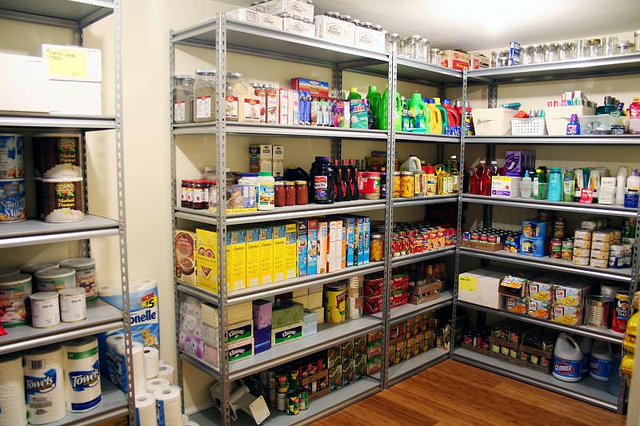
Remember as you plan meals, you may be in a grid down situation. Don’t be planning on electric grain grinders, food processors, et cetera, unless you have the backup sources of power. Women need to prepare themselves mentally for this situation. Our modern appliances, large and small, have made our lives very easy and given us a great deal of leisure. That will drastically change with TEOTWAWKI. Before the advent of our modern conveniences, women spent the better part of each day preparing food for their families. There was no instant anything. There was no microwave and no refrigeration. Fortunately for us, for the days when we will need an instant meal, there are many options in freeze-dried meals and canned foods.

Storing Food in General

Food grade buckets are available in several sizes from at least two- to six-gallon options. Make sure you can handle the size of the container and the weight and that you can manipulate the lid. Smaller and older women may struggle with a 45-pound, six-gallon bucket of wheat. Those lids can be difficult to remove. Make sure you have a handy bucket wrench or two. (The “two is one, and one is none” principle applies.)

Consider buying foods in smaller containers with the idea that refrigeration will not always be an option and that it will be important to reduce opportunities for cross contamination.

If your food is stored in a moderate to high humidity area, consider dipping each end of your cans of LTS food in paraffin to protect from rust and/or consider removing the cans from their cardboard boxes. Do not store any foods, whether in jars, cans, or buckets, directly on cement. Make sure all foods are at least one inch above the cement.

Vacuum Sealing

The ability to vacuum seal foods when you live in a moderate to high humidity area is critical to being able to store food for your family. That is a given. Deciding whether to store these foods in jars or in bags becomes a trickier question. Jars prevent foods from being crushed, but they are also more vulnerable in earthquakes. On the other hand, bags are more efficient with space and weight, but they are vulnerable to rodents.

Tailor your storage to your family’s needs and wants, but also strive to accustom your family now to the diet they will have to become accustomed to. Perhaps it’s time to cut back on sodas and so much sugar. Start eating beans once a week or twice a month. Gradually begin working whole grains into your diet as well. Instead of microwave popcorn, try popping it on the stove.

Now, here’s a note of caution. There is a popular series of books currently available; each book focuses on one the basic food storage groups. I bought the one that covers dry milk. I can forgive a poorly-written book that actually offers valuable information. This one did not and is actually very misleading. As an example, a recipe is provided for making parmesan cheese substitute. While reconstituted powdered milk mixed with lemon juice and dehydrated makes something that resembles Parmesan cheese, it does not taste anything like Parmesan. You absolutely must be learning how to make the foods your family wants now. You should not trust everything you read. You need to have the recipes that work for you and your family now. You need to adapt them to your circumstances. For example, making bread—good bread—in a warm, humid area is entirely different from making it in a dry, cool, or cold area. Being able to make artisan bread is great, but when your family wants a nice loaf of bread for making PB&J’s, artisan may not work for that.

Also, once you have gotten the basic foods, start getting your equipment and supplies. Garage sales and older ladies at church can be great sources for getting canning jars. Avoid jars and lids made in China. (Walmart’s Better Homes and Gardens jars and lids are, or were when I last checked, made in China. There have been several reports of the BH&G jars having uneven rims. If the rim is uneven, your jar won’t seal.) Over the years I have purchased hundreds of boxes of canning jar lids at garage sales. So far, I think only three or four boxes of those lids have been bad. Two boxes were Bernardin lids; two were Kerr. In all cases, the sealing compound kind of disintegrated after being softened in hot water, so there was no loss of product in canning.

May we all plan and prepare well, and may God guide and bless our efforts.

Disclaimer: I have no financial interest or gain in any of the websites I have mentioned in this article.

Resources

LDS Home Storage Centers

LDS Home Storage Center locations

Wonderful website for learning to use your food storage now.

Great online store for herbs, spices, teas.

How to make yogurt.  

How to render lard.

Notes on the LDS Home Storage Centers: One or two years ago some changes were made at the home storage centers. Before the changes, all items could be purchased in bulk bags. Now only a few items—wheat, rice, beans, onions, and carrots—can be purchased in bulk. Everything else is only available prepackaged. Also, most centers had empty #10 cans for sale and the option of borrowing a machine to fill and seal cans at home. This is no longer an option, unfortunately. Also, you are no longer asked to provide any information when you make purchases there.

Notes on oxygen absorbers: Oxygen absorbers unopened (in their original packaging from the manufacturer) have a shelf life of six months. Any unused absorbers after opening should immediately be put in a glass mason jar—the smallest size in which they will fit—and vacuum sealed. Once the package of oxygen absorbing packets is opened, they will start working within 20 minutes of being exposed to oxygen. If left exposed to air, the oxygen absorbers will be rendered completely useless in as little as five hours. Plan ahead and use all of the absorbers or vacuum seal the remaining packets.


Letter Re: What’s for Dinner?

HJL,

There are lots of great ideas and advice on this article! The comments on potatoes reminded me of some questions that have been banging around in my head for years.

Why were potatoes always peeled back in the day? If it was to avoid botulism, why are they often left unpeeled these days, not only when fried, but also when baked or stewed? A Google search brought up some interesting data at the Center for Disease Control (CDC) regarding botulism and canning et cetera. I’m not an expert by any means, but it seems important to me that food borne botulism from ingesting live spores or bacteria is very rare in adults. Much more common is food borne botulism toxin (a chemical produced by the bacterium, not an organism). The question is, will the heat of frying destroy or deactivate the toxin? I’m not confident it will.

It might be better to root cellar the potatoes instead of canning them, or maybe not. I don’t know the answer; I’m still researching, and it may take awhile, but it seemed important enough to point out. You definitely don’t want to get botulism after TEOTWAWKI! – R.H.