
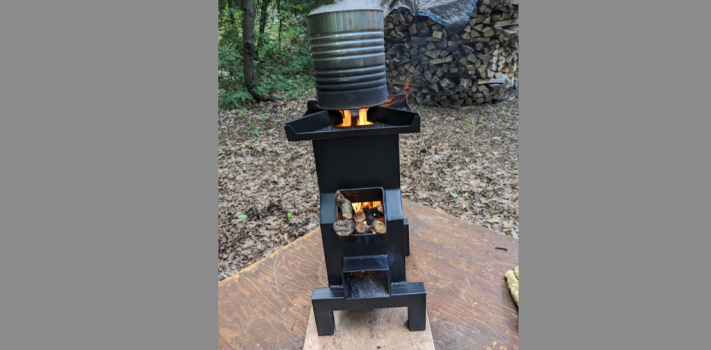


The Minuteman Titan Rocket Stove has a shell around the body of the stove that is filled with ceramic fiber insulation. This ensures that a large portion of the heat produced by the stove goes up the chimney to cook whatever is on the grate instead of being randomly dissipated in all directions. Once the stove is hot, this feature greatly accelerates its cooking speed in comparison with a similar uninsulated stove.
With a weight of 35 pounds, the Titan is best suited for use at a fixed location or in conjunction with wheeled transport.
The Titan is fairly expensive. At the time of this writing, the Titan cost $499.95 at MinutemanStove.com. If you have Cadillac tastes with a corresponding Cadillac income, then the Titan may be the stove for you. If you have Chevy tastes and/or a Chevy income, you might want to take a look at the Minuteman “K” Stove instead.
Minuteman Provision Company tells me that SurvivalBlog readers can use the promo code “Survivalblog” to receive a 10% discount on their orders.
Background
Rocket stoves use biomass like sticks and pine cones for fuel. The draft created by the heat rising up the chimney draws fresh supplies of air to the flames, creating efficient combustion. The cooking surface is directly on the top of the chimney, effectively utilizing most of the heat produced by the flames.
Lane Miller of Minuteman Provision Company makes some outstanding rocket stoves. I have previously reviewed his clever Minuteman Stove that fits inside a .50 caliber U.S. Army issue ammo can. and his “K” Stove, that is a well-executed version of the definitive rocket stove. I liked both of those stoves, so when Mr. Miller offered to let me test the Titan, I gladly took him up on his offer.
First Impressions
I saw the UPS truck coming up my driveway, so I stepped outside to save the driver some steps. When the driver picked up the box containing the big Titan stove, he groaned a little and said, “This is a heavy one.”
When he handed the box to me, I also groaned a little, and said, “Yes, you are right.”
When I got inside, I set the box on the kitchen table. It groaned a little too.
The shipping box measured 20.5 x 14 x 11 inches. It had been shipped from Minuteman Provision Company, 261 Twin Lakes Drive, Reidsville, NC 27320. I found that a hole had been punched through the side of the cardboard box during transport, but the stove was packed well enough that no damage occurred.
As I cut open the cardboard box using my EDC knife, I first found a letter-sized sheet of paper with operating suggestions and a second sheet of paper with a packing list.
The Operating Suggestions included the following items:
- Placing a metal or ceramic dish under the air intake pipe to catch coals and embers which may fall out of the pipe during operation.
- Using heavy welding gloves if you need to handle the stove during use.
- Orienting the stove during operation so that the air intake pipe faces the incoming breeze.
- Using multiple smaller sticks to make a hotter fire and fewer big sticks to make a slower fire.
- Allowing the stove to cool slowly following use to avoid weld stress and cracking.
- Storing it in a dry environment with all ashes removed.
Inside the box, the stove was padded with brown paper and wrapped in a clear plastic bag. Two bags of Maya Sticks fatwood fire starters were also enclosed.
The stove is well-crafted. It stands 19.88 inches high from the bottom of the feet to the top of the grate that caps the chimney. It is 7.13 inches wide except at the feet which stretch out to 10.5 inches to provide a stable base for the stove. It is 13.5 inches deep from the front of the air intake pipe to the back of the carrying handle.
The chimney is 13.75 inches tall from the bottom of the combustion chamber to the top excluding the grate. The bottom of the feed tube slants toward the air intake pipe to make ash removal easier. It is 9 inches from the opening in the air intake pipe to the back of the combustion chamber. It is 8.5 inches from the opening in the feed tube to its slanting bottom.
The welds are well done, and the stove is nicely finished with high-temperature barbecue paint.
My Testing
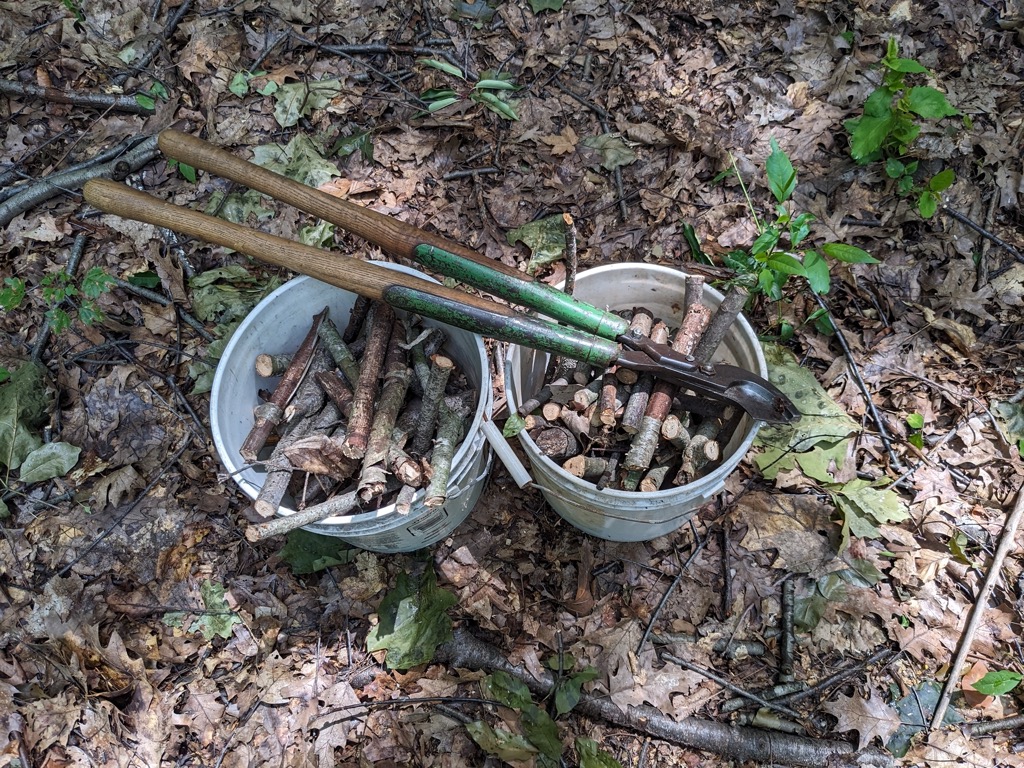 I used bypass loppers to collect two buckets full of sticks. I collected two full buckets rather than one, based on previous experience with how fast rocket stoves can consume biomass. Each stick was roughly 0.33 to 1.00 inches in diameter. As mentioned before, using smaller-diameter sticks in a rocket stove produces a hotter fire. Using larger diameter sticks produces a longer burning fire.
Next, I cut two similar three-inch pieces of Maya stick. I also gathered two one-square-foot pieces of ceramic tile and two number-10 cans. I put one-half gallon of water from a rain barrel in each can.
It was a beautiful afternoon in mid-summer. The temperature was a mild 73 degrees Fahrenheit. A gentle breeze was coming mostly out of the northeast, although it appeared somewhat undecided at times about where it was coming from and where it was going.
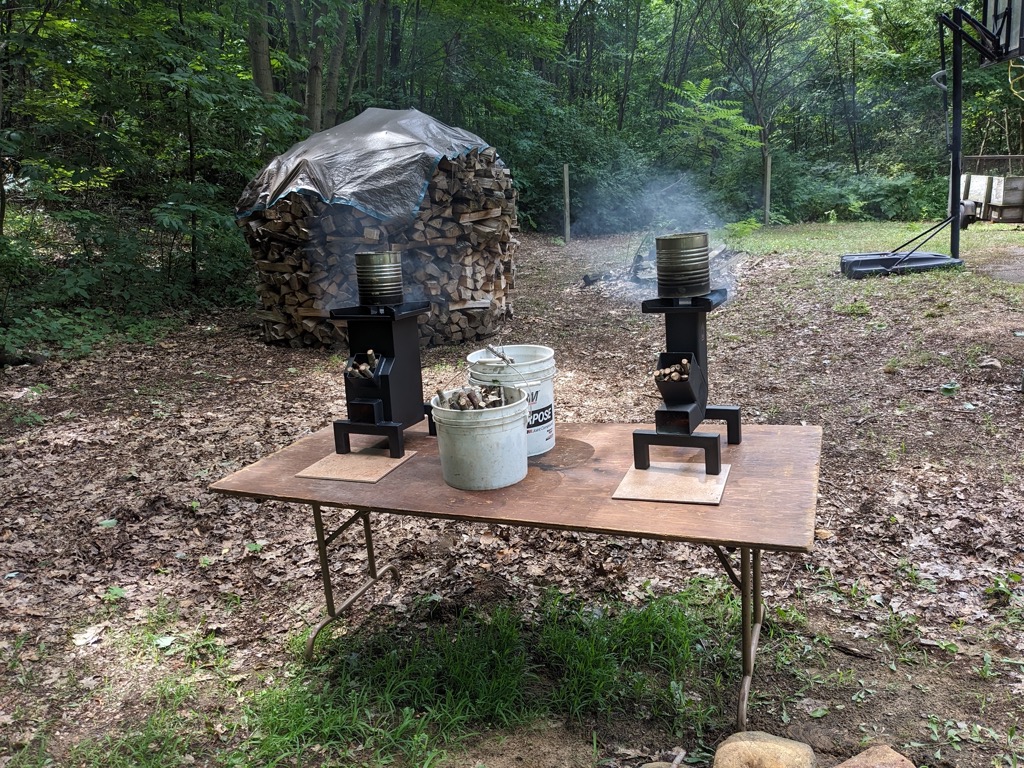
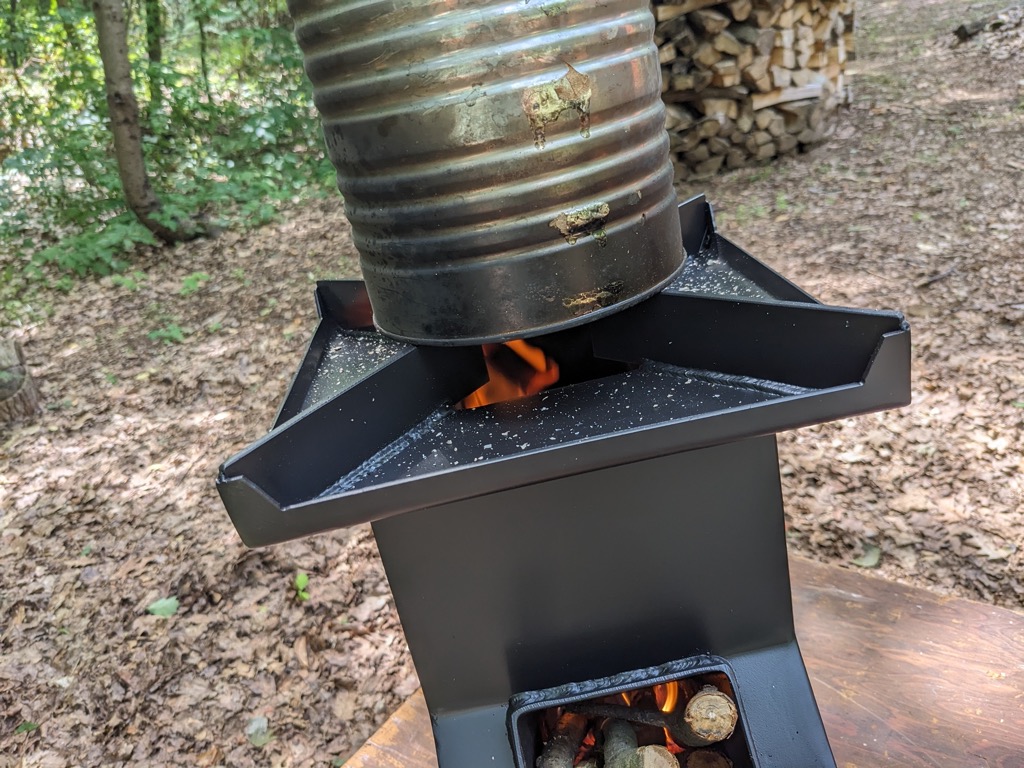 I set up a table in the shade near our fire pit. I set up the Minuteman Titan Rocket Stove near one end of the table and the Minuteman “K” Rocket Stove near the other end. I put a ceramic tile under the intake for the air feed tube in each stove to protect the table from any embers that might spill out of the mouth of the tube. I then put one of the water cans on the grate of each stove.
Next, I lit both of the Maya sticks simultaneously with a butane lighter, dropped one Maya stick into the combustion chamber of each stove, and then filled the fuel feed tubes of both stoves with sticks.
I had misjudged the direction of the prevailing wind. As the blowing smoke gave me a better fix on the wind direction, I rotated both stoves so that their air intake tubes faced the wind. The wind continued to shift, so after a couple of adjustments, I just left the stoves pointed in a direction that was more or less correct most of the time.
Recent heavy rains had made the sticks that I collected somewhat damp, so they were slow to catch at first. After 14 minutes, flames were shooting out of the top of the “K” stove. One minute later, they were shooting out of the top of the Titan as well. Eight minutes later, the water on top of both stoves was steaming, and another seven minutes later, the water on both stoves was simmering.
By 34 minutes after ignition, the water on the “K” stove was in a full rolling boil. One minute later, the water in the Titan was in a full rolling boil as well.
I removed the cans of water from the top of each stove, and emptied the coals from the stoves into the fire pit. I then reignited both stoves, and placed the cans of water back on the grates.
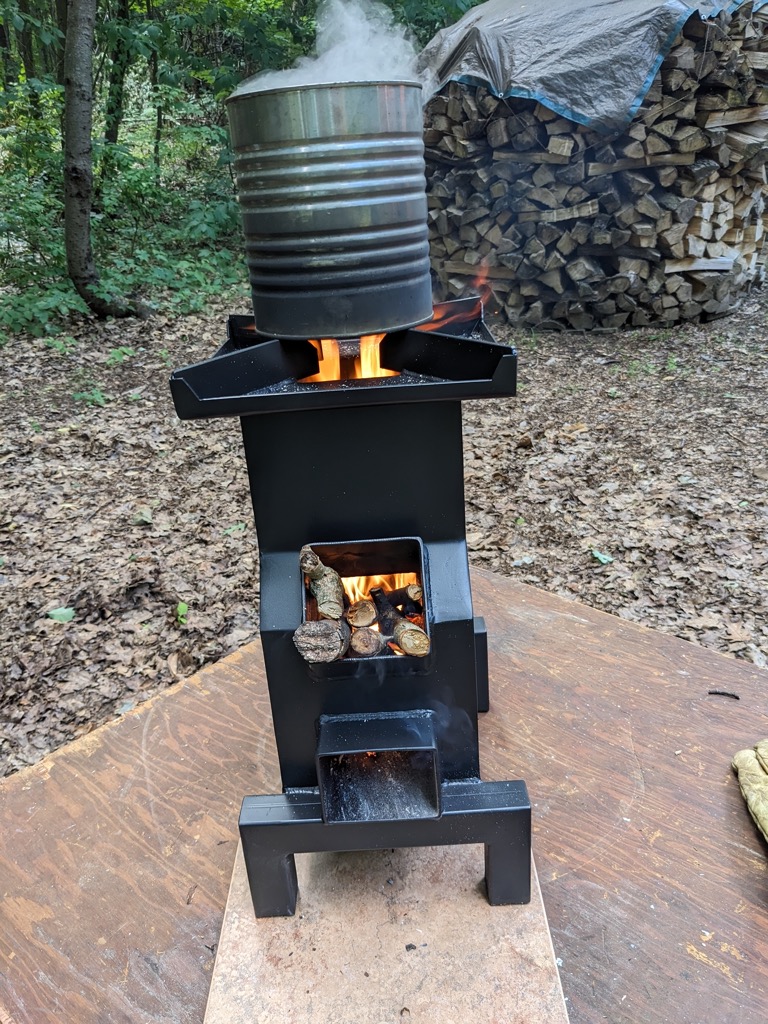 The Titan stove developed a vigorous fire much faster than the “K” stove during the second burn, and it had the water back in a full rolling boil within five minutes. It took the “K stove a total of 17 minutes to achieve the same feat. The insulation on the Titan preserved the heat from the first burn better, allowing the Titan to more quickly attain an effective draft during the second burn.
Conclusions
If you plan to use a stove most often to heat just one item, and if heating that one item does not require more thermal units than boiling a half gallon of water, then the “K” stove will probably perform about as well for you as the Titan. Since the “K” stove is significantly lighter than the Titan and costs significantly less ( $289.95 at the time of this writing, versus $499.95), it may present a better option for transport and for lighter use, such as when camping, versus use at a home, ranch, or other fixed location.
But if you plan to heat multiple dishes, or to heat especially large dishes, then the Titan may present a better option. With longer burns or for an immediate succession of burns, the Titan becomes significantly more efficient and effective than the “K” stove. Minuteman Provision Company reports, “In our testing, we were able to boil a full 5-gallon metal bucket with no lid in about 45-50 minutes.”
Disclaimer
Minuteman Provision Company provided me with a sample of their Titan Rocket Stove for testing and evaluation. They had also provided me with samples of their Minuteman and “K” Stoves for previous reviews. I tried not to allow their kindness to interfere with my objectivity in this review, and I believe that I have succeeded. I did not receive any other financial or other inducement to mention any vendor, product, or service in this article.