
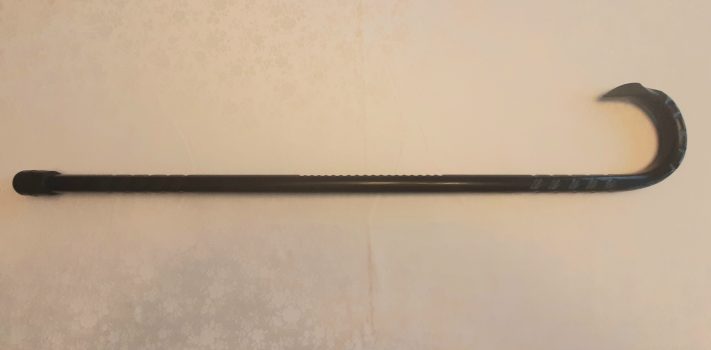


The need to be prepared to defend one’s self in an increasingly uncivil, hostile world is apparent. I strongly recommend the daily carriage of a defensive sidearm, backed up by a reliable edged weapon whenever possible, and I strongly encourage regular practice with these essential tools. More important than simply having hardware is cultivating the mindset of awareness and preparedness. But all too often, our increasingly intrusive nanny state governments, both national and local, enact laws and encourage policies designed to disarm us in public places. Some jurisdictions will go out of their way to prosecute any use of armed defensive force with a firearm or blade, as a punitive example to other citizens who might think of disobeying their draconian weapons restrictions. They all too often harness the power of law to prevent us from being armed and to punish those who arm and defend themselves anyway.
Fortunately, there is a loophole in these misguided, unconstitutional and frankly evil efforts to disarm good people. Two federal laws with real teeth provide for the routine, universal, and legally authorized carriage of a potent weapon of self-defense: the Fighting Cane. (Proviso: I am not a lawyer and the information contained in this article is not legal advice. Do your own research on these matters or consult a licensed attorney.)
The use of the crooked walking cane as a defensive weapon is nothing new. The ancient Egyptians practiced this art. Later, a well-refined system of using the cane was developed and systematized in ancient Korea, adjunct to their brutally effective martial art of Hapkido. Traditionally reserved for Hapkido black belts, the art of Jang Sul focused on a broad array of tactics and techniques for the use of the hooked walking cane as a potent defensive weapon. In the 20th century, American Grandmaster Mark Shuey distilled and brought Jang Sul techniques to the American martial artist as the American Cane Fighting System. It continues to prosper for reasons we will explore.
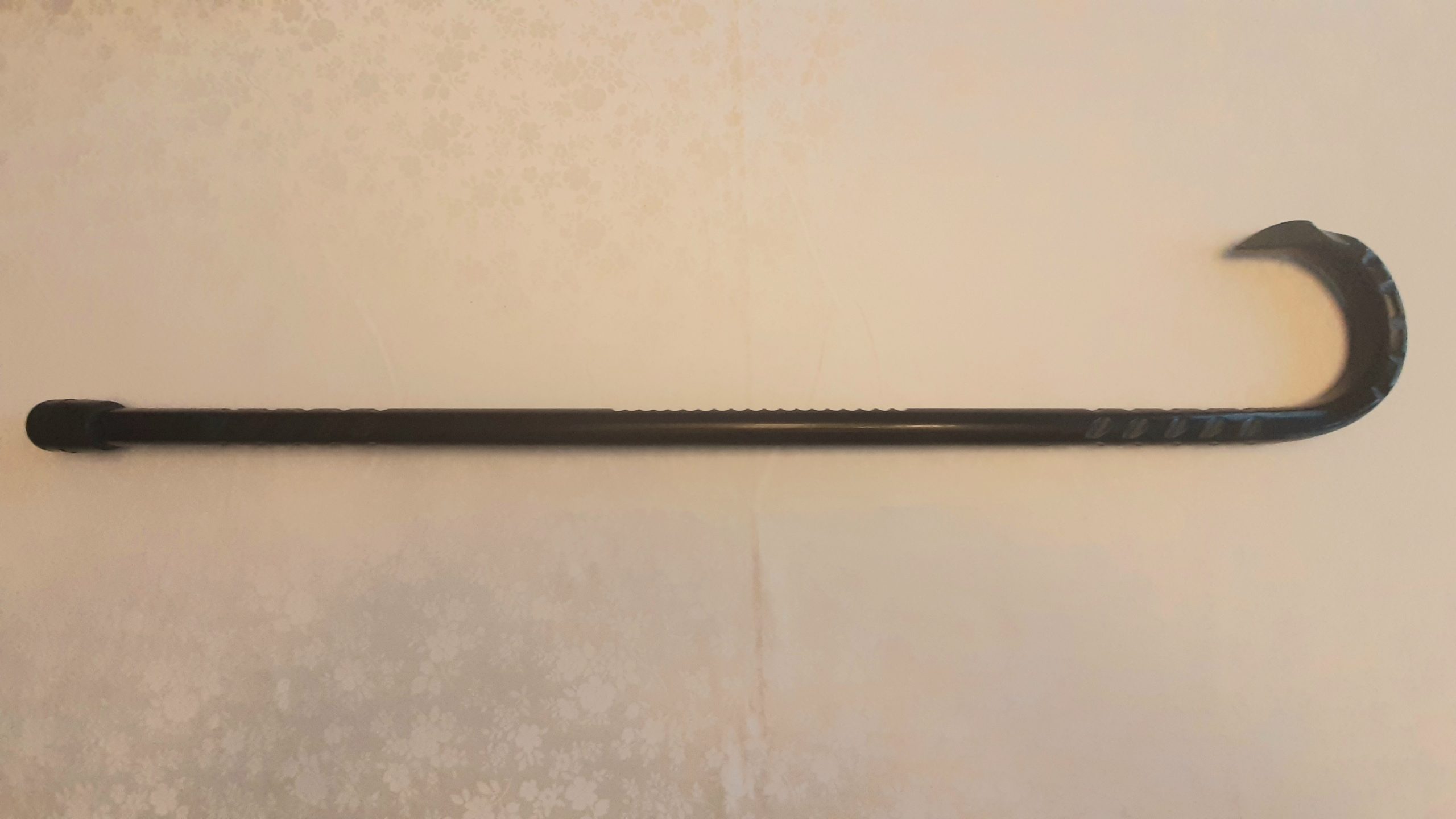 Definition: We are talking about the carriage and use of a crooked walking cane of about three feet in length, and made of strong hardwood. Optimally, it will also incorporate some specific features, but these are a matter of personal preference. The presence of a crook at the upper end is key; in many jurisdictions, a straight walking stick, with or without a weighted handle, is a felony “bludgeon”. Carrying this style stick is not legally protected, it may be barred from carriage in specific denied areas, and its defensive use may be a prosecutable offense. But the hooked walking cane is a legally-protected medical device. It falls squarely under the auspices of two powerful federal laws: The Health Insurance Portability and Accountability Act of 1996 (HIPAA) and the Americans with Disabilities Act of 1990 (ADA.) Under the ADA, anyone who needs one must be allowed to carry a mobility aid device wherever they go. An airport, on an airplane, any public or private venue, even into the Oval Office of the President, it matters not.
The cane may be inspected, even x-rayed, but it must be returned to the owner and that owner must be allowed to carry it and use it. And under the HIPAA, no one may ask the owner why they need to carry it, or to provide proof of any disability or medical condition requiring or justifying its carriage and use. This is a legally protected area of medical privacy. Thus, you may carry your defensive cane anywhere, at any time, as a matter of federal law.
Advantages: It should be obvious that the fastest weapon to bring into action is the one that is already in hand when the problem starts. The cane fits this bill implicitly. It provides stability on uneven ground, icy pavement, wet floors, stairs, or escalators. As we age, this reassurance can inspire confidence, and it may alleviate joint pain and prevent a broken hip or wrist. But the cane is also a potent defensive weapon providing strength, striking power, and perhaps most importantly, a significant reach advantage against an attacker with empty hands, or one who is armed with a knife or blunt object.
Using a cane well, the owner may dissuade, hold off, or disable several attackers simultaneously. And as street thugs are basically cowards, they usually select victims who they do not expect to be able or willing to resist as targets for their attacks. A man or woman holding a cane initially looks like easy prey. But any such target who practices awareness, and who sees a problem developing, can change the dynamic. If, when approached, an alert cane fighter steps into a fighting stance, brings the cane into a position of readiness, and issues sharp verbal commands, he suddenly looks much less like an easy meal.
The Fighting Cane’s use: The cane is an impact tool. It seeks areas where the bones of an adversary are close under the skin, and not protected by a thick layer of intervening fat or muscle. Think jawbones, crania, collarbones, forearms, wrists, the backs of hands, ribs, shins, and ankles. Power is generated by speed; a rapid strike against any of these targets will likely shatter bone, split the skin and cause bleeding and significant pain. This effect is multiplied if the cane has any striking edges vice a round cross-section.
Thrusts along the long axis of the cane concentrate great force in the relatively small cross-section of the tip or horn. The hook of the crook allows hooking of an opponent, redirection of his movements and disruption of his balance, robbing him of power, agility, and control. (A brief tip: if you hook him high, pull down. If low, pull up.) Highly effective deflections or blocks against punches, kicks, and swings of other weapons are part and parcel of defensive cane use. Simply put, a well-used cane is a devastatingly effective defensive weapon. It can be used in a less-than-lethal manner, or it can deliver lethal force. This difference is determined by the selected striking area, at the discretion of the user.
Desirable features: First and foremost, the cane must be strong. I recommend premium hickory or oak. No, a cheap drugstore cane (and even worse, one of those folding aluminum monstrosities available at your local Walmart) will not hold up, if used as a fighting tool. It will fail you just when you need it to work. How much is your life worth? Buy quality. Properly maintained, your cane will last you a lifetime. One purveyor of excellent quality, American-made, purpose-built defensive canes is Cane Masters. (I am not associated with Canemasters, and have received no compensation of any kind for this endorsement. I am simply a hugely satisfied owner of three of their excellent canes. I believe in the product and use it myself.)
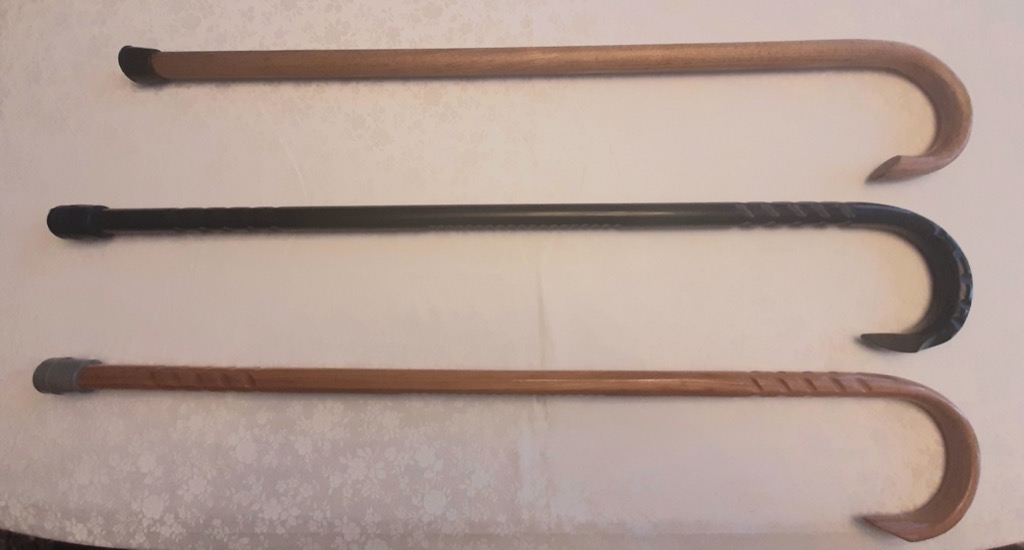 The cane should be light enough to allow swinging it with speed. Weight is less useful than agility. If you are older, somewhat disabled or a smaller man or woman with thinner wrists and diminished grip strength, you may wish to opt for a thinner diameter cane than the approximately one-inch standard diameter. The cane must be sized to your body by length; get one cut specifically for your height. Size guides are available on the Internet, but as an example, 35.5 inches is about right for a person of 5’10” height. I am 6’1” with correspondingly long arms, and my canes are 37” long.
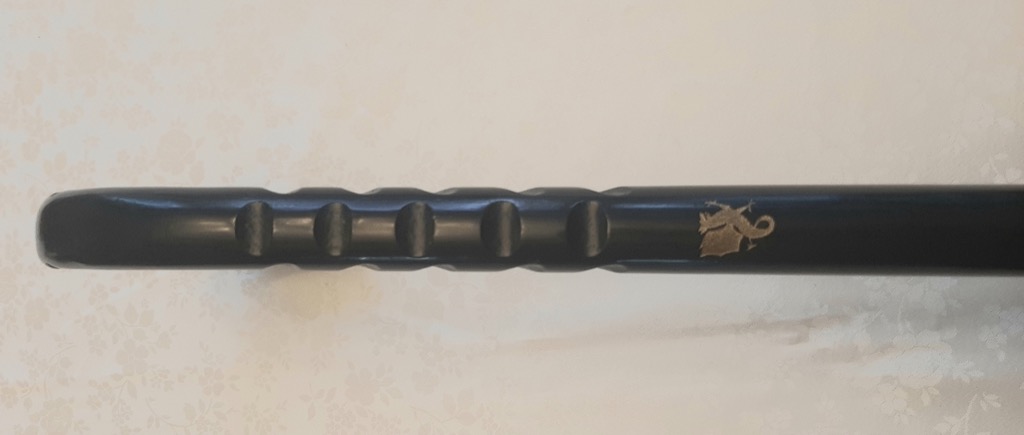 Other features are a matter of personal preference and budget. I personally like having a carved grip at the top and the bottom of the shaft, and I strongly prefer a sharply pointed horn and a rough “rumble strip” area of grooves on the inside middle of the shaft. These improve retention and concentrate force into smaller striking edge areas, increasing the probability of injury to an attacker with each strike. A black finish makes the cane less visually noticeable, and in dim lighting, an incoming strike is basically invisible. Surprise! Personalization options are available and increase your enjoyment of use; I have a carved Welsh dragon on one of my canes, celebrating my Welsh heritage. You may want your name, military service details, or personal totem or motto carved onto yours.
Maintenance: Your cane should be oiled every few months with a coating of food-grade clear mineral oil. Rub on a coat with your hand and let it sit for an hour or two. The cane will take up what it needs. Wipe off the excess. That’s it. This will keep your cane strong, smooth, and visually appealing for decades.
Training: A wise man named Jeff Cooper once said “owing a gun doesn’t make you a gunfighter any more than owning a guitar makes you a musician.” Training is an excellent idea with respect to the fighting cane as well. There are a plethora of YouTube videos, Internet articles and other sources of information on cane fighting available on the Internet. [For example, see JWR’s August, 2006 SurvivalBlog article: Canes, Walking Sticks, and Umbrellas for Street Self Defense.] The American Cane Self Defense organization offers extremely well-presented training opportunities. (Again, no association or compensation has been provided to me. I just think they are good.)
Do not think that you need to embark on a multi-year, expensive pursuit of a dojo-certified black belt to achieve useful proficiency. A few hours of focused training on fundamental concepts and some occasional practice in your own home can develop needed grip strength, wrist flexibility, and reflexes. This will provide you with a formidable set of basic skills to look to your own defense with the fighting cane.
Concerns: The usual complaint of the new potential cane carrier is cost. “Holy smoke, these things are expensive!” Yes, so are good firearms, hospital bills, caskets, and funeral expenses. The graveyards are full of cheapskates. You get what you pay for and you should ask yourself what your life is worth. And the cane is multi-use, multi-benefit, and always with you.
Another complaint is cosmetic. “I don’t want to look old and frail, carrying a cane everywhere.” Well, you don’t have to carry yourself like an invalid, or walk with a limp while carrying a cane; it’s better if you don’t in fact. Head up, eyes up, straight and erect posture, confident stride. Remember, no one can ask you why you need a cane, or require you to prove that you do. “I sometimes have a trick knee” is a polite explanation you may use if you feel so inclined. (In my case, this isn’t a lie. I can deliver a very tricky knee strike while grappling, on occasion.) And consider what it is worth to you to be able to have a weapon with you in places where everyone else has been legally or effectively disarmed. My ego can handle the perception of a few strangers that I might be somewhat impaired. Your mileage may vary.
Convenience is another complaint. “The cane will just get in my way as I go about my life.” You will quickly discover that you can just hook the cane over your forearm, use your hands normally, and set your cane between your driver’s seat and car door low on the floor of your car as you live through your day’s activities. It rapidly becomes far less than awkward. And you may discover that the cane actually benefits your mobility and comfort in ways that you didn’t want to admit that you needed. Time and tide wait for no man, and we are all getting older with every grain of sand through the hourglass. Happy caning!
About the author
“Kim Kipling” (a pseudonym) is a retired US Navy officer and CIA Paramilitary Operations Officer, with more than thirty years of service in CIA, both as a staff officer and a contractor. He is a long-time daily reader of SurvivalBlog. “Kipling” is the author of four entertaining books, all of which are informed by and reflective of his life experiences. They are: Dutch: From Rising Sun to the Rise of Jihad (the biography of a Vietnam War hero and CIA legend,) Neptune’s Asylum: Sea Stories from the 1980s US Navy (a humorous collection of military memoirs,) The Flickering Torch (a full-length novel of a dystopian future), and, The Lions of the Mara (a short but powerful anti-DEI novella.) All four of his books are available on Amazon.com and Audible.com.