During the summer of 2025, I was enjoying a picnic in a park with my wife, “Kari” and my youngest daughter “Rivka.” Part way through the meal, Rivka commented, “Wow, the cicadas certainly are deafening. My immediate response was: “What cicadas?”
In the days of my youth, we had access to earmuff style hearing protection. The problem was that they were dumb muffs. They prevented the wearer from hearing both what he wanted to hear and what he did not want to hear. Therefore, I didn’t wear hearing protection whenever there might be something that I wanted to hear. I often wanted to hear things like the voices of my companions or the sound of approaching prey. As a result, I too often neglected to wear hearing protection.
Since I did not wear hearing protection enough when I was young, I am now often unable to hear things that I want to hear: things like the words that Kari or my grandchildren are saying.
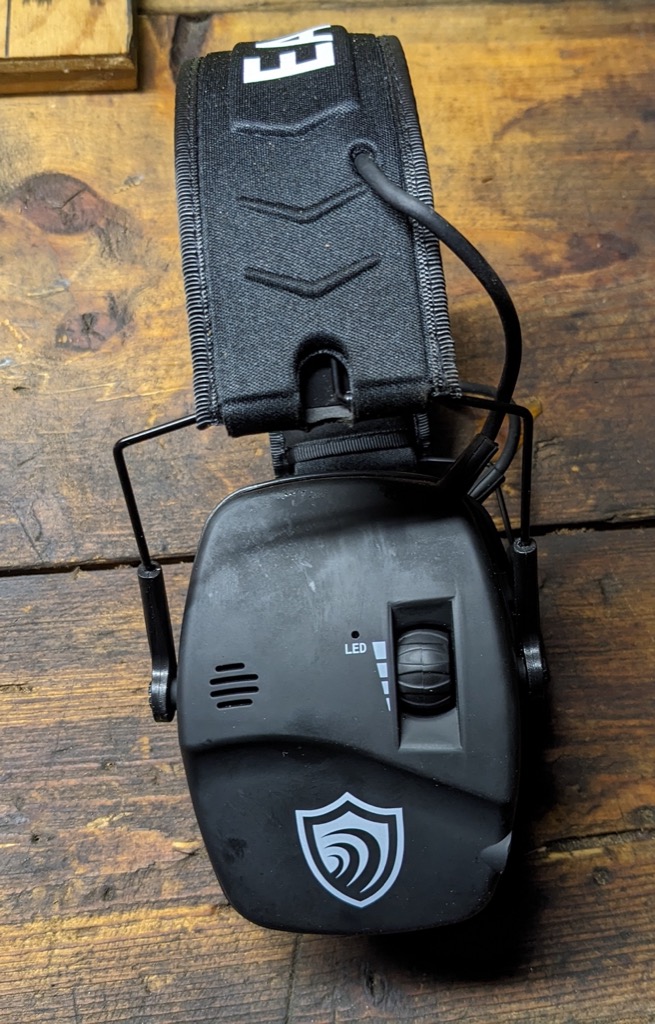
It is too bad that we didn’t have hearing protection like the Otis EarShield Ranger RE-23 Electronic Pro Earmuff when I was young. The RE-23 filters out loud noises that can damage hearing while transmitting or even amplifying the quieter sounds that the wearer actually wants to hear.
During my testing, I found the RE-23 to be comfortable and effective at both hearing protection and sound amplification. The RE-23 cost $73.49 at the time of this writing at otistec.com . I highly recommend the unit.
Where Made?
When I first requested the RE-23, there was a graphic on their webpage that indicated that the muffs were made in the USA. The graphic was a relic from the time when all Otis products were made in the USA. When Otis began to carry a few products that were imported, they forgot to update the default graphics on their various webpages.
When the RE-23 arrived, the package box indicated that the unit was made in China. I contacted Otis to let them know about the potentially confusing messaging. They apologized and promised to update the webpages of their imported products. It seems likely that the process will be completed by the time this review is published.
Background
In February of 2025, SurvivalBlog published my review of the Otis FG-750 Tactical Cleaning System [1]. This excellent, compact kit provides the tools and supplies necessary to clean anything from a .177 caliber pellet gun to a 12 gauge shotgun.
The FG-750 introduced me to Otis Technology’s line of outstanding products. As I was browsing those products online, I ran across the RE-23. I was eager to test a set of electronic earmuffs, and the specs of the RE-23 looked like exactly what I had in mind. I contacted Otis to see if they could provide me with a sample for testing and evaluation. They were kind enough to agree. Not long afterward, a 9 x 7.25 x 5.5 inch shipping box arrived via USPS Ground Advantage from Otis Technology, 6987 Laura St., Lyons Falls, NY 13368-1802.
First Impressions
The shipping box contained a 5.75 x 6 x 4 inch product box imprinted with a wealth of helpful information:
–the muffs are lightweight, compact, and utilize slim profile gel cups.
–they have a 0.5ms attack time.
–they have a noise reduction rating of 23.
–they can amplify environmental sounds up to five times to provide both hearing protection and amplification.
–they are powered by two AAA batteries.
–they shut off automatically after four hours.
–they are equipped with an auxiliary input jack and come with the associated cord.
I opened the package box. It contained the muffs, the auxiliary cord, and a card with instructions.
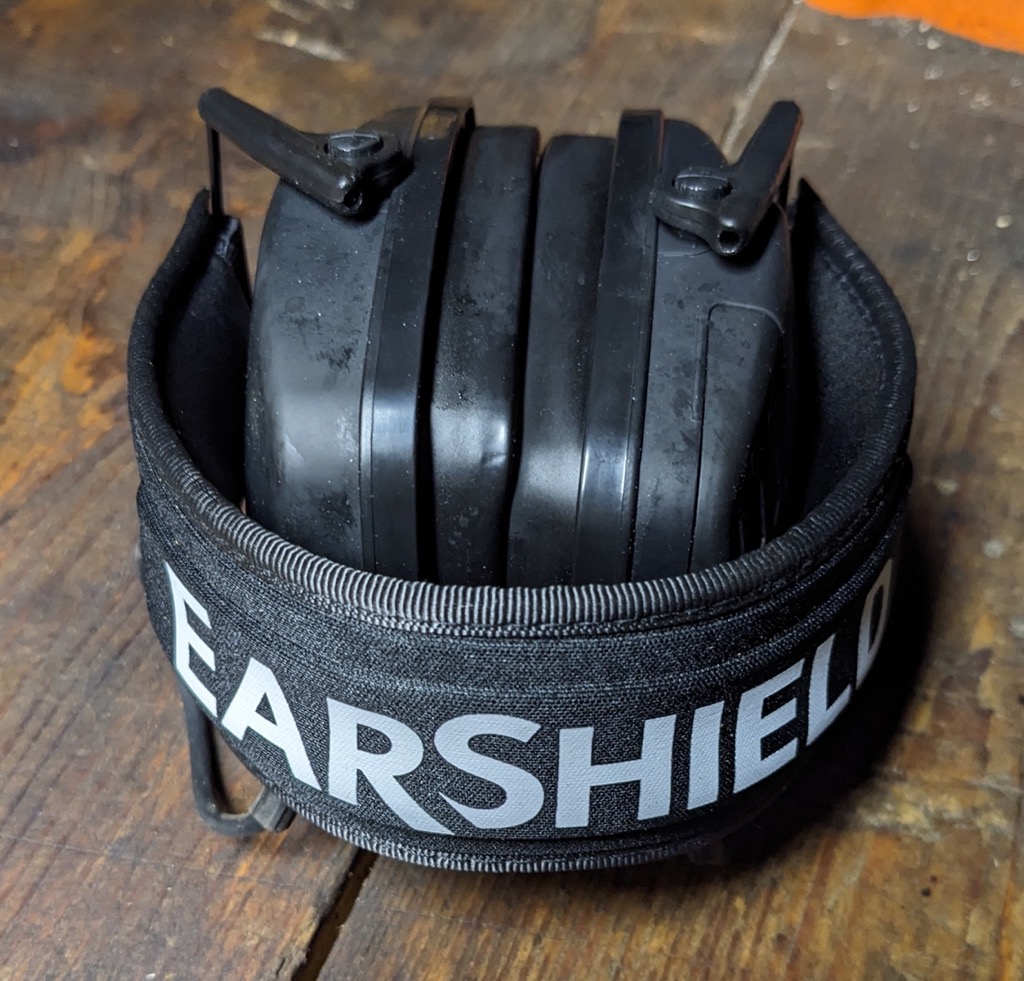 [2]The muffs fold down into a nice, compact package. There is a indentation on the bottom of each earpiece to allow for improved cheek weld with rifle and shotgun stocks. I inserted two AAA batteries, and put on the muffs. I found them to be quite comfortable. They also worked as well as or better than my hearing aids for amplifying conversation without excessive background noise.
I put the muffs in my range bag for further testing.
Testing
I was pleasantly surprised to discover that the muffs fit comfortably over my bump cap [3]. None of my over-the-head dumb muffs could equal that achievement.
The muffs also passed the Tucker the Beagle Torture Test. His baying can be deafeningly loud, but the muffs reduced the noise to a comfortable level.
The muffs kept my ears comfortably warm in frosty weather, and allowed me to hear ambient sounds like the rustle of leaves beneath my boots. I had not been able to hear so well for years.
 [4]
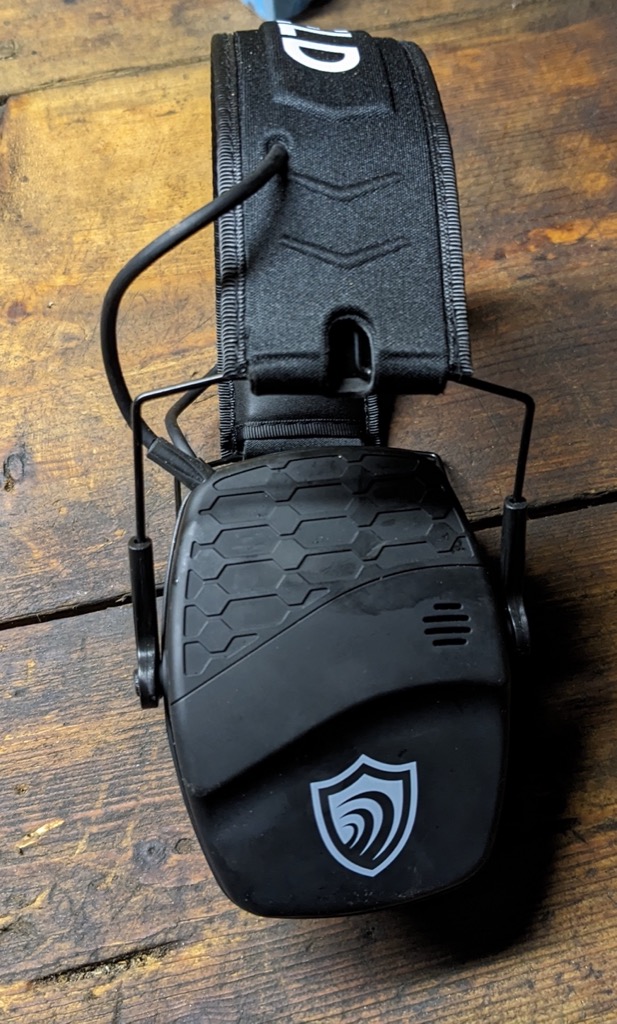 [5]Because the muffs worked so well with my bump cap, I found myself wearing them a lot while working around the property. I wore the muffs while blowing frosty leaves from my yard on a late November morning. I wore them while using a shop vac to clean out the truck so that I could loan it to a visiting youth pastor candidate. I wore them while clearing snow from the driveway with a snowblower on several occasions. The muffs functioned well at all of these tasks and a host of others.
The gel inserts in the ear cups made the muffs unusually comfortable to wear for extended periods of time. My ears are more sensitive to pressure than most. This sensitivity is so pronounced that I sleep with a special pillow with a hole cut in the middle. The hole helps to relieve the pressure on my ears. Most of my dumb muffs became uncomfortable after less than an hour of wear. The RE-23 remained comfortable for more than two hours.
The RE-23 did not play nice with the elevated cheek rest on the buttstock of my Savage 110 Stor [6]m. The slim profile and the cutout at the bottom of each ear cup were not sufficient to allow the shape of my face to fit the comb of the rifle. All of the other earmuff-style hearing protection sets that I have ever tried have been even worse at allowing a good cheek weld. I will need to continue to use ear plugs for my rifle shooting until further notice.
Cheek weld is not an issue, of course, when hearing protection is used in conjunction with handguns. The RE-23 is well suited to that role.
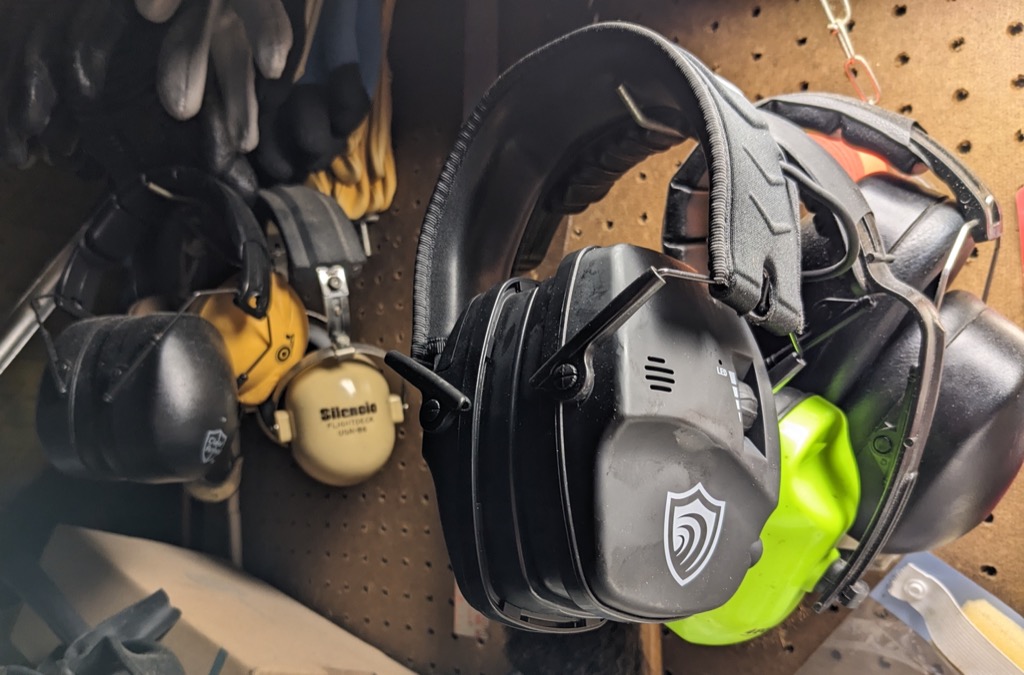 [7]I found that when used in conjunction with an air compressor, the electronics of the RE-23 did not reduce the noise to a comfortable level. Instead, I simply turned off the volume completely for that task and used the RE-23 as a set of dumb muffs. Since the RE-23 fits better than any of my dumb muffs and is more comfortable, I was happy to use them even with the power off.
Earmuff History
The first earmuffs were designed to protect ears from cold. Chester Greenwood of Farmington Maine had big ears. On cold and windy days, his ears became cold quickly even while the rest of him was still comfortably warm.
One winter day in 1873 when Greenwood was 15 years old, he was out ice skating. As was often the case, his ears were cold while the rest of him was warm. He conceived the idea of a wire frame that could go over his head with loops for the ears. The loops could be covered with fur to keep his ears warm. Greenwood made the frame and convinced his grandmother to sew the fur covers for the loops. The idea took off, and for the next 60 years Greenwood ran a business manufacturing earmuffs.
The loud noises produced by jet engines made the development of effective hearing protection absolutely essential. Earmuffs were adapted to this task, with truly effective designs coming into use by the 1950’s. By the 1980’s, nonlinear electronic systems began to be incorporated into some earmuffs designed for hearing protection.
Conclusions
I was surprised to find the RE-23 to be my favorite set of muffs not only for shooting, but also for operating power tools and other noisy equipment. Their superior comfort and good fit over other protective equipment outclassed all of my dumb muffs. The electronic hearing enhancement was icing on the cake.
If you need a good set of electronic earmuff-style hearing protection, I highly recommend the EarShield Ranger RE-23.
Disclaimer
Otis Technology provided me with a sample of their EarShield Ranger RE-23 Electronic Pro Earmuffs for testing and evaluation. They had provided me with a sample of the FG-750 Tactical Cleaning System for a previous review. Savage Arms had loaned me a sample of their 110 Storm in 6.5 Creedmoor for a previous review. I subsequently purchased that test sample. I tried not to allow the kindness of these vendors to interfere with my objectivity in this review, and I believe that I have succeeded. I did not receive any other financial or other inducement to mention any vendor, product, or service in this article.