Many articles in SurvivalBlog discuss reaching the point of a new normal after TEOTWAWKI when society starts to rebuild and little communities pull together. However, the majority of articles focus on getting through the event itself and not how you are going to live beyond the event. To be successful in the post-TEOTWAWKI economy you will need to have the means to produce. Without petroleum-powered combines, chemical fertilizers, centralized distribution systems, and confined animal feeding operations the food system will fall apart. It’s all powered by (relatively) cheap fuel and transport. Your food sources will be mostly reduced to whatever can be grown, collected, or hunted within a 5-to-10 mile radius. Gardening/farming is the original means of production, and it is probably the most accessible means of production in terms of entry requirements. All you need is some dirt and some seeds and now you are a gardener. However, as you all know there is a lot more involved in being a successful gardener than just that.
In this article, I’m going to share the gardening principles I’ve learned over the past 11 years that have led to my gardening success. Early on in my gardening journey I stumbled on some of these principles by accident and found some successes. I just didn’t know why it was working. Now that I’ve rounded out my knowledge of these principles, I can better understand why a particular planting succeeded or failed (yes, I still have failures). But now the crucial question, why should you listen to me? It’s important that we answer this question now so I can potentially save you a lot of reading.
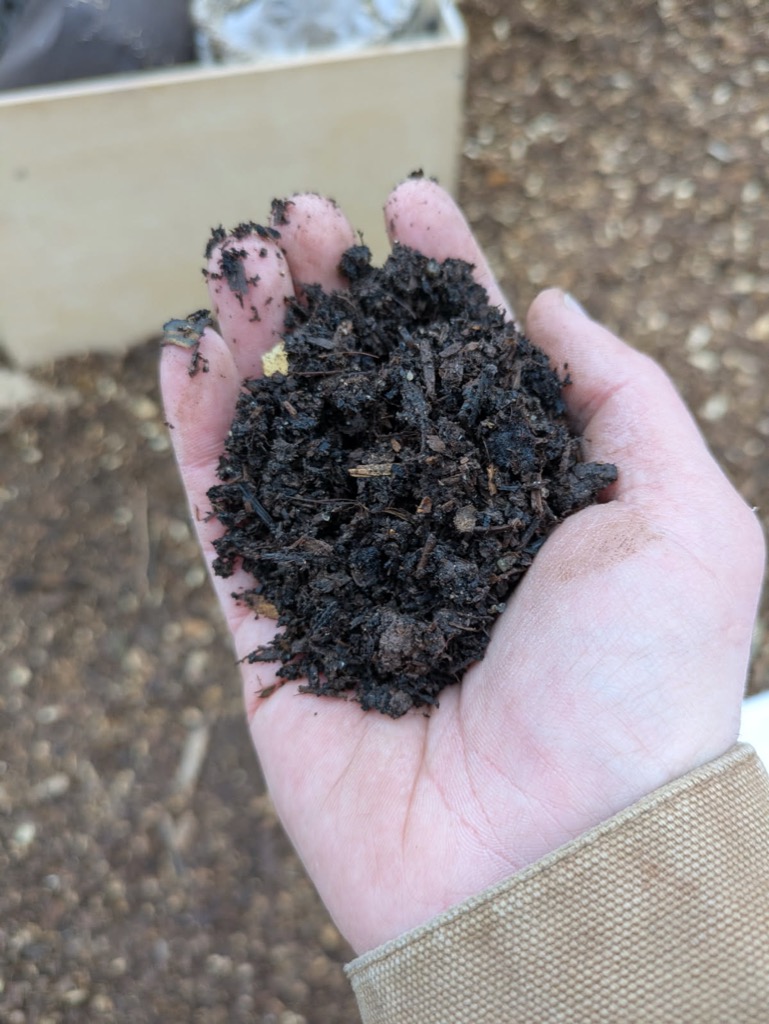 [1]I’ve been gardening intensively in Zone 7b for 11 years and am attempting to organize and share the essential lessons I have learned from hands-on experience and study. My parents did not garden much, so I was starting from scratch in terms of knowledge and experience. Our property is around a quarter acre, and over time I have developed our cultivated ground to include a 1,100 sq/ft main garden, 200-300 sq/ft of berry patches, and roughly 400 sq/ft in a gothic arch greenhouse. I make all my own compost, I do not use fertilizers, the only pest control I have used in the last 5yrs is a bacteria that attacks caterpillars and I barely use that anymore. The only inputs I am sourcing from off the property are woodchips, leaves, hay, mineral amendments, and occasionally other clean organic material that I collect from neighbors.
My typical results are in the range of 1,000 lbs in fresh produce each year. Since it is all “organic” produce the market value is equivalent to several thousand dollars. When other gardeners tour my garden they are always impressed and want to know how I’m getting my results. Also I’ve gotten my parents to start gardening, they follow my advice, and are finding success in their little hobby garden. Let me be clear that I did not invent any of what I’m going to share, and I will include numerous references at the end of the article for further research if you wish. While I believe I am fully qualified to write this article, I am not sharing this information as an “expert.” I am sharing it as a fellow student who is a bit further down the road, and who is still studying and learning myself.
Biological Systems Gardening
What is biological systems gardening? In a biological systems approach we seek to work with the natural systems of creation in order to create a healthy miniature ecosystem where plants, animals, and people can thrive. It goes back to our original job in the garden of Eden to tend and care. When we work with the systems God created, we end up with a sustainable system that can regenerate the land and respect the plants and animals we care for. In the end we reap the blessings of health, nutrition, and abundance.
“Labels can say organic, natural, or fresh, but that doesn’t guarantee what your body is actually receiving. The truth is, much of our modern food looks alive but is nutritionally hollow—grown in depleted soil, bred for shelf life over substance. You can’t always see the difference, but you can taste it. And more importantly, your body can feel it.” – Bionutrient Food Association [2]
There are a number of advantages of biodynamic gardening that will be relevant to preparedness. We’ll delve into each of these where relevant later in the article:
- Requires little to no inputs or fertilizer once established, independence from supply chains
- Exponentially higher nutrient density which reduces production volume requirements
- Does not require power equipment or tools (although they help a lot if you have them)
- Does not require significant pest management (except for 2-footed and 4-footed pests)
- Significantly reduced irrigation requirements
Now, before we jump into the principles of biological gardening, let’s take a look at how plants actually grow. It might surprise you.
The Rhizosphere: How Plants Really Grow
If you had a typical grade school experience at some point you had a module on plants and how they grow. You learned that plants use photosynthesis to convert sunlight into sugars, and extract water and nutrients from the soil with their roots. This is only partially correct, and it leaves out so much of the picture that the full truth turns modern agricultural practices on their head. The shortest summary is this: plants can’t survive and thrive without symbiotic bacteria and fungi (human beings also can’t survive without bacteria but that’s a different article).
Plants can’t actually extract most nutrients from the soil. The nutrients are locked up in rock & mineral particles that are indigestible to the plant. Instead, plants have been designed to exude as much as 30% of the sugars they produce into the soil. Plants also produce and create a large quantity of organic matter in the soil via dead roots and cells. These sugars and organic matter feed colonies of bacteria and fungi that live on and around the roots called the rhizosphere. In exchange the bacteria extract mineral nutrients from the soil via carbonic acid and feed them to the plant. The plants influence which nutrients they receive by exuding different sugars to different bacteria in exchange for different nutrients. Need some phosphate? Exude sugar for the phosphate bacteria. Need some calcium? Exude sugar for the calcium bacteria.
Plants need so much more than the typical nitrogen, phosphorus, and potassium (N, P, K) listed on most fertilizers. Those are the plant macronutrients, sort of like carbs, fat, and protein for humans. But imagine what would happen to a human if we hit our macronutrient needs, but didn’t get any vitamins? We might be able to survive for a while, but eventually we would die. The same thing happens to plants without their vitamins. Let’s use boron as an example of what a micronutrient can do for plants:
- Improves the strength of plant cell walls, which improves disease and pest resistance
- Improves membrane function and cell division aiding growth
- Stimulation/inhibition of various metabolic pathways
- Development of flowers and fruit for more consistent pollination
- Important in plant reproductive growth, which is usually the edible part of the plant
Sure, your plants don’t need a lot of boron but it really packs a punch.
But plant roots only have access to about 5% of the soil in the plant’s growing radius so how can they get access to everything they need? This is where the mycorrhizal fungi come in. These fungi create micro filament networks through the soil, from plant to plant, often only 1 cell wide. The sugars provided by plants power the network and allow the mycorrhizal fungi to transport sugars and nutrients through the soil in a sort of plant/microbe commodities exchange. This gives plants access to almost the entire topsoil zone and allows them to trade resources with other plants and microbes that are not even within the radius of the plant’s roots. Studies using radioactive isotopes to track the range of the fungal network found the isotopes being transported miles from when they were inserted! We are still just scratching the surface on the complexity of the soil system, and there is beginning to be study on whether or not the plants are communicating or signaling to each other via this mycorrhizal network.
My mind was a little blown when I learned all this. It was way different than what I thought was happening in the soil. But the more I learned about how the plants & microbes were interacting in the soil, the more I understood why some of the things I had started to implement in my garden had been so accidentally successful (composting, no till, and heavy mulching). From the experience I’ve gained since then, I’ve put together 3 key principles that sum up biodynamic practices and form a framework for practical application. In Part 2, I will get into the principles of biodynamic growing and the specifics of how to put them into action.
(To be continued tomorrow, in Part 2.)