Editor’s Introductory Warning: The devices described in this article can cause great bodily injury. We live in a highly litigious society. Employing caltrops in any situation other than a “Without Rule of Law” societal collapse would invite a lawsuit that could potentially cost hundreds of thousands of dollars or perhaps even more than a million dollars in assessed damages, attorney fees, and court costs. There is also the potential for these to be stepped on inadvertently by family members, friends, pets, or livestock. So, ONLY use them in absolute extremis, and only in a fenced-off area that will prevent the equivalent of a “friendly fire” incident. – JWR
The best tire spikes available can be crafted by you at home. You are going to really love this one.
Making tire spikes has to be one of the most popular prepper & survival “how-to” skills out there and you are going to learn how to make tire spikes like the pros. This design that we are going to go over is by far the most effective and durable available. Both National Geographic Doomsday Preppers and the Discovery Channel Myth Busters have already released very popular tire spike video designs with over 2.5 million views, but the design I am going to reveal here far surpasses both of those featured designs.
Tire spikes are also sometimes called caltrops or road spikes. Forms of tire spikes or caltrops have been around for many ages and some of the first uses of these devices can be traced back in history to the times of medieval knights when caltrops of various sizes would be used against enemies on foot and horseback. Tire spikes are also thought of as road spikes or spike strips that law enforcement may deploy to stop fleeing vehicles effectively by rapidly deflating their tires. Tire spikes have even been featured in various Hollywood action films like the James Bond film Tomorrow Never Dies, when tire spikes are dropped by Bond’s BMW spy car.
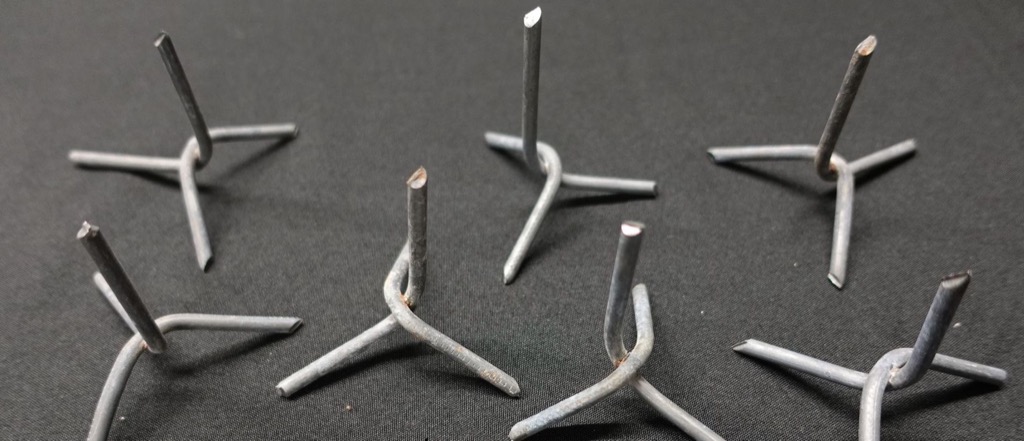
This modernized version of tire spikes is composed of two pieces of welded galvanized metal wire. Each tire spike has 4 sharp metal points. They are bent in such a manner that no matter which way they are placed, one of the sharp spikes is always pointed directly upward. In geometric terms, we will be making a form similar to a regular tetrahedron, a shape that ensures one point always faces upward when the object rests on a flat surface.
I will say that these are the real deal, and if you do make any of these for yourself then you’ll need to respect them. As you would a sharp knife, you’ll have to respect all 4 sharp points of each of these tire spikes. I have sliced my hand pretty good while making some of these. Of course, check your local laws before making these and they are only to be constructed for the apocalypse to protect your life or the life of a loved one.
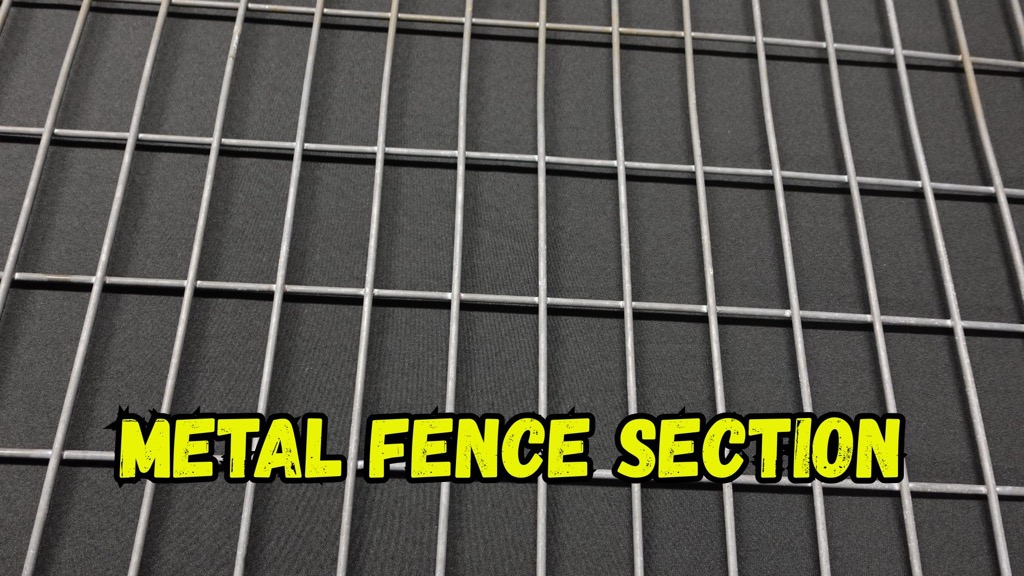 [1]So how do we start? First off, you’re going to need to get the proper metal wire. The best source for that is going to be a feed lot panel from a farming supply store. I got my feed lot panel from the Tractor Supply Store. It’s the horse fence panel measuring 5 feet by 16 feet. With the 4 inch by 2 inch steel mesh 6 gauge wire. A brand new panel goes for about $109. When you go to buy the panel, double check and see if they have any damaged panels available that you can buy at a discount. I was able to get a decent discount off the panel because the store had a panel with a curled, bent corner. All I did was briefly speak with the store manager and asked if a discount was possible because of the small amount of damage and the store manager agreed and provided a discount off the retail price.
Once I trasported that home, the small portion of the damaged fence corner was just removed with bolt cutters with minimal material loss and had no effect on the project. Also, a quick tip for transportation. You may ask yourself, how am I going to transport a 16 foot section of metal fencing back home without a trailer? What I did was, I actually just cut the panel in half with my bolt cutters right in the Tractor Supply parking lot to make it more suitable for transport with a normal pickup truck bed. That way I had 2, 8 foot sections of fence I double-stacked on my truck bed instead of trying to maneuver a 16-foot section. The Tractor Supply store operates in 49 of the U.S. states so these metal fence panels should be available to most people around the country and metal farming fence is widely available in many countries across the globe, so just about everybody can make these as long as you can handle the one-time cutting and bending labor of properly shaping the tire spikes.
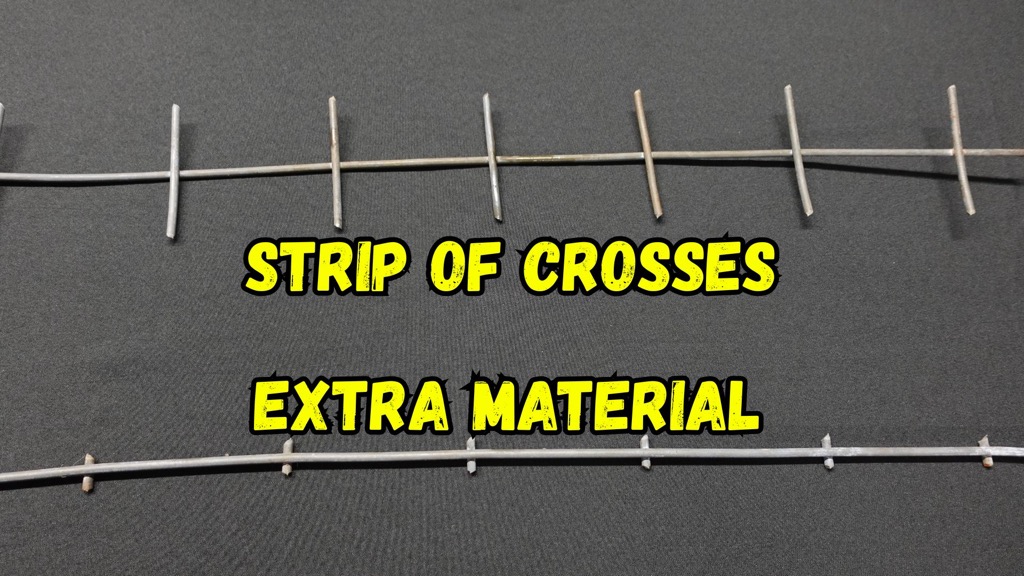
So now that you’ve got your feed lot fence panel back home, now what’s next? The following series of photos almost tells the story, by itself.
 [2]
[2]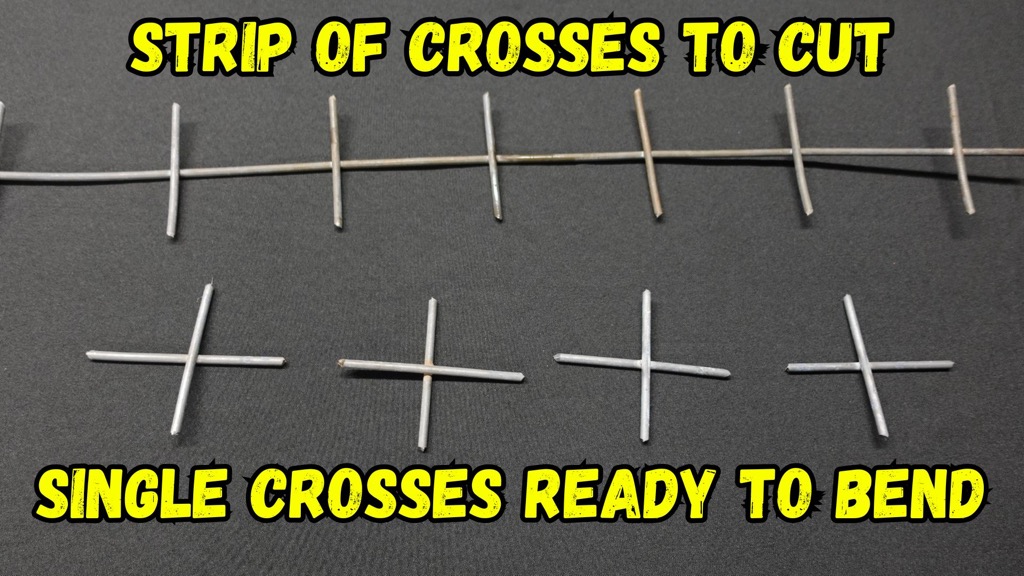 [3]Ideally, you’re going to want to lay the metal fence panel down on a hard surface like pavement or concrete. This is going to make the wire easier to cut. You’re going to need some good bolt cutters to properly cut the wire. As you cut each row, make a strip of wire crosses and then a strip of waste material. The strip of wire crosses will be broken down further and the waste material will just be tossed in the trash.
As you go along cutting the wire with the bolt cutters as it is resting on the hard surface it’s going to be the easiest to cut if you use what I like to call the “boot and lift” technique. You’re going to want to lift the wire with your boot several inches off the hard surface as you go along cutting. This will enable you to both cut faster and also make better cuts which ideally you want to do at a 45-degree angle, to better ensure there is a sharper tip at the end of each spike. Once you have your strip of wire crosses, you are going to cut them into individual wire crosses. These welded cross sections will become the tire spikes after you bend them properly. Just like the main portion of the fence, it will probably be helpful to do the same “boot and lift” technique when separating the strip of wire crosses into individual wire crosses.
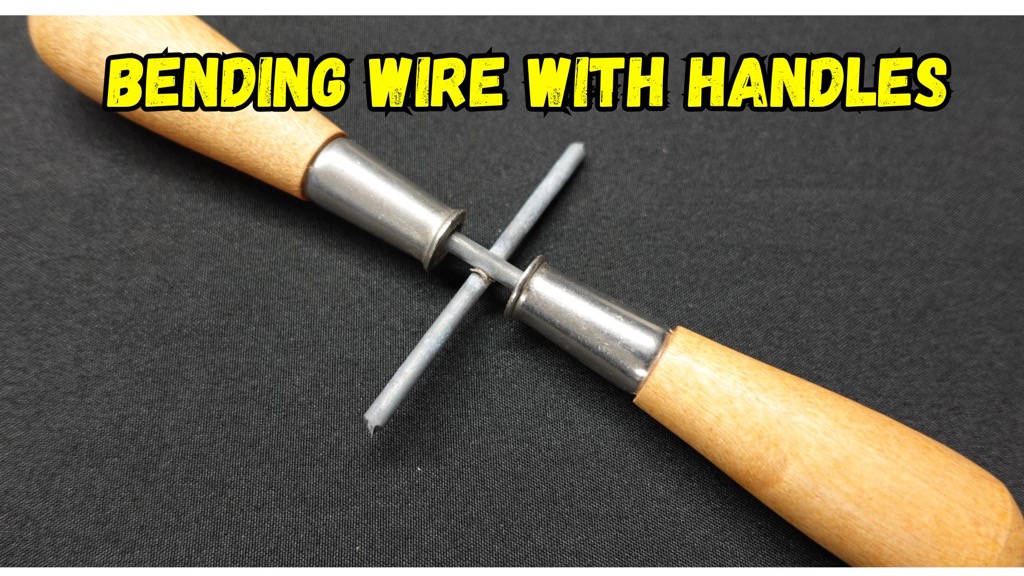
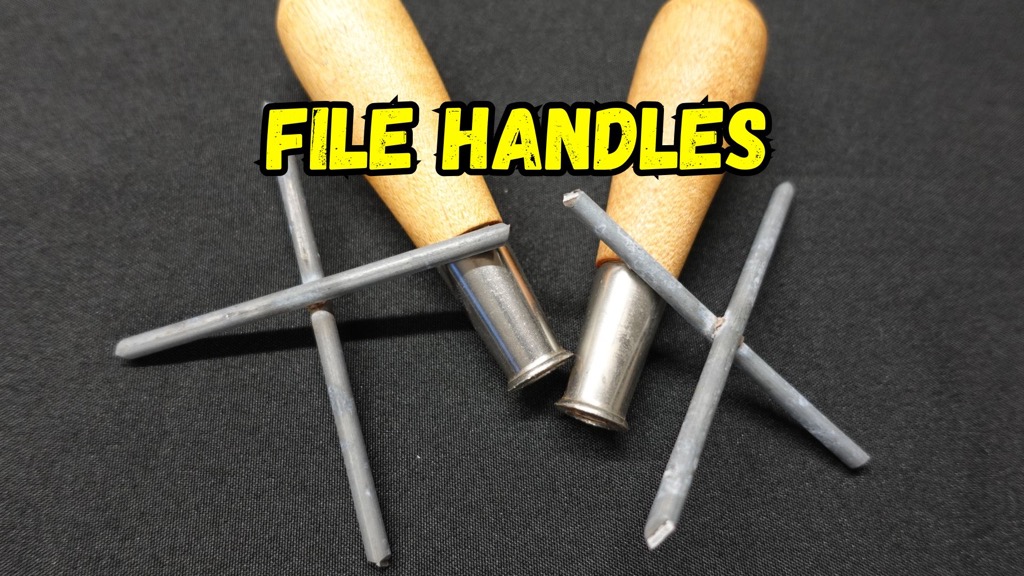 [4]When you have all the 6 gauge wire crosses cut out, the next step is going to be to properly bend each spike into position. Keep in mind that the 6 gauge wire really is the sweet spot for these tire spikes. You’re not going to be able to bend the wire with your bare hands. I’ve found the best way to bend these is to use the old fashioned wooden file handles. These simple wooden handles are used to hold various sized metal files. These end up being the perfect size for bending our 6 gauge wire because the wooden handle already has a hole in it the fits the 6 gauge wire perfectly. These file handles can be picked up very inexpensively. A pair of handles goes for about $5 on Amazon.
 [5]
[5]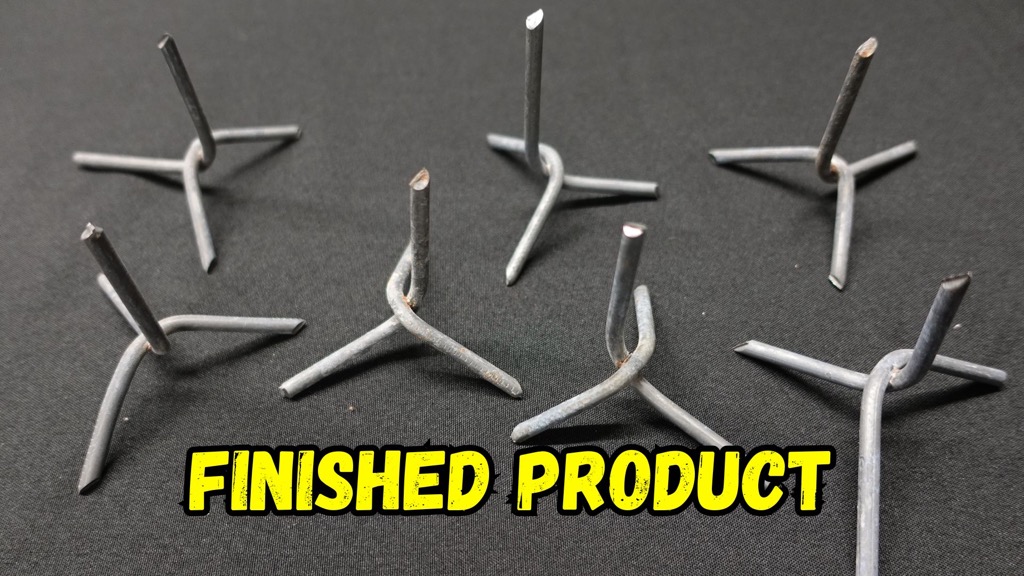 [6]In order to start bending the wire, you’re going to need to isolate the 2 opposite spikes and bend them both in towards the weld. After one set is bent you’ll do the same with the remaining 2 spikes and bend them in towards the weld as well. Keep in mind these galvanized welds are very strong. What you want to do, is have the angles of all the bends support each other, so no matter which way the tire spike sits, there will always be a spike pointing straight up. The exact bend angle will be somewhere close to 109.5 degrees or just past a 90-degree bend. Eyeballing the bending works best especially after just a little bit of practice. There is no need to get out the protractor and start measuring your bend angles. Some of you may remember the game of jacks and just like jacks, no matter how you toss these tire spikes they always land with spikes up!
You’re going to find that some of your wire bends are slightly off. You’re probably going to create 10-20% rejects and 80-90% perfect tire spikes. You may want to separate these into different containers. Keep a bucket of your pre-cut wire crosses and then 2 different grades of your finished product. After all your wire is pre-cut into individual crosses you can slowly work at bending out the tire spikes over time.
The final product is going to stand an average of 2 3/4 inches off the ground with each spike having an average length of 2 inches. You can choose to leave them as traditional galvanized metal or there are many camouflage options available in ultra flat earth colored spray paints. You could go with flat mud brown paint for the dirt roads or flat OD green paint for a grassy area, depending on your local environment. Whatever color you choose, these tire spikes are sure to be the envy of any Mad Max road warrior.
 [7]You have now learned how to turn a section of metal farm fencing into several hundred top-quality tire spikes. This method really does surpass all the other designs, while also being the most time-efficient and cost-effective. These tire spikes will last longer than all of your food storage and are likely bomb proof to a high degree. Once the labor of cutting and bending the spikes is done, they’ll last forever on your homestead and you’ll always have them for your Mad Max perimeter defense.