Introduction
This article is not a full review. It is just a cursory evaluation.
Several weeks ago, I ordered a Multifunction Nuclear Radiation Detector from a eBay seller who imports these units from China. FNIRSI also sells several other electronic test equipment units, one of which I bought was the multi-function oscilloscope hoping that I could use it on the bench as well as for portable operations. Alas, I didn’t like the unit because the probe connections for the oscilloscope don’t fit well into the connector (BNC type) on the top of the case and because of that issue I broke off the connector for one of the two channels and when I disassembled the unit it effectively destroyed the outer lining for the case. I contacted the company but never got any reply from them or the seller I bought it from. I was able to repair the unit and make it operational, and it is not as good as advertised as far as sensitivity is concerned. It is just a glorified DMM. In that regard, it is good. So up front, just beware that if you buy any items from the FINRSI brand you’re on your own for user support. I am under no illusion that this unit will be any different in that respect. Caveat emptor.
Disclaimer: I paid for this unit out of my own pocket and in no way do I represent the company or anyone that market these units.
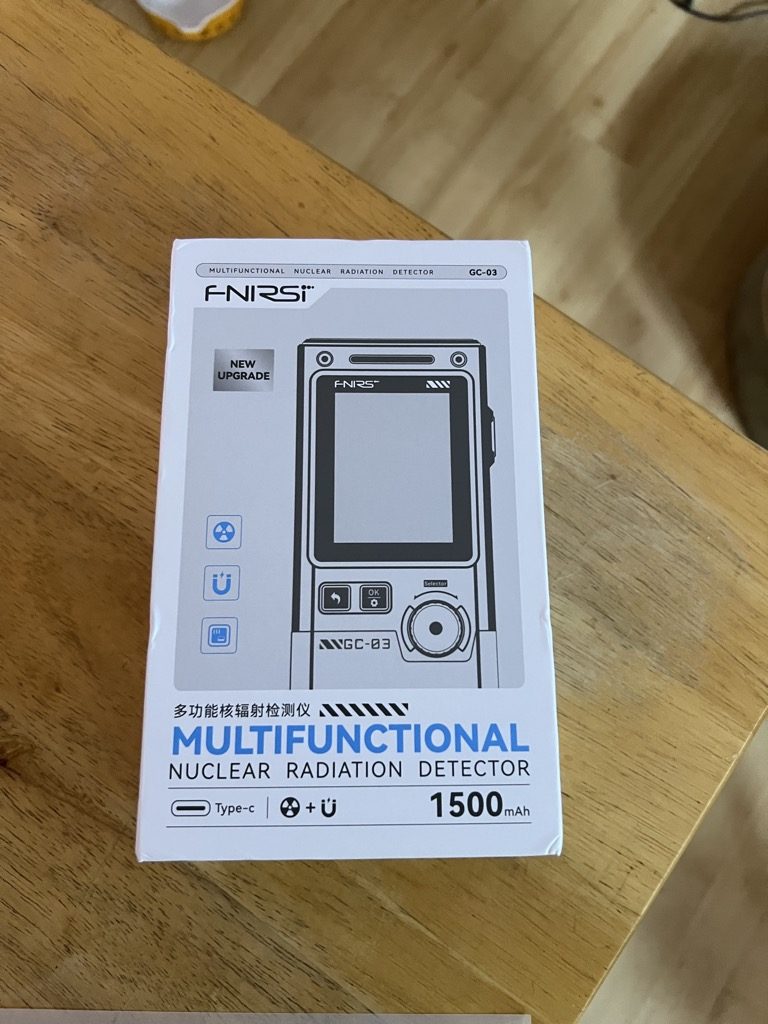
The FNIRSI GC-03 Radiation Detector
 [1]
[1]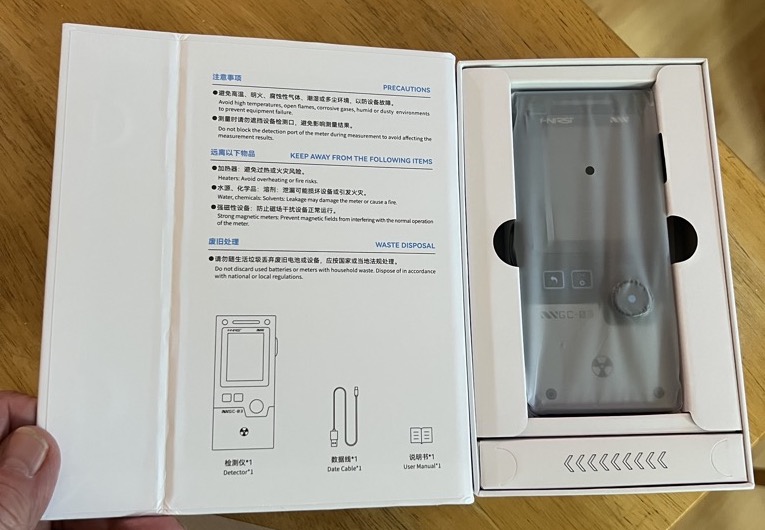 [2]First impression: it is well made with an ABS type plastic case that was well fitted and seems solid in the hand. It came in a very nice box that opens like a small treasure chest. The inside of the front cover has some instruction in Chinese as well as English as precautions for use. It is lightweight and has pleasing lines.
The very first thing I did was to use the included C-type USB charging cable to plug into a wall-mounted power supply and charge the unit up overnight. Once it showed that the battery had a full charge, I then did an initial power up. The first screen is going to give you the option of using either Chinese language, or English. However, what is not given is just how to make that selection if you aren’t familiar with the original programmer’s format and process, and if you didn’t read the included user’s manual.
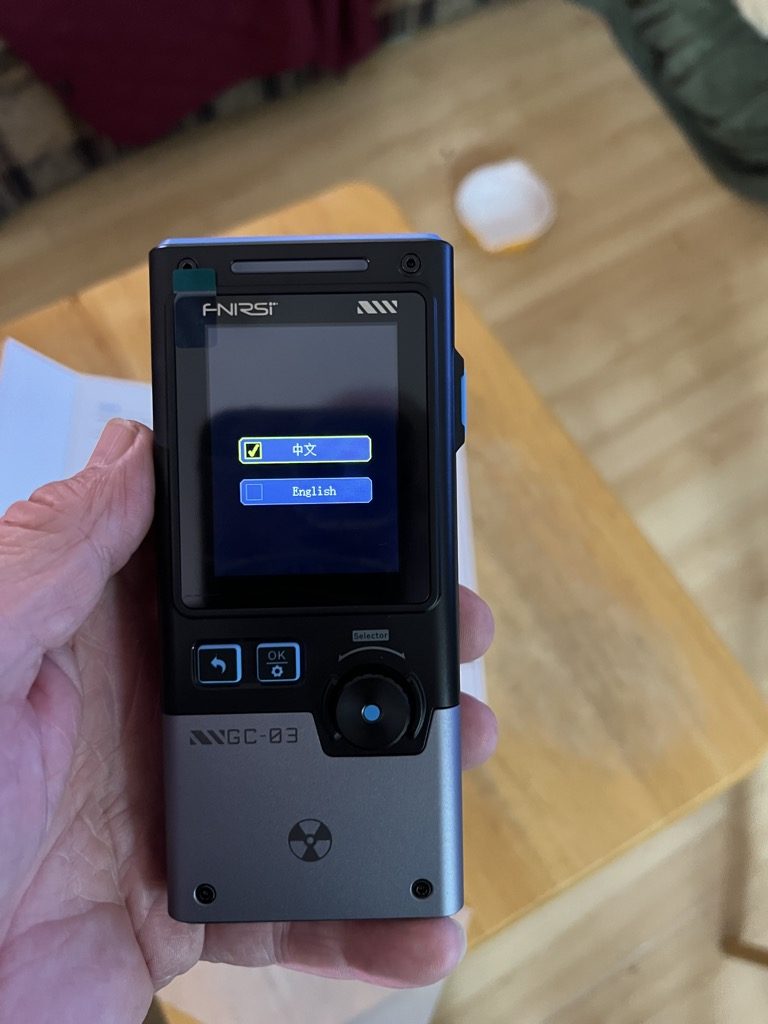 [3]The manual is typical of the Chinese-to-English transcription and grammatical format. Amusing in some ways, and just plain frustrating in others. There is a lot of information in that manual and sorting out what is relevant to what you wish to do is most likely buried somewhere in that tome. In any case, somehow my fumble fingers managed to hit the stroke for the Chinese language which this unit was very happy and quick to oblige. From then on, it was off to the race to see how fast I could learn Chinese.
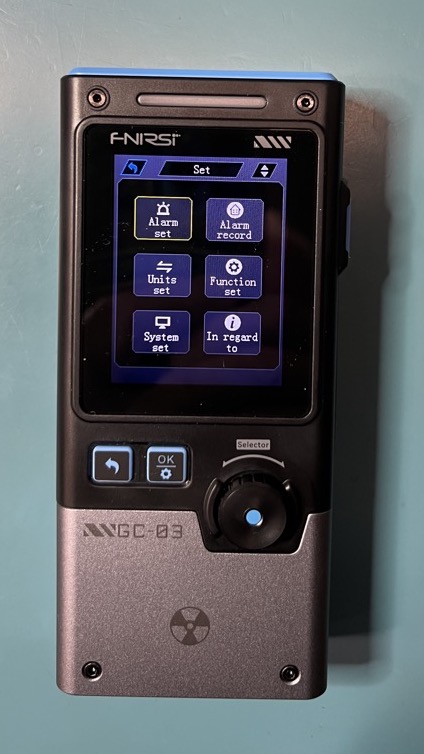
this point, I decided to just read the manual and do my best to find how to make this thing use English. On page 31 of 40 (The English version starts on page 19) pages in the manual you will find the instructions on how to “short press” and how to “rotate” to get to the page that will let you select English or Chinese. Those are the only two languages available to select; it may be possible that for those sold in other countries there are more languages available.
 [4]
[4]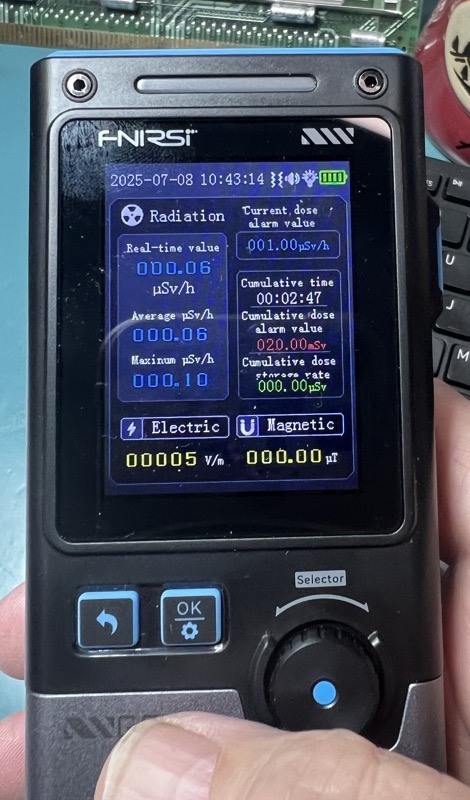 [5]Using the rotate & short press, you can then make this thing talk English. The rest of this manual is bout the same … short presses with a sprinkle or two if rotate and short press … that’s the magic to this little gem. To be clear, there are good instructions and whoever translated the manual did a fairly good job, at least once you understand the methodology of selection between short press and rotate you can get around pretty well; the rest of the effort is intuitive. As for that, this unit can do its mind boggling how much is packed into the programming.
The display measures 2” wide by 2.75” high. It is amazingly clear and sharp. My old eyes aren’t the world’s best, even though I had cataract surgery a few years ago and my eyesight is very good now that I don’t need glasses anymore; still this screen was impressive in both the color intensity and clarity even on the small print areas.
I found that it fits in the palm of my hand snugly and that it is easy to use the various buttons to control.
 [6]Once I got the hang of the menu operation and selection and did some browsing around in the various options, I decided that setting the time and date was the most important. That is an interesting exercise and if you can do that task then the rest is going to be a snap. I was able to get it figured out and set the time to my NIST clock that I keep in my ham shack computer for coordination my computer to my various radio programs that use such precision. I then browsed into the other programming menus but decided not to make any further changes except to set the automatic off setting to five minutes so as not to waste the battery.
The primary reason that I chose the automatic power-down was because I found that I could accidentally hit the power on / off button on the side of the case and turn the unit on while placing it back in the box for storage. Had I not noticed that, I most likely would have run the battery dead since this unit as delivered, won’t shut off the unit until you command it “off”.
The unit will measure nuclear radiation, electric field strength, and magnetic field strength. My primary interest was the nuclear measurement details.
Where to Get One
The FNIRSI GC-03 3-IN-1 Electromagnetic Nuclear Radiation Detector Digital EMF Meter is available via eBay [7].
There is a nice 8-minute video [8] on YouTube about this unit.
Screen Graphing Functions
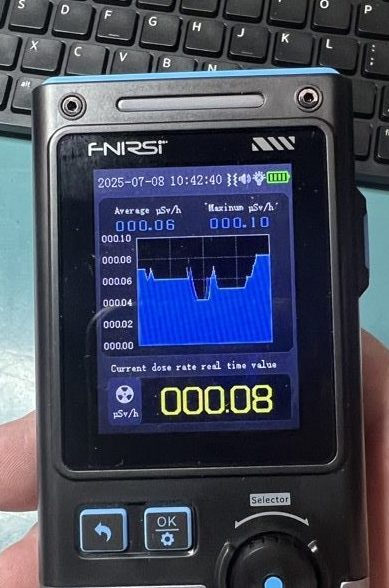
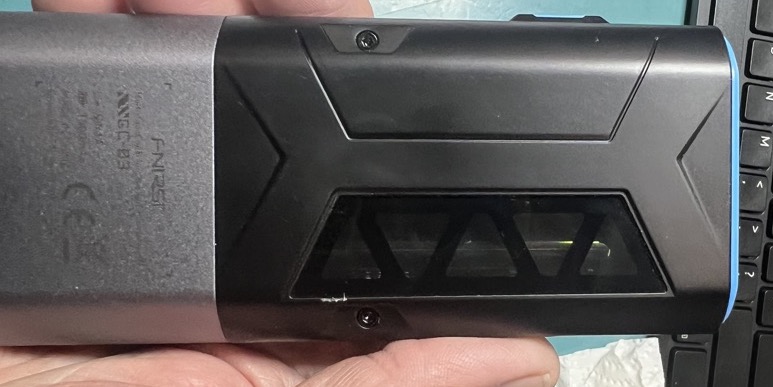 [9]The unit offers the ability to graph its various reading functions, and so I’ve included some photos of the three graph function screens for the nuclear radiation detection screens. I haven’t yet investigated the other detection functions since I was primarily interested in using this as a radiation detector. There is a sensor port on the side. (See photo at left.)
I am still exploring the sensitivity of this device, some of the instruments in the cockpit of the MD80 jet I work on have radium in them and I think it may be possible for me to use that as a test source.
The bottom line is I think that for around $100 or less you can have a unit that will detect nuclear radiation, electromagnetic radiation, as well as electric field emissions. FINRSI also makes a Geiger Counter unit, but I was interested in this one because of its other capabilities, so this was worth the extra cost, to my mind.