I recently bought a Mason Jar vacuum sealer from the Lehman’s Non-Electric [1] store located in Kidron, Ohio. The following is my informal review.
Disclaimer: I paid full retail price for this jar sealer. Lehman’s has not paid me or otherwise compensated me, nor do I represent them. I am simply offering to readers of the blog our experience with this product.
We have bought many items from Lehman’s over the years, from cast iron products, food, candies, to Aladdin Lamps. The quality of their products is what we call “generational quality”; that is, you can pass their products down to the next generation. (Except for the candy and food items. Those don’t get by me for long.)
We have an All-American Pressure Canner we bought from Lehman’s several years ago., If you’re going to preserve liquid foods, then use that method and save the Pressure Vacuum canner in this review for prolonging the storage of dry goods and foods. We use the pressure canner for our meats, fish, vegetables, and fruit, since that method is the safest way to preserve those types of foods.
For this device, I decided to buy it because it was not very expensive, even with shipping to the interior of Alaska. The total cost was $115.97 and this included the shipping costs of $32.99 and an extra-large pack of new jar lids. It seemed like an inexpensive way to store dry items that we can buy in quantity like cereal, grains, and other stuff that we would buy but not use quickly enough that it wouldn’t go stale sitting on the shelf in the original box or whatever container that the manufacturer shipped it in.
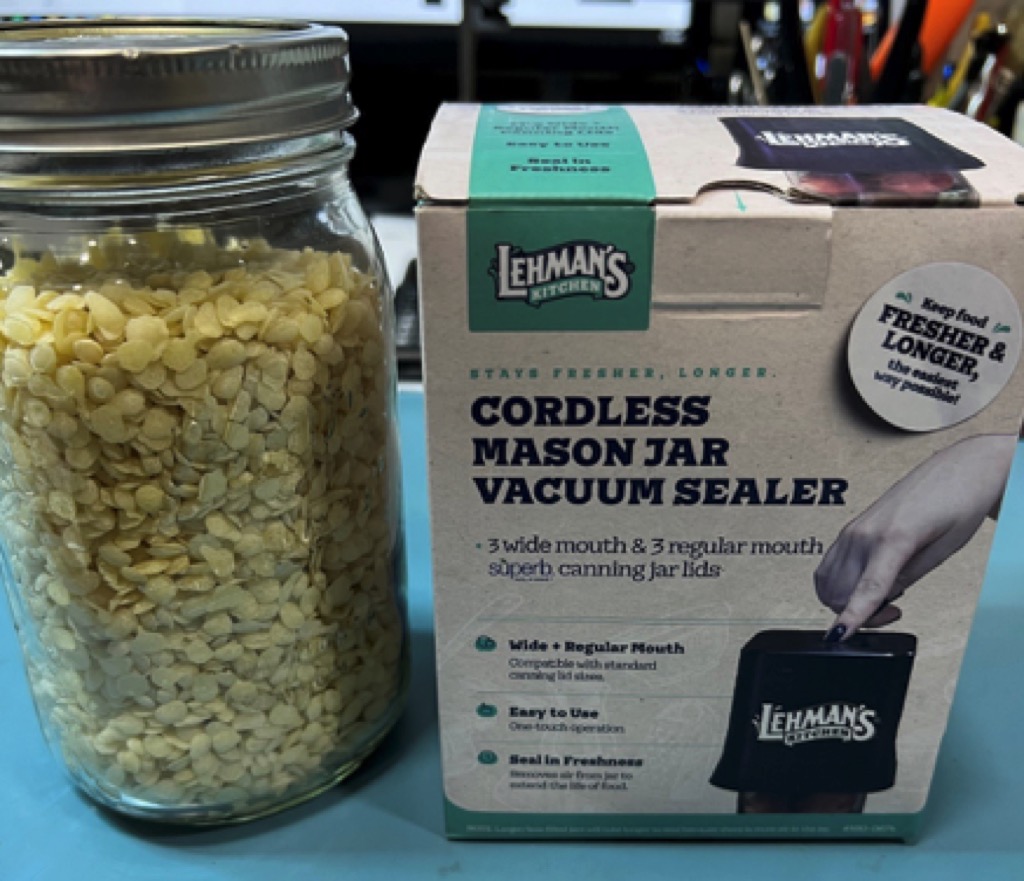 [2]For this review, I used a bag of beeswax beads that I had procured a long time ago and felt like it would be a good first time use in learning about this sealer. Now that I’ve had a chance to use it with a product I’m not worried about spoiling or messing up, I am going to start using it to store other items like sugar, flour, and dry food items that we use regularly. Once I’ve put up a number of items, I will put them on the shelf in our storage room. (My garage that has turned into a “root cellar” since it is kept above freezing in the long, dark winters of the arctic, and stays at around 50 degrees to 55 degrees in the summer since it is so well insulated.)
INITIAL OPERATION
The instructions that come with the unit are not going to dazzle you with their brilliance. But then that’s just the mind of a fuzzy-brained old guy, so I’ll let you be the judge of them, should you buy one of these critters. I read them several times before it dawned on me that I was overthinking them. There are apparently other attachments you can buy that allow you to use this vacuum pump on bags and such and so the instructions mix in those operations in the beginning and so I was looking for what was missing; or so I thought. No, not missing, I just didn’t order them and probably won’t since we already have a nice unit that was made for sealing bags of food and such. My next project to seal beyond the bee’s beeswax beads will be my personal mix of nuts, grains, and dehydrated fruit in what I like as a munchy kit for use on the trail or on the road.
So, once I read the whole operations manual and realized what they were trying to get across, it turned out to be much easier and simpler than I initially thought. All the inventory, diagrams and such for the accessories should have been listed in the back of the operator’s guide and just get to the good stuff of the basic operation on jars up front. Embarrassing for me to admit, but it is so easy that even a grizzled old caveman (or woman) can do it.
CANNING BEESWAX BEADS
Why bee wax? Because my bride of many years who is very wise to my ways and antics said no to food stuff for now. She didn’t understand why I bought that bag of bee’s wax beads in the first place and since it was long ago and far away in another time domain neither do I? But I’m sure it was for a good reason and seemed like a good thing at the time. Besides, why experiment on food that I plan to eat? Next up will be flour and such.
 [3]
[3]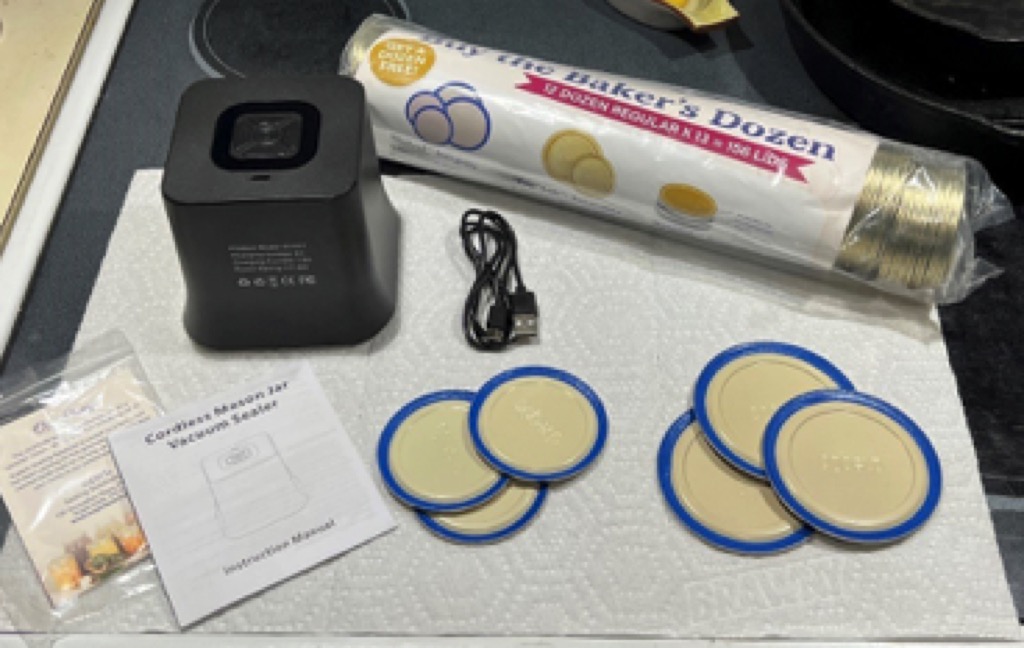 [4]Once I figured out how this contraption works, I went ahead and plugged it into the wall wart charging unit. It comes with the charging cord a C-type USB cord with a normal USB plug on one end and the C type on the other end. I happened to have a two-place wall wart charging unit, so I plugged the sealer in and let it charge up until the green light that was blinking when it arrived went to solid green.
You could use a computer USB port to charge it with, but also any wall wart that can output 5 volts to charge up the unit will work as well. It took about 20 minutes to fully charge this critter, and I haven’t used it enough yet to see how many cycles it will run until it runs down. Sealing the jar of wax only took about 10 to 15 seconds and I repeatedly did the process just for the practice and yet the charge light is still green.
THE SEALING PROCESS
First, if you’re going to be sealing anything you plan to eat then you must first sterilize the jars. The usual hot bath canning method will be the best way to do this, and I highly recommend that you do this.
As for the beeswax, I have no plans to eat that stuff, so I didn’t sterilize the jar. The wax came in a zip lock baggie, so I’ll just put it back in the bag and use the jar for real food.
Once you have sterilized your jars, lids, and rings just as you would if you were going to pressure cook food stuff set them aside to dry completely. Place whatever you plan to seal like flour, sugar, oats or such in the jar you are using. This machine will seal any regular Mason or Ball jar with the wide-mouth lids or regular mouth lids.
The unit came with new lids made by Superb Canning Lids Company, and I used their lids as well as a used Mason lid that I had on the jar to begin with. It didn’t seem to matter which brand of lid I used but the Superb brand was there and in addition to the six lids the unit comes with (3-large and 3- small) I also bought the “Bakers Dozen” package of Superb Lids as well because we are low on lids and they are out of stock up here locally. That package has 12 dozen lids in it in a mix of large and small types. They were not very expensive which for us up here in the hinterboonies is relative to needs and availability. For folks on the outside (the rest of the USA) it is probably not an issue.
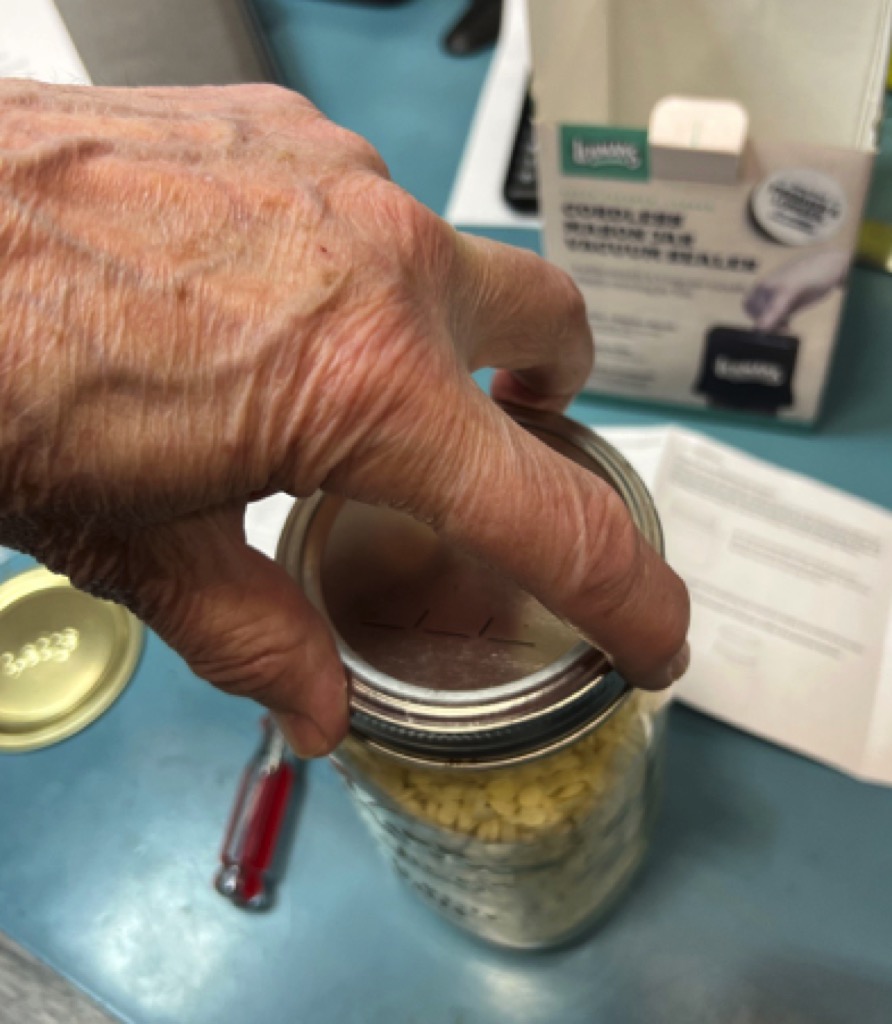 [5]Fill the jar to just below the rounded top of the jar, place the lid on the jar and use the three-finger method to tighten down the ring. Do not over-tighten as this will prevent a seal from being formed. I did that on purpose just to know that it’s possible to mess this up. Once the lid is set with the ring attached, push the power button in the middle of the pump, simply push the vacuum sealer down on the jar top until it bottoms out. There are some rubber seals inside that unit which are there to seal the jar into the pump.
Do not try to seal a jar without the ring on it as the jar will not seal and that lid will remain inside the seal area as the ring comes off. Yeah, I did that.
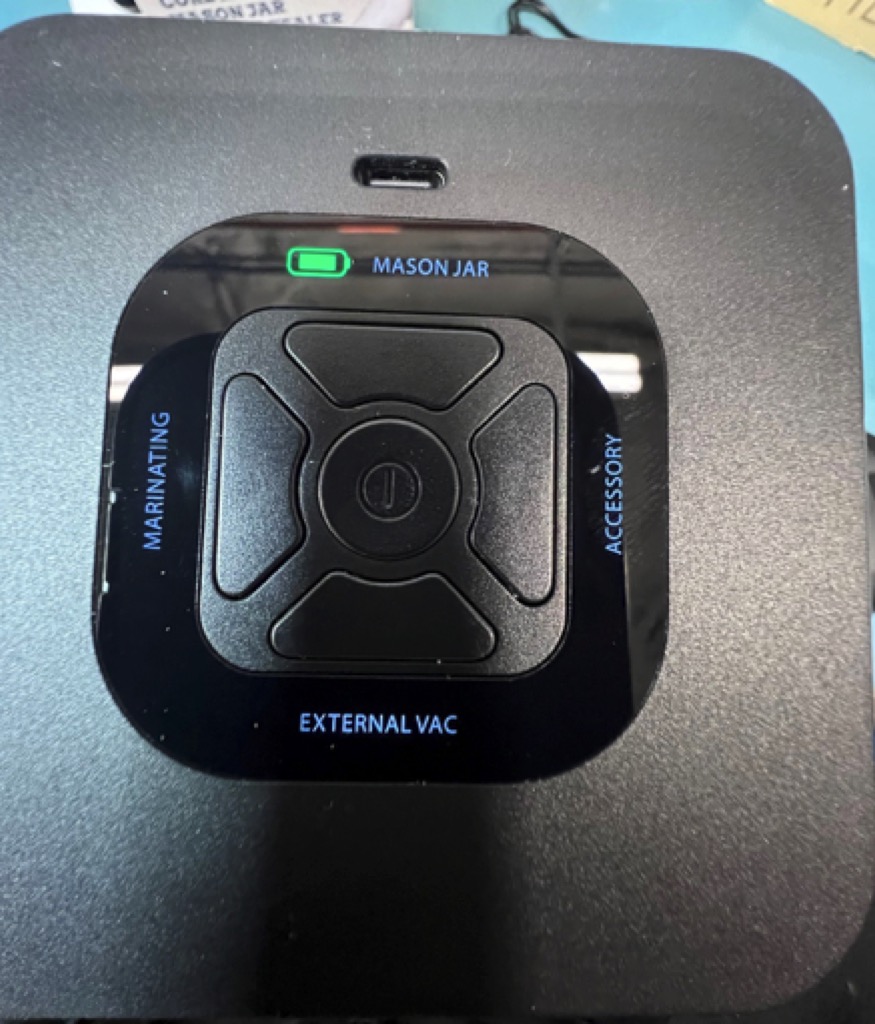
You’ll see at the top of the pump after you push the power button in the center of the pump that there will be a display in blue to indicate the process you want to perform, either Mason Jar, Accessory, External Vac, or Marinating.
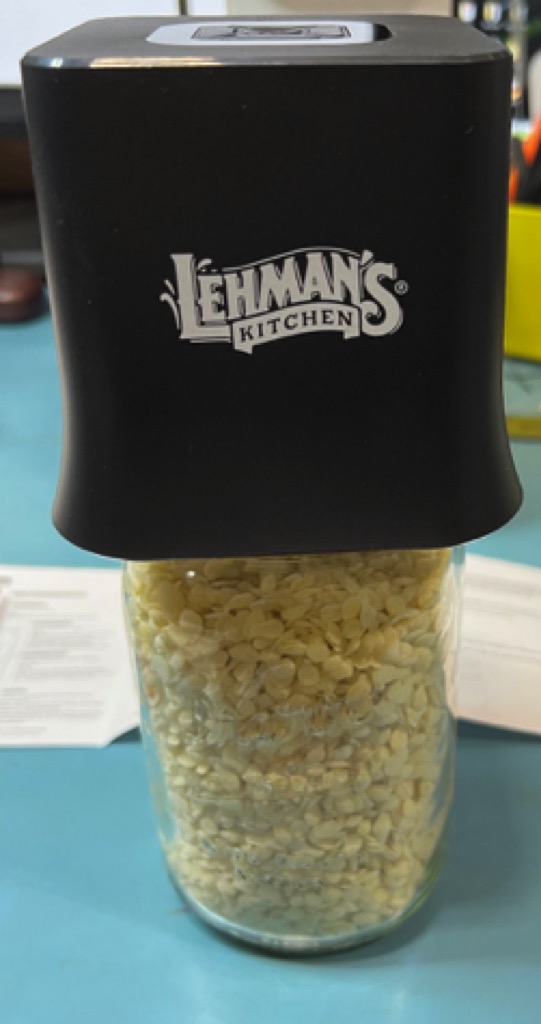 [6]Just hold pressure on the jar and push the Mason Jar button and let the pump run until it stops. As I said the jars of wax only took about 10 to 15 seconds to seal. Remove the pump and press in the middle of the lid of the jar you just sealed. It should make a popping sound, and this shows that a good seal has been made. When we use the pressure canner the jars will pop as they cool down indicating a good vacuum seal, this is the same as for the lid popping when you seal it with the pump. That’s it, finished.
So, is it worth it? That you will need to decide for yourself. It’s fast, it’s simple and it’s inexpensive. I am going to spend the weekend canning (vacuum sealing) some food stuff. I’ll mark and date the jar lids and set them in the storage room and let you know in a few months just how well this experiment has fared.
When we go to the store, usually Safeway but occasionally Costco, we don’t buy the larger quantity of items. So, here is my devious plan; go to Costco, get that big bag of macaroni, rice, sugar, or whatever and can it in the jars in amounts that we will consume it in as opposed to opening that bulk bag, jar, or whatever container the stuff comes in and can it in the smaller storage quantity for our current use needs. The problem is that when I go shopping, I don’t go for just a gallon of milk or a loaf of bread. When I go to Costco it is for $400 or more and I try to avoid the bulk size deals that are a better buy in terms of quantity versus cost. We don’t have 10 children to feed, so there’s that. Now I am thinking that all those extra canning jars setting around have a good use and storing the dry stuff I can buy in the bulk size and break down into quantities we would use is where this vacuum sealer may well prove to be a good deal.
If you are considering buying one of these units, then I recommend it. It appears to be made of good quality material, it is easy to use and should last a long time if it is kept stored clean. Lehman’s has always stand behind their products and I’ve never had any issues with them for breakage or poor-quality products.