Saturday, May 25, 2013


Today we present another entry for Round 46 of the SurvivalBlog non-fiction writing contest. The prizes for this round include:

First Prize: A.) Gunsite Academy Three Day Course Certificate, good for any one, two, or three course. (A $1,195 value.) B.) A course certificate from onPoint Tactical. This certificate will be for the prize winner's choice of three-day civilian courses. (Excluding those restricted for military or government teams.) Three day onPoint courses normally cost $795, and C.) Two cases of Mountain House freeze dried assorted entrees in #10 cans, courtesy of Ready Made Resources. (A $350 value.) D.) a $300 gift certificate from CJL Enterprize, for any of their military surplus gear, E.) A 9-Tray Excalibur Food Dehydrator from Safecastle.com (a $300 value), and F.) A $250 gift certificate from Sunflower Ammo. and G.) A roll of $10 face value in pre-1965 U.S. 90% silver quarters, courtesy of GoldAndSilverOnline.com. The current value of this roll is at least $225.

Second Prize: A.) A gift certificate worth $1,000, courtesy of Spec Ops Brand, B.) A Glock form factor SIRT laser training pistol and a SIRT AR-15/M4 Laser Training Bolt, courtesy of Next Level Training. Together, these have a retail value of $589. C.) A FloJak FP-50 stainless steel hand well pump (a $600 value), courtesy of FloJak.com. D.) A "grab bag" of preparedness gear and books from Jim's Amazing Secret Bunker of Redundant Redundancy (JASBORR) with a retail value of at least $300 and 10 TAPCO polymer magazines (5 AR and 5 AK) courtesy of Armageddon Armory, E.) A $250 gift card from Emergency Essentials and F.) Two cases of Meals, Ready to Eat (MREs), courtesy of CampingSurvival.com (a $180 value).

Third Prize: A.) A Royal Berkey water filter, courtesy of Directive 21. (This filter system is a $275 value.), B.) A large handmade clothes drying rack, a washboard and a Homesteading for Beginners DVD, all courtesy of The Homestead Store, with a combined value of $206, C.) Expanded sets of both washable feminine pads and liners, donated by Naturally Cozy. This is a $185 retail value, D.) A Commence Fire! emergency stove with three tinder refill kits. (A $160 value. E.) A Tactical Trauma Bag #3 from JRH Enterprises (a $200 value), and F.) Two Super Survival Pack seed collections, a $150 value, courtesy of Seed for Security.

Round 46 ends on May 31st so get busy writing and e-mail us your entry. Remember that there is a 1,500-word minimum, and that articles on practical "how to" skills for survival have an advantage in the judging.


(Why I prep, and how I do so in a family that thinks I’m crazy.)

In the summer of 1977 my mother dragged me to see my older brother’s Cub Scouts meeting.  I was closing in on my sixth birthday and she informed me in no uncertain terms that I would be joining.  My mother was one of the multitudes of single mom’s in my part of Brooklyn.  A neighborhood where at the time crime was high, money was tight, and involved dads were few.   The only place for many boys to find any kind of positive male role model was in Scouting.  So off to the basement of the local savings bank I went, passing along the way many other kids whose parents weren’t making them go off somewhere that required stuffy uniforms on humid July evenings. 

Shortly after arriving, “Signs Up” was called and the scouts were ordered into their Dens so the meeting could open with The Pledge of Allegiance.  When that was done and all outstanding business concluded I watched in absolute amazement as the older boys (the Webelos) proceeded to learn how to treat shock and minor wounds on one side of the large room while the younger boys (Cubs) were learning how to lash branches together to build a tripod for use as a camp table complete with seats.  Those relatively simple things spoke to me on a level I still can’t comprehend.  I was “all-in” right then and there.

From that night until I turned six I was at every meeting.  I became a mascot of sorts, treated as a member of the team but not quite in the game.  It was a big deal for me when I was finally able to wear the uniform.  At the time (I believe it has changed now) the neckerchief had a picture of a bear cub and the logo: “Be Prepared”.  Words that still echo in my mind and a philosophy that continues to permeate everything I do.

The Modern World:

So here I am: A full grown man, husband and father both, having grown up hearing some variation of “Be Prepared” on a regular basis…  “Make sure you have a dime for the pay-phone”, “Make sure you have extra pencils for your test”, and “Make sure you check your engine fluids before you drive that far”.  The list of recommendations of how and why to be prepared just keeps going and going. 

In a modern world a fully charged cell phone has replaced the dime for the pay phone, but otherwise little has changed with regards to what we tell our children on a daily basis.  So you can imagine my surprise when upon building an emergency kit some year’s back, my wife looked at me with “that look”. 

You know the one you get… it sort of says: “Poor fool just doesn’t know any better”, the visual equivalent of a condescending pat on the head.  I guess I just didn’t realize that being prepared was somehow strange.  So my wife and I proceeded to have a conversation where on one side was the feeling that you can’t ever be too careful (especially in light of how many times we lose power in Upstate N.Y.), and on the other the assertion that I’m paranoid; backed up with the ever so logical “what will the neighbors think?”  I was astonished.

Having grown up about five cents below the poverty line and being raised with Scouting at my side, I had learned to always hedge my proverbial bets.  To find out that according to the people who loved me preparedness was considered crazy…  that most people truly believe the government can and will take care of them in a crisis… just confounds me. 

Had these people not been watching the same news I had?  Do they not remember any of the natural disasters over the last ten years?  Katrina, Irene or Sandy anyone?  Were all of my tidbits of wisdom thrown out like the mornings coffee grinds?

After several discussions about the topic of preparedness I realized I was alone.  I would not receive any assistance in gathering, organizing, storing or in any other way getting my stuff together for an emergency of any kind let alone for TEOTWAWKI.

I had no choice but to become: “The Secret Prepper.” (Cue ominous music.)

Logistics of a dual identity:

Deciding on where to begin is kind of like being an eight-year-old with a $100 bill in a candy store: Overwhelming in its possibilities.  So in looking at the logistics of fulfilling the requirements of my shadow-self, I decided to create 3 basic (but in retrospect woefully inadequate) categories to manage the tasks:

  1. How to pay for it?
  2. What to get and where to get it?
  3. How and where to store it?

The most difficult of these three options, for me, was how to pay for it.  Having a stay at home parent raising a child, in my humble opinion, far outweighs the negative financial effect resulting from only one income.  The problem I came across is that my wife wears so many hats.  I make the money, take care of the yard, kill the bugs and protect us from things that go bump in the night while she does pretty much everything else.  This includes balancing the checkbook.  (Remember, she’s not on-board because I’m nuts.)

How was “The Secret Prepper” to accomplish any of his preparedness goals while not tipping his hand to the one-woman oversight committee that thinks he’s insane?  Not to mention maintaining Operational Security (I will make references to where I adhered strictly to OPSEC.)  Over time it became a game to me.

Getting ready for the Schumer on the cheap:

Finances came from good old-fashioned sacrifice.  I’ve found that when money is tight you have an obligation to stick to what you feel in your gut is important.  As such, sacrifice is an imperative.  At that time, when all was said and done I could allot myself $25 each Friday for the following week.  This money was to pay for my lunch, coffee or anything else I wanted while I was at work. 

I realize this doesn’t sound like a significant amount of money, but once you learn how to squeeze blood from a stone you’d be surprised how much those suckers can bleed.  So I thought back to my childhood and how my mother managed to feed us and came up with some practical solutions as well as some that were foreign to me.

Two things that I did were start a vegetable garden and learn how to jar/can.  This was a completely foreign world to me.  Growing up in an apartment building, the only reason I wanted a good-sized property hours from the city was to get away from people.  I didn’t realize what could be done until I bought a homesteading book.  The amount of money I now save on produce is astonishing.  This has served to help my entire household and not just “The Secret Prepper”.

Otherwise, I spent the first few weeks stocking surplus goods in my locker at work.  Nothing too big mind you, just the basics for the purposes of masking my future purchases.  Ferreting away an excess item from home here and there and bringing it to work, I managed to stash several days lunch in my locker and needed less money the following week.  My surplus cash went into an envelope there as well.  I made it a point to only use cash so as not to create any kind of a paper trail (OPSEC).  It was good practice for my later and larger purchases.

I soon had a sizeable bankroll and a grocery store in my locker with none the wiser.  Some of this food was moved to buckets in the basement and some was consumed for lunch but all of it served to free up $100 a month in cash.  This process took several weeks but once I had it down to a science there was no stopping it.

Saving about $100 a month, I was able to start prioritizing the next objective: What to get and where to get it?

I decided on what my most immediate need would be in the event of the most likely emergency in my area: Nature’s fury and her prolonged power outages.  So with that particular goal in mind, and the knowledge that needs are similar in many emergencies, I proceeded to spend my hard saved money.  Candles, matches, water purification tablets/canteens, solar blankets, first-aid kit, tent and sleeping bags, walkie-talkie’s, batteries, MREs. Thus, all of the basics.

My cup runneth over:

Pretty soon my work locker, my car and my super-secret-hidey-hole were near to bursting at the seams.  It was time to consider task three: How and where to store it?  The problem was, I was still working on what to get.  It became clear to me that a two-pronged approach was in order.

I went to a “mom-and-pop” hardware store in the next town and bought two footlockers, paying in cash (OPSEC), making sure that they could fit into the trunk of my car in case I had to bug out rather than in.  One I labeled camping gear and proceeded to fill it with pretty much anything that fit the bill, storing it where I keep all of the other things my family has no interest in. The other one I left unlabeled and filled with surplus goods.  I added to them some large desiccant packs that I got for free at a piano store and hid the unlabeled one in a dark corner among the spiders.

With room at my outside locations freed up, I went back to my list of necessities.  After buying and waylaying various supplies, I started looking into the next phase of purchase and storage: Mylar.

Nowadays there are a lot of good videos on YouTube about the use of Mylar bags.  Not so just a few years back.  I’ll tell you what I believe to be the most important piece of information I learned about Mylar bags after I had started using them.  I have decided (once again my humble opinion) that I prefer to fill smaller bags.  I can then use these bags to create a variety of items in a single storage bucket.  If I had to grab just a few buckets and bug due to an emergency I won’t have to think about which ones to grab.  Each has a little of everything.  But I’m getting way ahead of myself…

I bought some 5-Gallon 5mil Mylar bags and oxygen absorbers through a dummy persona from an Internet retailer that accepted money orders (OPSEC).  Then, to save money I went to a bunch of grocery stores out-of-town (OPSEC) and basically trash-picked or asked for some food-grade buckets.  When I had a good bucket to Mylar ratio I proceeded to fill my dried stores.

Filling Mylar bags is a simple thing to do.  It’s pretty much a 3-step process:

1. Put bag in bucket and fill with dry goods.
2. Add Oxygen Absorbers.  I use 300 to 500cc absorbers per pound depending on how much “dead air” is left in the bag. For instance ziti leaves more air than rice.
3. Fold the bag over, squeezing all of the air out and run a hot iron across the open end to create a seal.  I usually iron the outermost part of the bag, near the opening, and an extra two inches to create a bigger seal.  By leaving a lot of the bag below the seal you can re-use it.

My dried stores consisted of what you’d expect: Beans, rice, pasta and various grains totaling a paltry five buckets-worth.  To supplement them I proceeded to add cans of various meats like tuna, sardines and the like.  Anything with a shelf life extending out for a few years that I could and would eat over time was collected and stored away.  After a while my secret stash, which was in plain sight, was becoming noticeable (definitely not OPSEC).

It was about then that I read on a blog about how a couple in Manhattan with a considerable shortage of space managed their preparedness needs. 
While I couldn’t follow their example strictly I did learn a lot from it.  Here are three examples of what I did with this wisdom:

  1. I made a workbench using stacked buckets for the legs and camouflaged it on three sides with storage shelves. (They had made a kitchen table camouflaged with a table cloth,)
  2. I stored food in Mylar bags under (my side) of the bed in those under-the-bed storage containers, surrounding them with out-of-season clothes.
  3. Started using 1-gallon Mylar bags to fit a greater variety of items per bucket.

Now it bears note that following number three is a less efficient use of food-space. When you seal the items this way and put them into a bucket there is a lot of dead space between the bags.  What I do with those spaces now is add things like: ammo, toilet paper, water filters/tablets, basic first aid supplies and pretty much anything else I can cram in there.  [JWR Adds: Never include anything on a food container that might exude toxic vapors such as lubricants, paint, Sterno, cans of lighter fluid, hexamine tabs, or Trioxane fuel bars.] So long as I can lift and carry them without straining myself I fill the buckets as much as I can.

Now, instead of having to open a 5-gallon bucket of rice and risk spoilage, I can open smaller amounts as needed and preserve freshness to greater quantities of supplies.  Plus, I have the added benefit of knowing that a single bucket is roughly equal to a full month of a majority of my supplies.  I’ll delve into this momentarily as I know it sounds like a ridiculous estimate.  Just bear with me.

Hiding in plain sight:

Over time my stores grew and my available space was shrinking.  I needed to find a new way to hide my stores in plain sight.  One of the way’s I’ve done this is to put storage buckets next to the items they resemble.  What I mean by this is that I have a bucket with a re-used label stating “Activated Carbon” next to my house’s water filter.  I have a bucket with a manufacturer painted fertilizer label on it among my garden supplies. The variety of things that now require buckets for “organization” in my house is amazing.

All of my buckets have been cleaned and sterilized, and the use of Mylar goes further to ensure the supplies are safe.  Plus, the buckets are among the items they are pretending to be.  This adds a level of camouflage that I otherwise wouldn’t have achieved (OPSEC).  If you think about it, you can find many different ways to not-camouflage your hidden stuff.

Like pulling a rabbit out of a hat:

So now that I have some experience in this, what do I fit in my magical, invisible buckets?  I’m glad you asked.  It takes some creative packing but here’s a typical inventory:

-8 Lbs Rice                                               
-5 Lbs Beans
-5 Lbs Pasta                                               
-5 Lbs TVP (taco, beef or chicken chunk)
-1 cup Sugar                                               
-1 cup Salt
-1 cup Italian Seasoning                       
-100 rounds .22 Long (for small game or ballistic wampum)
-4 Bottles of Water Purification Tablets in a wide mouth quart jug (totals 50 quarts)
-25 each of Chicken and Beef Bullion Cubes (also in the quart jug)
-1 roll of compressed/vacuum sealed toilet paper (cardboard removed)
-50 (ish) compressed/vacuum sealed napkins (can double as kindling after use)
-200 strike anywhere matches in a sealed plastic tube
-2 solar accent lights removed from their stakes
-Whatever first-aid supplies I can get in

Coupled with my jarred stores, garden and chickens (see below), these supplemental items should do just fine.  And if something should go wrong what buckets I may need to bring should I have to evacuate/bug out will still have a solid variety of supplies.

Subterranean Supermarket

I will touch briefly on canned goods.  We can all agree on the fact that they last a long while and offer up a variety of ways to supplement protein and calories as well as ways to avoid Food Fatigue

Food Fatigue is basically getting so sick and tired of eating the same things repeatedly over a long period of time that you slowly starve yourself because you choose not to eat them anymore.  Please feel free to look up a literal definition.

Setting up a rotational stock system should be high on your list.  Canned goods must be stored in such a way that they can be rotated with every purchase.  Optimally you can set up a shelf that lets you put new stuff directly in back and allows you to easily take from the front.

Just imagine that the Schumer has hit the Fan.  You’ve used everything in your refrigerator first and now are going to your stores.  You open up a can of tuna and it just doesn’t smell right.  So you open another… same thing.  As the fear sets in you realize your mistake.  The best way to avoid this is to rotate your stock and stay on top of it. 

Rule of thumb: One in, one out. [Quickly replace everything you use, and use your oldest stocks first.]

Other things you need to keep along with your canned/jarred stores are:

  1. Bleach: You can’t beat it for keeping things sanitary, especially if you have a designated area for butchering game.  It can also be used for treating water, but I’m not entirely comfy with that.
  2. Vinegar: It’s a great non-chemical cleaner that can be used where food is prepared/consumed.  You’ll also need it for jarring foods, post-SHTF.  Store different types of vinegar.  White for cleaning/jarring, apple cider for poultices or treatment for conditions like Gout.
  3. Alcohol:  The drinking kind.  I do not partake often, but if there is any kind of prolonged crisis you may need it for tincturing medicines.  It’s also a great barter item.  Make sure you have vodka and high proof rum.

An old dog learns new tricks:

So to address the obvious shortcomings in my monthly supply estimate, I did after all say it was a rough estimate, I had to learn a few new skills.  Under the guise of boredom (OPSEC) I decided that I wanted to enter the magical world of keeping chickens.  I had to think long and hard about this one.  There are a lot of reasons not to do this.  Among them are:

  1. Chicken coops require maintenance.  If you can’t keep up on things you have no place having them, especially when it comes to living creatures.  They may only be chickens, but their still Gods creatures.
  2. Space is a factor.  If you have a rooster and your neighbors are as little as an acre away, you won’t be friends for long.
  3. Town ordinances.
  4. My limited experience with animals of any nature.

If you look on YouTube there are a lot of instructional videos dealing with coop construction.  I strongly recommend watching them.  Also, though my acreage is small I’m surrounded on three sides by state land.  As for town ordinance, the clerk told me that, though illegal, if there were no noise complaints from my nearest neighbor then there weren't any chickens in existence on my property. 

After about six months, I decided that all was well on the chicken keeping front.  The next thing I had to learn was how to jar and can the produce from my ever-expanding garden. 

I firmly believe that it is my duty not just as a Christian, but also as a human being, to give charitably whenever possible.  I have found that a garden can go long ways towards helping others when needs are great.  As unemployment in my area exceeds 15% at the time of typing this, I am finding more and more people within five miles of my home who are in need of food assistance than I ever though I would see.  Having gone to bed hungry many times as a child I find this to be an affront to my very existence.

As such I keep producing as much as possible.  Along with this, I have found that it has become a simple matter to jar foods like pickles, salsa, tomato sauce, chutney and bean salad.  I give my surplus to the food pantry run by my church versus direct giving (OPSEC) and I’ve managed to streamline my process and make better quality stores for myself.  I still have a lot to learn, but I’ve always believed that you learn best by doing.

The best offense is a good defense:

I’ve now spent the last couple of years secretly creating my cache of supplies.  While doing so I’ve come across a like-minded individual who brought me to my current phase of preparedness: Security and Defense.

I had come to realize that there is a giant hole in all of my preparation.  I did not have the ability to defend it.  I have a fairly decent ability to fight hand-to-hand and with knives.  I honed this ability growing up in a rough neighborhood.  My biggest problem was that I didn’t want to end up being the fool who died because he brought a knife to a gunfight.

To that end I sought to get my pistol permit.  During my journey to permit-hood I met a firearms instructor who, as it turns out, lives not too far from my home.  My gut told me we were kindred.  After my class we got to talking and our belief systems seemed to be in sync.  So I decided to break operational security and divulge my preparedness.  I have not had a single regret about it yet.

My newly discovered partner-in-preparedness is a retired SWAT-experienced police officer.   He has helped several people on the road to “Emergency Security” and has decided to not only teach this to me, but to train with me.  I have been introduced to the world of the “three gun” philosophy and am currently taking steps to hone my skills along with others like me.

A man’s home is his castle:

When it comes to home defense, it’s not enough to just know how to shoot.  I had heard numerous times about “Hardening your home”.  Hardening, in general, is a very simple concept: Don’t make it easy for the bad guys to get in and win.  Use things like thorny plants below but not overgrowing your windows, security system, motion lights etc.  But what about when the Schumer hits the fan?

These basic precautions would likely not be enough to fend of a few hungry people let alone stand up to a full-on assault by looters.  With that in mind I spent a good amount of time walking the perimeter of my property looking for places where my property, as well as my home, could be compromised or used against me.

My property, which borders hundreds of acres of state land, is heavily wooded.  I don’t expect to be set-upon by a fast moving vehicle based force from any of the sides facing forest.  Any approach on foot from these directions would have plenty of cover, but only after traversing 12 acres of swamp on one side, and hundreds of densely forested acres on the others.  I have made good use of a chainsaw and thinned out the woods for a hundred feet in each direction past my property line.  This wood will do a lot of good in my fireplace.

Additionally, I have taken the liberty of re-populating the now thinned areas with low growing vines for ground cover.  These will serve to entangle all but the most dexterous foot thus slowing any approach, and even offering up targets should they get stuck on approach.

With three of four areas of approach taken care of I then needed to contend with my homes three weakest points.

  1. My proximity to the road.
  2. The gaping hole in my home created by my glass deck doors.
  3. The gaping hole in my home created by the Bay Window facing the road.

There isn’t much I can do about how close to the road my home is.  Here are a few solutions I have applied or am in the process of at the time of typing:

  1. The digging of a “Water Run-off” ditch along my road frontage will do considerable damage to smaller vehicles.
  2. A six-foot privacy fence, using concrete in the pillars running the length of my property.  On the “Yard Side” of the fence, concrete “Planters” with decorative brick facing have been added at intervals that will make it impossible for anything to drive between (should my fence be rammed).  Plus they look nice and are the future home for my medicinal herb garden.
  3. My glass doors will be removed when SHTF.  To take their place I have constructed a ballistic and fire resistant blockade that I refer to as “The Portcullis”, though it doesn’t really look like one.


Building The Portcullis

2x8 pressure treated lumber was used to frame out the door opening.  The framing was done in such a way as to allow for the installation of a steel fire door in the center.  The outside of the structure will be closed around the door by screwing plywood to the framing and allowing it to overlap the house by one foot in all directions. 

This plywood is then covered with sheet metal, which when needed for actual use will be coated in barbecue paint.  The whole effect, with the steel fire door installed, is to create a standard door opening that offers protection from nasty things like Molotov cocktails and bullets. 

The additional ballistic protection comes from gravel.   Once the outside of The Portcullis is installed, the inside will go up in sections.  The bottom four feet will be covered with plywood.  At which time gravel, cleverly disguised as additional parking on the side of my driveway (OPSEC), will be used to fill in the space between the outer and inner plywood. 

When I reach the top of the first section, three additional feet will be added in the same manner.  The final foot will be filled this way but with a bit more difficulty as there is little room remaining for the shovels of gravel to be manipulated.

The final product results in excellent ballistic and flame protection.  The same process will be used for the Bay Window with the addition of two gun ports.

The beauty of this assembly is that all of the parts can be stored unassumingly in my basement, shed or anywhere else such things seem ordinary (OPSEC).

It all comes full circle:

As I type this I am still living this secret life.  I have learned how to raise chickens, grow crops, jar and can, purify drinking water, store food, use multiple weapons and harden my home.  I am surveying my land for an area suitable for fuel storage and I have even signed up to take “classes” on battlefield medicine.  But I have yet to re-visit the topic of preparedness with my family.

To an extent I am a coward.  I know how I will react in an emergency.  We’ve had multiple hurricanes and nor’easters. We’ve had a “gas crunch” which saw people fighting on long lines.  I have stared-down armed assailants and fought violently to clear a path through harm’s way. And worse, I have performed CPR on my dying child, and failed, while others either panicked or froze in fear. I know exactly who I am.

I’m just still trying to find out how to be him.  Until then I am shrouded in Operational Security in my own home.  I am “The Secret Prepper”.


Dear Mr. Rawles,
A young friend recommended "Patriots" to me a month ago and, since that time, I've consumed it's two sequels and "How to Survive..."  I was pleased to see that I have followed most if not all of your recommendations without having known them - my endless frustration in life has been to never had an original thought.  In re-reading "Surviving...", the lighting, alarm and camera chapters, I note that you reference motion detector operated lighting, Dakota Alert MURS systems and webcams but not an alarm system as such.

Back in 2008, as moving day to The American Redoubt was close at hand, I suddenly panicked thinking, "What about security for my U-Haul full of "stuff"?" (By "stuff", I mean valuable items that the movers wouldn't handle or those which I did not want them to handle.) Since my move was to include at least 3 nights in low-end motels, the kind that allow dogs, my concerns increased exponentially.  In a sweat, I started web-searching like mad for some sort of portable alarm system that would signal me in my room without alerting or annoying others should the trailer be tampered with.  What I found was a remarkable system, the Tattletale.

The system is designed primarily for contractors who must leave storage units, materials and equipment scattered about remote locations.  The alarm signal is conveyed to a "central station" via the national cell phone network but does not use any single service provider or cell phone number, etc; the central station then alerts you and/or any others you may designate by whatever means you designate.  The alarm signal itself is sent via some sort of cell phone system "side band" that you, with your knowledge of arcane radio mumbo-jumbo, will understand.

The transmitter unit is portable, includes an integral motion detection unit and has battery backup which is good for extended periods.  Furthermore, numerous other devices can be added to this unit, wirelessly, such as additional motion detectors, smoke/fire detectors and locking devices which can be used to secure equipment or outbuildings, etc.

This system will be rendered unusable post-TEOTWAWKI, of course, but is an excellent system till then.  I used my system for more than two years and never had a false alarm.

Thank you for expanding my horizons and especially for scaring the pants off a lot of complacent but otherwise sentient beings and getting them off the dime - a 90% silver dime, that is.

All the best, - Sam

P.S.: The funny part of the story, though I'm loathe to tell it, is that my system arrived on the day of the move so I was not able to figure it out until I arrived in Montana and could finally sit down, focus and follow through.  To use one of your favorite phrases, "needless to say", I spent several very nervous nights on the road.  Three years ago, I built my retreat: a dugout ("earth sheltered home" to liberal greenies), 3/4th of a mile off the county road, out of sight behind a butte, at the end of a road closely monitored by friends. Therefore, I put my Tattletale contract on hold and have yet to re-install it.  S. 


I suspect this will start a trend: Commissioners Declare Carroll a Sanctuary County for Second Amendment. It is great seeing this coming from a state like Maryland. Please contact your county commissioners and state legislators and urge them to do likewise, with this as model legislation.

   o o o

Some useful lessons here: Self-defense groups spring up in Mexico to battle Knights Templar drug cartel. (A hat tip to Peter S. for the link.)

   o o o

Sue C. sent: Sweden's capital hit by worst riots in years. JWR's Comment: Conspicuously absent in this coverage is the fact that these "youths" are nearly all Muslim immigrants. The mass media in Europe has now so fully embraced Political Correctness that they are complicit with their cultural suicide.

   o o o

Attention readers living in Buck Owens country: The Prepare 2 Endure ("P2E") Emergency Preparedness Expo is scheduled for June 8th and 9th at the Kern County Fairgrounds in Bakersfield, California.

   o o o

J.F.J. recommended this piece: Inside Every Liberal Is a Totalitarian Screaming to Get Out

   o o o

Fellow blogger Mac Slavo warns of a trend that could be used as an excuse for disarming millions of Americans: You are Crazy: New Psychiatric Guidelines Target Hoarding, Child Temper Tantrums, and a Host of Other “Illnesses”. (Thanks to B.B. for the link.)


"Son of man, wail for the multitude of Egypt, and cast them down, [even] her, and the daughters of the famous nations, unto the nether parts of the earth, with them that go down into the pit.
Whom dost thou pass in beauty? go down, and be thou laid with the uncircumcised.
They shall fall in the midst of [them that are] slain by the sword: she is delivered to the sword: draw her and all her multitudes.
The strong among the mighty shall speak to him out of the midst of hell with them that help him: they are gone down, they lie uncircumcised, slain by the sword." - Ezekiel 32:18-21 (KJV)


Friday, May 24, 2013


JRH Enterprises is running a Memorial Day sale through June 1st on FLIR Scout Series thermal imagers. These are ideal for retreat security. The Scout PS24 FLIR is on sale for $1,850 and the FLIR PS32 Thermal camera which offers higher resolution and 2X magnification greatly increasing the range for $2,795. JRH also has on sale the DBAL-I2 Infrared and visible laser sighting system for use with your night vision device available.

--

Today we present another entry for Round 46 of the SurvivalBlog non-fiction writing contest. The prizes for this round include:

First Prize: A.) Gunsite Academy Three Day Course Certificate, good for any one, two, or three course. (A $1,195 value.) B.) A course certificate from onPoint Tactical. This certificate will be for the prize winner's choice of three-day civilian courses. (Excluding those restricted for military or government teams.) Three day onPoint courses normally cost $795, and C.) Two cases of Mountain House freeze dried assorted entrees in #10 cans, courtesy of Ready Made Resources. (A $350 value.) D.) a $300 gift certificate from CJL Enterprize, for any of their military surplus gear, E.) A 9-Tray Excalibur Food Dehydrator from Safecastle.com (a $300 value), and F.) A $250 gift certificate from Sunflower Ammo. and G.) A roll of $10 face value in pre-1965 U.S. 90% silver quarters, courtesy of GoldAndSilverOnline.com. The current value of this roll is at least $225.

Second Prize: A.) A gift certificate worth $1,000, courtesy of Spec Ops Brand, B.) A Glock form factor SIRT laser training pistol and a SIRT AR-15/M4 Laser Training Bolt, courtesy of Next Level Training. Together, these have a retail value of $589. C.) A FloJak FP-50 stainless steel hand well pump (a $600 value), courtesy of FloJak.com. D.) A "grab bag" of preparedness gear and books from Jim's Amazing Secret Bunker of Redundant Redundancy (JASBORR) with a retail value of at least $300 and 10 TAPCO polymer magazines (5 AR and 5 AK) courtesy of Armageddon Armory, E.) A $250 gift card from Emergency Essentials and F.) Two cases of Meals, Ready to Eat (MREs), courtesy of CampingSurvival.com (a $180 value).

Third Prize: A.) A Royal Berkey water filter, courtesy of Directive 21. (This filter system is a $275 value.), B.) A large handmade clothes drying rack, a washboard and a Homesteading for Beginners DVD, all courtesy of The Homestead Store, with a combined value of $206, C.) Expanded sets of both washable feminine pads and liners, donated by Naturally Cozy. This is a $185 retail value, D.) A Commence Fire! emergency stove with three tinder refill kits. (A $160 value. E.) A Tactical Trauma Bag #3 from JRH Enterprises (a $200 value), and F.) Two Super Survival Pack seed collections, a $150 value, courtesy of Seed for Security.

Round 46 ends on May 31st so get busy writing and e-mail us your entry. Remember that there is a 1,500-word minimum, and that articles on practical "how to" skills for survival have an advantage in the judging.


I’ve always considered myself and my family extremely blessed.  I also am a firm believer that God expects you to make the most out of what you have.  God gave me a wonderful wife and 3 healthy, strong boys.  We are a hard working family who have always had goals and planned well for the future.  We even had a bug-out plan when not many other folks even talked about such things.  Our world took a drastic turn a little over a year ago when my oldest son was injured in a high school wrestling accident.  In the blink of an eye my son became a C4C5 quadriplegic.  After about three months reality began to sit in and we had to start planning for a greatly altered future.  One night I began to think about our bug-out plan and it became obvious for a plethora of reasons that we couldn’t just grab our stuff and head out.  At this point I began to harden our existing home.  Fortunately we live in a very rural neighborhood with like-minded people around us.  There is nothing about us that calls attention to ourselves or screams prepper.  We just go about business as usual and quietly prepare.  Here is what we have done and are in the process of doing to make our house a handicapped assessable fortress.

I must preface this article by saying that we are not a wealthy family with an unlimited budget.  We are just a dual income family that has always saved for the future.  Most of what I will describe came together very quickly because we sold a property that was not handicapped assessable and opted to put that extra money in our now primary and only home.  I hope that what I’m about to share will help others who want to prepare and have a handicapped family member.  We’re not trying to reinvent the wheel.  I do realize that we are doing many things that other individuals have done and are doing, but, I will give you a unique perspective from a handicapped assessable point of view.  The first thing I learned was that you really do need to commit to live where you will hunker down.  Everything that you want or need will be with you all the time and you will never have to decide what to take and what to leave behind in an emergency situation.  I also found it easier from a financial stand point since I was putting money into one place.  So, with that being said, here is our home and retreat.  

Our house is a one level all brick home on a full basement with one step to get in the front door and a nice smooth slope with no steps down to the drive and basement.  Talk about handicapped ready before we even arrived!  Doors will be your first challenge.  They have to be widened to allow wheel chair access.  Use this opportunity to really fortify all those exterior entries.  Nobody will question you at all in this situation so here is your opportunity to go a little crazy.  I do suggest that you limit the amount of glass and beef these doors up to take a slug.  You can justify this by saying that the door may take a beating from the wheel chair and if it is a power chair it will definitely take a few good licks early in the game.  At the very least you need a very heavy wooden door with some kind of cross support.  Install a strike plate which would deflect and distribute the force of a blow along with reinforced hinges.  Go ahead and widen every single doorway inside the house.  You won’t regret it.  It will be easier for everybody to move around, I promise.  Eventually your injured family member will need access to the entire house and it is an opportunity to reinforce the interior a little as well.  Get rid of all carpet.  Wheel chairs don’t like carpet and it’s hard to keep clean.  Hard wood is an excellent choice for all rooms and no lip at any door.  Let’s talk wheelchair for a second.  Make sure you have a high quality manual push chair as a back-up if not your primary chair.  Charging a motorized chair could be an issue when there is no power to count on.  Opt for solid wheels rather than air so that you don’t have to worry about flat tires.  Air will give you a better ride though.

The next modifications made were in my son's living area which is in our finished basement.  These changes in particular are aimed at handicapped individuals but have made maintenance and livability much easier for everyone.  All carpet and tile was torn out so that we had raw concrete.  The concrete was then polished, stained, and sealed.  It’s beautiful and very easy to clean as well as super tough and durable.  Also worth mentioning is his bathroom.  We took out a wall and increased the area from existing closet space and constructed him a huge roll in shower.  The shower is now roughly a 10 foot by 10 foot area.  It’s overkill but, maneuverability is an important issue.

Surveillance was something that we put our money into soon after getting our son home.  We invested in both indoor and outdoor cameras.  We can’t be with our son at every moment, so, we can always check on him and his care person at any time and any place.  All of our cameras are tied into our alarm system and we can monitor with our phone 24/7 by video monitor at home.  These cameras will help as our son begins to gain some independence and in crunch time they may save your life by giving you a view of exactly what is going on outside without placing someone in a potentially dangerous situation.  We did opt for infrared cameras outside which give you an incredible view in the dark.

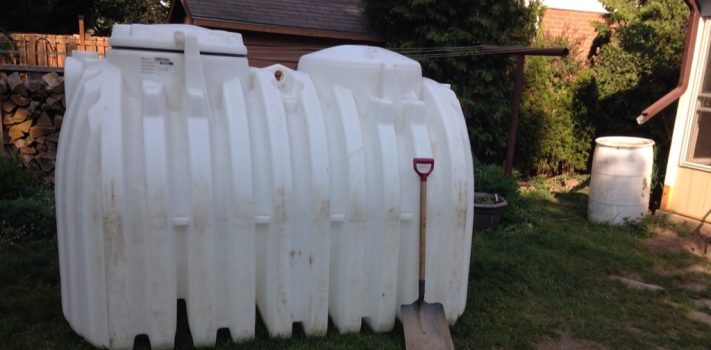
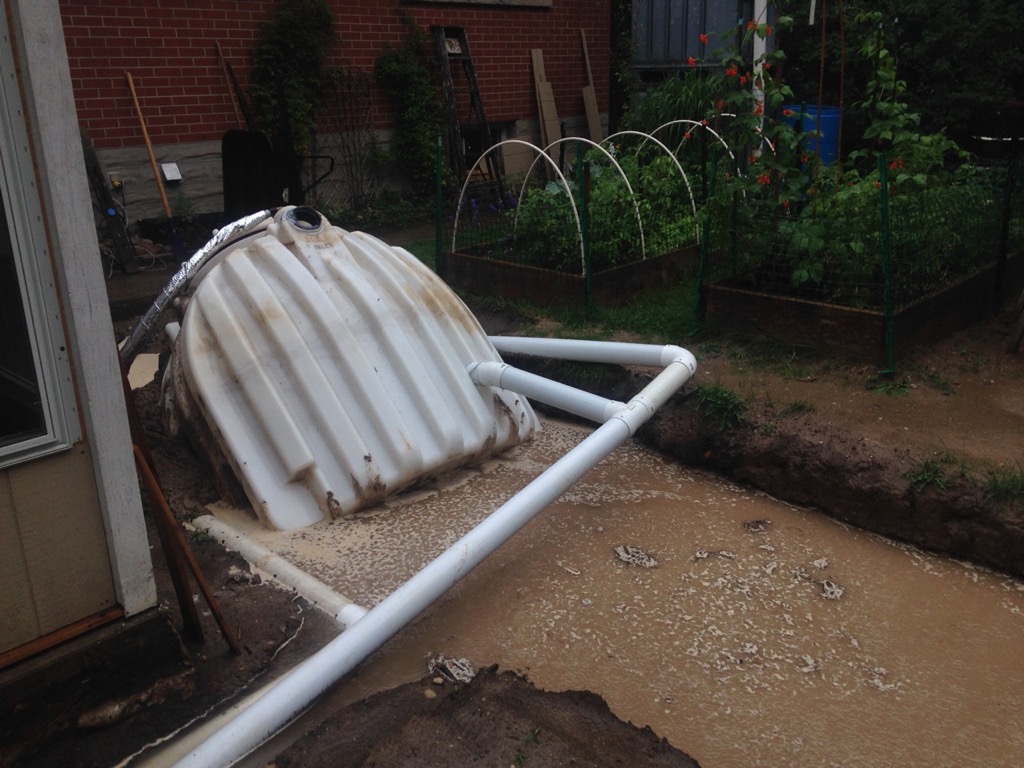
An all metal roof is nice but, you may have to put a few other changes first.  If you don’t have gutters, get them!  Rain water is your friend.  If possible, install underground tanks to catch all the rain off your roof.  I learned this trick from a Cajun that I duck hunt with.  He has a camp built on a barge that catches rain water in 2 tanks that each holds a thousand gallons.  If you treat your water with swimming pool chlorine and use your water wisely, you should have plenty of usable water at all times.  I have been shocked at how well this works at his camp.  I’m going to us a 1,000 gallon holding tank.  Putting it in will spur a few questions but, explaining that you have drainage issues and you also intend to irrigate with it should explain it all away.  It has also come to my attention that in some cities you must have a permit to catch rain water off your roof.  This is crazy, but some regulations in a few places say you are not allowed to change the natural flow of water, even if that is off your roof.  In my opinion this is government over reaching its bounds again.  If you’re worried about this it is easy to check.  We did, and all is fine.   We will pump the water with electric pumps that can also work with our back-up power system which I will discuss later in this article.  We use about 6,000 gallons of water each month and in crunch time this could be greatly reduced.  We get plenty of rain throughout the year here in the South, so we should be able to keep our tank rather full.  For now, we are picking out the most practical placement for this tank and with a little luck it will be catching water by June of this year.  Initially we will just use our tanks for watering and car washing.  This water will be perfect to use for washing and bathing as is.  It should be run through a filter system before drinking and cooking.   Another great thing about the underground tank method is that people will never realize that you have plenty of water.  We also store water in many other various containers. 

My next suggestion concerning water will be a little complicated, but this fix will hopefully make your septic system more trouble free.  An inspector will not allow you to do this but, route your black water (toilet) to the septic tank.  Re-route your waste water (gray) out to a run off to catch it for reuse.  If you plan ahead for this, when the mess hits the fan, all you will need to do is twist a few levers and you are on a black/gray system.  If you think about it, your home just became similar to a giant camper with a fresh water holding tank, black tank, and a gray tank.

Let’s talk about energy independence and some practical modifications that I have made and will be making very soon.  Solar energy is a strong and lasting option.  You will need a good supply of sunshine though.  Our house is situated so that we get full sunlight on our house from sunrise until sunset.  Did God know that we would need this place or what!!  The system that we are planning to install produces enough energy that we can meet all our needs and feed back into the power grid for credit should we so choose.  We will have a battery system for night time power and use the grid if necessary.  Batteries are not great power sources like the sun but, they can keep you a fair supply of emergency power.  Should the grid go down, we hope it won’t faze us too bad.  This does come with a strong price tag!  Depending on your choice of set-up and needs, the price can range from $15,000-$30,000.  This will be our most expensive prep.  The good news is that you can take advantage of some tax credits by going solar.  I know that is a lot of money, but, over the span of a few years the system will help pay for itself through energy savings and increasing the value and marketability of your home.  It will be worth every penny the first time you lose power for any extended period of time and when the mess hits the fan, this system will be priceless.  Don’t forget, we have a quadriplegic that has more needs to meet than for the average person.  Thank goodness he is not respirator dependent, but, that need could be met if it were ever necessary.  We are working out the logistics for a 10KW system to be installed before summer.   We also keep a 7,500 watt generator on hand with 60 gallons of stabilized gas close by. (Yes, I know that this is not enough fuel. We are making arrangements for a larger and better storage system.)   Other electrical needs are met with an abundance of rechargeable batteries and the small backpack solar chargers.  The most important modification that we made to our house was done well before we started preparing for a hunkering down situation.  We installed lightning rods on our home.  We have been hit twice over the past few years and lost television s and other electrical items.  In crunch time, this would be a devastating blow.  Get your house grounded by a professional.  Take every step to make your shelter safe and energy independent.  We are quickly moving toward energy independence.  You should be too!

Windows are a weak link in all homes.  Ours are tied into an alarm system.  In crunch time my suggestion here is to have diamond plate sheets on hand to place over certain select windows (I’m not talking about aluminum).  You can find them in many different gauges to meet your personal needs.  I do suggest that you get them in a flat black or brown color.  They can easily be bolted on in times of emergency and to be honest, in severe weather outbreaks, they are rather handy.  Can they stop a bullet?  Yes.  A heavy gauge will offer sufficient protection from almost any projectile that you will encounter.  If a tank rolls into your neighborhood, it’s not going to matter what you have up.  Is this perfect?  No.  But I guarantee you that a looter won’t crawl in a window or shoot you from the street.  This leads me right to my next change.  We will be adding a wood burning stove in our basement kitchen for heating and cooking purposes.  It will be vented out an existing window which will now be closed and sealed off.  That’s one less window to worry about.  Also, consider adding a kitchen in your basement.  We added a small kitchen to our basement when we made modifications to our home for our son.  His area is the basement and the kitchen actually makes him feel like the basement is his own place.  You never know when you may have to stay in your basement for extended periods of time due to a Biological/Chemical hazard or some other fallout.  A good underground basement offers nice protection and can be sealed fairly tight.  Also, our basement has a fully furnished and well equipped wine cellar.  Homemade wine will be an excellent trade/barter item when some stability is returned to society.  A simple hobby now could turn into a nice profession one day.  Also, the temperature of the cellar makes it easy to store other items should it ever become necessary.

Now, let’s discuss a few personal needs.  These next few comments are especially for those hunkering down with someone who has a spinal cord injury but, can be helpful to the able bodied individual as well.  You must have a rock solid plan for bowel and bladder needs.  I won’t elaborate.  You are familiar with your loved one’s needs better than anyone else.  This is priority number one.  Next is skin care, which must become second nature.  A pressure sore could easily be fatal.  Remember, there won’t be deliveries and replacements for medical supplies for a long time (if ever).You must learn to conserve and reuse as well as clean and sterilize material.  It’s defiantly tough to consider, but, you better learn how to put an indwelling foley catheter in your family member just in case something happens and intermittent catheterization is not practical.  I suggest you obtain a large amount of cranberry supplements for your injured family member.  It will help a little in the prevention of a urinary tract infection.  Many spinal cord injury patients die from urinary tract infections long after their injury, so be careful.  I should also mention that individuals with high spinal cord injuries have trouble with blood pressure and lose the ability to regulate their body temperature.  Blood pressure medicine may be hard to get or even impossible.  You should stock up with many extra pair of ted hose and abdominal binders.  These will help push the blood back toward the heart.  Familiarize yourself with the signs of dysreflexia and be prepared to treat it immediately.  This is a sudden and huge increase in blood pressure usually caused by some type of irritation or something that would be painful to the able bodied person.  You must locate this problem and correct it immediately.  Your family member can die from this if not corrected quickly.  Your doctor should have prepared you for this.  Our family is lucky.  My wife is a family nurse practitioner so she is highly qualified to care for our family.  Here are some things that we feel you must have stocked up:  Ibuprofen, Tylenol, Aspirin, Antibiotics, Vitamins, Potassium Iodide tablets, Masks, Bandages, Tape, Eye drops, Suture kit, Surgical and other instruments.  Have a very high quality blood pressure cuff on hand that you know how to use.  Keep a very large supply of Clorox, rubbing alcohol, iodine, and peroxide on hand.   KY jelly and Vaseline should also be stocked heavily.  I would also have several aloe plants on hand and keep them in good health.  Rubber gloves, paper products, and plastic bags are vital and like other medical supplies are finite in number.  The list can go on and on.  The bottom line is to stock up so that you can meet your medical needs as best possible. 

You must eat to stay healthy.  Stocking up on food is a given.  You must learn to grow, gather seed, can, and preserve your food.  When my son was still inpatient, he took an interest in gardening and landscape.  As a result of his new found interest, we constructed several raised beds in our back yard for him to plant in and help tend his garden.  We have a large, fenced in back yard where these raised beds are located.   And much to our surprise, our neighbors have done the same.  After some discussion and planning, we have decided to team up in the food production (and defense) business should the need ever arise.  You will be shocked at the quantity and quality of food that is produced in raised beds.  Our garden produces enough that we had to give away a large amount of food.  You will find that you will be able to keep something growing almost year around.  The raised beds and fence help keep the critters out.  The fact that the beds are raised will allow our son to help cultivate the crops from his wheelchair.  It is extremely important for the mental well being of your injured family member that they be able to work and contribute to the success of your home. We also have several blackberry and blueberry bushes planted with several fruit trees.  Our newest project has been establishing grape vines.  At some point, I would like to learn how to keep bees.  Do you have any idea how popular you would be in crunch time if you had honey to barter or trade with?  Bees are vital around your garden anyway!  I should probably move this up on my list especially since we live in a perfect climate for bee keeping. 

Birds are a different story.  A BB gun or nice air rifle will handle that problem and I guess that we all might need to learn to eat a little crow.  It goes without saying that you need a dehydrator and lots of salt.  You need to learn how to make jerky.  Now, how do I put meat on the table?  Of course we have plenty on hand to last several months but, sooner or later you will need to begin harvesting again.  This won’t be easy but we have a plan.  Around here everybody and their brother will head for any wooded area and try to kill anything that moves during the first few weeks of a meltdown.  I don’t think they will have much success as there are very few real hunters.  After a couple of weeks when people figure out that they can’t just go out and kill what they want, most will stop trying and resort to other methods (looting/stealing).  In a situation where everything has fallen apart, normal rules have to be thrown out so that food can be harvested.   When the time is right, I will harvest game, if we need it, in the middle of the night with the aid of a FLIR.  That is thermal imaging.  Everything alive gives off a heat signature and I plan to take full advantage of this fact.  I was completely amazed the first time I drove through our hunting club in our Ranger and took a look through my FLIR.  Wow!  There were many pairs of eyes on me!  If you have a chance, try one out and you will be very impressed.  You can purchase a nice FLIR for about $2,000 and it will be a valuable asset when it comes to food gathering and defense of your home.  The one that I use runs on rechargeable batteries and is very trouble free.  I have not had very good luck with regular night vision goggles.  Lenses tend to break easy and they have caused us more trouble than they are worth.  Camouflage won’t hide a heat signature either.    Nobody will sneak up on you.  If you can afford it, get an extra one.  Now, back to food harvesting for a second.  Given the circumstances, I doubt the game warden will be out looking for poachers.  I’m sure I can bring plenty of game right to our door with a nice salt block or a little corn. 

It is my opinion that the defense of your home is the most important part of preparing for a crisis like the one we are discussing.  I’ve already mentioned what my plans are for entry ways and windows.  After much research and study, I believe that the reinforced heavy doors and diamond plate sheets are perfect for most situations like ours.  Our back yard and garden are already fenced in with chain link and as luck would have it, our property looks out over hundreds of acres and there is a huge drop to the property below.  We are on extremely high ground and it would be difficult for someone to approach us from behind.  Therefore, in a time of civil unrest, I would probably only add barbed wire to the top of our fence and apply a layer of electric wire.  Another huge advantage that we have is how isolated our small neighborhood is and there is only one dead end road which enters and forest around that.  However, until we can agree as a neighborhood group to barricade the road, my neighbors and I will take steps to keep a crazy looter from driving through our front door.  My two neighbors on each side and I plan to erect pilings through our yards spaced so that a vehicle cannot pass between them.  Railroad ties along with existing trees are what we plan to use and we have been collecting the ties for a couple of months now.  They are easy to get here and it doesn’t hurt to have a friend who works with the railroad.  We realize that this is going to be very tough and time consuming work but, if everything falls apart you will have plenty of time on your hands and you never know what a desperate individual might try.  Each post will be placed at least 3 feet in the ground.  This should be an excellent barrier from almost any vehicle.  Speaking as someone who has operated heavy machinery in the past, I can definitely vouch that the machine could not just drive straight through.  It would require a little work which would give us time to take appropriate action to stop it. 

Thank God for the Second Amendment!   We do try to keep things simple.  Everybody has a 12 gauge shotgun.  In a rural neighborhood like ours this gun may very well be our most valuable weapon.  We’ll use number 2 or 4 shot in most cases.  We do have buckshot and some goose loads if necessary.  Everybody has a. 22 rifle with thousands of rounds and extra magazines.  Everyone has a handgun with the exception of our injured son.   These include a .44 Magnum, .45 ACP, .38 revolvers, .22s, and some extras parts.  The long guns in addition to our .22s include a .44 Mag lever action rifle ,a .22-250, a .17 HMR, .270 and an AR-15.   

All these weapons are very effective in our particular situation and everyone is very comfortable with these weapons.  I do believe our shotguns will be our most useful tool.  Now, our handicapped son will be able to take part in the defense of the home as well.  He has a very nice .270 with a first class Leupold scope.  How does he shoot it?  Thanks to Buckmasters, he has a mounting system for his chair that enables him to shoot as well as an able bodied person if not better.  He has a LCD display with joystick controls and a sip and puff trigger control.  He can really reach out and touch someone.  The whole set-up runs off a 12 volt battery.  Many thanks go out to the people at Buckmasters for giving this to my son which has enabled him to hunt again.  We even figured out how to use the LCD with the FLIR.  Of course we do keep a few other surprises locked away in our vault and our neighbors each have a very nice selection of weapons.  Our area will be very well defended! 

With that being said, let me take a moment and talk especially to those who have an injured or disabled family member.  Your family member is an easy target for criminals.  In our situation, (our son) is a target when he is in public because he can’t help or defend himself.  A thief will target a quad and take anything they want with very little problem.  Independence is important and must be approached carefully.  Due to the level of our son’s injury he still has an attendant or close friend with him if he is in public.  One step that we took to help our son become more independent was to get a service dog.  He chose a large German shepherd.  The security around our house just doubled.  That dog loves my son and would give her life protecting his and the family.  She opens and closes doors, picks up items off the floor, helps pull him when he is in his manual chair, and is a constant companion.  She has also been exposed to the sport of schutzhund.  I know that there have been other articles about the value of dogs in crunch time so I won’t spend time discussing them.  But, you should strongly consider a service animal!  Once a dog like a German shepherd bonds with you and the family they will become extremely protective of their pack.  You are now part of the pack! You should see the wide space people give my son when he is in public with his German shepherd.  Also, these animals can go any place in public that you go.  That equals independence and peace of mind.     

Another factor that I believe will play a vital role in the survival of our family is the fact that we are all very outdoor oriented people.  We’re all avid campers and know how to ruff it when necessary.  Everyone knows how to read a map and use a compass.  These are skills that are very valuable and few people understand anymore.  We all have good knives and know how to use them.  We have good radios to communicate with and listen for local news.  We also obtained a good short wave radio.  Monitoring the radios and cameras will be our injured son’s primary job.  We have a large supply of what I call my everyday useful tools.  Examples of these are rakes, shovels, hoes, picks, axes, wedges, hammers of all sizes and weights, sling blades, hatchets, machetes, saws including an old fashioned 2 man saw, various sizes of nails, bolts, screws, nuts, and washers.  You will also need a good supply of common hand tools for mechanical, plumbing, and carpenter needs.  Consider keeping a supply of various tape, caulk, glue, and oils.  Keep a good supply of replacement parts on hand and learn how to maintain what you have, especially your solar power supply and water pumps.  Don’t forget that you are now the repair man.  There is also a little pocket reference book that is written by Thomas J. Glover which I think everybody should own.  It has over 500 pages of tables/facts/formulas and other information that you will need sooner or later.  I think that it is a great tool that everyone must have.

Also, keep in mind that with a spinal cord injury you are going to have large amounts of medical waste that will need to be disposed of to avoid disease and other problems.  My suggestion is to invest in one or two 50 gallon metal drums to burn trash in.  You might be surprised how often you use it now.  Keep your old new papers.  Try to have a nice selection of books and magazines which should include plenty of how to information.  The fox fire book series is nice to have.  Cards and board games will also help pass the time.  And I guess most important would be to learn how to reload your ammunition and have plenty of supplies in that area! 

We’re lucky we don’t live in a big city, but we are a little too close for comfort.  Should something happen, we feel that the first 24 to 48 hours will be vital in the preparation and initial fortification of our home.  While everybody else is staggering around in shock, we will get everybody home and move into action.  Close up, seal up, lock up, and drop off of the radar.  Let the crazy’s kill and steal from each other and don’t do anything to catch their attention.  No smoke during the day and keep it dark at night.  With any luck all this will pass and civility will return rather soon.  If not, we and our neighbors are ready to hunker down together where are and keep each other safe for the long haul.  Hunkering down where you are may be your best plan for now.  For us, at this time in our life, we really must make the best out of what we have.  Working with your close neighbors makes this process much easier.  For those of you who can’t relocate at this time like us, don’t stress, just work to make what you have the best possible.  It can be done.  We’re living proof.  So, until such a time that we are able to relocate to the great American redoubt, we’ll be holding the line here in the South.   God Bless and good luck.


Sir,
For those with hollowpoint feeding problems with their pistols, I’d like to recommend the Dremel 516 Abrasive Point, which is bullet-shaped.

Here is manufacturer's description: "Abrasive point, bullet shaped constructed of compressed non-woven nylon fibers that have been impregnated with aluminum oxide abrasive grains. These abrasive points are great for finishing work and light deburring."
 
I find it works well by polishing the feed ramp to a mirror finish as well as lightly rounding the sharp edges of the chamber end of a new barrel.  I stumbled upon this solution when I received one of the first batch of Diamondback 380s.  I had multiple malfunctions with the DB380 using hollow points and was considering sending it back to Diamondback.  I elected to polish the barrel as describe above and it was a remarkable improvement and the next box of hollow points fed flawlessly.  I now do this polishing mod with all my new pistols.  A simple test of bullet to chamber feed is to hold the barrel vertical and simply drop a bullet in from one inch above.  If the bullet doesn’t simply glide into the chamber, hangs up by catching the case rim, or if it rolls around the on barrel rim a few times, buff it a little bit more with the Dremel abrasive bit.  My only warning is don’t overdo it, as you might remove too much barrel material and have a case rupture near the rim (which I have to date not experienced.) Cheers, - Foo

JWR Replies: I concur that feed ramp polishing should be done judiciously. As with any machining process, always remember that it is easy to remove metal, but it is usually impossible to put it back via welding or brazing without ruining a part. Proceed with caution and take your time! Never use a file when you should be using a stone, or your will probably regret it. The old saying is "haste makes waste." Or, as my father put it: "haste makes expensive trips to the hardware store." Also keep in mind any time you use any abrasives on your guns, that you need to remove all of the fragments and filings, which might wear on the inner workings elsewhere in your pistol or scratch their protective finishes. For this, I often use a spray can of brake cleaner solvent. (Available at you local auto parts store.) Be sure to wear rubber gloves, and of course properly re-lubricate the parts as you re-assemble the gun, since brake cleaner will strip away all of the lubrication.


We saw this coming: Global Market Rout Spreads

Reader Denise in Florida spotted this: Ceiling suspended: US takes on $300 billion in new debt after hitting $16.7 trillion. The article begins: "America’s ticking debt bomb has been reset. Washington has suspended the debt ceiling, setting a date, and not a concrete dollar sum as a deadline, an unprecedented first in US history."

Fed's Dudley: Will Take 3 to 4 Months to Decide on Tapering. JWR's Comment: In my estimation The Fed, Treasury, and their derivatives trading clients are now so addicted to QE that they will utterly destroy the Dollar before they quit.

File under Unintended Consequences: How The Obama Gun Boom Pushed the Fortune of Two Brothers to $1.2 Billion

Chris Martenson: Four Signs That We're Back in Dangerous Bubble Territory

Items from The Economatrix:

Don Coxe: Buying Gold May Have Downside Risks, "But The Upside Is Going To Be Enormous"

10 Scenes From The Economic Collapse That Is Sweeping The Planet

View From Main Street From One Small Town


Reader F.G. sent us links to a curious disparity: Scientists say united on global warming, at odds with public view: "(Reuters) - Ninety-seven percent of scientists say global warming is mainly man-made but a wide public belief that experts are divided is making it harder to gain support for policies to curb climate change, an international study showed on Thursday." But then we also read: Peer-Reviewed Survey Finds Majority Of Scientists Skeptical Of Global Warming Crisis. "Only 36 percent of geoscientists and engineers believe that humans are creating a global warming crisis, according to a survey reported in the peer-reviewed Organization Studies." No comment needed.

   o o o

Also from F.G.: How to Fix a "New Style" Gasoline Can (a seven minute video)

   o o o

A deer in Johnstown, Pennsylvania gets her two minutes of fame.

   o o o

New York Sheriffs: Cuomo asked for silence; Law officials say governor tried to quiet criticism of gun law.

   o o o

Speaking of gun control, here is the end result of disarming honest men and women: Blood on his hands, hatred in his eyes: 2.30 pm on a suburban high street, Islamic fanatics wielding meat cleavers butcher a British soldier... As we say here in the States: "When seconds count, the police are only minutes away." In this case, it was 14 minutes after the first 999 call. A lot can happen in 14 minutes. There is no substitute for an armed citizenry.)


"The American people expect the Internal Revenue Service to violate them fairly and impartially, that one taxpayer not be garroted while another is but lightly strangled, that 'service' be understood in the veterinary sense rather than the mortician's. The compact has been breeched. The nation pauses." - Ol' Remus, The Woodpile Report


Thursday, May 23, 2013


140 years ago today, on May 23 1873, the North West Mounted Police, the progenitor of the Royal Canadian Mounted Police (RCMP), was established. They are still a great group of lawmen, for the most part.

--

Today we present another entry for Round 46 of the SurvivalBlog non-fiction writing contest. The prizes for this round include:

First Prize: A.) Gunsite Academy Three Day Course Certificate, good for any one, two, or three course. (A $1,195 value.) B.) A course certificate from onPoint Tactical. This certificate will be for the prize winner's choice of three-day civilian courses. (Excluding those restricted for military or government teams.) Three day onPoint courses normally cost $795, and C.) Two cases of Mountain House freeze dried assorted entrees in #10 cans, courtesy of Ready Made Resources. (A $350 value.) D.) a $300 gift certificate from CJL Enterprize, for any of their military surplus gear, E.) A 9-Tray Excalibur Food Dehydrator from Safecastle.com (a $300 value), and F.) A $250 gift certificate from Sunflower Ammo. and G.) A roll of $10 face value in pre-1965 U.S. 90% silver quarters, courtesy of GoldAndSilverOnline.com. The current value of this roll is at least $225.

Second Prize: A.) A gift certificate worth $1,000, courtesy of Spec Ops Brand, B.) A Glock form factor SIRT laser training pistol and a SIRT AR-15/M4 Laser Training Bolt, courtesy of Next Level Training. Together, these have a retail value of $589. C.) A FloJak FP-50 stainless steel hand well pump (a $600 value), courtesy of FloJak.com. D.) A "grab bag" of preparedness gear and books from Jim's Amazing Secret Bunker of Redundant Redundancy (JASBORR) with a retail value of at least $300 and 10 TAPCO polymer magazines (5 AR and 5 AK) courtesy of Armageddon Armory, E.) A $250 gift card from Emergency Essentials and F.) Two cases of Meals, Ready to Eat (MREs), courtesy of CampingSurvival.com (a $180 value).

Third Prize: A.) A Royal Berkey water filter, courtesy of Directive 21. (This filter system is a $275 value.), B.) A large handmade clothes drying rack, a washboard and a Homesteading for Beginners DVD, all courtesy of The Homestead Store, with a combined value of $206, C.) Expanded sets of both washable feminine pads and liners, donated by Naturally Cozy. This is a $185 retail value, D.) A Commence Fire! emergency stove with three tinder refill kits. (A $160 value. E.) A Tactical Trauma Bag #3 from JRH Enterprises (a $200 value), and F.) Two Super Survival Pack seed collections, a $150 value, courtesy of Seed for Security.

Round 46 ends on May 31st so get busy writing and e-mail us your entry. Remember that there is a 1,500-word minimum, and that articles on practical "how to" skills for survival have an advantage in the judging.


Most people have been fishing at some point in their life and in the event of TEOTWAWKI many people will include this basic survival skill in their portfolio of hunting and gathering activities.  Since the majority of the world lives along coastlines, fishing for survival might become fairly competitive and with so many lines in the water you'll be better off jumping in and hunting your fish the way God intended.  After all, why else would humans be given the mammalian diving reflex, the set adaptations which occur as soon as your face touches the water that maximize your oxygen efficiency and protect your organs from damage due to water pressure?  So you could spearfish of course.  

Spearfishing (often referred to as free diving) provides a wonderful alternative to fishing with a pole but requires a different skill set.  Spearfishing is often a better approach than using a pole for a number of reasons:   Spearfishing requires little to no fishing line that may be hard to come by and easily lost in the water or damaged.  It does not require bait. Spears are not lost as easily as hooks.  And from an ecological point of view spearfishing damages the environment less because it is more selective and leaves behind no old line to tangle up animals and trash the environment.     

Despite the many positives of spearfishing there are some cons as well.  Spearfishing still requires its own set of supplies that can be hard to come by in a collapse scenario.  Long sharpened steel shafts with the necessary shapes and structures to lock it into the trigger mechanism will be difficult to fabricate much less find.  The heavy rubber tubing required for the spear gun's power bands will also be a difficult item to find and because rubber degrades over time, the chance of finding well maintained rubber that can withstand the tension required for your purpose will be in short supply.  Also, spearfishing is best done in clear water where you can visually identify your prey from a distance in order to have time to aim and fire your spear gun accurately.  Since clear water typically means ocean water and much of the ocean water in North America is quite cold it requires a wetsuit and good swimming ability to accomplish comfortably and safely.   If you are going after large, active fish, you will need a spear gun.  For more approachable fish that tend to be more sedentary a Hawaiian sling may suffice.  A sling is less likely to bring in the big fish but it requires much less equipment.   The standard spear gun is basically a long crossbow.  A steel shaft, sharpened at one end,  sits atop a metal pipe or length of wood and nestles into a groove.  At the back end of the gun is a handle and trigger mechanism.  The trigger mechanism accepts the appropriately shaped spear shaft and holds it in place until the trigger is pulled.  At the front of the gun one or more heavy rubber bands are passed through the body of the gun and connected into a loop by nylon cord.  When the bands are pulled back the nylon strings are set into a small tab on the top of the spear shaft.  The trigger mechanism holds the shaft in place under the tension.  When you're read to fire, you pull the trigger, the spear is loosed and the bands send the shaft down the groove and into your target.  The effective range of a spear gun with a typical two band configuration is roughly 20 feet under water.    

Alternatively, the Hawaiian sling is simply a spear shaft with a rubber loop at the back end and typically three sharp metal wires at the front.  You operate it by placing your index finger and thumb inside of the rubber loop and pulling back on the spear to create tension in the rubber band then release, much the same way that you launch a paperclip with a rubber band.  This version has an effective range of about the length of the spear itself but would be a much easier version to fabricate if you have to go MacGyver.   There are also pneumatic spear guns but I have no experience with these types nor do many people use them from my experience.  

The spear gun. method of spearfishing usually requires a set of additional gear which includes a float (basically the orange flotation devices that lifeguards carry) that is towed behind the diver by a length of rope, typically a length longer than the deepest the diver would expect to dive (anywhere from 30 to 100 feet.  The float often holds a dive flag which is required by law in many areas where boat traffic could present a hazard.  The float also serves as a place to tie up dispatched fish while the diver hunts for more.  It also keeps the dead, bloody fish away from the diver in the event a fish shows up for a free meal, especially the kind that can make a meal of the diver himself.  The gun is clipped on to the end of the float line to secure it in case the diver has to drop the gun.  Some very large fish can be taken with a spear gun and the diver wants the option of dropping the gun and letting the fish wear itself out against the float.  Divers have lost their lives struggling to bring large fish to the surface.   

A diver also wants to bring gloves to handle the spiny fish and a knife to finish off any that weren't dispatched from the initial shot.  Wetsuits are a must in cold water but even in warm water become necessary as many spearfishing expeditions can last several hours, long enough to dangerously chill a diver even in the tropics.  Fins are essential as they make swimming much easier, make for much deeper dives, and allow the diver to expend less energy, leading to a lower heart rate, less air consumption, and more time underwater where the fish are.     A high quality mask is a must and in my opinion the most important thing to pay a high price for.  There's nothing worse than dealing with a leaky, poor fitting mask while your in the water.  You don't want to even think about the mask.  Get one that has a wide field of view but a low volume of space between your face and the lens as this space will require air from you lungs to equalize as you descend.  The bigger the mask, the less air you'll get to keep in your lungs.  Freediving-specific masks are always "low-volume" masks for the reason mentioned above but they aren't always the most comfortable and don't always offer large field of views by way of their low volume.  I find the single frame masks with a single lens as opposed to two or more separate lenses offer the highest field of view and most comfort.  The Oceanic Shadow is my mask of choice.    

A snorkel is highly recommended because it allows you to be on the surface keep your vision focused underwater on the prey or any lurking predators.  Face down is also the lowest energy position for rest on the surface for recovering between dives.  If the waves begin to pick up it really helps to have a tube to breathe through so you are not fighting the waves for air. A weight belt will absolutely be needed if you are using a wetsuit and also help to lower the energy required to get down on the bottom and also allow you to rest on the bottom and be still while you wait to ambush fish.  Ankle weights can help to flatten out any extra buoyancy you might have on the legs.  Make sure that your weight belt has a quick-release and that you know how to disconnect it in case you need to make an emergency dash for the surface.   In a collapse scenario this gear can be reduced down to a mask and Hawaiian sling or even just the sling.    

So now that you've got your gear, the next question is; can you swim?  If the answer is no, then it's time to start learning.  Are you comfortable enough in the water to not need solid support for hours at a time?  Are you comfortable holding your breath?  Are you comfortable not breathing through you nose or getting water inside of your mask?  Obviously swimming ability is vitally important to this survival skill as is your comfort level in the water because the idea with spearfishing is not to get a workout but to maintain the lowest heart rate you can, you want to be comfortable enough to fall asleep in the water… but don't fall asleep.  If you lack the comfort or swimming ability, then get in a pool and swim.  Hold your breath and sit on the bottom, work your way up to a minute underwater, first in the shallow end where you can stand up if you have to breathe and then move to the deep end.   In order to hold you breath for as long as possible and thereby give yourself a higher chance of success there are a few techniques that you should utilize.   First, you want to lower your heart rate and oxygenate your blood as much as possible.  To do this, completely relax your body and breathe through your snorkel with slow, deep breaths - completely filling and emptying your lungs each time.  Just having your face in the water will induce bradycardia (part of the mammalian diving reflex) and help lower your heart rate.  Use this time to enter a zen state, focus on lowering the heart rate, relaxing, whatever meditation method helps you. 

One technique I've found useful is to spend ten seconds exhaling slowly, push all the air out of your lungs and then hold yourself emptied of air for two seconds.  Then breathe in and completely fill your lungs over five seconds.  Hold at the top for two seconds and repeat the process three or so times. Do not rapidly hyperventilate.  Now take in one final deep breath and bend at the waist 90 degrees so the top of your head is pointing straight down towards the bottom and then kick your legs up straight above your body and you should sink down into the water enough for your feet to submerge and begin kicking.  You may feel somewhat lightheaded at first from the high oxygen level in your brain and even have the urge to breathe again right away, but if you give it a moment you will normalize and see that you have a lot of time before you'll need a breath.  Kick in long slow motions from the hip, keeping your knees more or less straight.  You will need to equalize your air spaces every few feet… do not wait until you feel discomfort.  Exhale a little air into your mask from your nose so that the mask does not begin to squeeze against your face and plug your nose with your fingers and exhale gently to equalize your ears.  Continue to do this throughout your descent.    

Depending on your body fat level, added weight on your belt, and wetsuit thickness, you will become neutrally buoyant at a depth corresponding to these factors and even negatively buoyant at deeper depths.  This is a good thing because you will not have to use extra energy keeping yourself underwater and you will also be able to remain on the bottom and blend in with the substrate to stealthily ambush your prey.  Focus on remaining as absolutely relaxed as possible and keeping loose any muscle that you don't need to use.  Even when you begin to feel that you need a breath, you still have a long time before you actually need to breathe or loose consciousness.  One concern however is that of shallow water blackout, where on your return to the surface your body does not recognize the need for oxygen because of pre-dive hyperventilation.  This can be deadly and is a major reason to always dive with a partner.  Your buddy should remain on the surface and continue to watch you throughout your dive, ready to pull you to the surface and hold your head above the water until you return to consciousness.    

Now it's time to get your fish.  Some divers use bait or flashy objects to attract fish in close enough for a kill.  Without some sort of bait you will need to wait for an unwary fish to come in close enough for a shot or slowly approach your quarry without frightening it and sending it off into the blue.  Fish are much smarter than you might expect, especially fish that are commonly prey to spear fishers.  I have seen many parrot fish that will remain relatively uninterested and relaxed in my presence when I am snorkeling but will then quickly turn tail and dash off when they see me with a spear in hand.  Some divers use masks that have reflective lenses that hide their gaze from the fish.  If you are not using this type of mask, try to not focus your gaze too hard on your intended target.  Fish know when they are being watched and will get uncomfortable if you show too much interest.  Just relax and wait for your shot.  When the fish approaches move your gun slowly and smoothly out in front of your face with both arms extended, aim down the shaft, and pull the trigger.  A fish can have amazing reflexes and dodge even a well aimed shot.  If you live in the tropics, the coral substrate will provide innumerable hiding places for fish, so take the time to peak into all the nooks and crannies.  In Hawaii, enormous ulua are often found hiding in small caverns that one would not expect to hold such a large, powerful fish.  Some fish, like the goatfish and squirrelfish in Hawaii, are very easy to approach and you can practically reach out and poke them with your spear before you pull the trigger.   If free diving sounds like too much then take a stab at it (pun) with a simple Hawaiian sling.  With a good eye you can catch plenty of octopus, lobsters, and sedentary fish in fairly shallow water.    With some practice you should be returning to shore with a float full of fish ready for the frying pan.  If you dive in the ocean, soak all of your gear in fresh water to prevent salt damage.  Take the time to learn how to replace and repair parts of your gun, stock up on extra power bands, and maintain your equipment well for the day when the lights go out and don't come back on. 

JWR Adds: The best way to store natural rubber items is in a cool dark place, with a coating of talcum powder.


James,
On the 22nd of May you linked an article titled "Map divides U.S. based on flow of cash transactions." It is interesting to note, though not exactly that the borders somewhat resemble the map of Federal Reserve district bank territories.

Naturally this should not be a surprise but certainly interesting to see how effective they are at controlling cash. - Dave in Florida


Ammo shortage continues across U.S.

At Barron's: This Time, Gold Bugs May Have a Point

"Scrutinize those Tea Party types? I'll get right on it, sir!". (And now she is pleading the Fifth Amendment.)

Fierce Finance reports: Delays at all levels in mortgage settlements

More mindless blathering over at Rachel Maddow's site: Deficit reduction picks up speed. Gosh, could part of this "great success" be due to the fact that they've more than doubled the money supply by creating money out of thin air with Quantitative Easing in the past three years? To extend this logic, if they just magically created a few more trillion bucks, we could see a budget surplus. Accounts will be balanced. Order will be restored to the universe. Happy days will be here again!

Items from The Economatrix:

Jobless Claims Rise Slightly This Week

Gas Prices to Keep Falling Through June

Fed Prepping Markets for an End to QE?


I heard that two Kindle e-books will be available free at Amazon.com from May 23rd to 25th, only: The Ultimate Dandelion Cookbook and A Vegetable For Every Season Cookbook. Both of these e-books are normally priced at $2.99.

   o o o

H.L. sent: Red Tape Delayed Oklahoma Town's Tornado Shelter Program. H.L.'s comment: 'When will Americans learn they need to make their own preparations for disasters if at all possible, and stop depending on the government for everything? What happened to our pioneer spirit? We've become lazy, which is dangerous."

   o o o

A reader sent a link to the "Subversive Stickers" produced by Jester Jones. Most of them are re-mixed WWII propaganda posters.

   o o o

J. McC. sent: The camera-eye view that you DO NOT want to have of a grizzly bear.

   o o o

A UPS Driver's Suggestions for Shipping Firearms

   o o o

An alert for gun owners in Illinois: Anti-gun extremist State Senator Dan Kotowski has introduced a ban on all magazines having a capacity exceeding 10 rounds. The bill is SB1002. Please help stop it by calling your State Senator. (If you do not know who your State Senator is, the Illinois State Board of Elections has a search page.)


"The urge to save humanity is almost always a false front for the urge to rule." - H.L. Mencken


Wednesday, May 22, 2013


Please keep the tornado victims in Oklahoma in your prayers. Prayers do get answered.

--

Today we present another entry for Round 46 of the SurvivalBlog non-fiction writing contest. The prizes for this round include:

First Prize: A.) Gunsite Academy Three Day Course Certificate, good for any one, two, or three course. (A $1,195 value.) B.) A course certificate from onPoint Tactical. This certificate will be for the prize winner's choice of three-day civilian courses. (Excluding those restricted for military or government teams.) Three day onPoint courses normally cost $795, and C.) Two cases of Mountain House freeze dried assorted entrees in #10 cans, courtesy of Ready Made Resources. (A $350 value.) D.) a $300 gift certificate from CJL Enterprize, for any of their military surplus gear, E.) A 9-Tray Excalibur Food Dehydrator from Safecastle.com (a $300 value), and F.) A $250 gift certificate from Sunflower Ammo. and G.) A roll of $10 face value in pre-1965 U.S. 90% silver quarters, courtesy of GoldAndSilverOnline.com. The current value of this roll is at least $225.

Second Prize: A.) A gift certificate worth $1,000, courtesy of Spec Ops Brand, B.) A Glock form factor SIRT laser training pistol and a SIRT AR-15/M4 Laser Training Bolt, courtesy of Next Level Training. Together, these have a retail value of $589. C.) A FloJak FP-50 stainless steel hand well pump (a $600 value), courtesy of FloJak.com. D.) A "grab bag" of preparedness gear and books from Jim's Amazing Secret Bunker of Redundant Redundancy (JASBORR) with a retail value of at least $300 and 10 TAPCO polymer magazines (5 AR and 5 AK) courtesy of Armageddon Armory, E.) A $250 gift card from Emergency Essentials and F.) Two cases of Meals, Ready to Eat (MREs), courtesy of CampingSurvival.com (a $180 value).

Third Prize: A.) A Royal Berkey water filter, courtesy of Directive 21. (This filter system is a $275 value.), B.) A large handmade clothes drying rack, a washboard and a Homesteading for Beginners DVD, all courtesy of The Homestead Store, with a combined value of $206, C.) Expanded sets of both washable feminine pads and liners, donated by Naturally Cozy. This is a $185 retail value, D.) A Commence Fire! emergency stove with three tinder refill kits. (A $160 value. E.) A Tactical Trauma Bag #3 from JRH Enterprises (a $200 value), and F.) Two Super Survival Pack seed collections, a $150 value, courtesy of Seed for Security.

Round 46 ends on May 31st so get busy writing and e-mail us your entry. Remember that there is a 1,500-word minimum, and that articles on practical "how to" skills for survival have an advantage in the judging.



Make no mistake, someone will fill the roles of Leader, Supervisor, and Mentor.  As we all know, power abhors a vacuum.  Leaders are considered to be in positions of power, in spite of the fact that many great leaders had little power and many powerful people were terrible leaders.  This article will refer to these roles as they pertain to survival situations.

While the Leader, Supervisor, and Mentor might be the same person, often each of these roles fall on different individuals.  A leader is someone who can organize a group of people to achieve a common goal.  It’s someone who people will follow, either because of coercion (power), charisma, intelligence, gained respect, or other characteristics.   A leader is often assertive and confident.  A leader must weigh their concern for others in the group versus the intended goal.  The situation will often dictate which style (coercion or charisma, for example) of leadership will work at any given time.  Because survival situations can often bring about depression, or a defeatist attitude, it is important that a leader be able to inspire others in the group.

Although someone may be the initial leader, they may not retain it.  Being a leader, as I said, includes having power.  Having power means having responsibility.  The more power you have (whether the president, a cop, or a parent), the more responsibility comes with it.  Some people don't like that responsibility, and some people (although they may like the power) don't know how to handle it well.  I think that, above all, doing what's “Reasonable” will help ensure a leader is considered suitable for the long haul.  Reasonable , in this case, encompasses many things, including good decision making skills and having high moral and ethical character.  As a leader, it is also important to have courage and good communication skills.  Again, not everyone is suitable for the position of leader.

A leader may delegate a supervisor for a particular assignment, so that the leader is not overwhelmed by trying to oversee too many people or projects.  A supervisor is someone who oversees others to see that a project gets completed properly.  A supervisor should probably supervise no more than seven adults at a time.  This, of course, depends on what the task is, but as the number of people being supervised increases, so does the chances of losing control of the project.  As mentioned earlier, the group leader may also be the supervisor, depending on how many people are in the group or are involved in a particular project.   A supervisor will be the primary link between the leader and the group completing the project.  Generally, a supervisor will (or should) also be actively involved in the labor of completing the task at hand.  This is a “lead by example” style that is often important in survival situations.

A mentor is someone who guides or teaches.  A leader or supervisor could also fill the role of mentor, or they may be a terrible mentor, depending on the task, the knowledge they have, and how good of a teacher they actually are.  A good mentor might also be a poor leader or supervisor.  For instance, you may have a doctor in your group who has no interest in being a leader or supervisor, but that doctor might be a very good mentor for aspiring medical care givers in your group.  A mentor may use a “Tell, Show, Do” model of teaching someone, but if the risks involved with a failure are high, then it may be more of a “Tell, Show, Tell, Show, Tell, Show, Do” method.  For instance, a medical procedures mentor might use this technique, because the risks of harm are high if the procedure is done wrong.

Think of the skills most people have now, and what skills will be needed during an extended grid-down scenario.  Not many people possess all the skills needed.  That means everyone will need training/mentoring in some aspect of survival.  For each skill needed, hopefully there is at least one person in your group who currently has expertise for that skill.  Skills need to be cross-trained so that several people possess each individual skill set.  This is so that if one person is unable to conduct a particular skill, then another person can still perform it.  Skills I expect to be needed are: medical (triage, wound management, child birth, disease diagnosis, I.V. administration, mental issues, etc.); food preparation (butchering animals, making basic breads, cooking over wood, solar cooking, dehydrating foods, canning, etc.); gardening (how and when to plant, maintaining soil quality, saving seeds, pest control. weeding, etc.); sanitation (making clean water, personal hygiene, waste disposal, etc.); security (early warning systems, personal combat, team tactics, observation and communication skills, etc.); maintenance (electronics, construction, metalwork, sewing, etc.); hunting (including trapping, snaring, and other wild food gathering); and teaching (primarily the basics of traditional education, along with religious education for the children). 

It is important that proper “feedback”, whether good or bad, be provided by leaders, supervisors, and mentors.  A survival situation is not the same as the normal business world, and the importance of keeping good relationships and completing important tasks cannot be underestimated.  Lives could be at stake.  With that in mind, realize that the way feedback is given greatly influences the way it is received.  If correcting someone (or giving negative feedback): make sure to give the feedback in a prompt manner (don't wait till three days has passed before you tell them they screwed up); be specific about what should be done better (they need to know what they actually did wrong); try to give negative feedback in a setting that is away from others so you don't appear to be trying to embarrass them; and, try to use the “sandwich” technique of saying something positive, then the negative, then finish up with something positive again.  For instance, you might say “Thanks for helping split this wood.  I know it's hard work and I appreciate it.  Can you please split the pieces a little thinner so we can fit them into our stove easier?  Again, I really appreciate your help with this.  This will help us all for quite a while.” 

Giving positive feedback is easier, but just as important.  We can all use positive reinforcement for the jobs we do, and it makes us more willing to do them.  As a leader, supervisor, or mentor, you will be giving feedback, but you will also probably be receiving it.  Make sure you take the feedback with an open mind and react the way you hope others react when you give them feedback.  In fact, as a leader, supervisor, or mentor, I would suggest you occasionally request feedback.  How else will you know how you are doing and where improvements can be made?  It also conveys the feeling that you care what others think about your performance and that you have their interests at heart.

There are many tasks (security, gardening, cooking, cleaning, wood gathering, etc.) that might need to be done in a survival situation.  How will these tasks be assigned?  How will divisive decisions be made?  Is there a process in place to overrule the group leader?  How about insubordination, or a minor crime like theft from someone else in the group?  What sorts of punishments will be handed out?  Those things should be discussed and some plans made.

If some of these decisions are to be made by voting, then I suggest figuring out how to do it ahead of time.  I would suggest having a stock of pre-printed ballots, which have a small box next to a “Yes” and a “No”.  The vote is made by just punching a small hole (with a stick or pencil) through one of the boxes.  Once marked, the ballots go into an empty box before being counted.  By doing it this way, all votes can be made discretely, thereby reducing the chance of influencing the vote by intimidation.  How many votes will be needed to pass a measure (unanimous, majority, super-majority)?  Again, these are for the individual group to decide.

In closing, I just want to say that a leader will almost always be needed, but may not be welcome.  If you have anarchists in your group, then they probably won’t want to follow rules, no matter who makes them.  Not every decision must be made by the leader, so figure out how that will take place.  Having some guidelines in place now will make it easier when times are tough.


When the SHTF, unless you’re alone, someone should, will, or must be a leader.  Not all situations or tasks will need a supervisor, but all will, at some point, have a leader.  It is important to consider who, among your group, will rise to the occasion.  Is it you?  Is it someone you believe will take that position, but not do the job correctly (especially for a survival situation)?  Does your group have too many people who think, or expect, they will be the leader?  Now’s the time to look at the dynamics of the people who may find their way to your house or retreat, in a survival situation.


Jim,.
In response to the nifty article written by Z.T.  I believe I have something to add:
 
Bill Wilson used to sell a great pamphlet on the care and feeding of 1911s. He specifically addressed hollowpoint reloading vs ball reloading.  In it the physical path and critical feed angles were discussed, as well as what a reloader should do if reloading semi-wadcutter or hollowpoint ammo.  I’d get into it, but I’m pretty certain it’s copyrighted – I don’t think they sell the pamphlet anymore but it’s still his intellectual property.  In a nutshell, if you’re going to reload hollowpoint ammo, you need to load to a slightly longer OAL because of the spot on the bullet where it actually hits the feed ramp is different due to the bullet profile – hitting it later in the slide cycle, essentially, and losing enough energy to create the slightly out of battery condition that’s a plague to 1911s.   There is also a solution that entails checking the feed lip profile for your magazines and either reshaping them to ensure accurate feeding.  I have a nice pile of 1911s of all flavors in existence because I like them.  The gun I carry is one I started shooting 15 years ago and it’s ratty and ugly – and it has my complete confidence.
 
The other issue in the article had to do with his former habit of buying 50 rounds of standard ball ammo and 20 rounds of “defensive” ammo. Arrggh!.
 
We as a shooting community have been plagued by the marketing divisions of the various ammo manufacturers since the invention of the original “magic” Federal Hydra-Shok. [JWR Adds: That actually dates back to the days of Super-Vel brand ammo, in the 1960s.] They package them in smaller quantities and put fancy names on them – then double the price, ostensibly because they’re “more effective” against goblins.  Police after-action shootout reports do not emphasize this, but they do prove something – there is no such thing as a magic bullet.    These same “magic” bullets are also sold to law enforcement agencies, but miraculously, they also package them in 50 round boxes and sell them for maybe 20 percent more than ball ammo.   And we continue to buy “magic ammo” in small quantities.   There is nothing more important that being confident in your ability to hit what you aim at and the reliability of your chosen firearm.  The only thing that will give you that is lots and lots of rounds downrange, and if you’re using “magic bullets” you probably can’t afford to do so – so you “compromise” and do what Z.T. described.  I see in everywhere in the civilian shooting community.  

The single greatest impact you can have on your ability to survive a deadly attack with your firearm is continual and copious practice under varying conditions and varying environments, you should get muddy, sunburned, out-of-breath, bruised, frustrated and way out of your comfort zone as much as you possibly can. Putting  0 rounds downrange once a month in an air-conditioned shooting club is no substitute, it’s not even “better than nothing” because your expectations of an encounter as such that the static nature of a typical range will actually work against you when you have to make real tactical decisions when defending your life.    Almost all the public ranges I’ve been to prohibit drawing from a holster, moving forward or backward or laterally, or at any angle other than from a fully standing position.  There are reasons for this that make sense for a range owner, and I’m not advocating a change in these rules – I agree with their rationale.  What I’m saying is that you need to seek out range experiences that allow you to do all the things you might need to do when defending your life.   If your choice is 50 rounds a month at a static range or nothing, I’d suggest the latter.   I’ve put countless people through stress simulation drills who have spent, in some cases, 20 or more years doing static target shooting – and without exception they all failed to achieve any sort of accuracy (center of mass) when stressed, even when the stress was so little as five pushups or starting  with an unknown (to them) empty firearm.   

The lesson I got from Z.T.’s article simply reinforced what I’ve already learned: training trumps equipment.  The Boers knew it, survivors of violent encounters know it – we need to embrace it and find ways to avoid the type of thinking the marketing people at ammunition manufacturers want us to think.   If there was a “magic bullet” like the pre-fragmented kind of Magsafe, etc...  and they were that effective – then wouldn’t you think they’d be the only kind of ammo out there?  In general the firearms “review” we read are conducted by someone who got his or her ammunition for free – so of course it’s going to be described as the best thing out there.  Yeah, yeah, I know Box O' Truth and some others don’t do that – but they aren’t as widely read as the typical gun writer in the magazines and articles we read in the mainstream.   Forget believing that there is any difference in hollowpoint and ball ammo, no hollowpoint in the world is going to make up for bad shot placement – if you can’t train with the ammo you’re going to carry (because it’s too expensive to do so) then abandon it and train with what you carry – it will give you the confidence in your equipment that you need to face a violent encounter, and that confidence is essential. - Jim H. in Colorado


Jeff H. sent this fascinating map: Map divides U.S. based on flow of cash transactions

F.G. sent: California Approves $92 Million Ammo Tax To Combat Gun Violence. "This is in addition to Dickinson’s AB 760, which would impose a five cent tax on every round of ammunition sold in California."

Also from F.G., some "voting with their feet" news: Beretta Leaving Maryland After Gov. Mandates Strict Gun Control Laws

Cameron flagged this item: Thousands of French Households Taxed 100%

Items from The Economatrix:

City of Detroit Ii "Financially Insolvent"

Detroit's Broke; Could Bankruptcy Lie Ahead?

Stamp Prices Could Rise Again


Fascinating: Aerial Data Visualisation Reveals Life In The United States. (Thanks to G.C. for the link.)

   o o o

Reader H.L. sent some news of self-delusion that is not surprising: Most Americans Feel "I'm Immune From Disaster"

   o o o

Missouri's Approved Gun Bills: Concealed-Carry Permits Easier to Get, Record-Keeping Banned. (Thanks to Clark H. for the link.)

   o o o

Mountainview Off Grid Living (in Nampa, Idaho) is offering SurvivalBlog readers a special until the end of May, 2013: Buy a Kimberly (multifuel) Wood Stove and get a free Propur "Big Size" Water Purification System. (A $259 value.) Call (208) 615-6331, for details.

   o o o

Dark, massive asteroid to fly by Earth on May 31

   o o o

Those clever World Wide Webbers: I noticed that YouTube automagically created a web page with brief excerpts from my blog in every place where it links to any YouTube video. That is fair use, so I can't fault them. But I suspect that this was done by a "bot" rather than a human. Meanwhile, in a paroxysm of "cp *.*", the marketeers at Amazon.com have created countless thousands of "Shopping Enabled" Wikipedia pages. This piqued my curiosity and I found that they had done so even for Abbie Hoffman's Steal This Book. Well, congratulations Amazon. You're really "Sticking it to The Man," now! No greater irony...


"But when oppression would lift its head
or a tyrant would be lord,
though we thank him for the plow,
we shall not forget the sword!"
- Charles Mackay (excerpt from the poem Tubal-Cain, about the world's first blacksmith)


Tuesday, May 21, 2013


Today is the birthday of weapons designer John Douglas Pedersen. (Born 1881, died 1951.)

--

Today we present another entry for Round 46 of the SurvivalBlog non-fiction writing contest. The prizes for this round include:

First Prize: A.) Gunsite Academy Three Day Course Certificate, good for any one, two, or three course. (A $1,195 value.) B.) A course certificate from onPoint Tactical. This certificate will be for the prize winner's choice of three-day civilian courses. (Excluding those restricted for military or government teams.) Three day onPoint courses normally cost $795, and C.) Two cases of Mountain House freeze dried assorted entrees in #10 cans, courtesy of Ready Made Resources. (A $350 value.) D.) a $300 gift certificate from CJL Enterprize, for any of their military surplus gear, E.) A 9-Tray Excalibur Food Dehydrator from Safecastle.com (a $300 value), and F.) A $250 gift certificate from Sunflower Ammo. and G.) A roll of $10 face value in pre-1965 U.S. 90% silver quarters, courtesy of GoldAndSilverOnline.com. The current value of this roll is at least $225.

Second Prize: A.) A gift certificate worth $1,000, courtesy of Spec Ops Brand, B.) A Glock form factor SIRT laser training pistol and a SIRT AR-15/M4 Laser Training Bolt, courtesy of Next Level Training. Together, these have a retail value of $589. C.) A FloJak FP-50 stainless steel hand well pump (a $600 value), courtesy of FloJak.com. D.) A "grab bag" of preparedness gear and books from Jim's Amazing Secret Bunker of Redundant Redundancy (JASBORR) with a retail value of at least $300 and 10 TAPCO polymer magazines (5 AR and 5 AK) courtesy of Armageddon Armory, E.) A $250 gift card from Emergency Essentials and F.) Two cases of Meals, Ready to Eat (MREs), courtesy of CampingSurvival.com (a $180 value).

Third Prize: A.) A Royal Berkey water filter, courtesy of Directive 21. (This filter system is a $275 value.), B.) A large handmade clothes drying rack, a washboard and a Homesteading for Beginners DVD, all courtesy of The Homestead Store, with a combined value of $206, C.) Expanded sets of both washable feminine pads and liners, donated by Naturally Cozy. This is a $185 retail value, D.) A Commence Fire! emergency stove with three tinder refill kits. (A $160 value. E.) A Tactical Trauma Bag #3 from JRH Enterprises (a $200 value), and F.) Two Super Survival Pack seed collections, a $150 value, courtesy of Seed for Security.

Round 46 ends on May 31st so get busy writing and e-mail us your entry. Remember that there is a 1,500-word minimum, and that articles on practical "how to" skills for survival have an advantage in the judging.


Many of the articles that I have read on various web sites are, in my not so humble opinion, not adequately addressing the equipment necessary for a Bug-Out-Bag (BOB).  Having had many years of experience in the survival arena, winter and summer, in the Arctic, mountains, tropic and desert regions, many times in hostile theaters, I have drawn up a list for a BOB, along with some accompanying information. There are variations for some of these items and the list of potential equipment and gear is nearly infinite.  However in my considerable experience, what I have listed below has proven to work.

Minimum Equipment

Weapons and Ammunition

  • Semiauto handgun in .45 ACP, 40 S&W, in (A 9mm, is less desirable. The bigger the projectile (bullet) the bigger the hole and big holes and deep penetration.)
  • Four loaded magazines for handgun
  • Additional 50 rounds for handgun
  • Fixed blade combat knife
  • Folding tactical knife
  • Tomahawk with sheath (excellent for bush craft & a formidable weapon)
  • Compact weapons cleaning kit for weapon caliber (Bore Snake and CLP)

Other Tactical Equipment

  • LED Key Chain flash light with green lens (to read maps)
  • Compass
  • GPS
  • Holster for your handgun (see info below)
  • Handgun Magazine Pouches
  • Camel back style Hydration System with inline filter, 100 fluid. oz
  • Multi-tool, black or OD in color
  • Small SureFire (or other tactical-type) flashlight
  • Six spare batteries for lights, GPS, etc.
  • Six spare batteries for Surefire lights
  • One (1) spare flashlight bulb for each style of light
  • Appropriate first aid kit
  • Small binoculars
  • GMRS/FRS Radio
  • Radio pouch for GMRS/FRS size radios
  • Head set with push to talk for GMRS/FRS radio
  • Wristwatch with covered dial/face.  Nothing that reflects.  (See SOP)
  • Knee pads
  • Ruggedized Cell Phone with spare battery
  • Cell Phone charger for 12 volt and 110 volt
  • Topo maps of your area of operation (AO)

Shelter

  • Sleeping pad (Thinsulate)
  • Good quality large size Space Blanket or Rain Fly, either camo in color or with camouflage net

Water / Food

  • Water bottle with filter
  • Several coffee filters to strain sediment from water
  • Flint & Steel with Magnesium Bar (practice building fires in the rain)
  • Zip Lock Bag of Dryer Lint (fire starter)
  • Dehydrated food for at least seven days, entrees only
  • Heavy duty Fork and Spoon
  • A way to cook your food, i.e. MSR Multifuel stove or MRE cook pouch.  You probably will not always have time for a cooking/warming fires and there will be many times that you do not want to expose yourself with that type of a signature.
  • P 38 can opener

Clothing

  • 1 set of Camo appropriate for your location
  • 1 pair of combat style boots that are well broken in to your feet
  • Camo rain gear or winter gear as needed
  • Hat
  • Sun glasses
  • Tactical belt for pants
  • Dry socks (No socks with seams over the toes!  i.e. Smart Wool brand)
  • Camo rain poncho
  • Store everything that has to stay dry in heavy duty Zip Lock bags

Other

  • If you wear prescription glasses or contact lenses you must have a spare pair/set
  • Toilet paper and know a natural alternative in your AO.  Save the T paper for when you have to be quick
  • Tooth brush
  • 10—six inch black zip ties (to repair equipment in the field)
  • 10—heavy duty 12” black sip ties to secure bad guys
  • One roll black electric tape (UL listed)
  • Partial roll of camouflage Gorilla Tape
  • 100’ of 550 cord
  • Potassium Iodate tablets
  • Several one gallon size Zip Lock Bags (spares)
  • Two leaf/yard size trash bags
  • Two small roles of picture hanging wire for snares etc.
  • Hooks, flies, lures, line, sinkers, swivels, weighted treble snagging hook with steel leader, all sized for your A.O.
  • One small plastic container of cayenne pepper
  • Mosquito repellent
  • * Coagula XL, 2 ounces
  • * Dysentery Stop, 2 ounces

SOP  (Standard operating procedure)         

No glow in the dark, shinny, reflective gear of any kind, including but not limited to:         

  • Stainless side arms or Leatherman tools (unless painted)
  • No glow in the dark sights (tritium type).  Black them out for night ops
  • Shiny pistol grips
  • Ink pens
  • Watches and watch bands
  • Rings and other jewelry
  • Flashlights
  • Eye glass frames

There will be nothing in your Bug-Out Bag that rattles or makes noise.
No perfumed products of any kind

GENERAL INFORMATION

After reading this list, I am sure that each of you has many different questions and I will try to answer some of them here.

One question that I am asked a lot is “How do I carry all of this stuff with me?” Some people prefer to have some type of day pack or back pack. Personally, I am not a great fan of packs because they throw your center of gravity to the back making it more difficult to navigate difficult terrain. Personally, I like a tactical vest better than anything else does. The tactical vest, in my not so humble opinion, is far superior to day packs and is much more comfortable to carry.  A tactical vest is much less fatiguing to wear all day than carrying a pack.  You do not have to take the tactical vest off to access the most critical items because they are carried in your front pockets.  You can conceal your tactical vest in a duffel bag while at work or in your vehicle.

Good tactical vests for a standard bug out bag (BOB) can be bought at Blackhawk.com. This company makes very good equipment and I have personally used a lot of their gear. If the only weapon that you plan to carry is a handgun (or no gun at all, which is foolish at best and catastrophic at worst) then I suggest that you get the Blackhawk Mega Tactical Vest (Medic/Utility), along with a Patrol Belt & Pad. This vest has many pouches to carry your gear/equipment. I also suggest that you get the S.T.R.I.K.E. LRRP Butt Pack GP, which easily attaches to the back of the vest. This allows you to carry extra supplies in the Butt Pack.  A 100 oz. hydration bladder will also work with this vest, so get one. I also suggest that you get the Serpa Drop Leg Holster (Platform) for your handgun on your strong hand side and an additional drop a leg STRIKE platform for your weak hand.  These attach to the Patrol Belt Pad (which attaches to the vest).  The weak hand platform can be used to carry your first aid kit or other things in a separate pouch or pouches.  BLACKHAWK carries a wide variety of STRIKE pouches.  If you do decide to use a day pack, get the best one that you can possibly afford.  Tactical Tailor, Blackhawk and 5:11 Tactical all make great packs.

[JWR Adds: As I've previously mentioned in SurvivalBlog, I personally find the weight of drop-leg holsters uncomfortable for walking long distances. I prefer traditional belt holsters. Not only is the weight distribution more natural--on your waist rather than on your thigh--but they are also quicker to access. But your mileage may vary. If you have the chance, try out this style gear before you buy it.]

Personally, if it is not in the winter, I do not take a tent or sleeping bag if I am going to be gone on a (dismounted) patrol/mission for less than 10 days and, depending on the climate/terrain etc., sometimes longer.  I take a Thinsulate closed cell foam sleeping pad just to stay off of the cold ground, a space blanket and maybe an extremely light water proof shelter.

Here is the scenario. All of a sudden without warning, there is a meltdown in the nation, whether it is social/economic, a terrorist strike, natural disaster or some combination of these. You grab your BUG-OUT-BAG and head for the door, be it from your place of work or your home. The next question is “Where am I going and can I get there from here?” If you plan to head home, you have to consider that someone else might be occupying your home by the time that you get there.  What will you do then?  Have you ever considered this?  Do you have a plan in place for this event?  No?  Then make one, make several.  It is critical to your survival and the survival of your family and loved ones that you have a plan for this. Just taking off with your BOB, family in tow, with no destination in mind is going to be a world-class train wreck for you and your family. So get a plan and then make several alternate plans and stick with it.  Always have several backup plans.

Be absolutely certain that you have a communication (commo) plan set up with all of your family members.  If things get bad during a weekday, you will be at work, your wife at home or at work, your kids in school….in other words almost everyone in your family will be away from home with no way to communicate with each other.  Do you think that is impossible?  The government always shuts down local cell phone service in a crisis to keep the bad guys from communication and remotely detonate IEDs. Just wait until the cell phones go down, the electricity goes out, the land line phones go out…then what are you going to do to communicate with your family?  Have a Rally Point (RP) that you know that you can all get to and have at least two alternate RPs in case the first one is compromised (overrun).   Everyone in your family has to be able to get there from all the places that each of them spends most of their time away from home.  Be able to pick up your kids from school on your way to the Rally Point and have an alternate plan for that. If your kids are old enough to be able to make it to the RPs on their own in case you can’t get there they need to be trained in how to do that, where to go, what to do, who to trust and who not to trust.  Make it known to the school that your kids can and may be picked up by your trusted friend or relative.  Then this trusted friend must be willing and able to transport your kids to your RP.

A few words about your handgun:  Buy only a good quality semi automatic handgun like a Colt or a Glock.  Then get some quality tactical training with your handgun!  I cannot stress this enough! After you get the training, practice and practice and practice some more. If you cannot hit a 3” X 5” note card four out of five times at between  7’ and 21’ than you need to practice some more. In a survival situation where the nation is completely falling apart, if you do not have tactical training with your handgun then somebody is going to take it away from you and use it on you. I have heard this many times “nobody’s taken’ my gun away from me!” but here is a news flash for you. If you do not have proper tactical training and if you do not keep current with your proper training then you will one day be in for a very rude awakening! When the chips are down and someone is trying like mad to kill you or one of your family members, believe me, when you return fire it is not the same as shooting at paper targets on the range with your friends!  And one more thing…get a concealed carry permit and carry your weapon with you….always!   If you are three seconds away from your weapon, then you are unarmed!!!

You very well might not make it out of Dodge if you leave too late, and you might very well bug out but not make it all the way to your RP or your retreat location with your vehicle.  In that scenario you will be stuck trying to survive with what you have on your back until you get to your RP or to your retreat.  If you do not have a retreat location that is already stocked, then you will have to spend the rest of your days trying to make it with what you have on your back, what you can hunt, catch or gather and what you can take from the enemy.  Not a very pretty picture is it?  So get a retreat and get it stocked…yesterday!

Remember this:  Many so-called experts only recommend that you have 72 hours worth the food in your BOB.  If that is the only thing that you have in your BOB, then you are only 72 hours away from being just another refugee.  You must have the necessary equipment (and knowledge) in your BOB to obtain more food, build a shelter, and provide heat and first aid treatments! 

Another thing that I highly recommend you get is some wilderness and urban survival training and some Escape and Evasion (E&E) training. Let’s face it; most of you do not know anything about E&E when the bad guys are hot on your heels and very little to nothing about surviving in the wilderness or in an urban setting with nothing but your BOB. None of this great stuff in your BOB will do you any good if you do not know how to use it. Get the training. You can survive with the gear/equipment on this list but you need some training in how to use it.   

Also, get some training in map/compass orientation and navigating. The civilian portion of the GPS system will likely be shut down in the event of a terrorist attack!  Or…..what are you going to do if your GPS batteries run out or just gets broken and quits?  If you cannot read a map and use a compass, and know how to orient yourself and navigate to your destination, you are going to be in very deep trouble!

When you have made up your Bug-Out Bag use it before you need it.  Get the kinks worked out of before you have to put it to use in a real world situation!  Take nothing but your BOB and head into the bush for a few days.  You will be surprised at what you learn works and what does not work.

This list may seem very long but most of the stuff is small and light and you will be surprised at what little room it takes up in your vest or pack.

Keep your Bug-Out Bag with you at all times!  It will do you no good if you leave it at home and you find yourself miles (or even several blocks) from home when you need it and there is no way to get back home.  If you chose to use a tactical vest for your Bug-Out-Bag then keep it in a duffel bag or larger back pack and keep that with you all of the time.  It will be far less noticeable.  When things fall apart, do not worry about what you will look like wearing a tactical vest.  Wearing a tactical vest with a drop leg platform/holster, you look like a professional and that you are serious. I promise you that the bad guys will be far less apt to mess with you.  They will pick a different target, probably the person wearing a day pack with his weapon his hidden inside. 

[JWR Adds: I disagree with this approach. Statistically, it is the people who stand out that tend to get targeted in a mob, riot, or "stream of refugees" situation. Just watch some archived news videos of riots, and ask yourself: Why were those people targeted for a beating? (Typically, it is boisterous people in the front ranks, but sometimes it is just the bright color of shirt.) In a refugee situation, who gets targeted for police searches and interrogation? So I advise the "Gray Man" approach in an urban escape situation. Blend in. DO NOT stick out. Unless you are part of a large, organized unit if you prominently display particularly desirable gear then you will be making yourself a target of envy or "we/they" discrimination. Avoid crowds when possible. (But of course as an urban refugee, that might be impossible.) Don't leave your vehicle unless you have to. Wear gear that can be concealed by a loose-fitting rain coat, if need be. Do your best to get out of the city far in advance of the pack. But if you are forced by circumstances to be in a crowd, then do your best to blend in.]

*Note:  (I have listed two items that you might not be not aware of. One is Coagula XL and the other is Dysentery Stop. Here’s a quick blurb on each product that, I pray that I will never have to go into a survival situation without these two products!

Coagula XL is a blood coagulant accelerator made from all natural products, it is non-toxic, chemical free and with no negative side effects.  It works on topical applications for open wounds, and it works equally well given orally for internal bleeding.  It also helps keep the wound from becoming infected.  I have seen this product save people lives when an onsite prepped operating theater would have failed. This will save your life when nothing else will. 

Dysentery Stop does exactly what it says. It is also an all natural product, non toxic and chemical free. Diarrhea/dysentery in a survival situation spells nothing but disaster. Dysentery causes you to become rapidly dehydrated so you will drink more water, which may be the cause of your dysentery to begin with.  I know of a tactical mission that had to be aborted when the entire team came down with dysentery and they had nothing to stop it with.  In a survival situation, you may be forced to drink water that is not too good, eat food that may be slightly tainted, and you will be exposed to every bacteria, virus and germ you could ever imagine. This stuff is a must have.)

When I am on a mission, everyone on my team carries two ounce bottles of both of these products in their personal first aid kit and our Combat Medic carries even more.
Both of these products can be purchased from BHP in Alaska by calling (907) 567-7486.  FYI:   The company does not take credit or debit cards.  You might have to leave a message but they will get back to you.


Please refrain from trying to get me to join Twitter, LinkedIn, Facebook, or any of the other social network sites. I get more than 175 e-mails per day, and that is bad enough, but getting an extra 20 proclaiming that "John Smith is following you on Twitter" and "I'd like to add you to my professional network on LinkedIn" is distracting. I consider these networks a security risk, so I simply don't respond. Knowing that even "deleted " Facebook posts, profiles, and photos are stored indefinitely, and most recently learning that the IRS is actively mining Facebook posts to find new "suspects" also has me concerned. Count me out! - J.W.R.


Mr. Rawles:
In every decent sized town I've lived in there has been at least one "discount" grocery store. The stores that sell almost-expired food, dented cans or torn bags, local farmer over-production, that sort of thing. (And FWIW, only one can in a flat has to be dented for "the powers that be" to deem the entire batch unfit.)

My most recent good buy has been repeated three years in a row here. It's May, and the local store is selling one-pound bags of black-eyed peas at the discount price of 3 for $1. New Year's Day was 5.7 months ago and the bags are marked 2012. It's a seasonal product, like Thanksgiving cranberries or Christmas and Easter candy. The peas will be good for 4-10 years, at least, if treated properly. Given that every other grocery store in town still has black-eyes at anywhere from $1.29 to $2.29 a pound, three pounds for a buck is ridiculously cheap. The best price I usually see on any form of dried beans in pound bags is about a dollar. The best price I've EVER seen at a normal store is 50 cents a pound for pintos at Sam's, but that's gone up recently, and it's a 25-50 pound bag.

Point being, smart shoppers should know what average prices are, know what the "buy" price is, and (best yet) know when to buy everything the store has, or all they can afford. I now have about 60 more pounds of viable food for a $20 expenditure. The buckets are free at another store's cake-frosting department, and the mylar bags are a necessary, arguably negligible expense.

For those who don't know: Red beans, black beans, black-eyed peas, field peas, pintos, etc. can all be put in a crock-pot or solar cooker with good results. One pound of dried beans and four cups of water (more or less, with no pre-soak usually necessary) and you have food. Add an onion, half a pound of smoked sausage and Tony Chachere's to taste, and you've got a Southern classic, best served over fresh cornbread with sweet tea on the side. Just don't add the sausage or spice mix until the beans are cooked, or the beans will get tough.

And up next (starting in about two weeks) we've got blueberry season, organically grown pick-your-own for $9 a gallon. - J.D.C. in Mississippi


Mr. Rawles,
Greetings from the occupied territory of Coloradostan. 

I am a long time reader and first time responder to the blog. I am an agricultural economist and read Woody's perspective with interest, as I am sure many did. I just examined USDA's crop progress report from this afternoon. Much progress was made in the 18 primary corn producing states. We are now 71 percent planted versus the previous five year average(which is skewed by last years data) of 79 percent. Woody's home state of Ohio, about which he's was particularly alarmed is now 74 percent planted vs. 58 percent for the five year average. To be clear his quote of 12 percent planted on 12 May 2013 is in error as the latest report shows 28 percent planted last Sunday and 71 percent last evening. We are now further along in corn planting than we were in both 2009 and 2011. 

His disdain for USDA is a little troubling as they do a far better job than the ag department of any other. Are they perfect? Certainly not, but as one of my mentor always said, "but they are official!".  Common wisdom may hold for common corn varieties but that isn't what is being planted in the US. Mote than half of this year's planted acreage will be stacked gene varieties and nearly 90 percent will be some form of biotech variety. Stacked gene varieties accounted for only 1 percent in 2001. Even if we lost the 8 percent we are behind vs the five year average it would still be the fifth largest corn planted acreage in US history. 

Corn price haven't responded or rallied because the acreage number is record large and even with conservative yield estimates corn ending stocks for the 2013/14 crop are expected to more than double to the largest corn surplus since the late 1980s. The renewable fuel standard will keep corn prices from approaching prices seen for the 1987/88 crop but they are still expected to drop by 25 to 35 percent. Just wanted folks to know before they loaded the boat so to speak. I'd buy some if I didn't have any but wouldn't lay in my entire needs of a lifetime. 

Most respectfully, - D.W. in Colorado


America's lands sharks: Wolves kill 31 sheep on south-central Idaho ranch.

   o o o

Folks in north Idaho or Eastern Washington with an interest in learning how to do metal casting or looking for casting supplies should visit Lost and Foundry, in Spokane, Washington. Foundry molds ("flasks") and petrobond casting sand are heavy to ship, so look for sources like Lost and Foundry, where you can pick then up yourself. (A similar company is Budget Casting Supply, in Sonora, California.)

   o o o

Some nice vintage fallout shelter models found in Montana. (Thanks to R.B.S. for the link.)

   o o o

I noticed that this particular video: Patriots - Surviving the Coming Collapse - Trike Flying, with more than 21,000 views, is still the "most viewed" trike flying video by former U.S. Navy pilot TTabs. It gives a great tour of the locales in my first novel. That video was shot back when he was running just two cameras. He now shoots four views simultaneously, and cuts between them. His visually stunning One October Evening video has had more than 13,000 views. It shows the terrain, fauna, and flora in the northern Palouse, near Spokane, Washington. Be sure to watch his videos in full screen mode, at HD quality. They are spectacular.

   o o o

Reader W.A. wrote to mention a Wyoming-headquartered company called LUCID that offers a couple of red dot sight alternatives which have great quality and features for a great price and use an AA battery. The the 'founder/creator' is a former optics manager for Brunton. Note that some of their products are made in the U.S., but some are made in China.


I recently posted a link to a 1916-vintage book on steel cutting and welding that is available free, via Kindle. Then reader Richard C. followed up to mention that it is also available in a variety of other formats.

   o o o

Michael W. sent: Bomb Shelter Boom Sees Underground Pools, Basketball Courts

   o o o

Noah, the Super Prepper. (Thanks to David W. for the link.)

   o o o

Courtesy of Mark: The Mystery of the Missing Crime Data--Corporate media spins "news" of declining criminal use of firearms to hide the truth.

   o o o

F.G. sent: Gun control: Cartridge ID law to take effect.


"The only purpose for which power can be rightfully exercised over any member of a civilized community against his will is to prevent harm to others. His own good... ...is not a sufficient warrant." - John Stuart Mill


Monday, May 20, 2013


Today is the birthday of Carlos Hathcock (Born 1942, died February 23, 1999.) He was a United States Marine Corps Gunnery Sergeant sniper with a service record of 93 confirmed kills.

This is also the birthday of my lifelong friend, Brad C. I miss seeing you, pal.


Some time ago, I did a review on SurvivalBlog about the Ruger 10/22 Takedown (TD) .22 LR rifle. I fell in love with my sample. I liked the idea of a .22 LR rifle, that could easily be taken apart, and put back together in a few seconds. I also liked the case that Ruger ships the rifle in - very nice, and you can carry the 10/22 Takedown rifle, with a brick or two of .22 LR ammo, half a dozen magazines, a scope and some clothes for the weekend. Not a bad combination, and whenever I travel more than 25-miles from home, I toss the 10/22 Takedown in my rig - just in case something happens and I have to hoof it home in an emergency.
 
However, I don't always need the heavy-duty case that the 10/22 Takedown comes in. And, I looked around, but there really wasn't anything available, other than a full-sized long gun case - which defeats the purpose of having a rifle that you can take apart, making it into a smaller package. SurvivalBlog reader Wayne W. e-mailed me and told me about the Skinner Sights TD Case that Andy Larsson, the owner of Skinner Sights, is producing for the 10/22 Takedown. And the Skinner gun case is much thinner, trimmer and doesn't take-up much room at all, yet it still protects the 10/22 Takedown rifle. Wayne W. told me that I'd better not get my sample, before he got the one he ordered - not to worry, Wayne W. got his order before I got mine.
 
The Skinner Sights 10/22 TD case is flat and compact. However, when I got my sample, I saw that it opened from both ends, with a secure clasp. I was more than a bit concerned that, when I took the 10/22 down into two-pieces, that they would rub against one another, causing scratches on my sample. Not to fear, Andy Larsson, very cleverly designed a method wherein, when you place the barrel assembly in one end of the bag, and the receiver in the other end of the bag, they do not touch - they are in separate compartments - although it appeared to me, that they were one in the same compartments. Neat idea, Andy - job well-done!
 
I used to own a standard cab pickup truck and found if I filled-up an overnight bag, and tried to stuff it behind the seat in my pick-up, it wouldn't fit - too fat. Such is the case with the factory bag that the 10/22 comes in - you can't fit it behind the seat of your pick-up truck - too fat! With the Skinner Sights 10/22 TD Case, you can easily store your 10/22 Take Down rifle behind the front seat of your pick-up truck - out of sight, so no one sees it. You can also toss a brick or two of .22 LR ammo - assuming you can find any these days, because of this ammo drought - in your glove box, or under the front seat of your pick-up, along with some extra 25-magazines - again, assuming you can find any - Ruger 10/22 25-round magazines are hard to come by these days.
 
Also, in a previous article, I reported on the Skinner Sights front and rear sight combination that Andy Larsson sells, as a replacement to the factory provided sights on a 10/22. While there is nothing "wrong" with the sights that come on a 10/22, there is always room for improvement, and with my aged eyes, I want every advantage I can get, and by replacing the factory sights on my 10/22 Takedown rifle, with the sights that Skinner Sights has, I greatly improved my hit ratio with the 10/22.
 
What Skinner Sights came up with is a shortened version of their standard rear hooded sight, that works nicely on the 10/22 Takedown rifle - it doesn't hang over the joint where the barrel and receiver join together - like the original Skinner Sight would do. I want to mention, too, that - all Skinner Sights are hand-made, you are not getting a cheap, mass-produced sight set-up. Andy Larsson takes great pride in designing and manufacturing his sights here in the USA.
 
Skinner Sights came out with the barrel mount sight that clears the take down mechanism, and does not contact the stock during assembly. The hooded rear sights is slick and provides an amazing sight picture - one that is much easier for me to see. And, others how shot my 10/22 Takedown rifle agreed with my findings. Additionally, the 10/22 Barrel Mount rear sight, ships with a .125-inch aperture installed - 5 different aperture sizes are available - and given the uniformity of common ammunition and barrel dimension, this aperture works great. A front comes bundled in the package, too.
 
By having both the front and rear sights mounted on the barrel, instead of one on the barrel and one on the receiver, insures repeatability when disassembling and re-assembling the 10/22 Takedown rifle. While I never had any problems with my factory sights staying zeroed on the 10/22 Takedown, things might loosen-up, if you took the rifle apart and put it back together hundreds of times, and you might have to make some sight adjustments. With the Skinner Sights Ruger 10/22 TD Sights, you have no worries about your zero changing, no matter how many times you might take your 10/22 Takedown apart and put it back together - the zero isn't going to change on you.
 
The Skinner Sights 10/22 sights are $62 in blue, $63 in brass and $65 in stainless steel. Not bad at all, considering these sights are hand-made and not mass-produced. The Skinner Sights 10/22 TD case is only $49 and comes in either black or dark green - your choice of colors. I want to thank SurvivalBlog reader, Wayne W. for alerting me to these products. As if often the case, I get alerted to a lot of new products by SurvivalBlog readers. You are a very intelligent bunch of folks. And, I appreciate all the help you give me in my quest for new products, or products I might have overlooked or not been aware of. I can't be all over the Internet and through factory catalogs each day, trying to find products to write about - not enough hours in the day.
 
So, if you're looking for a slimmer carrying case for your Ruger 10/22 Takedown rifle, and you want some better sights to go on that gun, check out the Skinner Sights web site for more information. - SurvivalBlog Field Gear Editor Pat Cascio


Sir:
As a retired corn farmer, I find it quite interesting that the Fed's USDA is still keeping to it's hard-and-fast immutable "projections" of 97.3 million acres of corn being planted this year. Just like building a house, call the Fed's number the "planned" or projected blueprint idea.

But now let's look at the "as built" story. Here, where the "rubber meets the road," or I should say "where the planter tucks in the actual corn seed,' the "actual" or real situation is quite another story due to very late corn plantings, if at all. The surprise is that the market has not yet reacted much.

Last Monday USDA reported that only 12% of the nation's corn crop was in as of Sunday night (12 May 2013.) This should have shocked the markets--but didn't. As of today, US corn planting is up to 28%, but a far cry from the "fast planting" of last year which stood at 85% [on the same date] one year ago.

Western states show significant delayed corn planting because of wet soils.

With long corn crop maturation days here in Ohio's Corn Belt, common wisdom is that if you don't have your seed in by May 10th, you may as well forget it (or switch to planting soybean.) Here we are almost the middle of May and very little corn is planted and the media and markets seem to say: "Ho-hum...nothing to see here, move along folks." This is not good; we are not being told or shown the truth that a nation can rely and act upon.

Maybe this all just doesn't matter; maybe all the corn will eventually get in, maybe we'll have excellent weather and no drought or natural disasters, maybe insects and diseases won't affect the corn, maybe the price at harvest will be just ducky. "Maybe" is the operative word here and that word ain't even good a notion as "close enough" like when you play horseshoes or toss hand grenades.

My thanks to Marlin Clark, commodity trader at "Market Monitor" on pages A6-A7 in Ohio's "Farm and Dairy" newspaper, issue of 16 May 2013, for is alert on this same subject..

Thoughtfully submitted, - Woody in Ohio

JWR Replies: Thanks for that early news tip. SurvivalBlog readers should consider themselves forewarned. This would be a good juncture to buy few more super pails of whole corn and cornmeal. Be sure to buy them before prices jump!


Hi Jim, 
The reader who contributed the food saver  storage bag post gave a lot of great ideas.  I would like to add my experience with Food Saver and how I solved some serious problems with the vacuum system itself.  Nine years ago I started a serious food storage program. Life is full of trials and errors, and lots of lessons learned from other's trials and errors.  I made the move into dehydrating foods,  primarily beef and vegetables for long term storage.

I bought Cabela's large dehydrator after researching everything out there that I could afford.  It has performed marvelously after I made a couple modifications to it and fixed the problems that others complained about.  I also bought the Game Saver Food Saver,  which of it self is an okay machine.  The glaring flaw is the food saver bag itself. First they are way too thin at around 2 mills and very expensive,  plus they are not mylar, which is needed to prevent oxygen penetration.  Any thing that I stored in them that had sharp points vis-a-vis jerky strips, dehydrated peppers etc. would perforate the bag and lose the seal.  I also had many other items lose the seal-----frozen meat that touched some sharp point in the freezer like another bag's pointed corner would make a pin hole and fill up with air.
 
Vacuum sealing is a must for preppers,  So this had to be remedied. The answer came from Sorbent Systems in Los Angeles. They sell a large selection  of heavy duty 6 mil mylar bags and a very cheap vacuum machine that uses a snorkel to suck out the air.  You cannot use this vacuum on wet foods without putting a piece of paper towel along the inside of the edge to be sealed to absorb any liquid. They periodically have specials.  They will once in a while discount overrun items that were special ordered by a large customer.  6 years ago a bought a bunch of military green gun-sized bags that must have been run for the government.  They actually called to confirm my order and asked what I was going to do with the green bags.  My pat answer for questions like this is: "You never know."  
 
Another source for the commercial grade bags and oxygen absorbers is USA Emergency Supply. They have great prices and a flat $4.99 shipping fee no matter how big the order is.  I have bought over 3,000 bags from these two companies.  I don't use the fill up the bucket method.  I store everything in the vacuumed bags with oxygen absorbers and then put the bags in the buckets.  I store multiple bags per bucket. So you don't get as much weight per bucket but as you use your food you are opening smaller packs and can also use them to trade or charitably help others without having to pass on a whole bucket.  I hope this helps others skip the mistakes I learned the hard way.  Keep the info flowing.   Regards, - Jim W.


Chris M.'s Vegetarian Tuscan Kale and White Bean Soup

I think that my Mom originally got this recipe from a Pat Robertson/CBN publication. I ate a lot of it without upsetting my blood sugar.

And there was enough methane to run a small motorbike.

She hit the nail on the head when she said that no matter what you do with these ingredients or similar ones, you won't go wrong.

---

Vegetarian Tuscan Kale and White Bean Soup

3 tbsp. olive oil
1 cup diced onion
4 large cloves of garlic, roughly chopped
4 cups vegetable broth
4 cup packed chopped kale
1 14 oz can of Italian –style diced tomatoes
1 14 oz. can of cannellini beans, drained and rinsed
1 14 oz. can of sliced carrots, drained

In a large saucepan, heat olive oil over medium heat. Add onion and
cook 3 minutes. Add garlic and cook 2 minutes. Add broth, kale and
tomatoes and cover and cook 5 minutes or until kale is tender. Add
beans and carrots and heat thoroughly.

Serve hot. Top with crunchy croutons and grated Pecorino Romano Cheese.

Chef's Notes:

These are my Mom's comments on her variations:

I have copied the recipe just as it appeared in the newspaper. Of course I did it my way. I used a large can of tomatoes (28oz. or so) and I don’t think they were the Italian style. I used either peeled or
chunks or whatever was on the shelf. I used chicken broth and probably 2 cups instead of four because I used the large can of tomatoes. Also I used fresh carrots and sautéed them with the onion. You would need to cook a little longer. Whatever you do I don’t think you could go wrong.

In doing the kale don’t forget to cut off the large stems of the kale.

Useful Recipe and Cooking Links:

Kale Recipes

15 Kale Recipes

Do you have a favorite recipe that would be of interest to SurvivalBlog readers? Please send it via e-mail. Thanks!


There are several captivating new property listings at our SurvivalRealty.com spin-off site There is even an off-grid house in Chile's Atacama desert. You will note that many of the former listings have been removed in the past month because of recent sales. SurvivalRealty has now had four years of proven success in bringing many retreat buyers and sellers together. The ads cost just $30 per month, and there are no sales commissions charged!

   o o o

Ready Made Resources has announced that anyone who buys an AN/PVS-14 night vision scope from them will not only receive the free weapons mount and shuttered eye relief, ($190 value) but we will also include a free box of infrared chemical light sticks.  (A $30 value.)

   o o o

F.G. suggested a piece over at the Weapons Man blog: A Formation of Liberators. OBTW, I began drafting the fourth sequel to my novel Patriots and titled it Liberators, about a year ago. I first announced the book's title in my blog almost a year ago. I'm suspect that the naming of the new 3D printed pistol was purely coincidental. But now that the 21st Century Liberator pistol has been designed and proven, I can't resist depicting the tactical employment of one or more of them in the storyline of the novel (a la 20th Century Liberator pistols, just 'cause... Vive la Maquisards!

   o o o

Freeze Dry Guy has announced a special sale on Mountain House Freeze Dried Eggs with a 25 to 30 year shelf life. This is a densely-packed product that normally retails for $359 a case. The Egg Mix with Butter Flavor--228 1⁄2 Cup Servings--is priced at $249, with free shipping to CONUS. This sale ends May 31st, so order soon. Phone: (866) 404-3663.

   o o o

Consider the ramifications: 54 Colorado County Sheriffs Sue Over State’s New Gun Control Measures and the New York State Sheriffs Association protests many SAFE Act provisions. And at least one sheriff has pledged to not enforce it. (Then came the predictable whining statist response: "You can't pick and choose what laws you will enforce..." I'm sure that the German Polizeipräsidenten were told the same thing, back around 1938.)


"I've previously pointed out that there is no longer 'law' as such, in the United States any more. Everything about the 'nation', which is no longer, properly speaking, even a nation anymore, is fraudulent, from its 'money' to its system of 'justice'. Even something as simple and basic as openly fighting a 'war' is now beyond its bloated, cancerous make-believe structure.

I wouldn't call the present system a dictatorship myself. Dictatorships are more open and direct. It is better described as a simulatorship, which is to say, rule by pretense. It is reminiscent of the latter days of the Soviet empire, when the Russian people pretended to work and the Soviet government pretended to pay them. In the latter days of the US empire, the federal government pretends its actions are within the limits set by the U.S. Constitution and the American people pretend to believe them.

If a corporate entity is too big to fail or too big to jail, then logic dictates it must be cut down to a size that permits both. Remember, corporations are not capitalism, they are creations of government and if they can't reasonably be imprisoned, they can certainly be 'executed.' And if real American people can be 'legally' executed at the order of the president, then can there really be any doubt that artificial American people are also liable to termination on command as well?" - Vox Day


Sunday, May 19, 2013


May 19th is the birthday of Frank Luke Jr. (born, 1897, died September 29, 1918). He was an Army Air Service fighter pilot of World War I, who was second only to Captain Eddie Rickenbacker in aerial victory scores. (18 versus Rickenbacker's 26.) Frank Luke was the first aviator to receive the Medal of Honor. Luke Air Force Base, Arizona, is named after him. (Luke AFB is one of the locales in my novel "Survivors".) My grandfather, Ernest E. Rawles (also born in 1897) was a friend and mountain climbing partner of Frank Luke in Arizona, before he left for France.

An observation: The generation that fought the Second World War is now often called The Greatest Generation. These were mostly men who were born between 1910 and 1924. But I believe that an even a greater generation was of those men who were born between 1880 and 1905. They were born in the days of the horse and buggy and the telegraph. But many of them lived long enough to die in the era of jet aircraft, television, sturmgewehr, nuclear power, nuclear weapons, early computers, and moon landings. Some of these men fought in both World Wars--often serving as junior officers in WWI and then as senior officers in WWII. In my estimation it is the capacity to adapt to rapid change that in part defines truly great men. This generation included both visionaries and men of action like Arthur Pink, Ludwig von Mises, Henry Hazlitt, Joseph Schumpeter, Billy Mitchell (an early airpower advocate), Jimmy Doolittle, George Patton, William J. Donovan, Raymond Spruance, Charles Lockwood, Hyman G. Rickover (America's longest-serving military man,) Harry Day, Jimmy Buckley, and Ernest Hemingway. Sadly, a few of them like Frank Luke died too young too reach their full potential.

--

Today we present another entry for Round 46 of the SurvivalBlog non-fiction writing contest. The prizes for this round include:

First Prize: A.) Gunsite Academy Three Day Course Certificate, good for any one, two, or three course. (A $1,195 value.) B.) A course certificate from onPoint Tactical. This certificate will be for the prize winner's choice of three-day civilian courses. (Excluding those restricted for military or government teams.) Three day onPoint courses normally cost $795, and C.) Two cases of Mountain House freeze dried assorted entrees in #10 cans, courtesy of Ready Made Resources. (A $350 value.) D.) a $300 gift certificate from CJL Enterprize, for any of their military surplus gear, E.) A 9-Tray Excalibur Food Dehydrator from Safecastle.com (a $300 value), and F.) A $250 gift certificate from Sunflower Ammo. and G.) A roll of $10 face value in pre-1965 U.S. 90% silver quarters, courtesy of GoldAndSilverOnline.com. The current value of this roll is at least $225.

Second Prize: A.) A gift certificate worth $1,000, courtesy of Spec Ops Brand, B.) A Glock form factor SIRT laser training pistol and a SIRT AR-15/M4 Laser Training Bolt, courtesy of Next Level Training. Together, these have a retail value of $589. C.) A FloJak FP-50 stainless steel hand well pump (a $600 value), courtesy of FloJak.com. D.) A "grab bag" of preparedness gear and books from Jim's Amazing Secret Bunker of Redundant Redundancy (JASBORR) with a retail value of at least $300 and 10 TAPCO polymer magazines (5 AR and 5 AK) courtesy of Armageddon Armory, E.) A $250 gift card from Emergency Essentials and F.) Two cases of Meals, Ready to Eat (MREs), courtesy of CampingSurvival.com (a $180 value).

Third Prize: A.) A Royal Berkey water filter, courtesy of Directive 21. (This filter system is a $275 value.), B.) A large handmade clothes drying rack, a washboard and a Homesteading for Beginners DVD, all courtesy of The Homestead Store, with a combined value of $206, C.) Expanded sets of both washable feminine pads and liners, donated by Naturally Cozy. This is a $185 retail value, D.) A Commence Fire! emergency stove with three tinder refill kits. (A $160 value. E.) A Tactical Trauma Bag #3 from JRH Enterprises (a $200 value), and F.) Two Super Survival Pack seed collections, a $150 value, courtesy of Seed for Security.

Round 46 ends on May 31st so get busy writing and e-mail us your entry. Remember that there is a 1,500-word minimum, and that articles on practical "how to" skills for survival have an advantage in the judging.


The Many Uses of Vacuum-Sealed Bags


Late spring and early summer are the times to buy the Seal A Meal or Foodsaver machines. They are both made by the same parent company and can be found at any major grocery or department store in the kitchenware section-the Seal A Meal is the less expensive version that can be found for under $30 on sale, and the bags to go with it will cost you about the same again. You can make this a game or a family activity like an assembly line, just have all your items stacked in little piles, and start sealing--it's actually fun to use it-I feel like a squirrel storing up nuts for the winter. See below for the myriad uses I have made of my unit. These also make wonderful gifts to your church for emergencies if they are given food items that may go stale.

1-Batteries-as we all know, moisture and air are the enemies of batteries, buy in bulk when they are on sale and seal them up airtight and watertight and keep them in your fridge.

2-Ammo--seal up your ammo/bullets in their boxes in individual sealing bags labeled with the date of purchase, that way if you have to ford any bodies of water (rivers, swamps, canals etc) or are caught in deluges, your extra ammo will stay nice and dry and untarnished.

3-Precious Metals--your silver coins and bars and gold coins and bars can be portioned out and individually sealed in similarly valued amounts. I haven't tried burying them to see how long it would take the heavy plastic to degrade but it should be good for a few months at least, unless rodents get into it or its in very wet or alkaline earth--you could try burying them inside a jar or can. One good side effect is that vacuum sealed items do not clink and clank as they are packed solidly together so they make no noise when carried.

Medicines-I sealed up individual pouches containing baby aspirin, Pepto Bismol chewable tablets, chloraseptic cough lozenges (the heavy duty ones that really numb your throat), over the counter allergy pills like generic claritin, sinus pain and pressure pills, Lanacane or Neosporin cream for insect bites and scrapes, insect repellant wipes, tooth and gum numbing gel for toothaches, moisturizing eyewash to help with dust, soot and gunpowder grit, small jars of Vicks and Noxema and aloe sunburn gel, and advil or tylenol. I also throw in a small bottle of Thompson Labs Fish Mox Forte which is the same as human grade 500 mg amoxicillin (antibiotics) that you can buy online without a prescription (it's a shame we cannot locate a family preparedness-friendly doctor who would be willing to give out prescriptions for tranquilizers or anti-anxiety meds for those individuals who will undoubtedly freak out big time after a week of no gas and no grocery deliveries). If you put together several of these as your finances allow, they make great trading items. You can also add condoms, or bag them up separately, as after the existing supply of condoms and birth control pills goes away, expect a flood of pregnancies as nature tries to naturally replenish the ranks. You can also bag up your medicinal marijuana separately if you anticipate needing it later.

Clothing Repair Kits--needles, thread in 4 basic colors, small scissors from the dollar store, buttons in half inch and three-quarter inch sizes (these are standard waistband and shirt front sizes, if the button holes are too big you can sew the holes partially shut so the buttons will not come unbuttoned.

Surgical Kit-a basic surgical kit containing over the counter items such as tweezers, silk suture thread and suture needles, a couple pairs nitrile gloves, gauze and medical tape, a couple surgical masks if you can obtain them, wound clotting powder or gauze saturated with same (expensive but may save a life), small bottle of silver solution or betadine wound area disinfectant, a small X-Acto knife, and a basic pair of dental pliers for extractions. Salt could also be included for rinsing mouths after extractions.

Children's books and small toys--bag up a couple of those old beanie babies and some Lego or Playmobile toys and a few standard children's books, they can be a great comfort and distraction to anxious small ones.

Fire Strikes and Sharpening Stones (and small pocketknives)--these are messy to carry loose in your bag but sealing them up minimizes the marks and grit, worth their weight in gold if unable to obtain later. I also buy the multi packs of bic lighters when they are on sale and keep a few in every location along with several cheap flashlights that I test semi-annually and replace batteries if needed.  

Coffee, Tea bags, Creamer and Sugar packets--I bag up sets that include a small bag of good brand ground coffee, a couple dozen individual sugar packets and some individual creamer packets, and do the same with tea bags. Don't combine coffee and tea as one will absorb the smell of the other. You can buy the individual packets in bulk from any restaurant supply store or from www.minimus.biz.

Newborn Gift Sets--use a larger size seal a meal bag that you can make yourself from the endless roll you can buy, you can cut it to any size, seal one end, fill it, and seal the other end. About half a dozen good thick cloth diapers, a few diaper pins, a baby bottle with nipple, a few packets of powdered infant formula and a flannelette baby gown will be a welcome gift for all those unprepared mothers with babies.

Sugar, Salt, Seasoning Packets--I buy the cheap seasonings when on sale for .99 cents, I get Lite Salt, Coarse Ground Pepper, Dried Onion Flakes, Cinnamon, and I buy the individual packets of salt and sugar online and throw in a big handful of those. You can add vanilla extract and garlic powder as well if you enjoy those flavors. I also include the strips of 6 quick rising yeast packets for "just in case". You can also throw in a couple packets of jerky seasonings or rubs if you make your own jerky. I also like to add a packet or two of uncle dan's dill dip as a seasoning for fish.

Important ID Papers--open your passport so the page with your photo is visible, then right below is, put your drivers license face out so it's visible, the on the reverse side, put your birth certificate face out so the details can be seen, that way you can show it without having to remove the documents.

Jerked Meats-you can seal up your own venison or salmon jerky, it will last for quite a while.

Local Honey--Honey has been known to last indefinitely if well preserved, I get local organic honey at the farmers market in glass jars, and then wrap the jars in bubble wrap and seal them up. Glass will break if dropped or clinked against something so make sure to bubble wrap the jar well.

Dried Fruits and Nuts-I especially like pecans and cashews so I buy cans of those and portion them out in seal a meal bags--they have the good fats in them. I also like dried cherries and strawberries and papaya, a spear or two of dried papaya every week will make your poop the consistency of mush and you will never be constipated-stands to reason, papaya is a natural tenderizer that breaks down food fibers. You can get a large bag for under $2 in the bulk foods section of any major grocery store

Photo Albums--if you are going to seal up any kind of paper goods they have to have stiff corners as the sealing process will crumple them all up otherwise.

Clothesline rope and clothespins--good to have for when you get to where you are going. Any good man can build the end supports for the clothesline and attach the rope for you--may take a pie or two to persuade him though.

Emergency Toilet Paper--as we all know, TP is a very fragile item if not stored properly and the most desirable in an emergency. The sealing process will flatten the roll but you can bend the internal paper tube back into shape once you open the bag. I bag up one roll per bag and throw a couple in your car trunk. Also to put it delicately, tampons and menstrual pads pack up easily and would be a great comfort to a female who may be embarrassed when her period begins. [JWR Adds: They also make good wound dressings.]

Clothing--a pair of clean socks, a pair of gloves and a clean pair of underpants can make a world of difference when yours are soaking wet and smelly. I keep a bagged set in the trunk-doesn't take up much room.

Laundry detergent--I pre-measure 2 heaping cups of powder type laundry detergent and seal it up. I do not like the liquid as the lids on the jugs are not tight and the liquid will leak out all over your other goods. One bag should be good for a small load of heavily soiled clothing when hand washing in a bucket or washtub if you don't have access to a motor driven washer. This way the powder is protected from absorbing water and spillage.

Soap and Washcloth--seal up a bar of your favorite soap and a washcloth or small hand towel. I make up several of these and keep one at work, one in the trunk, one in the go-bag at home--you never know where you will be when the smoke, dirt etc, will land on you. Throw in a handful of individual wet wipes if you like.

Make your own Breakfast and Lunch packets--I buy the boxes of high fiber oatmeal packets when on sale, and bag up 8 at a time--if watered down, that is enough for a family of 4 to have a nutritious breakfast for a couple days. I also make up emergency group lunch packets by combining 2 cups of instant rice with an envelope of the cheap brown gravy mix. You can do the same with stuffing mix or instant mashed potatoes, the goal is to get as many carbohydrates into you as possible if you are on the march and these items will not create much of a cooking smell to attract predators.

I will not mention liquor or cigarettes as those are wants, not needs, And if your adrenaline is pumping hard you won't need any further stimulation.

Another suggestion: Once the SHTF, if you are near other humans and will be cooking anything that has a smell, like baking bread or frying meat or making coffee, wait until full dark, and keep lights from being seen. That way another person may smell what you are cooking but will not be able to see the smoke or follow the scent exactly.

And one closing suggestion: Every time you have an empty mineral water bottle or juice bottle, rinse and fill with water and add a couple drops of food grade hydrogen peroxide, and cap tightly and put up on the top closet shelf or under the sink, there's always a little room, and the worst that will happen is in a year you may need to empty and refill them. As a test, try going for 8 hours without drinking any liquid and you will appreciate the necessity of having clean drinking water on hand.


JWR,
I thought you might be interested in this new mapping tool. It is much faster than Google Earth.  Is there nowhere to hide?

After opening the link to Showmystreet.com, type in the address you want slowly, letter by letter, space by space, and watch where it takes you, incrementally.

It located our home in the whole world after just seven strokes of the keys. - Rip


Reader John C. recommended the wool Boreal Shirts made by Lester River Bushcraft. These are very sturdy, American-made, and in a color that blends in well in many environments.

   o o

Stand by for some revelations about another one of Mikey Bloomberg's "crime-fighting" mayors: Federal investigation of Pittsburgh police reaches Ravenstahl's office. How many dirty mayors will it take before Mayors Against Illegal Guns loses any remaining shred of credibility? Meanwhile we read: Gov. Cuomo proposes anti-corruption bill that would ban convicted bribers from state business. Gee, if they can't stop their many corrupt mayors from taking bribes, then perhaps they can stop companies from offering bribes. Oh, and in other news, thrice-convicted former Mayor Kwame Kilpatrick is still whining, but that is hardly a news flash.

   o o o

Laura D. suggested: Making fuel donuts with shredded paper and water.

   o o o

Jeff H. sent: The mass exodus of Christians from the Muslim world

   o o o

New Yorker reveals Aaron Swartz-inspired system to protect sources


"And Jesus returned in the power of the Spirit into Galilee: and there went out a fame of him through all the region round about.
And he taught in their synagogues, being glorified of all.

And he came to Nazareth, where he had been brought up: and, as his custom was, he went into the synagogue on the sabbath day, and stood up for to read.
And there was delivered unto him the book of the prophet Esaias. And when he had opened the book, he found the place where it was written,
The Spirit of the Lord [is] upon me, because he hath anointed me to preach the gospel to the poor; he hath sent me to heal the brokenhearted, to preach deliverance to the captives, and recovering of sight to the blind, to set at liberty them that are bruised,
To preach the acceptable year of the Lord." - Luke 4:14-19 (KJV)


Saturday, May 18, 2013


Today is the birthday of Daniel B. Wesson (of Smith and Wesson fame) born in 1825.

--

Today we present another entry for Round 46 of the SurvivalBlog non-fiction writing contest. The prizes for this round include:

First Prize: A.) Gunsite Academy Three Day Course Certificate, good for any one, two, or three course. (A $1,195 value.) B.) A course certificate from onPoint Tactical. This certificate will be for the prize winner's choice of three-day civilian courses. (Excluding those restricted for military or government teams.) Three day onPoint courses normally cost $795, and C.) Two cases of Mountain House freeze dried assorted entrees in #10 cans, courtesy of Ready Made Resources. (A $350 value.) D.) a $300 gift certificate from CJL Enterprize, for any of their military surplus gear, E.) A 9-Tray Excalibur Food Dehydrator from Safecastle.com (a $300 value), and F.) A $250 gift certificate from Sunflower Ammo. and G.) A roll of $10 face value in pre-1965 U.S. 90% silver quarters, courtesy of GoldAndSilverOnline.com. The current value of this roll is at least $225.

Second Prize: A.) A gift certificate worth $1,000, courtesy of Spec Ops Brand, B.) A Glock form factor SIRT laser training pistol and a SIRT AR-15/M4 Laser Training Bolt, courtesy of Next Level Training. Together, these have a retail value of $589. C.) A FloJak FP-50 stainless steel hand well pump (a $600 value), courtesy of FloJak.com. D.) A "grab bag" of preparedness gear and books from Jim's Amazing Secret Bunker of Redundant Redundancy (JASBORR) with a retail value of at least $300 and 10 TAPCO polymer magazines (5 AR and 5 AK) courtesy of Armageddon Armory, E.) A $250 gift card from Emergency Essentials and F.) Two cases of Meals, Ready to Eat (MREs), courtesy of CampingSurvival.com (a $180 value).

Third Prize: A.) A Royal Berkey water filter, courtesy of Directive 21. (This filter system is a $275 value.), B.) A large handmade clothes drying rack, a washboard and a Homesteading for Beginners DVD, all courtesy of The Homestead Store, with a combined value of $206, C.) Expanded sets of both washable feminine pads and liners, donated by Naturally Cozy. This is a $185 retail value, D.) A Commence Fire! emergency stove with three tinder refill kits. (A $160 value. E.) A Tactical Trauma Bag #3 from JRH Enterprises (a $200 value), and F.) Two Super Survival Pack seed collections, a $150 value, courtesy of Seed for Security.

Round 46 ends on May 31st so get busy writing and e-mail us your entry. Remember that there is a 1,500-word minimum, and that articles on practical "how to" skills for survival have an advantage in the judging.



To any avid gun collector, this may seem to be old news. For those of you that this isn't old news, it may save your life. You should take great care in your personal protection firearm and the ammunition you have loaded in it.

If you are like me, shooting your firearms is a hobby that has had to take a back seat because of today's economy and political climate. For many years, it was nothing to go out and shoot a thousand rounds of ammunition for fun. It wasn't even that long ago! I remember back in around 2006-2007, I could go to Wal-Mart and buy all the .45 ACP ammo I wanted  for $12 a box of 50 rounds. But today is a different day. You can scarcely find .45 ammo. And if you can, you are limited to 1 box a day and you will pay $26 for it. Period. And that will be for cheap ammo.

But, to the point, I am not even talking about shooting cheap ammunition.

Collecting firearms has finally become a reality to me...or it had...and despite the relatively high prices and scarcity of quality firearms, I am still fortunate enough to be able to buy a little here and there. Yet, despite having a little extra money to buy the gun itself, being able to go about and pop off 500 rounds isn't feasible for me. As a result, I did something that I hear is very common--and dangerous--these days:

I buy the gun, 50 rounds of inexpensive ammo, and 20 rounds of good defense rounds. I go to the range and shoot the 50 rounds to make sure the gun runs, than I stick the premium rounds in it, stick in in the holster, and call it a day.

Believe it or not, this is a life-threatening mistake.

This past weekend, the rain was beating down outside which caused all of my family outdoors activity to be canceled. Desperate for something to do, I decided to clean all of my pistols. In particular, I was cleaning two of my carry pistols, a Taurus PT-145 Millennium Pro .45 ACP  and a Taurus TCP .380.

As I was saying, both of these guns are recent purchases, both within the last year. I had put less than 50 rounds of ammo through each of them. I had put ZERO self defense rounds through them. Both are loaded with Hornady Critical Defense for self protection.

Now, quoting from their web site:

"The patented Flex Tip® technology used in Critical Defense® ammunition eliminates the clogging and inconsistency that often plagues hollow point bullets. ?"

They make a fantastic round, but despite the claims, when I finished up reassembling each gun, I cycled a few rounds through it. Guess what. They jammed. Both guns. Multiple times.

I picked up my Springfield Armory 1911, which has had a good bit of work in massaging the feed ramp and it had zero problems feeding the rounds.

Okay. So, now what? Well, racking the slide to check for feeding problems isn't exactly exact, so there is only one thing to do to verify whether or not your firearm will feed the self defense rounds: Go fire it. Now, I know that's easier said than done. A box of 20 rounds for any common caliber is going to cost you $25 dollars. And you really need to shoot several boxes through it. $100 is a lot of money to most people, not to mention the time to go out and do it. But, it's a necessary thing. Your life depends on it.

I have hinted around at it, and surely you have figured it out by now. If you haven't, consider the situation (heaven forbid it actually happen, but in today's world, you better be ready) where you have to defend yourself and others against an assailant. You pull the gun out, take aim, get a shot off. Maybe it hits. Maybe it doesn't. In either case, you should always shoot until the mag is empty. But, to your surprise, the spent casing ejects and the next round hangs on the feed ramp. It takes about three seconds, best case, to dislodge and reload. What do you think will happen in those three seconds? Anything. And that's the point.

I am as cheap as the next person, but this reality really hit home for me. Why? Because I have to think of myself and others I protect....and, what about my wife who also carries. What will she do if her gun hangs up? Cheap or not, money is a stupid reason to get yourself or a loved one shot, especially if $100 is what you "saved".

The question you may have is "why does it jam up?"

First off, I want to shake off a common misconception. A gun hanging up hollow points isn't a sign of a defective gun. Take the 1911, for example. The 1911 is one, if not the most, sought after handguns. It is one of the most popular handguns on the planet. It helped win two World Wars. It's still used by many armies. It is a favorite of gun collectors everywhere. But, it was also designed to shoot full metal jacket ("ball") round-nosed ammunition. You go buy a nice 1911 and try and cycle hollow point ammo through it and more often than not, a 1911 will have issues. Let's be honest, even 90% feeding success ratio isn't going to make any one feel good in a live fire situation.

These feed ramps, and the mating surface to them, are all made on different machines by different operators. Because of this, some of the pieces don't mate up just perfectly. Sometimes there are tool marks from the machining processes. Maybe there are some imperfections due to what-have-you. While many gun companies out there do their due diligence and spend the extra time working on these finer points, the cost is passed on to the consumer. You. So, if you are like me and you are staring at the gun case wondering if you should get a Smith & Wesson or a Taurus, keep in mind that one of the reasons (other than the name) that one cost more than the other is usually the fit and finish. I know that's an over used phrase, but it's accurate in this case. Are the surfaces matched perfectly? Are the surfaces cleaned and massaged? Maybe. Maybe not.

So, you go out and you shoot up a bunch of expensive ammo. The gun hangs up. Now what? Well, this is the crux of this post, really.

You have several options:

  1. The most common fix that I have seen is that people will massage the feed ramp and related pieces of the gun by light sanding and polishing. A quick search on the Internet will unearth a lot of information about how to do it. But, I caution any of you to go sanding and polishing on your firearm unless you really know what you are doing or you have enough money to go buy a new gun. There are a lot of things that you must also consider, like lined barrels. Even if you do a terrific job, you may destroy the coating that came on the barrel. It's very easy to ruin a gun, period. A little too much sanding...or uneven sanding....and you have misshaped the critical parts of your firearm.  
  2. Take it to a gunsmith. You know the saying "you get what you pay for." You may have to be without your gun for a long time. It may cost you more money. But, you will get a much more  reliable piece back. If you only have one defense gun, or don't have much money, this can present a problem. But, in the end, this is really the best solution to fixing it. It is value adding, too.
  3. Shoot 500 to 1,000 rounds of ball round nose ammo through it in order to smooth those imperfections out. Now. I know many of you are laughing. Me to. Yesterday when I was doing some research, I came across this solution. It is absolutely a viable solution that works most of the time. But, I thought..."how in the world could I even find that much ammo, much less afford it". Then I looked at the date of the article....2006. Again, if you are well off enough to still be able to shoot...this is a great solution! The passage of the round will knock down and smooth out the mating surfaces, as well as coat the imperfection with copper jacketing. [JWR Adds: Successively hand-cycling but not firing 1,000 cartridges through your pistol will also help. But because this will put a lot of wear on the cartridges, it is best to use the same 50 cartridges repeatedly, and then actually shoot them, the 20th time that you cycle them through the gun. And, needless to say, it is absolutely essential that you use a safe backstop when hand-cycling the cartridges, in the event of an accidental trigger press.]
  4. Don't carry autoloading pistols. Many men will laugh at this. But don't think of yourself. Think of your wives. If they are like mine, they already don't want to carry a chambered round in their auto loader. Which means that in a shooter situation, they have to pull it out of their purse, chamber a round, and fire. Why not do what millions have done before and buy her a revolver. I will be honest. This was my solution for my wife.
  5. Only shoot ball nose ammunition through the gun. I know...everyone wants fancy ammo. Does it make a difference? Sure. Absolutely. But ball ammo can do nearly as much damage. If you plan on filling an assailant with half a dozen holes, it really won't matter whether they came from ball or hollow point. Going back to our 1911 example, this gun and ball ammunition has killed a lot of people. Now, if you only get one round into Mr. Perpetrator, then yes, I would rather have a hollow point. In some cases though, you may be better off with ball anyway. Take the case where an assailant has body armour. A hollow point will expand on contact and won't penetrate. Ball will hold together better and give you the best chance at penetrating.

So, in summation: Don't buy a gun and just try it out with ball, then throw fancy hollowpoint ammo in it and assume that it will function. It's a dangerous proposition that may have a bad ending. Know how your gun will function in all situations and take steps to rectify any potential issues. It could save your life. And saving your life is worth  a lot more than saving a few dollars.


James,
To follow up on a recent letter: Yes, stock up on shotgun shells! The availability of shotgun shells here locally (northern Gulf Coast) seems to have improved in some stores-but by no means all retail outlets- in recent weeks. For a while there wasn't much to be found. Shells that were available generally had a high price or were of a variety that fell outside the range of everyday use (i.e. high-priced shells loaded with tungsten or steel shot.) If a person needs shotshells and you can find a good product that meets your needs, then I suggest you buy them by the case. If you don't, then your only regret will be not buying them when you had the opportunity. - J.B. and Co.


Two evidences of the consequences of shifting to round-the-clock AR-15 production: Brand New AR-15 Bolt Disintegrates, Owner Not Happy and, by way of a link from Tam's blog, we read: Supply sorta meeting demand...

   o o o

R.B.S. sent a link to a fantastic un-narrated documentary video: The Phillips Brothers Mill: a steam powered wooden box factory. His comments: "One of the better videos I've seen. I think you will enjoy it. Lots of ways to get hurt, burned, or dismembered here! Not OSHA approved." BTW, not shown is their rough-cut sawmill, also on the property.

   o o o

Frequent content contributor Jim W. recommended: Fifteen "Must-Have" Downloads

   o o o

Also from Jim, this from Project Gutenberg: Deadfalls and Snares, skinning, trapping, etc.

   o o o

Just for fun: Space Oddity


"And Judah gathered themselves together, to ask [help] of the LORD: even out of all the cities of Judah they came to seek the LORD.

And Jehoshaphat stood in the congregation of Judah and Jerusalem, in the house of the LORD, before the new court,
And said, O LORD God of our fathers, [art] not thou God in heaven? and rulest [not] thou over all the kingdoms of the heathen? and in thine hand [is there not] power and might, so that none is able to withstand thee?
[Art] not thou our God, [who] didst drive out the inhabitants of this land before thy people Israel, and gavest it to the seed of Abraham thy friend for ever?
And they dwelt therein, and have built thee a sanctuary therein for thy name, saying,
If, [when] evil cometh upon us, [as] the sword, judgment, or pestilence, or famine, we stand before this house, and in thy presence, (for thy name [is] in this house,) and cry unto thee in our affliction, then thou wilt hear and help." - 2 Chronicles 20:4-9 (KJV)

All Content on This Web Site Copyright 2005-2013 All Rights Reserved - James Wesley, Rawles - SurvivalBlog.com

Monthly Archives

Visitor Map

Map

Statistics

counter customisable
Unique visits since July 2005. More than 300,000 unique visits per week.